

IEC TR 63400:2025
(Main)Nuclear facilities - Instrumentation, control and electrical power systems important to safety - Structure of the IEC SC 45A standards series
General Information
- Abstract
IEC TR 63400:2025 augments that description to enable users of individual IEC SC 45A standards to obtain a more comprehensive understanding of the overall structure of the series and its relationship with other standards bodies and standards. The publication of this document and its subsequent editions should also enable minor changes in the structure to be described without the need for amending the common description that is included in the Introduction, item d), of all IEC SC 45A documents.
- Status
- Published
- Publication Date
- 14-Dec-2025
- Technical Committee
- SC 45A - Instrumentation, control and electrical power systems of nuclear facilities
- Drafting Committee
- WG 7 - TC 45/SC 45A/WG 7
- Current Stage
- PPUB - Publication issued
- Start Date
- 15-Dec-2025
- Completion Date
- 03-Oct-2025
Buy Documents
IEC TR 63400:2025 - Nuclear facilities - Instrumentation, control and electrical power systems important to safety - Structure of the IEC SC 45A standards series Released:12/15/2025
REDLINE IEC TR 63400:2025 RLV - Nuclear facilities - Instrumentation, control and electrical power systems important to safety - Structure of the IEC SC 45A standards series/15/2025
Overview
IEC TR 63400:2025, published by the International Electrotechnical Commission (IEC), provides a comprehensive overview of the structure and relationships of the IEC SC 45A standards series. Focused on instrumentation, control, and electrical power systems important to safety in nuclear facilities, this technical report is essential for professionals seeking to understand how SC 45A standards are organized, how they interrelate, and their links with key documents from other major standards bodies such as the IAEA, ISO, and IEEE.
This second edition reflects updates made to the SC 45A portfolio between 2021 and 2025, including advances in areas like artificial intelligence applications for nuclear facilities. By clarifying the hierarchical structure and providing guidance on the use and development of these standards, IEC TR 63400:2025 facilitates consistent implementation and helps users navigate both existing and newly published standards within the nuclear safety and security fields.
Key Topics
Hierarchy of IEC SC 45A Standards
The series is structured in four levels, from general requirements at the top to topic-specific standards and technical reports at lower levels.- Level 1: Core system-level standards such as IEC 61513 (I&C systems) and IEC 63046 (electrical power systems).
- Level 2: General requirements for specialized topics, including cybersecurity, control room design, human factors engineering, and ageing management.
- Level 3: Standards addressing specific equipment, technical methods, and activities, often referring back to Level 2 documents.
- Level 4: Non-normative technical reports, including IEC TR 63400, that provide supporting guidance and structure.
Integration with External Standards
- Strong alignment with IAEA safety guides (e.g., SSR-2/1, SSG-30, SSG-34, SSG-39, SSG-51, and NSS42-G).
- Incorporation of relevant ISO standards, such as ISO 9001 for quality assurance.
- Coordination with IEEE and close relationships with other IEC technical committees (e.g., SC 65A, SC 45B).
Topic Areas Covered
- I&C architecture
- Electrical power system design
- Safety fundamentals and equipment qualification
- Human factors engineering and HMIs
- Cybersecurity for nuclear control systems
- Ageing management and modernization
- Sensors, measurement, radiation monitoring, and plant-wide equipment
Applications
IEC TR 63400:2025 is a practical tool for:
- Standard Users: Assisting engineers, regulatory authorities, and nuclear facility operators in understanding how to apply the right IEC SC 45A standard for a specific application, and how these standards fit together for a comprehensive approach to nuclear safety.
- Developers and Committees: Providing a framework for developing, revising, and organizing new SC 45A standards in line with updates in technology and international best practices.
- Quality, Safety, and Security Management: Ensuring robust integration between instrumentation, control, electrical systems, and supporting safety, security, and quality assurance requirements throughout a nuclear facility’s lifecycle.
- International Projects: Supporting harmonization and compliance by mapping relationships between IEC, IAEA, ISO, and IEEE standards.
Related Standards
Professionals referencing IEC TR 63400:2025 should also consider the following closely related standards:
- IEC 61513: General requirements for I&C systems in nuclear power plants
- IEC 63046: General requirements for electrical power systems in nuclear power plants
- IEC 61508: Functional safety of electrical/electronic/programmable electronic safety-related systems (industrial safety basis)
- IEC 62645: Cybersecurity for nuclear power plants and related facilities
- IAEA Safety Standards: Including SSR-2/1, SSG-30, SSG-34, SSG-39, SSG-51, NSS42-G
- ISO 9001: Quality management systems
- IEEE Nuclear Standards: Standards developed by IEEE NPEC relevant to nuclear I&C and electrical systems
For detailed lists and breakdowns by topic area, reference annexes within IEC TR 63400 and regularly check updates on the IEC webstore and IAEA library.
Keywords: nuclear facility safety standards, IEC SC 45A, instrumentation and control, electrical power systems, nuclear cybersecurity standards, IAEA integration, IEC TR 63400, IEC 61513, IEC 63046, standardization, nuclear power plant compliance
Relations
- Effective Date
- 24-May-2024
Buy Documents
IEC TR 63400:2025 - Nuclear facilities - Instrumentation, control and electrical power systems important to safety - Structure of the IEC SC 45A standards series Released:12/15/2025
REDLINE IEC TR 63400:2025 RLV - Nuclear facilities - Instrumentation, control and electrical power systems important to safety - Structure of the IEC SC 45A standards series/15/2025
Get Certified
Connect with accredited certification bodies for this standard

DNV
DNV is an independent assurance and risk management provider.

Lloyd's Register
Lloyd's Register is a global professional services organisation specialising in engineering and technology.
DNV Energy Systems
Energy and renewable energy certification.
Sponsored listings
Frequently Asked Questions
IEC TR 63400:2025 is a technical report published by the International Electrotechnical Commission (IEC). Its full title is "Nuclear facilities - Instrumentation, control and electrical power systems important to safety - Structure of the IEC SC 45A standards series". This standard covers: IEC TR 63400:2025 augments that description to enable users of individual IEC SC 45A standards to obtain a more comprehensive understanding of the overall structure of the series and its relationship with other standards bodies and standards. The publication of this document and its subsequent editions should also enable minor changes in the structure to be described without the need for amending the common description that is included in the Introduction, item d), of all IEC SC 45A documents.
IEC TR 63400:2025 augments that description to enable users of individual IEC SC 45A standards to obtain a more comprehensive understanding of the overall structure of the series and its relationship with other standards bodies and standards. The publication of this document and its subsequent editions should also enable minor changes in the structure to be described without the need for amending the common description that is included in the Introduction, item d), of all IEC SC 45A documents.
IEC TR 63400:2025 is classified under the following ICS (International Classification for Standards) categories: 27.120.20 - Nuclear power plants. Safety. The ICS classification helps identify the subject area and facilitates finding related standards.
IEC TR 63400:2025 has the following relationships with other standards: It is inter standard links to IEC TR 63400:2021. Understanding these relationships helps ensure you are using the most current and applicable version of the standard.
IEC TR 63400:2025 is available in PDF format for immediate download after purchase. The document can be added to your cart and obtained through the secure checkout process. Digital delivery ensures instant access to the complete standard document.
Standards Content (Sample)
IEC TR 63400 ®
Edition 2.0 2025-12
TECHNICAL
REPORT
Nuclear facilities - Instrumentation, control and electrical power systems
important to safety - Structure of the IEC SC 45A standards series
ICS 27.120.20 ISBN 978-2-8327-0760-9
All rights reserved. Unless otherwise specified, no part of this publication may be reproduced or utilized in any form or
by any means, electronic or mechanical, including photocopying and microfilm, without permission in writing from either
IEC or IEC's member National Committee in the country of the requester. If you have any questions about IEC copyright
or have an enquiry about obtaining additional rights to this publication, please contact the address below or your local
IEC member National Committee for further information.
IEC Secretariat Tel.: +41 22 919 02 11
3, rue de Varembé info@iec.ch
CH-1211 Geneva 20 www.iec.ch
Switzerland
About the IEC
The International Electrotechnical Commission (IEC) is the leading global organization that prepares and publishes
International Standards for all electrical, electronic and related technologies.
About IEC publications
The technical content of IEC publications is kept under constant review by the IEC. Please make sure that you have the
latest edition, a corrigendum or an amendment might have been published.
IEC publications search - IEC Products & Services Portal - products.iec.ch
webstore.iec.ch/advsearchform Discover our powerful search engine and read freely all the
The advanced search enables to find IEC publications by a publications previews, graphical symbols and the glossary.
variety of criteria (reference number, text, technical With a subscription you will always have access to up to date
committee, …). It also gives information on projects, content tailored to your needs.
replaced and withdrawn publications.
Electropedia - www.electropedia.org
The world's leading online dictionary on electrotechnology,
IEC Just Published - webstore.iec.ch/justpublished
Stay up to date on all new IEC publications. Just Published containing more than 22 500 terminological entries in English
details all new publications released. Available online and and French, with equivalent terms in 25 additional languages.
once a month by email. Also known as the International Electrotechnical Vocabulary
(IEV) online.
IEC Customer Service Centre - webstore.iec.ch/csc
If you wish to give us your feedback on this publication or
need further assistance, please contact the Customer
Service Centre: sales@iec.ch.
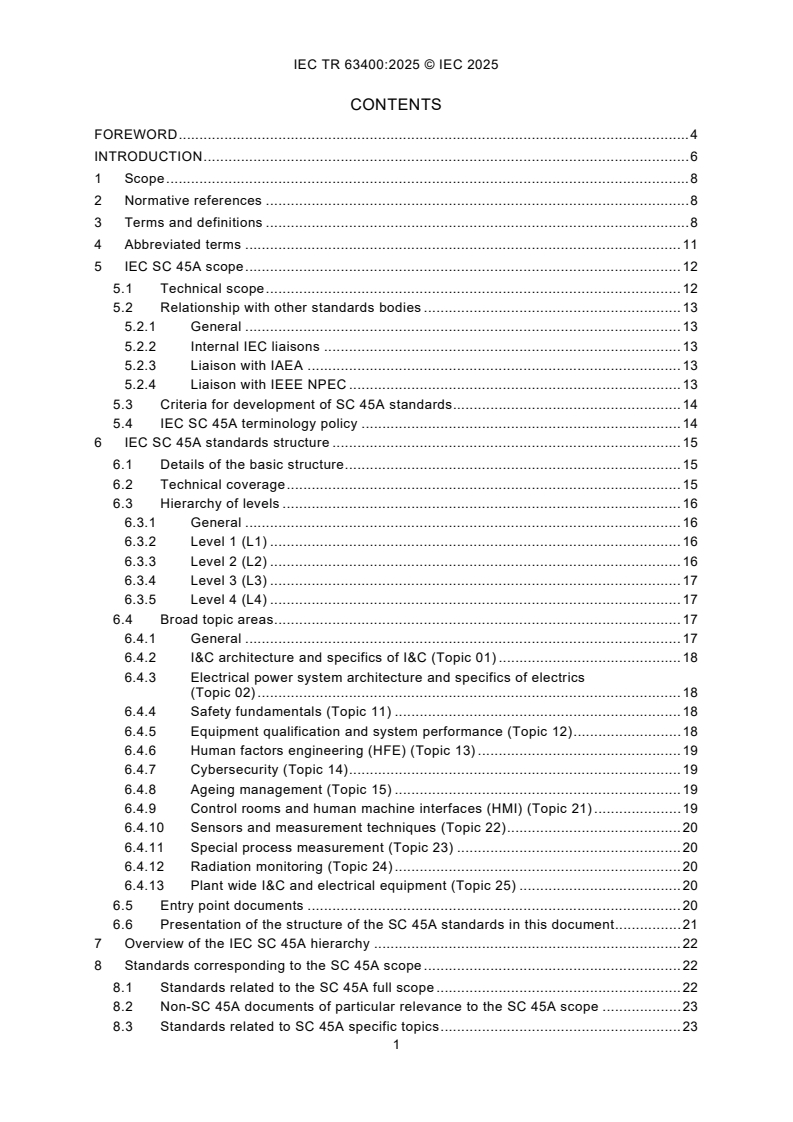
CONTENTS
FOREWORD . 4
INTRODUCTION . 6
1 Scope . 8
2 Normative references . 8
3 Terms and definitions . 8
4 Abbreviated terms . 11
5 IEC SC 45A scope . 12
5.1 Technical scope . 12
5.2 Relationship with other standards bodies . 13
5.2.1 General . 13
5.2.2 Internal IEC liaisons . 13
5.2.3 Liaison with IAEA . 13
5.2.4 Liaison with IEEE NPEC . 13
5.3 Criteria for development of SC 45A standards . 14
5.4 IEC SC 45A terminology policy . 14
6 IEC SC 45A standards structure . 15
6.1 Details of the basic structure . 15
6.2 Technical coverage . 15
6.3 Hierarchy of levels . 16
6.3.1 General . 16
6.3.2 Level 1 (L1) . 16
6.3.3 Level 2 (L2) . 16
6.3.4 Level 3 (L3) . 17
6.3.5 Level 4 (L4) . 17
6.4 Broad topic areas . 17
6.4.1 General . 17
6.4.2 I&C architecture and specifics of I&C (Topic 01) . 18
6.4.3 Electrical power system architecture and specifics of electrics
(Topic 02) . 18
6.4.4 Safety fundamentals (Topic 11) . 18
6.4.5 Equipment qualification and system performance (Topic 12) . 18
6.4.6 Human factors engineering (HFE) (Topic 13) . 19
6.4.7 Cybersecurity (Topic 14) . 19
6.4.8 Ageing management (Topic 15) . 19
6.4.9 Control rooms and human machine interfaces (HMI) (Topic 21) . 19
6.4.10 Sensors and measurement techniques (Topic 22) . 20
6.4.11 Special process measurement (Topic 23) . 20
6.4.12 Radiation monitoring (Topic 24) . 20
6.4.13 Plant wide I&C and electrical equipment (Topic 25) . 20
6.5 Entry point documents . 20
6.6 Presentation of the structure of the SC 45A standards in this document . 21
7 Overview of the IEC SC 45A hierarchy . 22
8 Standards corresponding to the SC 45A scope . 22
8.1 Standards related to the SC 45A full scope . 22
8.2 Non-SC 45A documents of particular relevance to the SC 45A scope . 23
8.3 Standards related to SC 45A specific topics . 23
Annex A (informative) List of IEC SC 45A and selected IEC SC 45B standards . 24
A.1 General . 24
A.2 Document list . 24
Annex B (informative) Other documents of particular relevance to the SC 45A
standards . 34
B.1 General . 34
B.2 IAEA documents . 34
B.2.1 All nuclear facilities. 34
B.2.2 Nuclear power plants (NPPs) . 35
B.2.3 Nuclear Fuel Cycle Facilities (NFCFs) . 36
B.2.4 Research Reactors (RRs) . 36
B.3 Other standards bodies documents . 37
B.3.1 Non-SC 45A IEC documents . 37
B.3.2 ISO documents . 37
B.3.3 ISO/IEC documents . 38
B.3.4 IEEE documents . 38
B.3.5 Other documents . 38
Annex C (informative) List of SC 45A and selected SC 45B standards by topic area . 39
C.1 General . 39
C.2 Document lists for each topic area . 39
C.2.1 Topic 01 – I&C architecture and specifics of I&C . 39
C.2.2 Topic 02 – Electrical power system architecture and specifics of
electrics . 43
C.2.3 Topic 11 – Safety fundamentals . 45
C.2.4 Topic 12 – Equipment qualification and system performance . 49
C.2.5 Topic 13 – Human factors engineering (HFE) . 50
C.2.6 Topic 14 – Cybersecurity . 52
C.2.7 Topic 15 – Ageing management . 54
C.2.8 Topic 21 – Control rooms and human machine interfaces (HMI) . 56
C.2.9 Topic 22 – Sensors and measurement techniques . 58
C.2.10 Topic 23 – Special process measurement . 60
C.2.11 Topic 24 – Radiation monitoring . 63
C.2.12 Topic 25 – Plant wide I&C and electrical equipment . 66
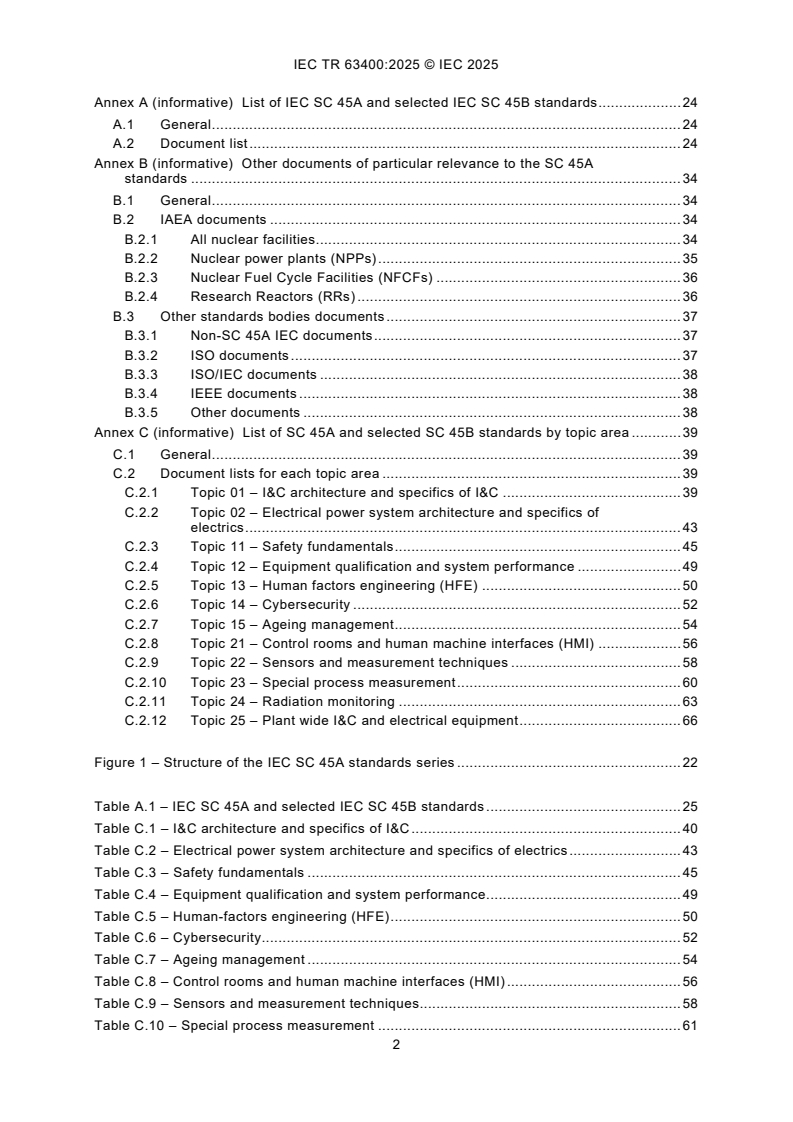
Figure 1 – Structure of the IEC SC 45A standards series . 22
Table A.1 – IEC SC 45A and selected IEC SC 45B standards . 25
Table C.1 – I&C architecture and specifics of I&C . 40
Table C.2 – Electrical power system architecture and specifics of electrics . 43
Table C.3 – Safety fundamentals . 45
Table C.4 – Equipment qualification and system performance . 49
Table C.5 – Human-factors engineering (HFE) . 50
Table C.6 – Cybersecurity. 52
Table C.7 – Ageing management . 54
Table C.8 – Control rooms and human machine interfaces (HMI) . 56
Table C.9 – Sensors and measurement techniques. 58
Table C.10 – Special process measurement . 61
Table C.11 – Radiation monitoring . 63
Table C.12 – Plant wide I&C and electrical equipment . 64
Table C.13 – Plant wide I&C and electrical equipment . 66
INTERNATIONAL ELECTROTECHNICAL COMMISSION
____________
Nuclear facilities –
Instrumentation, control and electrical power systems important to safety -
Structure of the IEC SC 45A standards series
FOREWORD
1) The International Electrotechnical Commission (IEC) is a worldwide organization for standardization comprising
all national electrotechnical committees (IEC National Committees). The object of IEC is to promote international
co-operation on all questions concerning standardization in the electrical and electronic fields. To this end and
in addition to other activities, IEC publishes International Standards, Technical Specifications, Technical Reports,
Publicly Available Specifications (PAS) and Guides (hereafter referred to as "IEC Publication(s)"). Their
preparation is entrusted to technical committees; any IEC National Committee interested in the subject dealt with
may participate in this preparatory work. International, governmental and non-governmental organizations liaising
with the IEC also participate in this preparation. IEC collaborates closely with the International Organization for
Standardization (ISO) in accordance with conditions determined by agreement between the two organizations.
2) The formal decisions or agreements of IEC on technical matters express, as nearly as possible, an international
consensus of opinion on the relevant subjects since each technical committee has representation from all
interested IEC National Committees.
3) IEC Publications have the form of recommendations for international use and are accepted by IEC National
Committees in that sense. While all reasonable efforts are made to ensure that the technical content of IEC
Publications is accurate, IEC cannot be held responsible for the way in which they are used or for any
misinterpretation by any end user.
4) In order to promote international uniformity, IEC National Committees undertake to apply IEC Publications
transparently to the maximum extent possible in their national and regional publications. Any divergence between
any IEC Publication and the corresponding national or regional publication shall be clearly indicated in the latter.
5) IEC itself does not provide any attestation of conformity. Independent certification bodies provide conformity
assessment services and, in some areas, access to IEC marks of conformity. IEC is not responsible for any
services carried out by independent certification bodies.
6) All users should ensure that they have the latest edition of this publication.
7) No liability shall attach to IEC or its directors, employees, servants or agents including individual experts and
members of its technical committees and IEC National Committees for any personal injury, property damage or
other damage of any nature whatsoever, whether direct or indirect, or for costs (including legal fees) and
expenses arising out of the publication, use of, or reliance upon, this IEC Publication or any other IEC
Publications.
8) Attention is drawn to the Normative references cited in this publication. Use of the referenced publications is
indispensable for the correct application of this publication.
9) IEC draws attention to the possibility that the implementation of this document may involve the use of (a)
patent(s). IEC takes no position concerning the evidence, validity or applicability of any claimed patent rights in
respect thereof. As of the date of publication of this document, IEC had not received notice of (a) patent(s), which
may be required to implement this document. However, implementers are cautioned that this may not represent
the latest information, which may be obtained from the patent database available at https://patents.iec.ch. IEC
shall not be held responsible for identifying any or all such patent rights.
IEC TR 63400 has been prepared by subcommittee 45A: Instrumentation, control and electrical
power systems of nuclear facilities, of IEC technical committee 45: Nuclear instrumentation. It
is a Technical Report.
The text of this Technical Report is based on the following documents:
Draft Report on voting
45A/1597/DTR 45A/1622/RVDTR
Full information on the voting for its approval can be found in the report on voting indicated in
the above table.
This second edition cancels and replaces the first edition published in 2021. This edition
constitutes a technical revision.
This edition includes the following significant technical changes with respect to the previous
edition:
a) This edition reflects changes made to the IEC SC45A portfolio of publications between 2021
and 2025, including the publication of revised standards in addition to new publications
including in the field of artificial intelligence applications for nuclear facilities.
The language used for the development of this Technical Report is English.
This document was drafted in accordance with ISO/IEC Directives, Part 2, and developed in
accordance with ISO/IEC Directives, Part 1 and ISO/IEC Directives, IEC Supplement, available
at www.iec.ch/members_experts/refdocs. The main document types developed by IEC are
described in greater detail at www.iec.ch/publications.
The committee has decided that the contents of this document will remain unchanged until the
stability date indicated on the IEC website under webstore.iec.ch in the data related to the
specific document. At this date, the document will be
– reconfirmed,
– withdrawn, or
– revised.
INTRODUCTION
a) Technical background, main issues and organisation of this document
The IEC SC 45A series of standards include the same common description in their Introduction,
item d), outlining the overall structure of the series and its relationship with other standards
bodies and standards (e.g. specific IAEA safety guides and IEC 61508).
The structure of the IEC SC 45A series at the time of drafting this document can be described
as a "pyramid" extending down from two top-level documents (at level 1) to other documents
(at levels 2, 3 and 4).
With the gradual extension of the IEC SC 45A scope to address electrical power systems,
cybersecurity and human factors engineering, and ongoing development of new standards, it
had become apparent that the common description could no longer, on its own, adequately fulfil
this objective without becoming overly extensive.
This document is therefore intended to augment the common description that is included in the
Introduction, item d), of all IEC SC 45A documents.
A revision of this document can be considered after each IEC SC 45A meeting and, if judged
necessary, a revision then undertaken subject to the availability of the appropriate resources.
In this Edition 2, the list of IEC SC 45A published documents and approved projects and the list
of IAEA documents of particular relevance to the IEC SC 45A technical scope have been
updated. However, no significant changes have been made to either the basic objective or
structure of the edition 1.
This document is organized as follows:
– Clause 5 outlines the scope of the IEC SC 45A standards series;
– Clause 6 describes the basic structure of the IEC SC 45A standards series, with particular
reference to a hierarchy of levels and subdivision into a set of broad topic areas;
– Clause 7 presents the structure of the IEC SC 45A standards series in diagrammatic form;
– Clause 8 introduces and points to three annexes that include:
– the full set of IEC SC 45A standards in tabular form and numerical order,
– other (i.e. non-IEC SC 45A) documents of particular relevance to IEC SC 45A, and
– the IEC SC 45A standards in tabular form for each broad topic area.
NOTE 1 In this edition, the documents under the responsibility of IEC SC 45A, as listed in the annexes, and their
status correspond to the situation that applied on 1 May 2025. For documents developed by other committees cited
for their relevance to IEC SC 45A, this document in most cases reflects the status of the situation that applied on
1 May 2024.
b) Situation of this document in the structure of the IEC SC 45A standards series
This document is a fourth level IEC SC 45A document.
Item d) of this Introduction describes the structure of the IEC SC 45A standards series in
general terms.
This document augments that description to enable users of individual IEC SC 45A standards
to obtain a more comprehensive understanding of the overall structure of the series and its
relationship with other standards bodies and standards. The publication of this document and
its subsequent editions should also enable minor changes in the structure to be described
without the need for amending the common description that is included in the Introduction, item
d), of all IEC SC 45A documents.
c) Recommendations and limitations regarding the application of this document
It is important to note that a Technical Report is entirely informative in nature. It gathers data
collected from different origins and it establishes no requirements.
d) Description of the structure of the IEC SC 45A standards series and relationships with
other IEC documents and other bodies documents (IAEA, ISO)
The IEC SC 45A standards series comprises a consistent set of documents organised in a
hierarchy of four levels. The top-level documents of the IEC SC 45A standards series are
IEC 61513 and IEC 63046, covering general requirements for instrumentation and control (I&C)
systems, and general requirements for electrical power systems of NPPs, respectively.
IEC 61513 and IEC 63046 adopt an overall system life-cycle framework and constitute, along
with the relevant second-level standards, the nuclear implementation of the basic safety series
IEC 61508.
IEC 61513 and IEC 63046 refer directly to other IEC SC 45A standards for general requirements
for specific topics, such as categorization of functions and classification of systems,
qualification, separation, defence against common cause failure, control room design,
electromagnetic compatibility, human factors engineering, cybersecurity, programmable digital
item and hardware aspects for programmable digital systems, coordination of safety and
cybersecurity requirements and management of ageing.
At a third level, IEC SC 45A standards not directly referenced by IEC 61513 or by IEC 63046
are standards related to specific requirements for specific equipment, technical methods, or
activities. Usually, these documents refer to second-level documents for general requirements
and can be used on their own.
A fourth level extending the IEC SC 45A standards series, corresponds to the Technical Reports
which are not normative.
The IEC SC 45A standards series consistently implements and details the safety and security
principles and basic aspects provided in the relevant IAEA safety standards and in the relevant
documents of the IAEA nuclear security series (NSS). In particular this includes the IAEA
requirements SSR-2/1, establishing safety requirements related to the design of nuclear power
plants (NPPs), the IAEA safety guide SSG-30 dealing with the safety classification of structures,
systems and components in NPPs, the IAEA safety guide SSG-39 dealing with the design of
instrumentation and control systems for NPPs, the IAEA safety guide SSG-34 dealing with the
design of electrical power systems for NPPs, the IAEA safety guide SSG-51 dealing with human
factors engineering in the design of NPPs, and the implementing guide NSS42-G for computer
security at nuclear facilities. The safety and security terminology and definitions used by the
SC 45A standards are consistent with those used by the IAEA.
IEC 61513 and IEC 63046 refer to ISO 9001 as well as to IAEA GSR part 2 and IAEA GS-G-
3.1 and IAEA GS-G-3.5 for topics related to quality assurance (QA).
At level 2, regarding nuclear security, IEC 62645 is the entry document for the IEC/SC 45A
security standards. It builds upon the valid high-level principles and main concepts of the
generic security standards, in particular ISO/IEC 27001 and ISO/IEC 27002; it adapts them and
completes them to fit the nuclear context and coordinates with the IEC 62443 series. At level 2,
IEC 60964 is the entry document for the IEC/SC 45A control rooms standards, IEC 63351 is the
entry document for the human factors engineering standards and IEC 62342 is the entry
document for the ageing management standards.
NOTE 2 This document provides a more comprehensive description of the overall structure of the IEC SC 45A
standards series and of its relationship with other standards bodies and standards.
1 Scope
The IEC SC 45A series of standards includes a general description in the Introduction, item d)
of each part, outlining the overall structure of the series and its relationship with other standards
bodies and standards (e.g. specific IAEA safety guides and IEC 61508).
This document is intended to augment that description to enable users of individual IEC SC 45A
International Standards to obtain a more comprehensive understanding of the overall structure
of the series and its relationship with other standards bodies and standards.
2 Normative references
There are no normative references in this document.
3 Terms and definitions
For the purposes of this document, the following terms and definitions apply.
ISO and IEC maintain terminology databases for use in standardization at the following
addresses:
– IEC Electropedia: available at https://www.electropedia.org/
– ISO Online browsing platform: available at https://www.iso.org/obp
3.1
computer-based item
item that relies on software instructions running on microprocessors or microcontrollers
Note 1 to entry: In this term and its definition, the term item can be replaced by the terms: system, or equipment,
or device.
Note 2 to entry: A computer-based item is a kind of programmable digital item.
Note 3 to entry: This term is equivalent to software-based item.
Note 4 to entry: See also the definition of E/E/PE item and the associated notes.
[SOURCE: IEC 62138:2018, 3.8, modified – Note 4 added.]
3.2
electrical/electronic/programmable electronic item
E/E/PE item
item based on electrical (E) and/or electronic (E) and/or programmable electronic (PE)
technology
Note 1 to entry: In this term and its definitions, the term item can be replaced by the terms: system, or equipment,
or device.
Note 2 to entry: See also the definitions of programmable digital item, of computer-based item, of hardwired item,
of programmable logic item and the associated notes.
Note 3 to entry: The definitions of the terms related to the technology: E/E/PE item, programmable digital item,
computer-based item, hardwired item, programmable logic item are totally consistent and coherent.
[SOURCE: IEC 62138:2018, 3.15, modified – Note 2 and Note 3 added.]
3.3
electrical power system
EPS
system performing electrical power generation, transmission and distribution; performing supply
functions to operate plant equipment (pumps, valves, heaters, etc.) and to I&C systems
Note 1 to entry: The Electrical Power System is composed by several electrical power sub-systems.
Note 2 to entry: An electrical system can integrate E/E/PE items to perform its internal electrical control and
protection.
[SOURCE: IEC 63046:2020, 3.12]
3.4
function
specific purpose or objective to be accomplished, that can be specified or described without
reference to the physical means of achieving it
[SOURCE: IEC 61226:2020, 3.10]
3.5
hardwired item
item that relies on relays, on analogue electronic or on discrete digital logic
Note 1 to entry: In this term and its definition, the term item can be replaced by the terms: system, or equipment,
or device.
Note 2 to entry: This term used by IEC SC 45A is roughly equivalent to electronic item used by IEC 61508. Relays
are electro-mechanical items, not electronic items, but they are included in the term hardwired-based item.
Note 3 to entry: Hardwired item are also usually called conventional items.
Note 4 to entry: The definitions for the following terms: E/E/PE item, Electrical item, I&C systems, Programmable
digital item, Computer-based item, Hardwired item, Programmable Logic Device, HDL Programmed Device (HDL
Hardware Description Language), have to be considered in conjunction and are totally consistent and coherent. They
are totally consistent and coherent with the general requirements established by IEC 61513 and IEC 63046 for
instrumentation, control and electrical systems for nuclear power plants.
[SOURCE: IEC 60987:2021, 3.10]
3.6
HDL-programmed device
HPD
integrated circuit configured (for NPP I&C systems), with Hardware Description Languages and
related software tools
Note 1 to entry: HDLs and related tools (e.g. simulator, synthesizer) are used to implement the requirements in a
proper assembly of pre-developed micro-electronic resources.
Note 2 to entry: The development of HPDs can use Pre-Developed Blocks.
Note 3 to entry: HPDs are typically based on blank FPGAs (Field Programmable Gate Arrays) or similar
programmable integrated circuits.
Note 4 to entry: HPD is a kind of programmable logic item.
Note 5 to entry: See also the definition of E/E/PE item and the associated notes.
[SOURCE: IEC 62566:2012, 3.7, modified – Note 3 modified, Note 4 and Note 5 added.]
3.7
I&C system
system, based on E/E/PE items, performing plant I&C functions as well as service and
monitoring functions related to the operation of the system itself
Note 1 to entry: The term is used as a general term which encompasses all elements of the system, such as internal
power supplies, sensors and other input devices, data highways and other communication paths, interfaces to
actuators and other output devices. The different functions within a system may use dedicated or shared resources.
Note 2 to entry: The elements included in a specific I&C system are defined in the specification of the boundaries
of the system.
Note 3 to entry: See also "electrical power system". The terms "electrical power system" and "I&C system" are
terms related to the main functions the systems perform; respectively "electrical power generation, transmission and
distribution" and "measurement, protection, control and HMI related to the NPP process". They have to be considered
in conjunction and are totally consistent and coherent with the general requirements established by IEC 61513 and
IEC 63046 for instrumentation, control and electrical power systems for nuclear power plants.
Note 4 to entry: See also the definition of E/E/PE item and the associated notes.
Note 5 to entry: According to their typical functionality, IAEA distinguishes between automation / control systems,
HMI systems, interlock systems and protection systems.
[SOURCE: IEC 62138:2018, 3.26, modified – Note 3 added.]
3.8
nuclear facility
facility (including associated buildings and equipment) in which nuclear material is produced,
processed, used, handled, stored or disposed of
[SOURCE: IEC 63272:2024, 3.24]
3.9
nuclear safety
achievement of proper operating conditions, prevention of accidents and mitigation of accident
consequences, resulting in protection of workers, the public and the environment from undue
radiation risks
[SOURCE: IAEA Nuclear Safety and Security Glossary, 2022 (Interim) edition]
3.10
programmable digital item
item that relies on software instructions or programmable logic to accomplish a function
Note 1 to entry: In this term and its definition, the term item can be replaced by the terms: system or equipment or
device.
Note 2 to entry: The main kinds of programmable digital items are computer-based items and programmable logic
items.
Note 3 to entry: This term used by IEC SC 45A is equivalent to programmable electronic item (PE item) defined
according to IEC 61508.
Note 4 to entry: See also the definition of E/E/PE item and the associated notes.
[SOURCE: IEC 62138:2018, 3.34, modified – Note 4 added.]
3.11
programmable logic item
item that relies on logic components with an integrated circuit that consists of logic elements
with an inter-connection pattern, parts of which are user programmable
Note 1 to entry: In this term and its definition, the term item can be replaced by the terms: system or equipment or
device.
Note 2 to entry: A programmable logic item is a kind of programmable digital item.
Note 3 to entry: See also the definition of E/E/PE item and the associated notes.
[SOURCE: IEC 62138:2018, 3.35]
3.12
standard
document, established by consensus and approved by a recognized body, that provides, for
common and repeated use, rules, guidelines or characteristics for activities or their results,
aimed at the achievement of the optimum degree of order in a given context
Note 1 to entry: Standards should be based on the consolidated results of science, technology and experience, and
aimed at the promotion of optimum community benefits.
[SOURCE: ISO/IEC Directives, Part 2:2021, 3.1.2]
3.13
international standard
standard that is adopted by an international standardizing/standards organization and made
available to the public
[SOURCE: ISO/IEC Directives, Part 2:2021, 3.1.3]
3.14
Technical Report
TR
document published by ISO or IEC containing collected data of a different kind from that
normally published as an International Standard or Technical Specification
Note 1 to entry: The content of a Technical Report is not permitted to include requirements, recommendations or
permissions.
[SOURCE: ISO/IEC Directives, Part 2:2021, 3.1.8, modified – original Note 1 and Note 2
removed.]
4 Abbreviated terms
AC Administrative Circular
BWR Boiling water reactor
CCF Common cause failure
CBP Computer-based procedures
EMI Electromagnetic interference
EP Electrical power
EPS Electrical power system
HFE Human factors engineering
HMI Human machine interface
HW Hardware
IAEA International Atomic Energy Agency
IEC International Electrotechnical Commission
IEEE Institute of Electrical and Electronic Engineers
IEV International Electrotechnical Vocabulary
ISO International Organization for Standardization
ITNS Important to nuclear safety
I&C Instrumentation and control
L/C Lifecycle
L1, L2, … Level 1, Level 2, …
NP New work item proposal
NPEC Nuclear Power Engineering Committee (of the IEEE)
NPP Nuclear power plant
NSS Nuclear Security Series (of the IAEA)
PWR Pressurised water reactor
RFI Radio frequency interference
RTD Resistance temperature detector
SC Subcommittee
SW Software
TC Technical committee
TR Technical Report
WG Working group
5 IEC SC 45A scope
5.1 Technical scope
An abridged version of the IEC SC 45A technical scope is as follows.
To prepare standards applicable to the electronic and electrical functions and associated
systems and equipment used in nuclear energy generation facilities (nuclear power plants, fuel
handling and processing plants, interim and final repositories for spent fuel and nuclear waste)
to improve the efficiency, safety and security of nuclear energy generation.
The standards cover the entire lifecycle of these instrumentation, control and electrical power
systems, from conception, through design, manufacture, test, installation, commissioning,
operation, maintenance, ageing management, modernization and decommissioning.
Refer to the IEC website for the IEC SC 45A full technical scope statement. The following two
links can be used to obtain information relating to IEC SC 45A and the list of IEC TCs / SCs,
respectively:
https://www.iec.ch/dyn/www/f?p=103:7:::::FSP_ORG_ID:1358
https://www.iec.ch/technical-committees-and-subcommittees#tclist
NOTE For more information about IEC management and activities, see: https://www.iec.ch/homepage.
5.2 Relationship with other standards bodies
5.2.1 General
Many IEC SC 45A standards make reference to other SC 45A standards and, where applicable,
they also make reference to various non-SC 45A IEC and ISO standards rather than repeating
their requirements.
In addition to the above, IEC SC 45A has established a number of liaisons with other IEC
technical committees/subcommittees and with technical committees of other standards bodies.
For further details of these, refer to the IEC website as below and then select "Liaisons":
https://www.iec.ch/dyn/www/f?p=103:29:8332652503242::::FSP_ORG_ID,FSP_LANG_ID:
1358,25
The relevance of some of these liaisons to the work of IEC SC 45A is outlined in 5.2.2 to 5.2.4.
5.2.2 Internal IEC liaisons
IEC 61513 and IEC 63046 are the IEC SC 45A nuclear sector standards, covering I&C and the
EPS respectively, equivalent to the basic safety publication IEC 61508-1, IEC 61508-2 and
IEC 61508-4, the latter standards series being prepared by IEC SC 65A, system aspects, of
IEC TC 65, industrial-process measurement, control and automation. The IEC SC 45A
standards suite IEC 60880, IEC 62138, IEC 62566 and IEC 62566-2, are similarly equivalent to
IEC 61508-3.
The IEC SC 45A standards (IEC 61513, IEC 60880, etc.) differ from IEC 61508 in that they take
into account the "traditional" nuclear sector deterministic design approach used since the 1950s.
NOTE As a result of the above, systems designed in accordance with the IEC SC 45A standards generally comply
with IEC 61508, but the reverse is not true.
It is also worth noting that IEC SC 45A and IEC SC 45B include radiation monitoring for different
functions. The IEC SC 45B radiation monitoring standards are therefore of interest to the
IEC SC 45A scope.
5.2.3 Liaison with IAEA
The IEC SC 45A standards series consistently implements and details the safety and security
principles and basic aspects provided in the relevant International Atomic Energy Agency (IAEA)
safety standards and in the relevant documents of the IAEA Nuclear Security Series (NSS).
These IAEA documents are introduced in 8.2 and included in Annex B.
In addition, the safety and security terminology and definitions used by IEC SC 45A standards
are consistent with those used by the IAEA as described in 5.4.
5.2.4 Liaison with IEEE NPEC
Recognizing the synergies between the IEC SC 45A and the IEEE NPEC nuclear standards
organizations, a collaborative programme was established to allow the development of joint
IEC/IEEE standards. There are two forms of joint or "dual logo" standards:
– Existing IEEE standards that are adopted by IEC: These receive new IEC identifiers.
– Existing IEC standards that are adopted by IEEE: These receive new IEEE identifiers.
– Standards that are developed jointly: These receive identifiers of the form IEC/IEEE xxxxx.
To enable this, the following agreements were established between IEC SC 45A and the
Nuclear Power Engineering Committee (NPEC) of the Institute of Electrical and Electronic
Engineers (IEEE):
AC/138/2002 – Co-operation and Licence Agreement between IEC and IEEE.
AC/24/2007 – IEC-IEEE dual logo maintenance procedure.
AC/22/2008 – IEC-IEEE joint development agreement.
These agreements have made possible:
– The joint development of dual logo IEC/IEEE standards on an agreed set of specific topics;
– The endorsement and publication of selected existing IEEE standards as IEC standards.
The three Administrative Circulars (ACs) can be accessed via the IEC website by following the
link (below)and entering the relevant document identifiers in the "search" field:
https://www.iec.ch/news-resources/acs#2
A guide on IEC/IEEE collaboration can also be accessed via the IEC website at:
www.iec.ch/resource-centre/guide-iecieee-cooperation
5.3 Criteria for development of SC 45A standards
Generic international standards (e.g. IEC, ISO) have been developed for most types of systems,
equipment and methods that are required by industry.
When there is a generic standard for a topic which cannot be used directly or which needs
adaptation for the nuclear sector, guidelines are developed for its use or "nuclear equivalent"
standards are developed.
In such cases, the IEC SC 45A "application" guidelines and "nuclear equivalent" standards
make reference to, and adhere as closely as possible to, the generic international standard.
5.4 IEC SC 45A terminology policy
The IEC SC 45A terminology policy has the following three broad objectives:
a) to use the IAEA safety and security terminology in the development of the IEC SC 45A
standards and any dual logo IEC/IEEE standards;
b) where this is not possible, to use applicable IEV definitions for generic terms in the
electrotechnical domain and applicable ISO definitions for generic terms in other domains;
c) where the above are not applicable, to develop new definitions.
Links to the IEC Electropedia and ISO Online browsing platform have already been provided in
Clause 3, and the IAEA nuclear safety and security glossary can be found at:
https://doi.org/10.61092/iaea.rrxi-t56z
NOTE 1 IEC and ISO terms are developed separately for each TC and SC and so there can be multiple definitions
for any given term.
Where the definition of a term in the IAEA Nuclear Safety and Security Glossary (see B.2.1) is
judged fully satisfactory, it is included directly into the IEC SC 45A relevant standard.
If an IAEA definition of a term is judged not fully satisfactory for direct use in an IEC SC 45A
standard, the original IAEA definition is integrated and a note is added to give precision or
introduce some nuance.
If an IAEA definition of a term cannot be used in a specific IEC SC 45A standard, a definition is
developed for inclusion in the standard and a note is added indicating that the definition is
different from the IAEA one and explaining the reason for the discrepancy.
NOTE 2 Where it is judged not possible to use an IAEA definition, a suitably justified proposal is made to the IAEA
to evolve their definition so that it can be used in the IEC SC 45A standards series in the future.
6 IEC SC 45A s
...
IEC TR 63400 ®
Edition 2.0 2025-12
TECHNICAL
REPORT
REDLINE VERSION
Nuclear facilities - Instrumentation, control and electrical power systems
important to safety - Structure of the IEC SC 45A standards series
ICS 27.120.20 ISBN 978-2-8327-0953-5
All rights reserved. Unless otherwise specified, no part of this publication may be reproduced or utilized in any form or
by any means, electronic or mechanical, including photocopying and microfilm, without permission in writing from either
IEC or IEC's member National Committee in the country of the requester. If you have any questions about IEC copyright
or have an enquiry about obtaining additional rights to this publication, please contact the address below or your local
IEC member National Committee for further information.
IEC Secretariat Tel.: +41 22 919 02 11
3, rue de Varembé info@iec.ch
CH-1211 Geneva 20 www.iec.ch
Switzerland
About the IEC
The International Electrotechnical Commission (IEC) is the leading global organization that prepares and publishes
International Standards for all electrical, electronic and related technologies.
About IEC publications
The technical content of IEC publications is kept under constant review by the IEC. Please make sure that you have the
latest edition, a corrigendum or an amendment might have been published.
IEC publications search - IEC Products & Services Portal - products.iec.ch
webstore.iec.ch/advsearchform Discover our powerful search engine and read freely all the
The advanced search enables to find IEC publications by a publications previews, graphical symbols and the glossary.
variety of criteria (reference number, text, technical With a subscription you will always have access to up to date
committee, …). It also gives information on projects, content tailored to your needs.
replaced and withdrawn publications.
Electropedia - www.electropedia.org
The world's leading online dictionary on electrotechnology,
IEC Just Published - webstore.iec.ch/justpublished
Stay up to date on all new IEC publications. Just Published containing more than 22 500 terminological entries in English
details all new publications released. Available online and and French, with equivalent terms in 25 additional languages.
once a month by email. Also known as the International Electrotechnical Vocabulary
(IEV) online.
IEC Customer Service Centre - webstore.iec.ch/csc
If you wish to give us your feedback on this publication or
need further assistance, please contact the Customer
Service Centre: sales@iec.ch.
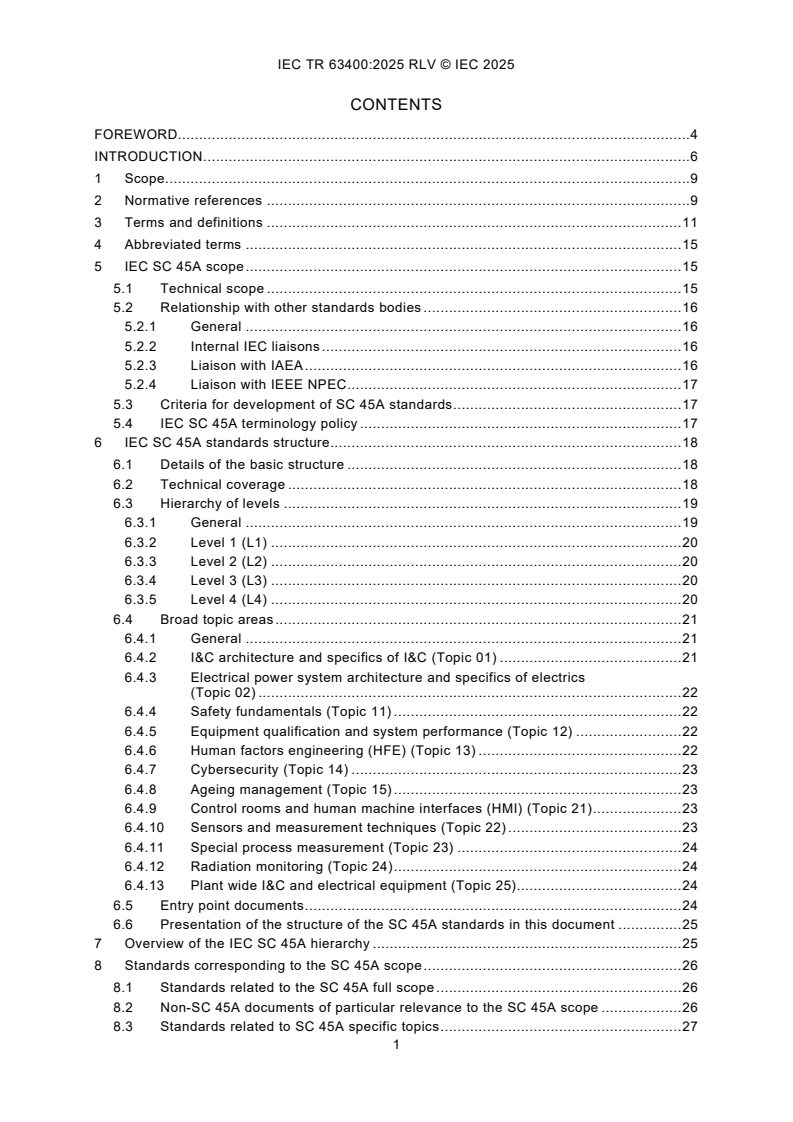
CONTENTS
FOREWORD. 4
INTRODUCTION . 6
1 Scope . 9
2 Normative references . 9
3 Terms and definitions . 11
4 Abbreviated terms . 15
5 IEC SC 45A scope . 15
5.1 Technical scope . 15
5.2 Relationship with other standards bodies . 16
5.2.1 General . 16
5.2.2 Internal IEC liaisons . 16
5.2.3 Liaison with IAEA . 16
5.2.4 Liaison with IEEE NPEC . 17
5.3 Criteria for development of SC 45A standards . 17
5.4 IEC SC 45A terminology policy . 17
6 IEC SC 45A standards structure . 18
6.1 Details of the basic structure . 18
6.2 Technical coverage . 18
6.3 Hierarchy of levels . 19
6.3.1 General . 19
6.3.2 Level 1 (L1) . 20
6.3.3 Level 2 (L2) . 20
6.3.4 Level 3 (L3) . 20
6.3.5 Level 4 (L4) . 20
6.4 Broad topic areas . 21
6.4.1 General . 21
6.4.2 I&C architecture and specifics of I&C (Topic 01) . 21
6.4.3 Electrical power system architecture and specifics of electrics
(Topic 02) . 22
6.4.4 Safety fundamentals (Topic 11) . 22
6.4.5 Equipment qualification and system performance (Topic 12) . 22
6.4.6 Human factors engineering (HFE) (Topic 13) . 22
6.4.7 Cybersecurity (Topic 14) . 23
6.4.8 Ageing management (Topic 15) . 23
6.4.9 Control rooms and human machine interfaces (HMI) (Topic 21) . 23
6.4.10 Sensors and measurement techniques (Topic 22) . 23
6.4.11 Special process measurement (Topic 23) . 24
6.4.12 Radiation monitoring (Topic 24) . 24
6.4.13 Plant wide I&C and electrical equipment (Topic 25) . 24
6.5 Entry point documents . 24
6.6 Presentation of the structure of the SC 45A standards in this document . 25
7 Overview of the IEC SC 45A hierarchy . 25
8 Standards corresponding to the SC 45A scope . 26
8.1 Standards related to the SC 45A full scope . 26
8.2 Non-SC 45A documents of particular relevance to the SC 45A scope . 26
8.3 Standards related to SC 45A specific topics . 27
Annex A (informative) List of IEC SC 45A and selected IEC SC 45B standards . 28
A.1 General . 28
A.2 Document list . 28
Annex B (informative) Other documents of particular relevance to the SC 45A
standards . 38
B.1 General . 38
B.2 IAEA documents . 38
B.2.1 All nuclear facilities . 38
B.2.2 Nuclear power plants (NPPs) . 39
B.2.3 Nuclear Fuel Cycle Facilities (NFCFs) . 40
B.2.4 Research Reactors (RRs) . 41
B.3 Other standards bodies documents . 41
B.3.1 Non-SC 45A IEC documents . 41
B.3.2 ISO documents . 42
B.3.3 ISO/IEC documents . 42
B.3.4 IEEE documents . 42
B.3.5 Other documents . 42
Annex C (informative) List of SC 45A and selected SC 45B standards by topic area . 44
C.1 General . 44
C.2 Document lists for each topic area . 44
C.2.1 Topic 01 – I&C architecture and specifics of I&C . 44
C.2.2 Topic 02 – Electrical power system architecture and specifics of
electrics . 48
C.2.3 Topic 11 – Safety fundamentals . 50
C.2.4 Topic 12 – Equipment qualification and system performance . 54
C.2.5 Topic 13 – Human factors engineering (HFE) . 56
C.2.6 Topic 14 – Cybersecurity . 58
C.2.7 Topic 15 – Ageing management . 59
C.2.8 Topic 21 – Control rooms and human machine interfaces (HMI) . 62
C.2.9 Topic 22 – Sensors and measurement techniques . 64
C.2.10 Topic 23 – Special process measurement . 67
C.2.11 Topic 24 – Radiation monitoring . 69
C.2.12 Topic 25 – Plant wide I&C and electrical equipment . 72
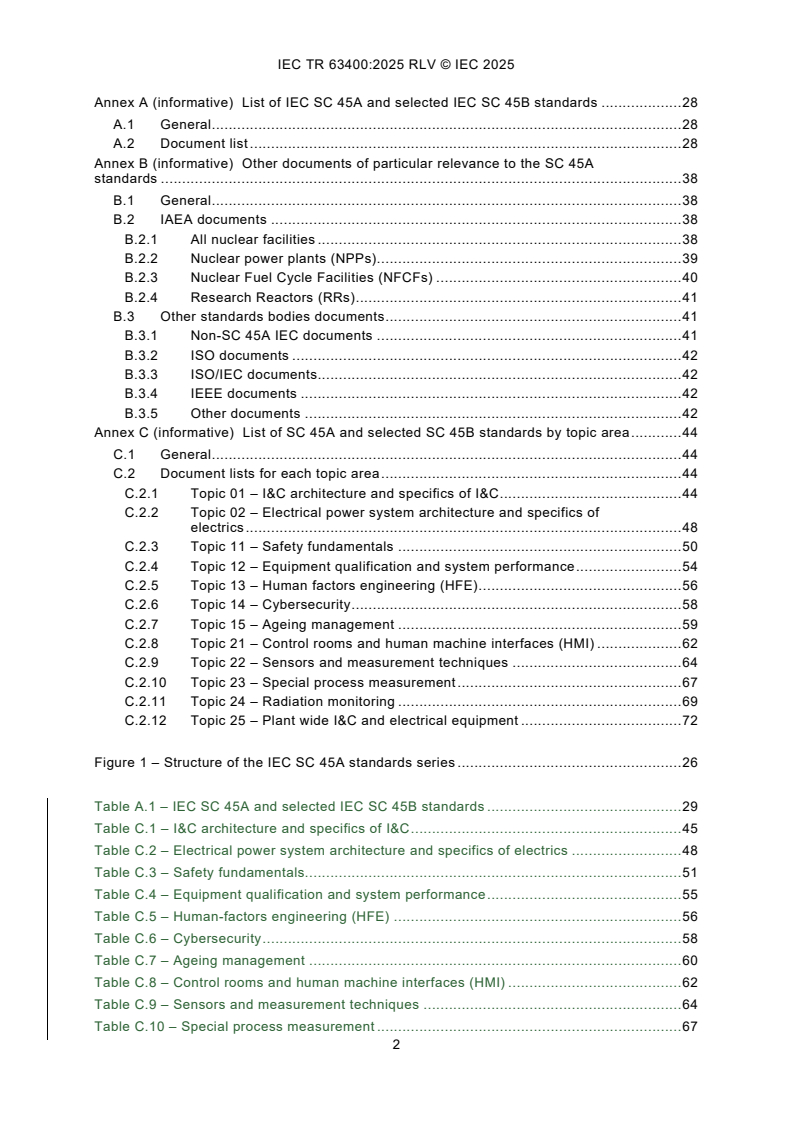
Figure 1 – Structure of the IEC SC 45A standards series . 26
Table A.1 – IEC SC 45A and selected IEC SC 45B standards . 29
Table C.1 – I&C architecture and specifics of I&C . 45
Table C.2 – Electrical power system architecture and specifics of electrics . 48
Table C.3 – Safety fundamentals. 51
Table C.4 – Equipment qualification and system performance . 55
Table C.5 – Human-factors engineering (HFE) . 56
Table C.6 – Cybersecurity . 58
Table C.7 – Ageing management . 60
Table C.8 – Control rooms and human machine interfaces (HMI) . 62
Table C.9 – Sensors and measurement techniques . 64
Table C.10 – Special process measurement . 67
Table C.11 – Radiation monitoring . 69
Table C.12 – Plant wide I&C and electrical equipment . 70
Table C.13 – Plant wide I&C and electrical equipment . 72
INTERNATIONAL ELECTROTECHNICAL COMMISSION
____________
Nuclear facilities –
Instrumentation, control and electrical power systems important to safety -
Structure of the IEC SC 45A standards series
FOREWORD
1) The International Electrotechnical Commission (IEC) is a worldwide organization for standardization comprising
all national electrotechnical committees (IEC National Committees). The object of IEC is to promote international
co-operation on all questions concerning standardization in the electrical and electronic fields. To this end and
in addition to other activities, IEC publishes International Standards, Technical Specifications, Technical Reports,
Publicly Available Specifications (PAS) and Guides (hereafter referred to as "IEC Publication(s)"). Their
preparation is entrusted to technical committees; any IEC National Committee interested in the subject dealt with
may participate in this preparatory work. International, governmental and non-governmental organizations liaising
with the IEC also participate in this preparation. IEC collaborates closely with the International Organization for
Standardization (ISO) in accordance with conditions determined by agreement between the two organizations.
2) The formal decisions or agreements of IEC on technical matters express, as nearly as possible, an international
consensus of opinion on the relevant subjects since each technical committee has representation from all
interested IEC National Committees.
3) IEC Publications have the form of recommendations for international use and are accepted by IEC National
Committees in that sense. While all reasonable efforts are made to ensure that the technical content of IEC
Publications is accurate, IEC cannot be held responsible for the way in which they are used or for any
misinterpretation by any end user.
4) In order to promote international uniformity, IEC National Committees undertake to apply IEC Publications
transparently to the maximum extent possible in their national and regional publications. Any divergence between
any IEC Publication and the corresponding national or regional publication shall be clearly indicated in the latter.
5) IEC itself does not provide any attestation of conformity. Independent certification bodies provide conformity
assessment services and, in some areas, access to IEC marks of conformity. IEC is not responsible for any
services carried out by independent certification bodies.
6) All users should ensure that they have the latest edition of this publication.
7) No liability shall attach to IEC or its directors, employees, servants or agents including individual experts and
members of its technical committees and IEC National Committees for any personal injury, property damage or
other damage of any nature whatsoever, whether direct or indirect, or for costs (including legal fees) and
expenses arising out of the publication, use of, or reliance upon, this IEC Publication or any other IEC
Publications.
8) Attention is drawn to the Normative references cited in this publication. Use of the referenced publications is
indispensable for the correct application of this publication.
9) IEC draws attention to the possibility that the implementation of this document may involve the use of (a)
patent(s). IEC takes no position concerning the evidence, validity or applicability of any claimed patent rights in
respect thereof. As of the date of publication of this document, IEC had not received notice of (a) patent(s), which
may be required to implement this document. However, implementers are cautioned that this may not represent
the latest information, which may be obtained from the patent database available at https://patents.iec.ch. IEC
shall not be held responsible for identifying any or all such patent rights.
This redline version of the official IEC Standard allows the user to identify the changes made
to the previous edition IEC TR 63400:2021. A vertical bar appears in the margin wherever a
change has been made. Additions are in green text, deletions are in strikethrough red text.
IEC TR 63400 has been prepared by subcommittee 45A: Instrumentation, control and electrical
power systems of nuclear facilities, of IEC technical committee 45: Nuclear instrumentation. It
is a Technical Report.
The text of this Technical Report is based on the following documents:
Draft Report on voting
45A/1597/DTR 45A/1622/RVDTR
Full information on the voting for its approval can be found in the report on voting indicated in
the above table.
This second edition cancels and replaces the first edition published in 2021. This edition
constitutes a technical revision.
This edition includes the following significant technical changes with respect to the previous
edition:
a) This edition reflects changes made to the IEC SC45A portfolio of publications between 2021
and 2025, including the publication of revised standards in addition to new publications
including in the field of artificial intelligence applications for nuclear facilities.
The language used for the development of this Technical Report is English.
This document was drafted in accordance with ISO/IEC Directives, Part 2, and developed in
accordance with ISO/IEC Directives, Part 1 and ISO/IEC Directives, IEC Supplement, available
at www.iec.ch/members_experts/refdocs. The main document types developed by IEC are
described in greater detail at www.iec.ch/publications.
The committee has decided that the contents of this document will remain unchanged until the
stability date indicated on the IEC website under webstore.iec.ch in the data related to the
specific document. At this date, the document will be
– reconfirmed,
– withdrawn, or
– revised.
INTRODUCTION
a) Technical background, main issues and organisation of this document
The IEC SC 45A series of standards include the same common description in their Introduction,
item d), outlining the overall structure of the series and its relationship with other standards
bodies and standards (e.g. specific IAEA safety guides and IEC 61508).
The structure of the IEC SC 45A series at the time of drafting this document can be described
as a "pyramid" extending down from two top-level documents (at level 1) to other documents
(at levels 2, 3 and 4).
With the gradual extension of the IEC SC 45A scope to address electrical power systems,
cybersecurity and human factors engineering, and ongoing development of new standards, it
had become apparent that the common description could no longer, on its own, adequately fulfil
this objective without becoming overly extensive.
This document is therefore intended to augment the common description that is included in the
Introduction, item d), of all IEC SC 45A documents.
It was agreed at the IEC SC 45A meeting held in Paris in April 2019 that this Technical
Report should be primarily for the benefit of the users of the IEC SC 45A standards
(including first time users) rather than for the expert members of IEC SC 45A and its working
groups.
A revision of this document should can be considered after each IEC SC 45A meeting and, if
judged necessary, a revision then undertaken subject to the availability of the appropriate
resources.
In this Edition 2, the list of IEC SC 45A published documents and approved projects and the list
of IAEA documents of particular relevance to the IEC SC 45A technical scope have been
updated. However, no significant changes have been made to either the basic objective or
structure of the edition 1.
This document is organized as follows:
– Clause 5 outlines the scope of the IEC SC 45A standards series;
– Clause 6 describes the basic structure of the IEC SC 45A standards series, with particular
reference to a hierarchy of levels and subdivision into a set of broad topic areas;
– Clause 7 presents the structure of the IEC SC 45A standards series in diagrammatic form;
– Clause 8 introduces and points to three annexes that include:
– the full set of IEC SC 45A standards in tabular form and numerical order,
– other (i.e. non-IEC SC 45A) documents of particular relevance to IEC SC 45A, and
– the IEC SC 45A standards in tabular form for each broad topic area.
NOTE 1 In this edition, the documents under the responsibility of IEC SC 45A, as listed in the annexes, and their
status correspond to the situation that applied on 1 May 2021 2025. For documents developed by other committees
cited for their relevance to IEC SC 45A, this document in most cases reflects the status of the situation that applied
on 1 May 2024.
b) Situation of this document in the structure of the IEC SC 45A standards series
This document is a fourth level IEC SC 45A document.
Item d) of this Introduction describes the structure of the IEC SC 45A standards series in
general terms.
This document augments that description to enable users of individual IEC SC 45A standards
to obtain a more comprehensive understanding of the overall structure of the series and its
relationship with other standards bodies and standards. The publication of this document and
its subsequent editions should also enable minor changes in the structure to be described
without the need for amending the common description that is included in the Introduction, item
d), of all IEC SC 45A documents.
c) Recommendations and limitations regarding the application of this document
It is important to note that a Technical Report is entirely informative in nature. It gathers data
collected from different origins and it establishes no requirements.
d) Description of the structure of the IEC SC 45A standards series and relationships with
other IEC documents and other bodies documents (IAEA, ISO)
The IEC SC 45A standards series comprises a consistent set of documents organised in a
hierarchy of four levels. The top-level documents of the IEC SC 45A standards series are
IEC 61513 and IEC 63046, covering general requirements for instrumentation and control (I&C)
systems, and general requirements for electrical power systems of NPPs, respectively.
IEC 61513 and IEC 63046 adopt an overall system life-cycle framework and constitute, along
with the relevant second-level standards, the nuclear implementation of the basic safety series
IEC 61508.
IEC 61513 provides general requirements for instrumentation and control (I&C) systems and
equipment that are used to perform functions important to safety in nuclear power plants (NPPs).
IEC 63046 provides general requirements for electrical power systems of NPPs; it covers power
supply systems including the supply systems of the I&C systems.
IEC 61513 and IEC 63046 are to be considered in conjunction and at the same level. IEC 61513
and IEC 63046 structure the IEC SC 45A standard series and shape a complete framework
establishing general requirements for instrumentation, control and electrical power systems for
nuclear power plants.
IEC 61513 and IEC 63046 refer directly to other IEC SC 45A standards for general requirements
for specific topics, such as categorization of functions and classification of systems,
qualification, separation, defence against common cause failure, control room design,
electromagnetic compatibility, human factors engineering, cybersecurity, software
programmable digital item and hardware aspects for programmable digital systems,
coordination of safety and security cybersecurity requirements and management of ageing. The
standards referenced directly at this second level should be considered together with IEC 61513
and IEC 63046 as a consistent document set.
At a third level, IEC SC 45A standards not directly referenced by IEC 61513 or by IEC 63046
are standards related to specific requirements for specific equipment, technical methods, or
activities. Usually, these documents refer to second-level documents for general requirements
and can be used on their own.
A fourth level extending the IEC SC 45A standards series, corresponds to the Technical Reports
which are not normative.
The IEC SC 45A standards series consistently implements and details the safety and security
principles and basic aspects provided in the relevant IAEA safety standards and in the relevant
documents of the IAEA nuclear security series (NSS). In particular this includes the IAEA
requirements SSR-2/1, establishing safety requirements related to the design of nuclear power
plants (NPPs), the IAEA safety guide SSG-30 dealing with the safety classification of structures,
systems and components in NPPs, the IAEA safety guide SSG-39 dealing with the design of
instrumentation and control systems for NPPs, the IAEA safety guide SSG-34 dealing with the
design of electrical power systems for NPPs, the IAEA safety guide SSG-51 dealing with human
factors engineering in the design of NPPs, and the implementing guide NSS17 NSS42-G for
computer security at nuclear facilities. The safety and security terminology and definitions used
by the SC 45A standards are consistent with those used by the IAEA.
IEC 61513 and IEC 63046 have adopted a presentation format similar to the basic safety
publication IEC 61508 with an overall life-cycle framework and a system life-cycle
framework. Regarding nuclear safety, IEC 61513 and IEC 63046 provide the interpretation
of the general requirements of IEC 61508-1, IEC 61508-2 and IEC 61508-4, for the nuclear
application sector. In this framework IEC 60880, IEC 62138 and IEC 62566 correspond to
IEC 61508-3 for the nuclear application sector.
IEC 61513 and IEC 63046 refer to ISO 9001 as well as to IAEA GSR part 2 and IAEA GS-G-
3.1 and IAEA GS-G-3.5 for topics related to quality assurance (QA).
At level 2, regarding nuclear security, IEC 62645 is the entry document for the IEC/SC 45A
security standards. It builds upon the valid high-level principles and main concepts of the
generic security standards, in particular ISO/IEC 27001 and ISO/IEC 27002; it adapts them and
completes them to fit the nuclear context and coordinates with the IEC 62443 series. At level 2,
IEC 60964 is the entry document for the IEC/SC 45A control rooms standards, IEC 63351
(currently in preparation) is intended as the entry document for the human factors engineering
standards and IEC 62342 is the entry document for the ageing management standards.
NOTE 1 It is assumed that for the design of I&C systems in NPPs that implement conventional safety functions
(e.g. to address worker safety, asset protection, chemical hazards, process energy hazards) international or
national standards would be applied.
NOTE 2 This document provides a more comprehensive description of the overall structure of the IEC SC 45A
standards series and of its relationship with other standards bodies and standards.
1 Scope
The IEC SC 45A series of standards includes a general description in the Introduction, item d)
of each part, outlining the overall structure of the series and its relationship with other standards
bodies and standards (e.g. specific IAEA safety guides and IEC 61508).
This document is intended to augment that description to enable users of individual IEC SC 45A
International Standards to obtain a more comprehensive understanding of the overall structure
of the series and its relationship with other standards bodies and standards.
2 Normative references
The following documents are referred to in the text in such a way that some or all of their content
constitutes requirements of this document. For dated references, only the edition cited applies.
For undated references, the latest edition of the referenced document (including any
amendments) applies.
IEC 60515, Nuclear power plants – Instrumentation important to safety – Radiation detectors –
Characteristics and test methods
IEC 60709, Nuclear power plants – Instrumentation, control and electrical power systems
important to safety – Separation
IEC 60737, Nuclear power plants – Instrumentation important to safety – Temperature sensors
(in-core and primary coolant circuit) – Characteristics and test methods
IEC 60772, Nuclear power plants – Instrumentation systems important to safety – Electrical
penetration assemblies in containment structures
IEC 60880, Nuclear power plants – Instrumentation and control systems important to safety
Software aspects for computer-based systems performing category A functions
IEC 60964, Nuclear power plants – Control rooms – Design
IEC 60965, Nuclear power plants – Control rooms – Supplementary control room for reactor
shutdown without access to the main control room
IEC 60987, Nuclear power plants – Instrumentation and control important to safety – Hardware
requirements
IEC 60988, Nuclear power plants – Instrumentation important to safety – Acoustic monitoring
systems for detection of loose parts: characteristics, design criteria and operational procedures
IEC 61031, Nuclear facilities – Instrumentation and control systems – Design, location and
application criteria for installed area gamma radiation dose rate monitoring equipment for use
during normal operation and anticipated operational occurrences
IEC 61225, Nuclear power plants – Instrumentation, control and electrical power systems –
Requirements for static uninterruptible DC and AC power supply systems
IEC 61226, Nuclear power plants – Instrumentation, control and electrical power systems
important to safety – Categorization of functions and classification of systems
IEC 61250, Nuclear reactors – Instrumentation and control systems important for safety –
Detection of leakage in coolant systems
IEC 61508-1, Functional safety of electrical/electronic/programmable electronic safety-related
systems – Part 1: General requirements
IEC 61508-2, Functional safety of electrical/electronic/programmable electronic safety-related
systems – Part 2: Requirements for electrical/electronic/programmable electronic safety-related
systems
IEC 61508-3, Functional safety of electrical/electronic/programmable electronic safety-related
systems – Part 3: Software requirements
IEC 61508-4, Functional safety of electrical/electronic/programmable electronic safety-related
systems – Part 4: Definitions and abbreviations
IEC 61508-7, Functional safety of electrical/electronic/programmable electronic safety-related
systems – Part 7: Overview of techniques and measures
IEC 61513, Nuclear power plants – Instrumentation and control important to safety – General
requirements for systems
IEC 61839, Nuclear power plants – Design of control rooms – Functional analysis and
assignment
IEC 62138, Nuclear power plants – Instrumentation and control systems important to safety –
Software aspects for computer-based systems performing category B or C functions
IEC 62340, Nuclear power plants – Instrumentation and control systems important to safety –
Requirements for coping with common cause failure (CCF)
IEC 62342, Nuclear power plants – Instrumentation and control systems important to safety –
Management of ageing
IEC 62465, Nuclear power plants – Instrumentation and control important to safety –
Management of ageing of electrical cabling systems
IEC 62566, Nuclear power plants – Instrumentation and control important to safety –
Development of HDL-programmed integrated circuits for systems performing category A
functions
IEC 62645, Nuclear power plants – Instrumentation, control and electrical power systems –
Cybersecurity requirements
IEC 62671, Nuclear power plants – Instrumentation and control important to safety – Selection
and use of industrial digital devices of limited functionality
IEC 62705, Nuclear power plants – Instrumentation and control important to safety – Radiation
monitoring systems (RMS): Characteristics and lifecycle
IEC 62808, Nuclear power plants – Instrumentation and control systems important to safety –
Design and qualification of isolation devices
IEC 62855, Nuclear power plants – Electrical power systems – Electrical power systems
analysis
IEC 62859, Nuclear power plants – Instrumentation and control systems – Requirements for
coordinating safety and cybersecurity
IEC 63046, Nuclear power plants – Electrical power system – General requirements
IEC 63272, Nuclear facilities – Electrical power systems – AC interruptible power supply
systems (in preparation)
IEC 63298, Nuclear power plants – Electrical power systems – Coordination and interaction
with electric grid (in preparation)
IEC 63351, Nuclear facilities – Human Factors Engineering – Application to the design of
Human Machine Interfaces (in preparation)
IEC/IEEE 60780-323, Nuclear facilities – Electrical equipment important to safety –
Qualification
IEC/IEEE 60980-344, Nuclear facilities – Equipment important to safety – Seismic qualification
IAEA Safety Glossary, 2018 Edition, IAEA, Vienna, 2019
IAEA Nuclear Security Series Glossary, Version 1.3, November 2015
There are no normative references in this document.
3 Terms and definitions
For the purposes of this document, the following terms and definitions apply.
ISO and IEC maintain terminology databases for use in standardization at the following
addresses:
– IEC Electropedia: available at https://www.electropedia.org/
– ISO Online browsing platform: available at https://www.iso.org/obp
3.1
computer-based item
item that relies on software instructions running on microprocessors or microcontrollers
Note 1 to entry: In this term and its definition, the term item can be replaced by the terms: system, or equipment,
or device.
Note 2 to entry: A computer-based item is a kind of programmable digital item.
Note 3 to entry: This term is equivalent to software-based item.
Note 4 to entry: See also the definition of E/E/PE item and the associated notes.
[SOURCE: IEC 62138:2018, 3.8, modified – Note 4 added.]
3.2
computer-based system
I&C system whose functions are mostly dependent on, or completely performed by using
microprocessors, programmed electronic equipment or computers
Note 1 to entry: See also I&C system.
3.2
electrical/electronic/programmable electronic item
E/E/PE item
item based on electrical (E) and/or electronic (E) and/or programmable electronic (PE)
technology
Note 1 to entry: In this term and its definitions, the term item can be replaced by the terms: system, or equipment,
or device.
Note 2 to entry: See also the definitions of programmable digital item, of computer-based item, of hardwired item,
of programmable logic item and the associated notes.
Note 3 to entry: The definitions of the terms related to the technology: E/E/PE item, programmable digital item,
computer-based item, hardwired item, programmable logic item are totally consistent and coherent.
[SOURCE: IEC 62138:2018, 3.15, modified – Note 2 and Note 3 added.]
3.3
electrical power system
EPS
system performing electrical power generation, transmission and distribution; performing supply
functions to operate plant equipment (pumps, valves, heaters, etc.) and to I&C systems
Note 1 to entry: The Electrical Power System is composed by several electrical power sub-systems.
Note 2 to entry: An electrical system can integrate E/E/PE items to perform its internal electrical control and
protection.
[SOURCE: IEC 63046:2020, 3.12]
3.4
function
specific purpose or objective to be accomplished, that can be specified or described without
reference to the physical means of achieving it
[SOURCE: IEC 61226:2020, 3.10]
3.5
hardwired item
item that relies on relays, on analogue electronic or on discrete digital logic
Note 1 to entry: In this term and its definition, the term item can be replaced by the terms: system, or equipment,
or device.
Note 2 to entry: This term used by IEC SC 45A is roughly equivalent to the term electrical/ electronic item (E/E
item) defined according to used by IEC 61508. Relays are electro-mechanical items which are, not electronic items,
but they are included in the term hardwired-based item.
Note 3 to entry: Hardwired item are also usually called conventional items.
Note 4 to entry: See also the definitions of E/E/PE item and the associated notes.
Note 4 to entry: The definitions for the following terms: E/E/PE item, Electrical item, I&C systems, Programmable
digital item, Computer-based item, Hardwired item, Programmable Logic Device, HDL Programmed Device (HDL
Hardware Description Language), have to be considered in conjunction and are totally consistent and coherent. They
are totally consistent and coherent with the general requirements established by IEC 61513 and IEC 63046 for
instrumentation, control and electrical systems for nuclear power plants.
[SOURCE: IEC 60987:2021, 3.10]
3.6
HDL-programmed device
HPD
integrated circuit configured (for NPP I&C systems), with Hardware Description Languages and
related software tools
Note 1 to entry: HDLs and related tools (e.g. simulator, synthesizer) are used to implement the requirements in a
proper assembly of pre-developed micro-electronic resources.
Note 2 to entry: The development of HPDs can use Pre-Developed Blocks.
Note 3 to entry: HPDs are typically based on blank FPGAs (Field Programmable Gate Arrays) or similar
programmable integrated circuits.
Note 4 to entry: HPD is a kind of programmable logic item.
Note 5 to entry: See also the definition of E/E/PE item and the associated notes.
[SOURCE: IEC 62566:2012, 3.7, modified – Note 3 modified, Note 4 and Note 5 added.]
3.7
I&C system
system, based on E/E/PE items, performing plant I&C functions as well as service and
monitoring functions related to the operation of the system itself
Note 1 to entry: The term is used as a general term which encompasses all elements of the system, such as internal
power supplies, sensors and other input devices, data highways and other communication paths, interfaces to
actuators and other output devices. The different functions within a system may use dedicated or shared resources.
Note 2 to entry: The elements included in a specific I&C system are defined in the specification of the boundaries
of the system.
Note 3 to entry: See also "electrical power system". The terms "electrical power system" and "I&C system" are
terms related to the main functions the systems perform; respectively "electrical power generation, transmission and
distribution" and "measurement, protection, control and HMI related to the NPP process". They have to be considered
in conjunction and are totally consistent and coherent with the general requirements established by IEC 61513 and
IEC 63046 for instrumentation, control and electrical power systems for nuclear power plants.
Note 4 to entry: See also the definition of E/E/PE item and the associated notes.
Note 5 to entry: According to their typical functionality, IAEA distinguishes between automation / control systems,
HMI systems, interlock systems and protection systems.
[SOURCE: IEC 62138:2018, 3.26, modified – Note 3 added.]
3.9
nuclear energy generation facilities
nuclear power plants (NPPs), fuel handling and processing plants, interim and final repositories
for spent fuel and nuclear waste
3.8
nuclear facility
facility (including associated buildings and equipment) in which nuclear material is produced,
processed, used, handled, stored or disposed of
[SOURCE: IEC 63272:2024, 3.24]
3.9
nuclear safety
achievement of proper operating conditions, prevention of accidents and mitigation of accident
consequences, resulting in protection of workers, the public and the environment from undue
radiation risks
[SOURCE: IAEA Nuclear Safety and Security Glossary, 20182022 (Interim) edition]
3.10
programmable digital item
item that relies on software instructions or programmable logic to accomplish a function
Note 1 to entry: In this term and its definition, the term item can be replaced by the terms: system or equipment or
device.
Note 2 to entry: See also the definition of E/E/PE item and the associated notes.
Note 2 to entry: The main kinds of programmable digital items are computer-based items and programmable logic
items.
Note 3 to entry: This term used by IEC SC 45A is equivalent to programmable electronic item (PE item) defined
according to IEC 61508.
Note 4 to entry: See also the definition of E/E/PE item and the associated notes.
[SOURCE: IEC 62138:2018, 3.34, modified – Note 4 added.]
3.11
programmable logic item
item that relies on logic components with an integrated circuit that consists of logic elements
with an inter-connection pattern, parts of which are user programmable
Note 1 to entry: In this term and its definition, the term item can be replaced by the terms: system or equipment or
device.
Note 2 to entry: A programmable logic item is a kind of programmable digital item.
Note 3 to entry: See also the definition of E/E/PE item and the associated notes.
[SOURCE: IEC 62138:2018, 3.35]
3.12
standard
document, established by consensus and approved by a recognized body, that provides, for
common and repeated use, rules, guidelines or characteristics for activities or their results,
aimed at the achievement of the optimum degree of order in a given context
Note 1 to entry: Standards should be based on the consolidated results of science, technology and experience, and
aimed at the promotion of optimum community benefits.
[SOURCE: ISO/IEC Directives, Part 2:2021, 3.1.2]
3.13
international standard
standard that is adopted by an international standardizing/standards organization and made
available to the public
[SOURCE: ISO/IEC Directives, Part 2:2021, 3.1.3]
3.14
Technical Report
TR
document published by ISO or IEC containing collected data of a different kind from that
normally published as an International Standard or Technical Specification
Note 1 to entry: The content of a Technical Report is not permitted to include requirements, recommendations or
permissions.
[SOURCE: ISO/IEC Directives, Part 2:2021, 3.1.8, modified – original Note 1 and Note 2
removed.]
...