

ASTM D7671-21
(Test Method)Standard Test Method for Corrosiveness to Silver by Automotive Spark–Ignition Engine Fuel–Silver Strip Method
General Information
- Abstract
SIGNIFICANCE AND USE
4.1 Crude petroleum contains sulfur compounds, most of which are removed during refining. However, of the sulfur compounds remaining in the petroleum product, some can have a corroding action on various metals and this corrosivity is not related to the total sulfur content. In addition, fuels can become contaminated by corrosive sulfur compounds during storage and distribution. The corrosive effect can vary according to the chemical types of sulfur compounds present.
4.2 The silver strip corrosion test is designed to assess the relative degree of corrosivity of a petroleum product towards silver and silver alloys.
4.3 Reactive sulfur compounds present in automotive spark-ignition engine fuels under some circumstances can corrode or tarnish silver alloy fuel gauge in-tank sender units (and silver-plated bearings in some 2-stroke cycle engines). To minimize or prevent the failure of silver alloy in-tank sender units by corrosion or tarnish, Specification D4814 requires that fuels shall pass the silver strip corrosion test.
SCOPE
1.1 This test method covers the determination of the corrosiveness to silver by automotive spark-ignition engine fuel, as defined by Specification D4814, or similar specifications in other jurisdictions, having a vapor pressure no greater than 124 kPa (18 psi) at 37.8 °C (100 °F), by one of two procedures. Procedure A involves the use of a pressure vessel, whereas Procedure B involves the use of a vented test tube.
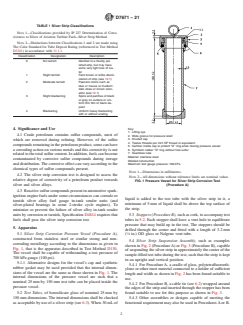
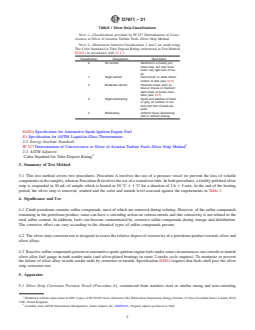
1.2 The result of the test is based on a visual rating that is classified as an integer in the range from 0 to 4 as defined in Table 1.
1.3 Warning—Mercury has been designated by many regulatory agencies as a hazardous substance that can cause serious medical issues. Mercury, or its vapor, has been demonstrated to be hazardous to health and corrosive to materials. Use caution when handling mercury and mercury-containing products. See the applicable product Safety Data Sheet (SDS) for additional information. The potential exists that selling mercury or mercury-containing products, or both, is prohibited by local or national law. Users must determine legality of sales in their location.
1.4 The values stated in SI units are to be regarded as the standard. The values in parentheses are for information only.
1.5 This standard does not purport to address all of the safety concerns, if any, associated with its use. It is the responsibility of the user of this standard to establish appropriate safety, health, and environmental practices and determine the applicability of regulatory limitations prior to use. For specific warning statements, see 6.1 and Section 7.
1.6 This international standard was developed in accordance with internationally recognized principles on standardization established in the Decision on Principles for the Development of International Standards, Guides and Recommendations issued by the World Trade Organization Technical Barriers to Trade (TBT) Committee.
- Status
- Published
- Publication Date
- 31-Oct-2021
- Technical Committee
- D02 - Petroleum Products, Liquid Fuels, and Lubricants
- Drafting Committee
- D02.05 - Properties of Fuels, Petroleum Coke and Carbon Material
Buy Documents
ASTM D7671-21 - Standard Test Method for Corrosiveness to Silver by Automotive Spark–Ignition Engine Fuel–Silver Strip Method
REDLINE ASTM D7671-21 - Standard Test Method for Corrosiveness to Silver by Automotive Spark–Ignition Engine Fuel–Silver Strip Method
Overview
ASTM D7671-21 is the internationally recognized standard test method for determining the corrosiveness to silver of automotive spark-ignition engine fuel through the Silver Strip Method. Developed by ASTM International, this standard provides a systematic approach for evaluating the presence and activity of corrosive sulfur compounds in gasoline and similar fuels. It is critical because certain sulfur compounds, even at low levels, can damage silver and silver alloys present in fuel systems, such as in-tank fuel gauge sender units and silver-plated bearings.
The test is essential for ensuring that fuels comply with performance requirements like those in ASTM Specification D4814 and similar standards, thereby helping to prevent equipment failure and extend component service life.
Key Topics
Corrosiveness Assessment: This method measures how automotive spark-ignition fuel corrodes silver or its alloys. The outcome is visually classified on a scale from 0 (no tarnish) to 4 (heavy blackening), indicating increasing levels of corrosion.
Test Procedures: The standard details two acceptable procedures for conducting the test:
- Procedure A: Utilizes a sealed pressure vessel to avoid the loss of volatile components.
- Procedure B: Uses a vented test tube, simpler but suitable mainly for less volatile samples.
Relevance of Sulfur Compounds: Although most sulfur content is removed during fuel refining, reactive sulfur species can remain or be introduced during storage and transport, leading to corrosion unrelated to total sulfur content.
Visual Rating System: The standard defines specific criteria for tarnish and corrosion via color comparisons, with reference to established color standards.
Sample Handling and Safety: Emphasizes proper sampling protocols and cautions regarding hazardous chemicals (e.g., mercury, isooctane). Handling of samples must prioritize safety and prevent contamination.
Applications
Fuel Quality Control: Used by fuel producers, distributors, and laboratories to verify that gasoline and similar fuels will not corrode important fuel system components made from silver or silver alloys.
Compliance with Specifications: Ensures fuels meet national and international product specifications (such as ASTM D4814), which often require passing the silver corrosion test to be considered suitable for use.
Protection of Equipment: Systematically mitigates the risk of premature failure in fuel gauge sender units and silver-plated components, common in both standard and high-performance automotive and certain two-stroke engines.
Research and Development: Supports fuel formulation studies, especially when introducing new additives or blending components, by providing a quantifiable means of assessing corrosion risk.
Regulatory and Safety Assurance: Assists regulatory bodies and stakeholders in demonstrating compliance with environmental and safety regulations related to hazardous substances and fuel integrity.
Related Standards
- ASTM D130: Test Method for Corrosiveness to Copper from Petroleum Products by Copper Strip Test.
- ASTM D3241: Test Method for Thermal Oxidation Stability of Aviation Turbine Fuels.
- ASTM D4057: Practice for Manual Sampling of Petroleum and Petroleum Products.
- ASTM D4177: Practice for Automatic Sampling of Petroleum and Petroleum Products.
- ASTM D4814: Specification for Automotive Spark-Ignition Engine Fuel.
- IP 227: Energy Institute standard for the determination of corrosiveness to silver in aviation turbine fuels.
ASTM D7671-21 is a critical standard offering a reliable, internationally accepted methodology for fuel corrosivity testing. Routine use of this test protects engine components, supports fuel specification compliance, and upholds fuel system reliability in the automotive industry.
Relations
- Refers
ASTM D3241-24 - Standard Test Method for Thermal Oxidation Stability of Aviation Turbine Fuels - Effective Date
- 01-Mar-2024
- Effective Date
- 01-Jan-2024
- Effective Date
- 01-Dec-2023
- Refers
ASTM D3241-23a - Standard Test Method for Thermal Oxidation Stability of Aviation Turbine Fuels - Effective Date
- 01-Oct-2023
- Refers
ASTM D3241-23ae1 - Standard Test Method for Thermal Oxidation Stability of Aviation Turbine Fuels - Effective Date
- 01-Oct-2023
- Effective Date
- 01-Feb-2020
- Effective Date
- 01-Dec-2019
- Refers
ASTM D3241-19a - Standard Test Method for Thermal Oxidation Stability of Aviation Turbine Fuels - Effective Date
- 01-Aug-2019
- Effective Date
- 01-Oct-2018
- Effective Date
- 01-Apr-2018
- Effective Date
- 01-Jan-2018
- Refers
ASTM D3241-17 - Standard Test Method for Thermal Oxidation Stability of Aviation Turbine Fuels - Effective Date
- 01-Sep-2017
- Effective Date
- 15-Nov-2016
- Effective Date
- 15-Nov-2016
- Effective Date
- 15-Jul-2016
Buy Documents
ASTM D7671-21 - Standard Test Method for Corrosiveness to Silver by Automotive Spark–Ignition Engine Fuel–Silver Strip Method
REDLINE ASTM D7671-21 - Standard Test Method for Corrosiveness to Silver by Automotive Spark–Ignition Engine Fuel–Silver Strip Method
Get Certified
Connect with accredited certification bodies for this standard

Element Materials Technology
Materials testing and product certification.

ABS Group Brazil
ABS Group certification services in Brazil.

ABS Quality Evaluations Inc.
American Bureau of Shipping quality certification.
Sponsored listings
Frequently Asked Questions
ASTM D7671-21 is a standard published by ASTM International. Its full title is "Standard Test Method for Corrosiveness to Silver by Automotive Spark–Ignition Engine Fuel–Silver Strip Method". This standard covers: SIGNIFICANCE AND USE 4.1 Crude petroleum contains sulfur compounds, most of which are removed during refining. However, of the sulfur compounds remaining in the petroleum product, some can have a corroding action on various metals and this corrosivity is not related to the total sulfur content. In addition, fuels can become contaminated by corrosive sulfur compounds during storage and distribution. The corrosive effect can vary according to the chemical types of sulfur compounds present. 4.2 The silver strip corrosion test is designed to assess the relative degree of corrosivity of a petroleum product towards silver and silver alloys. 4.3 Reactive sulfur compounds present in automotive spark-ignition engine fuels under some circumstances can corrode or tarnish silver alloy fuel gauge in-tank sender units (and silver-plated bearings in some 2-stroke cycle engines). To minimize or prevent the failure of silver alloy in-tank sender units by corrosion or tarnish, Specification D4814 requires that fuels shall pass the silver strip corrosion test. SCOPE 1.1 This test method covers the determination of the corrosiveness to silver by automotive spark-ignition engine fuel, as defined by Specification D4814, or similar specifications in other jurisdictions, having a vapor pressure no greater than 124 kPa (18 psi) at 37.8 °C (100 °F), by one of two procedures. Procedure A involves the use of a pressure vessel, whereas Procedure B involves the use of a vented test tube. 1.2 The result of the test is based on a visual rating that is classified as an integer in the range from 0 to 4 as defined in Table 1. 1.3 Warning—Mercury has been designated by many regulatory agencies as a hazardous substance that can cause serious medical issues. Mercury, or its vapor, has been demonstrated to be hazardous to health and corrosive to materials. Use caution when handling mercury and mercury-containing products. See the applicable product Safety Data Sheet (SDS) for additional information. The potential exists that selling mercury or mercury-containing products, or both, is prohibited by local or national law. Users must determine legality of sales in their location. 1.4 The values stated in SI units are to be regarded as the standard. The values in parentheses are for information only. 1.5 This standard does not purport to address all of the safety concerns, if any, associated with its use. It is the responsibility of the user of this standard to establish appropriate safety, health, and environmental practices and determine the applicability of regulatory limitations prior to use. For specific warning statements, see 6.1 and Section 7. 1.6 This international standard was developed in accordance with internationally recognized principles on standardization established in the Decision on Principles for the Development of International Standards, Guides and Recommendations issued by the World Trade Organization Technical Barriers to Trade (TBT) Committee.
SIGNIFICANCE AND USE 4.1 Crude petroleum contains sulfur compounds, most of which are removed during refining. However, of the sulfur compounds remaining in the petroleum product, some can have a corroding action on various metals and this corrosivity is not related to the total sulfur content. In addition, fuels can become contaminated by corrosive sulfur compounds during storage and distribution. The corrosive effect can vary according to the chemical types of sulfur compounds present. 4.2 The silver strip corrosion test is designed to assess the relative degree of corrosivity of a petroleum product towards silver and silver alloys. 4.3 Reactive sulfur compounds present in automotive spark-ignition engine fuels under some circumstances can corrode or tarnish silver alloy fuel gauge in-tank sender units (and silver-plated bearings in some 2-stroke cycle engines). To minimize or prevent the failure of silver alloy in-tank sender units by corrosion or tarnish, Specification D4814 requires that fuels shall pass the silver strip corrosion test. SCOPE 1.1 This test method covers the determination of the corrosiveness to silver by automotive spark-ignition engine fuel, as defined by Specification D4814, or similar specifications in other jurisdictions, having a vapor pressure no greater than 124 kPa (18 psi) at 37.8 °C (100 °F), by one of two procedures. Procedure A involves the use of a pressure vessel, whereas Procedure B involves the use of a vented test tube. 1.2 The result of the test is based on a visual rating that is classified as an integer in the range from 0 to 4 as defined in Table 1. 1.3 Warning—Mercury has been designated by many regulatory agencies as a hazardous substance that can cause serious medical issues. Mercury, or its vapor, has been demonstrated to be hazardous to health and corrosive to materials. Use caution when handling mercury and mercury-containing products. See the applicable product Safety Data Sheet (SDS) for additional information. The potential exists that selling mercury or mercury-containing products, or both, is prohibited by local or national law. Users must determine legality of sales in their location. 1.4 The values stated in SI units are to be regarded as the standard. The values in parentheses are for information only. 1.5 This standard does not purport to address all of the safety concerns, if any, associated with its use. It is the responsibility of the user of this standard to establish appropriate safety, health, and environmental practices and determine the applicability of regulatory limitations prior to use. For specific warning statements, see 6.1 and Section 7. 1.6 This international standard was developed in accordance with internationally recognized principles on standardization established in the Decision on Principles for the Development of International Standards, Guides and Recommendations issued by the World Trade Organization Technical Barriers to Trade (TBT) Committee.
ASTM D7671-21 is classified under the following ICS (International Classification for Standards) categories: 75.160.20 - Liquid fuels. The ICS classification helps identify the subject area and facilitates finding related standards.
ASTM D7671-21 has the following relationships with other standards: It is inter standard links to ASTM D3241-24, ASTM D4814-24, ASTM D4814-23a, ASTM D3241-23a, ASTM D3241-23ae1, ASTM D4814-20, ASTM D4814-19a, ASTM D3241-19a, ASTM D4814-18c, ASTM D4814-18a, ASTM D4814-18, ASTM D3241-17, ASTM D4814-16ee1, ASTM D4814-16e, ASTM D4814-16d. Understanding these relationships helps ensure you are using the most current and applicable version of the standard.
ASTM D7671-21 is available in PDF format for immediate download after purchase. The document can be added to your cart and obtained through the secure checkout process. Digital delivery ensures instant access to the complete standard document.
Standards Content (Sample)
This international standard was developed in accordance with internationally recognized principles on standardization established in the Decision on Principles for the
Development of International Standards, Guides and Recommendations issued by the World Trade Organization Technical Barriers to Trade (TBT) Committee.
Designation: D7671 − 21
Standard Test Method for
Corrosiveness to Silver by Automotive Spark–Ignition
Engine Fuel–Silver Strip Method
This standard is issued under the fixed designation D7671; the number immediately following the designation indicates the year of
original adoption or, in the case of revision, the year of last revision.Anumber in parentheses indicates the year of last reapproval.A
superscript epsilon (´) indicates an editorial change since the last revision or reapproval.
1. Scope* mendations issued by the World Trade Organization Technical
Barriers to Trade (TBT) Committee.
1.1 This test method covers the determination of the corro-
siveness to silver by automotive spark-ignition engine fuel, as
2. Referenced Documents
defined by Specification D4814, or similar specifications in
other jurisdictions, having a vapor pressure no greater than 2.1 ASTM Standards:
D130Test Method for Corrosiveness to Copper from Petro-
124kPa(18psi)at37.8°C(100°F),byoneoftwoprocedures.
Procedure A involves the use of a pressure vessel, whereas leum Products by Copper Strip Test
D3241Test Method for Thermal Oxidation Stability of
Procedure B involves the use of a vented test tube.
Aviation Turbine Fuels
1.2 The result of the test is based on a visual rating that is
D4057Practice for Manual Sampling of Petroleum and
classified as an integer in the range from 0 to 4 as defined in
Petroleum Products
Table 1.
D4177Practice for Automatic Sampling of Petroleum and
1.3 Warning—Mercuryhasbeendesignatedbymanyregu-
Petroleum Products
latoryagenciesasahazardoussubstancethatcancauseserious
D4814Specification for Automotive Spark-Ignition Engine
medicalissues.Mercury,oritsvapor,hasbeendemonstratedto
Fuel
be hazardous to health and corrosive to materials. Use caution
E1Specification for ASTM Liquid-in-Glass Thermometers
when handling mercury and mercury-containing products. See
2.2 Energy Institute Standard:
the applicable product Safety Data Sheet (SDS) for additional
IP227Determination of Corrosiveness to Silver ofAviation
information. The potential exists that selling mercury or
Turbine Fuels–Silver Strip Method
mercury-containing products, or both, is prohibited by local or
2.3 ASTM Adjuncts:
national law. Users must determine legality of sales in their
Color Standard for Tube Deposit Rating
location.
1.4 The values stated in SI units are to be regarded as the
3. Summary of Test Method
standard. The values in parentheses are for information only.
3.1 This test method covers two procedures. Procedure A
1.5 This standard does not purport to address all of the
involves the use of a pressure vessel (to prevent the loss of
safety concerns, if any, associated with its use. It is the
volatile components in the sample), whereas Procedure B
responsibility of the user of this standard to establish appro-
involves the use of a vented test tube. In both procedures, a
priate safety, health, and environmental practices and deter-
freshly polished silver strip is suspended in 30mL of sample
mine the applicability of regulatory limitations prior to use.
whichisheatedto50°C 61°Cforadurationof3h 65min.
For specific warning statements, see 6.1 and Section 7.
At the end of the heating period, the silver strip is removed,
1.6 This international standard was developed in accor-
washed and the color and tarnish level assessed against the
dance with internationally recognized principles on standard-
requirements in Table 1.
ization established in the Decision on Principles for the
Development of International Standards, Guides and Recom-
For referenced ASTM standards, visit the ASTM website, www.astm.org, or
contact ASTM Customer Service at service@astm.org. For Annual Book of ASTM
This test method is under the jurisdiction of ASTM Committee D02 on Standards volume information, refer to the standard’s Document Summary page on
Petroleum Products, Liquid Fuels, and Lubricants and are the direct responsibility the ASTM website.
of Subcommittee D02.05 on Properties of Fuels, Petroleum Coke and Carbon Withdrawn without replacement in 2001. Copies of IP 227/99 can be obtained
Material. at The Publications Department, Energy Institute, 61 New Cavendish Street,
Current edition approved Nov. 1, 2021. Published December 2021. Originally London, W1G 7AR, United Kingdom.
approved in 2010. Last previous edition approved in 2021 as D7671–10 (2021). Available from ASTM International Headquarters. Order Adjunct No.
DOI: 10.1520/D7671-21. ADJD3241. Original adjunct produced in 1986.
*A Summary of Changes section appears at the end of this standard
Copyright © ASTM International, 100 Barr Harbor Drive, PO Box C700, West Conshohocken, PA 19428-2959. United States
D7671 − 21
TABLE 1 Silver Strip Classifications
NOTE 1—Classifications provided by IP 227 Determination of Corro-
siveness to Silver of Aviation Turbine Fuels–Silver Strip Method.
NOTE 2—Distinctions between Classifications 1 and 2 are made using
The Color Standard for Tube Deposit Rating (referenced in Test Method
D3241) in accordance with 11.1.1.
Classification Designation Description
0 No tarnish Identical to a freshly pol-
ished strip, but may have
some very light loss of lus-
ter
1 Slight tarnish Faint brown or white discol-
oration of strip (see 12.1)
2 Moderate tarnish Peacock colors such as
blue or mauve or medium/
dark straw or brown color-
ation (see 12.1)
3 Slight blackening Spots and patches of black
or gray on surface or uni-
form thin film of black de-
posit
4 Blackening Uniform heavy blackening
with or without scaling
4. Significance and Use Key:
1. Lifting eye
4.1 Crude petroleum contains sulfur compounds, most of
2. Wide groove for pressure relief
3. Knurled cap
which are removed during refining. However, of the sulfur
4. Twelve threads per inch NF thread or equivalent
compoundsremaininginthepetroleumproduct,somecanhave
5. Camber inside cap to protect “O” ring when closing pressure vessel
a corroding action on various metals and this corrosivity is not
6. Synthetic rubber “O” ring without free sulfur
7. Seamless tube
relatedtothetotalsulfurcontent.Inaddition,fuelscanbecome
Material: stainless steel
contaminated by corrosive sulfur compounds during storage
Welded construction
anddistribution.Thecorrosiveeffectcanvaryaccordingtothe
Maximum test gauge pressure: 700 kPa
chemical types of sulfur compounds present.
NOTE 1—Dimensions in millimetres.
4.2 The silver strip corrosion test is designed to assess the
NOTE 2—All dimensions without tolerance limits are nominal values.
relative degree of corrosivity of a petroleum product towards
FIG. 1 Pressure Vessel for Silver Strip Corrosion Test
silver and silver alloys. (Procedure A)
4.3 Reactivesulfurcompoundspresentinautomotivespark-
ignition engine fuels under some circumstances can corrode or
liquid is added to the test tube with the silver strip in it, a
tarnish silver alloy fuel gauge in-tank sender units (and
minimum of 5mm of liquid shall be above the top surface of
silver-plated bearings in some 2-stroke cycle engines). To
the strip.
minimize or prevent the failure of silver alloy in-tank sender
unitsbycorrosionortarnish,SpecificationD4814requiresthat
5.3 Stoppers(ProcedureB),suchascork,toaccompanytest
fuels shall pass the silver strip corrosion test.
tubes in 5.2. Each stopper shall have a vent hole to equilibrate
pressure that may build up in the test. The stoppers should be
5. Apparatus
drilled through the center and fitted with a length of 3.2mm
5.1 Silver Strip Corrosion Pressure Vessel (Procedure A), ( ⁄8in.) OD glass or Nalgene vent tube.
constructed from stainless steel or similar strong and non-
5.4 Silver Strip Suspension Assembly, such as examples
corroding metallurgy according to the dimensions as given in
showninFig.2(ProcedureA)orFig.3(ProcedureB),capable
Fig. 1, that is the apparatus described in Test Method D130.
ofsuspendingthesilverstripinapproximatelythecenterofthe
The vessel shall be capable of withstanding a test pressure of
sample-filledtesttubeduringthetest,suchthatthestripiskept
700kPa gauge (100psi).
in an upright and vertical position.
5.1.1 Alternative designs for the vessel’s cap and synthetic
5.4.1 For ProcedureA, a cradle of glass, polytetrafluoroeth-
rubber gasket may be used provided that the internal dimen-
ylene or other inert material connected to a holder of sufficient
sions of the vessel are the same as those shown in Fig. 1. The
length and width as shown in Fig. 2 has been found suitable to
internal dimensions of the pressure vessel are such that a
use.
nominal 25mm by 150mm test tube can be placed inside the
5.4.2 For Procedure B, a cable tie (see 6.2) wrapped around
pressure vessel.
theedgesofthestripandinsertedthroughthestopperhasbeen
5.2 Test Tubes, of borosilicate glass of nominal 25mm by found suitable to use for this purpose as shown in Fig. 3.
150mm dimensions.The internal dimensions shall be checked 5.4.3 Other assemblies or designs capable of meeting the
as acceptable by use of a silver strip (see 6.3).When 30mLof functional requirement may also be used in ProceduresAor B.
D7671 − 21
5.5 Test Bath:
5.5.1 General—The test baths shall be able to maintain the
test temperature to within 61°C (2°F) of the required test
temperature (normally 50ºC).
5.5.2 Liquid Bath Used for Submerging Pressure Vessel(s)
(Procedure A)—The bath shall be deep enough to submerge
one or more pressure vessels (see 5.1) completely during the
test. As the bath medium, use water or any liquid that can be
satisfactorily controlled to the sample test temperature. The
bath shall be fitted with suitable supports to hold each pressure
vesselinaverticalpositionwhensubmerged.Theuseofasolid
blockbathhasbeenfoundasasuitablealternativetotheliquid
bath.
5.5.3 Liquid Bath Used for Vented Test Tube Method (Pro-
cedure B)—The bath liquid level shall be at a level that is
higher than the liquid level in the test tube at the test
temperature. It is recommended that the bath be placed inside
an exhaust hood.
5.5.4 The use of a solid block bath has been found to be a
suitable alternative to the liquid bath.
5.6 Temperature Sensing Device (TSD),capableofmonitor-
ing the desired test temperature in the bath to within accuracy
of 61°C(2°F),measuredinthemiddleoftheliquidbath.The
ASTM 12C (12F) (see Specification E1) orASTM E2251 (see
Specification E1) or IP 64C (64F) total immersion thermom-
FIG. 2 Silver Strip Suspension Assembly (Procedure A)
eters have been found suitable for use in the test. If used, no
morethan10mm(0.4in.)ofthemercuryshouldextendabove
the surface of the bath at the test temperature.
5.7 PolishingVise,forholdingthesilverstripfirmlywithout
marring the edges while polishing. Any convenient type of
holder (see Appendix X1) may be used provided that the strip
isheldtightlyandthatthesurfaceofthestripbeingpolishedis
supported above the surface of the holder.
5.8 Viewing Test Tubes, (optional) flat glass test tubes, are
convenient for protecting corroded silver strips for close
inspection or storage (see Appendix X1 for the description of
a flat-glass viewing tube). The viewing test tube shall be of
such dimensions as to allow the introduction of a silver strip
(see 6.3) and made of glass free of striae or similar defects.
5.9 Forceps, with either stainless steel or polytetrafluoro-
ethylene tips, for use in handling the silver strips, have been
found suitable to use.
5.10 Timing Device, electronic or manual, capable of accu-
rately measuring the test duration within the allowable toler-
ance.
5.11 ASTM Silver Strip Corrosion Standards, consist of
reproductions in color of typical test strips representing in-
creasing degrees of tarnish and corrosion, the reproductions
beingencasedforprotectioninplasticandmadeupintheform
Key:
of a plaque. See Table 1.
1. Stopper
2. Vent tube 5.11.1 Keep the plastic-encased ASTM Silver Strip Corro-
3. Cable tie
sion Standards protected from light to avoid the possibility of
4. Silver strip
fading. Inspect for fading by comparing two different plaques,
5. Test tube
one of which has been carefully protected from light (for
FIG. 3 Silver Strip Suspension Assembly (Procedure B)
example, new plaque). Observe both sets in diffused daylight
(or equivalent) first from a point directly above and then from
D7671 − 21
an angle of 45°. If any evidence of fading is observed, suitable containers that will not affect the corrosive properties
particularly at the left-hand end of the plaque, it is suggested of the fuel.Avoid the use of tin plate containers for collection
that the one that is the more faded with respect to the other be of samples, since experience has shown that they may contrib-
discarded. ute to the corrosiveness of the sample.
5.11.1.1 Alternatively, place a suitably sized opaque strip
8.2 Collect samples and close the container immediately
(for example, 20mm ( ⁄4in.) black electrical tape) across the
aftertakingthesample.Adequateheadspaceinthecontaineris
top of the colored portion of the plaque when initially
necessary to provide room for possible thermal expansion
purchased. At intervals remove the opaque strip and observe.
during transport. It is recommended that volatile samples be
When there is any evidence of fading of the exposed portion,
filledbetween70%and80%ofthecontainer’scapacity.Take
the standards shall be replaced.
care during sampling to protect the samples from exposure to
5.11.2 The plaques are full-color reproductions of typical
direct sunlight or even diffused daylight.
strips.Theyhavebeenprintedonaluminumsheetsbya4-color
8.3 Test the sample as soon as practical after sampling. If
processandareencasedinplasticforprotection.Directionsfor
samplesarenottobetestedimmediately,storeinarefrigerator
their use are given on the reverse side of each plaque.
at
...
This document is not an ASTM standard and is intended only to provide the user of an ASTM standard an indication of what changes have been made to the previous version. Because
it may not be technically possible to adequately depict all changes accurately, ASTM recommends that users consult prior editions as appropriate. In all cases only the current version
of the standard as published by ASTM is to be considered the official document.
Designation: D7671 − 10 (Reapproved 2021) D7671 − 21
Standard Test Method for
Corrosiveness to Silver by Automotive Spark–Ignition
Engine Fuel–Silver Strip Method
This standard is issued under the fixed designation D7671; the number immediately following the designation indicates the year of
original adoption or, in the case of revision, the year of last revision. A number in parentheses indicates the year of last reapproval. A
superscript epsilon (´) indicates an editorial change since the last revision or reapproval.
1. Scope Scope*
1.1 This test method covers the determination of the corrosiveness to silver by automotive spark-ignition engine fuel, as defined
by Specification D4814, or similar specifications in other jurisdictions, having a vapor pressure no greater than 124 kPa (18 psi)
at 37.8 °C (100 °F), by one of two procedures. Procedure A involves the use of a pressure vessel, whereas Procedure B involves
the use of a vented test tube.
1.2 The result of the test is based on a visual rating that is classified as an integer in the range from 0 to 4 as defined in Table
1.
1.3 Warning—Mercury has been designated by many regulatory agencies as a hazardous substance that can cause serious medical
issues. Mercury, or its vapor, has been demonstrated to be hazardous to health and corrosive to materials. Use caution when
handling mercury and mercury-containing products. See the applicable product Safety Data Sheet (SDS) for additional
information. The potential exists that selling mercury or mercury-containing products, or both, is prohibited by local or national
law. Users must determine legality of sales in their location.
1.4 The values stated in SI units are to be regarded as the standard. The values in parentheses are for information only.
1.5 This standard does not purport to address all of the safety concerns, if any, associated with its use. It is the responsibility
of the user of this standard to establish appropriate safety, health, and environmental practices and determine the applicability of
regulatory limitations prior to use. For specific warning statements, see 6.1 and Section 7.
1.6 This international standard was developed in accordance with internationally recognized principles on standardization
established in the Decision on Principles for the Development of International Standards, Guides and Recommendations issued
by the World Trade Organization Technical Barriers to Trade (TBT) Committee.
2. Referenced Documents
2.1 ASTM Standards:
D130 Test Method for Corrosiveness to Copper from Petroleum Products by Copper Strip Test
D3241 Test Method for Thermal Oxidation Stability of Aviation Turbine Fuels
D4057 Practice for Manual Sampling of Petroleum and Petroleum Products
D4177 Practice for Automatic Sampling of Petroleum and Petroleum Products
This test method is under the jurisdiction of ASTM Committee D02 on Petroleum Products, Liquid Fuels, and Lubricants and are the direct responsibility of
Subcommittee D02.05 on Properties of Fuels, Petroleum Coke and Carbon Material.
Current edition approved Jan. 1, 2021Nov. 1, 2021. Published February 2021December 2021. Originally approved in 2010. Last previous edition approved in 20152021
as D7671 – 10 (2015).(2021). DOI: 10.1520/D7671-10R21.10.1520/D7671-21.
For referenced ASTM standards, visit the ASTM website, www.astm.org, or contact ASTM Customer Service at service@astm.org. For Annual Book of ASTM Standards
volume information, refer to the standard’s Document Summary page on the ASTM website.
*A Summary of Changes section appears at the end of this standard
Copyright © ASTM International, 100 Barr Harbor Drive, PO Box C700, West Conshohocken, PA 19428-2959. United States
D7671 − 21
TABLE 1 Silver Strip Classifications
NOTE 1—Classifications provided by IP 227 Determination of Corro-
siveness to Silver of Aviation Turbine Fuels–Silver Strip Method.
NOTE 2—Distinctions between Classifications 1 and 2 are made using
The Color Standard for Tube Deposit Rating (referenced in Test Method
D3241) in accordance with 11.1.1.
Classification Designation Description
0 No tarnish Identical to a freshly pol-
ished strip, but may have
some very light loss of lus-
ter
1 Slight tarnish Faint brown or white discol-
oration of strip (see 12.1)
2 Moderate tarnish Peacock colors such as
blue or mauve or medium/
dark straw or brown color-
ation (see 12.1)
3 Slight blackening Spots and patches of black
or gray on surface or uni-
form thin film of black de-
posit
4 Blackening Uniform heavy blackening
with or without scaling
D4814 Specification for Automotive Spark-Ignition Engine Fuel
E1 Specification for ASTM Liquid-in-Glass Thermometers
2.2 Energy Institute Standard:
IP 227 Determination of Corrosiveness to Silver of Aviation Turbine Fuels–Silver Strip Method
2.3 ASTM Adjuncts:
Color Standard for Tube Deposit Rating
3. Summary of Test Method
3.1 This test method covers two procedures. Procedure A involves the use of a pressure vessel (to prevent the loss of volatile
components in the sample), whereas Procedure B involves the use of a vented test tube. In both procedures, a freshly polished silver
strip is suspended in 30 mL of sample which is heated to 50 °C 6 1 °C for a duration of 3 h 6 5 min. At the end of the heating
period, the silver strip is removed, washed and the color and tarnish level assessed against the requirements in Table 1.
4. Significance and Use
4.1 Crude petroleum contains sulfur compounds, most of which are removed during refining. However, of the sulfur compounds
remaining in the petroleum product, some can have a corroding action on various metals and this corrosivity is not related to the
total sulfur content. In addition, fuels can become contaminated by corrosive sulfur compounds during storage and distribution.
The corrosive effect can vary according to the chemical types of sulfur compounds present.
4.2 The silver strip corrosion test is designed to assess the relative degree of corrosivity of a petroleum product towards silver and
silver alloys.
4.3 Reactive sulfur compounds present in automotive spark-ignition engine fuels under some circumstances can corrode or tarnish
silver alloy fuel gauge in-tank sender units (and silver-plated bearings in some 2-stroke cycle engines). To minimize or prevent
the failure of silver alloy in-tank sender units by corrosion or tarnish, Specification D4814 requires that fuels shall pass the silver
strip corrosion test.
5. Apparatus
5.1 Silver Strip Corrosion Pressure Vessel (Procedure A), constructed from stainless steel or similar strong and non-corroding
Withdrawn without replacement in 2001. Copies of IP 227/99 can be obtained at The Publications Department, Energy Institute, 61 New Cavendish Street, London, W1G
7AR, United Kingdom.
Available from ASTM International Headquarters. Order Adjunct No. ADJD3241. Original adjunct produced in 1986.
D7671 − 21
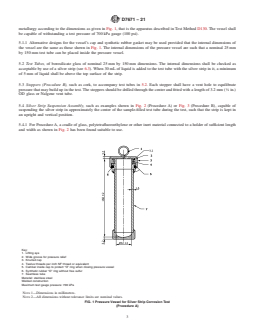
metallurgy according to the dimensions as given in Fig. 1, that is the apparatus described in Test Method D130. The vessel shall
be capable of withstanding a test pressure of 700 kPa gauge (100 psi).
5.1.1 Alternative designs for the vessel’s cap and synthetic rubber gasket may be used provided that the internal dimensions of
the vessel are the same as those shown in Fig. 1. The internal dimensions of the pressure vessel are such that a nominal 25 mm
by 150 mm test tube can be placed inside the pressure vessel.
5.2 Test Tubes, of borosilicate glass of nominal 25 mm by 150 mm dimensions. The internal dimensions shall be checked as
acceptable by use of a silver strip (see 6.3). When 30 mL of liquid is added to the test tube with the silver strip in it, a minimum
of 5 mm of liquid shall be above the top surface of the strip.
5.3 Stoppers (Procedure B), such as cork, to accompany test tubes in 5.2. Each stopper shall have a vent hole to equilibrate
pressure that may build up in the test. The stoppers should be drilled through the center and fitted with a length of 3.2 mm ( ⁄8 in.)
OD glass or Nalgene vent tube.
5.4 Silver Strip Suspension Assembly, such as examples shown in Fig. 2 (Procedure A) or Fig. 3 (Procedure B), capable of
suspending the silver strip in approximately the center of the sample-filled test tube during the test, such that the strip is kept in
an upright and vertical position.
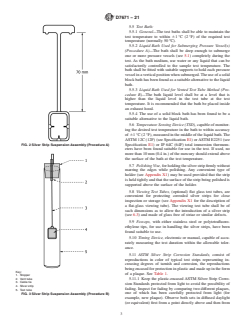
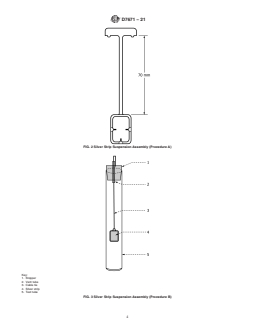
5.4.1 For Procedure A, a cradle of glass, polytetrafluoroethylene or other inert material connected to a holder of sufficient length
and width as shown in Fig. 2 has been found suitable to use.
Key:
1. Lifting eye
2. Wide groove for pressure relief
3. Knurled cap
4. Twelve threads per inch NF thread or equivalent
5. Camber inside cap to protect “O” ring when closing pressure vessel
6. Synthetic rubber “O” ring without free sulfur
7. Seamless tube
Material: stainless steel
Welded construction
Maximum test gauge pressure: 700 kPa
NOTE 1—Dimensions in millimetres.
NOTE 2—All dimensions without tolerance limits are nominal values.
FIG. 1 Pressure Vessel for Silver Strip Corrosion Test
(Procedure A)
D7671 − 21
FIG. 2 Silver Strip Suspension Assembly (Procedure A)
Key:
1. Stopper
2. Vent tube
3. Cable tie
4. Silver strip
5. Test tube
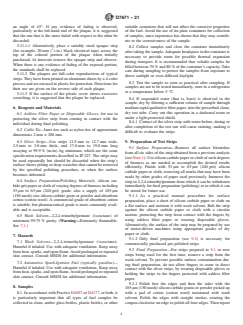
FIG. 3 Silver Strip Suspension Assembly (Procedure B)
D7671 − 21
5.4.2 For Procedure B, a cable tie (see 6.2) wrapped around the edges of the strip and inserted through the stopper has been found
suitable to use for this purpose as shown in Fig. 3.
5.4.3 Other assemblies or designs capable of meeting the functional requirement may also be used in Procedures A or B.
5.5 Test Bath:
5.5.1 General—The test baths shall be able to maintain the test temperature to within 61 °C (2 °F) of the required test temperature
(normally 50 ºC).
5.5.2 Liquid Bath Used for Submerging Pressure Vessel(s) (Procedure A)—The bath shall be deep enough to submerge one or more
pressure vessels (see 5.1) completely during the test. As the bath medium, use water or any liquid that can be satisfactorily
controlled to the sample test temperature. The bath shall be fitted with suitable supports to hold each pressure vessel in a vertical
position when submerged. The use of a solid block bath has been found as a suitable alternative to the liquid bath.
5.5.3 Liquid Bath Used for Vented Test Tube Method (Procedure B)—The bath liquid level shall be at a level that is higher than
the liquid level in the test tube at the test temperature. It is recommended that the bath be placed inside an exhaust hood.
5.5.4 The use of a solid block bath has been found to be a suitable alternative to the liquid bath.
5.6 Temperature Sensing Device (TSD), capable of monitoring the desired test temperature in the bath to within accuracy of 61 °C
(2 °F), measured in the middle of the liquid bath. The ASTM 12C (12F) (see Specification E1) or ASTM E2251 (see Specification
E1) or IP 64C (64F) total immersion thermometers have been found suitable for use in the test. If used, no more than 10 mm
(0.4 in.) of the mercury should extend above the surface of the bath at the test temperature.
5.7 Polishing Vise, for holding the silver strip firmly without marring the edges while polishing. Any convenient type of holder
(see Appendix X1) may be used provided that the strip is held tightly and that the surface of the strip being polished is supported
above the surface of the holder.
5.8 Viewing Test Tubes, (optional) flat glass test tubes, are convenient for protecting corroded silver strips for close inspection or
storage (see Appendix X1 for the description of a flat-glass viewing tube). The viewing test tube shall be of such dimensions as
to allow the introduction of a silver strip (see 6.3) and made of glass free of striae or similar defects.
5.9 Forceps, with either stainless steel or polytetrafluoroethylene tips, for use in handling the silver strips, have been found suitable
to use.
5.10 Timing Device, electronic or manual, capable of accurately measuring the test duration within the allowable tolerance.
5.11 ASTM Silver Strip Corrosion Standards, consist of reproductions in color of typical test strips representing increasing degrees
of tarnish and corrosion, the reproductions being encased for protection in plastic and made up in the form of a plaque. See Table
1.
5.11.1 Keep the plastic-encased ASTM Silver Strip Corrosion Standards protected from light to avoid the possibility of fading.
Inspect for fading by comparing two different plaques, one of which has been carefully protected from light (for example, new
plaque). Observe both sets in diffused daylight (or equivalent) first from a point directly above and then from an angle of 45°. If
any evidence of fading is observed, particularly at the left-hand end of the plaque, it is suggested that the one that is the more faded
with respect to the other be discarded.
5.11.1.1 Alternatively, place a suitably sized opaque strip (for example, 20 mm ( ⁄4 in.) black electrical tape) across the top of the
colored portion of the plaque when initially purchased. At intervals remove the opaque strip and observe. When there is any
evidence of fading of the exposed portion, the standards shall be replaced.
5.11.2 The plaques are full-color reproductions of typical strips. They have been printed on aluminum sheets by a 4-color process
and are encased in plastic for protection. Directions for their use are given on the reverse side of each plaque.
D7671 − 21
5.11.3 If the surface of the plastic cover shows excessive scratching, it is suggested that the plaque be replaced.
6. Reagents and Materials
6.1 Ashless Filter Paper or Disposable Gloves, for use in protecting the silver strip from coming in contact with the individual
during final polishing.
6.2 Cable Tie—Inert ties such as nylon ties of approximate dimensions 2 mm × 208 mm.
6.3 Silver Strips—Use strips 12.5 mm to 12.7 mm wide, 2.5 mm to 3.0 mm thick, and 17.0 mm to 19.0 mm long assaying at
99.9 % (m ⁄m) Ag minimum, which are the same specification requirements described in IP 227. The strips may be used repeatedly
but shou
...