

ASTM E1708-20
(Practice)Standard Practice for Electronic Interchange of Color and Appearance Data
General Information
- Abstract
SIGNIFICANCE AND USE
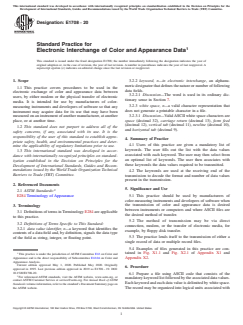
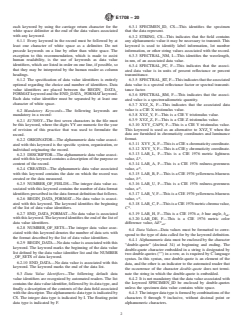
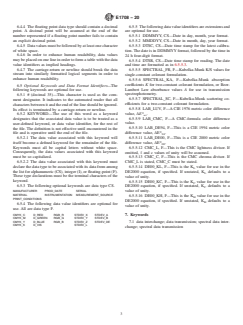
5.1 This practice should be used by manufacturers of color-measuring instruments and developers of software when the transmission of color and appearance data is desired between instruments or computers and where ASCII files are the desired method of transfer.
5.2 The method of transmission may be via direct connection, modem, or the transfer of electronic media, for example, by floppy disk transfer.
5.3 The practice lends itself to the transmission of either a single record of data or multiple record files.
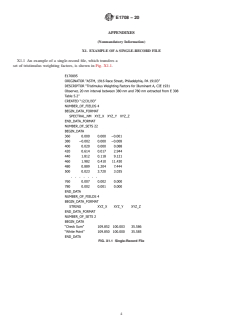
5.4 Examples of files generated in this practice are contained in Fig. X1.1 and Fig. X2.1 of Appendix X1 and Appendix X2.
SCOPE
1.1 This practice covers procedures to be used in the electronic exchange of color and appearance data between users, by either modem or the physical transfer of electronic media. It is intended for use by manufacturers of color-measuring instruments and developers of software so that any instrument may acquire data for its use that may have been measured on an instrument of another manufacturer, at another place, or at another time.
1.2 This standard does not purport to address all of the safety concerns, if any, associated with its use. It is the responsibility of the user of this standard to establish appropriate safety, health, and environmental practices and determine the applicability of regulatory limitations prior to use.
1.3 This international standard was developed in accordance with internationally recognized principles on standardization established in the Decision on Principles for the Development of International Standards, Guides and Recommendations issued by the World Trade Organization Technical Barriers to Trade (TBT) Committee.
- Status
- Published
- Publication Date
- 30-Apr-2020
- Technical Committee
- E12 - Color and Appearance
- Drafting Committee
- E12.04 - Color and Appearance Analysis
Overview
ASTM E1708-20 is the Standard Practice for Electronic Interchange of Color and Appearance Data, developed by ASTM International. This standard specifies recommended procedures for electronically exchanging color and appearance data between users, particularly among manufacturers of color-measuring instruments and software developers. ASTM E1708-20 facilitates seamless data interoperability across instruments or systems from different manufacturers, in various locations, or at different times, through the use of structured ASCII file formats. Its methods are flexible in terms of transmission, supporting direct device connection, modem transfer, or portable electronic media.
Key Topics
ASCII-based Data Exchange: The standard prescribes the creation and use of ASCII files for exchanging color and appearance measurement data, ensuring broad compatibility and readability across platforms and devices.
Structured Keywords: A mandatory keyword system provides a consistent framework for data records, enabling both automated systems and human users to interpret color data without ambiguity.
Transmission Methods: Color and appearance data can be transmitted via direct connection, modem, or physical media (such as a USB drive), depending on operational requirements.
Interoperability: ASTM E1708-20 enables instruments and software from different manufacturers to share and utilize color and appearance data, reducing data silos and enhancing process efficiency.
Support for Single and Multiple Records: The practice supports the transmission of both single-record and multi-record data files, making it adaptable for complex measurement scenarios.
Optional Keywords and Extended Formats: Beyond the required keywords and data fields, the standard allows for optional extensions, supporting a wide variety of data types relevant to specific industry needs.
Applications
ASTM E1708-20 is widely applicable in industries that require precise color matching, appearance analysis, and quality assurance. Practical applications include:
- Manufacturing: Enables color consistency across product batches when components are measured or produced at different facilities.
- Quality Control: Facilitates the electronic transfer of spectrophotometric data or color measurements between laboratories, production facilities, and suppliers.
- Software Development: Assists software developers in implementing standardized data import/export functions for color measurement solutions, supporting greater integration with third-party instruments.
- Research and Development: Allows researchers and engineers to share spectral and appearance data between different tools, aiding collaborative innovation.
- Printing and Textile: Streamlines communication of color formulations, recipes, and appearance data in the supply chain for print and textile operations.
Related Standards
- ASTM E284 - Terminology of Appearance: Provides definitions for key terms related to appearance measurement, referenced within ASTM E1708-20.
- Color Data Interchange Standards: Other related standards may include those specifying color measurement methods, such as for reflectance or transmittance, as well as file format specifications for industrial data exchange.
- WTO TBT Principles: ASTM E1708-20 is developed following internationally recognized principles for standardization, supporting global trade and interoperability.
Practical Value
By implementing ASTM E1708-20, organizations benefit from:
- Greater Data Consistency: Structured, keyword-based file formats reduce interpretation errors and support repeatable quality assurance processes.
- Enhanced Compatibility: Supports cross-instrument and cross-software data exchange, essential for multinational companies and distributed workflows.
- Efficient Data Workflows: Streamlines the transfer, storage, and processing of color and appearance data, saving time and reducing manual work.
- Scalability: The standard's support for both simple and complex data sets enables it to scale with evolving measurement technologies and business needs.
Keywords: ASTM E1708-20, color data exchange, electronic appearance data, color measurement, ASCII data format, interoperability, quality control, spectrophotometric data, data interchange standard, color consistency.
Relations
- Effective Date
- 01-May-2020
- Effective Date
- 01-Nov-2013
- Effective Date
- 01-Jun-2013
- Effective Date
- 01-Jan-2013
- Effective Date
- 01-Jul-2012
- Effective Date
- 01-Jun-2009
- Effective Date
- 01-Jan-2009
- Effective Date
- 01-Aug-2008
- Effective Date
- 15-Jul-2007
- Effective Date
- 01-Dec-2006
- Effective Date
- 15-Jul-2006
- Effective Date
- 15-Feb-2006
- Effective Date
- 15-Jun-2005
- Effective Date
- 01-Feb-2005
- Effective Date
- 01-Jun-2004
Get Certified
Connect with accredited certification bodies for this standard

BSMI (Bureau of Standards, Metrology and Inspection)
Taiwan's standards and inspection authority.
Sponsored listings
Frequently Asked Questions
ASTM E1708-20 is a standard published by ASTM International. Its full title is "Standard Practice for Electronic Interchange of Color and Appearance Data". This standard covers: SIGNIFICANCE AND USE 5.1 This practice should be used by manufacturers of color-measuring instruments and developers of software when the transmission of color and appearance data is desired between instruments or computers and where ASCII files are the desired method of transfer. 5.2 The method of transmission may be via direct connection, modem, or the transfer of electronic media, for example, by floppy disk transfer. 5.3 The practice lends itself to the transmission of either a single record of data or multiple record files. 5.4 Examples of files generated in this practice are contained in Fig. X1.1 and Fig. X2.1 of Appendix X1 and Appendix X2. SCOPE 1.1 This practice covers procedures to be used in the electronic exchange of color and appearance data between users, by either modem or the physical transfer of electronic media. It is intended for use by manufacturers of color-measuring instruments and developers of software so that any instrument may acquire data for its use that may have been measured on an instrument of another manufacturer, at another place, or at another time. 1.2 This standard does not purport to address all of the safety concerns, if any, associated with its use. It is the responsibility of the user of this standard to establish appropriate safety, health, and environmental practices and determine the applicability of regulatory limitations prior to use. 1.3 This international standard was developed in accordance with internationally recognized principles on standardization established in the Decision on Principles for the Development of International Standards, Guides and Recommendations issued by the World Trade Organization Technical Barriers to Trade (TBT) Committee.
SIGNIFICANCE AND USE 5.1 This practice should be used by manufacturers of color-measuring instruments and developers of software when the transmission of color and appearance data is desired between instruments or computers and where ASCII files are the desired method of transfer. 5.2 The method of transmission may be via direct connection, modem, or the transfer of electronic media, for example, by floppy disk transfer. 5.3 The practice lends itself to the transmission of either a single record of data or multiple record files. 5.4 Examples of files generated in this practice are contained in Fig. X1.1 and Fig. X2.1 of Appendix X1 and Appendix X2. SCOPE 1.1 This practice covers procedures to be used in the electronic exchange of color and appearance data between users, by either modem or the physical transfer of electronic media. It is intended for use by manufacturers of color-measuring instruments and developers of software so that any instrument may acquire data for its use that may have been measured on an instrument of another manufacturer, at another place, or at another time. 1.2 This standard does not purport to address all of the safety concerns, if any, associated with its use. It is the responsibility of the user of this standard to establish appropriate safety, health, and environmental practices and determine the applicability of regulatory limitations prior to use. 1.3 This international standard was developed in accordance with internationally recognized principles on standardization established in the Decision on Principles for the Development of International Standards, Guides and Recommendations issued by the World Trade Organization Technical Barriers to Trade (TBT) Committee.
ASTM E1708-20 is classified under the following ICS (International Classification for Standards) categories: 17.180.20 - Colours and measurement of light. The ICS classification helps identify the subject area and facilitates finding related standards.
ASTM E1708-20 has the following relationships with other standards: It is inter standard links to ASTM E1708-19, ASTM E284-13b, ASTM E284-13a, ASTM E284-13, ASTM E284-12, ASTM E284-09a, ASTM E284-09, ASTM E284-08, ASTM E284-07, ASTM E284-06b, ASTM E284-06a, ASTM E284-06, ASTM E284-05a, ASTM E284-05, ASTM E284-04. Understanding these relationships helps ensure you are using the most current and applicable version of the standard.
ASTM E1708-20 is available in PDF format for immediate download after purchase. The document can be added to your cart and obtained through the secure checkout process. Digital delivery ensures instant access to the complete standard document.
Standards Content (Sample)
This international standard was developed in accordance with internationally recognized principles on standardization established in the Decision on Principles for the
Development of International Standards, Guides and Recommendations issued by the World Trade Organization Technical Barriers to Trade (TBT) Committee.
Designation: E1708 − 20
Standard Practice for
Electronic Interchange of Color and Appearance Data
This standard is issued under the fixed designation E1708; the number immediately following the designation indicates the year of
original adoption or, in the case of revision, the year of last revision. A number in parentheses indicates the year of last reapproval. A
superscript epsilon (´) indicates an editorial change since the last revision or reapproval.
1. Scope 3.2.2 keyword, n—in electronic interchange, an alphanu-
mericdesignatorthatdefinesthenatureornumberoffollowing
1.1 This practice covers procedures to be used in the
data fields.
electronic exchange of color and appearance data between
3.2.2.1 Discussion—The word is used in its ordinary dic-
users, by either modem or the physical transfer of electronic
tionary sense in Section 7.
media. It is intended for use by manufacturers of color-
3.2.3 white space, n—a valid character representation that
measuring instruments and developers of software so that any
does not generate a printable character in a file.
instrument may acquire data for its use that may have been
3.2.3.1 Discussion—ValidASCII white space characters are
measured on an instrument of another manufacturer, at another
space (decimal 32), carriage return (decimal 13), form feed
place, or at another time.
(decimal 12), vertical tab (decimal 11), newline (decimal 10),
1.2 This standard does not purport to address all of the
and horizontal tab (decimal 9).
safety concerns, if any, associated with its use. It is the
responsibility of the user of this standard to establish appro-
4. Summary of Practice
priate safety, health, and environmental practices and deter-
4.1 Users of this practice are given a mandatory list of
mine the applicability of regulatory limitations prior to use.
keywords. The user fills out the list with the data values
1.3 This international standard was developed in accor-
associated with each keyword. The user may then select from
dance with internationally recognized principles on standard-
an optional list of keywords. The user then associates with
ization established in the Decision on Principles for the
these keywords the data values required to be transmitted.
Development of International Standards, Guides and Recom-
mendations issued by the World Trade Organization Technical
4.2 The keywords are used at the receiving end of the
Barriers to Trade (TBT) Committee.
transmission to decode the format and number of data values
present in the transmission.
2. Referenced Documents
2 5. Significance and Use
2.1 ASTM Standards:
5.1 This practice should be used by manufacturers of
E284 Terminology of Appearance
color-measuring instruments and developers of software when
the transmission of color and appearance data is desired
3. Terminology
between instruments or computers and where ASCII files are
3.1 DefinitionsoftermsinTerminologyE284areapplicable
the desired method of transfer.
to this practice.
5.2 The method of transmission may be via direct
3.2 Definitions of Terms Specific to This Standard:
connection, modem, or the transfer of electronic media, for
3.2.1 data value identifier, n—a keyword that identifies the
example, by floppy disk transfer.
contents of a data field and, by definition, signals the data type
5.3 The practice lends itself to the transmission of either a
of the field as string, integer, or floating point.
single record of data or multiple record files.
5.4 Examples of files generated in this practice are con-
1 tained in Fig. X1.1 and Fig. X2.1 of Appendix X1 and
This practice is under the jurisdiction of ASTM Committee E12 on Color and
Appearance and is the direct responsibility of Subcommittee E12.04 on Color and
Appendix X2.
Appearance Analysis.
Current edition approved May 1, 2020. Published May 2020. Originally
6. Procedure
approved in 1995. Last previous edition approved in 2019 as E1708 – 19. DOI:
10.1520/E1708-20.
6.1 Prepare a file using ASCII code that consists of the
For referenced ASTM standards, visit the ASTM website, www.astm.org, or
mandatorykeywordlistfollowedbytheassociateddatavalues.
contact ASTM Customer Service at service@astm.org. For Annual Book of ASTM
Each keyword and each data value is delimited by white space.
Standards volume information, refer to the standard’s Document Summary page on
the ASTM website. The record may be organized into logical units associated with
Copyright © ASTM International, 100 Barr Harbor Drive, PO Box C700, West Conshohocken, PA 19428-2959. United States
E1708 − 20
each keyword by using the carriage return character for the 6.3.1 SPECIMEN_ID, CS—This identifies the specimen
white space delimiter at the end of the data values associated that the data represent.
with any keyword.
6.3.2 STRING, CS—This indicates that the field contains
any alphanumeric value it may be necessary to transmit. This
6.1.1 Every keyword in the record must be followed by at
least one character of white space as a delimiter. Do not keyword is used to identify label information, lot number
information, or other string values associated with the record.
precede keywords on a line by other than white space. The
exception to this recommendation, which is made to assist
6.3.3 SPECTRAL_NM, I—This identifies the wavelength,
human readability, is the use of keywords as data value in nm, of an associated data value.
identifiers, which are listed in order on one line, if possible, so
6.3.4 SPECTRAL_PC, F—This indicates that the associ-
that they may be interpreted by the human reader as column
ated data value is in units of percent reflectance or percent
headings.
transmittance.
6.1.2 The specification of data value identifiers is entirely
6.3.5 SPECTRAL_RT,F—Thisindicatesthattheassociated
optional regarding the choice and number of identifiers. Data
data value is a spectral reflectance factor or spectral transmit-
value identifiers are placed between the BEGIN_ DATA_
tance factor.
FORMAT keyword and the END_DATA_ FORMAT keyword.
6.3.6 SPECTRAL_RM, F—This indicates that the associ-
Each data value identifier must be separated by at least one
ated value is a spectroradiometric quantity.
character of white space.
6.3.7 XYZ_X, F—This indicates that the associated data
value is a CIE X tristimulus value.
6.2 Mandatory Keywords—The following keywords are
6.3.8 XYZ_Y, F—This is a CIE Y tristimulus value.
mandatory in a record:
6.3.9 XYZ_Z, F—This is a CIE Z tristimulus value.
6.2.1 E1708YY—The first seven characters in the file must
6.3.10 XYY_CAPY, F—This is a CIE Y tristimulus value.
be this keyword, where the digits YY are numeric for the year
This keyword is used as an alternative to XYZ_Y when the
of revision of this practice that was used to formulate the
data are furnished in chromaticity coordinates and luminance
record.
format.
6.2.2 ORIGINATOR—The alphanumeric data value associ-
6.3.11 XYY_X,F—ThisisaCIExchromaticitycoordinate.
ated with this keyword is the specific system, organization, or
6.3.12 XYY_Y,F—ThisisaCIEychromaticitycoordinate.
individual originating the record.
6.3.13 LAB_L, F—This is a CIE 1976 metric lightness
6.2.3 DESCRIPTOR—The alphanumeric data value associ-
value, L*.
ated with this keyword contains a description of the purpose or
content of the record. 6.3.14 LAB_A, F—This is a CIE 1976 redness-greenness
value, a*.
6.2.4 CREATED—The alphanumeric data value associated
with this keyword contains the date on which the record was 6.3.15 LAB_B, F—This is a CIE 1976 yellowness-blueness
created or the data measured. value, b*.
6.3.16 LAB_U, F—This is a CIE 1976 redness-greenness
6.2.5 NUMBER_OF_FIELDS—The integer data value as-
sociated with this keyword contains the number of data format value, u*.
identifiers prescribed in the data format definition that follows. 6.3.17 LAB_V, F—This is a CIE 1976 yellowness-blueness
6.2.6 BEGIN_DATA_FORMAT—No data value is associ- value, v*.
ated with this keyword. The keyword identifies t
...
This document is not an ASTM standard and is intended only to provide the user of an ASTM standard an indication of what changes have been made to the previous version. Because
it may not be technically possible to adequately depict all changes accurately, ASTM recommends that users consult prior editions as appropriate. In all cases only the current version
of the standard as published by ASTM is to be considered the official document.
Designation: E1708 − 19 E1708 − 20
Standard Practice for
Electronic Interchange of Color and Appearance Data
This standard is issued under the fixed designation E1708; the number immediately following the designation indicates the year of
original adoption or, in the case of revision, the year of last revision. A number in parentheses indicates the year of last reapproval. A
superscript epsilon (´) indicates an editorial change since the last revision or reapproval.
1. Scope
1.1 This practice covers procedures to be used in the electronic exchange of color and appearance data between users, by either
modem or the physical transfer of electronic media. It is intended for use by manufacturers of color-measuring instruments and
developers of software so that any instrument may acquire data for its use that may have been measured on an instrument of
another manufacturer, at another place, or at another time.
1.2 This standard does not purport to address all of the safety concerns, if any, associated with its use. It is the responsibility
of the user of this standard to establish appropriate safety, health, and environmental practices and determine the applicability of
regulatory limitations prior to use.
1.3 This international standard was developed in accordance with internationally recognized principles on standardization
established in the Decision on Principles for the Development of International Standards, Guides and Recommendations issued
by the World Trade Organization Technical Barriers to Trade (TBT) Committee.
2. Referenced Documents
2.1 ASTM Standards:
E284 Terminology of Appearance
3. Terminology
3.1 Definitions of terms in Terminology E284 are applicable to this practice.
3.2 Definitions of Terms Specific to This Standard:
3.2.1 data value identifier, n—a keyword that identifies the contents of a data field and, by definition, signals the data type of
the field as string, integer, or floating point.
3.2.2 keyword, n—in electronic interchange, an alphanumeric designator that defines the nature or number of following data
fields.
3.2.2.1 Discussion—
The word is used in its ordinary dictionary sense in Section 7.
3.2.3 white space, n—a valid character representation that does not generate a printable character in a file.
3.2.3.1 Discussion—
Valid ASCII white space characters are space (decimal 32), carriage return (decimal 13), form feed (decimal 12), vertical tab
(decimal 11), newline (decimal 10), and horizontal tab (decimal 9).
This practice is under the jurisdiction of ASTM Committee E12 on Color and Appearance and is the direct responsibility of Subcommittee E12.04 on Color and
Appearance Analysis.
Current edition approved Nov. 1, 2019May 1, 2020. Published November 2019May 2020. Originally approved in 1995. Last previous edition approved in 2019 as
E1708 – 14 (2019).E1708 – 19. DOI: 10.1520/E1708-19.10.1520/E1708-20.
For referenced ASTM standards, visit the ASTM website, www.astm.org, or contact ASTM Customer Service at service@astm.org. For Annual Book of ASTM Standards
volume information, refer to the standard’s Document Summary page on the ASTM website.
Copyright © ASTM International, 100 Barr Harbor Drive, PO Box C700, West Conshohocken, PA 19428-2959. United States
E1708 − 20
4. Summary of Practice
4.1 Users of this practice are given a mandatory list of keywords. The user fills out the list with the data values associated with
each keyword. The user may then select from an optional list of keywords. The user then associates with these keywords the data
values required to be transmitted.
4.2 The keywords are used at the receiving end of the transmission to decode the format and number of data values present in
the transmission.
5. Significance and Use
5.1 This practice should be used by manufacturers of color-measuring instruments and developers of software when the
transmission of color and appearance data is desired between instruments or computers and where ASCII files are the desired
method of transfer.
5.2 The method of transmission may be via direct connection, modem, or the transfer of electronic media, for example, by
floppy disk transfer.
5.3 The practice lends itself to the transmission of either a single record of data or multiple record files.
5.4 Examples of files generated in this practice are contained in Fig. X1.1 and Fig. X2.1 of Appendix X1 and Appendix X2.
6. Procedure
6.1 Prepare a file using ASCII code that consists of the mandatory keyword list followed by the associated data values. Each
keyword and each data value is delimited by white space. The record may be organized into logical units associated with each
keyword by using the carriage return character for the white space delimiter at the end of the data values associated with any
keyword.
6.1.1 Every keyword in the record must be followed by at least one character of white space as a delimiter. Do not precede
keywords on a line by other than white space. The exception to this recommendation, which is made to assist human readability,
is the use of keywords as data value identifiers, which are listed in order on one line, if possible, so that they may be interpreted
by the human reader as column headings.
6.1.2 The specification of data value identifiers is entirely optional regarding the choice and number of identifiers. Data value
identifiers are placed between the BEGIN_ DATA_FORMAT keyword and the END_DATA_ FORMAT keyword. Each data value
identifier must be separated by at least one character of white space.
6.2 Mandatory Keywords—The following keywords are mandatory in a record:
6.2.1 E1708YY—The first seven characters in the file must be this keyword, where the digits YY are numeric for the year of
revision of this practice that was used to formulate the record.
6.2.2 ORIGINATOR—The alphanumeric data value associated with this keyword is the specific system, organization, or
individual originating the record.
6.2.3 DESCRIPTOR—The alphanumeric data value associated with this keyword contains a description of the purpose or
content of the record.
6.2.4 CREATED—The alphanumeric data value associated with this keyword contains the date on which the record was created
or the data measured.
6.2.5 NUMBER_OF_FIELDS—The integer data value associated with this keyword contains the number of data format
identifiers prescribed in the data format definition that follows.
6.2.6 BEGIN_DATA_FORMAT—No data value is associated with this keyword. The keyword identifies the beginning of the
list of data value identifiers.
6.2.7 END_DATA_FORMAT—No data value is associated with this keyword. The keyword identifies the end of the list of data
value identifiers.
6.2.8 NUMBER_OF_SETS—The integer data value associated with this keyword denotes the number of data sets with the
format described by the list of data value identifiers.
6.2.9 BEGIN_DATA—No data value is associated with this keyword. The keyword marks the beginning of the data value list
defined by the data value identifier list and the NUMBER_OF_SETS of data keyword.
6.2.10 END_DATA—No data value is associated with this keyword. The keyword marks the end of the data list.
6.3 Data Value Identifiers—The following default data value identifiers are recognized by automated readers. The list contains
the data value identifier, followed by its data type, and finally a description of the contents of the data field associated with the
descriptor. The alphanumeric data type is indicated by CS. The integer data type is indicated by I. The floating point data type is
indicated by F.
6.3.1 SPECIMEN_ID, CS—This identifies the specimen that the data represent.
6.3.2 STRING, CS—This indicates that the field contains any alphanumeric value it may be necessary to transmit. This keyword
is used to identify label information, lot number information, or other string values associated with the record.
6.3.3 SPECTRAL_NM, I—This identifies the wavelength, in nm, of an associated data value.
E1708 − 20
6.3.4 SPECTRAL_PC, F—This indicat
...