

ASTM D2307-21
(Test Method)Standard Test Method for Thermal Endurance of Film-Insulated Round Magnet Wire
General Information
- Abstract
SIGNIFICANCE AND USE
5.1 This test method is useful in determining the thermal endurance characteristics and thermal indices of film-insulated round magnet wire in air (see 1.3). This test method is used as a screening test before making tests of more complex systems or functional evaluation. It is also used where complete functional systems testing is not feasible.
5.2 Experience has shown that film-insulated wire and electrical insulating varnishes or resins can affect one another during the thermal exposure process. Test Method D3251 provides indications on the thermal endurance for a combination of insulating varnish or resin and film insulated wire. It is possible that interaction between varnish or resin and film insulation will increase or decrease the relative thermal life of the varnish and film insulated wire combination compared with the life of the film insulated wire tested without varnish.
5.3 The conductor type or the surface condition of the conductor will affect the thermal endurance of film-insulated magnet wire. This test method is used to determine the thermal endurance characteristics of film insulation on various kinds of conductors. The use of sizes other than those specified in 7.1.1 is permissible but is not recommended for determining thermal endurance characteristics.
5.4 The temperature index determined by this test method is a nominal or relative value expressed in degrees Celsius at 20 000 h. It is to be used for comparison purposes only and is not intended to represent the temperature at which the film insulated wire could be operated.
5.5 There are many factors that influence the results obtained with this test method. Among the more obvious are the following:
5.5.1 Wire size and film thickness.
5.5.2 Moisture conditions during proof voltage tests.
5.5.3 Oven construction:
5.5.3.1 Velocity of air.
5.5.3.2 Amount of replacement air.
5.5.3.3 Elimination of products of decomposition during thermal exposure.
5.5.3.4 Oven loading....
SCOPE
1.1 This test method covers determination of the thermal endurance of film-insulated round magnet wire in air at atmospheric pressure. It is not applicable to magnet wire with fibrous insulation, such as cotton or glass.
1.2 This test method covers the evaluation of thermal endurance by observing changes in response to ac proof voltage tests. The evaluation of thermal endurance by observing changes in other properties of magnet wire insulation requires the use of different test methods.
1.3 It is possible that exposure of some types of film insulated wire to heat in gaseous or liquid environments in the absence of air will give thermal endurance values different from those obtained in air. Consider this possibility when interpreting the results obtained by heating in air with respect to applications where the wire will not be exposed to air in service.
1.4 It is possible that electric stress applied for extended periods at a level exceeding or even approaching the discharge inception voltage will change significantly the thermal endurance of film insulated wires. Under such electric stress conditions, it is possible that comparisons between materials will also differ from those developed using this method.
1.5 This test method is similar to IEC 60172. Differences exist regarding specimen preparation.
1.6 The values stated in inch-pound units are to be regarded as the standard. The SI units in parentheses are provided for information only and are not considered standard.
1.7 This standard does not purport to address all of the safety concerns, if any, associated with its use. It is the responsibility of the user of this standard to establish appropriate safety, health, and environmental practices and determine the applicability of regulatory limitations prior to use.
1.8 This international standard was developed in accordance with internationally recognized principles on standardization established in...
- Status
- Published
- Publication Date
- 30-Jun-2021
- Technical Committee
- D09 - Electrical and Electronic Insulating Materials
- Drafting Committee
- D09.17 - Fire and Thermal Properties
Buy Documents
ASTM D2307-21 - Standard Test Method for Thermal Endurance of Film-Insulated Round Magnet Wire
REDLINE ASTM D2307-21 - Standard Test Method for Thermal Endurance of Film-Insulated Round Magnet Wire
Overview
ASTM D2307-21 is the Standard Test Method for Thermal Endurance of Film-Insulated Round Magnet Wire. Published by ASTM International, this standard provides procedures to determine the thermal endurance and temperature index of film-insulated round magnet wire in air at atmospheric pressure. It serves as a key screening test before using more complex evaluation methods, ensuring that magnet wire meets reliability and performance expectations under thermal stress.
This method is widely used to compare the thermal durability of different wire insulation systems and to guide material selection for applications where long-term electrical insulation performance is critical.
Key Topics
- Thermal Endurance Determination: This standard describes how to assess the thermal stability of film insulation on round magnet wires by subjecting specimens to elevated temperatures and then applying an AC proof voltage test.
- Temperature Index: The method calculates a relative temperature index in degrees Celsius at which the material can operate for 20,000 hours. This value is used for comparative purposes between different insulation types, not as a direct operational limit.
- Test Environment: Testing is conducted in air unless otherwise specified. Exposing wires in other atmospheres (e.g., inert gases or liquids) may yield different results and should be considered if wire is to be used in those environments.
- Interacting Materials: The influence of electrical insulating varnishes or resins on the endurance of film-insulated wire is acknowledged, as these can either shorten or prolong service life when combined with the base film insulation.
- Critical Test Variables: Results depend on several factors, such as wire size, film thickness, oven design and loading, proof voltage settings, moisture during testing, specimen handling, and environmental conditions.
- Calculation and Analysis: The standard provides guidance on median and log-average failure time calculations, plotting regression lines, and determining the temperature index and correlation coefficient to ensure reliable results.
Applications
- Quality Assurance in Manufacturing: Used by magnet wire manufacturers for product development, comparison, and quality control of round magnet wire insulation.
- Performance Benchmarking: Enables end users and OEMs in electrical, automotive, and appliance industries to evaluate and compare the durability of different insulated wires to meet demanding thermal performance requirements.
- Material Selection: Assists engineers in selecting appropriate magnet wire insulation systems for use in motors, transformers, solenoids, relays, and other electrical equipment exposed to thermal stress.
- Regulatory Compliance and Documentation: Provides a standardized method for demonstrating compliance with thermal endurance requirements as part of product specification documentation and regulatory submissions.
- Research and Development: Supports R&D activities by enabling consistent, repeatable comparison of new insulation materials and coatings.
Related Standards
For comprehensive evaluation, consider these associated standards:
- ASTM D1676: Test Methods for Film-Insulated Magnet Wire
- ASTM D3251: Test Method for Thermal Endurance Characteristics of Electrical Insulating Varnishes Applied Over Film-Insulated Magnet Wire
- ASTM D5423: Specification for Forced-Convection Laboratory Ovens for Evaluation of Electrical Insulation
- ASTM D1711: Terminology Relating to Electrical Insulation
- IEC 60172: Statistical Analysis of Thermal Life Test Data for Enamelled Winding Wires
- IEEE 101: Guide for Statistical Analysis of Thermal Life Test Data
By following ASTM D2307-21, organizations can ensure the thermal reliability of film-insulated round magnet wire in their products and systems, supporting safety and performance in electrical applications. This test method is a cornerstone for anyone needing to verify the long-term endurance of magnet wire insulation through standardized procedures.
Relations
- Effective Date
- 01-Mar-2024
- Effective Date
- 01-Jan-2019
- Effective Date
- 01-Nov-2017
- Effective Date
- 01-Nov-2015
- Effective Date
- 01-Nov-2014
- Effective Date
- 01-May-2014
- Effective Date
- 01-Nov-2013
- Effective Date
- 01-Apr-2013
- Effective Date
- 01-Aug-2011
- Effective Date
- 01-Aug-2011
- Effective Date
- 01-Oct-2009
- Effective Date
- 01-May-2008
- Effective Date
- 01-Sep-2005
- Effective Date
- 01-Mar-2004
- Effective Date
- 01-Oct-2003
Buy Documents
ASTM D2307-21 - Standard Test Method for Thermal Endurance of Film-Insulated Round Magnet Wire
REDLINE ASTM D2307-21 - Standard Test Method for Thermal Endurance of Film-Insulated Round Magnet Wire
Get Certified
Connect with accredited certification bodies for this standard

IMQ S.p.A. (Certification)
Italian electrical product certification.

SLG Prüf- und Zertifizierungs GmbH
German testing and certification body.

UL Solutions
Global safety science company with testing, inspection and certification.
Sponsored listings
Frequently Asked Questions
ASTM D2307-21 is a standard published by ASTM International. Its full title is "Standard Test Method for Thermal Endurance of Film-Insulated Round Magnet Wire". This standard covers: SIGNIFICANCE AND USE 5.1 This test method is useful in determining the thermal endurance characteristics and thermal indices of film-insulated round magnet wire in air (see 1.3). This test method is used as a screening test before making tests of more complex systems or functional evaluation. It is also used where complete functional systems testing is not feasible. 5.2 Experience has shown that film-insulated wire and electrical insulating varnishes or resins can affect one another during the thermal exposure process. Test Method D3251 provides indications on the thermal endurance for a combination of insulating varnish or resin and film insulated wire. It is possible that interaction between varnish or resin and film insulation will increase or decrease the relative thermal life of the varnish and film insulated wire combination compared with the life of the film insulated wire tested without varnish. 5.3 The conductor type or the surface condition of the conductor will affect the thermal endurance of film-insulated magnet wire. This test method is used to determine the thermal endurance characteristics of film insulation on various kinds of conductors. The use of sizes other than those specified in 7.1.1 is permissible but is not recommended for determining thermal endurance characteristics. 5.4 The temperature index determined by this test method is a nominal or relative value expressed in degrees Celsius at 20 000 h. It is to be used for comparison purposes only and is not intended to represent the temperature at which the film insulated wire could be operated. 5.5 There are many factors that influence the results obtained with this test method. Among the more obvious are the following: 5.5.1 Wire size and film thickness. 5.5.2 Moisture conditions during proof voltage tests. 5.5.3 Oven construction: 5.5.3.1 Velocity of air. 5.5.3.2 Amount of replacement air. 5.5.3.3 Elimination of products of decomposition during thermal exposure. 5.5.3.4 Oven loading.... SCOPE 1.1 This test method covers determination of the thermal endurance of film-insulated round magnet wire in air at atmospheric pressure. It is not applicable to magnet wire with fibrous insulation, such as cotton or glass. 1.2 This test method covers the evaluation of thermal endurance by observing changes in response to ac proof voltage tests. The evaluation of thermal endurance by observing changes in other properties of magnet wire insulation requires the use of different test methods. 1.3 It is possible that exposure of some types of film insulated wire to heat in gaseous or liquid environments in the absence of air will give thermal endurance values different from those obtained in air. Consider this possibility when interpreting the results obtained by heating in air with respect to applications where the wire will not be exposed to air in service. 1.4 It is possible that electric stress applied for extended periods at a level exceeding or even approaching the discharge inception voltage will change significantly the thermal endurance of film insulated wires. Under such electric stress conditions, it is possible that comparisons between materials will also differ from those developed using this method. 1.5 This test method is similar to IEC 60172. Differences exist regarding specimen preparation. 1.6 The values stated in inch-pound units are to be regarded as the standard. The SI units in parentheses are provided for information only and are not considered standard. 1.7 This standard does not purport to address all of the safety concerns, if any, associated with its use. It is the responsibility of the user of this standard to establish appropriate safety, health, and environmental practices and determine the applicability of regulatory limitations prior to use. 1.8 This international standard was developed in accordance with internationally recognized principles on standardization established in...
SIGNIFICANCE AND USE 5.1 This test method is useful in determining the thermal endurance characteristics and thermal indices of film-insulated round magnet wire in air (see 1.3). This test method is used as a screening test before making tests of more complex systems or functional evaluation. It is also used where complete functional systems testing is not feasible. 5.2 Experience has shown that film-insulated wire and electrical insulating varnishes or resins can affect one another during the thermal exposure process. Test Method D3251 provides indications on the thermal endurance for a combination of insulating varnish or resin and film insulated wire. It is possible that interaction between varnish or resin and film insulation will increase or decrease the relative thermal life of the varnish and film insulated wire combination compared with the life of the film insulated wire tested without varnish. 5.3 The conductor type or the surface condition of the conductor will affect the thermal endurance of film-insulated magnet wire. This test method is used to determine the thermal endurance characteristics of film insulation on various kinds of conductors. The use of sizes other than those specified in 7.1.1 is permissible but is not recommended for determining thermal endurance characteristics. 5.4 The temperature index determined by this test method is a nominal or relative value expressed in degrees Celsius at 20 000 h. It is to be used for comparison purposes only and is not intended to represent the temperature at which the film insulated wire could be operated. 5.5 There are many factors that influence the results obtained with this test method. Among the more obvious are the following: 5.5.1 Wire size and film thickness. 5.5.2 Moisture conditions during proof voltage tests. 5.5.3 Oven construction: 5.5.3.1 Velocity of air. 5.5.3.2 Amount of replacement air. 5.5.3.3 Elimination of products of decomposition during thermal exposure. 5.5.3.4 Oven loading.... SCOPE 1.1 This test method covers determination of the thermal endurance of film-insulated round magnet wire in air at atmospheric pressure. It is not applicable to magnet wire with fibrous insulation, such as cotton or glass. 1.2 This test method covers the evaluation of thermal endurance by observing changes in response to ac proof voltage tests. The evaluation of thermal endurance by observing changes in other properties of magnet wire insulation requires the use of different test methods. 1.3 It is possible that exposure of some types of film insulated wire to heat in gaseous or liquid environments in the absence of air will give thermal endurance values different from those obtained in air. Consider this possibility when interpreting the results obtained by heating in air with respect to applications where the wire will not be exposed to air in service. 1.4 It is possible that electric stress applied for extended periods at a level exceeding or even approaching the discharge inception voltage will change significantly the thermal endurance of film insulated wires. Under such electric stress conditions, it is possible that comparisons between materials will also differ from those developed using this method. 1.5 This test method is similar to IEC 60172. Differences exist regarding specimen preparation. 1.6 The values stated in inch-pound units are to be regarded as the standard. The SI units in parentheses are provided for information only and are not considered standard. 1.7 This standard does not purport to address all of the safety concerns, if any, associated with its use. It is the responsibility of the user of this standard to establish appropriate safety, health, and environmental practices and determine the applicability of regulatory limitations prior to use. 1.8 This international standard was developed in accordance with internationally recognized principles on standardization established in...
ASTM D2307-21 is classified under the following ICS (International Classification for Standards) categories: 29.060.10 - Wires. The ICS classification helps identify the subject area and facilitates finding related standards.
ASTM D2307-21 has the following relationships with other standards: It is inter standard links to ASTM D1711-24, ASTM D3251-19, ASTM D1676-17, ASTM D1711-15, ASTM D1711-14a, ASTM D1711-14, ASTM D1711-13, ASTM D3251-04(2013), ASTM D1676-03(2011), ASTM D1711-11a, ASTM D3251-04(2009), ASTM D1711-08, ASTM D5423-93(2005), ASTM D3251-04, ASTM D3251-03. Understanding these relationships helps ensure you are using the most current and applicable version of the standard.
ASTM D2307-21 is available in PDF format for immediate download after purchase. The document can be added to your cart and obtained through the secure checkout process. Digital delivery ensures instant access to the complete standard document.
Standards Content (Sample)
This international standard was developed in accordance with internationally recognized principles on standardization established in the Decision on Principles for the
Development of International Standards, Guides and Recommendations issued by the World Trade Organization Technical Barriers to Trade (TBT) Committee.
Designation: D2307 − 21
Standard Test Method for
Thermal Endurance of Film-Insulated Round Magnet Wire
This standard is issued under the fixed designation D2307; the number immediately following the designation indicates the year of
original adoption or, in the case of revision, the year of last revision. A number in parentheses indicates the year of last reapproval. A
superscript epsilon (´) indicates an editorial change since the last revision or reapproval.
1. Scope* ization established in the Decision on Principles for the
Development of International Standards, Guides and Recom-
1.1 This test method covers determination of the thermal
mendations issued by the World Trade Organization Technical
endurance of film-insulated round magnet wire in air at
Barriers to Trade (TBT) Committee.
atmospheric pressure. It is not applicable to magnet wire with
fibrous insulation, such as cotton or glass.
2. Referenced Documents
1.2 This test method covers the evaluation of thermal
2.1 ASTM Standards:
endurance by observing changes in response to ac proof
D1676 Test Methods for Film-Insulated Magnet Wire
voltage tests. The evaluation of thermal endurance by observ-
D1711 Terminology Relating to Electrical Insulation
ing changes in other properties of magnet wire insulation
D3251 Test Method for Thermal Endurance Characteristics
requires the use of different test methods.
of Electrical Insulating Varnishes Applied Over Film-
1.3 It is possible that exposure of some types of film
Insulated Magnet Wire
insulated wire to heat in gaseous or liquid environments in the
D5423 Specification for Forced-Convection Laboratory Ov-
absence of air will give thermal endurance values different
ens for Evaluation of Electrical Insulation
from those obtained in air. Consider this possibility when
2.2 Other Standards:
interpreting the results obtained by heating in air with respect
IEC 60172 Test Procedure For The Determination Of The
to applications where the wire will not be exposed to air in
Temperature Index Of Enamelled Winding Wires
service.
IEEE 101 Guide for the StatisticalAnalysis of Thermal Life
1.4 It is possible that electric stress applied for extended
Test Data
periods at a level exceeding or even approaching the discharge
inception voltage will change significantly the thermal endur-
3. Terminology
ance of film insulated wires. Under such electric stress
3.1 Definitions:
conditions, it is possible that comparisons between materials
3.1.1 temperature index, n—a number which permits com-
will also differ from those developed using this method.
parison of the temperature/time characteristics of an electrical
1.5 This test method is similar to IEC 60172. Differences
insulatingmaterial,orasimplecombinationofmaterials,based
exist regarding specimen preparation.
on the temperature in degrees Celsius which is obtained by
1.6 The values stated in inch-pound units are to be regarded extrapolating theArrhenius plot of life versus temperature to a
as the standard. The SI units in parentheses are provided for specified time, usually 20 000 h.
information only and are not considered standard.
3.1.2 thermal endurance, n—an expression for the stability
1.7 This standard does not purport to address all of the of an electrical insulating material, or a simple combination of
safety concerns, if any, associated with its use. It is the materials, when maintained at elevated temperatures for ex-
responsibility of the user of this standard to establish appro- tended periods of time.
priate safety, health, and environmental practices and deter-
3.2 Definitions of Terms Specific to This Standard:
mine the applicability of regulatory limitations prior to use.
1.8 This international standard was developed in accor-
dance with internationally recognized principles on standard-
For referenced ASTM standards, visit the ASTM website, www.astm.org, or
contact ASTM Customer Service at service@astm.org. For Annual Book of ASTM
Standards volume information, refer to the standard’s Document Summary page on
This test method is under the jurisdiction of ASTM Committee D09 on the ASTM website.
Electrical and Electronic Insulating Materials and is the direct responsibility of Available from International Electrotechnical Commission (IEC), 3, rue de
Subcommittee D09.17 on Fire and Thermal Properties. Varembé, 1st floor, P.O. Box 131, CH-1211, Geneva 20, Switzerland, https://
Current edition approved July 1, 2021. Published August 2021. Originally www.iec.ch.
approved in 1964. Last previous edition approved in 2013 as D2307 – 07a (2013). Available from Institute of Electrical and Electronics Engineers, Inc. (IEEE),
DOI: 10.1520/D2307-21 445 Hoes Ln., Piscataway, NJ 08854-4141, http://www.ieee.org.
*A Summary of Changes section appears at the end of this standard
Copyright © ASTM International, 100 Barr Harbor Drive, PO Box C700, West Conshohocken, PA 19428-2959. United States
D2307 − 21
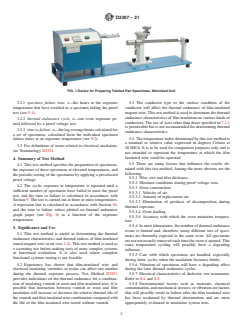
FIG. 1 Device for Preparing Twisted Pair Specimens, Motorized Unit
3.2.1 specimen failure time, n—the hours at the exposure 5.3 The conductor type or the surface condition of the
temperature that have resulted in a specimen failing the proof conductor will affect the thermal endurance of film-insulated
test (see 9.1). magnet wire.This test method is used to determine the thermal
endurance characteristics of film insulation on various kinds of
3.2.2 thermal endurance cycle, n—one oven exposure pe-
conductors. The use of sizes other than those specified in 7.1.1
riod followed by a proof voltage test.
is permissible but is not recommended for determining thermal
3.2.3 time to failure, n—the log average hours calculated for
endurance characteristics.
a set of specimens, calculated from the individual specimen
5.4 The temperature index determined by this test method is
failure times at an exposure temperature (see 9.2).
a nominal or relative value expressed in degrees Celsius at
3.3 For definitions of terms related to electrical insulation,
20 000 h. It is to be used for comparison purposes only and is
see Terminology D1711.
not intended to represent the temperature at which the film
insulated wire could be operated.
4. Summary of Test Method
5.5 There are many factors that influence the results ob-
4.1 This test method specifies the preparation of specimens,
tained with this test method. Among the more obvious are the
the exposure of these specimens at elevated temperatures, and
following:
the periodic testing of the specimens by applying a preselected
5.5.1 Wire size and film thickness.
proof voltage.
5.5.2 Moisture conditions during proof voltage tests.
4.2 The cyclic exposure to temperature is repeated until a
5.5.3 Oven construction:
sufficient number of specimens have failed to meet the proof
5.5.3.1 Velocity of air.
test, and the time to failure is calculated in accordance with
5.5.3.2 Amount of replacement air.
Section 9.The test is carried out at three or more temperatures.
5.5.3.3 Elimination of products of decomposition during
A regression line is calculated in accordance with Section 10,
thermal exposure.
and the time to failure values plotted on thermal endurance
5.5.3.4 Oven loading.
graph paper (see Fig. 6) as a function of the exposure
5.5.3.5 Accuracy with which the oven maintains tempera-
temperature.
ture.
5.5.4 In most laboratories, the number of thermal endurance
5. Significance and Use
ovens is limited and, therefore, many different sets of speci-
5.1 This test method is useful in determining the thermal
mens are thermally exposed in the same oven. All specimens
endurance characteristics and thermal indices of film-insulated
are not necessarily removed each time the oven is opened.This
round magnet wire in air (see 1.3). This test method is used as
extra temperature cycling will possibly have a degrading
a screening test before making tests of more complex systems
influence.
or functional evaluation. It is also used where complete
5.5.5 Care with which specimens are handled, especially
functional systems testing is not feasible.
during latter cycles when the insulation becomes brittle.
5.2 Experience has shown that film-insulated wire and 5.5.6 Vibration of specimens will have a degrading effect
electrical insulating varnishes or resins can affect one another during the later thermal endurance cycles.
during the thermal exposure process. Test Method D3251 5.5.7 Electrical characteristics of dielectric test instrument.
provides indications on the thermal endurance for a combina- Refer to 8.4 and 8.5.
tion of insulating varnish or resin and film insulated wire. It is 5.5.8 Environmental factors such as moisture, chemical
possible that interaction between varnish or resin and film contamination,andmechanicalstresses,orvibrationarefactors
insulation will increase or decrease the relative thermal life of that will possibly result in failure after the film insulated wire
thevarnishandfilminsulatedwirecombinationcomparedwith has been weakened by thermal deterioration and are more
the life of the film insulated wire tested without varnish. appropriately evaluated in insulation system tests.
D2307 − 21
will protect the twisted specimens from external mechanical
damageandwarpage.Anexampleofasuitableholderisshown
in Figs. 3 and 4. Construct the holder so as to allow for the
electricalconnectionofthetwistsfortheprooftesting(seeFig.
5 for an example).
7.4 Electrical Connection—Provide a suitable electrical
connection to the test specimens in the holder that will not
induce mechanical stress to the specimens. Non-mechanical
connections are preferred. A typical device is shown in Fig. 5.
The specimens are connected to a voltage source as described
in 8.3 and 8.4.
8. Procedure
8.1 Priortothefirstexposurecycle,makesureallspecimens
pass the proof-voltage test (see Table 2). Expose the specimens
at elevated temperatures in accordance with Table 3. Remove
the specimens from the oven and cool to room temperature
before testing. Test by applying the voltage specified in Table
2. Take care to prevent damage to the specimens.
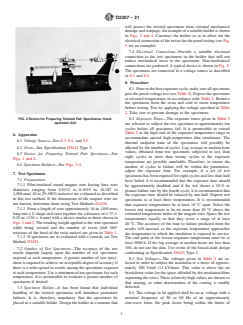
FIG. 2 Device for Preparing Twisted Pair Specimens, Hand-
8.2 Exposure Times—The exposure times given in Table 3
operated Unit
are selected to subject the test specimen to approximately ten
cycles before all specimens fail. It is permissible to extend
Table 3 at the high end of the exposure temperature range to
6. Apparatus
accommodate special high-temperature film insulations. The
6.1 Voltage Source—See 8.3, 8.4, and 8.5.
thermal endpoint time of the specimens will possibly be
6.2 Oven—See Specification D5423 Type 2. affected by the number of cycles. Log average or median hour
values, obtained from test specimens subjected to less than
6.3 Device for Preparing Twisted Pair Specimens—See
eight cycles or more than twenty cycles at the exposure
Figs. 1 and 2.
temperature are possibly unreliable. Therefore, to ensure the
6.4 Specimen Holders—See Figs. 3-5.
number of cycles to failure will be within the parameters,
adjust the exposure time. For example, if a set of test
7. Test Specimens
specimens has been exposed for eight cycles and less than half
7.1 Preparation:
have failed, it is recommended that the exposure time should
7.1.1 Film-insulated round magnet wire having bare wire
be approximately doubled, and if the test shows a 30 % or
diameters ranging from 0.0113 to 0.1019 in. (0.287 to
greater failure rate by the fourth cycle, it is recommended that
2.588 mm) 10 to 29AWG inclusive are evaluated as described
the exposure time should be reduced by one-half. Expose test
in this test method. If the dimensions of the magnet wire are
specimens to at least three temperatures. It is recommended
not known, determine them using Test Methods D1676.
that exposure temperatures be at least 10 °C apart. Select the
7.1.2 Form a length of wire approximately 16 in. (400 mm)
lowest test temperature to be no more than 20 °C above the
long into a U shape and twist together for a distance of 4.75 6
estimated temperature index of the magnet wire. Space the test
0.25 in. (120 6 6 mm) with a device similar to those shown in
temperatures equally so that they cover a range of at least
Figs.1and2.Thewindingweightappliedtothewirespecimen
40 °C. The accuracy of the time to failure predicted from the
while being twisted and the number of twists (full 360°
results will increase as the exposure temperature approaches
rotations of the head of the twist maker) are given in Table 1.
the temperature to which the insulation is exposed in service.
7.1.3 If specimens are to evaluated with a varnish, see Test
The end point at the lowest exposure temperature must be at
Method D3251.
least 5000 h. If the log average or median hours are less than
100, do not use the data. Use ovens of the forced-draft design
7.2 Number of Test Specimens—The accuracy of the test
conforming to Specification D5423 Type 2.
results depends largely upon the number of test specimens
exposed at each temperature. A greater number of test speci-
8.3 Test Voltages—The voltages given in Table 2 are se-
mens is required to achieve an acceptable degree of accuracy if
lected in order to subject the insulation to a stress of approxi-
there is a wide spread in results among the specimens exposed
mately 300 V/mil (12 kV/mm). This value is above the air
at each temperature. Use a minimum of ten specimens for each
breakdown value for the space afforded by the insulation films
temperature. It is permissible to evaluate a greater number of
separatingthewires.Theserelativelyhighvaluesarechosenso
specimens if desired.
that crazing, or other deterioration of the coating is readily
detected.
7.3 Specimen Holder—It has been found that individual
handling of the twisted specimens will introduce premature 8.4 The voltage to be applied shall be an ac voltage with a
failures. It is, therefore, mandatory that the specimens be nominal frequency of 50 or 60 Hz of an approximately
placed in a suitable holder. Design the holder in a manner that sine-wave form, the peak factor being within the limits of
D2307 − 21
Metric Equivalents
in. mm in. mm in. mm
0.03 0.8 0.38 9.7 1.25 31.8
0.046 1.2 0.44 11.2 2.00 50.8
0.064 1.6 0.50 12.7 3.00 76.2
0.12 3.0 0.62 15.7 4.75 120.7
0.140 3.6 0.88 22.4 4.88 124.0
0.250 6.4 1.00 25.4 6.81 173.0
0.30 7.6 1.12 28.4
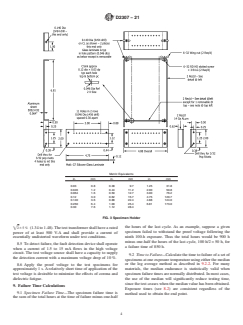
FIG. 3 Specimen Holder
the hours of the last cycle. As an example, suppose a given
=265% (1.34to1.48).Thetesttransformershallhavearated
specimen failed to withstand the proof voltage following the
power of at least 500 V-A and shall provide a current of
ninth 100-h exposure. Thus the total hours would be 900 h
essentially undistorted waveform under test conditions.
minus one-half the hours of the last cycle, 100 h/2 = 50 h, for
8.5 To detect failure, the fault de
...
This document is not an ASTM standard and is intended only to provide the user of an ASTM standard an indication of what changes have been made to the previous version. Because
it may not be technically possible to adequately depict all changes accurately, ASTM recommends that users consult prior editions as appropriate. In all cases only the current version
of the standard as published by ASTM is to be considered the official document.
Designation: D2307 − 07a (Reapproved 2013) D2307 − 21
Standard Test Method for
Thermal Endurance of Film-Insulated Round Magnet Wire
This standard is issued under the fixed designation D2307; the number immediately following the designation indicates the year of
original adoption or, in the case of revision, the year of last revision. A number in parentheses indicates the year of last reapproval. A
superscript epsilon (´) indicates an editorial change since the last revision or reapproval.
1. Scope*
1.1 This test method covers determination of the thermal endurance of film-insulated round magnet wire in air at atmospheric
pressure. It is not applicable to magnet wire with fibrous insulation, such as cotton or glass.
1.2 This test method covers the evaluation of thermal endurance by observing changes in response to ac proof voltage tests. The
evaluation of thermal endurance by observing changes in other properties of magnet wire insulation requires the use of different
test methods.
1.3 It is possible that exposure of some types of film insulated wire to heat in gaseous or liquid environments in the absence of
air will give thermal endurance values different from those obtained in air. Consider this possibility when interpreting the results
obtained by heating in air with respect to applications where the wire will not be exposed to air in service.
1.4 It is possible that electric stress applied for extended periods at a level exceeding or even approaching the discharge inception
voltage will change significantly the thermal endurance of film insulated wires. Under such electric stress conditions, it is possible
that comparisons between materials will also differ from those developed using this method.
1.5 This test method is similar to IEC 60172. Differences exist regarding specimen preparation.
1.6 The values stated in inch-pound units are to be regarded as the standard. The SI units in parentheses are provided for
information only.only and are not considered standard.
1.7 This standard does not purport to address all of the safety concerns, if any, associated with its use. It is the responsibility
of the user of this standard to establish appropriate safety safety, health, and healthenvironmental practices and determine the
applicability of regulatory limitations prior to use.
1.8 This international standard was developed in accordance with internationally recognized principles on standardization
established in the Decision on Principles for the Development of International Standards, Guides and Recommendations issued
by the World Trade Organization Technical Barriers to Trade (TBT) Committee.
2. Referenced Documents
2.1 ASTM Standards:
D1676 Test Methods for Film-Insulated Magnet Wire
This test method is under the jurisdiction of ASTM Committee D09 on Electrical and Electronic Insulating Materials and is the direct responsibility of Subcommittee
D09.17 on Fire and Thermal Properties.
Current edition approved April 1, 2013July 1, 2021. Published April 2013August 2021. Originally approved in 1964. Last previous edition approved in 20072013 as
D2307 – 07a.D2307 – 07a (2013). DOI: 10.1520/D2307-07AR13. 10.1520/D2307-21
For referenced ASTM standards, visit the ASTM website, www.astm.org, or contact ASTM Customer Service at service@astm.org. For Annual Book of ASTM Standards
volume information, refer to the standard’s Document Summary page on the ASTM website.
*A Summary of Changes section appears at the end of this standard
Copyright © ASTM International, 100 Barr Harbor Drive, PO Box C700, West Conshohocken, PA 19428-2959. United States
D2307 − 21
D1711 Terminology Relating to Electrical Insulation
D3251 Test Method for Thermal Endurance Characteristics of Electrical Insulating Varnishes Applied Over Film-Insulated
Magnet Wire
D5423 Specification for Forced-Convection Laboratory Ovens for Evaluation of Electrical Insulation
2.2 Other Standards:
IEC 60172 Statistical Analysis of Thermal Life Test DataTest Procedure For The Determination Of The Temperature Index Of
Enamelled Winding Wires
IEEE 101 Guide for the Statistical Analysis of Thermal Life Test Data
3. Terminology
3.1 Definitions:
3.1.1 temperature index, n—a number which permits comparison of the temperature/time characteristics of an electrical insulating
material, or a simple combination of materials, based on the temperature in degrees Celsius which is obtained by extrapolating the
Arrhenius plot of life versus temperature to a specified time, usually 20 000 h.
3.1.2 thermal endurance, n—an expression for the stability of an electrical insulating material, or a simple combination of
materials, when maintained at elevated temperatures for extended periods of time.
FIG. 1 Device for Preparing Twisted Pair Specimens,
Motorized Unit
3.2 Definitions of Terms Specific to This Standard:
3.2.1 specimen failure time, n—the hours at the exposure temperature that have resulted in a specimen failing the proof test (see
9.1).
3.2.2 thermal endurance cycle, n—one oven exposure period followed by a proof voltage test.
3.2.3 time to failure, n—the log average hours calculated for a set of specimens, calculated from the individual specimen failure
times at an exposure temperature (see 9.2).
3.3 For definitions of terms related to electrical insulation, see Terminology D1711.
4. Summary of Test Method
4.1 This test method specifies the preparation of specimens, the exposure of these specimens at elevated temperatures, and the
periodic testing of the specimens by applying a preselected proof voltage.
Available from International Electrotechnical Commission (IEC), 3, rue de Varembé, Case postale 1st floor, P.O. Box 131, CH-1211, Geneva 20, Switzerland,
http://www.iec.ch. https://www.iec.ch.
Available from Institute of Electrical and Electronics Engineers, Inc. (IEEE), 445 Hoes Ln., P.O. Box 1331, Piscataway, NJ 08854-1331,08854-4141, http://www.ieee.org.
D2307 − 21
4.2 The cyclic exposure to temperature is repeated until a sufficient number of specimens have failed to meet the proof test, and
the time to failure is calculated in accordance with Section 9. The test is carried out at three or more temperatures. A regression
line is calculated in accordance with Section 10, and the time to failure values plotted on thermal endurance graph paper (see Fig.
6) as a function of the exposure temperature.
5. Significance and Use
5.1 This test method is useful in determining the thermal endurance characteristics and thermal indices of film-insulated round
magnet wire in air (see 1.3) (see Test Method D3251). This test method is used as a screening test before making tests of more
complex systems or functional evaluation. It is also used where complete functional systems testing is not feasible.
5.2 Experience has shown that film-insulated wire and electrical insulating varnishes or resins can affect one another during the
thermal exposure process. Test Method D3251 provides indications on the thermal endurance for a combination of insulating
varnish or resin and film insulated wire. It is possible that interaction between varnish or resin and film insulation will increase
or decrease the relative thermal life of the varnish and film insulated wire combination compared with the life of the film insulated
wire tested without varnish.
5.3 The conductor type or the surface condition of the conductor will affect the thermal endurance of film-insulated magnet wire.
This test method is used to determine the thermal endurance characteristics of film insulation on various kinds of conductors. The
use of sizes other than those specified in 7.1.1 is permissible but is not recommended for determining thermal endurance
characteristics.
5.4 The temperature index determined by this test method is a nominal or relative value expressed in degrees Celsius at 20 000
h. It is to be used for comparison purposes only and is not intended to represent the temperature at which the film insulated wire
could be operated.
5.5 There are many factors that influence the results obtained with this test method. Among the more obvious are the following:
5.5.1 Wire size and film thickness.
5.5.2 Moisture conditions during proof voltage tests.
5.5.3 Oven construction:
FIG. 2 Device for Preparing Twisted Pair Specimens,
Hand-Operated Hand-operated Unit
D2307 − 21
Metric Equivalents
in. mm in. mm in. mm
0.03 0.8 0.38 9.7 1.25 31.8
0.046 1.2 0.44 11.2 2.00 50.8
0.064 1.6 0.50 12.7 3.00 76.2
0.12 3.0 0.62 15.7 4.75 120.7
0.140 3.6 0.88 22.4 4.88 124.0
0.250 6.4 1.00 25.4 6.81 173.0
0.30 7.6 1.12 28.4
FIG. 3 A Specimen Holder
5.5.3.1 Velocity of air.
5.5.3.2 Amount of replacement air.
5.5.3.3 Elimination of products of decomposition during thermal exposure.
5.5.3.4 Oven loading.
5.5.3.5 Accuracy with which the oven maintains temperature.
5.5.4 In most laboratories, the number of thermal endurance ovens is limited and, therefore, many different sets of specimens are
thermally exposed in the same oven. All specimens are not necessarily removed each time the oven is opened. This extra
temperature cycling will possibly have a degrading influence.
D2307 − 21
FIG. 4 A Specimen Holder
FIG. 5 A Specimen Holder and Electrical Connection Device
5.5.5 Care with which specimens are handled, especially during latter cycles when the insulation becomes brittle.
5.5.6 Vibration of specimens will have a degrading effect during the later thermal endurance cycles.
5.5.7 Electrical characteristics of dielectric test instrument. Refer to 8.4 and 8.5.
D2307 − 21
NOTE 1—This graph should contain all appropriate information regarding the insulating materials.
FIG. 6 Example of a Regression Line Plot (Table 5)
5.5.8 Environmental factors such as moisture, chemical contamination, and mechanical stresses, or vibration are factors that will
possibly result in failure after the film insulated wire has been weakened by thermal deterioration and are more appropriately
evaluated in insulation system tests.
6. Apparatus
6.1 Voltage Source Source—(seeSee 8.3, 8.4, and 8.5).
6.2 Oven Oven—(seeSee Specification D5423 Type 2).2.
6.3 Device for Preparing Twisted Pair Specimens Specimens—(seeSee Figs. 1 and 2).
6.4 Specimen Holders Holders—(seeSee Figs. 3-5).
D2307 − 21
7. Test Specimens
7.1 Preparation:
7.1.1 Film-insulated round magnet wire having bare wire diameters ranging from 0.0113 to 0.1019 in. (0.287 to 2.588 mm)
2.588 mm) 10 to 29 AWG inclusive are evaluated as described in this test method. If the dimensions of the magnet wire are not
known, determine them using Test Methods D1676.
7.1.2 Form a length of wire approximately 16 in. (400 mm) long into a U shape and twist together for a distance of 4.75 6 0.25
in. (120 6 6 mm) with a device similar to those shown in Figs. 1 and 2. The winding weight applied to the wire specimen while
being twisted and the number of twists (full 360° rotations of the head of the twist maker) are given in Table 1.
7.1.3 If specimens are to evaluated with a varnish, see Test Method D3251.
7.2 Number of Test Specimens—The accuracy of the test results depends largely upon the number of test specimens exposed at
each temperature. A greater number of test specimens is required to achieve an acceptable degree of accuracy if there is a wide
spread in results among the specimens exposed at each temperature. Use a minimum of 10ten specimens for each temperature. It
is permissible to evaluate a greater number of specimens if desired.
7.3 Specimen Holder—It has been found that individual handling of the twisted specimens will introduce premature failures. It
is, therefore, mandatory that the specimens be placed in a suitable holder. Design the holder in a manner that will protect the twisted
specimens from external mechanical damage and warpage. An example of a suitable holder is shown in Figs. 3 and 4. Construct
the holder so as to allow for the electrical connection of the twists for the proof testing (see Fig. 5 for an example).
7.4 Electrical Connection—Provide a suitable electrical connection to the test specimens in the holder that will not induce
mechanical stress to the specimens. Non-mechanical connections are preferred. A typical device is shown in Fig. 5. The specimens
are connected to a voltage source as described in 8.3 and 8.4.
8. Procedure
8.1 Prior to the first exposure cycle, make sure all specimens pass the proof-voltage test (see Table 2). Expose the specimens at
elevated temperatures in accordance with Table 3. Remove the specimens from the oven and cool to room temperature before
testing. Test by applying the voltage specified in Table 2. Take care to prevent damage to the specimens.
8.2 Exposure Times—The exposure times given in Table 3 are selected to subject the test specimen to approximately ten cycles
before all specimens fail. It is permissible to extend Table 3 at the high end of the exposure temperature range to accommodate
special high-temperature film insulations. The thermal endpoint time of the specimens will possibly be affected by the number of
cycles. Log average or median hour values, obtained from test specimens subjected to less than eight cycles or more than twenty
cycles at the exposure temperature are possibly unreliable. Therefore, to ensure the number of cycles to failure will be within the
parameters, adjust the exposure time. For example, if a set of test specimens has been exposed for eight cycles and less than half
TABLE 1 Tension and Number of Twists for Twisted Pair Construction
Nominal Bare Wire Diameter Winding Weight on Specimens (± 2%)
Wire Size Total
A
AWG Twists
in. mm kg lb
0.102 to 0.091 2.59 to 2.30 10 to 11 3 10.8 24
0.081 to 0.064 2.05 to 1.63 12 to 14 4 5.4 12
0.057 to 0.045 1.45 to 1.15 15 to 17 6 2.7 6
0.040 to 0.032 1.02 to 0.81 18 to 20 8 1.35 3
B
0.029 to 0.023 0.72 to 0.57 21 to 23 12 0.70 1.5
0.020 to 0.016 0.51 to 0.40 24 to 26 16 0.34 .
0.014 to 0.011 0.36 to 0.29 27 to 29 20 0.17 .
A
Prepare test specimens, of intermediate diameters, in accordance with the requirements for the next smaller AWG size.
B
For weights less than 1.5 lb, use kilogram weights.
D2307 − 21
TABLE 2 Proof-Voltage Test
Difference Between the Bare Wire
AC Test
A
and Insulated Wire Diameters
Voltage, V
± 5%±5%
in. mm
0.0015 to 0.0020 0.036 to 0.050 500
0.0021 to 0.0027 0.051 to 0.070 700
0.0028 to 0.0035 0.071 to 0.090 1000
0.0036 to 0.0051 0.091 to 0.130 1200
A
For self-bonding magnet wires, the self-bonding layer is included in the film build
thickness determination.
TABLE 3 Recommended Exposure Times in Days Per Cycle
Estimated Temperature Index
Exposure
Temperature (°C)
105 130 155 180 200 220 240
320 1
310 2
300 1 4
290 2 7
280 1 4 14
270 2 7 28
260 1 4 14 56
250 2 7 28
240 4 14 56
230 1 7 28
220 2 14 56
210 1 4 28
200 2 7 56
190 1 4 14
180 2 7 28
170 4 14 56
160 7 28
150 14 56
140 28
130 56
have failed, it is recommended that the exposure time should be approximately doubled, and if the test shows a 30 % or greater
failure rate by the fourth cycle, it is recommended that the exposure time should be reduced by one-half. Expose test specimens
to at least three temperatures. It is recommended that exposure temperatures be at least 10°C 10 °C apart. Select the lowest test
temperature to be no more than 20°C 20 °C above the estimated temperature index of the magnet wire.
...