

ASTM D5459-95(2020)
(Test Method)Standard Test Method for Machine Direction Elastic Recovery and Permanent Deformation and Stress Retention of Stretch Wrap Film
General Information
- Abstract
SIGNIFICANCE AND USE
5.1 Elastic recovery is related to the ability of a package to resume its original shape after being distended during its use cycle.
5.2 Elastic recovery also relates to the tightness or snugness of a package.
5.3 Stress retention is related to the tightness or snugness of a package.
SCOPE
1.1 This test method covers the measurement of recovery from extension, permanent deformation, and stress retention of stretch wrap film.
1.2 Several levels of extension are included to ascertain the effect of both small and large extensions.
1.3 The values stated in inch-pound units are to be regarded as standard. The values given in parentheses are mathematical conversions to SI units that are provided for information only and are not considered standard.
1.4 This standard does not purport to address all of the safety concerns, if any, associated with its use. It is the responsibility of the user of this standard to establish appropriate safety, health, and environmental practices and determine the applicability of regulatory limitations prior to use.
1.5 This international standard was developed in accordance with internationally recognized principles on standardization established in the Decision on Principles for the Development of International Standards, Guides and Recommendations issued by the World Trade Organization Technical Barriers to Trade (TBT) Committee.
- Status
- Published
- Publication Date
- 31-Oct-2020
- Technical Committee
- D10 - Packaging
- Drafting Committee
- D10.25 - Palletizing and Unitizing of Loads


Overview
ASTM D5459-95(2020): Standard Test Method for Machine Direction Elastic Recovery and Permanent Deformation and Stress Retention of Stretch Wrap Film is an international standard developed by ASTM International. This standard outlines methods to test and quantify three key properties of stretch wrap film: elastic recovery, permanent deformation, and stress retention. These material characteristics are vital in determining the performance of stretch wrap films used for packaging, especially in load containment and securing goods during transportation and storage.
This test method is applicable to thin plastic films designed for stretch wrapping, focusing on their behavior when extended in the machine direction and subsequently released. By evaluating such properties, manufacturers, packaging engineers, and quality control professionals can assess film suitability, optimize packaging processes, and ensure product integrity.
Key Topics
- Elastic Recovery: The percentage of elongation a stretch wrap film regains after being stretched and allowed to relax. High elastic recovery indicates the film’s ability to return toward its original dimensions, contributing to package tightness and integrity.
- Permanent Deformation: The extent to which a stretch wrap film does not recover after being elongated. This is expressed as a percentage of the original length, and lower values point to better resilience and less distortion.
- Stress Retention: The portion of applied tension that a film retains over a specified period (such as 60 seconds or 24 hours) after being stretched. High stress retention is critical for maintaining load containment over time.
- Machine Direction Testing: Focuses on properties as the film is extended in the direction it was manufactured, which is particularly relevant for process control and performance consistency.
Applications
ASTM D5459-95(2020) is widely used in:
- Quality Control in Manufacturing: Verifying that stretch wrap films meet performance specifications for elastic recovery, permanent deformation, and stress retention across production batches.
- Product Development: Comparing the mechanical performance of new film formulations or competitive products for improved packaging solutions.
- Load Unitization and Palletizing: Assessing a film’s ability to maintain load stability, reduce shifting, and prevent damage during storage and transportation.
- Packaging Optimization: Selecting appropriate films for specific applications, such as heavy pallets or irregularly shaped loads, based on standardized test results.
- Compliance Documentation: Providing reliable, internationally recognized data for customers, regulators, and internal audits within the packaging industry.
Related Standards
- ASTM D882: Test Method for Tensile Properties of Thin Plastic Sheeting - often referenced for baseline mechanical properties.
- ASTM D996: Terminology of Packaging and Distribution Environments - provides standard definitions for packaging terms.
- ASTM D2103: Specification for Polyethylene Film and Sheeting - relevant for material requirements in film manufacturing.
- ASTM E122: Practice for Calculating Sample Size to Estimate, With Specified Precision, the Average for a Characteristic of a Lot or Process.
- ASTM E691: Practice for Conducting an Interlaboratory Study to Determine the Precision of a Test Method.
Practical Value
Ensuring stretch wrap film performs as expected under real-world conditions is essential for minimizing product loss, maximizing logistical efficiency, and reducing costs due to damaged goods. Adherence to ASTM D5459-95(2020) provides a science-based, repeatable approach to characterize film mechanical properties, benefiting manufacturers, suppliers, and users across the packaging supply chain.
Keywords: elastic recovery, permanent deformation, stress retention, stretch wrap film, material testing, packaging standards, load containment, ASTM D5459, quality control, packaging performance, unitization, thin plastic film.
Relations
- Effective Date
- 01-Dec-2023
- Effective Date
- 15-Nov-2023
- Effective Date
- 29-Sep-2023
- Effective Date
- 01-Apr-2015
- Effective Date
- 01-May-2013
- Effective Date
- 01-Nov-2011
- Effective Date
- 01-Aug-2011
- Effective Date
- 01-Dec-2010
- Effective Date
- 01-Apr-2010
- Effective Date
- 01-Aug-2009
- Effective Date
- 01-Jan-2009
- Effective Date
- 01-Nov-2008
- Effective Date
- 01-Oct-2008
- Effective Date
- 01-Oct-2007
- Effective Date
- 01-Dec-2005
Get Certified
Connect with accredited certification bodies for this standard

BRCGS (Brand Reputation Compliance Global Standards)
Global food safety and quality standards owner.
Sponsored listings
Frequently Asked Questions
ASTM D5459-95(2020) is a standard published by ASTM International. Its full title is "Standard Test Method for Machine Direction Elastic Recovery and Permanent Deformation and Stress Retention of Stretch Wrap Film". This standard covers: SIGNIFICANCE AND USE 5.1 Elastic recovery is related to the ability of a package to resume its original shape after being distended during its use cycle. 5.2 Elastic recovery also relates to the tightness or snugness of a package. 5.3 Stress retention is related to the tightness or snugness of a package. SCOPE 1.1 This test method covers the measurement of recovery from extension, permanent deformation, and stress retention of stretch wrap film. 1.2 Several levels of extension are included to ascertain the effect of both small and large extensions. 1.3 The values stated in inch-pound units are to be regarded as standard. The values given in parentheses are mathematical conversions to SI units that are provided for information only and are not considered standard. 1.4 This standard does not purport to address all of the safety concerns, if any, associated with its use. It is the responsibility of the user of this standard to establish appropriate safety, health, and environmental practices and determine the applicability of regulatory limitations prior to use. 1.5 This international standard was developed in accordance with internationally recognized principles on standardization established in the Decision on Principles for the Development of International Standards, Guides and Recommendations issued by the World Trade Organization Technical Barriers to Trade (TBT) Committee.
SIGNIFICANCE AND USE 5.1 Elastic recovery is related to the ability of a package to resume its original shape after being distended during its use cycle. 5.2 Elastic recovery also relates to the tightness or snugness of a package. 5.3 Stress retention is related to the tightness or snugness of a package. SCOPE 1.1 This test method covers the measurement of recovery from extension, permanent deformation, and stress retention of stretch wrap film. 1.2 Several levels of extension are included to ascertain the effect of both small and large extensions. 1.3 The values stated in inch-pound units are to be regarded as standard. The values given in parentheses are mathematical conversions to SI units that are provided for information only and are not considered standard. 1.4 This standard does not purport to address all of the safety concerns, if any, associated with its use. It is the responsibility of the user of this standard to establish appropriate safety, health, and environmental practices and determine the applicability of regulatory limitations prior to use. 1.5 This international standard was developed in accordance with internationally recognized principles on standardization established in the Decision on Principles for the Development of International Standards, Guides and Recommendations issued by the World Trade Organization Technical Barriers to Trade (TBT) Committee.
ASTM D5459-95(2020) is classified under the following ICS (International Classification for Standards) categories: 55.040 - Packaging materials and accessories. The ICS classification helps identify the subject area and facilitates finding related standards.
ASTM D5459-95(2020) has the following relationships with other standards: It is inter standard links to ASTM D2103-23a, ASTM D2103-23, ASTM D1898-68(1989), ASTM D2103-15, ASTM E691-13, ASTM E691-11, ASTM E122-09e1, ASTM D996-10a, ASTM D2103-10, ASTM E122-09, ASTM D882-09, ASTM D2103-08, ASTM E691-08, ASTM E122-07, ASTM D2103-05. Understanding these relationships helps ensure you are using the most current and applicable version of the standard.
ASTM D5459-95(2020) is available in PDF format for immediate download after purchase. The document can be added to your cart and obtained through the secure checkout process. Digital delivery ensures instant access to the complete standard document.
Standards Content (Sample)
This international standard was developed in accordance with internationally recognized principles on standardization established in the Decision on Principles for the
Development of International Standards, Guides and Recommendations issued by the World Trade Organization Technical Barriers to Trade (TBT) Committee.
Designation: D5459 − 95 (Reapproved 2020)
Standard Test Method for
Machine Direction Elastic Recovery and Permanent
Deformation and Stress Retention of Stretch Wrap Film
This standard is issued under the fixed designation D5459; the number immediately following the designation indicates the year of
original adoption or, in the case of revision, the year of last revision. A number in parentheses indicates the year of last reapproval. A
superscript epsilon (´) indicates an editorial change since the last revision or reapproval.
1. Scope E122 Practice for Calculating Sample Size to Estimate,With
Specified Precision, the Average for a Characteristic of a
1.1 This test method covers the measurement of recovery
Lot or Process
from extension, permanent deformation, and stress retention of
E691 Practice for Conducting an Interlaboratory Study to
stretch wrap film.
Determine the Precision of a Test Method
1.2 Several levels of extension are included to ascertain the
effect of both small and large extensions.
3. Terminology
1.3 The values stated in inch-pound units are to be regarded 3.1 Definitions—General definitions for packaging and dis-
as standard. The values given in parentheses are mathematical
tribution environments are found in Terminology D996.
conversions to SI units that are provided for information only
3.2 Definitions of Terms Specific to This Standard:
and are not considered standard.
3.2.1 elastic recovery—the percentage of a given deforma-
1.4 This standard does not purport to address all of the
tion that behaves elastically, after 180 s when subjected to the
safety concerns, if any, associated with its use. It is the
extensions prescribed in this test method.
responsibility of the user of this standard to establish appro-
3.2.2 permanent deformation—the increase in length, ex-
priate safety, health, and environmental practices and deter-
pressed as a percentage of the original length, by which an
mine the applicability of regulatory limitations prior to use.
elastic material fails to return to original length after subjected
1.5 This international standard was developed in accor-
to the extensions prescribed in the test procedure in this
dance with internationally recognized principles on standard-
method.
ization established in the Decision on Principles for the
3.2.3 stress retention—the percentage of stress retained 60 s
Development of International Standards, Guides and Recom-
or 24 h, or both, after application.
mendations issued by the World Trade Organization Technical
Barriers to Trade (TBT) Committee.
4. Summary of Test Method
4.1 Elastic properties of the films are determined by sub-
2. Referenced Documents
jecting specimens to known extensions and by measuring the
2.1 ASTM Standards:
quantity of recovery and the permanent change with respect to
D882 Test Method for Tensile Properties of Thin Plastic
the original dimensions.
Sheeting
D1898 Practice for Sampling of Plastics (Withdrawn 1998)
5. Significance and Use
D996 Terminology of Packaging and Distribution Environ-
5.1 Elastic recovery is related to the ability of a package to
ments
resume its original shape after being distended during its use
D2103 Specification for Polyethylene Film and Sheeting
cycle.
5.2 Elastic recovery also relates to the tightness or snugness
This test method is under the jurisdiction of ASTM Committee D10 on
of a package.
Packaging and is the direct responsibility of Subcommittee D10.25 on Palletizing
and Unitizing of Loads. 5.3 Stress retention is related to the tightness or snugness of
Current edition approved Nov. 1, 2020. Published November 2020. Originally
a package.
approved in 1994. Last previous edition approved in 2012 as D5459 – 95 (2012).
DOI: 10.1520/D5459-95R20.
6. Apparatus
For referenced ASTM standards, visit the ASTM website, www.astm.org, or
contact ASTM Customer Service at service@astm.org. For Annual Book of ASTM
6.1 Tensile Testing Machine, with a reversible chart, com-
Standards volume information, refer to the standard’s Document Summary page on
plying with the requirements listed for Method A of Test
the ASTM website.
Method D882 with grips satisfactory for the purpose. Refer to
The last approved version of this historical standard is referenced on
www.astm.org. section on grips in Test Method D882.
Copyright © ASTM International, 100 Barr Harbor Drive, PO Box C700, West Conshohocken, PA 19428-2959. United States
D5459 − 95 (2020)
6.2 Specimen Cutter, capable of producing nick-free 1 6
0.001 in. (25.4 6 0.03 mm) testing strips, with a precision of
1 6 0.001 in. (25.4 6 0.03 mm).
6.3 Micrometer, capable of measuring the thickness of
specimens to 0.001 in. (0.03 mm) as described in 8.9.1.1 of
Specification D2103.
7. Sampling
7.1 Acceptance Sampling—Sampling shall be in accordance
with Practice D1898.
7.2 Sampling for Other Purposes—The sampling and the
number of test specimens depend on the purposes of the
testing. Practice E122 is recommended. Test specimens are
taken from several rolls of film, and when possible, from
several production runs of a product. Strong conclusions about
a specific property of a film cannot be based on a single roll of
product.
8. Specimen Preparation
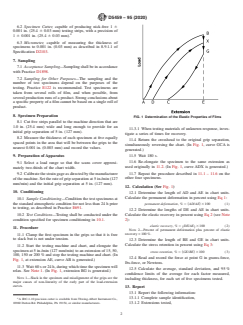
FIG. 1 Determination of the Elastic Properties of Films
8.1 Cut five strips parallel to the machine direction that are
1.0 in. (25.4 mm) wide and long enough to provide for an
11.3.1 When testing materials of unknown response, inves-
initial grip separation of 5 in. (127 mm).
tigate a series of times for recovery.
8.2 Measure the thickness of each specimen at five equally
11.4 Return the crosshead to the original grip separation,
spaced points in the area that will be between the grips to the
simultaneously reversing the chart. (In Fig. 1, curve GCA is
nearest 0.001 in. (0.003 mm) and record the values.
generated.)
11.5 Wait 180 s.
9. Preparation of Apparatus
11.6 Re-elongate the specimen to the same extension as
9.1 Select a load range so that the scans cover approxi-
used originally in 11.2. (In Fig. 1, curve ADX is generated.)
mately two-thirds of the chart width.
11.7 Repeat the procedure described in 11.1 – 11.6 on the
9.2 Calibrate the strain gage as directed by the manufacturer
other four specimens.
of the machine. Set the rate of grip separation at 5 in./min (127
mm/min) and the initial grip separation at 5 in. (127 mm).
12. Calculation (See Fig. 1)
10. Conditioning
12.1 Determine the length of AD and AE in chart units.
Calculate the permanent deformation in percent using Eq 1:
10.1 Sample Conditioning—Condition the test specimens at
the standard atmospheric condition for not less than 24 h prior
permanent deformation,% 5 AD/AE 3100 (1)
~ !
to testing, as described in Practice E691.
12.2 Determine the lengths of DE and AE in chart units.
10.2 Test Conditions—Testing shall b
...