

ASTM F3036-21
(Guide)Standard Guide for Testing Absorbable Stents
General Information
- Abstract
SIGNIFICANCE AND USE
4.1 Absorbable cardiovascular stents provide temporary support to the vasculature and are intended to degrade and absorb over time after being implanted into the vasculature.
4.2 The test methods used to evaluate the mechanical performance of absorbable devices are similar to those used to evaluate permanent (non-absorbable) cardiovascular devices. The absorbable-specific pre-test conditioning requirements, handling requirements before and during the test, and time-dependent mechanical property evaluations for absorbable devices are addressed here.
4.3 As the absorbable implant degrades, the mechanical performance of the device also deteriorates. The key to achieving effective revascularization with absorbable devices is to provide an adequate level of luminal support for the time frame needed for vessel stabilization.
SCOPE
1.1 This guide covers select physical and mechanical characterizations of vascular stents with one or more absorbable components. Such absorbable stents (also referred to as vascular scaffolds) are used to provide temporary luminal support of the coronary and peripheral vasculature following interventional revascularization procedures. This guide covers devices that are fabricated from one or more degradable polymers and/or metals (from this point on referred to as “absorbable”). This guide provides a framework for evaluating the change in select physical and mechanical characteristics of absorbable stents from manufacture through their intended degradation in vivo. Specific testing recommendations are limited to existing ASTM standards for stent evaluation.
1.2 Recommendations specific to non-absorbable stents with absorbable coatings are not within scope.
1.3 Recommendations specific to testing absorbable stent grafts are not provided here; however, this standard has many elements applicable to testing absorbable stent grafts.
1.4 Clinical need dictates that absorbable stents initially possess the same general dimensions and mechanical function as their non-absorbable counterparts. Thus, utilization of already established mechanical stent evaluation methods is possible when absorbable test specimens are previously conditioned under physiologically relevant temperature and humidity. As a result, this standard addresses absorbable-specific testing issues related to the mechanical and physical evaluation of these devices. The annexes in this standard provide absorbable-specific testing recommendations for evaluations where an ASTM test method for durable (that is, non-absorbable) stents is already available. Specifically, this standard provides testing recommendations for adapting the elastic recoil (F2079), dimensional attributes (F2081), securement/dislodgement (F2394), pulsatile durability (F2477), FEA of stents (F2514), three-point bending (F2606), coating/acute particulate characterization (F2743), shelf life (F2914), axial bend torsional rigidity (F2942), radial loading (F3067), design verification sampling (F3172), fatigue to fracture (F3211), and fixation durability (F3374) tests to fully absorbable devices. This guide generally describes specimen conditioning, as appropriate, for absorbable devices, which can range from none to extensive depending on the measured attribute and relevant clinical exposure conditions, including time in the in-use environment. Additional stent evaluation methods that are not addressed explicitly in this guide may require absorbable-specific provisions. The user should justify the appropriate testing for the specific absorbable material and device.
1.4.1 While the primary purpose of this guide is to address absorbable stent-related issues specific to the tests described in 1.4, additional testing (for example, radial strength) will likely also be needed. Thus, aspects of what is presented herein may be applicable to additional relevant device attributes, such as those described in ISO 25539-1 and/or 25539-2.
1.5 T...
- Status
- Published
- Publication Date
- 31-Oct-2021
- Technical Committee
- F04 - Medical and Surgical Materials and Devices
- Drafting Committee
- F04.30 - Cardiovascular Standards
Overview
ASTM F3036-21: Standard Guide for Testing Absorbable Stents establishes a comprehensive framework for the physical and mechanical evaluation of vascular stents that contain one or more absorbable components. Absorbable stents, sometimes referred to as vascular scaffolds, are designed to provide temporary luminal support to the coronary or peripheral vasculature following interventional procedures. Over time, these stents degrade and are absorbed by the body, which introduces unique considerations for testing and evaluation compared to permanent stents.
This guide outlines the recommended approaches for testing absorbable stents, including pre-test specimen conditioning, handling protocols, and assessment of time-dependent mechanical property changes as the implant degrades. The document focuses on adapting established ASTM test methods for permanent stents, with modifications specific to the unique properties of absorbable materials.
Key Topics
- Absorbable Stent Evaluation: The guide addresses methods for evaluating changes in physical and mechanical characteristics of absorbable stents from manufacture through clinical degradation.
- Pre-test Conditioning: Stresses the necessity of conditioning absorbable stent specimens under physiologically relevant temperature and humidity to accurately simulate clinical conditions.
- Mechanical Testing: Recommends the adaptation of existing mechanical tests for stents, such as elastic recoil, three-point bending, and radial loading, to accommodate absorbable devices.
- Time-Dependent Properties: Emphasizes considerations for monitoring the mechanical integrity of stents at multiple time points as degradation progresses.
- Sample Handling: Details best practices for specimen handling, immersion in physiologically relevant solutions, and maintaining appropriate testing environments (including temperature and pH controls).
- Degradation Modeling: Encourages development of in vitro models that simulate the in vivo degradation behavior of absorbable stents.
Applications
- Device Development and Regulatory Submission: ASTM F3036-21 provides medical device manufacturers and testing laboratories with standardized guidance for assessing the performance and safety of absorbable stents. It supports comprehensive documentation for regulatory submissions.
- Benchmarking and Product Comparison: The standard enables consistent performance evaluation, allowing comparison between different designs, materials, and manufacturers.
- Quality Assurance: Laboratories implementing ASTM F3036-21 ensure rigorous, reproducible quality control over stent products throughout manufacturing and shelf-life stages.
- Research and Innovation: Researchers can use the standard to guide material selection, prototype iteration, and evaluation of next-generation absorbable stent technologies.
- Clinical Safety: By rigorously testing luminal support duration and mechanical integrity, the standard contributes to improved patient outcomes in vascular interventions.
Related Standards
ASTM F3036-21 frequently references other established ASTM and ISO standards for specific mechanical and physical testing requirements for vascular stents:
- ASTM F2079: Elastic recoil of balloon-expandable stents
- ASTM F2081: Dimensional attributes characterization
- ASTM F2394: Stent securement and dislodgement
- ASTM F2477: Pulsatile durability of stents
- ASTM F2514: Finite element analysis (FEA) of stents
- ASTM F2606: Three-point bending of stents
- ASTM F2914: Shelf-life identification for endovascular devices
- ASTM F3268: Degradation testing of absorbable metals
- ISO 25539-1 & 25539-2: Cardiovascular implants - Endovascular devices and vascular stents
- ISO 10993 Series: Biological evaluation of medical devices
Conclusion
ASTM F3036-21 serves as a crucial guide for the standardized testing of absorbable stents, supporting innovation while ensuring safety and efficacy. By building on established methods and addressing absorbable-specific requirements, it delivers practical value for manufacturers, regulatory bodies, and clinicians involved in cardiovascular implant development and evaluation.
Keywords: absorbable stent, vascular scaffold, mechanical testing, ASTM F3036-21, cardiovascular implants, stent degradation, medical device evaluation, pre-test conditioning, mechanical durability, biocompatibility testing, physiologically relevant simulation.
Relations
- Effective Date
- 15-Feb-2024
- Effective Date
- 01-Feb-2024
- Effective Date
- 15-Jan-2024
- Effective Date
- 01-Feb-2020
- Effective Date
- 01-Jun-2019
- Effective Date
- 01-Nov-2018
- Effective Date
- 01-Nov-2018
- Effective Date
- 01-Apr-2018
- Effective Date
- 01-Sep-2017
- Effective Date
- 01-Dec-2016
- Effective Date
- 01-Dec-2016
- Effective Date
- 01-Dec-2016
- Effective Date
- 15-Aug-2013
- Effective Date
- 01-Mar-2013
- Effective Date
- 01-Mar-2013
Get Certified
Connect with accredited certification bodies for this standard

BSI Group
BSI (British Standards Institution) is the business standards company that helps organizations make excellence a habit.

TÜV Rheinland
TÜV Rheinland is a leading international provider of technical services.

TÜV SÜD
TÜV SÜD is a trusted partner of choice for safety, security and sustainability solutions.
Sponsored listings
Frequently Asked Questions
ASTM F3036-21 is a guide published by ASTM International. Its full title is "Standard Guide for Testing Absorbable Stents". This standard covers: SIGNIFICANCE AND USE 4.1 Absorbable cardiovascular stents provide temporary support to the vasculature and are intended to degrade and absorb over time after being implanted into the vasculature. 4.2 The test methods used to evaluate the mechanical performance of absorbable devices are similar to those used to evaluate permanent (non-absorbable) cardiovascular devices. The absorbable-specific pre-test conditioning requirements, handling requirements before and during the test, and time-dependent mechanical property evaluations for absorbable devices are addressed here. 4.3 As the absorbable implant degrades, the mechanical performance of the device also deteriorates. The key to achieving effective revascularization with absorbable devices is to provide an adequate level of luminal support for the time frame needed for vessel stabilization. SCOPE 1.1 This guide covers select physical and mechanical characterizations of vascular stents with one or more absorbable components. Such absorbable stents (also referred to as vascular scaffolds) are used to provide temporary luminal support of the coronary and peripheral vasculature following interventional revascularization procedures. This guide covers devices that are fabricated from one or more degradable polymers and/or metals (from this point on referred to as “absorbable”). This guide provides a framework for evaluating the change in select physical and mechanical characteristics of absorbable stents from manufacture through their intended degradation in vivo. Specific testing recommendations are limited to existing ASTM standards for stent evaluation. 1.2 Recommendations specific to non-absorbable stents with absorbable coatings are not within scope. 1.3 Recommendations specific to testing absorbable stent grafts are not provided here; however, this standard has many elements applicable to testing absorbable stent grafts. 1.4 Clinical need dictates that absorbable stents initially possess the same general dimensions and mechanical function as their non-absorbable counterparts. Thus, utilization of already established mechanical stent evaluation methods is possible when absorbable test specimens are previously conditioned under physiologically relevant temperature and humidity. As a result, this standard addresses absorbable-specific testing issues related to the mechanical and physical evaluation of these devices. The annexes in this standard provide absorbable-specific testing recommendations for evaluations where an ASTM test method for durable (that is, non-absorbable) stents is already available. Specifically, this standard provides testing recommendations for adapting the elastic recoil (F2079), dimensional attributes (F2081), securement/dislodgement (F2394), pulsatile durability (F2477), FEA of stents (F2514), three-point bending (F2606), coating/acute particulate characterization (F2743), shelf life (F2914), axial bend torsional rigidity (F2942), radial loading (F3067), design verification sampling (F3172), fatigue to fracture (F3211), and fixation durability (F3374) tests to fully absorbable devices. This guide generally describes specimen conditioning, as appropriate, for absorbable devices, which can range from none to extensive depending on the measured attribute and relevant clinical exposure conditions, including time in the in-use environment. Additional stent evaluation methods that are not addressed explicitly in this guide may require absorbable-specific provisions. The user should justify the appropriate testing for the specific absorbable material and device. 1.4.1 While the primary purpose of this guide is to address absorbable stent-related issues specific to the tests described in 1.4, additional testing (for example, radial strength) will likely also be needed. Thus, aspects of what is presented herein may be applicable to additional relevant device attributes, such as those described in ISO 25539-1 and/or 25539-2. 1.5 T...
SIGNIFICANCE AND USE 4.1 Absorbable cardiovascular stents provide temporary support to the vasculature and are intended to degrade and absorb over time after being implanted into the vasculature. 4.2 The test methods used to evaluate the mechanical performance of absorbable devices are similar to those used to evaluate permanent (non-absorbable) cardiovascular devices. The absorbable-specific pre-test conditioning requirements, handling requirements before and during the test, and time-dependent mechanical property evaluations for absorbable devices are addressed here. 4.3 As the absorbable implant degrades, the mechanical performance of the device also deteriorates. The key to achieving effective revascularization with absorbable devices is to provide an adequate level of luminal support for the time frame needed for vessel stabilization. SCOPE 1.1 This guide covers select physical and mechanical characterizations of vascular stents with one or more absorbable components. Such absorbable stents (also referred to as vascular scaffolds) are used to provide temporary luminal support of the coronary and peripheral vasculature following interventional revascularization procedures. This guide covers devices that are fabricated from one or more degradable polymers and/or metals (from this point on referred to as “absorbable”). This guide provides a framework for evaluating the change in select physical and mechanical characteristics of absorbable stents from manufacture through their intended degradation in vivo. Specific testing recommendations are limited to existing ASTM standards for stent evaluation. 1.2 Recommendations specific to non-absorbable stents with absorbable coatings are not within scope. 1.3 Recommendations specific to testing absorbable stent grafts are not provided here; however, this standard has many elements applicable to testing absorbable stent grafts. 1.4 Clinical need dictates that absorbable stents initially possess the same general dimensions and mechanical function as their non-absorbable counterparts. Thus, utilization of already established mechanical stent evaluation methods is possible when absorbable test specimens are previously conditioned under physiologically relevant temperature and humidity. As a result, this standard addresses absorbable-specific testing issues related to the mechanical and physical evaluation of these devices. The annexes in this standard provide absorbable-specific testing recommendations for evaluations where an ASTM test method for durable (that is, non-absorbable) stents is already available. Specifically, this standard provides testing recommendations for adapting the elastic recoil (F2079), dimensional attributes (F2081), securement/dislodgement (F2394), pulsatile durability (F2477), FEA of stents (F2514), three-point bending (F2606), coating/acute particulate characterization (F2743), shelf life (F2914), axial bend torsional rigidity (F2942), radial loading (F3067), design verification sampling (F3172), fatigue to fracture (F3211), and fixation durability (F3374) tests to fully absorbable devices. This guide generally describes specimen conditioning, as appropriate, for absorbable devices, which can range from none to extensive depending on the measured attribute and relevant clinical exposure conditions, including time in the in-use environment. Additional stent evaluation methods that are not addressed explicitly in this guide may require absorbable-specific provisions. The user should justify the appropriate testing for the specific absorbable material and device. 1.4.1 While the primary purpose of this guide is to address absorbable stent-related issues specific to the tests described in 1.4, additional testing (for example, radial strength) will likely also be needed. Thus, aspects of what is presented herein may be applicable to additional relevant device attributes, such as those described in ISO 25539-1 and/or 25539-2. 1.5 T...
ASTM F3036-21 is classified under the following ICS (International Classification for Standards) categories: 11.040.40 - Implants for surgery, prosthetics and orthotics. The ICS classification helps identify the subject area and facilitates finding related standards.
ASTM F3036-21 has the following relationships with other standards: It is inter standard links to ASTM E1823-24a, ASTM E1823-24, ASTM F2914-12(2024), ASTM E1823-20, ASTM F3374-19, ASTM F2743-11(2018), ASTM F2914-12(2018), ASTM F3268-18, ASTM F3211-17, ASTM F2902-16e1, ASTM F1635-16, ASTM F2902-16, ASTM F2942-13, ASTM F2079-09(2013), ASTM F2477-07(2013). Understanding these relationships helps ensure you are using the most current and applicable version of the standard.
ASTM F3036-21 is available in PDF format for immediate download after purchase. The document can be added to your cart and obtained through the secure checkout process. Digital delivery ensures instant access to the complete standard document.
Standards Content (Sample)
This international standard was developed in accordance with internationally recognized principles on standardization established in the Decision on Principles for the
Development of International Standards, Guides and Recommendations issued by the World Trade Organization Technical Barriers to Trade (TBT) Committee.
Designation: F3036 − 21
Standard Guide for
Testing Absorbable Stents
This standard is issued under the fixed designation F3036; the number immediately following the designation indicates the year of
original adoption or, in the case of revision, the year of last revision. A number in parentheses indicates the year of last reapproval. A
superscript epsilon (´) indicates an editorial change since the last revision or reapproval.
1. Scope bend torsional rigidity (F2942), radial loading (F3067), design
verification sampling (F3172), fatigue to fracture (F3211), and
1.1 This guide covers select physical and mechanical char-
fixation durability (F3374) tests to fully absorbable devices.
acterizations of vascular stents with one or more absorbable
This guide generally describes specimen conditioning, as
components. Such absorbable stents (also referred to as vas-
appropriate, for absorbable devices, which can range from
cular scaffolds) are used to provide temporary luminal support
none to extensive depending on the measured attribute and
of the coronary and peripheral vasculature following interven-
relevant clinical exposure conditions, including time in the
tional revascularization procedures. This guide covers devices
in-use environment. Additional stent evaluation methods that
that are fabricated from one or more degradable polymers
are not addressed explicitly in this guide may require
and/or metals (from this point on referred to as “absorbable”).
absorbable-specific provisions. The user should justify the
This guide provides a framework for evaluating the change in
appropriate testing for the specific absorbable material and
select physical and mechanical characteristics of absorbable
device.
stents from manufacture through their intended degradation in
1.4.1 While the primary purpose of this guide is to address
vivo. Specific testing recommendations are limited to existing
absorbable stent-related issues specific to the tests described in
ASTM standards for stent evaluation.
1.4, additional testing (for example, radial strength) will likely
1.2 Recommendations specific to non-absorbable stents
also be needed. Thus, aspects of what is presented herein may
with absorbable coatings are not within scope.
be applicable to additional relevant device attributes, such as
1.3 Recommendations specific to testing absorbable stent
those described in ISO 25539-1 and/or 25539-2.
grafts are not provided here; however, this standard has many
1.5 This guide may not be appropriate for all absorbable
elements applicable to testing absorbable stent grafts.
devices, for example those that possess limited hydrolytic or
1.4 Clinical need dictates that absorbable stents initially
corrosion susceptibility and degrade in vivo primarily through
possess the same general dimensions and mechanical function
enzymatic action. The user is cautioned to consider the
as their non-absorbable counterparts. Thus, utilization of al-
appropriateness of the standard in view of the particular
ready established mechanical stent evaluation methods is
absorbable device and its potential application.
possible when absorbable test specimens are previously con-
1.6 This guide does not address the methods necessary to
ditioned under physiologically relevant temperature and hu-
characterize the chemical degradation of the absorbable stent
midity.As a result, this standard addresses absorbable-specific
(for example, changes in mass, molecular weight, or degrad-
testingissuesrelatedtothemechanicalandphysicalevaluation
ants). However, this type of characterization does represent an
of these devices. The annexes in this standard provide
important component of the degradation profile and mecha-
absorbable-specific testing recommendations for evaluations
nism of the device. These characterizations are addressed in
where an ASTM test method for durable (that is, non-
Test Method F1635, ISO 13781, or Guide F3268, as appropri-
absorbable) stents is already available. Specifically, this stan-
ate.
dard provides testing recommendations for adapting the elastic
recoil (F2079), dimensional attributes (F2081), securement/
1.7 The provided supplemental information is to be consid-
dislodgement (F2394), pulsatile durability (F2477), FEA of
eredasspecifictoabsorbableconstructsandappliesonlytothe
stents (F2514), three-point bending (F2606), coating/acute
respective referenced cardiovascular-oriented ASTM docu-
particulate characterization (F2743), shelf life (F2914), axial
ments.
1.8 Additional (especially non-mechanical) device attri-
butes that are not addressed in this document or through the
This guide is under the jurisdiction of ASTM Committee F04 on Medical and
Surgical Materials and Devices and is the direct responsibility of Subcommittee
current cardiovascular-oriented ASTM standards may also be
F04.30 on Cardiovascular Standards.
relevant to appropriate evaluation of absorbable stent con-
Current edition approved Nov. 1, 2021. Published November 2021. Originally
structs. See ISO/TS 17137 for additional guidance on such
approved in 2013. Last previous edition approved in 2013 as F3036 – 13. DOI:
10.1520/F3036-21. cardiovascular-specific absorbable device considerations.
Copyright © ASTM International, 100 Barr Harbor Drive, PO Box C700, West Conshohocken, PA 19428-2959. United States
F3036 − 21
1.9 The values stated in SI units are to be regarded as F3374 Guide forActive Fixation Durability of Endovascular
standard. No other units of measurement are included in this Prostheses
standard. 2.2 Other Standards:
ISO 14630 Non-Active Surgical Implants—General Re-
1.10 This standard does not purport to address all of the
quirements
safety concerns, if any, associated with its use. It is the
ISO 25539-1 Cardiovascular implants—Endovascular
responsibility of the user of this standard to establish appro-
devices—Part 1: Endovascular prostheses
priate safety, health, and environmental practices and deter-
ISO 25539-2 Cardiovascular implants—Endovascular
mine the applicability of regulatory limitations prior to use.
devices—Part 2: Vascular stents
1.11 This international standard was developed in accor-
ISO10993-1 Biologicalevaluationofmedicaldevices—Part
dance with internationally recognized principles on standard-
1: Evaluation and testing within a risk management
ization established in the Decision on Principles for the
process
Development of International Standards, Guides and Recom-
ISO10993-9 Biologicalevaluationofmedicaldevices—Part
mendations issued by the World Trade Organization Technical
9: Framework for identification and quantification of
Barriers to Trade (TBT) Committee.
potential degradation products
2. Referenced Documents
ISO 10993-13 Biological evaluation of medical devices—
Part 13: Identification and quantification of degradation
2.1 ASTM Standards:
products from polymeric medical device
E6 Terminology Relating to Methods of Mechanical Testing
ISO 10993-15 Biological evaluation of medical devices—
E122 Practice for Calculating Sample Size to Estimate,With
Part 15: Identification and quantification of degradation
Specified Precision, the Average for a Characteristic of a
products from metals and alloys
Lot or Process
ISO 13781 Implants for surgery—Homopolymers, copoly-
E1823 TerminologyRelatingtoFatigueandFractureTesting
mers and blends on poly(lactide)—In vitro degradation
F1635 Test Method for in vitro Degradation Testing of
testing
HydrolyticallyDegradablePolymerResinsandFabricated
ISO/TS 17137 Cardiovascular implants and extracorporeal
Forms for Surgical Implants
systems—Cardiovascular absorbable implants
F2079 Test Method for Measuring Intrinsic Elastic Recoil of
Balloon-Expandable Stents
3. Terminology
F2081 Guide for Characterization and Presentation of the
3.1 Definitions:
Dimensional Attributes of Vascular Stents
3.1.1 Unless otherwise defined in this standard, the termi-
F2394 Guide for Measuring Securement of Balloon Expand-
nology related to mechanical testing that is used in these test
able Vascular Stent Mounted on Delivery System
methods will be in accordance with the definitions of Termi-
F2477 Test Methods for in vitro Pulsatile Durability Testing
nologies E6 and E1823, and the respective standards described
of Vascular Stents
in the annexes of this document.
F2514 Guide for Finite ElementAnalysis (FEA) of Metallic
3.1.2 absorbable, adj—in the body, referring to an initially
Vascular Stents Subjected to Uniform Radial Loading
distinct foreign material or substance that either directly or
F2606 Guide for Three-Point Bending of Balloon-
through intended degradation can be excreted, metabolized, or
Expandable Vascular Stents and Stent Systems
assimilated by cells and/or tissue.
F2743 Guide for Coating Inspection and Acute Particulate
Characterization of Coated Drug-Eluting Vascular Stent 3.1.3 conditioning, v—preparation of the device prior to
Systems mechanical testing to include elements that (1) affect the
F2902 Guide for Assessment of Absorbable Polymeric Im- attributetobetested,and (2)areimposedondeviceperclinical
plants and/or degradation timeline up to points of interest for the
F2914 Guide for Identification of Shelf-life Test Attributes attribute.
for Endovascular Devices
3.1.4 stent, vascular, n—a tubular structure that is implanted
F2942 Guide for in vitro Axial, Bending, and Torsional
in the native or grafted vasculature and is intended to provide
Durability Testing of Vascular Stents
mechanical radial support to enhance vessel patency over the
F3067 GuideforRadialLoadingofBalloon-Expandableand
intended design life of the device. A stent is not covered by
Self-Expanding Vascular Stents
synthetic textile or tissue graft material.
F3172 Guide for Design Verification Device Size and
4. Significance and Use
Sample Size Selection for Endovascular Devices
F3211 Guide for Fatigue-to-Fracture (FtF) Methodology for
4.1 Absorbable cardiovascular stents provide temporary
Cardiovascular Medical Devices
support to the vasculature and are intended to degrade and
F3268 Guide for in vitro Degradation Testing ofAbsorbable
absorb over time after being implanted into the vasculature.
Metals
4.2 The test methods used to evaluate the mechanical
performance of absorbable devices are similar to those used to
For referenced ASTM standards, visit the ASTM website, www.astm.org, or
contact ASTM Customer Service at service@astm.org. For Annual Book of ASTM
Standards volume information, refer to the standard’s Document Summary page on Available fromAmerican National Standards Institute (ANSI), 25 W. 43rd St.,
the ASTM website. 4th Floor, New York, NY 10036, http://www.ansi.org.
F3036 − 21
evaluate permanent (non-absorbable) cardiovascular devices. 6.1.2 Aging and Shelf Life Requirements:
The absorbable-specific pre-test conditioning requirements,
6.1.2.1 The user shouldestablish the labeled shelflifeofthe
handling requirements before and during the test, and time-
absorbable device through appropriate real-time studies ac-
dependent mechanical property evaluations for absorbable
cording to Guide F2914. Appropriate storage conditions (for
devices are addressed here.
example, refrigerated, room temperature, relative humidity)
need to be defined and then modeled at the most challenging
4.3 As the absorbable implant degrades, the mechanical
limit of the acceptable labeled range. A justification for
performance of the device also deteriorates. The key to
attributes covered in this guide not addressed as part of
achieving effective revascularization with absorbable devices
real-time studies should be provided. Accelerated testing may
is to provide an adequate level of luminal support for the time
be performed with appropriate justification. Additional guid-
frame needed for vessel stabilization.
anceregardingproductshelflifeconsiderationscanbefoundin
Guide F2902 and in ISO/TS 17137, which also contains
5. Materials and Manufacture
guidance regarding accelerated aging.
5.1 The manufacturer should ensure that materials used to
manufacture absorbable implants are suitable for implanting
7. General Sampling, Conditioning, and Testing
into the body. General requirements regarding a material’s
Considerations
suitability for use as an implant are described in ISO 14630.
Methods and guidance for assessment of biocompatibility can
7.1 Apparatus, Equipment, and Materials—The test equip-
be found in ISO 10993. There may be additional issues related
ment should be maintained to the necessary precision and
to the biocompatibility of absorbable materials that are not
accuracy, as appropriate for the specific device and functional
covered in ISO 10993.
output being tested.
7.1.1 Specimen Container—A glass or plastic container
6. General Requirements and Performance
capable of holding the test specimen and the conditioning
Considerations
solution should be used. The container should be sealable to
6.1 Absorbable Stents—The following considerations may prevent solution loss due to evaporation, as appropriate.
be important when determining the suitability of a stent for a Multiple specimens may be stored in the same container,
particular application. However, the test methods referenced as provided (1) suitable specimen separation is maintained to
in the annexes may not be appropriate for all types of implant allow fluid access to each specimen surface, (2) specimen-to-
specimen contact is precluded, and (3) the environment is
applications. The user is cautioned to consider the appropriate-
nessofthetestmethodsinviewofthedevicesbeingtestedand identical.
their potential application.
7.1.2 Conditioning/Soaking Solution:
6.1.1 Performance Considerations:
7.1.2.1 For absorbable stents manufactured from hydrolyti-
6.1.1.1 To better characterize the degradation and degrada-
cally degradable polymers, a physiologically relevant aqueous
tion products of the absorbable stent, significant effort should
solutionshouldbeused;formoredetailseeTestMethodF1635
be undertaken toward developing an in vitro model for the
and X1.2.
anticipated in vivo degradation mechanism (for example,
7.1.2.2 For absorbable stents fabricated from degradable
corrosion, hydrolysis, etc.). Such a model would reflect the
(via corrosion) metals, a physiologically relevant aqueous
implant’s composition and any related interaction(s) with the
solution with appropriate pH, buffer capacity, isotonicity, and
physiologically relevant aqueous solution, including, as
ion concentration should be used; for more detail see Guide
appropriate, consideration of the influence of additives (for
F3268.
example, anti-microbials), temperature, ionic composition and
7.1.2.3 The user is cautioned that the ions present in the
strength, pH, and fluid flow conditions. This in vitro model
soaking solution (and in blood) may carry potential to chemi-
might also be used to assess subsequent changes to the
cally react with the released metallic ions. pH should be
absorbable stent in lieu of animal experimentation.
controlled to 60.2. If it is not possible to hold this pH range,
6.1.1.2 Composition/chemical properties in the finished,
the impact of the wider pH range on the degradation of the test
sterilized state and during degradation.
sample shall be understood and indicated in the final report.
6.1.1.3 Mechanical behavior of the finished, sterilized de-
7.1.2.4 A buffer should be considered as critical for pH
vice and during degradation. Mechanical evaluation should be
control, but can be undertaken at reduced levels with more
completed for relevant device attributes (for example, bending
stringent or continuous pH monitoring and compensation.
stiffness). Additional mechanical characteristics may need to
7.1.2.5 Non-phosphate buffers may be necessary with the
be evaluated to determine the degree of vascular support and
selected buffer likely different for absorbable polymeric and
resistance to non-radial vessel deformation.
metallic test specimens, where the utilized buffer will be
6.1.1.4 While chronic durability should be assessed for
degradation mechanism dependent.
absorbable stents, this guide does not specify methods to
perform this characterization. The user should justify the 7.1.2.6 LimitedexcursionsoutsideofthespecifiedpHrange
appropriate pre-conditioning (for example, aging to labeled are tolerable provided the time-weighted average (TWA) pH
shelf life) and durability testing for the specific absorbable after buffer replenishment is maintained within this range (see
stent, including structural integrity and the potential for device TWA discussion and related appendix within Test Method
embolization. F1635).
F3036 − 21
7.1.2.7 Use of microbicide should be undertaken only after environment can be replaced during mechanical testing to
consideration of potential for impact on device degradation. address the impact of degradation products.
7.1.2.8 If accelerated degradation is desired, changes in
7.1.4 pH Meter:
temperature, pH, or composition of solution may be used with
7.1.4.1 ApHmeteringdevicewithappropriateaccuracyand
appropriate justification.
precision in the physiological range (pH 6 to pH 8) should be
7.1.3 Constant-Temperature Bath or Oven:
used.
7.1.3.1 An aqueous bath or oven capable of maintaining the
specimens at a physiologic temperature (37 °C, with appropri-
7.2 Specimen Acquisition and Evaluation Frequency:
ate tolerances per Test Method F1635, ISO 13781, or Guide
7.2.1 Sampling—If appropriate, representative random
F3268, as appropriate) for the specified testing periods should
specimens should be taken from multiple batches/lots in
be used. If the range in the referenced standard is not
accordance with Practice E122.
achievable in a particular experimental setup, the temperature
7.2.2 Evaluation Frequency—For a complete history of the
shall be maintained within the minimum practical limits to
behavior of a specimen during degradation and absorption,
maintain experimental consistency and reproducibility. Such a
functional attributes of the device should be evaluated at
universally recognized in vivo temperature is considered to
appropriate time points determined by resolution required to
broadly represent the physiological condition and thereby
confidentlycharacterizethedeclineinmechanicalpropertiesof
provide the most broadly applicable scientific value. However,
the device and the time frame over which the attributes are
testingatothertemperaturesmayalsobeincludedtodetermine
relevant.
differences in reaction mechanisms and rates. An additional
alternateevaluationtemperaturemaybeespeciallyusefulifthe
7.2.2.1 Evaluation time points should be both clinically
temperature at the intended implant application and/or the
relevant and reflective of the expected changes resulting from
temperature in a particular animal model differs significantly
exposure to the physiologically relevant aqueous solution (for
from 37 °C. Thus, the effect of the actually achieved tempera-
example, degradation).
ture ranges outside those provided in the referenced standard
7.2.2.2 The testing intervals should be documented in the
on the degradation of the test sample shall be understood and
test report.
indicated in the final report.
7.3 Conditioning—All devices subjected to conditioning
7.1.3.2 The fluid environment should be well mixed during
conditioning and mechanical testing. It is critical for pH to be shouldbecompletelyfabricated,andfinishedabsorbablestents
controlled during device degradation. If needed, the fluid or stent systems should be sterilized as intended by the
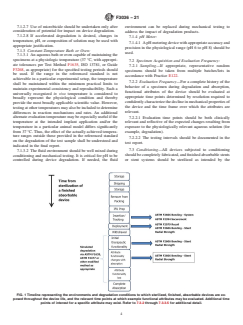
FIG. 1 Timeline representing the environments and degradation conditions to which sterilized, finished, absorbable devices are ex-
posed throughout the device life, and the relevant time points at which example functional attributes may be evaluated. Additional time
points of interest for a specific attribute may exist. Refer to 7.3.2 through 7.3.3.5 for additional detail.
F3036 − 21
manufacturer. This section provides guidance for characteriza- 7.3.3.1 A generalized in vitro degradation test method for
tion of the performance of the stent over time, with sufficient absorbable devices in the absence of mechanical loading or
resolution to adequately characterize the attribute. accelerated conditions can be found in Test Method F1635,
ISO 13781, or Guide F3268, as appropriate.
7.3.1 Fig. 1 presents a timeline for the sterilized, finished,
7.3.3.2 The specific time points chosen throughout degra-
absorbable device in different environments and conditions;
dationwillvaryforthedevicematerial,design,andpotentially,
however, the durations of each phase will vary depending on
the device’s intended use.
the device material and design.
7.3.3.3 An elevated solution temperature or change in solu-
7.3.1.1 The conditioning performed prior to evaluation of a
tion composition enabling an accelerated degradation rate may
specificattributeshouldincludeallrelevantexposuresuptothe
be used with appropriate justification.
finaltimepointfortheattribute(see7.3.2).Relevantexposures
7.3.3.4 If the device is intended for use in a loaded physi-
may include humidity, flow, radial and non-radial cyclic
ologicalcondition,itisimportanttoconsidercharacterizingthe
deformation, all of which need to be conducted under relevant
influence of static and/or fatigue loads during degradation on
thermal conditions.
the mechanical properties of the test specimen. Applied load
7.3.1.2 Itmaybenecessarytomeasureadditionalfunctional
types and magnitudes that are representative of anticipated
attributes of the device as dictated by the indications for use
physiological conditions should be used or an alternative
and/or failure mode.
should be justified. For example, if the user is only considering
NOTE 1—Localized changes are common when evaluating absorbable
radial loads, Test Methods F2477 may be adapted to allow for
stents, especially where stress is concentrated. However, this aspect and
degradation monitoring.
how it may affect mechanical attribute characterization upon degradation
7.3.3.5 If accelerated loading is applied, the degradation
is not directly addressed. For example, radial strength addresses the
should be synchronized to the accelerated loading rate.
therapeutic aspect from the perspective of the whole device but is not
sensitive to localized changes. High-resolution imaging of any morpho-
7.4 Specimen Testing:
logical changes or localized changes in surface area of degradation may
7.4.1 Care and Handling—Care, handling, and positioning
address this to some extent.
of the absorbable device specimen should be conducted in
7.3.2 Upon introduction to the physiologically relevant
accordance with its Instructions for Use where available and
aqueous solution, polymeric absorbable materials will uptake
appropriate.
fluid prior to hydrolysis, which may affect some attributes. For
7.4.2 Testing While Specimen Is Immersed—A reasonable
example, stent radial strength may increase with fluid uptake
approximation of in vivo environmental conditions is to test
prior to a significant change in molecular weight. The user
specimens while fully immersed in a physiologically relevant
should consider characterizing these dynamic attributes upon
aqueous solution at 37 °C, with tolerances per Test Method
deployment of the device and during hydration, prior to a
F1635, ISO 13781, or Guide F3268, as appropriate. If it is not
significant decline in molecular weight. Such attributes should
possible for the apparatus to hold this temperature range, the
also be monitored at multiple time points throughout degrada-
impact of the actually achieved temperature range on the
tion in order to characterize their change over time.
degradation of the test sample shall be understood and indi-
7.3.2.1 If the time frame for fluid uptake is very short, it
cated in the final report.
may not be possible to measure some device functional
7.4.3 Timing—Mechanical testing is to occur within an
attributes after stable hydration and before onset of degrada-
appropriate time after relevant conditioning, as determined by
tion. In these instances, evaluation of device functional attri-
the dehydration behavior of the material being tested and the
butes at deployment as well as interim points at multiple time
sensitivity of the attribute to temperature and hydration state.
points during degradation may be adequate.
Once retrieved, excess conditioning medium may be removed
7.3.2.2 The time required for the specimen to reach a stable
and the specimen should then be promptly positioned in
temperature and/or hydration state may extend longer than the
accordance with the specific test method.
time frame for a particular attribute to become clinically
7.4.4 Ambient Testing—Depending on the specimen and test
relevant. For example, stent securement is only relevant from
method,testingwhilethespecimenisimmersedasdescribedin
insertion through deployment (or through withdrawal if assess-
7.4.2 may be impractical to implement. In these cases, the
ing withdrawal repositioning, or aborted stenting). Similarly,
device may be removed from the conditioning environment
stentsystembendingisrelevantfrominsertionthroughdeploy-
prior to testing. Any damage induced by removal of the
ment. Also, recoil and radial strength become relevant upon
specimen from the conditioning environment (for example,
stent deployment. In such instances, appropriate clinically
removal from a mock vessel) should be identified and assessed
relevant conditioning may not allow for the stent to reach a
for the potential to impact the attribute under measurement. It
stable temperature and/or hydration state.
is also recommended that the relationship between functional
7.3.2.3 Degradable (via corrosion) metals typically do not
outputs in the tested hydration and temperature states and
uptake fluid and, therefore, evaluation of device attributes after
clinically relevant state be assessed. Testing of dried or drying
hydration, prior to degradation, may not be relevant.
specimens should be undertaken with caution due to the
potential to affect the functional attributes and/or variability of
7.3.3 Relevant functional attributes of the device related to
the attribute under measurement.
its therapeutic intent should be evaluated at multiple time
points during degradation to evaluate the kinetics of their 7.4.5 Reporting Requirements—A description of the se-
decline at various stages of chemical breakdown. lected specimen conditioning and testing parameters should be
F3036 − 21
included as separate sections within the report for the respec-
tive attribute’s test method.
8. Keywords
8.1 absorbable;bendtesting;conditioning;degradable;elas-
tic recoil; fatigue; radial loading; securement; stent; stent graft;
vascular scaffold
ANNEXES
(Mandatory Information)
A1. INTRODUCTION TO ANNEXES
A1.1 The provided annexes list specific provisions or varia- provides a listing of needed variations or new provisions
tions to test methods that may be relevant to evaluation of necessary to properly evaluate an absorbable balloon-
absorbable cardiovascular stents. Recommendations specific to
expandable stent or stent system. The provisions listed herein
testing absorbable stent grafts are not addressed here; however,
are specific to the testing of absorbables and carry precedent
these annexes have many elements applicable to testing stent
over language within the referenced standard.
grafts. Each listed annex is specific to a particular standard and
A2. F2606–08 (2021) STANDARD GUIDE FOR THREE-POINT BENDING OF BALLOON-EXPANDABLE VASCULAR STENTS
AND STENT SYSTEMS
A2.1 Unless stated otherwise, terms should be defined as the test specimen is immersed a justification may be provided
presented within Section 3 of this absorbable cardiovascular
if recirculation is not required.
standard. The test specimen should be completely fabricated,
A2.2 Attention is directed to adhere closely to the reporting
and finished absorbable stents or stent systems should be
provision contained in Guide F2606 subsection 9.1.9 regarding
sterilized as intended by the manufacturer. The relevant
thermal sensitivity, and subsection 9.1.10 regarding sensitivity
sampling, conditioning, and testing considerations shall con-
to hydration. Reporting should also include details regarding
sider the information presented within Section 7. Additional
specimen conditioning guidance may be found in Appendix any specimen conditioning and the specific composition of the
X1. It may be necessary to ensure that the test specimen has physiologically relevant immersion solution. Note test results
attained a stable temperature and/or hydration state, where
at different degradation time points and any additional damage
applicable to the device material, before testing. The rate of
to the test specimen (for example, strut fracture).
loading should be appropriate to the material being tested. If
A3. F2079–09 (2017) STANDARD TEST METHOD FOR MEASURING INTRINSIC ELASTIC RECOIL OF BALLOON-
EXPANDABLE STENTS
A3.1 Unless stated otherwise, terms should be defined as Appendix X1. It may be necessary to ensure that the test
presented within Section 3 of this absorbable cardiovascular
specimen has attained a stable temperature and/or hydration
standard. The balloon-expandable test specimen should be
state, where applicable to the device material, before testing.
completely fabricated, and finished absorbable stents or stent
A3.2 The absorbable stent should be fully immersed in a
systems should be sterilized as intended by the manufacturer.
physiologically relevant aqueous solution during expansion
The relevant sampling, conditioning, and testing consider-
and subsequent d
...
This document is not an ASTM standard and is intended only to provide the user of an ASTM standard an indication of what changes have been made to the previous version. Because
it may not be technically possible to adequately depict all changes accurately, ASTM recommends that users consult prior editions as appropriate. In all cases only the current version
of the standard as published by ASTM is to be considered the official document.
Designation: F3036 − 13 F3036 − 21
Standard Guide for
Testing Absorbable Stents
This standard is issued under the fixed designation F3036; the number immediately following the designation indicates the year of
original adoption or, in the case of revision, the year of last revision. A number in parentheses indicates the year of last reapproval. A
superscript epsilon (´) indicates an editorial change since the last revision or reapproval.
1. Scope
1.1 This Guideguide covers select physical and mechanical characterizations of vascular stents with one or more absorbable
components. Such absorbable stents (also referred to as vascular scaffolds) are used to provide temporary luminal support of the
coronary and peripheral vasculature following interventional revascularization procedures. This Guideguide covers devices that are
fabricated from one or more degradable polymers and/or metals (from this point on referred to as “absorbable”). This Guideguide
provides a framework for evaluating the change in select physical and mechanical characteristics of absorbable stents from
manufacture through their intended degradation in vivo. Specific testing recommendations are limited to existing ASTM standards
for stent evaluation.
1.2 Recommendations specific to non-absorbable stents with absorbable coatings are not within scope.
1.3 Recommendations specific to testing absorbable stent grafts are not provided here, howeverhere; however, this standard has
many elements applicable to testing absorbable stent grafts.
1.4 Clinical need dictates that absorbable stents initially possess the same general dimensions and mechanical function as their
non-absorbable counterparts. Thus, utilization of already established mechanical stent evaluation methods is possible when
absorbable test specimens are previously conditioned under physiologically relevant temperature and humidity. As a result, this
standard addresses absorbable-specific testing issues related to the mechanical and physical evaluation of these devices. This
standard is limited to providingThe annexes in this standard provide absorbable-specific testing recommendations for evaluations
where an ASTM test method for durable (i.e., (that is, non-absorbable) stents is already available. Specifically, this standard
provides testing recommendations for adapting the elastic recoil (ASTM (F2079), dimensional attributes (F2081), securement/
dislodgement (ASTM (F2394), and pulsatile durability (F2477), FEA of stents (F2514), three-point bending (ASTM(F2606),
coating/acute particulate characterization (F2606F2743), shelf life (F2914), axial bend torsional rigidity (F2942), radial loading
(F3067), design verification sampling (F3172), fatigue to fracture (F3211), and fixation durability (F3374) tests to fully absorbable
devices. This guide generally describes specimen conditioning, as appropriate, for absorbable devices, which can range from none
to extensive – depending on the measured attribute and relevant clinical exposure conditions, including time in the in-use
environment. There are additional Additional stent evaluation methods that are not addressed explicitly in this guide, e.g., chronic
durability, that guide may require absorbable-specific provisions. The user should justify the appropriate testing for the specific
polymer absorbable material and device.
1.4.1 While the primary purpose of this guide is to address absorbable stent-related issues specific to the tests described in Section
1.31.4, additional testing (e.g., (for example, radial strength) will likely also be needed. Thus, aspects of what is presented herein
may be applicable to additional relevant device attributes, such as those described in ISO 25539-1 and/or 25539-2.
This test method guide is under the jurisdiction of ASTM Committee F04 on Medical and Surgical Materials and Devices and is the direct responsibility of Subcommittee
F04.30 on Cardiovascular Standards.
Current edition approved Nov. 1, 2013Nov. 1, 2021. Published December 2013November 2021. Originally approved in 2013. Last previous edition approved in 2013 as
F3036 – 13. DOI: 10.1520/F3036-13.10.1520/F3036-21.
Copyright © ASTM International, 100 Barr Harbor Drive, PO Box C700, West Conshohocken, PA 19428-2959. United States
F3036 − 21
1.5 This Guideguide may not be appropriate for all absorbable devices, for example those that possess limited hydrolytic or
corrosion susceptibility and degrade in vivo primarily through enzymatic action. The user is cautioned to consider the
appropriateness of the standard in view of the particular absorbable device and its potential application.
1.6 This Guideguide does not address the methods necessary to characterize the chemical degradation of the absorbable stent (e.g.,
(for example, changes in mass, molecular weight, or degradants). However, this type of characterization does represent an
important component of the degradation profile and mechanism of the device. These characterizations are addressed in ASTM Test
Method F1635., ISO 13781, or Guide F3268, as appropriate.
1.7 The provided supplemental information is to be considered as specific to absorbable constructs and applies only to the
respective referenced cardiovascular-oriented ASTM documents.
1.8 Additional (especially non-mechanical) device attributes that are not addressed in this document or through the current
cardiovascular-oriented ASTM standards may also be relevant to appropriate evaluation of absorbable stent constructs. See ISO/TS
17137 for additional guidance on such cardiovascular-specific absorbable device considerations.
1.9 The values stated in SI units are to be regarded as standard. No other units of measurement are included in this standard.
1.10 This standard does not purport to address all of the safety concerns, if any, associated with its use. It is the responsibility
of the user of this standard to establish appropriate safety safety, health, and healthenvironmental practices and determine the
applicability of regulatory limitations prior to use.
1.11 This international standard was developed in accordance with internationally recognized principles on standardization
established in the Decision on Principles for the Development of International Standards, Guides and Recommendations issued
by the World Trade Organization Technical Barriers to Trade (TBT) Committee.
2. Referenced Documents
2.1 ASTM Standards:
D618 Practice for Conditioning Plastics for Testing
E6 Terminology Relating to Methods of Mechanical Testing
E122 Practice for Calculating Sample Size to Estimate, With Specified Precision, the Average for a Characteristic of a Lot or
Process
E1823 Terminology Relating to Fatigue and Fracture Testing
F1635 Test Method for in vitro Degradation Testing of Hydrolytically Degradable Polymer Resins and Fabricated Forms for
Surgical Implants
F2079 Test Method for Measuring Intrinsic Elastic Recoil of Balloon-Expandable Stents
F2081 Guide for Characterization and Presentation of the Dimensional Attributes of Vascular Stents
F2394 Guide for Measuring Securement of Balloon Expandable Vascular Stent Mounted on Delivery System
F2477 Test Methods for in vitro Pulsatile Durability Testing of Vascular Stents
F2514 Guide for Finite Element Analysis (FEA) of Metallic Vascular Stents Subjected to Uniform Radial Loading
F2606 Guide for Three-Point Bending of Balloon-Expandable Vascular Stents and Stent Systems
F2743 Guide for Coating Inspection and Acute Particulate Characterization of Coated Drug-Eluting Vascular Stent Systems
F2902 Guide for Assessment of Absorbable Polymeric Implants
F2914 Guide for Identification of Shelf-life Test Attributes for Endovascular Devices
F2942 Guide for in vitro Axial, Bending, and Torsional Durability Testing of Vascular Stents
F3067 Guide for Radial Loading of Balloon-Expandable and Self-Expanding Vascular Stents
F3172 Guide for Design Verification Device Size and Sample Size Selection for Endovascular Devices
F3211 Guide for Fatigue-to-Fracture (FtF) Methodology for Cardiovascular Medical Devices
F3268 Guide for in vitro Degradation Testing of Absorbable Metals
F3374 Guide for Active Fixation Durability of Endovascular Prostheses
2.2 Other Standards:
ISO 14630 Non-Active Surgical Implants—General Requirements
ISO 25539-1 Cardiovascular implants—Endovascular devices—Part 1: Endovascular prostheses
For referenced ASTM standards, visit the ASTM website, www.astm.org, or contact ASTM Customer Service at service@astm.org. For Annual Book of ASTM Standards
volume information, refer to the standard’s Document Summary page on the ASTM website.
Available from American National Standards Institute (ANSI), 25 W. 43rd St., 4th Floor, New York, NY 10036, http://www.ansi.org.
F3036 − 21
ISO 25539-2 Cardiovascular implants—Endovascular devices—Part 2: Vascular stents
ISO 10993-1 Biological evaluation of medical devices—Part 1: Evaluation and testing within a risk management process
ISO 10993-9 Biological evaluation of medical devices—Part 9: Framework for identification and quantification of potential
degradation products
ISO 10993-13 Biological evaluation of medical devices—Part 13: Identification and quantification of degradation products from
polymeric medical device
ISO 10993-15 Biological evaluation of medical devices—Part 15: Identification and quantification of degradation products from
metals and alloys
ISO 13781 Implants for surgery—Homopolymers, copolymers and blends on poly(lactide)—In vitro degradation testing
ISO/TS 17137 Cardiovascular implants and extracorporeal systems—Cardiovascular absorbable implants
3. Terminology
3.1 Definitions:
3.1.1 Unless otherwise defined in this standard, the terminology related to mechanical testing that is used in these test methods
will be in accordance with the definitions of Terminologies ASTM E6 and ASTM E1823, and the respective standards described
in the annexes of this document.
3.1.2 absorbable, adj—in the body, referring to an initially distinct foreign material or substance that either directly or through
intended degradation can be excreted, metabolized, or assimilated by cells and/or tissue.
3.1.3 stent, vascular, n—a structure implanted in the native or grafted vasculature that is intended to provide mechanical radial
support to enhance vessel patency.
3.1.3 conditioning, v—preparation of the device prior to mechanical testing to include elements that (1) affect the attribute to be
tested, and (2) are imposed on device per clinical and/or degradation timeline up to points of interest for the attribute.
3.1.4 stent, vascular, n—a tubular structure that is implanted in the native or grafted vasculature and is intended to provide
mechanical radial support to enhance vessel patency over the intended design life of the device. A stent is not covered by synthetic
textile or tissue graft material.
4. Significance and Use
4.1 Absorbable cardiovascular stents provide temporary support to the vasculature and are intended to degrade and absorb over
time after being implanted into the vasculature.
4.2 The test methods used to evaluate the mechanical performance of absorbable devices are similar to those used to evaluate
permanent (non-absorbable) cardiovascular devices. The absorbable-specific pre-test conditioning requirements, handling
requirements before and during the test, and time-dependent mechanical property evaluations for absorbable devices are addressed
here.
4.3 As the absorbable implant degrades, the mechanical performance of the device also deteriorates. The key to achieving effective
revascularization with absorbable devices is to provide an adequate level of luminal support for the time frame needed for vessel
stabilization.
5. Materials and Manufacture
5.1 The manufacturer should ensure that materials used to manufacture absorbable implants are suitable for implanting into the
body. General requirements regarding a material’s suitability for use as an implant are described in ISO 14630. Methods and
guidance for assessment of biocompatibility can be found in ISO 10993. There may be additional issues related to the
biocompatibility of absorbable materials that are not covered in ISO 10993.
6. General Requirements and Performance Considerations
6.1 Absorbable Stents—The following considerations may be important when determining the suitability of a stent for a particular
F3036 − 21
application. However, the test methods referenced as in the Annexesannexes may not be appropriate for all types of implant
applications. The user is cautioned to consider the appropriateness of the test methods in view of the devices being tested and their
potential application.
6.1.1 Performance Considerations:
6.1.1.1 To better characterize the degradation and degradation products of the absorbable stent, significant effort should be
undertaken toward developing an in vitro model for the anticipated in vivo degradation mechanism (e.g., (for example, corrosion,
hydrolysis, etc.). Such a model would reflect the implant’s composition and any related interaction(s) with the physiologically
relevant aqueous solution, including – as appropriate – including, as appropriate, consideration of the influence of additives (e.g.,
(for example, anti-microbials), temperature, ionic composition and strength, pH, and fluid flow conditions. This in vitro model
might also be used to assess subsequent changes to the absorbable stent in lieu of animal experimentation.
6.1.1.2 Composition/chemical properties in the finished, sterilized state and during degradation.
6.1.1.3 Mechanical behavior of the finished, sterilized device and during degradation. Mechanical evaluation should be completed
for relevant device attributes including, but not limited to bending (e.g., bending (for example, bending stiffness). Additional
mechanical characteristics may need to be evaluated to determine the degree of vascular support and resistance to non-radial vessel
deformation.
6.1.1.4 While chronic durability should be assessed for absorbable stents, this Guideguide does not specify methods to perform
this characterization. The user should justify the appropriate pre-conditioning (for example, aging to labeled shelf life) and
durability testing for the specific absorbable stent, including structural integrity and the potential for device embolization.
6.1.2 Aging and Shelf Life Requirements:
6.1.2.1 The user should establish the labeled shelf-life shelf life of the absorbable device through appropriate real-time studies
according to ASTMGuide F2914. Appropriate storage conditions (for example, refrigerated, room temperature, relative humidity)
need to be defined and then modeled at the most challenging limit of the acceptable labeled range. A justification for attributes
covered in this guide not addressed as part of real-time studies should be provided. Accelerated testing may be performed with
appropriate justification. Additional guidance regarding product shelf life considerations can be found in Guide F2902 and in
ISO/TS 17137, which also contains guidance regarding accelerated aging.
7. General Sampling, Conditioning, and Testing Considerations
7.1 Apparatus, Equipment, and Materials—The test equipment should be maintained to the necessary precision and accuracy, as
appropriate for the specific device and functional output being tested.
7.1.1 Specimen Container—A glass or plastic container capable of holding the test specimen and the conditioning solution should
be used. The container should be sealable to prevent solution loss due to evaporation, as appropriate. Multiple specimens may be
stored in the same container, provided (1) suitable specimen separation is maintained to allow fluid access to each specimen
surface, (2) specimen-to-specimen contact is precluded, and (3) the environment is identical.
7.1.2 Conditioning/Soaking Solution:
7.1.2.1 For absorbable stents manufactured from hydrolytically degradable polymers, a physiologically relevant aqueous solution
should be used. (Forused; for more detail see ASTM Test Method F1635 and References contained in Section X1.2).
7.1.2.2 For absorbable stents fabricated from degradable (via corrosion) metals, a physiologically relevant aqueous solution with
appropriate pH, buffer capacity, isotonicity, and ion concentration should be used; for more detail see Guide F3268.
7.1.2.3 For absorbable stents fabricated from degradable (corrodible) metals, a physiologically relevant aqueous solution with
appropriate pH, buffer capacity, isotonicity, and ion concentration should be used (e.g., artificial plasma: ISO 10993-15). The user
is cautioned that the ions present in the soaking solution (and in blood) may carry potential to chemically react with the released
metallic ions.The user is cautioned that the ions present in the soaking solution (and in blood) may carry potential to chemically
react with the released metallic ions. pH should be controlled to 60.2. If it is not possible to hold this pH range, the impact of
the wider pH range on the degradation of the test sample shall be understood and indicated in the final report.
F3036 − 21
7.1.2.4 A buffer should be considered as critical for pH control, but can be undertaken at reduced levels with more stringent or
continuous pH monitoring and compensation.
7.1.2.5 Non-phosphate buffers may be necessary with the selected buffer likely different for absorbable polymeric and metallic test
specimens, where the utilized buffer will be degradation mechanism dependent.
7.1.2.6 Limited excursions outside of the specified pH range are tolerable provided the time-weighted average (TWA) pH after
buffer replenishment is maintained within this range (see TWA discussion and related appendix within Test Method F1635).
7.1.2.7 Use of microbicide should be undertaken only after consideration of potential for impact on device degradation.
7.1.2.8 If accelerated degradation is desired, changes in temperature, pH, or composition of solution may be used with appropriate
justification.
7.1.3 Constant Temperature Constant-Temperature Bath or Oven:
7.1.3.1 An aqueous bath or oven capable of maintaining the specimens at a physiologic temperature (37 6 2°C) (37 °C, with
appropriate tolerances per Test Method F1635, ISO 13781, or Guide F3268, as appropriate) for the specified testing periods should
be used. If the range in the referenced standard is not achievable in a particular experimental setup, the temperature shall be
maintained within the minimum practical limits to maintain experimental consistency and reproducibility. Such a universally
recognized in vivo temperature is considered to broadly represent the physiological condition and thereby provide the most broadly
applicable scientific value. However, testing at other temperatures may also be included to determine differences in reaction
mechanisms and rates. An additional alternate evaluation temperature may be especially useful if the temperature at the intended
implant application and/or the temperature in a particular animal model differs significantly from 37 °C. Thus, the effect of the
actually achieved temperature ranges outside those provided in the referenced standard on the degradation of the test sample shall
be understood and indicated in the final report.
7.1.3.2 The fluid environment should be well-mixed well mixed during conditioning and mechanical testing. It is critical for pH
to be controlled during device degradation. If needed, the fluid environment can be replaced during mechanical testing to address
the impact of degradation products.
7.1.4 pH Meter:
7.1.4.1 A pH metering device with appropriate accuracy and precision in the physiological range (pH 6 to pH 8) should be used.
7.2 Specimen Acquisition &and Evaluation Frequency:
7.2.1 Sampling—If appropriate, representative random specimens should be taken from multiple batches/lots in accordance with
Practice E122.
7.2.2 Evaluation Frequency—For a complete history of the behavior of a specimen during degradation and absorption, functional
attributes of the device should be evaluated at appropriate time points determined by resolution required to confidently characterize
the decline in mechanical properties of the device and the time frame over which the attributeattributes are relevant.
7.2.2.1 Evaluation time points should be both clinically relevant and reflective of the expected changes resulting from exposure
to the physiologically relevant aqueous solution (e.g., (for example, degradation).
7.2.2.2 The testing intervals should be documented in the test report.
7.3 Conditioning—All devices subjected to conditioning should be completely fabricated, and finished absorbable stents or stent
systems should be sterilized as intended by the manufacturer. This section provides guidance for characterization of the
performance of the stent over time, with sufficient resolution to adequately characterize the attribute.
7.3.1 Fig. 1 presents a timeline for the sterilized, finished, absorbable device in different environments and conditions; however,
the durations of each phase will vary depending on the device material and design.
7.3.1.1 The conditioning performed prior to evaluation of a specific attribute should include all relevant exposures up to the final
F3036 − 21
FIG. 1 Timeline representing the environments and degradation conditions to which sterilized, finished, absorbable devices are ex-
posed throughout the device life;life, and the relevant time points at which example functional attributes may be evaluated. Additional
time points of interest for a specific attribute may exist. Refer to Sections 7.3.2 through 7.3.3.5 for additional detail.
time point for the attribute (see 7.3.2). Relevant exposures may include humidity, flow, radial and non-radial cyclic deformation,
all of which need to be conducted under relevant thermal conditions.
7.3.1.2 It may be necessary to measure additional functional attributes of the device as dictated by the indications for use and/or
failure mode.
NOTE 1—Localized changes are common when evaluating absorbable stents, especially where stress is concentrated. However, this aspect and how it may
affect mechanical attribute characterization upon degradation is not directly addressed. For example, radial strength addresses the therapeutic aspect from
the perspective of the whole device but is not sensitive to localized changes. High-resolution imaging of any morphological changes or localized changes
in surface area of degradation may address this to some extent.
7.3.2 Upon introduction to the physiologically relevant aqueous solution, polymeric absorbable materials will uptake fluid prior
to hydrolysis, which may affect some attributes. For example, stent radial strength may increase with fluid uptake prior to a
significant change in molecular weight. The user should consider characterizing these dynamic attributes upon deployment of the
device and during hydration, prior to a significant decline in molecular weight. Such attributes should also be monitored at multiple
time points throughout degradation in order to characterize their change over time.
7.3.2.1 If the time frame for fluid uptake is very short, it may not be possible to measure some device functional attributes after
stable hydration and before onset of degradation. In these instances, evaluation of device functional attributes at deployment as
well as interim points at multiple time points during degradation may be adequate.
7.3.2.2 The time required for the specimen to reach a stable temperature and/or hydration state may extend longer than the time
frame for a particular attribute to become clinically relevant. For example, stent securement is only relevant from insertion through
deployment (or through withdrawal if assessing withdrawal repositioning, or aborted stenting). Similarly;Similarly, stent system
bending is relevant from insertion through deployment. Also, recoil and radial strength become relevant upon stent deployment.
In such instances, appropriate clinically relevant conditioning may not allow for the stent to reach a stable temperature and/or
hydration state.
7.3.2.3 Degradable (corrodible) (via corrosion) metals typically do not uptake fluid and, therefore, evaluation of device attributes
after hydration, prior to degradation, may not be relevant.
F3036 − 21
7.3.3 Relevant functional attributes of the device related to its therapeutic intent should be evaluated at multiple time points during
degradation to evaluate the kinetics of their decline at various stages of chemical breakdown.
7.3.3.1 A generalized in vitro degradation test method for absorbable devices in the absence of mechanical loading or accelerated
conditions can be found in ASTM Test Method F1635., ISO 13781, or Guide F3268, as appropriate.
7.3.3.2 The specific time points chosen throughout degradation will vary for the device material, design, and potentially, the
device’s intended use.
7.3.3.3 An elevated solution temperature or change in solution composition enabling an accelerated degradation rate may be used
with appropriate justification.
7.3.3.4 If the device is intended for use in a loaded physiological condition, it is important to consider characterizing the influence
of static and/or fatigue loads during degradation on the mechanical properties of the test specimen. Applied load types and
magnitudes that are representative of anticipated physiological conditions should be used or an alternative should be justified. For
example, if the user is only considering radial loads, ASTM Test Methods F2477 (Test Method for Radial Pulsatile Fatigue of
Stents) may be adapted to allow for degradation monitoring.
7.3.3.5 If accelerated loading is applied, the degradation should be synchronized to the accelerated loading rate.
7.4 Specimen Testing:
7.4.1 Care and Handling—Care, handling, and positioning of the absorbable device specimen should be conducted in accordance
with its Instructions for Use where available and appropriate.
7.4.2 Testing whileWhile Specimen isIs Immersed—A reasonable approximation of in vivo environmental conditions is to test
specimens while fully immersed in a physiologically relevant aqueous solution at 37 6 2°C.37 °C, with tolerances per Test Method
F1635, ISO 13781, or Guide F3268, as appropriate. If it is not possible for the apparatus to hold this temperature range, the impact
of the actually achieved temperature range on the degradation of the test sample shall be understood and indicated in the final
report.
7.4.3 Timing—Mechanical testing is to occur within an appropriate time after relevant conditioning, as determined by the
dehydration behavior of the material being tested and the sensitivity of the attribute to temperature and hydration state. Once
retrieved, excess conditioning medium may be removed and the specimen should then be promptly positioned in accordance with
the specific test method.
7.4.4 Ambient Testing—Depending on the specimen and test method, testing while the specimen is immersed as described in
Section 7.4.2 may be impractical to implement. In these cases, the device may be removed from the conditioning environment prior
to testing. Any damage induced by removal of the specimen from the conditioning environment (e.g., (for example, removal from
a mock vessel) should be identified and assessed for the potential to impact the attribute under measurement. It is also
recommended that the relationship between functional outputs in the tested hydration and temperature states and clinically relevant
state be assessed. Testing of dried or drying specimens should be undertaken with caution due to the potential to affect the
functional attributes and/or variability of the attribute under measurement.
7.4.5 Reporting Requirements—The A description of the selected specimen conditioning and testing parameters should be included
in as separate sections within the report (seefor X1.4).the respective attribute’s test method.
8. Keywords
8.1 absorbable; bend testing; conditioning; degradable; elastic recoil; fatigue; radial loading; securement; stent; stent graft;
vascular scaffold
F3036 − 21
ANNEXES
(Mandatory Information)
A1. INTRODUCTION TO ANNEXES
A1.1 The provided annexes list specific provisions or variations to test methods that may be relevant to evaluation of absorbable
cardiovascular stents. Recommendations specific to testing absorbable stent grafts are not addressed here, howeverhere; however,
these annexes have many elements applicable to testing stent grafts. Each listed annex is specific to a particular standard and
provides a section-by-section listing of needed variations or new provisions necessary to properly evaluate an absorbable
balloon-expandable stent or stent system. The provisions listed herein are specific to the testing of absorbables and carry precedent
over language within the referenced standard.
A2. F2606-08 –08 (2021) STANDARD GUIDE FOR THREE-POINT BENDING OF BALLOON-EXPANDABLE VASCULAR
STENTS AND STENT SYSTEMS
A2.1 Scope
A2.1.1 There are no absorbable specific provisions.
A2.2 Terminology
A2.2.1 Unless stated otherwise, terms should be defined as presented within Section 3 of this absorbable cardiovascular standard.
A2.3 Significance and Use
A2.3.1 There are no absorbable specific provisions or variations.
A2.4 Summary of Guide
A2.4.1 Three-point bending evaluation of absorbable stent specimens is undertaken while completely immersed in a physiologi-
cally relevant aqueous-based solution or other appropriate medium maintained at 37 6 2°C. As described in Section 7.3, the
conditioning performed prior to evaluation of a three-point bending of the delivery system should include all relevant exposures
from insertion through deployment, and three-point testing of the stent should include additional exposure as appropriate.
A2.4.2 Evaluation of absorbable stent systems (e.g., catheter mounted) may be performed in standardized room temperature
conditions as described in Section 7.3, if the temperature and hydration are not expected to affect the test article, or the relationship
between temperature, hydration and three-point bending performance is known.
F3036 − 21
A2.5 Apparatus
A2.5.1 Test specimen—The test specimen should be completely fabricated, and finished absorbable stents or stent systems should
be sterilized as intended by the manufacturer.
A2.5.2 Evaluation of the bending properties of deployed (i.e., unmounted) absorbable stent specimens should occur while
completely immersed in a fluid medium maintained at 37 6 2°C. Therefore, the testing apparatus should include a fluid
containment component or bath and fluid heating and recirculating instrumentation. If recirculation is not required (e.g., the fluid
volume is low and the heating surface is large), then a justification may be provided. Details regarding appropriate physiologically
relevant fluids are provided in Section 7.3.
A2.6 Test Specimens
A2.6.1 There are no absorbable specific provisions or variations.
A2.1 ProcedureA2.1 Unless stated otherwise, terms should be defined as presented within Section 3 of this absorbable
cardiovascular standard. The test specimen should be completely fabricated, and finished absorbable stents or stent systems should
be sterilized as intended by the manufacturer. The relevant sampling, conditioning, and testing considerations shall consider the
information presented within Section 7. Additional specimen conditioning guidance may be found in Appendix X1. It may be
necessary to ensure that the test specimen has attained a stable temperature and/or hydration state, where applicable to the device
material, before testing. The rate of loading should be appropriate to the material being tested. If the test specimen is immersed
a justification may be provided if recirculation is not required.
A2.7.1 When testing while the specimen is immersed:
A2.7.1.1 Assure that the solution temperature at the point of testing complies with test requirements.
A2.7.1.2 Assure the test specimens are completely immersed in the solution throughout the test and compensate for potential
buoyancy factors as appropriate.
A2.7.1.3 It may be necessary to ensure that the specimens have attained a stable temperature and/or hydration state, where
applicable to the device material before testing.
A2.7.1.4 The rate of loading should be appropriate to the material being tested.
A2.8 Calculation and Interpretation of Data
A2.8.1 There are no absorbable specific provisions or variations.
A2.2 ReportA2.2 Attention is directed to adhere closely to the reporting provision contained in Guide F2606 subsection 9.1.9
regarding thermal sensitivity, and subsection 9.1.10 regarding sensitivity to hydration. Reporting should also include details
F3036 − 21
regarding any specimen conditioning and the specific composition of the physiologically relevant immersion solution. Note test
results at different degradation time points and any additional damage to the test specimen (for example, strut fracture).
A2.9.1 Attention is directed to adhere closely to the reporting provision contained in ASTM F2606 Section 9.1.9, regarding
thermal sensitivity, and Section 9.1.10, regarding sensitivity to hydration. Reporting should include details regarding any specimen
conditioning and the specific composition of the physiologically relevant immersion solution.
A2.9.2 Additional damage: Indicate if any damage to the test specimen occurred during the test (for example, strut fracture).
A3. F2079-09 –09 (2017) STANDARD TEST METHOD FOR MEASURING INTRINSIC ELASTIC RECOIL OF BALLOON-
EXPANDABLE STENTS
A3.1 Scope
A3.1.1 It is not the intention of this Annex or test method to define levels of performance, in that insufficient information is
available to predict the consequences of any particular design.
A3.1.2 This Annex is intended for balloon-expandable absorbable stents.
A3.1 TerminologyA3.1 Unless stated otherwise, terms should be defined as presented within Section 3 of this absorbable
cardiovascular standard. The balloon-expandable test specimen should be completely fabricated, and finished absorbable stents or
stent systems should be sterilized as intended by the manufacturer. The relevant sampling, conditioning, and testing considerations
shall consider the information presented within Section 7. Additional specimen conditioning guidance may be found in Appendix
X1. It may be necessary to ensure that the test specimen has attained a stable temperature and/or hydration state, where applicable
to the device material, before testing.
A3.2.1 Unless stated otherwise, terms should be defined as presented within Section 3 of this absorbable stent standard.
A3.3 Significance and Use
A3.3.1 There are no absorbable specific provisions or variations.
A3.4 Summary of Test Method
A3.4.1 As stated in ASTM F2079, this test method provides recommendations for measuring the stent diameter while it is still
mounted on the balloon and following deflation of the balloon such that it is no longer in contact with the stent. In addition, the
diameter measurements should be acquired using non-contact methods. The absorbable stent should be fully immersed in a
physiologically relevant aqueous solution maintained at 37 6 2°C during expansion and subsequent deflation of the balloon and
measurement of intrinsic elastic recoil.
F3036 − 21
A3.5 Apparatus
A3.5.1 Expansion of the absorbable stent specimen and subsequent deflation of the delivery balloon should be undertaken while
completely immersed in a physiologically relevant aqueous solution maintained at 37 6 2°C. Therefore, a fluid bath as well as a
fluid heating and recirculation instrument are necessary. Details regarding appropriate physiologically relevant fluids are provided
in Section 7.1. Additional specimen conditioning guidance may be found in Appendix X1.
A3.5.2 If possible, the calibrated optical system used for measuring diameter of the stent should allow for the stent to be fully
immersed in physiologically relevant fluid at 37 6 2°C. If this bath cannot be integrated with the optical system, the stent and its
delivery system may be removed from the bath and immediately measured for its diameter.
A3.6 Sampling, Test Specimens, and Test Units
A3.6.1 Test specimen—The test specimen should be completely fabricated, and finished absorbable stents or stent systems should
be sterilized as intended by the manufacturer.
A3.2 ProcedureA3.2 The absorbable stent should be fully immersed in a physiologically relevant aqueous solution during
expansion and subsequent deflation of the balloon and measurement of intrinsic elastic recoil. If possible, the calibrated optical
system used for measuring diameter of the stent should allow for the stent to be fully immersed during measuring. If this bath
cannot be integrated with the optical system, the stent and its delivery system may be removed from the bath and immediately
measured for its diameter. If the test specimen is immersed a justification may be provided if recirculation is not required. Because
recoil properties may exhibit some time dependency, the recoil measurements may be acquired on immersed stents immediately
following balloon deployment and/or at some time point after deployment, but before significant degradation, consistent with the
Instructions for Use and/or clinical practice, to ensure that the diameter has stabilized. The time points at which the stent diameter
is measured with the balloon in the inflated and deflated states should be specified and justified.
A3.7.1 It may be necessary to expose the device to an appropriate medium such that temperature and/or hydration levels are
clinically relevant before testing (see Section 7.3).
A3.7.2 When deploying the stent and deflating the balloon, assure the test specimens are completely immersed in the solution
throughout the time period necessary to perform the deployment and deflation.
A3.7.3 When deploying the stent and deflating the balloon while the specimen is immersed, assure that the solution temperature
at the point of testing complies with test requirements.
A3.7.4 Because recoil properties may exhibit some time dependency, the recoil measurements may be acquired on immersed
stents immediately following balloon deployment and/or at some time point after deployment, but before significant degradation,
consistent with the Instructions for Use and/or clinical practice, to ensure that the diameter has stabilized. The time points at which
the stent diameter is measured with the balloon in the inflated and deflated states should be specified and justified.
F3036 − 21
A3.8 Calculation
A3.8.1 There are no absorbable stent specific provisions or variations.
A3.3 ReportA3.3 Attention is directed to adhere to the reporting provision contained in Test Method F2079 subsection 9.1.8
regarding temperature, including range. Reporting should also include details regarding specimen immersion, any conditioning,
and the specific composition of the physiologically relevant immersion solution.
A3.9.1 Attention is directed to adhere to the reporting provision contained in ASTM F2079 Section 9.1.8, regarding temperature.
Reporting should include details regarding specimen immersion, any conditioning, and the specific composition of the
physiologically relevant immersion solution.
A3.10 Precision and Bias
A3.10.1 There are no absorbable stent specific provisions or variations.
A3.11 Keywords
A3.11.1 There are no absorbable stent specific provisions or variations.
A4. F2081–06 (2017) STANDARD GUIDE FOR CHARACTERIZATION AND PRESENTATION OF THE DIMENSIONAL
ATTRIBUTES OF VASCULAR STENTS
A4.1 Unless stated otherwise, terms should be defined as presented within Section 3 of this absorbable cardiovascular standard.
The test specimen should be completely fabricated, and finished absorbable stents or stent systems and should be sterilized as
intended by the manufacturer. The relevant sampling, conditioning, and testing considerations shall consider the information
presented within Section 7. Additional specimen conditioning guidance may be found in Appendix X1. It may be necessary to
ensure that the test specimen has attained a stable temperature and/or hydration state, where applicable to the device material,
before testing. If the test specimen is immersed, a justification may be provided if recirculation is not required.
A4.2 Consideration should be given to potential changes in stent dimensional attributes post implantation (for example, swelling
due to hydration) but prior to significant degradation. Clinically significant changes in inner diameter and/or stent length shall be
characterized and understood.
A4.3 The absorbable stent should be prepared and deployed unconstrained per IFU in a physiologically relevant aqueous solution.
Dimensional measurements should be taken post deployment and at subsequent time points, (for example, 24 h), until dimensional
stability is reached (<10 % change from previous measurement).
F3036 − 21
A4.4 It is recommended to determine the limit of expansion prior to strut fracture. While immersed in a physiologically relevant
aqueous solution, the stent should be expanded with increasing balloon sizes until strut fracture is observed. The internal diameter
at fracture may be estimated from the balloon inflation pressure compliance chart.
NOTE A4.1—As an alternative to conducting the expansion test while immersed in a physiologically relevant aqueous solution, the device can be
preconditioned (tracking through a torturous path model without withdrawal of the delivery system and dilation to RBP) prior to the test, simulating the
mechanical loading and effect of the solution during implantation of the device. The stent expanded to RBP can then immediately be tested in air (still
soaked and wet), if an actual measurement of the diameter at fracture is conducted, instead of an estimation based on pressure compliance charts.
A5. F2394-07 –07 (2017) STANDARD GUIDE FOR MEASURING SECUREMENT OF BALLOON-EXPANDABLE VASCULAR
STENT MOUNTED ON DELIVERY SYSTEM
A4.1 Scope
A4.1.1 There are no absorbable specific provisions or variations. It is not the intention of this Annex or test method to define levels
of performance, in that insufficient information is available to predict the consequences of any particular design.
A4.1.2 This Annex is intended for balloon-expandable absorbable stents. This Annex does not provide for assessing securement
of self-expanding stents.
A4.2 Terminology
A4.2.1 Unless stated otherwise, terms should be defined as presented within Section 3 of this absorbable stent standard.
A4.3 Significance and Use
A4.3.1 There are no absorbable specific provisions or variations.
A4.4 Clinical Scenarios
A4.4.1 There are no absorbable specific provisions or variations.
A5.1 Test Method ConsiderationsA5.1 Unless stated otherwise, terms should be defined as presented within Section 3 of this
absorbable cardiovascular standard. The balloon-expandable test specimen should be completely fabricated, and finished
absorbable stents or stent systems should be sterilized as intended by the manufacturer. The relevant sampling, conditioning, and
testing considerations shall consider the information presented within Section 7. Additional specimen conditioning guidance may
be found in Appendix X1. It may be necessary to ensure that the test specimen has attained a stable temperature and/or hydration
state, where applicable to the device material, before testing.
F3036 − 21
A4.5.1 Test specimen—The test specimen should be completely fabricated, and finished absorbable stents or stent systems should
be sterilized as intended by the manufacturer.
A5.2 Apparatus and ProcedureA5.2 Relevant environmental conditions for evaluating securement of absorbable stents include
dry conditions at room temperature or fully immersed conditions at physiologic temperature
...