

ASTM E1326-20
(Guide)Standard Guide for Evaluating Non-culture Microbiological Tests
General Information
- Abstract
SIGNIFICANCE AND USE
5.1 This guide should be used by producers and potential producers of non-culture tests to determine the accuracy, selectivity, specificity, and precision of the tests, as defined in Practice E691. Results of such studies should identify the limitations and indicate the utility or applicability of the non-culture test, or both, for use on different types of samples. Guide E1488 recommends other statistical tools for evaluating the suitability and applicability of proposed new test methods.
5.2 Non-culture test users and potential users should employ this guide to evaluate results of the non-culture test as compared to their present methods. Practices D5245 and D5465 should be reviewed in regards to the microbiological methods employed. If culture methods have not been used for monitoring the systems, then guidelines are included for obtaining microbiological expertise.
5.3 Utilization of a non-culture test can reduce the time required to determine the microbiological status of the system and detect microbe that are not detected by culture testing. Consequently, non-culture tests can contribute to the improvement in the overall operating efficiency of microbial contamination condition monitoring and diagnostic efforts, and microbicide performance evaluations.
5.4 Detecting microbial contamination levels that exceed predetermined upper control limits indicates the need for an addition of an antimicrobial agent or other corrective maintenance action. By accurately determining this in a shorter time period than is possible than by culture methods, treatment with antimicrobial agents may circumvent more serious problems than if the treatment were postponed until culture results were available. If the antimicrobial treatment program relied on an inaccurate non-culture test, then unnecessary loss of product and problems associated with inappropriate selection or improper dosing with antimicrobial agents would exist.
5.5 Since many methods based on entirely diff...
SCOPE
1.1 The purpose of this guide is to assist users and producers of non-culture microbiological tests in determining the applicability of the test for processing different types of samples and evaluating the accuracy of the results. Culture test procedures such as the Heterotrophic (Standard) Plate Count, the Most Probable Number (MPN) method and the Spread Plate Count are widely cited and accepted for the enumeration of microorganisms. However, these methods have their limitations, such as performance time. Moreover, any given culture test method typically recovers only a portion of the total viable microbes present in a sample. It is these limitations that have recently led to the marketing of a variety of non-culture procedures, test kits and instruments.
1.2 Culture test methods estimate microbial population densities based on the ability of mircoorganisms in a sample to proliferate in or on a specified growth medium, under specified growth conditions. Non-culture test methods attempt to provide the same or complimentary information through the measurement of a different parameter. This guide is designed to assist investigators in assessing the accuracy and precision of non-culture methods intended for the determination of microbial population densities or activities.
1.3 It is recognized that the Heterotrophic Plate Count (HPC) does not recover all microorganisms present in a product or a system (1, 2).2 When this problem occurs during the characterization of a microbiological population, alternative standard enumeration procedures may be necessary, as in the case of sulfate-reducing bacteria. At other times, chemical methods that measure the rates of appearance of metabolic derivatives, the utilization of contaminated product components or genetic profile of the microbial population might be indicated. In evaluating non-culture tests, it is possible that the use of these alternative standard procedures might be...
- Status
- Published
- Publication Date
- 30-Nov-2020
- Technical Committee
- E35 - Pesticides, Antimicrobials, and Alternative Control Agents
- Drafting Committee
- E35.15 - Antimicrobial Agents
Overview
ASTM E1326-20: Standard Guide for Evaluating Non-culture Microbiological Tests provides comprehensive guidance for producers, users, and evaluators of non-culture microbiological tests. Traditional culture-based microbiological testing methods, such as the Heterotrophic Plate Count (HPC), have limitations including lengthy processing times and incomplete recovery of all viable microorganisms in a sample. This guide addresses the growing need for alternative non-culture test methods, offering direction on how to determine a method’s accuracy, precision, applicability, and limitations compared to conventional culture techniques.
ASTM E1326-20 is particularly valuable in industries where rapid, accurate, and efficient microbial contamination monitoring is essential, and where traditional culture methods might not capture the full spectrum of microbial diversity.
Key Topics
- Evaluation Criteria: Outlines how to assess new non-culture microbiological tests for accuracy, selectivity, specificity, and precision, drawing on statistical practices such as those in ASTM E691 and E1488.
- Comparison with Existing Methods: Emphasizes comparing non-culture methods to current practices (including culture-based methods) to clarify advantages, limitations, and practical utility.
- Test Design Considerations: Discusses the importance of including multiple test levels (low, medium, high bioburden) and addressing major sources of sample variability (e.g., heterogeneity, perishability, handling).
- Reference and Validation Methods: Recommends when traditional methods (such as HPC or Most Probable Number) or alternative approaches (e.g., chemical methods, ATP measurement) should be used as comparators for validation.
- Data Analysis: Provides guidance on analyzing results, reporting findings, and assessing method performance using appropriate statistical tools to evaluate repeatability, reproducibility, and relative bias.
- When to Use a Non-culture Test: Explains that non-culture methods can provide faster results, support early intervention (such as antimicrobial dosing), and improve efficiency in microbial contamination monitoring.
Applications
ASTM E1326-20 applies broadly to laboratories, quality assurance teams, R&D departments, and regulatory professionals across multiple sectors:
- Water and Wastewater Testing: Enables faster and more comprehensive assessment of microbial contamination in environmental and industrial water samples.
- Pharmaceutical and Healthcare Product Monitoring: Supports stringent quality control and rapid detection of contamination in production processes where time is critical.
- Food, Beverage, and Dairy: Assists in validating innovative rapid tests for pathogen detection or spoilage organisms, contributing to food safety and shelf-life studies.
- Industrial Systems Monitoring: Facilitates efficient detection and control of microbial activity in industrial fluids, cooling systems, and other process environments.
- Research and Development: Serves as a framework for validating novel testing technologies, such as molecular assays, biosensors, or ATP bioluminescence, ensuring results can be compared reliably with established methods.
By providing structured evaluation criteria and procedures, ASTM E1326-20 helps organizations select the best non-culture microbiological tests for their needs, minimize risk, and respond quickly to contamination events.
Related Standards
To ensure robust method validation and consistent terminology, ASTM E1326-20 references and is complemented by several related standards:
- ASTM D4012 - Test Method for Adenosine Triphosphate (ATP) Content of Microorganisms in Water
- ASTM D5245 - Practice for Cleaning Laboratory Glassware, Plasticware, and Equipment Used in Microbiological Analyses
- ASTM D5465 - Practices for Determining Microbial Colony Counts from Waters Analyzed by Plating Methods
- ASTM E691 - Practice for Conducting an Interlaboratory Study to Determine the Precision of a Test Method
- ASTM E1488 - Guide for Statistical Procedures to Use in Developing and Applying Test Methods
- ASTM E1601 - Practice for Conducting Interlaboratory Studies to Evaluate the Performance of an Analytical Method
- Terminology D1129 and E2756 - Terminologies relating to water and antimicrobial/antiviral agents
Together, these standards facilitate reliable, repeatable, and meaningful comparison of non-culture microbiological methods, ensuring organizations meet both regulatory and operational requirements in microbial detection and control.
Relations
- Effective Date
- 01-Apr-2024
- Effective Date
- 01-Nov-2023
- Effective Date
- 01-Nov-2023
- Effective Date
- 01-Jul-2020
- Effective Date
- 01-May-2020
- Effective Date
- 01-Nov-2019
- Effective Date
- 01-Nov-2019
- Effective Date
- 01-Apr-2019
- Effective Date
- 01-Apr-2018
- Effective Date
- 01-Jun-2016
- Effective Date
- 01-May-2014
- Effective Date
- 01-May-2013
- Effective Date
- 01-May-2013
- Effective Date
- 15-Dec-2012
- Effective Date
- 01-Aug-2012
Frequently Asked Questions
ASTM E1326-20 is a guide published by ASTM International. Its full title is "Standard Guide for Evaluating Non-culture Microbiological Tests". This standard covers: SIGNIFICANCE AND USE 5.1 This guide should be used by producers and potential producers of non-culture tests to determine the accuracy, selectivity, specificity, and precision of the tests, as defined in Practice E691. Results of such studies should identify the limitations and indicate the utility or applicability of the non-culture test, or both, for use on different types of samples. Guide E1488 recommends other statistical tools for evaluating the suitability and applicability of proposed new test methods. 5.2 Non-culture test users and potential users should employ this guide to evaluate results of the non-culture test as compared to their present methods. Practices D5245 and D5465 should be reviewed in regards to the microbiological methods employed. If culture methods have not been used for monitoring the systems, then guidelines are included for obtaining microbiological expertise. 5.3 Utilization of a non-culture test can reduce the time required to determine the microbiological status of the system and detect microbe that are not detected by culture testing. Consequently, non-culture tests can contribute to the improvement in the overall operating efficiency of microbial contamination condition monitoring and diagnostic efforts, and microbicide performance evaluations. 5.4 Detecting microbial contamination levels that exceed predetermined upper control limits indicates the need for an addition of an antimicrobial agent or other corrective maintenance action. By accurately determining this in a shorter time period than is possible than by culture methods, treatment with antimicrobial agents may circumvent more serious problems than if the treatment were postponed until culture results were available. If the antimicrobial treatment program relied on an inaccurate non-culture test, then unnecessary loss of product and problems associated with inappropriate selection or improper dosing with antimicrobial agents would exist. 5.5 Since many methods based on entirely diff... SCOPE 1.1 The purpose of this guide is to assist users and producers of non-culture microbiological tests in determining the applicability of the test for processing different types of samples and evaluating the accuracy of the results. Culture test procedures such as the Heterotrophic (Standard) Plate Count, the Most Probable Number (MPN) method and the Spread Plate Count are widely cited and accepted for the enumeration of microorganisms. However, these methods have their limitations, such as performance time. Moreover, any given culture test method typically recovers only a portion of the total viable microbes present in a sample. It is these limitations that have recently led to the marketing of a variety of non-culture procedures, test kits and instruments. 1.2 Culture test methods estimate microbial population densities based on the ability of mircoorganisms in a sample to proliferate in or on a specified growth medium, under specified growth conditions. Non-culture test methods attempt to provide the same or complimentary information through the measurement of a different parameter. This guide is designed to assist investigators in assessing the accuracy and precision of non-culture methods intended for the determination of microbial population densities or activities. 1.3 It is recognized that the Heterotrophic Plate Count (HPC) does not recover all microorganisms present in a product or a system (1, 2).2 When this problem occurs during the characterization of a microbiological population, alternative standard enumeration procedures may be necessary, as in the case of sulfate-reducing bacteria. At other times, chemical methods that measure the rates of appearance of metabolic derivatives, the utilization of contaminated product components or genetic profile of the microbial population might be indicated. In evaluating non-culture tests, it is possible that the use of these alternative standard procedures might be...
SIGNIFICANCE AND USE 5.1 This guide should be used by producers and potential producers of non-culture tests to determine the accuracy, selectivity, specificity, and precision of the tests, as defined in Practice E691. Results of such studies should identify the limitations and indicate the utility or applicability of the non-culture test, or both, for use on different types of samples. Guide E1488 recommends other statistical tools for evaluating the suitability and applicability of proposed new test methods. 5.2 Non-culture test users and potential users should employ this guide to evaluate results of the non-culture test as compared to their present methods. Practices D5245 and D5465 should be reviewed in regards to the microbiological methods employed. If culture methods have not been used for monitoring the systems, then guidelines are included for obtaining microbiological expertise. 5.3 Utilization of a non-culture test can reduce the time required to determine the microbiological status of the system and detect microbe that are not detected by culture testing. Consequently, non-culture tests can contribute to the improvement in the overall operating efficiency of microbial contamination condition monitoring and diagnostic efforts, and microbicide performance evaluations. 5.4 Detecting microbial contamination levels that exceed predetermined upper control limits indicates the need for an addition of an antimicrobial agent or other corrective maintenance action. By accurately determining this in a shorter time period than is possible than by culture methods, treatment with antimicrobial agents may circumvent more serious problems than if the treatment were postponed until culture results were available. If the antimicrobial treatment program relied on an inaccurate non-culture test, then unnecessary loss of product and problems associated with inappropriate selection or improper dosing with antimicrobial agents would exist. 5.5 Since many methods based on entirely diff... SCOPE 1.1 The purpose of this guide is to assist users and producers of non-culture microbiological tests in determining the applicability of the test for processing different types of samples and evaluating the accuracy of the results. Culture test procedures such as the Heterotrophic (Standard) Plate Count, the Most Probable Number (MPN) method and the Spread Plate Count are widely cited and accepted for the enumeration of microorganisms. However, these methods have their limitations, such as performance time. Moreover, any given culture test method typically recovers only a portion of the total viable microbes present in a sample. It is these limitations that have recently led to the marketing of a variety of non-culture procedures, test kits and instruments. 1.2 Culture test methods estimate microbial population densities based on the ability of mircoorganisms in a sample to proliferate in or on a specified growth medium, under specified growth conditions. Non-culture test methods attempt to provide the same or complimentary information through the measurement of a different parameter. This guide is designed to assist investigators in assessing the accuracy and precision of non-culture methods intended for the determination of microbial population densities or activities. 1.3 It is recognized that the Heterotrophic Plate Count (HPC) does not recover all microorganisms present in a product or a system (1, 2).2 When this problem occurs during the characterization of a microbiological population, alternative standard enumeration procedures may be necessary, as in the case of sulfate-reducing bacteria. At other times, chemical methods that measure the rates of appearance of metabolic derivatives, the utilization of contaminated product components or genetic profile of the microbial population might be indicated. In evaluating non-culture tests, it is possible that the use of these alternative standard procedures might be...
ASTM E1326-20 is classified under the following ICS (International Classification for Standards) categories: 07.100.10 - Medical microbiology. The ICS classification helps identify the subject area and facilitates finding related standards.
ASTM E1326-20 has the following relationships with other standards: It is inter standard links to ASTM D5245-19(2024), ASTM D4012-23a, ASTM E1488-23, ASTM D5465-16(2020), ASTM D1129-13(2020)e2, ASTM E2756-19, ASTM E1601-19, ASTM D5245-19, ASTM E2756-18, ASTM D5465-16, ASTM E177-14, ASTM E691-13, ASTM E177-13, ASTM E1601-12, ASTM E1488-12e1. Understanding these relationships helps ensure you are using the most current and applicable version of the standard.
ASTM E1326-20 is available in PDF format for immediate download after purchase. The document can be added to your cart and obtained through the secure checkout process. Digital delivery ensures instant access to the complete standard document.
Standards Content (Sample)
This international standard was developed in accordance with internationally recognized principles on standardization established in the Decision on Principles for the
Development of International Standards, Guides and Recommendations issued by the World Trade Organization Technical Barriers to Trade (TBT) Committee.
Designation: E1326 − 20
Standard Guide for
Evaluating Non-culture Microbiological Tests
This standard is issued under the fixed designation E1326; the number immediately following the designation indicates the year of
original adoption or, in the case of revision, the year of last revision. A number in parentheses indicates the year of last reapproval. A
superscript epsilon (´) indicates an editorial change since the last revision or reapproval.
1. Scope* means available for establishing correlation. In such cases, this
guide can serve as a reference for those considerations.
1.1 Thepurposeofthisguideistoassistusersandproducers
1.4 Because there are so many types of tests that could be
of non-culture microbiological tests in determining the appli-
considered non-culture based, it is impossible to recommend a
cabilityofthetestforprocessingdifferenttypesofsamplesand
specific test protocol with statistical analyses for evaluating the
evaluating the accuracy of the results. Culture test procedures
tests. Instead, this guide should assist in determining what
such as the Heterotrophic (Standard) Plate Count, the Most
types of tests should be considered to verify the utility and
Probable Number (MPN) method and the Spread Plate Count
identify the limitations of the nonconventional test.
are widely cited and accepted for the enumeration of microor-
ganisms. However, these methods have their limitations, such
1.5 The values stated in SI units are to be regarded as
as performance time. Moreover, any given culture test method
standard. No other units of measurement are included in this
typically recovers only a portion of the total viable microbes
standard.
presentinasample.Itistheselimitationsthathaverecentlyled
1.6 This international standard was developed in accor-
to the marketing of a variety of non-culture procedures, test
dance with internationally recognized principles on standard-
kits and instruments.
ization established in the Decision on Principles for the
1.2 Culture test methods estimate microbial population Development of International Standards, Guides and Recom-
densities based on the ability of mircoorganisms in a sample to mendations issued by the World Trade Organization Technical
proliferate in or on a specified growth medium, under specified Barriers to Trade (TBT) Committee.
growth conditions. Non-culture test methods attempt to pro-
2. Referenced Documents
vide the same or complimentary information through the
measurementofadifferentparameter.Thisguideisdesignedto
2.1 ASTM Standards:
assist investigators in assessing the accuracy and precision of
D1129 Terminology Relating to Water
non-culture methods intended for the determination of micro-
D4012 Test Method forAdenosineTriphosphate (ATP) Con-
bial population densities or activities.
tent of Microorganisms in Water
D5245 Practice for Cleaning Laboratory Glassware,
1.3 It is recognized that the Heterotrophic Plate Count
Plasticware, and Equipment Used in Microbiological
(HPC) does not recover all microorganisms present in a
Analyses
product or a system (1, 2). When this problem occurs during
D5465 Practices for Determining Microbial Colony Counts
the characterization of a microbiological population, alterna-
from Waters Analyzed by Plating Methods
tive standard enumeration procedures may be necessary, as in
E177 Practice for Use of the Terms Precision and Bias in
the case of sulfate-reducing bacteria. At other times, chemical
ASTM Test Methods
methods that measure the rates of appearance of metabolic
E691 Practice for Conducting an Interlaboratory Study to
derivatives, the utilization of contaminated product compo-
Determine the Precision of a Test Method
nents or genetic profile of the microbial population might be
E1488 GuideforStatisticalProcedurestoUseinDeveloping
indicated. In evaluating non-culture tests, it is possible that the
and Applying Test Methods
use of these alternative standard procedures might be the only
E1601 Practice for Conducting an Interlaboratory Study to
Evaluate the Performance of an Analytical Method
E2756 Terminology Relating to Antimicrobial and Antiviral
This guide is under the jurisdiction of ASTM Committee E35 on Pesticides,
Agents
Antimicrobials, and Alternative Control Agents and is the direct responsibility of
Subcommittee E35.15 on Antimicrobial Agents.
Current edition approved Dec. 1, 2020. Published December 2020. Originally
approved in 1990. Last previous edition approved in 2015 as E1326 – 15a. DOI: For referenced ASTM standards, visit the ASTM website, www.astm.org, or
10.1520/E1326-20. contact ASTM Customer Service at service@astm.org. For Annual Book of ASTM
The boldface numbers in parentheses refer to the list of references at the end of Standards volume information, refer to the standard’s Document Summary page on
this guide. the ASTM website.
*A Summary of Changes section appears at the end of this standard
Copyright © ASTM International, 100 Barr Harbor Drive, PO Box C700, West Conshohocken, PA 19428-2959. United States
E1326 − 20
3. Terminology Consequently, non-culture tests can contribute to the improve-
ment in the overall operating efficiency of microbial contami-
3.1 Defintions:
nation condition monitoring and diagnostic efforts, and micro-
3.1.1 For definitions of terms used in this guide refer to
bicide performance evaluations.
Terminologies D1129, E2756, and E177.
5.4 Detecting microbial contamination levels that exceed
3.2 Abbreviations:
predetermined upper control limits indicates the need for an
3.2.1 HPC—Heterotrophic Plate Count
addition of an antimicrobial agent or other corrective mainte-
nance action. By accurately determining this in a shorter time
4. Summary of Guide
period than is possible than by culture methods, treatment with
4.1 ASTM standard methods and practices are referenced
antimicrobial agents may circumvent more serious problems
for use by producers and users in order to determine the
than if the treatment were postponed until culture results were
potential utility of a non-standard, non-culture test.
available. If the antimicrobial treatment program relied on an
4.2 Recognizing that potential users of non-culture test
inaccurate non-culture test, then unnecessary loss of product
methods might not have the resources with which or capabili-
and problems associated with inappropriate selection or im-
ties for evaluating the utility of non-standard, non-culture test
proper dosing with antimicrobial agents would exist.
methods,recommendationsareprovidedtoassistthoseusersin
5.5 Since many methods based on entirely different chemi-
identifying the capabilities that qualify microbiological labo-
cal and microbiological principles are considered, it is not
ratories to perform collaborative studies to evaluate those
possible to establish a unique design and recommend a specific
methods.
method of statistical analyses for the comparisons to be made.
It is only possible to present guides that should be followed
5. Significance and Use
while performing the experiments. It is also recommended that
5.1 This guide should be used by producers and potential
a statistician be involved in the study.
producers of non-culture tests to determine the accuracy,
selectivity, specificity, and precision of the tests, as defined in 6. Procedures
Practice E691. Results of such studies should identify the
6.1 Practice E1601 provides guidance on the evaluation of
limitations and indicate the utility or applicability of the
analytical method performance. The guidance provided below
non-culture test, or both, for use on different types of samples.
amplifies the processes described in Practice E1601 as they
Guide E1488 recommends other statistical tools for evaluating
apply to microbiological test methods.
the suitability and applicability of proposed new test methods.
6.2 Although the heterotrophic plate count (HPC) has been
5.2 Non-culturetestusersandpotentialusersshouldemploy
used historically to determine the utility of newly developed
this guide to evaluate results of the non-culture test as
non-culture methods, and can be an appropriate reference
compared to their present methods. Practices D5245 and
method in many cases (3), there are cases for which HPC is not
D5465 should be reviewed in regards to the microbiological
an appropriate reference method
methods employed. If culture methods have not been used for
6.2.1 The choice of referee method to use for validating a
monitoring the systems, then guidelines are included for
new or proposed non-culture method should be determined
obtaining microbiological expertise.
based on the parameter the new method purports to be
5.3 Utilization of a non-culture test can reduce the time measuring.
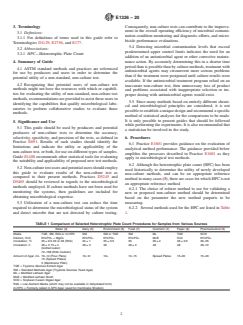
required to determine the microbiological status of the system 6.2.2 Several methods used for the HPC are listed in Table
and detect microbe that are not detected by culture testing. 1.
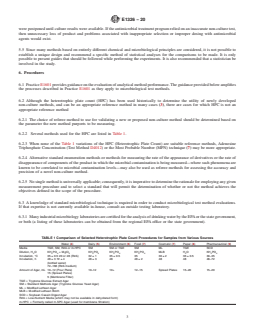
TABLE 1 Comparison of Selected Heterotrophic Plate Count Procedures for Samples from Various Sources
Water (4) Dairy (5) Environment (6) Food (7) Cosmetic (7) Paper (8) Pharmaceutical (9)
Media TGE, SM, R2A or m-HPC SM SM or TGE SM ML TGE SCD
Dilution, HOKH PO + MgCl KH PO KH PO KH PO MLB HOKH PO
2 2 4 2 2 4 2 4 2 4 2 2 4
Incubation, °C 35 ± 0.5 20 or 28 (R2A) 32 ± 1 35 ± 0.5 35 30 ± 2 36 ± 0.5 30–35
Incubation, h 48 ± 3 72 ± 4 48 ± 3 48 48 ± 2 48 48 48–72
(bottled water)
72–168 (R2A medium)
Amount of Agar, mL 10–12 (Pour Plate) 10–12 10+ 12–15 Spread Plates 15–20 15–20
15 (Spread Plates)
5 (Membrane Filter)
TGE = Tryptone Glucose Extract Agar
SM = Standard Methods Agar (Tryptone Glucose Yeast Agar)
ML = Modified Letheen Agar
MLB = Modified Letheen Broth
SCD = Soybean Casein Digest Agar
R2A = Low-Nutrient Media (which may not be available in dehydrated form)
m-HPC = Formerly called m-SPC Agar (used for membrane filtration)
E1326 − 20
6.2.3 When none of the Table 1 variations of the HPC method’s expected lower limit of quantification
(Heterotrophic Plate Count) are suitable reference methods, •Medium bioburden – microbial contamination in the mid-
Adenosine Triphosphate Concentration (Test Method D4012) range of the method’s detection range
or the Most Probable Number (MPN) technique (7) may be •High bioburden – microbial contamination near the upper
more appropriate. limits of the method’s detection range
6.2.4 Alternative standard enumeration methods or methods
6.4.3.1 For the purposes of this practice, each bioburden
for measuring the rate of the appearance of derivatives or the
range is a test level. Thus the levels must cover the range of
rate of disappearance of components of the product in which
interest for each intended application.
the microbial contamination is being measured—where such
6.4.3.2 A test matrix is the type material in which the
phenomena are known to be correlated to microbial contami-
microbes are found (for example: water, industrial fluids, soils,
nation levels—may also be used as referee methods for
coatings, etc.)
assessing the accuracy and precision of a novel non-culture
6.5 Ateachtestlevel,analyzereplicatesamples,byboththe
method.
method being evaluated, and by the standard or reference
6.2.5 No single method is universally applicable;
method. The number of replicates depends on the number of
consequently, it is imperative to determine the rationale for
sources of variability. Thus, in the previous-mentioned ex-
employing any given measurement procedure and to select a
ample of non-culture test (6.4.2), it is necessary to analyze at
standard that will permit the determination of whether or not
least two replicate samples at each level (preferably more) by
the method achieves the objectives defined in the scope of the
both the reference and candidate method.
procedure.
6.5.1 The standard or reference method used will often be
6.3 A knowledge of standard microbiological technique is
one of the methods listed in Table 1, however, in matrices from
required in order to conduct microbiological test method
which culture test results are likely to be inaccurate or
evaluations.Ifthatexpertiseisnotcurrentlyavailablein-house,
suspected of being inaccurate, data from the candidate method
consult an outside testing laboratory.
can be compared with data form non-microbiological param-
6.3.1 Many industrial microbiology laboratories are certi-
eters known to covary with bioburden.
fied for the analysis of drinking water by the EPA or the state
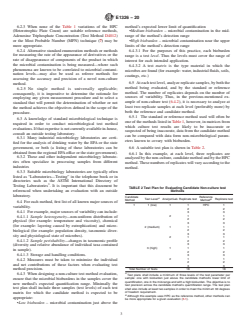
government, or both (a listing of these laboratories can be 6.6 A suitable test plan is shown in Table 2.
obtainedfromtheregionalEPAofficeorthestategovernment).
6.6.1 In this example, at each level, three replicates are
6.3.2 These and other independent microbiology laborato-
analyzedbythenon-culture,candidatemethodandbytheHPC
ries often specialize in processing samples from different
method.These numbers of replicates will vary according to the
industries
method.
6.3.
...
This document is not an ASTM standard and is intended only to provide the user of an ASTM standard an indication of what changes have been made to the previous version. Because
it may not be technically possible to adequately depict all changes accurately, ASTM recommends that users consult prior editions as appropriate. In all cases only the current version
of the standard as published by ASTM is to be considered the official document.
Designation: E1326 − 15a E1326 − 20
Standard Guide for
Evaluating Non-culture Microbiological Tests
This standard is issued under the fixed designation E1326; the number immediately following the designation indicates the year of
original adoption or, in the case of revision, the year of last revision. A number in parentheses indicates the year of last reapproval. A
superscript epsilon (´) indicates an editorial change since the last revision or reapproval.
1. Scope Scope*
1.1 The purpose of this guide is to assist users and producers of non-culture microbiological tests in determining the applicability
of the test for processing different types of samples and evaluating the accuracy of the results. Culture test procedures such as the
Heterotrophic (Standard) Plate Count, the Most Probable Number (MPN) method and the Spread Plate Count are widely cited and
accepted for the enumeration of microorganisms. However, these methods have their limitations, such as performance time.
Moreover, any given culture test method typically recovers only a portion of the total viable microbes present in a sample. It is
these limitations that have recently led to the marketing of a variety of non-culture procedures, test kits and instruments.
1.2 Culture test methods estimate microbial population densities based on the ability of mircoorganisms in a sample to proliferate
in or on a specified growth medium, under specified growth conditions. Non-culture test methods attempt to provide the same or
complimentary information through the measurement of a different parameter. This guide is designed to assist investigators in
assessing the accuracy and precision of non-culture methods intended for the determination of microbial population densities or
activities.
1.3 It is recognized that the Heterotrophic Plate Count (HPC) does not recover all microorganisms present in a product or a system
(1, 2). When this problem occurs during the characterization of a microbiological population, alternative standard enumeration
procedures may be necessary, as in the case of sulfate-reducing bacteria. At other times, chemical methods that measure the rates
of appearance of metabolic derivatives, the utilization of contaminated product components or genetic profile of the microbial
population might be indicated. In evaluating non-culture tests, it is possible that the use of these alternative standard procedures
might be the only means available for establishing correlation. In such cases, this guide can serve as a reference for those
considerations.
1.4 Because there are so many types of tests that could be considered non-culture based, it is impossible to recommend a specific
test protocol with statistical analyses for evaluating the tests. Instead, this guide should assist in determining what types of tests
should be considered to verify the utility and identify the limitations of the nonconventional test.
1.5 The values stated in SI units are to be regarded as standard. No other units of measurement are included in this standard.
1.6 This international standard was developed in accordance with internationally recognized principles on standardization
established in the Decision on Principles for the Development of International Standards, Guides and Recommendations issued
by the World Trade Organization Technical Barriers to Trade (TBT) Committee.
This guide is under the jurisdiction of ASTM Committee E35 on Pesticides, Antimicrobials, and Alternative Control Agents and is the direct responsibility of
Subcommittee E35.15 on Antimicrobial Agents.
Current edition approved Oct. 1, 2015Dec. 1, 2020. Published November 2015December 2020. Originally approved in 1990. Last previous edition approved in 2015 as
E1326 – 15.E1326 – 15a. DOI: 10.1520/E1326-15A.10.1520/E1326-20.
The boldface numbers in parentheses refer to the list of references at the end of this guide.
*A Summary of Changes section appears at the end of this standard
Copyright © ASTM International, 100 Barr Harbor Drive, PO Box C700, West Conshohocken, PA 19428-2959. United States
E1326 − 20
2. Referenced Documents
2.1 ASTM Standards:
D1129 Terminology Relating to Water
D4012 Test Method for Adenosine Triphosphate (ATP) Content of Microorganisms in Water
D5245 Practice for Cleaning Laboratory Glassware, Plasticware, and Equipment Used in Microbiological Analyses
D5465 Practices for Determining Microbial Colony Counts from Waters Analyzed by Plating Methods
E177 Practice for Use of the Terms Precision and Bias in ASTM Test Methods
E691 Practice for Conducting an Interlaboratory Study to Determine the Precision of a Test Method
E1488 Guide for Statistical Procedures to Use in Developing and Applying Test Methods
E1601 Practice for Conducting an Interlaboratory Study to Evaluate the Performance of an Analytical Method
E2756 Terminology Relating to Antimicrobial and Antiviral Agents
3. Terminology
3.1 Defintions:
3.1.1 For definitions of terms used in this guide refer to Terminologies D1129, E2756, and E177.
3.2 Abbreviations:
3.2.1 HPC—Heterotrophic Plate Count
4. Summary of Guide
4.1 ASTM standard methods and practices are referenced for use by producers and users in order to determine the potential utility
of a non-standard, non-culture test.
4.2 Recognizing that potential users of non-culture test methods might not have the resources with which or capabilities for
evaluating the utility of non-standard, non-culture test methods, recommendations are provided to assist those users in identifying
the capabilities that qualify microbiological laboratories to perform collaborative studies to evaluate those methods.
5. Significance and Use
5.1 This guide should be used by producers and potential producers of non-culture tests to determine the accuracy, selectivity,
specificity, and precision of the tests, as defined in Practice E691. Results of such studies should identify the limitations and
indicate the utility or applicability of the non-culture test, or both, for use on different types of samples. Guide E1488 recommends
other statistical tools for evaluating the suitability and applicability of proposed new test methods.
5.2 Non-culture test users and potential users should employ this guide to evaluate results of the non-culture test as compared to
their present methods. Practices D5245 and D5465 should be reviewed in regards to the microbiological methods employed. If
culture methods have not been used for monitoring the systems, then guidelines are included for obtaining microbiological
expertise.
5.3 Utilization of a non-culture test can reduce the time required to determine the microbiological status of the system and detect
microbe that are not detected by culture testing. Consequently, non-culture tests can contribute to the improvement in the overall
operating efficiency of microbial contamination condition monitoring and diagnostic efforts, and microbicide performance
evaluations.
5.4 Detecting microbial contamination levels that exceed predetermined upper control limits indicates the need for an addition of
an antimicrobial agent or other corrective maintenance action. By accurately determining this in a shorter time period than is
possible than by culture methods, treatment with antimicrobial agents may circumvent more serious problems than if the treatment
For referenced ASTM standards, visit the ASTM website, www.astm.org, or contact ASTM Customer Service at service@astm.org. For Annual Book of ASTM Standards
volume information, refer to the standard’s Document Summary page on the ASTM website.
E1326 − 20
were postponed until culture results were available. If the antimicrobial treatment program relied on an inaccurate non-culture test,
then unnecessary loss of product and problems associated with inappropriate selection or improper dosing with antimicrobial
agents would exist.
5.5 Since many methods based on entirely different chemical and microbiological principles are considered, it is not possible to
establish a unique design and recommend a specific method of statistical analyses for the comparisons to be made. It is only
possible to present guides that should be followed while performing the experiments. It is also recommended that a statistician be
involved in the study.
6. Procedures
6.1 Practice E1601 provides guidance on the evaluation of analytical method performance. The guidance provided below amplifies
the processes described in Practice E1601 as they apply to microbiological test methods.
6.2 Although the heterotrophic plate count (HPC) has been used historically to determine the utility of newly developed
non-culture methods, and can be an appropriate reference method in many cases (3), there are cases for which HPC is not an
appropriate reference method
6.2.1 The choice of referee method to use for validating a new or proposed non-culture method should be determined based on
the parameter the new method purports to be measuring.
6.2.2 Several methods used for the HPC are listed in Table 1.
6.2.3 When none of the Table 1 variations of the HPC (Heterotrophic Plate Count) are suitable reference methods, Adenosine
Triphosphate Concentration (Test Method D4012) or the Most Probable Number (MPN) technique (7) may be more appropriate.
6.2.4 Alternative standard enumeration methods or methods for measuring the rate of the appearance of derivatives or the rate of
disappearance of components of the product in which the microbial contamination is being measured—where such phenomena are
known to be correlated to microbial contamination levels—may also be used as referee methods for assessing the accuracy and
precision of a novel non-culture method.
6.2.5 No single method is universally applicable; consequently, it is imperative to determine the rationale for employing any given
measurement procedure and to select a standard that will permit the determination of whether or not the method achieves the
objectives defined in the scope of the procedure.
6.3 A knowledge of standard microbiological technique is required in order to conduct microbiological test method evaluations.
If that expertise is not currently available in-house, consult an outside testing laboratory.
6.3.1 Many industrial microbiology laboratories are certified for the analysis of drinking water by the EPA or the state government,
or both (a listing of these laboratories can be obtained from the regional EPA office or the state government).
TABLE 1 Comparison of Selected Heterotrophic Plate Count Procedures for Samples from Various Sources
Water (4) Dairy (5) Environment (6) Food (7) Cosmetic (7) Paper (8) Pharmaceutical (9)
Media TGE, SM, R2A or m-HPC SM SM or TGE SM ML TGE SCD
Dilution, H O KH PO + MgCl KH PO KH PO KH PO MLB H O KH PO
2 2 4 2 2 4 2 4 2 4 2 2 4
Incubation, °C 35 ± 0.5 20 or 28 (R2A) 32 ± 1 35 ± 0.5 35 30 ± 2 36 ± 0.5 30–35
Incubation, h 48 ± 3 72 ± 4 48 ± 3 48 48 ± 2 48 48 48–72
(bottled water)
72–168 (R2A medium)
Amount of Agar, mL 10–12 (Pour Plate) 10–12 10+ 12–15 Spread Plates 15–20 15–20
15 (Spread Plates)
5 (Membrane Filter)
TGE = Tryptone Glucose Extract Agar
SM = Standard Methods Agar (Tryptone Glucose Yeast Agar)
ML = Modified Letheen Agar
MLB = Modified Letheen Broth
SCD = Soybean Casein Digest Agar
R2A = Low-Nutrient Media (which may not be available in dehydrated form)
m-HPC = Formerly called m-SPC Agar (used for membrane filtration)
E1326 − 20
6.3.2 These and other independent microbiology laboratories often specialize in processing samples from different industries
6.3.3 Suitable microbiology laboratories are typically often listed as “Laboratories—Testing” in the telephone book or in
directories such as the ASTM International Directory of Testing Laboratories . It is important that this document be referenced
when undertaking an evaluation with an outside laboratory.
6.4 For each method, first list of all known major sources of variability.
6.4.1 For example, major sources of variability can include:
6.4.1.1 Sample heterogeneity—non-uniform distribution of physical (for example: temperature and viscosity), chemical (for
example: layering caused by eutrophication) and microbiological (for example: population density, taxonomic diversity and
physiological state of microbes).
6.4.1.2 Sample perishability—changes in taxonomic profile (diversity and relative abundance of individual taxa contained in
sample).
6.4.1.3 Storage and handling conditions.
6.4.2 Measures must be taken to minimize the individual and net contributions of these factors when evaluating test method
precision.
6.4.3 When designing a non-culture test method evaluation, ensure that the microbial bioburdens in the samples cover the new
method’s expected quantification range. Minimally the test plan shall include three samples (test levels) of each test matrix for
which the candidate method is expected to be appropriate:
•Low bioburden – microbial contamination just above the method’s
...