

ASTM F1043-18(2022)
(Specification)Standard Specification for Strength and Protective Coatings on Steel Industrial Fence Framework
General Information
- Abstract
ABSTRACT
This specification covers the strength and protective coating requirements for industrial steel chain link fence framework. Maximum allowable heights of framework and post spacing are to be based on chain link fence fabric mesh size and gages, and specified wind loads. Coatings shall be classified as: external coatings (Type A, B, and C) and internal coatings (Type A, B, C, and D). Zinc used for coating shall be any grade of zinc conforming to the requirements and shall be applied by the hot-dip method. Strength test, tension test, adhesion test, and cross hatch test shall be performed to meet the specified requirements.
SCOPE
1.1 This specification covers the strength and protective coating requirements for industrial steel fence framework. The intended use is for all types of fence, including but not limited to, chain link, expanded metal, wire mesh both welded and woven, PVC, and wood. Consult fencing product manufacturer for post spacing requirements. Post spacings for chain link fence are not to exceed 10 ft. (For additional information, see CLFMI Guide WLG2445.)
1.1.1 Caution Regarding Windload—If additives to the fence, such as windscreen, inserts, or signage are required, it is advisable to use stronger framework and fittings, to reduce the on-center spacing of posts, or to add back bracing. Factors to consider when determining windload include the type of screening material to be used, area of fence to be covered, and local wind conditions.
1.2 Posts and rails may have any cross-sectional shape meeting the requirements herein. The shapes may be formed and welded, cold formed, hot rolled, or extruded.
1.3 The values stated in inch-pound units are to be regarded as standard. The values given in parentheses are mathematical conversions to SI units that are provided for information only and are not considered standard.
1.4 This standard does not purport to address all of the safety concerns, if any, associated with its use. It is the responsibility of the user of this standard to establish appropriate safety, health, and environmental practices and determine the applicability of regulatory limitations prior to use.
1.5 This international standard was developed in accordance with internationally recognized principles on standardization established in the Decision on Principles for the Development of International Standards, Guides and Recommendations issued by the World Trade Organization Technical Barriers to Trade (TBT) Committee.
- Status
- Published
- Publication Date
- 31-Oct-2022
- Technical Committee
- F14 - Fences
- Drafting Committee
- F14.40 - Chain Link Fence and Wire Accessories
Overview
ASTM F1043-18(2022) - Standard Specification for Strength and Protective Coatings on Steel Industrial Fence Framework provides essential guidance for the manufacturing, selection, and application of steel framework used in industrial fencing systems. This standard, developed by ASTM International, outlines the required strength and protective coating parameters to ensure the durability and reliability of steel posts and rails across varied fencing installations, including chain link, welded and woven wire mesh, PVC, and wood fences.
The specification addresses strength requirements, maximum allowable heights, post spacing, and wind load considerations, ensuring both performance and safety. It also classifies external and internal protective coatings by type, referencing the use of hot-dip zinc and other polymer coatings to maximize corrosion protection.
Key Topics
- Strength Requirements: Specifies minimum yield strengths, wall thicknesses, and weights for different categories and groups of steel pipe and roll-formed shapes for both heavy industrial and light industrial/commercial fencing applications.
- Protective Coatings: Details multiple external and internal coating types (including hot-dip galvanized zinc and various polymers such as PVC, polyester, and polyolefin elastomers). Zinc coatings must conform to specific standards and application methods to ensure corrosion resistance.
- Design and Installation Considerations:
- Cross-sectional versatility for posts and rails, allowing round, formed and welded, or extruded shapes.
- Recommendations for post spacing, with a maximum of 10 feet for chain link fences under standard conditions.
- Cautions regarding wind load: Reinforcement or reduced spacing is recommended if windscreens, inserts, or signage are used or in areas with higher wind speeds.
- Quality Control and Testing:
- Outlines critical testing methods including strength, tension, adhesion, and cross hatch tests to verify compliance with the standard.
- Specifies documentation and marking requirements for traceability and verification.
- Certification and Inspection: Requires manufacturer certification and enables purchaser inspection, with provisions for sampling, retesting, and documentation.
Applications
ASTM F1043-18(2022) is widely applied in industrial, commercial, municipal, and high-security environments where steel fencing systems are integral. Practical uses include:
- Chain Link Fencing: For property boundaries, sports facilities, and critical infrastructure protection.
- Wire Mesh Fencing: Suited for areas demanding higher security or visibility.
- Fencing for PVC and Wood Panels: Provides robust frameworks to support a variety of infill materials.
- Custom Industrial Enclosures: Used in warehouses, factories, and logistics centers.
By adhering to this standard, fence manufacturers, contractors, and end-users ensure long-lasting, structurally sound installations that withstand corrosion, physical loading, and environmental demands.
Related Standards
- ASTM F1083: Standard Specification for Pipe, Steel, Hot-Dipped Zinc-Coated (Galvanized) Welded, for Fence Structures.
- ASTM B6: Specification for Zinc used in hot-dip galvanizing.
- ASTM A90/A90M: Test Method for Weight [Mass] of Coating on Iron and Steel Articles with Zinc or Zinc-Alloy Coatings.
- ASTM D3359: Test Methods for Rating Adhesion by Tape Test.
- ASTM F934: Specification for Standard Colors for Polymer-Coated Chain Link Fence Materials.
- ASCE/SEI 7-10: Minimum Design Loads for Buildings and Other Structures (Used for wind load criteria).
- CLFMI Guide WLG2445: Guide for the Selection of Line Post Spacing for Chain Link Fence.
For professionals involved in the design, specification, and installation of industrial fences, ASTM F1043-18(2022) ensures reliable performance and regulatory compliance with strength and coating requirements for steel fence framework.
Relations
- Effective Date
- 01-Jan-2024
- Effective Date
- 01-May-2019
- Effective Date
- 01-Nov-2017
- Effective Date
- 15-Jul-2016
- Effective Date
- 01-Jan-2016
- Effective Date
- 01-Feb-2015
- Effective Date
- 15-Sep-2014
- Effective Date
- 15-Nov-2013
- Effective Date
- 01-Jun-2013
- Effective Date
- 01-Mar-2013
- Effective Date
- 01-Mar-2013
- Effective Date
- 01-Feb-2013
- Effective Date
- 01-May-2012
- Effective Date
- 01-Dec-2011
- Effective Date
- 01-Jul-2011
Get Certified
Connect with accredited certification bodies for this standard

DIBt (Deutsches Institut für Bautechnik)
German Institute for Building Technology.
DIN CERTCO
DIN Group product certification.

Aboma Certification B.V.
Specialized in construction, metal, and transport sectors.
Sponsored listings
Frequently Asked Questions
ASTM F1043-18(2022) is a technical specification published by ASTM International. Its full title is "Standard Specification for Strength and Protective Coatings on Steel Industrial Fence Framework". This standard covers: ABSTRACT This specification covers the strength and protective coating requirements for industrial steel chain link fence framework. Maximum allowable heights of framework and post spacing are to be based on chain link fence fabric mesh size and gages, and specified wind loads. Coatings shall be classified as: external coatings (Type A, B, and C) and internal coatings (Type A, B, C, and D). Zinc used for coating shall be any grade of zinc conforming to the requirements and shall be applied by the hot-dip method. Strength test, tension test, adhesion test, and cross hatch test shall be performed to meet the specified requirements. SCOPE 1.1 This specification covers the strength and protective coating requirements for industrial steel fence framework. The intended use is for all types of fence, including but not limited to, chain link, expanded metal, wire mesh both welded and woven, PVC, and wood. Consult fencing product manufacturer for post spacing requirements. Post spacings for chain link fence are not to exceed 10 ft. (For additional information, see CLFMI Guide WLG2445.) 1.1.1 Caution Regarding Windload—If additives to the fence, such as windscreen, inserts, or signage are required, it is advisable to use stronger framework and fittings, to reduce the on-center spacing of posts, or to add back bracing. Factors to consider when determining windload include the type of screening material to be used, area of fence to be covered, and local wind conditions. 1.2 Posts and rails may have any cross-sectional shape meeting the requirements herein. The shapes may be formed and welded, cold formed, hot rolled, or extruded. 1.3 The values stated in inch-pound units are to be regarded as standard. The values given in parentheses are mathematical conversions to SI units that are provided for information only and are not considered standard. 1.4 This standard does not purport to address all of the safety concerns, if any, associated with its use. It is the responsibility of the user of this standard to establish appropriate safety, health, and environmental practices and determine the applicability of regulatory limitations prior to use. 1.5 This international standard was developed in accordance with internationally recognized principles on standardization established in the Decision on Principles for the Development of International Standards, Guides and Recommendations issued by the World Trade Organization Technical Barriers to Trade (TBT) Committee.
ABSTRACT This specification covers the strength and protective coating requirements for industrial steel chain link fence framework. Maximum allowable heights of framework and post spacing are to be based on chain link fence fabric mesh size and gages, and specified wind loads. Coatings shall be classified as: external coatings (Type A, B, and C) and internal coatings (Type A, B, C, and D). Zinc used for coating shall be any grade of zinc conforming to the requirements and shall be applied by the hot-dip method. Strength test, tension test, adhesion test, and cross hatch test shall be performed to meet the specified requirements. SCOPE 1.1 This specification covers the strength and protective coating requirements for industrial steel fence framework. The intended use is for all types of fence, including but not limited to, chain link, expanded metal, wire mesh both welded and woven, PVC, and wood. Consult fencing product manufacturer for post spacing requirements. Post spacings for chain link fence are not to exceed 10 ft. (For additional information, see CLFMI Guide WLG2445.) 1.1.1 Caution Regarding Windload—If additives to the fence, such as windscreen, inserts, or signage are required, it is advisable to use stronger framework and fittings, to reduce the on-center spacing of posts, or to add back bracing. Factors to consider when determining windload include the type of screening material to be used, area of fence to be covered, and local wind conditions. 1.2 Posts and rails may have any cross-sectional shape meeting the requirements herein. The shapes may be formed and welded, cold formed, hot rolled, or extruded. 1.3 The values stated in inch-pound units are to be regarded as standard. The values given in parentheses are mathematical conversions to SI units that are provided for information only and are not considered standard. 1.4 This standard does not purport to address all of the safety concerns, if any, associated with its use. It is the responsibility of the user of this standard to establish appropriate safety, health, and environmental practices and determine the applicability of regulatory limitations prior to use. 1.5 This international standard was developed in accordance with internationally recognized principles on standardization established in the Decision on Principles for the Development of International Standards, Guides and Recommendations issued by the World Trade Organization Technical Barriers to Trade (TBT) Committee.
ASTM F1043-18(2022) is classified under the following ICS (International Classification for Standards) categories: 91.090 - External structures. The ICS classification helps identify the subject area and facilitates finding related standards.
ASTM F1043-18(2022) has the following relationships with other standards: It is inter standard links to ASTM E8/E8M-24, ASTM E376-19, ASTM E376-17, ASTM E8/E8M-16, ASTM F1083-16, ASTM E8/E8M-15, ASTM F552-14, ASTM F1083-13, ASTM E8/E8M-13, ASTM F934-96(2013), ASTM F552-02(2013), ASTM B6-13, ASTM B6-12, ASTM E8/E8M-11, ASTM E376-11. Understanding these relationships helps ensure you are using the most current and applicable version of the standard.
ASTM F1043-18(2022) is available in PDF format for immediate download after purchase. The document can be added to your cart and obtained through the secure checkout process. Digital delivery ensures instant access to the complete standard document.
Standards Content (Sample)
This international standard was developed in accordance with internationally recognized principles on standardization established in the Decision on Principles for the
Development of International Standards, Guides and Recommendations issued by the World Trade Organization Technical Barriers to Trade (TBT) Committee.
Designation:F1043 −18 (Reapproved 2022)
Standard Specification for
Strength and Protective Coatings on Steel Industrial Fence
Framework
This standard is issued under the fixed designation F1043; the number immediately following the designation indicates the year of
original adoption or, in the case of revision, the year of last revision. A number in parentheses indicates the year of last reapproval. A
superscript epsilon (´) indicates an editorial change since the last revision or reapproval.
1. Scope 2. Referenced Documents
2.1 ASTM Standards:
1.1 This specification covers the strength and protective
A90/A90M Test Method for Weight [Mass] of Coating on
coating requirements for industrial steel fence framework. The
Iron and Steel Articles with Zinc or Zinc-Alloy Coatings
intended use is for all types of fence, including but not limited
B6 Specification for Zinc
to, chain link, expanded metal, wire mesh both welded and
D1499 Practice for Filtered Open-Flame Carbon-Arc Expo-
woven, PVC, and wood. Consult fencing product manufacturer
for post spacing requirements. Post spacings for chain link sures of Plastics
D3359 Test Methods for Rating Adhesion by Tape Test
fence are not to exceed 10 ft. (For additional information, see
CLFMI Guide WLG2445.) E8/E8M Test Methods for Tension Testing of Metallic Ma-
terials
1.1.1 Caution Regarding Windload—If additives to the
E376 Practice for Measuring Coating Thickness by
fence, such as windscreen, inserts, or signage are required, it is
Magnetic-Field or Eddy Current (Electromagnetic) Test-
advisable to use stronger framework and fittings, to reduce the
ing Methods
on-center spacing of posts, or to add back bracing. Factors to
F552 Terminology Relating to Chain Link Fencing
consider when determining windload include the type of
F934 Specification for Standard Colors for Polymer-Coated
screening material to be used, area of fence to be covered, and
Chain Link Fence Materials
local wind conditions.
F1083 Specification for Pipe, Steel, Hot-Dipped Zinc-
1.2 Posts and rails may have any cross-sectional shape
Coated (Galvanized) Welded, for Fence Structures
meeting the requirements herein. The shapes may be formed
G155 Practice for Operating XenonArc LampApparatus for
and welded, cold formed, hot rolled, or extruded.
Exposure of Materials
1.3 The values stated in inch-pound units are to be regarded 3
2.2 Other Documents:
as standard. The values given in parentheses are mathematical
WLG2445 CLFMI Guide for the Selection of Line Post
conversions to SI units that are provided for information only
Spacings
and are not considered standard.
3. Terminology
1.4 This standard does not purport to address all of the
safety concerns, if any, associated with its use. It is the
3.1 Definitions:
responsibility of the user of this standard to establish appro-
3.1.1 posts—vertical members of the fence.
priate safety, health, and environmental practices and deter-
3.1.1.1 Discussion—End, corner, and pull posts are posts at
mine the applicability of regulatory limitations prior to use.
which fencing material terminates. Gateposts are posts to
1.5 This international standard was developed in accor-
which gates are either attached or latched. Line posts are posts
dance with internationally recognized principles on standard-
that occur in a line of fence in which the fencing material
ization established in the Decision on Principles for the
passes and to which it is secured.
Development of International Standards, Guides and Recom-
3.1.2 rails—horizontal members of the fence.
mendations issued by the World Trade Organization Technical
3.1.2.1 Discussion—May be top, bottom, intermediate, or
Barriers to Trade (TBT) Committee.
brace rails.
1 2
This specification is under the jurisdiction ofASTM Committee F14 on Fences For referenced ASTM standards, visit the ASTM website, www.astm.org, or
and is the direct responsibility of Subcommittee F14.40 on Chain Link Fence and contact ASTM Customer Service at service@astm.org. For Annual Book of ASTM
Wire Accessories. Standards volume information, refer to the standard’s Document Summary page on
Current edition approved Nov. 1, 2022. Published November 2022. Originally the ASTM website.
approved in 1995. Last previous edition approved in 2018 as F1043 – 18. DOI: AvailablefromChainLinkFenceManufacturersInstitute,10015OldColumbia
10.1520/F1043-18R22. Road, Suite B-215, Columbia, MD 21046, http://www.chainlinkinfo.org.
Copyright © ASTM International, 100 Barr Harbor Drive, PO Box C700, West Conshohocken, PA 19428-2959. United States
F1043−18 (2022)
TABLE 1 Pipe Diameter Terminology
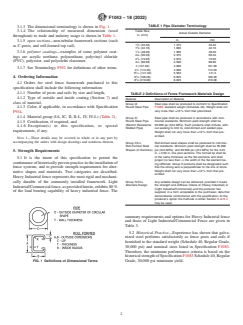
3.1.3 The dimensional terminology is shown in Fig. 1.
3.1.4 The relationship of measured dimension (used Trade Size,
Actual Outside Diameter
in. (mm)
throughout) to trade and industry usage is shown in Table 1.
in. mm
3.1.5 open sections—non-tubular framework sections (such
1 ⁄8 (33.40) 1.315 33.40
as C-posts, and roll-formed top rail).
1 ⁄8 (42.16) 1.660 42.16
3.1.6 polymer coatings—examples of some polymer coat- 1 ⁄8 (48.26) 1.900 48.26
2 ⁄8 (60.33) 2.375 60.33
ings are acrylic urethane, polyurethane, polyvinyl chloride
2 ⁄8 (73.03) 2.875 73.03
(PVC), polyester, and polyolefin elastomer. 1
3 ⁄2 (88.90) 3.500 88.90
4 (101.60) 4.000 101.60
3.1.7 See Terminology F552 for definitions of other terms.
4 ⁄2 (114.30) 4.500 114.30
5 ⁄16 (141.30) 5.563 141.3
6 ⁄8 (168.28) 6.625 168.28
4. Ordering Information
8 ⁄8 (219.08) 8.625 219.08
4.1 Orders for steel fence framework purchased to this
specification shall include the following information:
4.1.1 Number of posts and rails by size and length,
TABLE 2 Definitions of Fence Framework Materials Design
4.1.2 Type of outside and inside coating (Section 7) and
Material Description of Material
class of material,
Group IA Steel pipe shall be produced to conform to Specification
4.1.3 Color, if applicable, in accordance with Specification Round Steel Pipe F1083, standard weight (Schedule 40). Weight shall not
vary more than ±10 % from that prescribed.
F934,
4.1.4 Material group (IA, IC, II, II-L, IV, IV-L) (Table 2),
Group IC Steel pipe shall be produced in accordance with com-
Round Steel Pipe mercial standards. Minimum yield strength shall be
4.1.5 Certification, if required, and
(Electric Resistance 50 000 psi (344 MPa). Such products shall include, with-
4.1.6 Exception(s) to this specification, or special
Welded Pipe) out seeking to limit to, cold-formed and welded pipe.
requirements, if any.
Weight shall not vary more than ±10 % from that pre-
scribed.
NOTE 1—These details may be covered in whole or in any part by
accompanying the orders with design drawings and notations thereon. Group II/II-L Roll-formed steel shapes shall be produced to commer-
Roll-Formed Steel cial standards. Minimum yield strength shall be 50 000
Shapes (C-Sections) psi (344 MPa), and 60 000 psi (413 MPa) for the 3.25
5. Strength Requirements
in. × 2.50 in. line post sections. The formed lip shall be
of the same thickness as the flat elements and shall
5.1 It is the intent of this specification to permit the
project no less than ⁄3 the width of the flat element be-
continuanceofhistoricallyprovenpracticeintheinstallationof
ing stiffened. Group II products shall be designated such
that the strong axis is perpendicular to the line of fence.
fence systems, and to provide strength requirements for alter-
Weight shall not vary more than ±10 % from that pre-
native shapes and materials. Two categories are described.
scribed.
Heavy Industrial fence represents the most rigid and mechani-
cally durable of the commonly installed framework. Light Group IV/IV-L Any suitable design can be delivered, provided it meets
Alternate Design the strength and stiffness criteria of (Heavy Industrial) or
Industrial/Commercialfence,asprovidedherein,exhibits80 %
(Light Industrial/Commercial) and the producer has
of the load bearing capability of heavy industrial fence. The
supplied, in a form acceptable to the purchaser, data that
demonstrates conformance with the specification. At the
producer’s option the methods in either Section 6 or 6.4
may be used.
summary requirements and options for Heavy Industrial fence
and those of Light Industrial/Commercial Fence are given in
Table 3.
5.2 Historical Practice—Experience has shown that galva-
nized steel performs satisfactorily as fence posts and rails if
furnished to the standard weight (Schedule 40, Regular Grade,
30,000 psi) and nominal sizes listed in Specification F1083.
Therefore, the minimum performance criteria is based on the
historicalstrengthofSpecificationF1083Schedule40,Regular
FIG. 1 Definitions of Dimensional Terms Grade, 30,000 psi minimum yield.
F1043−18 (2022)
TABLE 3 Summary of Requirements for Heavy Industrial and Light Industrial/Commercial Fence Framework
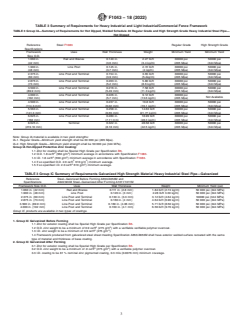
TABLE 3 Group IA—Summary of Requirements for Hot Dipped, Welded Schedule 40 Regular Grade and High Strength Grade Heavy Industrial Steel Pipe—
Hot Dipped
Reference Steel F1083 Regular Grade High Strength Grade
Specifications
Framework Uses Wall Thickness Weight Minimum Yield Minimum Yield
Size O.D.
1.660 in. Rail and Braces 0.140 in. 2.27 lb/ft 30000 psi 50000 psi
(42 mm) (3.6 mm) (3.4 kg/m) (205 Mpa) (344 Mpa)
1.900 in. Line Post 0.145 in. 2.72 lb/ft 30000 psi 50000 psi
(48 mm) (3.7 mm) (4 kg/m) (205 Mpa) (344 Mpa)
2.375 in. Line Post and Terminal 0.154 in. 3.65 lb/ft 30000 psi 50000 psi
(60 mm) (3.9 mm) (5.4kg/m) (205 Mpa) (344 Mpa)
2.875 in. Line Post and Terminal 0.203 in. 5.80 lb/ft 30000 psi 50000 psi
(73 mm) (5.2 mm) (8.6 kg/m) (205 Mpa) (344 Mpa)
3.500 in. Line Post and Terminal 0.216 in. 7.58 lb/ft 30000 psi 50000 psi
(89.9 mm) (5.49 mm) (11.3 kg/m) (205 Mpa) (344 Mpa)
4.000 in. Line Post and Terminal 0.226 in. 9.12 lb/ft 30000 psi
Not Available
(102 mm) (5.7 mm) (13.6 kg/m) (205 Mpa)
4.500 in. Line Post and Terminal 0.237 in. 10.8 lb/ft 30000 psi 50000 psi
(114.3 mm) (6.02 mm) (16.1 kg/m) (205 Mpa) (344 Mpa)
5.563 in. Line Post and Terminal 0.258 in. 14.63 lb/ft 30000 psi 50000 psi
(141.3 mm) (6.55 mm) (21.77 kg/m) (205 Mpa) (344 Mpa)
6.625 in. Line Post and Terminal 0.280 in. 18.99 lb/ft 30000 psi 50000 psi
(168 mm) (7.11 mm) (28.3 kg/m) (205 Mpa) (344 Mpa)
8.625 in. Terminal 0.322 in. 28.58 lb/ft 30000 psi 50000 psi
(219.10 mm) (8.18 mm) (42.5 kg/m) (205 Mpa) (344 Mpa)
Note: Group IA material is available in two yield strengths:
IA-1. Regular Grade—Minimum yield strength shall be 30 000 psi (205 Mpa).
IA-2. High Strength Grade—Minimum yield strength shall be 50 000 psi (344 MPa).
Group IA Hot-Dipped Protective Zinc Coating:
1.1 Zinc for coating shall be Special High Grade per Specification B6.
2 2
1.2 O.D. 1.8 oz/ft (550 g/m ) minimum average in accordance with Specification F1083.
2 2
1.3 I.D. 1.8 oz/ft (550 g/m ) minimum average in accordance with Specification F1083.
2 2
1.4 If so specified O.D. 2.0 oz/ft 610 g/m ) minimum average.
2 2
1.5 If so specified I.D. 2.0 oz/ft 610 g/m ) minimum average.
TABLE 3 Group IC Summary of Requirements Galvanized High Strength Material Heavy Industrial Steel Pipe—Galvanized
Reference Steel--Galvnized Before Forming A653/A653M and
Specifications A924/924M Steel--Galvanized After Forming A1011/1011M
Framework Size O.D. Uses Wall Thickness Weight Minimum Yield (psi)
1.660 in. (42 mm) Rail and Braces 0.111 in. (2.8 mm) 1.84 lb/ft (2.74 kg/m) 50 000 psi (344 MPa)
1.900 in. (48 mm) Line Post 0.120 in. (3 mm) 2.28 lb/ft 3.39 kg/m) 50 000 psi (344 MPa)
2.375 in. (60 mm) Line Post and Terminal 0.130 in. (3.3 mm) 3.12 lb/ft (4.64 kg/m) 50000 psi (344 MPa)
2.875 in. (73 mm) Line Post and Terminal 0.160 in. (4 mm) 4.64 lb/ft (6.90 kg/m) 50 000 psi (344 MPa)
3.500 in. (89.9 mm) Line Post and Terminal 0.160 in. (4.06 mm) 5.71 lb/ft (8.50 kg/m) 50 000 psi (344 MPa)
4.000 in. (102 mm) Line Post and Terminal 0.160 in. (4.1 mm) 6.56 lb/ft (9.76 kg/m) 50 000 psi (344 MPa)
Group IC products are available in two types of coatings.
1. Group IC Galvanized Before Forming
1.1 Zinc for exterior coating shall be Special High Grade per Specification B6.
2 2
1.2 O.D. zinc weight to be a minimum of 0.9 oz/ft (275 g/m ) with a verifiable verifiable polymer overcoat.
2 2
1.3 I.D. zinc weight to be a minimum of 0.9 oz/ft (275 g/m ).
1.4 Framework produced from galvanized steel sheet meeting Specification A653/A653M shall have exterior welded surface recoated with the same
type of material and thickness of base coating.
2. Group IC Galvanized After Forming
3.1 Zinc for exterior coating shall be Special High Grade per Specification B6.
2 2
3.2 O.D. zinc weight to be a minimum of .9 oz/ft (275 g/m ) with a verifiable polymer overcoat.
3.3 I.D. coating to be 81 % nominal zinc pigmented coating, 0.3 mils (0.0076 mm) minimum coverage.
F1043−18 (2022)
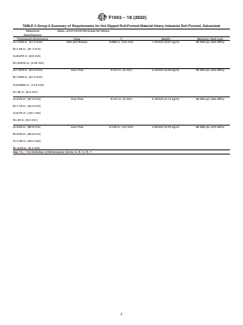
TABLE 3 Group II Summary of Requirements for Hot Dipped Roll-Formed Material Heavy Industrial Roll-Formed, Galvanized
Reference Steel—A1011/A1011M Grade 50 Others
Specifications
Framework Dimensions Uses T Weight Minimum Yield (psi)
A=1.625 in. (41.2 mm) Rail and Braces 0.080 in. (2.0 mm) 1.35 lb/ft (2.01 kg/m) 50 000 psi (344 MPa)
B=1.25 in. (31.7 mm)
C=0.375 in. (9.5 mm)
R=.01875 in. (4.76 mm)
A=1.875 in. (47.6 mm) Line Post 0.121 in. (3 mm) 2.40 lb/ft (3.39 kg/m) 50 000 psi (344 MPa)
B=1.625 in. (41.2 mm)
C=0.5625 in. (14.3 mm)
R=.25 in. (6.4 mm)
A=2.25 in. (57.2 mm) Line Post 0.121 in. (3 mm) 2.78 lb/ft (4.13 kg/m) 50 000 psi (344 MPa)
B=1.70 in. (43.2 mm)
C=0.75 in. (19.1 mm)
R=.25 in. (6.4 mm)
A=3.25 in. (82.6 mm) Line Post 0.130 in. (3.3 mm) 4.50 lb/ft (6.70 kg/m) 60 000 psi (413 MPa)
B=2.50 in. (64.0 mm)
C=1.00 in. (25.4 mm)
R=.0.25 in. (6.4 mm)
See Fig. 1 for Definition of Dimensional Terms: A, B, C, R, T
F1043−18 (2022)
TABLE 3 Group II-L Summary of Requirements for Hot Dipped Roll-Formed Material Light Industrial
Reference Steel—A1011/A1011M Grade 50 Others
Specifications
Framework Dimensions Uses T Weight Minimum Yield (psi)
A=1.625 in. (41.2 mm) Rails and Braces 0.80 in. (2.0 mm) 1.35 lb/ft (2.01 kg/m) 50 000 psi (344 MPa)
B=1.25 in. (31.7 mm)
C=0.375 in. (9.5 mm)
R=0.1875 in. (4.76 mm)
A=1.875 in. (47.6 mm) Line Post 0.105 in. (2.67 mm) 1.85 lb/ft (2.75 kg/m) 50 000 psi (344 MPa)
B=1.625 in. (41.2 mm)
C=0.5625 in. (14.3 mm)
R=0.25 in. (6.4 mm)
A=1.875 in.
...