

ASTM D5910-05(2019)
(Test Method)Standard Test Method for Determination of Free Formaldehyde in Emulsion Polymers by Liquid Chromatography
General Information
- Abstract
SIGNIFICANCE AND USE
4.1 With the need to calculate free formaldehyde levels in emulsion polymers, it is necessary to make the determination without upsetting any equilibria that might generate or deplete formaldehyde. This test method provides a means for determining ppm levels of free formaldehyde in emulsion polymers without upsetting existing equilibria.
SCOPE
1.1 This test method is used for the determination of free formaldehyde (HCHO) in emulsion polymers without upsetting existing formaldehyde equilibria. The procedure has been evaluated using acrylic, acrylonitrile-butadiene, carboxylated styrene-butadiene and polyvinyl acetate emulsion polymers. This test method may also be applicable for emulsion polymers of other compositions. The established working range of this test method is from 0.05 to 15 ppm formaldehyde. Emulsion polymers must be diluted to meet the working range.
1.2 This test method minimizes changes in free formaldehyde concentration that can result from changes in the physical or chemical properties of an emulsion polymer.
1.3 There are no known limitations to this test method when used in the manner described. The emulsion polymer test specimen must be prepared with a diluent that has a pH similar to that of the emulsion. Use of an inappropriate pH may upset formaldehyde equilibria and result in incorrect formaldehyde levels.
1.4 The values stated in SI units are to be regarded as standard. No other units of measurement are included in this standard.
1.5 This standard does not purport to address all of the safety concerns, if any, associated with its use. It is the responsibility of the user of this standard to establish appropriate safety, health, and environmental practices and determine the applicability of regulatory limitations prior to use.
1.6 This international standard was developed in accordance with internationally recognized principles on standardization established in the Decision on Principles for the Development of International Standards, Guides and Recommendations issued by the World Trade Organization Technical Barriers to Trade (TBT) Committee.
- Status
- Published
- Publication Date
- 31-May-2019
- Technical Committee
- D01 - Paint and Related Coatings, Materials, and Applications
- Drafting Committee
- D01.33 - Polymers and Resins
Overview
ASTM D5910-05(2019) is an internationally recognized standard developed by ASTM International for the precise determination of free formaldehyde in emulsion polymers using liquid chromatography. This method is designed to measure free formaldehyde levels, expressed in parts per million (ppm), in a variety of emulsion polymer types, including acrylic, acrylonitrile-butadiene, carboxylated styrene-butadiene, and polyvinyl acetate. The procedure is notable for its ability to accurately quantify formaldehyde without disrupting chemical equilibria within the polymer sample, ensuring reliable results crucial to product quality and regulatory compliance.
Key Topics
Sample Integrity: The test method is specifically structured to prevent upsetting formaldehyde equilibria, which can otherwise generate or deplete free formaldehyde and lead to inaccurate readings. This is achieved by preparing samples with a diluent that closely matches the pH of the original emulsion polymer.
Analytical Range and Applicability: The working range of this method spans from 0.05 to 15 ppm of free formaldehyde. While validated using specific common emulsion polymers, the method’s principles may be applied to other emulsion polymer types with appropriate validation.
Selectivity and Precision: The use of liquid chromatography with post-column derivatization delivers high selectivity for formaldehyde, minimizing interference from other components typically present in emulsion polymer matrices.
Safety and Compliance: The standard mandates that users establish and follow appropriate safety, health, and environmental practices, ensuring responsible laboratory procedure in alignment with international guidelines.
Applications
Quality Control in Polymer Manufacturing: Accurate determination of free formaldehyde levels is essential in the production of emulsion polymers used in paints, adhesives, coatings, and textiles. This standard helps manufacturers ensure their products meet both internal quality standards and external regulatory requirements.
Regulatory Compliance: Many industries are subject to strict limits on the level of free formaldehyde due to health and environmental concerns. This test method provides trusted, reproducible results necessary for documentation and compliance with local, national, and international formaldehyde regulations.
Product Development and Research: Material scientists and R&D labs use ASTM D5910 to evaluate and compare the performance of new polymer formulations with respect to residual formaldehyde, enabling informed decisions in product innovation and safety.
Related Standards
Several ASTM standards are referenced within ASTM D5910-05(2019) to ensure consistency and reliability in the determination of free formaldehyde:
- ASTM D1193: Specification for Reagent Water - Outlines the quality of water required for analytical testing.
- ASTM D2194: Test Method for Concentration of Formaldehyde Solutions - Provides details for formaldehyde assay procedures.
- ASTM E180: Practice for Determining the Precision of ASTM Methods (Withdrawn) - Guidance on assessing test method precision.
- ASTM E682: Practice for Liquid Chromatography Terms and Relationships - Establishes definitions and concepts relevant to liquid chromatography.
Practical Value
By following the guidance in ASTM D5910-05(2019), laboratories and manufacturers can confidently report free formaldehyde concentrations in emulsion polymers with high accuracy. The standard’s focus on maintaining chemical equilibria, clear process steps, and validation measures ensures robust data for risk assessment, regulatory filings, and product labeling. Its alignment with international trade and technical barriers to trade (TBT) principles further supports its global adoption.
Keywords: emulsion polymers, free formaldehyde, ASTM D5910, liquid chromatography, polymer analysis, quality control, regulatory compliance, chemical testing standards.
Relations
- Effective Date
- 01-Jun-2019
- Effective Date
- 01-Sep-2019
- Effective Date
- 01-Nov-2011
- Effective Date
- 01-Jun-2007
- Effective Date
- 01-Sep-2006
- Effective Date
- 01-Mar-2006
- Effective Date
- 01-Jan-2000
- Effective Date
- 10-Feb-1999
- Effective Date
- 10-Feb-1999
Get Certified
Connect with accredited certification bodies for this standard

ECOCERT
Organic and sustainability certification.

Eurofins Food Testing Global
Global leader in food, environment, and pharmaceutical product testing.

Intertek Bangladesh
Intertek certification and testing services in Bangladesh.
Sponsored listings
Frequently Asked Questions
ASTM D5910-05(2019) is a standard published by ASTM International. Its full title is "Standard Test Method for Determination of Free Formaldehyde in Emulsion Polymers by Liquid Chromatography". This standard covers: SIGNIFICANCE AND USE 4.1 With the need to calculate free formaldehyde levels in emulsion polymers, it is necessary to make the determination without upsetting any equilibria that might generate or deplete formaldehyde. This test method provides a means for determining ppm levels of free formaldehyde in emulsion polymers without upsetting existing equilibria. SCOPE 1.1 This test method is used for the determination of free formaldehyde (HCHO) in emulsion polymers without upsetting existing formaldehyde equilibria. The procedure has been evaluated using acrylic, acrylonitrile-butadiene, carboxylated styrene-butadiene and polyvinyl acetate emulsion polymers. This test method may also be applicable for emulsion polymers of other compositions. The established working range of this test method is from 0.05 to 15 ppm formaldehyde. Emulsion polymers must be diluted to meet the working range. 1.2 This test method minimizes changes in free formaldehyde concentration that can result from changes in the physical or chemical properties of an emulsion polymer. 1.3 There are no known limitations to this test method when used in the manner described. The emulsion polymer test specimen must be prepared with a diluent that has a pH similar to that of the emulsion. Use of an inappropriate pH may upset formaldehyde equilibria and result in incorrect formaldehyde levels. 1.4 The values stated in SI units are to be regarded as standard. No other units of measurement are included in this standard. 1.5 This standard does not purport to address all of the safety concerns, if any, associated with its use. It is the responsibility of the user of this standard to establish appropriate safety, health, and environmental practices and determine the applicability of regulatory limitations prior to use. 1.6 This international standard was developed in accordance with internationally recognized principles on standardization established in the Decision on Principles for the Development of International Standards, Guides and Recommendations issued by the World Trade Organization Technical Barriers to Trade (TBT) Committee.
SIGNIFICANCE AND USE 4.1 With the need to calculate free formaldehyde levels in emulsion polymers, it is necessary to make the determination without upsetting any equilibria that might generate or deplete formaldehyde. This test method provides a means for determining ppm levels of free formaldehyde in emulsion polymers without upsetting existing equilibria. SCOPE 1.1 This test method is used for the determination of free formaldehyde (HCHO) in emulsion polymers without upsetting existing formaldehyde equilibria. The procedure has been evaluated using acrylic, acrylonitrile-butadiene, carboxylated styrene-butadiene and polyvinyl acetate emulsion polymers. This test method may also be applicable for emulsion polymers of other compositions. The established working range of this test method is from 0.05 to 15 ppm formaldehyde. Emulsion polymers must be diluted to meet the working range. 1.2 This test method minimizes changes in free formaldehyde concentration that can result from changes in the physical or chemical properties of an emulsion polymer. 1.3 There are no known limitations to this test method when used in the manner described. The emulsion polymer test specimen must be prepared with a diluent that has a pH similar to that of the emulsion. Use of an inappropriate pH may upset formaldehyde equilibria and result in incorrect formaldehyde levels. 1.4 The values stated in SI units are to be regarded as standard. No other units of measurement are included in this standard. 1.5 This standard does not purport to address all of the safety concerns, if any, associated with its use. It is the responsibility of the user of this standard to establish appropriate safety, health, and environmental practices and determine the applicability of regulatory limitations prior to use. 1.6 This international standard was developed in accordance with internationally recognized principles on standardization established in the Decision on Principles for the Development of International Standards, Guides and Recommendations issued by the World Trade Organization Technical Barriers to Trade (TBT) Committee.
ASTM D5910-05(2019) is classified under the following ICS (International Classification for Standards) categories: 71.040.50 - Physicochemical methods of analysis. The ICS classification helps identify the subject area and facilitates finding related standards.
ASTM D5910-05(2019) has the following relationships with other standards: It is inter standard links to ASTM D5910-05(2012), ASTM E682-92(2019), ASTM E682-92(2011), ASTM D2194-02(2007), ASTM E682-92(2006), ASTM D1193-06, ASTM E682-92, ASTM D1193-99e1, ASTM D1193-99. Understanding these relationships helps ensure you are using the most current and applicable version of the standard.
ASTM D5910-05(2019) is available in PDF format for immediate download after purchase. The document can be added to your cart and obtained through the secure checkout process. Digital delivery ensures instant access to the complete standard document.
Standards Content (Sample)
This international standard was developed in accordance with internationally recognized principles on standardization established in the Decision on Principles for the
Development of International Standards, Guides and Recommendations issued by the World Trade Organization Technical Barriers to Trade (TBT) Committee.
Designation: D5910 − 05 (Reapproved 2019)
Standard Test Method for
Determination of Free Formaldehyde in Emulsion Polymers
by Liquid Chromatography
This standard is issued under the fixed designation D5910; the number immediately following the designation indicates the year of
original adoption or, in the case of revision, the year of last revision. A number in parentheses indicates the year of last reapproval. A
superscript epsilon (´) indicates an editorial change since the last revision or reapproval.
1. Scope 2. Referenced Documents
2.1 ASTM Standards:
1.1 This test method is used for the determination of free
D1193 Specification for Reagent Water
formaldehyde (HCHO) in emulsion polymers without upset-
D2194 Test Method for Concentration of Formaldehyde
ting existing formaldehyde equilibria. The procedure has been
Solutions
evaluated using acrylic, acrylonitrile-butadiene, carboxylated
E180 Practice for Determining the Precision of ASTM
styrene-butadiene and polyvinyl acetate emulsion polymers.
Methods for Analysis and Testing of Industrial and Spe-
Thistestmethodmayalsobeapplicableforemulsionpolymers
cialty Chemicals (Withdrawn 2009)
of other compositions. The established working range of this
E682 Practice for Liquid Chromatography Terms and Rela-
test method is from 0.05 to 15 ppm formaldehyde. Emulsion
tionships
polymers must be diluted to meet the working range.
3. Summary of Test Method
1.2 This test method minimizes changes in free formalde-
hyde concentration that can result from changes in the physical
3.1 The aqueous phase of an emulsion polymer is diluted
or chemical properties of an emulsion polymer.
and chromatographed on a reversed-phase octadecyl silane
(ODS) column using an aqueous mobile phase and a visible-
1.3 There are no known limitations to this test method when
light detector at 410 nm. Formaldehyde is separated from other
used in the manner described. The emulsion polymer test
species in the matrix on a chromatographic column. The
specimen must be prepared with a diluent that has a pH similar
detection system includes a post-column reactor that produces
to that of the emulsion. Use of an inappropriate pH may upset
a lutidine derivative when formaldehyde reacts with the
formaldehyde equilibria and result in incorrect formaldehyde
2,4-pentanedione reagent (Nash Reagent). The concentration
levels.
offreeformaldehydeinemulsionpolymersisdeterminedusing
1.4 The values stated in SI units are to be regarded as
peak areas from the standard and sample chromatograms. This
standard. No other units of measurement are included in this
test method is specific for formaldehyde.
standard.
4. Significance and Use
1.5 This standard does not purport to address all of the
4.1 With the need to calculate free formaldehyde levels in
safety concerns, if any, associated with its use. It is the
emulsion polymers, it is necessary to make the determination
responsibility of the user of this standard to establish appro-
without upsetting any equilibria that might generate or deplete
priate safety, health, and environmental practices and deter-
formaldehyde. This test method provides a means for deter-
mine the applicability of regulatory limitations prior to use.
mining ppm levels of free formaldehyde in emulsion polymers
1.6 This international standard was developed in accor-
without upsetting existing equilibria.
dance with internationally recognized principles on standard-
ization established in the Decision on Principles for the 5. Interferences
Development of International Standards, Guides and Recom-
5.1 This test method is very selective for formaldehyde.
mendations issued by the World Trade Organization Technical
Potential interferants are either chromatographically separated
Barriers to Trade (TBT) Committee.
from formaldehyde or do not react with the post-column
reagent.
1 2
This test method is under the jurisdiction of ASTM Committee D01 on Paint For referenced ASTM standards, visit the ASTM website, www.astm.org, or
and Related Coatings, Materials, andApplications and is the direct responsibility of contact ASTM Customer Service at service@astm.org. For Annual Book of ASTM
Subcommittee D01.33 on Polymers and Resins. Standards volume information, refer to the standard’s Document Summary page on
Current edition approved June 1, 2019. Published June 2019. Originally the ASTM website.
approved in 1996. Last previous edition approved in 2012 as D5910 – 05 (2012). The last approved version of this historical standard is referenced on
DOI: 10.1520/D5910-05R19. www.astm.org.
Copyright © ASTM International, 100 Barr Harbor Drive, PO Box C700, West Conshohocken, PA 19428-2959. United States
D5910 − 05 (2019)
NOTE 1—The following species were identified as possible interfer-
ences for the method: acetaldehyde, acetone, benzaldehyde, formamide,
formic acid, glyoxylic acid and propionaldehyde. These species, when
chromatographed using this test method, did not interfere with the
formaldehyde peak at the 1000 ppm level or lower.
5.2 Because emulsion polymers vary in composition, the
method run time may need to be extended to allow for late
eluting compounds. Compounds that remain on the column
after an analysis may interfere with the formaldehyde peak in
subsequent runs.
6. Apparatus
6.1 Liquid Chromatograph—Any liquid chromatographic
instrument having an injection valve, a post-column reactor, a
410-nm UV-Vis detector, and an isocratic solvent delivery
system may be used. The solvent delivery system must deliver
a mobile phase flow of 0.6 mL/min.
NOTE 2—The UV-Vis detector may incorporate either a tungsten lamp
or a deuterium lamp with a second order visible filter that filters out light
below 400 nm.
6.2 Post-Column Reactor—Any post-column reactor that
can deliver a reagent flow at 0.5 mL/min, contains a Knitted
Reaction Coil thatcanbeheatedto95°Candcontainsastatic
5,6
mixing tee.
6.3 Chromatographic Column—Column should be 250 by
4.6 mm inside diameter packed with a reversed-phase pH
stable C18, 5-µm particles.
6.4 Chromatographic Guard Column—The column should
be 10 by 4.6 mm inside diameter packed with a reversed-phase
pH stable C18 5-µm particles.
6.5 Data System, that can collect data at 1 point/s from a
1-V output detector.
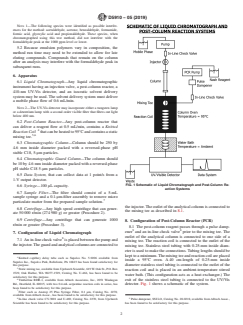
FIG. 1 Schematic of Liquid Chromatograph and Post-Column Re-
6.6 Syringe—100 µL capacity.
action Systems
6.7 Sample Filter—The filter should consist of a 5-mL
sample syringe and a 0.1-µm-filter assembly to remove micro
particulate matter from the prepared sample solution.
the injector.The outlet of the analytical column is connected to
6.8 Centrifuge—Any high speed centrifuge that can gener-
the mixing tee as described in 8.1.
ate 50 000 r/min (274 980 g) or greater (Procedure 2).
6.9 Centrifuge—Any centrifuge that can generate 1000
8. Configuration of Post-Column Reactor (PCR)
r/min or greater (Procedure 3).
8.1 The post-column reagent passes through a pulse damp-
9 8
ener and an in-line check valve prior to the mixing tee. The
7. Configuration of Liquid Chromatograph
outlet of the analytical column is connected to one side of a
7.1 An in-line check valve is placed between the pump and
mixing tee. The reaction coil is connected to the outlet of the
theinjector.Theguardandanalyticalcolumnsareconnectedto
mixing tee. Stainless steel tubing with 0.25-mm inside diam-
eter is used to make the connections. Tubing lengths should be
kepttoaminimum.Themixingteeandreactioncoilareplaced
Knitted capillary delay tube such as Supelco No. 5-9206 available from
inside a 95°C oven. A 40 cm-length of 0.25-mm inside
Supelco Inc., Supelco Park, Bellefonte, PA 16823 has been found satisfactory for
this purpose. diameter stainless steel tubing is connected to the outlet of the
Staticmixingtee,availablefromUpchurchScientific,619W.OakSt.,P.O.Box
reaction coil and is placed in an ambient-temperature stirred
1529, Oak Harbor, WA 98277-1529, Catalog No. U-466, has been found to be
water bath. (This configuration acts as a heat exchanger.) The
satisfactory for this purpose.
exit of the stainless steel tubing is connected to the UV/Vis
Timberline RDR-1, available from Alltech Associates, Inc., 2051 Waukegan
Rd., Deerfield, IL 60015, with two 0.4-mL serpentine reaction coils in series, has
detector. Fig. 1 shows a schematic of the system.
been found to be satisfactory for this purpose.
Filter such as Anotop 25 Plus Syringe Filter, 0.1 µm, Catalog No. 2270,
available from Alltech Assoc., has been found to be satisfactory for this purpose.
8 9
In-line check valve CV-3001 and U-469, Catalog No. 2270, from Upchurch Pulse dampener, SSI LO, Catalog No. 20-0218, available fromAlltechAssoc.,
Scientific has been found to be satisfactory for this purpose. has been found to be satisfactory for this purpose.
D5910 − 05 (2019)
9. Reagents and Materials 10.1.3 Transfer the post-column reagent to the post-column
reactor reservoir. The reservoir should be protected from light.
9.1 Purity of Reagents—Reagent grade chemicals shall be
10.1.4 Degas the post-column reagent with a helium sparge.
used with this test method. Unless otherwise indicated, it is
intended that all reagents shall conform to the specification of 10.2 Mobile Phase and Standard Diluent:
theCommitteeonAnalyticalReagentsoftheAmericanChemi- 10.2.1 Transfer1.78gofsodiumphosphate,dibasictoa2-L
cal Society, where such specifications are available. Other mobilephasereservoirthatcontainsastirbar.Add2Lofwater
grades may be used, provided it is first ascertained that the and mix on a stir plate until the sodium phosphate, dibasic has
reagent is of sufficiently high purity to permit its use without completely dissolved.
lessening the accuracy of the determination. 10.2.2 Adjust the pH of the solution to 7.0 with 0.1 N
phosphoric acid.
9.2 Water—Unless otherwise indicated, references to water
10.2.3 Degas the mobile phase with a helium sparge.
shall be understood to mean reagent water minimally conform-
ing to Type II of Specification D1193, or distilled deionized
NOTE 5—Water may also be used as the mobile phase without the
addition of a buffer.Awater mobile phase should be used when the Carrez
water. High-performance liquid chromatography (HPLC)
reagents are used in the sample preparation (see section 12.2.3).
grade water from chromatography suppliers is also acceptable.
10.3 Sample Diluent:
9.3 Acetic Acid, glacial (CH CO H).
3 2
10.3.1 Transfer0.89gofsodiumphosphate,dibasictoa1-L
9.4 Ammonium Acetate—(CH CO NH ).
3 2 4
bottle that contains a stir bar. Add 1 L of water and mix on a
stir plate until the sodium phosphate, dibasic has completely
9.5 Formaldehyde, 37 % (HCHO).
11 dissolved.
9.6 2,4-Pentanedione, 99 % (CH COCH COCH ).
3 2 3
10.3.2 ThefinalstepofthediluentpreparationrequiresapH
9.7 Phosphoric Acid Solution (0.1 N)—Dissolve 2.3 mL of
adjustment. Before that step can occur the pH of the emulsion
phosphoric acid 85 % (H PO ) in water and dilute to 1 L with
3 4 polymers must be measured to 0.1 pH unit. The emulsion
water.
polymers must be diluted with a buffer that is 60.1 pH unit of
the emulsion polymer.
9.8 Potassium Ferrocyanide Trihydrate Solution (36 g/L)
10.3.3 Divide the 1-L solution into the number of separate
[Carrez Soluti
...