

ASTM D709-17
(Specification)Standard Specification for Laminated Thermosetting Materials
General Information
- Abstract
ABSTRACT
This specification establishes the manufacture, property requirements, and testing of several grades of laminated thermosetting materials consisting of two or more plies or layers of reinforcing material such as cellulose paper, cotton fabric, glass fabric, and synthetic fiber fabrics, bonded by a thermosetting synthetic resin. These materials are available in the form of sheets, rolled and molded tubes, and molded rods.
SCOPE
1.1 This specification covers laminated thermosetting materials consisting of two or more plies or layers of reinforcing material bonded by a thermosetting synthetic resin. Examples of such reinforcement are cellulose paper, cotton fabric, glass fabric, and synthetic fiber fabrics. These materials are available in the form of sheets, rolled and molded tubes, and molded rods.
1.2 The values stated in inch-pound units are to be regarded as the standard.
Note 1: This specification resembles IEC 60893-3 in title only. The content is significantly different.
1.3 The following safety hazards caveat pertains only to the test methods described in this specification. This standard does not purport to address all of the safety concerns, if any, associated with its use. It is the responsibility of the user of this standard to establish appropriate safety and health practices and determine the applicability of regulatory limitations prior to use.
1.4 This international standard was developed in accordance with internationally recognized principles on standardization established in the Decision on Principles for the Development of International Standards, Guides and Recommendations issued by the World Trade Organization Technical Barriers to Trade (TBT) Committee.
- Status
- Published
- Publication Date
- 31-Mar-2017
- Technical Committee
- D09 - Electrical and Electronic Insulating Materials
- Drafting Committee
- D09.07 - Electrical Insulating Materials
Overview
ASTM D709-17 is a standard specification developed by ASTM International that establishes property requirements, manufacturing guidelines, and testing methods for several grades of laminated thermosetting materials. These materials are composites made by bonding two or more layers of reinforcing materials-such as cellulose paper, cotton fabric, glass fabric, or synthetic fiber fabrics-with a thermosetting synthetic resin. Laminated thermosetting materials are versatile and supplied in forms including sheets, rolled and molded tubes, and molded rods, making them vital for a wide range of industrial and electrical insulation applications.
Key Topics
- Materials Composition: Includes various reinforcements like cellulose paper, cotton fabric, glass cloth, and synthetic fiber fabrics, bonded with thermosetting resins.
- Available Forms: Supplied as flat sheets, rolled or molded tubes, and molded rods, each with specific physical and electrical properties.
- Grades and Types: Classified based on type of reinforcement and performance attributes such as mechanical strength, electrical insulation, moisture resistance, flame resistance, and heat resistance.
- Quality and Finish: Specifies requirements for surface finish (semigloss, polished, dull, ground, buffed, or varnished) and stipulates acceptable variations in dimensions, warp, or twist.
- Testing and Conformance: Includes procedures for sampling, testing, and validating conformity with physical and electrical property requirements using ASTM test methods (e.g., flexural strength, impact resistance, burning rate).
- Safety and Compliance: Addresses general safety and regulatory responsibilities relevant to the use and testing of laminated thermosetting materials.
Applications
Laminated thermosetting materials conforming to ASTM D709-17 offer key benefits in multiple industries, especially where electrical insulation and mechanical resilience are critical. Common applications include:
- Electrical Insulation: Extensively used as insulating barriers, panel boards, and supports in power equipment, transformers, and switchgear.
- Mechanical Components: Employed in bushings, spacers, gears, and structural components requiring dimensional stability and resistance to heat and chemicals.
- Printed Circuit Boards (PCBs): Glass fabric reinforced epoxy laminates (such as FR-4 and FR-5 grades) are the industry standard substrates for PCBs due to their reliable electrical properties and flame resistance.
- Automotive and Aerospace: Used in motor housings, electrical connectors, and hardware for both automotive and aeronautical applications where performance under load, temperature, and humidity is essential.
- Industrial Equipment: Applied as machine parts and protective barriers in industrial settings where high strength-to-weight ratio and resistance to environmental factors are necessary.
Related Standards
ASTM D709-17 references a number of related standards and specifications to ensure comprehensive quality and compatibility:
- ASTM D229 - Test Methods for Rigid Sheet and Plate Materials Used for Electrical Insulation
- ASTM D257 - Test Methods for DC Resistance or Conductance of Insulating Materials
- ASTM D348, D349, D495, D668 - Methods for testing tubes, rods, arc resistance, and measuring dimensions
- NEMA LI 1, LI 5, LI 3 - Industrial Laminated Thermosetting Products and their temperature characteristics
- Military Specifications - MIL-I-24768, MIL-P series for plastic and insulation materials used in defense and industrial applications
- IEC 60893-3 - International standard for industrial laminated sheets based on thermosetting resins, though content differs from ASTM D709
- IEEE Standards - Covering temperature limits, thermal evaluation, and statistical analysis of insulation systems
ASTM D709-17 is a vital compliance tool that ensures the consistent quality and reliability of laminated thermosetting materials, supporting their safe and effective use across electrical, electronic, and industrial sectors.
Relations
- Effective Date
- 01-Mar-2024
- Effective Date
- 01-Feb-2024
- Effective Date
- 01-Nov-2023
- Effective Date
- 01-Jan-2020
- Effective Date
- 01-Aug-2019
- Effective Date
- 15-Apr-2019
- Effective Date
- 01-Apr-2019
- Effective Date
- 01-Mar-2019
- Effective Date
- 01-Feb-2019
- Effective Date
- 01-Dec-2018
- Effective Date
- 01-Nov-2018
- Effective Date
- 15-Aug-2017
- Effective Date
- 01-Nov-2015
- Effective Date
- 01-Nov-2014
- Effective Date
- 01-May-2014
Get Certified
Connect with accredited certification bodies for this standard

DIN CERTCO
DIN Group product certification.

Smithers Quality Assessments
US management systems and product certification.
Sponsored listings
Frequently Asked Questions
ASTM D709-17 is a technical specification published by ASTM International. Its full title is "Standard Specification for Laminated Thermosetting Materials". This standard covers: ABSTRACT This specification establishes the manufacture, property requirements, and testing of several grades of laminated thermosetting materials consisting of two or more plies or layers of reinforcing material such as cellulose paper, cotton fabric, glass fabric, and synthetic fiber fabrics, bonded by a thermosetting synthetic resin. These materials are available in the form of sheets, rolled and molded tubes, and molded rods. SCOPE 1.1 This specification covers laminated thermosetting materials consisting of two or more plies or layers of reinforcing material bonded by a thermosetting synthetic resin. Examples of such reinforcement are cellulose paper, cotton fabric, glass fabric, and synthetic fiber fabrics. These materials are available in the form of sheets, rolled and molded tubes, and molded rods. 1.2 The values stated in inch-pound units are to be regarded as the standard. Note 1: This specification resembles IEC 60893-3 in title only. The content is significantly different. 1.3 The following safety hazards caveat pertains only to the test methods described in this specification. This standard does not purport to address all of the safety concerns, if any, associated with its use. It is the responsibility of the user of this standard to establish appropriate safety and health practices and determine the applicability of regulatory limitations prior to use. 1.4 This international standard was developed in accordance with internationally recognized principles on standardization established in the Decision on Principles for the Development of International Standards, Guides and Recommendations issued by the World Trade Organization Technical Barriers to Trade (TBT) Committee.
ABSTRACT This specification establishes the manufacture, property requirements, and testing of several grades of laminated thermosetting materials consisting of two or more plies or layers of reinforcing material such as cellulose paper, cotton fabric, glass fabric, and synthetic fiber fabrics, bonded by a thermosetting synthetic resin. These materials are available in the form of sheets, rolled and molded tubes, and molded rods. SCOPE 1.1 This specification covers laminated thermosetting materials consisting of two or more plies or layers of reinforcing material bonded by a thermosetting synthetic resin. Examples of such reinforcement are cellulose paper, cotton fabric, glass fabric, and synthetic fiber fabrics. These materials are available in the form of sheets, rolled and molded tubes, and molded rods. 1.2 The values stated in inch-pound units are to be regarded as the standard. Note 1: This specification resembles IEC 60893-3 in title only. The content is significantly different. 1.3 The following safety hazards caveat pertains only to the test methods described in this specification. This standard does not purport to address all of the safety concerns, if any, associated with its use. It is the responsibility of the user of this standard to establish appropriate safety and health practices and determine the applicability of regulatory limitations prior to use. 1.4 This international standard was developed in accordance with internationally recognized principles on standardization established in the Decision on Principles for the Development of International Standards, Guides and Recommendations issued by the World Trade Organization Technical Barriers to Trade (TBT) Committee.
ASTM D709-17 is classified under the following ICS (International Classification for Standards) categories: 83.140.20 - Laminated sheets. The ICS classification helps identify the subject area and facilitates finding related standards.
ASTM D709-17 has the following relationships with other standards: It is inter standard links to ASTM D1711-24, ASTM D883-24, ASTM D883-23, ASTM D883-20, ASTM D883-19c, ASTM D883-19a, ASTM D3636-19, ASTM D229-19, ASTM D883-19, ASTM D883-18a, ASTM D883-18, ASTM D883-17, ASTM D1711-15, ASTM D1711-14a, ASTM D1711-14. Understanding these relationships helps ensure you are using the most current and applicable version of the standard.
ASTM D709-17 is available in PDF format for immediate download after purchase. The document can be added to your cart and obtained through the secure checkout process. Digital delivery ensures instant access to the complete standard document.
Standards Content (Sample)
This international standard was developed in accordance with internationally recognized principles on standardization established in the Decision on Principles for the
Development of International Standards, Guides and Recommendations issued by the World Trade Organization Technical Barriers to Trade (TBT) Committee.
Designation:D709 −17
Standard Specification for
Laminated Thermosetting Materials
This standard is issued under the fixed designation D709; the number immediately following the designation indicates the year of
original adoption or, in the case of revision, the year of last revision. A number in parentheses indicates the year of last reapproval. A
superscript epsilon (´) indicates an editorial change since the last revision or reapproval.
This standard has been approved for use by agencies of the U.S. Department of Defense.
1. Scope* D348 Test Methods for Rigid Tubes Used for Electrical
Insulation (Withdrawn 2020)
1.1 This specification covers laminated thermosetting mate-
D349 Test Methods for Laminated Round Rods Used for
rials consisting of two or more plies or layers of reinforcing
Electrical Insulation (Withdrawn 2020)
material bonded by a thermosetting synthetic resin. Examples
D495 Test Method for High-Voltage, Low-Current, DryArc
of such reinforcement are cellulose paper, cotton fabric, glass
Resistance of Solid Electrical Insulation
fabric,andsyntheticfiberfabrics.Thesematerialsareavailable
D621 Test Methods for Deformation of Plastics Under Load
in the form of sheets, rolled and molded tubes, and molded
(Withdrawn 1994)
rods.
D668 TestMethodsofMeasuringDimensionsofRigidRods
1.2 The values stated in inch-pound units are to be regarded
and Tubes Used for Electrical Insulation (Withdrawn
as the standard. 3
2020)
D883 Terminology Relating to Plastics
NOTE 1—This specification resembles IEC 60893-3 in title only. The
content is significantly different.
D1180 Method of Test for Warpage of Sheet Plastics (With-
drawn 1988)
1.3 The following safety hazards caveat pertains only to the
D1711 Terminology Relating to Electrical Insulation
test methods described in this specification. This standard does
D2303 Test Methods for Liquid-Contaminant, Inclined-
not purport to address all of the safety concerns, if any,
Plane Tracking and Erosion of Insulating Materials
associated with its use. It is the responsibility of the user of this
D2304 Test Method for Thermal Endurance of Rigid Elec-
standard to establish appropriate safety and health practices
trical Insulating Materials
and determine the applicability of regulatory limitations prior
D3636 Practice for Sampling and Judging Quality of Solid
to use.
Electrical Insulating Materials
1.4 This international standard was developed in accor-
D6054 Practice for Conditioning Electrical Insulating Mate-
dance with internationally recognized principles on standard-
rials for Testing (Withdrawn 2012)
ization established in the Decision on Principles for the
Development of International Standards, Guides and Recom-
2.2 IEEE Standards:
mendations issued by the World Trade Organization Technical 1 General Principles forTemperature Limits in the Rating of
Barriers to Trade (TBT) Committee.
Electric Equipment
98 Guide for the Preparation of Test Procedures for the
2. Referenced Documents
Thermal Evaluation and Establishment of Temperature
Indices of Solid Electrical Insulating Materials
2.1 ASTM Standards:
99 Guide for the Preparation of Test Procedures for the
D229 Test Methods for Rigid Sheet and Plate Materials
Thermal Evaluation of Insulation Systems for Electric
Used for Electrical Insulation
Equipment
D257 Test Methods for DC Resistance or Conductance of
101 Guide for the Statistical Analysis of Thermal Life Test
Insulating Materials
Data
2.3 NEMA Standards:
This specification is under the jurisdiction of ASTM Committee D09 on
LI 1-1971 Industrial Laminated Thermosetting Products
Electrical and Electronic Insulating Materials and is the direct responsibility of
Subcommittee D09.07 on Electrical Insulating Materials.
Current edition approved April 1, 2017. Published April 2017. Originally
approved in 1943. Last previous edition approved in 2013 as D709 – 16. DOI: The last approved version of this historical standard is referenced on
10.1520/D0709-17. www.astm.org.
2 4
For referenced ASTM standards, visit the ASTM website, www.astm.org, or Available from Institute of Electrical and Electronics Engineers, Inc. (IEEE),
contact ASTM Customer Service at service@astm.org. For Annual Book of ASTM 445 Hoes Ln., P.O. Box 1331, Piscataway, NJ 08854-1331, http://www.ieee.org.
Standards volume information, refer to the standard’s Document Summary page on Available from National Electrical Manufacturers Association (NEMA), 1300
the ASTM website. N. 17th St., Suite 1752, Rosslyn, VA 22209, http://www.nema.org.
*A Summary of Changes section appears at the end of this standard
Copyright © ASTM International, 100 Barr Harbor Drive, PO Box C700, West Conshohocken, PA 19428-2959. United States
D709−17
design of the piece. The requirements of this specification, particularly
LI 5-1969 Temperature Indices of Industrial Thermosetting
with regard to mechanical properties, cannot be considered as applying to
Laminates
molded shapes, except for rectangular and square tubes, since such
LI 3-1961 High-Temperature Properties of Industrial Ther-
properties will depend to a considerable extent upon the design of the
mosetting Laminates
piece.
2.4 Military Specifications:
MIL-I-24768 Insulation, Plastics, Laminated,
6. General Requirements
Thermosetting, General Specifications for
6.1 Materials and Workmanship—Laminated material shall
2.5 IEC Standard:
be uniform in quality. It shall be free of blisters, wrinkles, or
Publication 60893-3 Specification for Industrial Laminated
cracks and shall be reasonably free of other small defects such
Sheets Based on Thermosetting Resins for Electrical
as scratches, heat marks, and so forth, as defined in Terminol-
Purposes
ogy D883. Tubes of any grade having wall thickness greater
than ⁄2 in. (13 mm) and molded paper-base rods (Grades XX
3. Terminology
and XXX) having diameters greater than 1 in. (25 mm) have
3.1 Definitions—For definitions of terms used in this
the potential to show checks or cracks between the laminations
specification, refer to Terminologies D883 or D1711.
on machined or sawed edges.
4. Types and Grades 6.2 Finish and Color—Requirements for finish (Note 6) and
color (Note 7) shall be as specified by the purchaser in the
4.1 Laminated materials covered by this specification are
contract or order.
classifiedinaccordancewiththetypesofreinforcementusedin
their manufacture, and the electrical, mechanical, and heat-
NOTE 6—The various forms and grades of laminated thermosetting
resisting characteristics of the finished products (Note 2). material are available in the finishes shown in Table 3.
NOTE 7—The various types and grades of laminated thermosetting
NOTE 2—Further descriptive information regarding these various types
material are available in the colors shown in Table 4. Where MIL-P
and grades of laminated thermosetting materials is given in Table 1 and
specifications are involved, natural color only shall be supplied.
Appendix X1 – Appendix X3. Appendix X3 also includes tables covering
6.3 Warp or Twist—The warp or twist shall not exceed the
engineering information on other properties of the various grades of
laminated thermosetting products that are not included in these specifica-
values prescribed in Table 5.
tion requirements.
6.4 Punching Properties—The grades of material differ in
5. Forms their suitability for punching, but thin pieces of any of the
grades are permitted to be punched in simple shapes, provided
5.1 Laminated thermosetting materials are available in four
good punching practice is used, including sharp, close-
forms:sheets,tubes(Note3),rods(Note4),andmoldedshapes
clearance dies, proper stripper plates, and proper heating
(Note 5), as indicated in Table 2. This specification covers the
conditions. When using good punching practice as outlined
material in three forms: sheets, tubes of two classes (rolled and
below,thevariousgradesshallpunchsatisfactorilyinthickness
molded),andmoldedrods.Theclassesoftubesdesiredshallbe
up to and including the maximum limits as prescribed in Table
specified by the purchaser in the contract or order. In cases
6. Where punching properties better than those listed in Table
wherethepurchaserdesiresaparticularclassofmoldedrodthe
6 are required for particular parts, this shall be subject to
purchaser shall so specify.
agreement between the purchaser and the manufacturer. In
NOTE 3—Tubes are made of laminations of fibrous sheet impregnated
goodpunchingpracticetheedgesofthepieceshallbenocloser
material, rolled upon mandrels under tension or between heated pressure
totheedgeofthestripthantwicethethicknessofthesheet,the
rolls, or both.They are of two classes, rolled and molded. Rolled tubes are
holes shall be no smaller in diameter than the thickness of the
oven-bakedafterrollingonthemandrels.Moldedtubesarecuredinmolds
sheet nor have square corners, and the distance between the
under heat and pressure.
NOTE 4—Molded rods are composed of laminations of impregnated
holesorbetweentheholesandtheedgeofthepieceshallbeno
sheet material molded in cylindrical molds under heat and pressure, and
less than the thickness of the sheet. For thicker materials,
then ground to size. Molded rods are of two classes made by winding the
depending upon the grade, heating the material to a tempera-
impregnated sheet convolutely before molding or by forming strips in the
ture of 120 to 140°C (approximately 15 min for material ⁄8 in.
molding operation.
Machined rods, manufactured from certain grades of sheet material, are (3 mm) in thickness) is generally necessary for best punching
not covered by this specification. In rods machined from sheets, the
results, although in Grade XP or XPC it is possible that this
laminations are parallel chords of a circular cross-section. In general, the
will make the material too soft. In this case, better results are
properties of these rods conform to those of the grade of sheet stock from
likely to be obtained by heating at lower temperatures or for a
which they are cut. This type of rod has the potential to be low in flexural
shorter time. If more than 2 min elapse between the time the
strength when stress is applied perpendicular to the lamination.
NOTE 5—Molded shapes are composed of impregnated sheet materials strip leaves the heating medium and the last piece is punched,
cut into various sizes and shapes to fit the contours of a mold, and molded
results will be poor.
under heat and pressure. In special cases some macerated material is used
in combination with impregnated sheet materials, depending upon the
NOTE 8—The punching properties of the cotton fabric-base grades and
of the paper-base grades classed as punching stock are somewhat better
than those of the other glass or nylon fabric-base grades.All grades can be
AvailablefromStandardizationDocumentsOrderDesk,Bldg.4SectionD,700 punched in thin thicknesses under suitable conditions.
Robbins Ave., Philadelphia, PA 19111-5094 Attn: NPODS.
6.5 Machining Properties—In general, most of the grades
Available fromAmerican National Standards Institute (ANSI), 25 W. 43rd St.,
4th Floor, New York, NY 10036, http://www.ansi.org. can be drilled, tapped, sawed, and machined. Grades X, XP,
D709−17
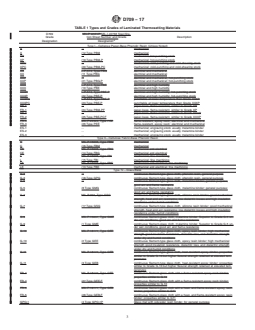
TABLE 1 Types and Grades of Laminated Thermosetting Materials
D709 MIL-I-24768 Specification Sheet Num-
Grade ber and Grade Description
A
Designation Designation
Type I—Cellulose Paper-Base Phenolic Resin (Unless Noted)
X /12 Type PBM mechanical
XP /19 Type PBM-P mechanical; hot-punching stock
XPC /20 Type PBM-PC mechanical; cold-punching and cold-shearing stock
XX /11 Type PBG electrical and mechanical
XXP /21 Type PBG-P electrical and mechanical; hot-punching stock
XXX /10 Type PBE electrical and high humidity
XXXP /22 Type PBE-P electrical and high humidity; hot-punching stock
XXXPC /23 Type PBE-P punchable at lower temperature than Grade XXXP
FR-1 /24 Type PBM-PF paper-base, flame-resistant, similar to Grade XP
FR-2 /25 Type PBE-PCF paper-base, flame-resistant, similar to Grade XXXP
FR-3 /26 Type PEE flame-resistant, epoxy resin; electrical and mechanical
ES-1 . mechanical; engraving stock usually melamine binder
ES-2 . mechanical; engraving stock usually melamine binder
ES-3 . mechanical; engraving stock usually melamine binder
Type II—Cellulose Fabric-Base Phenolic Resin
C /16 Type FBM mechanical
CE /14 Type FBG mechanical and electrical
L /15 Type FBI mechanical; fine machining
LE /13 Type FBE mechanical and electrical; fine machining
Type IV—Glass-Base
G-3 /18 Type GPG continuous filament-type glass cloth; phenolic resin, general purpose
G-5 /8 Type GMG continuous filament-type glass cloth, melamine binder; general purpose;
good arc and flame resistance
G-7 /17 Type GSG continuous filament-type glass cloth, silicone resin binder; good mechanical
strength, heat and arc resistance; low dielectric losses and high insulation
resistance under humid conditions
G-9 /1 Type GME continuous filament-glass cloth, melamine binder. Superior to Grade G-5 un-
der wet conditions, good arc and flame resistance
G-10 /2 Type GEE continuous filament-type glass cloth, epoxy resin binder; high mechanical
strength good insulation resistance, dielectric loss, and dielectric strength
under dry and humid conditions
G-11 /3 Type GEB continuous filament-type glass cloth, heat-resistant epoxy binder; properties
similar to Grade G-10 but higher flexural strength retained at elevated tem-
peratures
FR-4 /27 Type GEE-F continuous filament-glass cloth with a flame-resistant epoxy resin binder;
properties similar to G-10
FR-5 /28 Type GEB-F continuous filament-glass cloth with a heat- and flame-resistant epoxy resin
binder; properties similar to G11
GPO-1 /4 Type GPO-1P Glass mat with polyester resin binder, for general purpose
GPO-2 /5 Type GPO-2P Glass mat with polyester resin binder, for general purpose and flame resis-
tance
GPO-3 /6 Type GPO-3P Glass mat with polyester resin binder, for general purpose, flame resistance
and tracking resistance
GPO-1P /31 Type GPO-N-1P Glass mat with polyester resin binder, for general purpose, has better punch-
ing performance than standard GPO
GPO-2P /32 Type GPO-N-2P Glass mat with polyester resin binder, for general purpose, and flame
resistance, has better punching performance than standard GPO
GPO-3P /33 Type GPO-N-3P Glass mat with polyester resin binder, for general purpose, flame resistance
and tracking resistance has better punching performance than standard GPO
Type V—Nylon-Base
N-1 /9 Type NPG nylon cloth-base, phenolic resin binder; excellent electrical properties under
high humidity; good impact
Type VI—Composite-Base Laminates
CEM-1 /29 Type CEM-1 cellulose paper core, glass surfaces, flame-resistant resin (see X1.28)
CEM-3 /30 Type CEM-3 non-woven glass core, glass surfaces, flame-resistant resin (see X1.29)
A
Individual Specification Sheets are subsidiary documents of the main MIL-I-24768 standard, and are designated as MIL-I-24768/1, /2, and so forth. Revisions of this
specification are designated by suffix letters added to the MIL-P or LP Specification number, A for the first revision, B for the second, and so forth. Reference shall
accordingly be made to the latest edition of the specification.
XPC, A, G-7, and N-1 are not recommended for drilling and 7.2 Rate of Burning—Tests shall be conducted on laminates
1 1
tapping parallel with laminations. Grades XXX, CE, and LE from ⁄32 to ⁄4 in. (0.8 to 6.4 mm) in thickness in accordance
are best suited to these operations. with Method I ofTest Methods D229.The rate of burning shall
be Class I for Grades FR-1, FR-2 and FR-3, and Class O for
7. Detail Requirements for Sheets
Grades FR-4, FR-5, CEM-1, G-5, G-7, G-9, and GPO-2.
7.1 Sheet material shall conform to the requirements for 7.3 Flame Resistance—Tests shall be conducted on lami-
physical and electrical properties prescribed in Tables 7-12. nates ⁄2 in.(12.7mm)inthicknessinaccordancewithMethod
D709−17
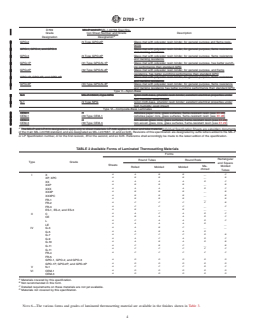
TABLE 2 Available Forms of Laminated Thermosetting Materials
Forms
Rectangular
Round Tubes Round Rods
Type Grade
and Square
Sheets
Ma-
Molded
Rolled Molded Molded
chined
Tubes
AA B B C
IX .
AB B B B
XP, XPC .
AA A A D C
XX
AB B B B
XXP .
AA A A D C
XXX
AB B B B
XXXP .
AB B B B
XXXPC .
AB B B B
FR-1 .
AC C C C B
FR-2
AC C C C
FR-3 .
AB B
ES-1, ES-2, and ES-3 . . .
AA C A D C
II C
AB A A D C
CE
AC A A D C
L
AA A A D
LE .
AA B C
IV G-3 . .
AA B A D
G-5
AC C C D B
G-7
AA C A D C
G-9
AA B A D B
G-10
AC B C B
G-11 .
AC C C C C
G-11
AC C C C C
FR-4
FR-5
AD D D D D
GPO-1, GPO-2, and GPO-3
AD D D D D
GPO-1P, GPO-2P, and GPO-3P
AC C C D C
VN-1
A D D D D D
VI CEM-1
A D D D D D
CEM-3
A
Materials covered by this specification.
B
Not recommended in this form.
C
Detailed requirements on these materials are not yet available.
D
Materials not covered by this specification.
TABLE 3 Available Finishes of Laminated Thermosetting Materials
A
Form Grade Finish
Sheets XX, XXX, CE, LE semigloss or polished
X, C, L, G-3, G-5, G-7, G-9, G-10, G-11, N-1, semigloss
FR-2, FR-4, FR-5, GPO-1, GPO-2, GPO-3, GPO-1P,
GPO-2P, GPO-3P, CEM-1, CEM-3
XPC, XP, XXP, XXXP, XXXPC, FR-1, FR-3 semigloss or dull
ES-1, ES-2, ES-3 dull or polished
Round tubing and rods G-3, G-5, G-7, G-9, G-10, G-11, N-1 ground only
all other grades ground, buffed, or varnished
Molded square and rectangular forms all grades semigloss, ground, or varnished
A
Ground finish is applied by a fine grinding wheel or belt, is free of any pronounced scratches and is suitable for a majority of applications.
Buffed finish is somewhat more glossy than the ground finish, and is obtained by buffing the tube or rod following grinding, using a touch of shellac or other polishing
compound on the buffer.
Varnished finish is sometimes applied to tubes or rods for special decorative, special electrical, or chemical-resistant applications. It is obtained by coating the tube or
rod one or more times with a varnish or lacquer and air-drying or baking. Because the varnish requires operations that could change greatly the physical and electrical
properties, such finished tubes or rods are not covered by this specification.
II of Test Methods D229. The requirements for average 9. Detail Requirements for Molded Rods
ignition time and burning time are shown in Table 13.
9.1 Molded rods shall conform to the requirements for
physical properties prescribed in Tables 20 and 21.
8. Detail Requirements for Tubes
10. Sheet Sizes and Permissible Variations
8.1 Tubes shall conform to the requirements for physical
and electrical properties prescribed in Table 14, Table 15, and
10.1 Length and Width—The nominal length and width of
Table 16 for round rolled tubes, and in Table 17, Table 18, and
the sheets shall be 61 in. (625 mm) from the manufacturer’s
Table 19 for round molded tubes. standard.
D709−17
TABLE 4 Available Colors of Laminated Thermosetting Materials
A
Type Grade Standard Color
Sheets X, XX, XXP, XXX, C, CE, L, LE natural or black
XP, XPC natural, black, or chocolate
XXXP, XXXPC, FR-1, FR-3, G-3, G-5, G-7, G-9, natural
G-10, G-11, N-1, FR-2, FR-4, FR-5, GPO-1,
GPO-2, GPO-3, GPO-1P, GPO-2P, GPO-3P,
CEM-1, CEM-3
ES-1 black or gray surface, white core
ES-2 black or gray surface, white subcore, black core
ES-3 white or gray surface, black core
Round tubing and rods and molded square X, XX, XXX, C, CE, L, LE natural or black
and rectangular forms FR-1, G-3, G-5, G-7, G-9, G-10, G-11, N-1 natural
A
Naturalcolor is produced by the natural undyed paper or fabric and resin used. Woven glass-base grades contains streaks due to differential coloration of various warp
or filler threads under heat-treating conditions. The natural color of the phenolic material will vary from a light tan to a light brown or reddish brown. The color of the
glass-base melamine and silicone materials will vary from white to light gray to a brown color. That of the glass-base silicone material will be from white to cream.
Blackcoloredsheetshavesubstantiallyuniformblacksurfacesandablackbody.Sawed,sanded,andmachinedsurfacesofsheets,andgroundsurfacesoftubes,show
a light grayish black tinge. Sawed, sanded, machined, and ground surfaces and edges of some cotton fabric-base grades and of asbestos paper-base materials show a
decided grayish black tinge.
Chocolate colored sheets have a uniform dark brown or chocolate color surface with natural core.
Experience has shown that colors other than those mentioned have ingredients which prevent laminated products from meeting the specified standard electrical or
mechanicalperformancevalues.Evenblackandchocolatecolorsaffectelectricalcharacteristics.Forinstance,thestandardcolorforgradeXXXPis“natural”onlybecause
the presence of any dye or pigment would impair its electrical qualities.
TABLE 5 Permissible Warp or Twist TABLE 6 Maximum Thickness in Inches (Millimetres) for Various
Grades at Which Satisfactory Punching Results shall be
Maximum
A
Obtained
Thickness or Outside
Permissible Warp or
Form
A
Diameter Twist on Basis of
When Heated Before
36-in. Dimension, %
Punching
At Room
B
1 1
Sheets ⁄32 to ⁄16 (0.79 to 5.0 Tempera-
To ap-
Grade
1.58), excl
ture (20
To 120 to proxi-
1 1
⁄16 to ⁄8 (1.58 to 3.17), 2.5 to 30°C)
140°C mately
excl
60°C
C
1 1
⁄8 to ⁄4 (3.17 to 6.35), 1.0
1 3
X ⁄32 (0.8) ⁄32 (2.4)
incl
1 1
XP, FR-1 ⁄16 (1.6) ⁄8 (3)
1 3
Over ⁄4 to ⁄4 (6.35 to 0.5
1 1
XPC ⁄8 (3) ⁄4 (6)
19.05), incl
1 3
XX ⁄32 (0.8) ⁄32 (2.4)
Over ⁄4 (19.05) 0.25
1 1
XXP ⁄32 (0.8) ⁄8 (3)
1 1
Tubes and ⁄8 to ⁄4 (3.17 to 6.35), 2.0
B
XXX . ⁄16 (1.6)
molded incl
XXXP . ⁄32 (2.4)
1 3
rods Over ⁄4 to ⁄4 (6.35 to
1 1
XXXPC, FR-2, FR-3, ⁄16 (1.6) . ⁄8 (3)
19.05), incl 1.0
CEM-1, CEM-3
Over ⁄4 (19.05) 0.5
1 3
C, L ⁄16 (1.6) ⁄16 (4.8)
A
In case of warp, this percentage is stated in terms of the lateral dimensions 3
CE . ⁄32 (2.4)
1 3
(length or width); in the case of twist, which applies only to sheet forms, the
LE ⁄32 (0.8) ⁄32 (2.4
percentage is stated in terms of the dimensions from one corner to the diagonally 1 1
G-3, G-5, G-7, G-9, ⁄8 (3) ⁄8 (3)
opposite corner.
G-10, G-11, FR-4,
B
These requirements do not apply to cut pieces, but only to sheet sizes, tube
FR-5
1 3
lengths, and rod lengths as manufactured.
N-1 ⁄16 (1.6) ⁄16 (4.8)
C
InthecaseofGradeG-7themaximumpermissiblewarportwistshallbe1.5 %.
A
With simple forms and special precautions greater thicknesses than the above
can sometimes be punched. With poor dies, poor punching practice, or intricate
parts, good results cannot be expected in the thicknesses listed in this table.
B
Simple shapes, compound dies only.
10.2 Tolerances of material cut by sawing shall be as
prescribed in Table 22 and those cut by shearing shall be as
prescribed in Tables 23 and 24.
prescribed in Table 25, and at no point shall the thickness as
NOTE 9—Due to variations in sizes of press equipment, there is
measured vary from the nominal by a value greater than 125 %
considerable variation in the lengths and widths of manufacturers’
of the specified variation. Permissible ranges in thickness of
standard size sheets. For most of the grades, these standard sizes range
component parts of engraving stock sheets are given in Table
between 36 and 50 in. (914 and 1270 mm) in width, and between 36 and
26.
96 in. (914 and 2438 mm) in length. Certain grades are sometimes
supplied in standard sizes ranging from 24 to 36 in. (610 to 914 mm) in
NOTE 10—Sheets are available in the thicknesses shown in Table 27.
width, and from 24 to 96 in. (610 to 2438 mm) in length. In order to avoid
damage to the sheets during shearing, it is recommended that this
11. Tube Sizes and Permissible Variations
operation not take place at temperatures lower than 20°C (68°F) and not
higher than 40°C (104°F).
11.1 Length—The length of rolled or molded tubes are
10.3 Thickness—The permissible variations from the stan- permitted to vary within 61 in. (625 mm) from the manufac-
dard thicknesses (Note 10) of the various grades of sheets shall turer’s standard length (Note 11), unless otherwise specified.
be within the requirements prescribed in Table 25. At least When tubes cut to definite lengths are specified, the permis-
90 % of the area of the sheet shall be within the variations sible variations shall be as shown in Tables 28 and 29.
D709−17
A
TABLE 7 Flexural Strength Requirements for Sheets, Measured Flatwise (Condition A), Min Average, psi
B
Thickness
1 1 3 1 3 1 1 3
Grade ⁄32 (0.8) ⁄16 (1.6) ⁄32 (2.4) ⁄8 (3) ⁄16 (4.8) ⁄4 (6) ⁄2 (13) ⁄4 (18) (25) and over
C C
LW CW LW CW LW CW LW CW LW CW LW CW LW CW LW CW LW CW
X 22 000 20 000 25 000 22 000 25 000 22 000 25 000 22 000 25 000 22 000 25 000 22 000 24 000 21 000 24 000 21 000 22 000 19 000
XX 15 000 13 000 15 000 14 000 15 000 14 000 15 000 14 000 15 000 14 000 15 000 14 000 15 000 14 000 15 000 14 000 13 500 12 500
XXX 13 500 11 800 13 500 11 800 13 500 11 800 13 500 11 800 13 500 11 800 13 500 11 800 13 500 11 800 13 500 11 800 12 000 10 600
XPC . . 10 000 8 000 10 000 8 000 12 000 10 000 12 000 10 000 12 000 10 000 . . . . . .
XP 12 000 10 000 13 000 11 000 13 000 11 000 14 000 12 000 14 000 12 000 14 000 12 000 . . . . . .
XXP 14 000 12 000 14 000 12 000 14 000 12 000 14 000 12 000 14 000 12 000 14 000 12 000 . . . . . .
XXXP, XXXPC 12 000 10 500 12 000 10 500 12 000 10 500 12 000 10 500 12 000 10 500 12 000 10 500 . . . . . .
FR-1 12 000 10 000 13 000 11 000 13 000 11 000 14 000 12 000 14 000 12 000 14 000 12 000 . . . . . .
FR-2 12 000 10 500 12 000 10 500 12 000 10 500 12 000 10 500 12 000 10 500 12 000 10 500 . . . . . .
FR-3 20 000 16 000 20 000 16 000 20 000 16 000 20 000 16 000 20 000 16 000 20 000 16 000 . . . . . .
ES-1 . . 13 500 13 500 . . . . . . . . . . . . . .
ES-2 . . . . 13 500 13 500 13 500 13 500 13 500 13 500 13 500 13 500 . . . . . .
ES-3 . . 13 500 13 500 13 500 13 500 13 500 13 500 13 500 13 500 13 500 13 500 . . . . . .
C 17 000 16 000 17 000 16 000 17 000 16 000 17 000 16 000 17 000 16 000 17 000 16 000 16 000 15 000 16 000 15 000 15 000 14 000
CE 16 500 14 000 16 500 14 000 16 500 14 000 16 500 14 000 16 000 14 000 16 000 14 000 15 500 13 500 15 500 13 500 14 500 13 000
L 16 500 14 500 16 500 14 500 16 500 14 500 16 500 14 500 16 500 14 500 16 500 14 500 15 500 14 000 15 500 14 000 15 000 13 500
GPO-1, GPO-2, 18 000 18 000 18 000 18 000 18 000 18 000 18 000 18 000 18 000 18 000 18 000 18 000 18 000 18 000 . . . .
GPO-3
GPO-1P, GPO-2P, 16 000 16 000 16 000 16 000 16 000 16 000 16 000 16 000 16 000 16 000 . . . . . . . .
GPO-3P
LE 16 000 14 000 16 000 14 000 16 000 14 000 16 000 14 000 16 000 14 000 16 000 14 000 15 000 13 500 15 000 13 500 14 500 13 000
G-3 18 000 16 000 20 000 18 000 20 000 18 000 20 000 18 000 20 000 18 000 20 000 18 000 20 000 18 000 19 000 17 000 17 000 15 300
G-5 55 000 45 000 50 000 40 000 47 000 39 000 44 000 38 000 41 000 36 000 38 000 34 000 31 200 28 500 31 200 28 500 31 200 28 500
G-7 10 000 8 000 20 000 18 000 20 000 18 000 20 000 18 000 18 000 15 000 18 000 15 000 16 000 13 000 16 000 13 000 14 400 11 700
G-9 . . 60 000 40 000 . . 55 000 35 000 . . . . 45 000 30 000 . . . .
D
G-10, G-11 60 000 50 000 60 000 50 000 60 000 50 000 55 000 45 000 55 000 45 000 55 000 45 000 45 000 35 000 40 000 30 000 40 000 30 000
FR-4 60 000 50 000 60 000 50 000 60 000 50 000 55 000 45 000 56 000 45 000 55 000 45 000 45 000 35 000 40 000 30 000 40 000 30 000
FR-5 60 000 50 000 60 000 50 000 60 000 50 000 60 000 45 000 55 000 45 000 55 000 45 000 45 000 35 000 40 000 30 000 40 000 30 000
N-1 10 000 9 500 10 000 9 500 10 000 9 500 10 000 9 500 9 500 9 000 9 000 8 500 9 000 8 500 9 000 8 500 8 000 7 500
CEM-1 50 000 40 000 35 000 28 000 30 000 25 000 . . . . . . . . . . . .
CEM-3 50 000 40 000 40 000 32 000 33 000 27 000 . . . . . . . . . . . .
A
See 14.2.
B
For intermediate thicknesses, the values for the next smaller thickness shall apply.
C
LW = tested in a lengthwise direction.
CW = tested in a crosswise direction.
D
TheflexuralstrengthofGradeG-11foralengthwisespecimen ⁄8 in.(3mm)thickmeasuredat150C,ConditionE-1/501,shallbenolessthan30 000psiforthicknesses
up to ⁄4 in. (6.4 mm) inclusive.
NOTE 11—Tubes are available in manufacturers’ lengths which vary A
Increments of Sizes of Round
Nominal Inside and Outside Diameters
B
from 18 to 24 in. (457 to 610 mm) in small outside diameters and from 30
in. (mm) Tubes, in. (mm)
1 1
to 48 in. (762 to 1219 mm) in large diameters. In a number of diameters ⁄8to1(3to25),incl ⁄32 (0.8)
1 1
1 ⁄16 to 3 (27 to 76), incl ⁄16 (1.6)
of certain grades longer lengths are available.
1 1
3 ⁄8 to 6 (79 to 152), incl ⁄8 (3)
11.2 Diameter—The nominal inside and outside diameter 1 1
6 ⁄4 to 8 (158 to 203), incl ⁄4 (6)
A
8 to 25 (203 to 635), incl ⁄2 (13)
(Note 12) shall be specified by the purchaser. The permissible
variations in inside and outside diameters of round rolled and
A
No standards have been developed for sizes above 25 in. (635 mm) up to 48 in.
molded tubes shall be within the requirements prescribed in
(1219 mm). No standards have been developed for Grade G-5 (melamine
Table 30. The permissible variations in inside and outside
glass-rolled tubes) for sizes above 8 in. (203 mm) inside diameter.
B
Steps in outside diameter apply only to molded tubes. Rolled tubes are ground
dimensions of square and rectangular molded tubes shall be
to size order.
within the requirements prescribed in Table 31.
The standard sizes of square and rectangular molded tubes are as shown in
Table 36.
11.3 Thickness—The permissible variations in wall thick-
ness (Note 12) for round tubing with inside diameters up to 4
12. Rod Sizes and Permissible Variations
in. (102 mm) shall be as shown in Tables 32 and 33. The
12.1 Length—Unless otherwise specified, molded rods shall
permissible variations in wall thickness of square and rectan-
be furnished to manufacturer’s standard lengths (Note 13).
gular molded tubes shall be within the requirements prescribed
When molded rods cut to definite lengths are specified, the
in Table 34.
permissible variations shall be as shown in Tables 36 and 37.
NOTE 12—The standard ranges of sizes of round tubes, including inside
and outside diameters and wall thicknesses, are given in Table 35. NOTE 13—Molded rods are available in lengths that vary from 18 to 48
Standard increments of sizes of round tubes are as follows, except as in. (457 to 1219 mm) for small diameters, and from 30 to 48 in. (762 to
limited by Table 35. 1219 mm) for large diameters.
D709−17
TABLE 8 Impact and Bonding Strength Requirements for Sheets
Impact Strength Impact Strength
(Izod, Edgewise), (Izod, Edgewise),
Bonding Strength, Bonding Strength,
min avg, min avg,
min avg, lb min avg, lb
ft·lb/in. ft·lb/in.
of notch of notch
Condition E-48/50 Condition E-48/50
1 1
Thicknesses, ⁄2 in. Thicknesses, ⁄2 in.
1 1
thicknesses: ⁄8 in. thicknesses: ⁄8 in.
Grade (13 mm) up to Grade (13 mm) up to
(3 mm) up to maxi- (3 mm) up to maxi-
maximum for maximum for
mum thickness for mum thickness for
grade, but not over grade, but not over
grade, but not over grade, but not over
A A
2in. (51 mm) 2in. (51 mm)
2 in. (51 mm) 2 in. (51 mm)
Condi- Condi-
Condi- Condi-
B B B B
LW CW tion D- LW CW tion D-
C C
tion A tion A
C C
48/50 48/50
X 0.55 0.50 700 400 G-3 6.50 5.50 850 700
XX 0.40 0.35 800 600 GPO-1, GPO-2, 8.0 8.0 850 800
D
XXX 0.40 0.35 950 700 GPO-3 1400
E E
G-5
1570 550
G-7
6.5 5.5
FR-1 . . . . G-9 . . 1700 1500
FR-2 . . . .
FR-3 . . . .
ES-1 0.25 0.22 . . G-10 7.0 5.5 2000 1600
ES-2 0.25 0.22 . . G-11 7.0 5.5 1600 1500
ES-3 0.25 0.22 . . GPO-1P, GPO-2P, 5.0 5.0 . .
A
GPO-3P
C 1.90 1.70 1800 1600 7.0 5.5 2000 1600
CE 1.60 1.40 1800 1600
L 1.35 1.10 1600 1500 FR-4 7.0 5.5 1600 1500
LE 1.25 1.00 1600 1500 FR-5 1.8 1.2 . .
CEM-1 . . . .
CEM-3 3.0 2.0 1000 1000
N-1
A
Specimens shall be nominal ⁄2 in. (13 mm) in thickness or machined to 0.500± 0.005 in. (13 ± 0.13 mm) from thicker sheets. Unmachined specimens shall be within
standard tolerance for ⁄2-in. thickness for the guide being tested. For thicker sheets, the specimens shall be cut from the center of the cross-section, machining
approximately equal amounts from each surface.
B
LW = tested in a lengthwise direction.
CW = tested in a crosswise direction.
C
See 14.2.
D
1 1
For specimens ⁄8 to ⁄2 in. (3 to 13 mm) inclusive.
E
Impact requirements for Grades G-5 and G-9 are as follows:
Minimum Average Impact Strength, ft-lb/1-in. (25 mm) notch
Thickness, in. (mm)
LW CW
1 1
⁄8 to ⁄2 (3 to 13), excl 7.0 5.5
1 A
⁄2 to 2 (13 to 51), excl 9.0 6.0
A
1 3
For specimens ⁄8 to ⁄16 in. inclusive.
12.2 Diameter—The diameters of rods (Note 14) shall be as requirements prescribed in this specification. Because of the
specified by the purchaser. The permissible variations in expense in both material and time, it is recommended that
diameter of molded rods shall be as shown in Table 38.
complete conformance tests be confined, where possible, to
1 1
sheets from ⁄16 to ⁄2 in. (1.6 to 13 mm) in thickness.
NOTE 14—Molded rods are available in the ranges of diameters given
in Table 39.
13.3 Tubes—Random samples of any grade and size of
tubing shall be taken to determine conformance with the
13. Sampling and Number of Tests
density requirements. A minimum of 2 tubes from each lot of
13.1 Forpurposesofsampling,aproductionlotshallconsist
50 tubes or a fraction thereof (of any one size), or 3 % of a
of a given machine run, and of a particular thickness range as
larger quantity of tubes of any grade and specific size, shall be
agreed upon between the purchaser and the manufacturer. A
tested. The average result for the specimens tested shall
machine run shall consist of all of the material pressed from a
conform to the requirements prescribed in this specification.
coating operation in which the basic resin, filler, and treating
conditions are the same.
13.4 Rods—Random samples of rods shall be selected from
each lot or shipment of any grade or size.Aminimum of 2 rods
13.2 Sheets—One sheet of a particular grade or thickness
from a lot of 50 rods or a fraction thereof (of any one size), or
shall be selected at random from each lot or shipment,
3 % from larger lots, shall be tested. The average result for the
whichever is the smaller. One set of test specimens as pre-
specimens tested shall conform to the requirements prescribed
scribed in Section 15 shall be considered sufficient. The
average result for the specimens tested shall conform to the in this specification.
D709−17
A
TABLE 9 Permittivity and Dissipation Factor Requirements for Sheets
Condition
B C C
Grade Condition A Condition D-24/23
C
D-48/50
1 3 1
⁄32 (0.8) and ⁄16 Over ⁄2
D
1 1 3 1 1 1 1
Thickness, in. (mm) ⁄32 (0.8) ⁄16 (1.6) ⁄32 (2.4) ⁄8 (3) ⁄4 (6) ⁄2 (13) ⁄8 (3) only
over (4.8) (13)
Permittivity at 1 MHz, max avg
XX 5.50 6.30 6.20 6.10 6.00 6.00 6.00 6.00 6.00 .
XXX 5.30 6.00 5.90 5.80 5.70 5.70 5.70 5.70 5.70 .
XXP 5.00 5.50 5.30 5.30 5.20 5.20 5.20 . . 5.80
XXXP, XXXPC 4.60 4.80 4.80 4.80 4.80 4.80 4.80 . . 5.30
FR-2 4.60 4.80 4.80 4.80 4.80 4.80 4.80 . . 5.30
FR-3 4.60 4.80 4.80 4.80 4.80 4.80 4.80 . . 5.00
E
FR-4, FR-5 5.40 5.40 5.40 5.40 5.40 5.40 5.40 5.70 5.80
E
CEM-1 5.20 5.00 4.80 . . . . . .
E
CEM-3 5.40 5.40 5.40 . . . . . . .
FF F
LE 5.80 6.00 6.00 6.00 6.00 6.00 .
EF F F
G-5 8.00 8.70 8.70 8.90 9.20 .
G-7 4.20 4.50 4.40 4.30 4.20 4.20 4.20 4.20 4.20 .
E
G-9 . 7.40 7.40 7.40 7.40 7.40 8.00 8.00 7.50
E
G-10, G-11 5.40 . . . . . 5.40 5.70 5.80
E
N-1 4.20 4.00 4.00 3.90 4.30 4.30 4.40 4.50 4.00
Dissipation Factor at 1 MHz, avg max
XX 0.045 0.053 0.052 0.051 0.050 0.050 0.050 0.050 0.050 .
XXX 0.038 0.048 0.047 0.046 0.045 0.044 0.043 0.043 0.043 .
XXP 0.040 0.080 0.060 0.060 0.050 0.050 0.050 . . 0.10
XXXP, XXXPC 0.038 0.040 0.040 0.040 0.040 0.040 0.040 . . 0.05
FR-2 0.038 0.040 0.040 0.040 0.040 0.040 0.040 . . 0.05
FR-3 0.035 0.040 . . . . 0.040 . . 0.045
FR-4, FR-5 0.025 0.035 0.035 0.035 0.035 0.035 0.035 0.035 0.035 0.045
CEM-1 0.035 0.040 0.040 0.040 . . . . . .
FA F
LE 0.055 0.070 0.070 0.070 0.070 0.070 .
GF F F
G-5 0.020 0.080 0.080 0.080 0.080 0.080 .
H
GPO-1, GPO-2 , GPO-3 . . 0.05 0.05 0.05 0.05 0.05 0.05 0.05 .
G-7 0.003 0.070 0.050 0.035 0.022 0.022 0.022 0.022 0.022 .
I
G-9 0.018 0.018 0.018 0.018 0.018 0.018 0.018 0.020 0.025 0.020
G-10, G-11 0.025 0.035 . . . . . 0.035 0.035 0.045
GPO-1P, GPO-2P, . . . . . . . . . .
GPO-3P
N-1 0.038 0.045 0.041 0.040 0.039 0.039 0.039 0.039 0.039 0.045
A
Dielectric loss factor is the product of dissipation factor and permittivity.
B
No dielectric loss values for Grades X, XPC, XP, FR-1, ES-1, ES-2, ES-3, C, CE, L, and G-3 are included because these grades are not suited to applications where
low dielectric loss under radio frequencies is required.
C
See 14.2.
D
For intermediate thicknesses, the value for the next smaller thickness shall apply.
E
Permittivity values for Grades FR-4, FR-5, G-5, G-9, G-10, G-11, CEM-1, CEM-3, and N-1, Condition A, are as follows:
F
DissipationfactorandpermittivityforGradesLEandG-5inthicknessesbelow ⁄8 in.(3mm)showtoogreatachangefromConditionAtobemeasuredsatisfactorilywith
usual laboratory equipment.
G
For Grade G-5 in thicknesses over 1 in. (24 mm), the value shall be 0.025.
H
For GPO-2 only measured at 60 Hz.
I 1
For Grade G-9 in thicknesses over ⁄2 in. (13 mm), the value shall be 0.020.
Grade Permittivity at 1 MHz, max avg (Condition A)
1 1 1 1 1 1
⁄32 to ⁄16 Over ⁄16 to Over ⁄8 to Over ⁄4 to Over ⁄2 to
Over 1
1 1 1
Thickness, in. (mm) (0.8 to 1.6), ⁄8 (1.6 to 3), ⁄4 (3 to 6), ⁄2 (6 to 13), 1 (13 to 25),
(25)
incl incl incl incl incl
G-5 7.80 7.80 8.00 8.50 8.70 9.00
G-9 7.20 7.20 7.20 7.50 7.50 .
G-10, G-11, FR-4, FR-5 5.20 5.20 5.20 5.20 5.50 .
CEM-1 5.00 4.60 . . . .
CEM-3 5.2 5.2 . . . .
N-1 3.90 3.90 4.20 4.30 4.40 .
GPO-1, GPO-2, GPO-3 . . . . . .
GPO-1P, GPO-2P, GPO-3P . . . . . .
13.5 Alternatively, the procedure described in Practice 14.1.1 Condition A—As received; no special conditioning.
D3636 is acceptable for use with the inspection levels as 14.1.2 Condition C—Humidity conditioning.
agreed upon by the purchaser. 14.1.3 Condition D—Immersion conditioning in distilled
water.
14. Conditioning
14.1.4 Condition E—Temperature conditioning.
14.1 Nomenclature—The following letters shall be used to
NOTE 15—Whenever a conditioning letter is followed by a subscript 1,
indicate the respective general conditioning procedures for test
as D , this indicates that a prior temperature conditioning has been carried
specimens: out.
D709−17
TABLE 10 Dielectric Breakdown Requirements for Sheets,
14.4 Temperature Tolerances—Tolerances on the condition-
Parallel to Laminations (Step-by-Step Test), Min Average kV
ing temperature shall be as follows:
A B B
Grade Condition A Condition D-48/50
Nominal Tolerance,
Over Over
Temperature, °C ±, °C
1 1
⁄32 to ⁄32 to
1to2 1to2
23 2
Thickness, 1(0.8 1(0.8
(25 to (25 to
50 2
in. (mm) to 25), to 25),
51), 51),
105 2
incl incl
incl incl
14.5 Test Conditions—Tests shall be conducted following
XX 40.0 25.0 5.0 3.0
the conditions specified in Table 41, Table 42, and Table 43
XXX 50.0 40.0 6.0 4.0
whether or not this conditioning conflicts with the referenced
XP 40.0 . . .
test method in the tables, except that in all matters of dispute
ConditionAspecimensshallbeconditionedinaccordancewith
XXP 60.0 . 5.0 3.0
XXXP, XXXPC 60.0 . 15.0 .
Procedure A of Practice D6054 and all tests regardless of
FR-1 40.0 . . .
conditioning shall be conducted in the Standard Laboratory
FR-2 60.0 . 15.0 .
Atmosphere (23 6 2°C, 50 6 2 % relative humidity) except
FR-3 60.0 . 30.0 .
FR-4, FR-5 45.0 . 40.0 .
tests conducted on specimens in a conditioning chamber at the
CEM-1 45.0 . 40.0 .
specific condition.
CEM-3 45.0 . 40.0 .
C 15.0 10.0 .
CE 35.0 25.0 2.5 2.5
15. Methods of Testing Sheets
C
GPO-1, GPO-2, GPO-3 40.0 . 15.0 .
L 15.0 10.0 . . 15.1 Methods of testing sheets, tubes, and rods shall be
LE 40.0 30.0 3.0 3.0
those shown in Table 41, Table 42, and Table 43 respectively.
D
GPO-1P, GPO-2P, GPO-3P . . 5.0 .
15.2 In all cases, the test values reported shall be the
G-5 23.0 15.0 5.0 3.0
average of the values determined for the number of specimens
G-7 32.0 25.0 15.0 .
E F F
required by each specific test procedure.
G-9 60.0 . 45.0 40.0
G-10, G-11 45.0 . 40.0 .
NOTE 17—Direction of Test—When conducting tests on sheets “length-
wise” (LW) shall be interpreted to mean the direction of the sheet known
N-1 60.0 50.0 40.0 30.0
to be stronger in flexure. “Crosswise” (CW) shall be the sheet direction
A
Grades X, XPC, ES-1, ES-2, ES-3, and G-3 are not primarily electrical grades;
knowntobeweakerinflexureandshallbe90°tothelengthwisedirection.
therefore, requirements for electrical properties of these grades are not included.
B
See 14.2.
C
1 1
For specimens ⁄16 to ⁄2 in. inclusive.
16. Recommended Control Tests
D
1 3
For specimens ⁄16 to ⁄16 in. inclusive.
E
This value applies to sheets having a maximum thickness of ⁄2 in. (13 mm). 16.1 Where experience indicates that a particular grade of
F
1 1
Thicknesses of ⁄32 in. to and including ⁄4in.(0.8to6.4
material is satisfactory for some particular application, the
mm).60
number of tests required to ascertain the uniformity of the
1 1
Over ⁄4 in. but less than ⁄2 in. (6.4 to 12.7 mm).55
From ⁄2 in. to 1 in. (12.7 to 25.4 mm), incl.45 product and whether or not it meets these requirements is
Over 1 in. to and including 3.5 in. (25.4 to 88.9 mm).40
permitted to be greatly reduced.The tests listed in Table 44 are
suggested as suitable to determine continuity of quality.
17. Retest and Rejection
14.2 Designation—Conditioning procedures shall be desig- 17.1 If the results of any test do not conform to the
nated as follows:
requirements prescribed in this specification, at the option of
14.2.1 Acapitalletterindicatingthegeneralconditionofthe the manufacturer that test shall be repeated on two additional
specimen, that is, A for as received, C for humidity, D for
sets of specimens from the same batch or shipment, each of
immersion, or E for temperature conditioning. which shall conform to the requirements specified. If either of
14.2.2 A number indicating in hours the duration of the
these two additional sets of specimens fails, the material is
conditioning. permitted to be rejected at the option of the purchaser. Notice
14.2.3 A number indicating in degrees Celsius the condi-
of failure of material based on tests made in accordance with
tioning temperature. this specification shall be reported to the manufacturer within
14.2.4 A number indicating relative humidity in percent, 3 weeks from the receipt of the material by the purchaser.Any
whenever relative humidity is controlled. portion of the accepted shipment of material that subsequently
14.2.5 The numbers shall be separated from each other by a is found not to be in accordance with this specification is
slant mark, and from the capital letter by a dash. permitted to be rejected, provided the manufacturer is notified
within 90 days from the date of receipt of the material by the
NOTE16—Examples:ConditionC-24/23/50—Humiditycondition,24h
purchaser.
at 23°C and 50 % relative humidity; Condition D-48/50—Immersion
condition, 48 h in distilled water at 50°C.
18. Packaging and Marking
14.3 Time Tolerances—Oven conditioning shall be followed
by cooling to room temperature (23°C) in a desiccator. Immer- 18.1 Packaging—The material shall be packaged in sub-
sion conditioning shall be followed by cooling to room stantial crates, boxes, or cartons so constructed as to ensure
temperature in distilled water, as specified in Table 40. acceptance by common or other carriers for safe transportation
...
This document is not an ASTM standard and is intended only to provide the user of an ASTM standard an indication of what changes have been made to the previous version. Because
it may not be technically possible to adequately depict all changes accurately, ASTM recommends that users consult prior editions as appropriate. In all cases only the current version
of the standard as published by ASTM is to be considered the official document.
Designation: D709 − 16 D709 − 17
Standard Specification for
Laminated Thermosetting Materials
This standard is issued under the fixed designation D709; the number immediately following the designation indicates the year of
original adoption or, in the case of revision, the year of last revision. A number in parentheses indicates the year of last reapproval. A
superscript epsilon (´) indicates an editorial change since the last revision or reapproval.
This standard has been approved for use by agencies of the U.S. Department of Defense.
1. Scope*
1.1 This specification covers laminated thermosetting materials consisting of two or more plies or layers of reinforcing material
bonded by a thermosetting synthetic resin. Examples of such reinforcement are cellulose paper, cotton fabric, glass fabric, and
synthetic fiber fabrics. These materials are available in the form of sheets, rolled and molded tubes, and molded rods.
1.2 The values stated in inch-pound units are to be regarded as the standard.
NOTE 1—This specification resembles IEC 60893-3 in title only. The content is significantly different.
1.3 The following safety hazards caveat pertains only to the test methods described in this specification. This standard does not
purport to address all of the safety concerns, if any, associated with its use. It is the responsibility of the user of this standard to
establish appropriate safety and health practices and determine the applicability of regulatory limitations prior to use.
1.4 This international standard was developed in accordance with internationally recognized principles on standardization
established in the Decision on Principles for the Development of International Standards, Guides and Recommendations issued
by the World Trade Organization Technical Barriers to Trade (TBT) Committee.
2. Referenced Documents
2.1 ASTM Standards:
D229 Test Methods for Rigid Sheet and Plate Materials Used for Electrical Insulation
D257 Test Methods for DC Resistance or Conductance of Insulating Materials
D348 Test Methods for Rigid Tubes Used for Electrical Insulation
D349 Test Methods for Laminated Round Rods Used for Electrical Insulation
D495 Test Method for High-Voltage, Low-Current, Dry Arc Resistance of Solid Electrical Insulation
D621 Test Methods for Deformation of Plastics Under Load (Withdrawn 1994)
D668 Test Methods of Measuring Dimensions of Rigid Rods and Tubes Used for Electrical Insulation
D883 Terminology Relating to Plastics
D1180 Method of Test for Warpage of Sheet Plastics (Withdrawn 1988)
D1711 Terminology Relating to Electrical Insulation
D2303 Test Methods for Liquid-Contaminant, Inclined-Plane Tracking and Erosion of Insulating Materials
D2304 Test Method for Thermal Endurance of Rigid Electrical Insulating Materials
D3636 Practice for Sampling and Judging Quality of Solid Electrical Insulating Materials
D6054 Practice for Conditioning Electrical Insulating Materials for Testing (Withdrawn 2012)
2.2 IEEE Standards:
1 General Principles for Temperature Limits in the Rating of Electric Equipment
98 Guide for the Preparation of Test Procedures for the Thermal Evaluation and Establishment of Temperature Indices of Solid
Electrical Insulating Materials
99 Guide for the Preparation of Test Procedures for the Thermal Evaluation of Insulation Systems for Electric Equipment
This specification is under the jurisdiction of ASTM Committee D09 on Electrical and Electronic Insulating Materials and is the direct responsibility of Subcommittee
D09.07 on Electrical Insulating Materials.
Current edition approved March 1, 2016April 1, 2017. Published March 2016April 2017. Originally approved in 1943. Last previous edition approved in 2013 as
D709 – 13.D709 – 16. DOI: 10.1520/D0709-16.10.1520/D0709-17.
For referenced ASTM standards, visit the ASTM website, www.astm.org, or contact ASTM Customer Service at service@astm.org. For Annual Book of ASTM Standards
volume information, refer to the standard’s Document Summary page on the ASTM website.
The last approved version of this historical standard is referenced on www.astm.org.
Available from Institute of Electrical and Electronics Engineers, Inc. (IEEE), 445 Hoes Ln., P.O. Box 1331, Piscataway, NJ 08854-1331, http://www.ieee.org.
*A Summary of Changes section appears at the end of this standard
Copyright © ASTM International, 100 Barr Harbor Drive, PO Box C700, West Conshohocken, PA 19428-2959. United States
D709 − 17
101 Guide for the Statistical Analysis of Thermal Life Test Data
2.3 NEMA Standards:
LI 1-1971 Industrial Laminated Thermosetting Products
LI 5-1969 Temperature Indices of Industrial Thermosetting Laminates
LI 3-1961 High-Temperature Properties of Industrial Thermosetting Laminates
2.4 Military Specifications:
MIL-P-997MIL-I-24768 Plastic Material, Laminated, Thermosetting, Electric Insulation, Sheets, Glass Cloth, Silicone
ResinInsulation, Plastics, Laminated, Thermosetting, General Specifications for
MIL-P-15035 Plastic Sheet, Laminated, Thermosetting, Cotton-Fabric-Base, Phenolic-Resin
MIL-P-15037 Plastic Sheet, Laminated, Thermosetting, Glass-Cloth, Melamine-Resin
MIL-P-15047 Plastic Material, Laminated Thermosetting Sheets, Nylon Fabric Base, Phenolic-Resin
MIL-P-18177 Plastic Sheet, Laminated, Thermosetting, Glass Fibre Base, Epoxy-Resin
MIL-P-22324 Plastic Sheet, Thermosetting, Paper-Base, Epoxy-Resin
2.5 Federal Specifications:
L-P-513 Plastic Sheet and Insulation Sheet, Electrical (Laminated, Thermosetting, Paper-Base, Phenolic-Resin)
L-P-509 Plastic Sheet, Rod and Tube, Laminated Thermosetting
2.5 IEC Standard:
Publication 60893-3 Specification for Industrial Laminated Sheets Based on Thermosetting Resins for Electrical Purposes
3. Terminology
3.1 Definitions—For definitions of terms used in this specification, refer to Terminologies D883 or D1711.
4. Types and Grades
4.1 Laminated materials covered by this specification are classified in accordance with the types of reinforcement used in their
manufacture, and the electrical, mechanical, and heat-resisting characteristics of the finished products (Note 2).
NOTE 2—Further descriptive information regarding these various types and grades of laminated thermosetting materials is given in Table 1 and
Appendix X1 – Appendix X3. Appendix X3 also includes tables covering engineering information on other properties of the various grades of laminated
thermosetting products that are not included in these specification requirements.
5. Forms
5.1 Laminated thermosetting materials are available in four forms: sheets, tubes (Note 3), rods (Note 4), and molded shapes
(Note 5), as indicated in Table 2. This specification covers the material in three forms: sheets, tubes of two classes (rolled and
molded), and molded rods. The classes of tubes desired shall be specified by the purchaser in the contract or order. In cases where
the purchaser desires a particular class of molded rod the purchaser shall so specify.
NOTE 3—Tubes are made of laminations of fibrous sheet impregnated material, rolled upon mandrels under tension or between heated pressure rolls,
or both. They are of two classes, rolled and molded. Rolled tubes are oven-baked after rolling on the mandrels. Molded tubes are cured in molds under
heat and pressure.
NOTE 4—Molded rods are composed of laminations of impregnated sheet material molded in cylindrical molds under heat and pressure, and then
ground to size. Molded rods are of two classes made by winding the impregnated sheet convolutely before molding or by forming strips in the molding
operation.
Machined rods, manufactured from certain grades of sheet material, are not covered by this specification. In rods machined from sheets, the laminations
are parallel chords of a circular cross-section. In general, the properties of these rods conform to those of the grade of sheet stock from which they are
cut. This type of rod has the potential to be low in flexural strength when stress is applied perpendicular to the lamination.
NOTE 5—Molded shapes are composed of impregnated sheet materials cut into various sizes and shapes to fit the contours of a mold, and molded under
heat and pressure. In special cases some macerated material is used in combination with impregnated sheet materials, depending upon the design of the
piece. The requirements of this specification, particularly with regard to mechanical properties, cannot be considered as applying to molded shapes, except
for rectangular and square tubes, since such properties will depend to a considerable extent upon the design of the piece.
6. General Requirements
6.1 Materials and Workmanship—Laminated material shall be uniform in quality. It shall be free of blisters, wrinkles, or cracks
and shall be reasonably free of other small defects such as scratches, heat marks, and so forth, as defined in Terminology D883.
Tubes of any grade having wall thickness greater than ⁄2 in. (13 mm) and molded paper-base rods (Grades XX and XXX) having
diameters greater than 1 in. (25 mm) have the potential to show checks or cracks between the laminations on machined or sawed
edges.
6.2 Finish and Color—Requirements for finish (Note 6) and color (Note 7) shall be as specified by the purchaser in the contract
or order.
Available from National Electrical Manufacturers Association (NEMA), 1300 N. 17th St., Suite 1752, Rosslyn, VA 22209, http://www.nema.org.
Available from Standardization Documents Order Desk, Bldg. 4 Section D, 700 Robbins Ave., Philadelphia, PA 19111-5094 Attn: NPODS.
Available from American National Standards Institute (ANSI), 25 W. 43rd St., 4th Floor, New York, NY 10036, http://www.ansi.org.
D709 − 17
TABLE 1 Types and Grades of Laminated Thermosetting Materials
D709 MIL-P and LP MIL-I-24768 Specifica-
Grade tion Sheet Number and Grade Description
A
Designation Designation
Type I—Cellulose Paper-Base Phenolic Resin (Unless Noted)
X . mechanical
X /12 Type PBM mechanical
XP . mechanical; hot-punching stock
XP /19 Type PBM-P mechanical; hot-punching stock
XPC . mechanical; cold-punching and cold-shearing stock
XPC /20 Type PBM-PC mechanical; cold-punching and cold-shearing stock
XX L-P-513, Type PBG electrical and mechanical
XX /11 Type PBG electrical and mechanical
XXP . electrical and mechanical; hot-punching stock
XXP /21 Type PBG-P electrical and mechanical; hot-punching stock
XXX L-P-513, Type PBE electrical and high humidity
XXX /10 Type PBE electrical and high humidity
XXXP L-P-513, Type PBE-P electrical and high humidity; hot-punching stock
XXXP /22 Type PBE-P electrical and high humidity; hot-punching stock
XXXPC L-P-513, Type PBE-P punchable at lower temperature than Grade XXXP
XXXPC /23 Type PBE-P punchable at lower temperature than Grade XXXP
FR-1 . paper-base, flame-resistant, similar to Grade XP
FR-1 /24 Type PBM-PF paper-base, flame-resistant, similar to Grade XP
FR-2 . paper-base, flame-resistant, similar to Grade XXXP
FR-2 /25 Type PBE-PCF paper-base, flame-resistant, similar to Grade XXXP
FR-3 MIL-P-22324, Type PEE flame-resistant, epoxy resin; electrical and mechanical
FR-3 /26 Type PEE flame-resistant, epoxy resin; electrical and mechanical
ES-1 . mechanical; engraving stock usually melamine binder
ES-2 . mechanical; engraving stock usually melamine binder
ES-3 . mechanical; engraving stock usually melamine binder
Type II—Cellulose Fabric-Base Phenolic Resin
C MIL-P-15035, Type FBM mechanical
C /16 Type FBM mechanical
CE MIL-P-15035, Type FBG mechanical and electrical
CE /14 Type FBG mechanical and electrical
L MIL-P-15035, Type FBI mechanical; fine machining
L /15 Type FBI mechanical; fine machining
LE MIL-P-15035, Type FBE mechanical and electrical; fine machining
LE /13 Type FBE mechanical and electrical; fine machining
Type IV—Glass-Base
G-3 . continuous filament-type glass cloth; phenolic resin, general purpose
G-3 /18 Type GPG continuous filament-type glass cloth; phenolic resin, general purpose
G-5 . continuous filament-type glass cloth, melamine binder; general purpose;
good arc and flame resistance
G-5 /8 Type GMG continuous filament-type glass cloth, melamine binder; general purpose;
good arc and flame resistance
G-7 MIL-P-997, Type GSG continuous filament-type glass cloth, silicone resin binder; good mechanical
strength, heat and arc resistance; low dielectric losses and high insulation
resistance under humid conditions
G-7 /17 Type GSG continuous filament-type glass cloth, silicone resin binder; good mechanical
strength, heat and arc resistance; low dielectric losses and high insulation
resistance under humid conditions
G-9 MIL-P-15037, Type GME continuous filament-glass cloth, melamine binder. Superior to Grade G-5 un-
der wet conditions, good arc and flame resistance
G-9 /1 Type GME continuous filament-glass cloth, melamine binder. Superior to Grade G-5 un-
der wet conditions, good arc and flame resistance
G-10 MIL-P-18177, Type GEE continuous filament-type glass cloth, epoxy resin binder; high mechanical
strength good insulation resistance, dielectric loss, and dielectric strength
under dry and humid conditions
G-10 /2 Type GEE continuous filament-type glass cloth, epoxy resin binder; high mechanical
strength good insulation resistance, dielectric loss, and dielectric strength
under dry and humid conditions
G-11 MIL-P-18177, Type GEB continuous filament-type glass cloth, heat-resistant epoxy binder; properties
similar to Grade G-10 but higher flexural strength retained at elevated tem-
peratures
G-11 /3 Type GEB continuous filament-type glass cloth, heat-resistant epoxy binder; properties
similar to Grade G-10 but higher flexural strength retained at elevated tem-
peratures
FR-4 MIL-P-18177, Type GEE continuous filament-glass cloth with a flame-resistant epoxy resin binder;
properties similar to G-10
FR-4 /27 Type GEE-F continuous filament-glass cloth with a flame-resistant epoxy resin binder;
properties similar to G-10
FR-5 MIL-P-18177, Type GEB continuous filament-glass cloth with a heat- and flame-resistant epoxy resin
binder; properties similar to G11
FR-5 /28 Type GEB-F continuous filament-glass cloth with a heat- and flame-resistant epoxy resin
binder; properties similar to G11
GPO-1 /4 Type GPO-1P Glass mat with polyester resin binder, for general purpose
D709 − 17
D709 MIL-P and LP MIL-I-24768 Specifica-
Grade tion Sheet Number and Grade Description
A
Designation Designation
GPO-2 /5 Type GPO-2P Glass mat with polyester resin binder, for general purpose and flame resis-
tance
GPO-1, GPO-2, and GPO-3 Glass mat with polyester resin binder, for general purpose, flame resistance
and tracking resistance
GPO-3 /6 Type GPO-3P Glass mat with polyester resin binder, for general purpose, flame resistance
and tracking resistance
GPO-1P /31 Type GPO-N-1P Glass mat with polyester resin binder, for general purpose, has better punch-
ing performance than standard GPO
GPO-2P /32 Type GPO-N-2P Glass mat with polyester resin binder, for general purpose, and flame
resistance, has better punching performance than standard GPO
GPO-1P, GPO-2P, and GPO-3P Glass mat with polyester resin binder, for general purpose, flame resistance
and tracking resistance
GPO-3P /33 Type GPO-N-3P Glass mat with polyester resin binder, for general purpose, flame resistance
and tracking resistance has better punching performance than standard GPO
Type V—Nylon-Base
N-1 MIL-P-15047, Type NPG nylon cloth-base, phenolic resin binder; excellent electrical properties under
high humidity; good impact
N-1 /9 Type NPG nylon cloth-base, phenolic resin binder; excellent electrical properties under
high humidity; good impact
Type VI—Composite-Base Laminates
CEM-1 . cellulose paper core, glass surfaces, flame-resistant resin (see X1.28)
CEM-1 /29 Type CEM-1 cellulose paper core, glass surfaces, flame-resistant resin (see X1.28)
CEM-3 . non-woven glass core, glass surfaces, flame-resistant resin (see X1.29)
CEM-3 /30 Type CEM-3 non-woven glass core, glass surfaces, flame-resistant resin (see X1.29)
A
The MIL-P and LP-513 designations apply only to sheet materials. LP-509 applies to sheet and tube material.Individual Specification Sheets are subsidiary documents
of the main MIL-I-24768 standard, and are designated as MIL-I-24768/1, /2, and so forth. Revisions of this specification are designated by suffix letters added to the MIL-P
or LP Specification number, A for the first revision, B for the second, and so forth. Reference shall accordingly be made to the latest edition of the specification.
TABLE 2 Available Forms of Laminated Thermosetting Materials
Forms
Rectangular
Round Tubes Round Rods
Type Grade
and Square
Sheets
Ma-
Molded
Rolled Molded Molded
chined
Tubes
A A B B C
I X .
A B B B B
XP, XPC .
A A A A D C
XX
A B B B B
XXP .
A A A A D C
XXX
A B B B B
XXXP .
A B B B B
XXXPC .
A B B B B
FR-1 .
A C C C C B
FR-2
A C C C C
FR-3 .
A B B
ES-1, ES-2, and ES-3 . . .
A A C A D C
II C
A B A A D C
CE
A C A A D C
L
A A A A D
LE .
A A B C
IV G-3 . .
A A B A D
G-5
A C C C D B
G-7
A A C A D C
G-9
A A B A D B
G-10
A C B C B
G-11 .
A C C C C C
G-11
A C C C C C
FR-4
FR-5
A D D D D D
GPO-1, GPO-2, and GPO-3
A D D D D D
GPO-1P, GPO-2P, and GPO-3P
A C C C D C
V N-1
A D D D D D
VI CEM-1
A D D D D D
CEM-3
A
Materials covered by this specification.
B
Not recommended in this form.
C
Detailed requirements on these materials are not yet available.
D
Materials not covered by this specification.
NOTE 6—The various forms and grades of laminated thermosetting material are available in the finishes shown in Table 3.
D709 − 17
TABLE 3 Available Finishes of Laminated Thermosetting Materials
A
Form Grade Finish
Sheets XX, XXX, CE, LE semigloss or polished
X, C, L, G-3, G-5, G-7, G-9, G-10, G-11, N-1, semigloss
FR-2, FR-4, FR-5, GPO-1, GPO-2, GPO-3, GPO-1P,
GPO-2P, GPO-3P, CEM-1, CEM-3
XPC, XP, XXP, XXXP, XXXPC, FR-1, FR-3 semigloss or dull
ES-1, ES-2, ES-3 dull or polished
Round tubing and rods G-3, G-5, G-7, G-9, G-10, G-11, N-1 ground only
all other grades ground, buffed, or varnished
Molded square and rectangular forms all grades semigloss, ground, or varnished
A
Ground finish is applied by a fine grinding wheel or belt, is free of any pronounced scratches and is suitable for a majority of applications.
Buffed finish is somewhat more glossy than the ground finish, and is obtained by buffing the tube or rod following grinding, using a touch of shellac or other polishing
compound on the buffer.
Varnished finish is sometimes applied to tubes or rods for special decorative, special electrical, or chemical-resistant applications. It is obtained by coating the tube or
rod one or more times with a varnish or lacquer and air-drying or baking. Because the varnish requires operations that could change greatly the physical and electrical
properties, such finished tubes or rods are not covered by this specification.
NOTE 7—The various types and grades of laminated thermosetting material are available in the colors shown in Table 4. Where MIL-P specifications
are involved, natural color only shall be supplied.
6.3 Warp or Twist—The warp or twist shall not exceed the values prescribed in Table 5.
6.4 Punching Properties—The grades of material differ in their suitability for punching, but thin pieces of any of the grades are
permitted to be punched in simple shapes, provided good punching practice is used, including sharp, close-clearance dies, proper
stripper plates, and proper heating conditions. When using good punching practice as outlined below, the various grades shall
punch satisfactorily in thickness up to and including the maximum limits as prescribed in Table 6. Where punching properties
better than those listed in Table 6 are required for particular parts, this shall be subject to agreement between the purchaser and
the manufacturer. In good punching practice the edges of the piece shall be no closer to the edge of the strip than twice the thickness
of the sheet, the holes shall be no smaller in diameter than the thickness of the sheet nor have square corners, and the distance
between the holes or between the holes and the edge of the piece shall be no less than the thickness of the sheet. For thicker
materials, depending upon the grade, heating the material to a temperature of 120 to 140°C (approximately 15 min for material
⁄8 in. (3 mm) in thickness) is generally necessary for best punching results, although in Grade XP or XPC it is possible that this
will make the material too soft. In this case, better results are likely to be obtained by heating at lower temperatures or for a shorter
time. If more than 2 min elapse between the time the strip leaves the heating medium and the last piece is punched, results will
be poor.
NOTE 8—The punching properties of the cotton fabric-base grades and of the paper-base grades classed as punching stock are somewhat better than
those of the other glass or nylon fabric-base grades. All grades can be punched in thin thicknesses under suitable conditions.
6.5 Machining Properties—In general, most of the grades can be drilled, tapped, sawed, and machined. Grades X, XP, XPC,
A, G-7, and N-1 are not recommended for drilling and tapping parallel with laminations. Grades XXX, CE, and LE are best suited
to these operations.
TABLE 4 Available Colors of Laminated Thermosetting Materials
A
Type Grade Standard Color
Sheets X, XX, XXP, XXX, C, CE, L, LE natural or black
XP, XPC natural, black, or chocolate
XXXP, XXXPC, FR-1, FR-3, G-3, G-5, G-7, G-9, natural
G-10, G-11, N-1, FR-2, FR-4, FR-5, GPO-1,
GPO-2, GPO-3, GPO-1P, GPO-2P, GPO-3P,
CEM-1, CEM-3
ES-1 black or gray surface, white core
ES-2 black or gray surface, white subcore, black core
ES-3 white or gray surface, black core
Round tubing and rods and molded square X, XX, XXX, C, CE, L, LE natural or black
and rectangular forms FR-1, G-3, G-5, G-7, G-9, G-10, G-11, N-1 natural
A
Natural color is produced by the natural undyed paper or fabric and resin used. Woven glass-base grades contains streaks due to differential coloration of various warp
or filler threads under heat-treating conditions. The natural color of the phenolic material will vary from a light tan to a light brown or reddish brown. The color of the
glass-base melamine and silicone materials will vary from white to light gray to a brown color. That of the glass-base silicone material will be from white to cream.
Black colored sheets have substantially uniform black surfaces and a black body. Sawed, sanded, and machined surfaces of sheets, and ground surfaces of tubes, show
a light grayish black tinge. Sawed, sanded, machined, and ground surfaces and edges of some cotton fabric-base grades and of asbestos paper-base materials show a
decided grayish black tinge.
Chocolate colored sheets have a uniform dark brown or chocolate color surface with natural core.
Experience has shown that colors other than those mentioned have ingredients which prevent laminated products from meeting the specified standard electrical or
mechanical performance values. Even black and chocolate colors affect electrical characteristics. For instance, the standard color for grade XXXP is “natural” only because
the presence of any dye or pigment would impair its electrical qualities.
D709 − 17
TABLE 5 Permissible Warp or Twist
Maximum
Thickness or Outside Permissible Warp or
Form
A
Diameter
Twist on Basis of
36-in. Dimension, %
B
1 1
Sheets ⁄32 to ⁄16 (0.79 to 5.0
1.58), excl
1 1
⁄16 to ⁄8 (1.58 to 3.17), 2.5
excl
C
1 1
⁄8 to ⁄4 (3.17 to 6.35), 1.0
incl
1 3
Over ⁄4 to ⁄4 (6.35 to 0.5
19.05), incl
Over ⁄4 (19.05) 0.25
1 1
Tubes and ⁄8 to ⁄4 (3.17 to 6.35), 2.0
incl
1 3
molded rods Over ⁄4 to ⁄4 (6.35 to 1.0
19.05), incl
Over ⁄4 (19.05) 0.5
TABLE 5 Permissible Warp or Twist
Maximum
Thickness or Outside
Permissible Warp or
Form
A
Diameter Twist on Basis of
36-in. Dimension, %
B
1 1
Sheets ⁄32 to ⁄16 (0.79 to 5.0
1.58), excl
1 1
⁄16 to ⁄8 (1.58 to 3.17), 2.5
excl
C
1 1
⁄8 to ⁄4 (3.17 to 6.35), 1.0
incl
1 3
Over ⁄4 to ⁄4 (6.35 to 0.5
19.05), incl
Over ⁄4 (19.05) 0.25
1 1
Tubes and ⁄8 to ⁄4 (3.17 to 6.35), 2.0
molded incl
1 3
rods Over ⁄4 to ⁄4 (6.35 to
19.05), incl 1.0
Over ⁄4 (19.05) 0.5
A
In case of warp, this percentage is stated in terms of the lateral dimensions
(length or width); in the case of twist, which applies only to sheet forms, the
percentage is stated in terms of the dimensions from one corner to the diagonally
opposite corner.
B
These requirements do not apply to cut pieces, but only to sheet sizes, tube
lengths, and rod lengths as manufactured.
C
In the case of Grade G-7 the maximum permissible warp or twist shall be 1.5 %.
7. Detail Requirements for Sheets
7.1 Sheet material shall conform to the requirements for physical and electrical properties prescribed in Tables 7-12.
1 1
7.2 Rate of Burning—Tests shall be conducted on laminates from ⁄32 to ⁄4 in. (0.8 to 6.4 mm) in thickness in accordance with
Method I of Test Methods D229. The rate of burning shall be Class I for Grades FR-1, FR-2 and FR-3, and Class O for Grades
FR-4, FR-5, CEM-1, G-5, G-7, G-9, and GPO-2.
7.3 Flame Resistance—Tests shall be conducted on laminates ⁄2 in. (12.7 mm) in thickness in accordance with Method II of Test
Methods D229. The requirements for average ignition time and burning time are shown in Table 13.
8. Detail Requirements for Tubes
8.1 Tubes shall conform to the requirements for physical and electrical properties prescribed in Table 14, Table 15, and Table
16 for round olledrolled tubes, and in Table 17, Table 18, and Table 19 for round molded tubes.
9. Detail Requirements for Molded Rods
9.1 Molded rods shall conform to the requirements for physical properties prescribed in Tables 20 and 21.
10. Sheet Sizes and Permissible Variations
10.1 Length and Width—The nominal length and width of the sheets shall be 61 in. (625 mm) from the manufacturer’s
standard.
10.2 Tolerances of material cut by sawing shall be as prescribed in Table 22 and those cut by shearing shall be as prescribed
in Tables 23 and 24.
D709 − 17
TABLE 6 Maximum Thickness in Inches (Millimetres) for Various
Grades at Which Satisfactory Punching Results shall be
A
Obtained
When Heated Before
Punching
At Room
Tempera-
To ap-
Grade
ture (20
To 120 to proxi-
to 30°C)
140°C mately
60°C
1 3
X ⁄32 (0.8) ⁄32 (2.4)
1 1
XP, FR-1 ⁄16 (1.6) ⁄8 (3)
1 1
XPC ⁄8 (3) ⁄4 (6)
1 3
XX ⁄32 (0.8) ⁄32 (2.4)
1 1
XXP ⁄32 (0.8) ⁄8 (3)
B
XXX . ⁄16 (1.6)
XXXP . ⁄32 (2.4)
1 1
XXXPC, FR-2, FR-3, ⁄16 (1.6) . ⁄8 (3)
CEM-1, CEM-3
1 3
C, L ⁄16 (1.6) ⁄16 (4.8)
CE . ⁄32 (2.4)
1 3
LE ⁄32 (0.8) ⁄32 (2.4
1 1
G-3, G-5, G-7, G-9, ⁄8 (3) ⁄8 (3)
G-10, G-11, FR-4,
FR-5
1 3
N-1 ⁄16 (1.6) ⁄16 (4.8)
A
With simple forms and special precautions greater thicknesses than the above
can sometimes be punched. With poor dies, poor punching practice, or intricate
parts, good results cannot be expected in the thicknesses listed in this table.
B
Simple shapes, compound dies only.
NOTE 9—Due to variations in sizes of press equipment, there is considerable variation in the lengths and widths of manufacturers’ standard size sheets.
For most of the grades, these standard sizes range between 36 and 50 in. (914 and 1270 mm) in width, and between 36 and 96 in. (914 and 2438 mm)
in length. Certain grades are sometimes supplied in standard sizes ranging from 24 to 36 in. (610 to 914 mm) in width, and from 24 to 96 in. (610 to
2438 mm) in length. In order to avoid damage to the sheets during shearing, it is recommended that this operation not take place at temperatures lower
than 20°C (68°F) and not higher than 40°C (104°F).
10.3 Thickness—The permissible variations from the standard thicknesses (Note 10) of the various grades of sheets shall be
within the requirements prescribed in Table 25. At least 90 % of the area of the sheet shall be within the variations prescribed in
Table 25, and at no point shall the thickness as measured vary from the nominal by a value greater than 125 % of the specified
variation. Permissible ranges in thickness of component parts of engraving stock sheets are given in Table 26.
NOTE 10—Sheets are available in the thicknesses shown in Table 27.
11. Tube Sizes and Permissible Variations
11.1 Length—The length of rolled or molded tubes are permitted to vary within 61 in. (625 mm) from the manufacturer’s
standard length (Note 11), unless otherwise specified. When tubes cut to definite lengths are specified, the permissible variations
shall be as shown in Tables 28 and 29.
NOTE 11—Tubes are available in manufacturers’ lengths which vary from 18 to 24 in. (457 to 610 mm) in small outside diameters and from 30 to 48
in. (762 to 1219 mm) in large diameters. In a number of diameters of certain grades longer lengths are available.
11.2 Diameter—The nominal inside and outside diameter (Note 12) shall be specified by the purchaser. The permissible
variations in inside and outside diameters of round rolled and molded tubes shall be within the requirements prescribed in Table
30. The permissible variations in inside and outside dimensions of square and rectangular molded tubes shall be within the
requirements prescribed in Table 31.
11.3 Thickness—The permissible variations in wall thickness (Note 12) for round tubing with inside diameters up to 4 in. (102
mm) shall be as shown in Tables 32 and 33. The permissible variations in wall thickness of square and rectangular molded tubes
shall be within the requirements prescribed in Table 34.
NOTE 12—The standard ranges of sizes of round tubes, including inside and outside diameters and wall thicknesses, are given in Table 35. Standard
increments of sizes of round tubes are as follows, except as limited by Table 35.
A
Increments of Sizes of Round
Nominal Inside and Outside Diameters
B
in. (mm) Tubes, in. (mm)
1 1
⁄8 to 1 (3 to 25), incl ⁄32 (0.8)
1 1
1 ⁄16 to 3 (27 to 76), incl ⁄16 (1.6)
1 1
3 ⁄8 to 6 (79 to 152), incl ⁄8 (3)
1 1
6 ⁄4 to 8 (158 to 203), incl ⁄4 (6)
A
8 to 25 (203 to 635), incl ⁄2 (13)
D709 − 17
A
TABLE 7 Flexural Strength Requirements for Sheets, Measured Flatwise (Condition A), Min Average, psi
B
Thickness
1 1 3 1 3 1 1 3
Grade ⁄32 (0.8) ⁄16 (1.6) ⁄32 (2.4) ⁄8 (3) ⁄16 (4.8) ⁄4 (6) ⁄2 (13) ⁄4 (18) (25) and over
C C
LW CW LW CW LW CW LW CW LW CW LW CW LW CW LW CW LW CW
X 22 000 20 000 25 000 22 000 25 000 22 000 25 000 22 000 25 000 22 000 25 000 22 000 24 000 21 000 24 000 21 000 22 000 19 000
XX 15 000 13 000 15 000 14 000 15 000 14 000 15 000 14 000 15 000 14 000 15 000 14 000 15 000 14 000 15 000 14 000 13 500 12 500
XXX 13 500 11 800 13 500 11 800 13 500 11 800 13 500 11 800 13 500 11 800 13 500 11 800 13 500 11 800 13 500 11 800 12 000 10 600
XPC . . 10 000 8 000 10 000 8 000 12 000 10 000 12 000 10 000 12 000 10 000 . . . . . .
XP 12 000 10 000 13 000 11 000 13 000 11 000 14 000 12 000 14 000 12 000 14 000 12 000 . . . . . .
XXP 14 000 12 000 14 000 12 000 14 000 12 000 14 000 12 000 14 000 12 000 14 000 12 000 . . . . . .
XXXP, XXXPC 12 000 10 500 12 000 10 500 12 000 10 500 12 000 10 500 12 000 10 500 12 000 10 500 . . . . . .
FR-1 12 000 10 000 13 000 11 000 13 000 11 000 14 000 12 000 14 000 12 000 14 000 12 000 . . . . . .
FR-2 12 000 10 500 12 000 10 500 12 000 10 500 12 000 10 500 12 000 10 500 12 000 10 500 . . . . . .
FR-3 20 000 16 000 20 000 16 000 20 000 16 000 20 000 16 000 20 000 16 000 20 000 16 000 . . . . . .
ES-1 . . 13 500 13 500 . . . . . . . . . . . . . .
ES-2 . . . . 13 500 13 500 13 500 13 500 13 500 13 500 13 500 13 500 . . . . . .
ES-3 . . 13 500 13 500 13 500 13 500 13 500 13 500 13 500 13 500 13 500 13 500 . . . . . .
C 17 000 16 000 17 000 16 000 17 000 16 000 17 000 16 000 17 000 16 000 17 000 16 000 16 000 15 000 16 000 15 000 15 000 14 000
CE 16 500 14 000 16 500 14 000 16 500 14 000 16 500 14 000 16 000 14 000 16 000 14 000 15 500 13 500 15 500 13 500 14 500 13 000
L 16 500 14 500 16 500 14 500 16 500 14 500 16 500 14 500 16 500 14 500 16 500 14 500 15 500 14 000 15 500 14 000 15 000 13 500
GPO-1, GPO-2, 18 000 18 000 18 000 18 000 18 000 18 000 18 000 18 000 18 000 18 000 18 000 18 000 18 000 18 000 . . . .
GPO-3
GPO-1P, GPO-2P, 16 000 16 000 16 000 16 000 16 000 16 000 16 000 16 000 16 000 16 000 . . . . . . . .
GPO-3P
LE 16 000 14 000 16 000 14 000 16 000 14 000 16 000 14 000 16 000 14 000 16 000 14 000 15 000 13 500 15 000 13 500 14 500 13 000
G-3 18 000 16 000 20 000 18 000 20 000 18 000 20 000 18 000 20 000 18 000 20 000 18 000 20 000 18 000 19 000 17 000 17 000 15 300
G-5 55 000 45 000 50 000 40 000 47 000 39 000 44 000 38 000 41 000 36 000 38 000 34 000 31 200 28 500 31 200 28 500 31 200 28 500
G-7 10 000 8 000 20 000 18 000 20 000 18 000 20 000 18 000 18 000 15 000 18 000 15 000 16 000 13 000 16 000 13 000 14 400 11 700
G-9 . . 60 000 40 000 . . 55 000 35 000 . . . . 45 000 30 000 . . . .
D
G-10, G-11 60 000 50 000 60 000 50 000 60 000 50 000 55 000 45 000 55 000 45 000 55 000 45 000 45 000 35 000 40 000 30 000 40 000 30 000
FR-4 60 000 50 000 60 000 50 000 60 000 50 000 55 000 45 000 56 000 45 000 55 000 45 000 45 000 35 000 40 000 30 000 40 000 30 000
FR-5 60 000 50 000 60 000 50 000 60 000 50 000 60 000 45 000 55 000 45 000 55 000 45 000 45 000 35 000 40 000 30 000 40 000 30 000
N-1 10 000 9 500 10 000 9 500 10 000 9 500 10 000 9 500 9 500 9 000 9 000 8 500 9 000 8 500 9 000 8 500 8 000 7 500
CEM-1 50 000 40 000 35 000 28 000 30 000 25 000 . . . . . . . . . . . .
CEM-3 50 000 40 000 40 000 32 000 33 000 27 000 . . . . . . . . . . . .
A
See 14.2.
B
For intermediate thicknesses, the values for the next smaller thickness shall apply.
C
LW = tested in a lengthwise direction.
CW = tested in a crosswise direction.
D 1
The flexural strength of Grade G-11 for a lengthwise specimen ⁄8 in. (3 mm) thick measured at 150 C, Condition E-1/501, shall be no less than 30 000 psi for thicknesses
up to ⁄4 in. (6.4 mm) inclusive.
A
No standards have been developed for sizes above 25 in. (635 mm) up to 48 in. (1219 mm). No standards have been developed for Grade G-5 (melamine glass-rolled
tubes) for sizes above 8 in. (203 mm) inside diameter.
B
Steps in outside diameter apply only to molded tubes. Rolled tubes are ground to size order.
The standard sizes of square and rectangular molded tubes are as shown in Table 36.
12. Rod Sizes and Permissible Variations
12.1 Length—Unless otherwise specified, molded rods shall be furnished to manufacturer’s standard lengths (Note 13). When
molded rods cut to definite lengths are specified, the permissible variations shall be as shown in Tables 36 and 37.
NOTE 13—Molded rods are available in lengths that vary from 18 to 48 in. (457 to 1219 mm) for small diameters, and from 30 to 48 in. (762 to 1219
mm) for large diameters.
12.2 Diameter—The diameters of rods (Note 14) shall be as specified by the purchaser. The permissible variations in diameter
of molded rods shall be as shown in Table 38.
NOTE 14—Molded rods are available in the ranges of diameters given in Table 39.
13. Sampling and Number of Tests
13.1 For purposes of sampling, a production lot shall consist of a given machine run, and of a particular thickness range as
agreed upon between the purchaser and the manufacturer. A machine run shall consist of all of the material pressed from a coating
operation in which the basic resin, filler, and treating conditions are the same.
13.2 Sheets—One sheet of a particular grade or thickness shall be selected at random from each lot or shipment, whichever is
the smaller. One set of test specimens as prescribed in Section 15 shall be considered sufficient. The average result for the
specimens tested shall conform to the requirements prescribed in this specification. Because of the expense in both material and
1 1
time, it is recommended that complete conformance tests be confined, where possible, to sheets from ⁄16 to ⁄2 in. (1.6 to 13 mm)
in thickness.
D709 − 17
TABLE 8 Impact and Bonding Strength Requirements for Sheets
Impact Strength Impact Strength
(Izod, Edgewise), (Izod, Edgewise),
Bonding Strength, Bonding Strength,
min avg, min avg,
min avg, lb min avg, lb
ft·lb/in. ft·lb/in.
of notch of notch
Condition E-48/50 Condition E-48/50
1 1
Thicknesses, ⁄2 in. Thicknesses, ⁄2 in.
1 1
thicknesses: ⁄8 in. thicknesses: ⁄8 in.
Grade (13 mm) up to Grade (13 mm) up to
(3 mm) up to maxi- (3 mm) up to maxi-
maximum for maximum for
mum thickness for mum thickness for
grade, but not over grade, but not over
grade, but not over grade, but not over
A A
2 in. (51 mm) 2 in. (51 mm)
2 in. (51 mm) 2 in. (51 mm)
Condi- Condi-
Condi- Condi-
B B B B
LW CW tion D- LW CW tion D-
C C
tion A tion A
C C
48/50 48/50
X 0.55 0.50 700 400 G-3 6.50 5.50 850 700
XX 0.40 0.35 800 600 GPO-1, GPO-2, 8.0 8.0 850 800
D
XXX 0.40 0.35 950 700 GPO-3 1400
E E
G-5
1570 550
G-7
6.5 5.5
FR-1 . . . . G-9 . . 1700 1500
FR-2 . . . .
FR-3 . . . .
ES-1 0.25 0.22 . . G-10 7.0 5.5 2000 1600
ES-2 0.25 0.22 . . G-11 7.0 5.5 1600 1500
ES-3 0.25 0.22 . . GPO-1P, GPO-2P, 5.0 5.0 . .
A
GPO-3P
C 1.90 1.70 1800 1600 7.0 5.5 2000 1600
CE 1.60 1.40 1800 1600
L 1.35 1.10 1600 1500 FR-4 7.0 5.5 1600 1500
LE 1.25 1.00 1600 1500 FR-5 1.8 1.2 . .
CEM-1 . . . .
CEM-3 3.0 2.0 1000 1000
N-1
A
Specimens shall be nominal ⁄2 in. (13 mm) in thickness or machined to 0.500± 0.005 in. (13 ± 0.13 mm) from thicker sheets. Unmachined specimens shall be within
standard tolerance for ⁄2-in. thickness for the guide being tested. For thicker sheets, the specimens shall be cut from the center of the cross-section, machining
approximately equal amounts from each surface.
B
LW = tested in a lengthwise direction.
CW = tested in a crosswise direction.
C
See 14.2.
D
1 1
For specimens ⁄8 to ⁄2 in. (3 to 13 mm) inclusive.
E
Impact requirements for Grades G-5 and G-9 are as follows:
Minimum Average Impact Strength, ft-lb/1-in. (25 mm) notch
Thickness, in. (mm)
LW CW
1 1
⁄8 to ⁄2 (3 to 13), excl 7.0 5.5
A
⁄2 to 2 (13 to 51), excl 9.0 6.0
A
1 3
For specimens ⁄8 to ⁄16 in. inclusive.
13.3 Tubes—Random samples of any grade and size of tubing shall be taken to determine conformance with the density
requirements. A minimum of 2 tubes from each lot of 50 tubes or a fraction thereof (of any one size), or 3 % of a larger quantity
of tubes of any grade and specific size, shall be tested. The average result for the specimens tested shall conform to the
requirements prescribed in this specification.
13.4 Rods—Random samples of rods shall be selected from each lot or shipment of any grade or size. A minimum of 2 rods
from a lot of 50 rods or a fraction therofthereof (of any one size), or 3 % from larger lots, shall be tested. The average result for
the specimens tested shall conform to the requirements prescribed in this specification.
13.5 Alternatively, the procedure described in Practice D3636 is acceptable for use with the inspection levels as agreed upon
by the purchaser.
14. Conditioning
14.1 Nomenclature—The following letters shall be used to indicate the respective general conditioning procedures for test
specimens:
14.1.1 Condition A—As received; no special conditioning.
14.1.2 Condition C—Humidity conditioning.
14.1.3 Condition D—Immersion conditioning in distilled water.
14.1.4 Condition E—Temperature conditioning.
D709 − 17
A
TABLE 9 Permittivity and Dissipation Factor Requirements for Sheets
Condition
B C C
Grade Condition A Condition D-24/23
C
D-48/50
1 3
⁄32 (0.8) and ⁄16 Over
D
1 1 3 1 1 1 1
Thickness, in. (mm) ⁄32 (0.8) ⁄16 (1.6) ⁄32 (2.4) ⁄8 (3) ⁄4 (6) ⁄2 (13) ⁄8 (3) only
over (4.8) ⁄2 (13)
Permittivity at 1 MHz, max avg
XX 5.50 6.30 6.20 6.10 6.00 6.00 6.00 6.00 6.00 .
XXX 5.30 6.00 5.90 5.80 5.70 5.70 5.70 5.70 5.70 .
XXP 5.00 5.50 5.30 5.30 5.20 5.20 5.20 . . 5.80
XXXP, XXXPC 4.60 4.80 4.80 4.80 4.80 4.80 4.80 . . 5.30
FR-2 4.60 4.80 4.80 4.80 4.80 4.80 4.80 . . 5.30
FR-3 4.60 4.80 4.80 4.80 4.80 4.80 4.80 . . 5.00
E
FR-4, FR-5 5.40 5.40 5.40 5.40 5.40 5.40 5.40 5.70 5.80
E
CEM-1 5.20 5.00 4.80 . . . . . .
E
CEM-3 5.40 5.40 5.40 . . . . . . .
F F F
LE 5.80 6.00 6.00 6.00 6.00 6.00 .
E F F F
G-5 8.00 8.70 8.70 8.90 9.20 .
G-7 4.20 4.50 4.40 4.30 4.20 4.20 4.20 4.20 4.20 .
E
G-9 . 7.40 7.40 7.40 7.40 7.40 8.00 8.00 7.50
E
G-10, G-11 5.40 . . . . . 5.40 5.70 5.80
E
N-1 4.20 4.00 4.00 3.90 4.30 4.30 4.40 4.50 4.00
Dissipation Factor at 1 MHz, avg max
XX 0.045 0.053 0.052 0.051 0.050 0.050 0.050 0.050 0.050 .
XXX 0.038 0.048 0.047 0.046 0.045 0.044 0.043 0.043 0.043 .
XXP 0.040 0.080 0.060 0.060 0.050 0.050 0.050 . . 0.10
XXXP, XXXPC 0.038 0.040 0.040 0.040 0.040 0.040 0.040 . . 0.05
FR-2 0.038 0.040 0.040 0.040 0.040 0.040 0.040 . . 0.05
FR-3 0.035 0.040 . . . . 0.040 . . 0.045
FR-4, FR-5 0.025 0.035 0.035 0.035 0.035 0.035 0.035 0.035 0.035 0.045
CEM-1 0.035 0.040 0.040 0.040 . . . . . .
F A F
LE 0.055 0.070 0.070 0.070 0.070 0.070 .
G F F F
G-5 0.020 0.080 0.080 0.080 0.080 0.080 .
H
GPO-1, GPO-2 , GPO-3 . . 0.05 0.05 0.05 0.05 0.05 0.05 0.05 .
G-7 0.003 0.070 0.050 0.035 0.022 0.022 0.022 0.022 0.022 .
I
G-9 0.018 0.018 0.018 0.018 0.018 0.018 0.018 0.020 0.025 0.020
G-10, G-11 0.025 0.035 . . . . . 0.035 0.035 0.045
GPO-1P, GPO-2P, . . . . . . . . . .
GPO-3P
N-1 0.038 0.045 0.041 0.040 0.039 0.039 0.039 0.039 0.039 0.045
A
Dielectric loss factor is the product of dissipation factor and permittivity.
B
No dielectric loss values for Grades X, XPC, XP, FR-1, ES-1, ES-2, ES-3, C, CE, L, and G-3 are included because these grades are not suited to applications where
low dielectric loss under radio frequencies is required.
C
See 14.2.
D
For intermediate thicknesses, the value for the next smaller thickness shall apply.
E
Permittivity values for Grades FR-4, FR-5, G-5, G-9, G-10, G-11, CEM-1, CEM-3, and N-1, Condition A, are as follows:
F
Dissipation factor and permittivity for Grades LE and G-5 in thicknesses below ⁄8 in. (3 mm) show too great a change from Condition A to be measured satisfactorily with
usual laboratory equipment.
G
For Grade G-5 in thicknesses over 1 in. (24 mm), the value shall be 0.025.
H
For GPO-2 only measured at 60 Hz.
I
For Grade G-9 in thicknesses over ⁄2 in. (13 mm), the value shall be 0.020.
Grade Permittivity at 1 MHz, max avg (Condition A)
1 1 1 1 1 1
⁄32 to ⁄16 Over ⁄16 to Over ⁄8 to Over ⁄4 to Over ⁄2 to
Over 1
1 1 1
Thickness, in. (mm) (0.8 to 1.6), ⁄8 (1.6 to 3), ⁄4 (3 to 6), ⁄2 (6 to 13), 1 (13 to 25),
(25)
incl incl incl incl incl
G-5 7.80 7.80 8.00 8.50 8.70 9.00
G-9 7.20 7.20 7.20 7.50 7.50 .
G-10, G-11, FR-4, FR-5 5.20 5.20 5.20 5.20 5.50 .
CEM-1 5.00 4.60 . . . .
CEM-3 5.2 5.2 . . . .
N-1 3.90 3.90 4.20 4.30 4.40 .
GPO-1, GPO-2, GPO-3 . . . . . .
GPO-1P, GPO-2P, GPO-3P . . . . . .
NOTE 15—Whenever a conditioning letter is followed by a subscript 1, as D , this indicates that a prior temperature conditioning has been carried out.
D709 − 17
TABLE 10 Dielectric Breakdown Requirements for Sheets,
Parallel to Laminations (Step-by-Step Test), Min Average kV
A B B
Grade Condition A Condition D-48/50
Over Over
1 1
⁄32 to ⁄32 to
1 to 2 1 to 2
Thickness, 1 (0.8 1 (0.8
(25 to (25 to
in. (mm) to 25), to 25),
51), 51),
incl incl
incl incl
XX 40.0 25.0 5.0 3.0
XXX 50.0 40.0 6.0 4.0
XP 40.0 . . .
XXP 60.0 . 5.0 3.0
XXXP, XXXPC 60.0 . 15.0 .
FR-1 40.0 . . .
FR-2 60.0 . 15.0 .
FR-3 60.0 . 30.0 .
FR-4, FR-5 45.0 . 40.0 .
CEM-1 45.0 . 40.0 .
CEM-3 45.0 . 40.0 .
C 15.0 10.0 .
CE 35.0 25.0 2.5 2.5
C
GPO-1, GPO-2, GPO-3 40.0 . 15.0 .
L 15.0 10.0 . .
LE 40.0 30.0 3.0 3.0
D
GPO-1P, GPO-2P, GPO-3P . . 5.0 .
G-5 23.0 15.0 5.0 3.0
G-7 32.0 25.0 15.0 .
E F F
G-9 60.0 . 45.0 40.0
G-10, G-11 45.0 . 40.0 .
N-1 60.0 50.0 40.0 30.0
A
Grades X, XPC,
...