


ISO/TS 22690:2021
(Main)Genomics informatics — Reliability assessment criteria for high-throughput gene-expression data
Genomics informatics — Reliability assessment criteria for high-throughput gene-expression data
This document specifies reliability assessment criteria for high-throughput gene-expression data. It is applicable to assessing the accuracy, reproducibility, and comparability of gene-expression data that are generated from microarray, next-generation sequencing, and other forms of high-throughput technologies. This document identifies the quality-related data for the process of the next-generation sequencing of RNA (RNA-seq). The sequencing platform covered by this document is limited to short-read sequencers. The use of RNA-seq for mutation detection and virus identification is outside of the scope of this document. This document is applicable to human health associated species such as human, cell lines, and preclinical animals. Other biological species are outside the scope of this document. From a biological point of view, expression profiles of all genetic sequences including genes, transcripts, isoforms, exons, and junctions are within the scope of this document
Informatique génomique — Critères d'évaluation de la fiabilité des données d'expression des gènes à haut débit
General Information
- Status
- Published
- Publication Date
- 24-Oct-2021
- Technical Committee
- ISO/TC 215/SC 1 - Genomics Informatics
- Drafting Committee
- ISO/TC 215/SC 1/WG 1 - Genomics data sharing
- Current Stage
- 9060 - Close of review
- Completion Date
- 03-Jun-2028
Overview - ISO/TS 22690:2021 (Genomics informatics)
ISO/TS 22690:2021 specifies reliability assessment criteria for high‑throughput gene‑expression data. It covers quality and reliability considerations for data generated by microarray, next‑generation sequencing (RNA‑seq) and other high‑throughput technologies, with a focus on short‑read sequencers and human‑health‑associated species (human, cell lines, preclinical animals). The document targets accuracy, reproducibility and comparability of gene‑expression measurements across genes, transcripts, isoforms, exons and junctions. Use of RNA‑seq for mutation detection or virus identification is explicitly out of scope.
Key topics and technical requirements
ISO/TS 22690:2021 organizes requirements around practical quality checkpoints and metadata capture:
- From sample to RNA
- RNA integrity, concentration and purity requirements and reporting
- Sample certificate of origin and traceability
- Sequencing read quality metrics
- Total number of reads, read length, base‑call quality, GC content
- Overrepresented sequences and adapter residue detection
- Alignment and mapping metrics
- Alignment ratio, gene‑body coverage uniformity, strand specificity
- Insert size, mismatch rates and contamination checks
- Expression and downstream QC
- Expression distribution, number of expressed genes, sequencing saturation
- Reproducibility and assessment of differentially expressed genes (DEGs)
- Biological interpretation and functional annotation guidance
- Batch effects and process controls
- Identification and QC of batch effects; recommendations for process management
- Spike‑in controls and proficiency testing
- Use of external controls and inter‑laboratory proficiency testing to assess laboratory competence
The specification emphasizes capturing quality‑related data and metadata needed for interoperability and reproducible analysis.
Practical applications and users
ISO/TS 22690:2021 is intended for:
- Clinical and research laboratories generating RNA‑seq or microarray gene‑expression data
- Sequencing service providers and biobanks
- Bioinformaticians and data analysts implementing RNA‑seq QC pipelines
- Pharmaceutical and biotech organizations conducting preclinical and translational studies
- Regulatory bodies and organizations validating omics‑based assays
Benefits include improved reproducibility, standardized QC reporting, better comparability across studies, and stronger support for FAIR (findable, accessible, interoperable, reusable) data practices - all critical for drug development, biomarker discovery and precision medicine.
Related guidance and initiatives
- Developed by ISO/TC 215 (Health informatics)
- Complements community efforts such as MAQC/SEQC and MAQC Society recommendations on expression data quality and reproducibility
Keywords: ISO/TS 22690:2021, genomics informatics, RNA‑seq quality, high‑throughput gene‑expression, quality control metrics, reliability assessment, short‑read sequencers, reproducibility, batch effects, proficiency testing.


ISO/TS 22690:2021 - Genomics informatics — Reliability assessment criteria for high-throughput gene-expression data Released:10/25/2021


ISO/TS 22690:2021 - Genomics informatics — Reliability assessment criteria for high-throughput gene-expression data Released:10/25/2021
Get Certified
Connect with accredited certification bodies for this standard

BSI Group
BSI (British Standards Institution) is the business standards company that helps organizations make excellence a habit.

NYCE
Mexican standards and certification body.
Sponsored listings
Frequently Asked Questions
ISO/TS 22690:2021 is a technical specification published by the International Organization for Standardization (ISO). Its full title is "Genomics informatics — Reliability assessment criteria for high-throughput gene-expression data". This standard covers: This document specifies reliability assessment criteria for high-throughput gene-expression data. It is applicable to assessing the accuracy, reproducibility, and comparability of gene-expression data that are generated from microarray, next-generation sequencing, and other forms of high-throughput technologies. This document identifies the quality-related data for the process of the next-generation sequencing of RNA (RNA-seq). The sequencing platform covered by this document is limited to short-read sequencers. The use of RNA-seq for mutation detection and virus identification is outside of the scope of this document. This document is applicable to human health associated species such as human, cell lines, and preclinical animals. Other biological species are outside the scope of this document. From a biological point of view, expression profiles of all genetic sequences including genes, transcripts, isoforms, exons, and junctions are within the scope of this document
This document specifies reliability assessment criteria for high-throughput gene-expression data. It is applicable to assessing the accuracy, reproducibility, and comparability of gene-expression data that are generated from microarray, next-generation sequencing, and other forms of high-throughput technologies. This document identifies the quality-related data for the process of the next-generation sequencing of RNA (RNA-seq). The sequencing platform covered by this document is limited to short-read sequencers. The use of RNA-seq for mutation detection and virus identification is outside of the scope of this document. This document is applicable to human health associated species such as human, cell lines, and preclinical animals. Other biological species are outside the scope of this document. From a biological point of view, expression profiles of all genetic sequences including genes, transcripts, isoforms, exons, and junctions are within the scope of this document
ISO/TS 22690:2021 is classified under the following ICS (International Classification for Standards) categories: 35.240.80 - IT applications in health care technology. The ICS classification helps identify the subject area and facilitates finding related standards.
ISO/TS 22690:2021 is available in PDF format for immediate download after purchase. The document can be added to your cart and obtained through the secure checkout process. Digital delivery ensures instant access to the complete standard document.
Standards Content (Sample)
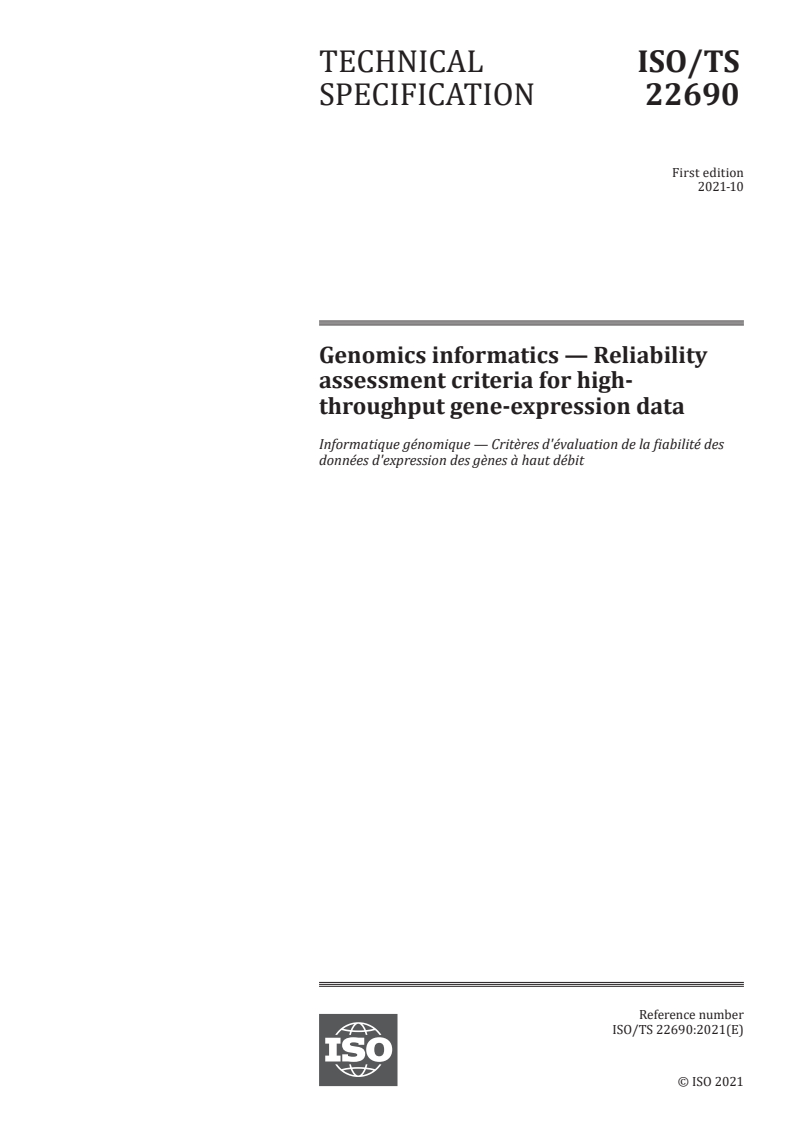
TECHNICAL ISO/TS
SPECIFICATION 22690
First edition
2021-10
Genomics informatics — Reliability
assessment criteria for high-
throughput gene-expression data
Informatique génomique — Critères d'évaluation de la fiabilité des
données d'expression des gènes à haut débit
Reference number
© ISO 2021
All rights reserved. Unless otherwise specified, or required in the context of its implementation, no part of this publication may
be reproduced or utilized otherwise in any form or by any means, electronic or mechanical, including photocopying, or posting on
the internet or an intranet, without prior written permission. Permission can be requested from either ISO at the address below
or ISO’s member body in the country of the requester.
ISO copyright office
CP 401 • Ch. de Blandonnet 8
CH-1214 Vernier, Geneva
Phone: +41 22 749 01 11
Email: copyright@iso.org
Website: www.iso.org
Published in Switzerland
ii
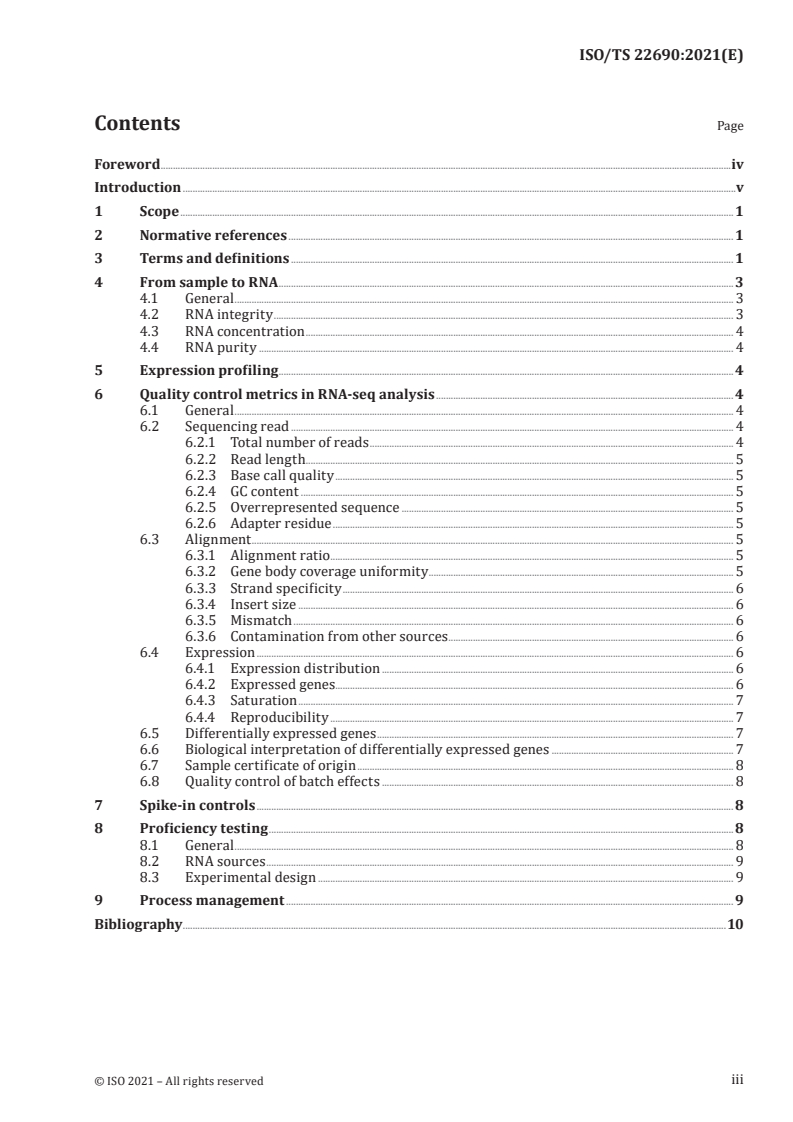
Contents Page
Foreword .iv
Introduction .v
1 Scope . 1
2 Normative references . 1
3 Terms and definitions . 1
4 From sample to RNA .3
4.1 General . 3
4.2 RNA integrity . 3
4.3 RNA concentration . 4
4.4 RNA purity . 4
5 Expression profiling . .4
6 Quality control metrics in RNA-seq analysis . 4
6.1 General . 4
6.2 Sequencing read . 4
6.2.1 Total number of reads . 4
6.2.2 Read length . . 5
6.2.3 Base call quality . 5
6.2.4 GC content . 5
6.2.5 Overrepresented sequence . 5
6.2.6 Adapter residue . 5
6.3 Alignment . 5
6.3.1 Alignment ratio . . 5
6.3.2 Gene body coverage uniformity . 5
6.3.3 Strand specificity . 6
6.3.4 Insert size . 6
6.3.5 Mismatch . 6
6.3.6 Contamination from other sources . 6
6.4 Expression . 6
6.4.1 Expression distribution . 6
6.4.2 Expressed genes. 6
6.4.3 Saturation . 7
6.4.4 Reproducibility . 7
6.5 Differentially expressed genes . 7
6.6 Biological interpretation of differentially expressed genes . 7
6.7 Sample certificate of origin . 8
6.8 Quality control of batch effects . 8
7 Spike-in controls . 8
8 Proficiency testing .8
8.1 General . 8
8.2 RNA sources . 9
8.3 Experimental design . 9
9 Process management . 9
Bibliography .10
iii
Foreword
ISO (the International Organization for Standardization) is a worldwide federation of national standards
bodies (ISO member bodies). The work of preparing International Standards is normally carried out
through ISO technical committees. Each member body interested in a subject for which a technical
committee has been established has the right to be represented on that committee. International
organizations, governmental and non-governmental, in liaison with ISO, also take part in the work.
ISO collaborates closely with the International Electrotechnical Commission (IEC) on all matters of
electrotechnical standardization.
The procedures used to develop this document and those intended for its further maintenance are
described in the ISO/IEC Directives, Part 1. In particular, the different approval criteria needed for the
different types of ISO documents should be noted. This document was drafted in accordance with the
editorial rules of the ISO/IEC Directives, Part 2 (see www.iso.org/directives).
Attention is drawn to the possibility that some of the elements of this document may be the subject of
patent rights. ISO shall not be held responsible for identifying any or all such patent rights. Details of
any patent rights identified during the development of the document will be in the Introduction and/or
on the ISO list of patent declarations received (see www.iso.org/patents).
Any trade name used in this document is information given for the convenience of users and does not
constitute an endorsement.
For an explanation of the voluntary nature of standards, the meaning of ISO specific terms and
expressions related to conformity assessment, as well as information about ISO's adherence to
the World Trade Organization (WTO) principles in the Technical Barriers to Trade (TBT), see
www.iso.org/iso/foreword.html.
This document was prepared by Technical Committee ISO/TC 215, Health informatics, Subcommittee SC
1, Genomics informatics.
Any feedback or questions on this document should be directed to the user’s national standards body. A
complete listing of these bodies can be found at www.iso.org/members.html.
iv
Introduction
High-throughput gene-expression profiling, including data generated from microarray, next-generation
sequencing, and other forms of high-throughput technologies, is a revolutionary technology for genomic
studies. It is a fast-moving field both in terms of innovation in measurement technology as well as
advances on the data analysis side. High-throughput expression technology enables us to efficiently
study complex biological systems and biological processes, mechanisms of diseases, and strategies
for disease prevention and treatment. This technology is currently applied in the biomedical research
community and industry, and plays an important role in disease characterization, drug development
[1][2][3][4]
and precision medicine .
Challenges and pitfalls in the generation, analysis, and interpretation of high-throughput expression
profiling data need to be addressed within the scientific community. Development of omics-based
products that influence or improve patient health has been slower than expected. Studies attempting to
[5]
reproduce findings of 53 papers in preclinical cancer research confirmed only 6 (11 %) of the results .
Misleading papers result in considerable expenditure of time, money and effort by researchers
following false trails. This affects companies and investors, presenting yet another barrier for the
[6]
translation of academic discoveries into new medicines by diverting funds away from real advances
[7]
. Irreproducible or inconsistent results could contribute to patient risk or death. As more and more
[8][9]
irreproducible reports occur, some scientific journals reported the issue in 2014 . The essential role
[10]
of reproducibility of scientific research has been widely recognized .
There exist different reasons for low reproducibility in omics research. One possible reason is the
complexity of omics data. The fact that the size of data is so massive that the manual inspection of data
quality and analysis results is often impossible. Thus, quality control processes for high-throughput
expression experiments are essential for the improvement of reproducibility of biological results.
[11]
The MicroArray and Sequencing Quality Control (MAQC/SEQC) consortia conducted three projects
[12][13]
to assess the reliability and reproducibility of genomics technologies, including microarrays,
genome-wide association studies, and next-generation sequencing. This has led to the formation of
[23]
the Massive Analysis and Quality Control Society (MAQC Society) , which is dedicated to quality
control and analysis of massive data generated from high-throughput technologies for enhanced
[14]
reproducibility and reliability . It has provided a collection of quality metrics for expression data
evaluation that corresponds to the reliability and reproducibility of high-throughput gene expression
data for quality control, including (i) from sample to RNA, (ii) expression profiling, (iii) quality control
metrics in RNA-seq, (iv) detecting differentially expressed genes, (v) biological interpretation, and (vi)
[15][16]
spike-ins. Similar and complementary efforts have been reported elsewhere .
High-quality data are the foundation for deriving reliable biological conclusions from a gene-expression
study. However, large differences in data quality have been observed in published data sets when the
same platform was used by different laboratories. In many cases, poor quality of data was due not to
the inherent quality problems of a platform but to the lack of technical proficiency of the laboratory that
generated the data. Therefore, proficiency testing, an assessment of the overall competence performed
through inter-laboratory comparisons, is introduced in this document to establish and monitor the
quality of laboratory tests.
This document can be utilized to (i) enhance community’s understanding of technical performance of
high-throughput gene expression; (ii) benefit the interoperability of qualified gene-expression data by
researchers, commercial entities and regulatory bodies, (iii) improve the application of high-throughput
gene expression in industry and clinics, (iv) promote the acceptance of transparent reporting according
[17]
to the FAIR (findable, accessible, interoperable, and reusable) data principles , and (v) contribute to
the development of precision medicine.
v
TECHNICAL SPECIFICATION ISO/TS 22690:2021(E)
Genomics informatics — Reliability assessment criteria for
high-throughput gene-expression data
1 Scope
This document specifies reliability assessment criteria for high-throughput gene-expression data.
It is applicable to assessing the accuracy, reproducibility, and comparability of gene-expression data
that are generated from microarray, next-generation sequencing, and other forms of high-throughput
technologies.
This document identifies the quality-related data for the process of the next-generation sequencing of
RNA (RNA-seq). The sequencing platform covered by this document is limited to short-read sequencers.
The use of RNA-seq for mutation detection and virus identification is outside of the scope of this
document.
This document is applicable to human health associated species such as human, cell lines, and preclinical
animals. Other biological species are outside the scope of this document.
From a biological point of view, expression profiles of all genetic sequences including genes, transcripts,
isoforms, exons, and junctions are within the scope of this document
2 Normative references
There are no normative references in this document.
3 Terms and definitions
For the purposes of this document, the following terms and definitions apply.
ISO and IEC maintain terminology databases for use in standardization at the following addresses:
— ISO Online browsing platform: available at https:// www .iso .org/ obp
— IEC Electropedia: available at https:// www .electropedia .org/
3.1
adapter
short, chemically synthesized oligonucleotide that can be ligated to the ends of DNA or RNA molecules
3.2
alignment ratio
percentage of total sequenced reads aligned to an intended target region
Note 1 to entry: Alignment ratio is different according to the definition of the gene structure (“annotation”) in
that region, and is also affected by the origin of the RNA sample, library preparation, sequencing approach, and
aligner.
3.3
batch effect
systematic technical variation in data unrelated to biological factors of interests and caused by
processing samples in different batches
3.4
differentially expressed gene
DEG
gene that exhibits difference or change in read counts or expression level between two experimental
conditions
3.5
functional annotation
process of attaching biological information to sequences of genes or proteins
3.6
guanine cytosine content
GC content
percentage of nitrogenous bases on a DNA or RNA molecule that are either guanine (G) or cytosine (C)
3.7
gene
specific sequence of nucleotides located on a chromosome as a functional unit of inheritance transferred
from a parent to offspring
3.8
gene body coverage
description of the overall reads density over the gene region
3.9
gene expression
process by which information from a gene is used in the synthesis of a functional gene product
3.10
insert size
length of the sequence between the adapters
3.11
isoform
one of many forms a gene sequence transcribed from DNA to RNA
3.12
microarray
multiplex lab-on-a-chip on a solid substrate (usually a glass slide or silicon thin-film cell) that assays
large numbers of biological molecules using high-throughput screening through miniaturized,
multiplexed and parallel processing and detection methods
3.13
mismatch
erroneous insertion, deletion, or mis-incorporation of bases that can arise during DNA replication and
recombination, as well as repairing of some forms of DNA damage
Note 1 to entry: Mismatch also refers to the fact that two sequences do not match exactly.
3.14
outlier
observation that appears to deviate markedly from other observations in a study, resulting from
biological or technical differences from the rest of the samples of the study group
3.15
read
sequence of a cluster that is obtained at the end of the sequencing process
3.16
reproducibility
fundamental hallmark of good science describing whether the results obtained from one situation can
be reproduced under another situation
3.17
RNA Integrity Number
RIN
number at the scale from 1 to 10 to indicate the integrity of an RNA sample, with a RIN of 1 indicating
completely degraded RNA and a RIN of 10 meaning a perfectly intact RNA sample
3.18
RNA sequencing
RNA-seq
high-throughput sequencing technology to reveal the presence and quantity of RNA molecules in a
biological sample at a given moment in time
3.19
RNA spike-in
RNA transcript added to an RNA sample for calibrating measurements in a high-throughput experiment,
based on its known sequence and abundance
3.20
sequencing depth
number of times a genomic region has been sequenced
3.21
transcriptome
set of all RNA molecules in one cell or a population of cells for a specific developmental stage or
physiological condition
4 From sample to RNA
4.1 General
High quality, intact RNA shall be extracted from samples. Store the extracted RNA under conditions
recommended by the vendor (e.g. -80 °C or liquid nitrogen) to preserve the integrity of the RNA
[18][19] [11]
sample . The RIN of the MAQC RNA reference materials has been found to be stable over a
o
period of more than 16 years under -80 C.
For RNA-based experiments, different vendor-provided RNA library construction kits for RNA-seq or
hybridizations for microarrays have different input requirements of RNA quality and quantity. Confirm
the required quality and quantity of RNA samples before use in a downstream application.
This document is intended for laboratory samples and can be too strict to be used in the medical field,
where sample quality can be compromised. For the handling of clinical samples for RNA analysis, see
ISO 20166-1, ISO 20184-1 and ISO 20186-1.
The quality of RNA samples can be monitored in several ways. Considerations for RNA quality include
the
...
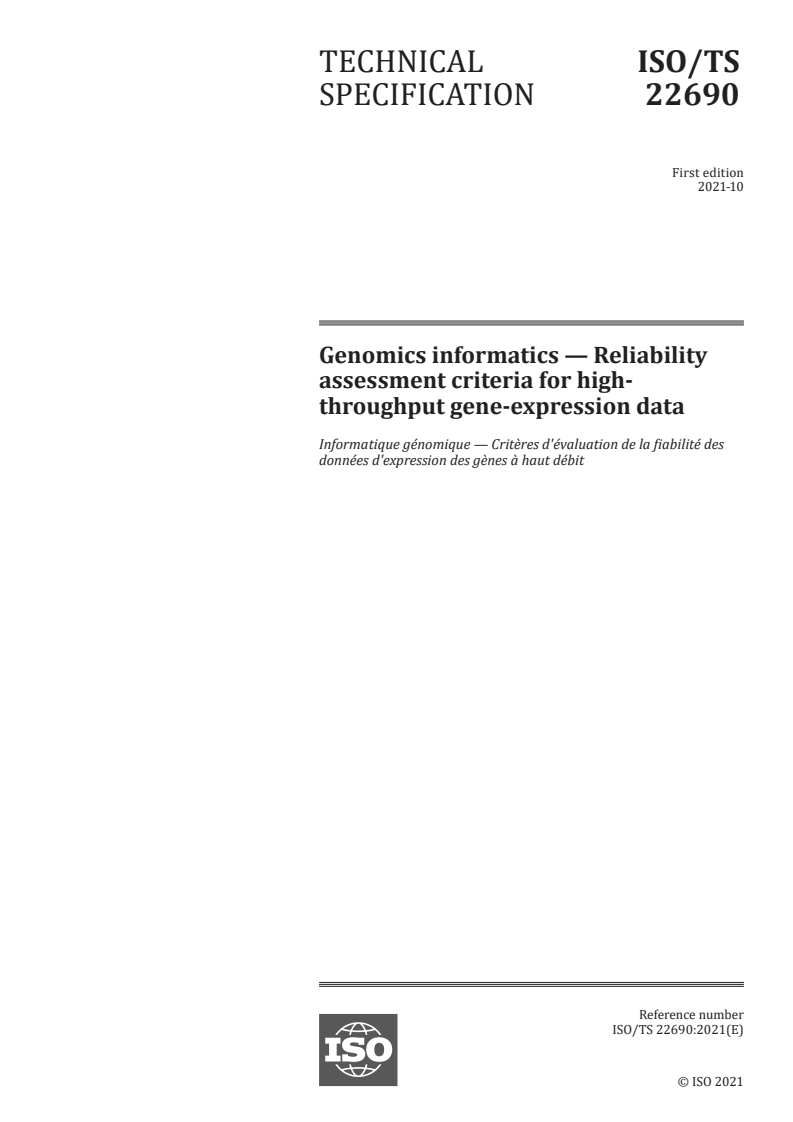
TECHNICAL ISO/TS
SPECIFICATION 22690
First edition
2021-10
Genomics informatics — Reliability
assessment criteria for high-
throughput gene-expression data
Informatique génomique — Critères d'évaluation de la fiabilité des
données d'expression des gènes à haut débit
Reference number
© ISO 2021
All rights reserved. Unless otherwise specified, or required in the context of its implementation, no part of this publication may
be reproduced or utilized otherwise in any form or by any means, electronic or mechanical, including photocopying, or posting on
the internet or an intranet, without prior written permission. Permission can be requested from either ISO at the address below
or ISO’s member body in the country of the requester.
ISO copyright office
CP 401 • Ch. de Blandonnet 8
CH-1214 Vernier, Geneva
Phone: +41 22 749 01 11
Email: copyright@iso.org
Website: www.iso.org
Published in Switzerland
ii
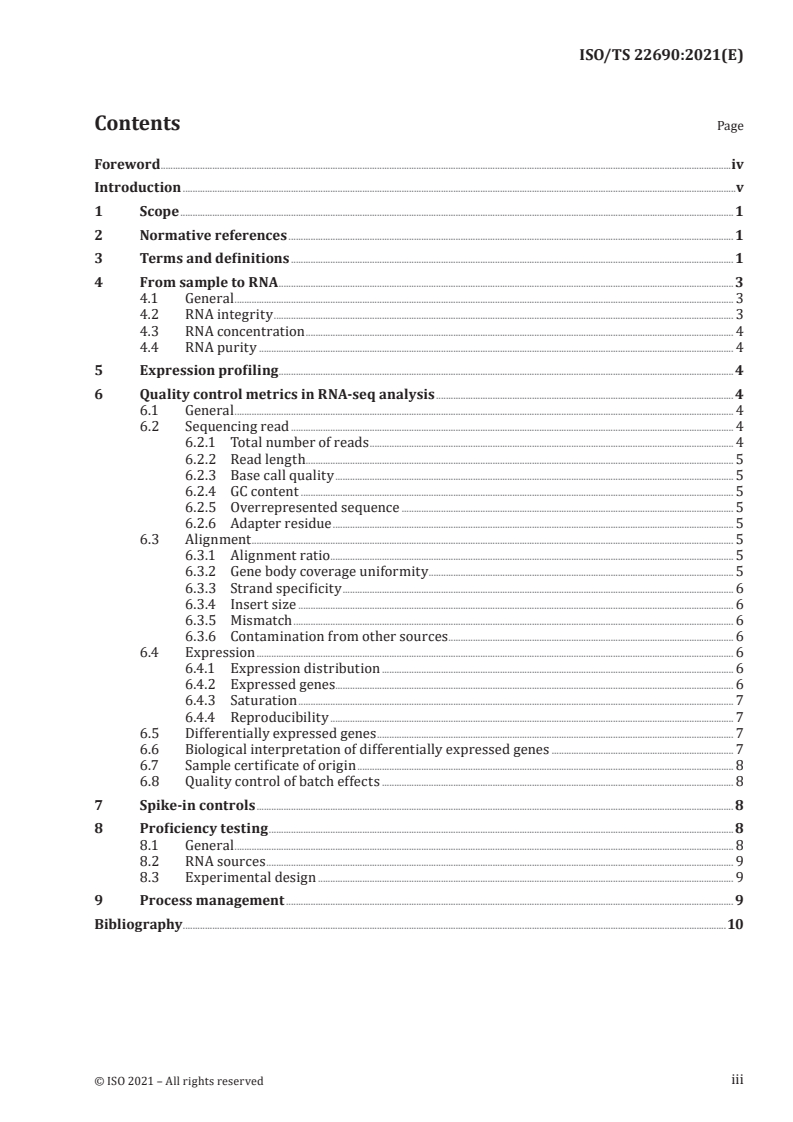
Contents Page
Foreword .iv
Introduction .v
1 Scope . 1
2 Normative references . 1
3 Terms and definitions . 1
4 From sample to RNA .3
4.1 General . 3
4.2 RNA integrity . 3
4.3 RNA concentration . 4
4.4 RNA purity . 4
5 Expression profiling . .4
6 Quality control metrics in RNA-seq analysis . 4
6.1 General . 4
6.2 Sequencing read . 4
6.2.1 Total number of reads . 4
6.2.2 Read length . . 5
6.2.3 Base call quality . 5
6.2.4 GC content . 5
6.2.5 Overrepresented sequence . 5
6.2.6 Adapter residue . 5
6.3 Alignment . 5
6.3.1 Alignment ratio . . 5
6.3.2 Gene body coverage uniformity . 5
6.3.3 Strand specificity . 6
6.3.4 Insert size . 6
6.3.5 Mismatch . 6
6.3.6 Contamination from other sources . 6
6.4 Expression . 6
6.4.1 Expression distribution . 6
6.4.2 Expressed genes. 6
6.4.3 Saturation . 7
6.4.4 Reproducibility . 7
6.5 Differentially expressed genes . 7
6.6 Biological interpretation of differentially expressed genes . 7
6.7 Sample certificate of origin . 8
6.8 Quality control of batch effects . 8
7 Spike-in controls . 8
8 Proficiency testing .8
8.1 General . 8
8.2 RNA sources . 9
8.3 Experimental design . 9
9 Process management . 9
Bibliography .10
iii
Foreword
ISO (the International Organization for Standardization) is a worldwide federation of national standards
bodies (ISO member bodies). The work of preparing International Standards is normally carried out
through ISO technical committees. Each member body interested in a subject for which a technical
committee has been established has the right to be represented on that committee. International
organizations, governmental and non-governmental, in liaison with ISO, also take part in the work.
ISO collaborates closely with the International Electrotechnical Commission (IEC) on all matters of
electrotechnical standardization.
The procedures used to develop this document and those intended for its further maintenance are
described in the ISO/IEC Directives, Part 1. In particular, the different approval criteria needed for the
different types of ISO documents should be noted. This document was drafted in accordance with the
editorial rules of the ISO/IEC Directives, Part 2 (see www.iso.org/directives).
Attention is drawn to the possibility that some of the elements of this document may be the subject of
patent rights. ISO shall not be held responsible for identifying any or all such patent rights. Details of
any patent rights identified during the development of the document will be in the Introduction and/or
on the ISO list of patent declarations received (see www.iso.org/patents).
Any trade name used in this document is information given for the convenience of users and does not
constitute an endorsement.
For an explanation of the voluntary nature of standards, the meaning of ISO specific terms and
expressions related to conformity assessment, as well as information about ISO's adherence to
the World Trade Organization (WTO) principles in the Technical Barriers to Trade (TBT), see
www.iso.org/iso/foreword.html.
This document was prepared by Technical Committee ISO/TC 215, Health informatics, Subcommittee SC
1, Genomics informatics.
Any feedback or questions on this document should be directed to the user’s national standards body. A
complete listing of these bodies can be found at www.iso.org/members.html.
iv
Introduction
High-throughput gene-expression profiling, including data generated from microarray, next-generation
sequencing, and other forms of high-throughput technologies, is a revolutionary technology for genomic
studies. It is a fast-moving field both in terms of innovation in measurement technology as well as
advances on the data analysis side. High-throughput expression technology enables us to efficiently
study complex biological systems and biological processes, mechanisms of diseases, and strategies
for disease prevention and treatment. This technology is currently applied in the biomedical research
community and industry, and plays an important role in disease characterization, drug development
[1][2][3][4]
and precision medicine .
Challenges and pitfalls in the generation, analysis, and interpretation of high-throughput expression
profiling data need to be addressed within the scientific community. Development of omics-based
products that influence or improve patient health has been slower than expected. Studies attempting to
[5]
reproduce findings of 53 papers in preclinical cancer research confirmed only 6 (11 %) of the results .
Misleading papers result in considerable expenditure of time, money and effort by researchers
following false trails. This affects companies and investors, presenting yet another barrier for the
[6]
translation of academic discoveries into new medicines by diverting funds away from real advances
[7]
. Irreproducible or inconsistent results could contribute to patient risk or death. As more and more
[8][9]
irreproducible reports occur, some scientific journals reported the issue in 2014 . The essential role
[10]
of reproducibility of scientific research has been widely recognized .
There exist different reasons for low reproducibility in omics research. One possible reason is the
complexity of omics data. The fact that the size of data is so massive that the manual inspection of data
quality and analysis results is often impossible. Thus, quality control processes for high-throughput
expression experiments are essential for the improvement of reproducibility of biological results.
[11]
The MicroArray and Sequencing Quality Control (MAQC/SEQC) consortia conducted three projects
[12][13]
to assess the reliability and reproducibility of genomics technologies, including microarrays,
genome-wide association studies, and next-generation sequencing. This has led to the formation of
[23]
the Massive Analysis and Quality Control Society (MAQC Society) , which is dedicated to quality
control and analysis of massive data generated from high-throughput technologies for enhanced
[14]
reproducibility and reliability . It has provided a collection of quality metrics for expression data
evaluation that corresponds to the reliability and reproducibility of high-throughput gene expression
data for quality control, including (i) from sample to RNA, (ii) expression profiling, (iii) quality control
metrics in RNA-seq, (iv) detecting differentially expressed genes, (v) biological interpretation, and (vi)
[15][16]
spike-ins. Similar and complementary efforts have been reported elsewhere .
High-quality data are the foundation for deriving reliable biological conclusions from a gene-expression
study. However, large differences in data quality have been observed in published data sets when the
same platform was used by different laboratories. In many cases, poor quality of data was due not to
the inherent quality problems of a platform but to the lack of technical proficiency of the laboratory that
generated the data. Therefore, proficiency testing, an assessment of the overall competence performed
through inter-laboratory comparisons, is introduced in this document to establish and monitor the
quality of laboratory tests.
This document can be utilized to (i) enhance community’s understanding of technical performance of
high-throughput gene expression; (ii) benefit the interoperability of qualified gene-expression data by
researchers, commercial entities and regulatory bodies, (iii) improve the application of high-throughput
gene expression in industry and clinics, (iv) promote the acceptance of transparent reporting according
[17]
to the FAIR (findable, accessible, interoperable, and reusable) data principles , and (v) contribute to
the development of precision medicine.
v
TECHNICAL SPECIFICATION ISO/TS 22690:2021(E)
Genomics informatics — Reliability assessment criteria for
high-throughput gene-expression data
1 Scope
This document specifies reliability assessment criteria for high-throughput gene-expression data.
It is applicable to assessing the accuracy, reproducibility, and comparability of gene-expression data
that are generated from microarray, next-generation sequencing, and other forms of high-throughput
technologies.
This document identifies the quality-related data for the process of the next-generation sequencing of
RNA (RNA-seq). The sequencing platform covered by this document is limited to short-read sequencers.
The use of RNA-seq for mutation detection and virus identification is outside of the scope of this
document.
This document is applicable to human health associated species such as human, cell lines, and preclinical
animals. Other biological species are outside the scope of this document.
From a biological point of view, expression profiles of all genetic sequences including genes, transcripts,
isoforms, exons, and junctions are within the scope of this document
2 Normative references
There are no normative references in this document.
3 Terms and definitions
For the purposes of this document, the following terms and definitions apply.
ISO and IEC maintain terminology databases for use in standardization at the following addresses:
— ISO Online browsing platform: available at https:// www .iso .org/ obp
— IEC Electropedia: available at https:// www .electropedia .org/
3.1
adapter
short, chemically synthesized oligonucleotide that can be ligated to the ends of DNA or RNA molecules
3.2
alignment ratio
percentage of total sequenced reads aligned to an intended target region
Note 1 to entry: Alignment ratio is different according to the definition of the gene structure (“annotation”) in
that region, and is also affected by the origin of the RNA sample, library preparation, sequencing approach, and
aligner.
3.3
batch effect
systematic technical variation in data unrelated to biological factors of interests and caused by
processing samples in different batches
3.4
differentially expressed gene
DEG
gene that exhibits difference or change in read counts or expression level between two experimental
conditions
3.5
functional annotation
process of attaching biological information to sequences of genes or proteins
3.6
guanine cytosine content
GC content
percentage of nitrogenous bases on a DNA or RNA molecule that are either guanine (G) or cytosine (C)
3.7
gene
specific sequence of nucleotides located on a chromosome as a functional unit of inheritance transferred
from a parent to offspring
3.8
gene body coverage
description of the overall reads density over the gene region
3.9
gene expression
process by which information from a gene is used in the synthesis of a functional gene product
3.10
insert size
length of the sequence between the adapters
3.11
isoform
one of many forms a gene sequence transcribed from DNA to RNA
3.12
microarray
multiplex lab-on-a-chip on a solid substrate (usually a glass slide or silicon thin-film cell) that assays
large numbers of biological molecules using high-throughput screening through miniaturized,
multiplexed and parallel processing and detection methods
3.13
mismatch
erroneous insertion, deletion, or mis-incorporation of bases that can arise during DNA replication and
recombination, as well as repairing of some forms of DNA damage
Note 1 to entry: Mismatch also refers to the fact that two sequences do not match exactly.
3.14
outlier
observation that appears to deviate markedly from other observations in a study, resulting from
biological or technical differences from the rest of the samples of the study group
3.15
read
sequence of a cluster that is obtained at the end of the sequencing process
3.16
reproducibility
fundamental hallmark of good science describing whether the results obtained from one situation can
be reproduced under another situation
3.17
RNA Integrity Number
RIN
number at the scale from 1 to 10 to indicate the integrity of an RNA sample, with a RIN of 1 indicating
completely degraded RNA and a RIN of 10 meaning a perfectly intact RNA sample
3.18
RNA sequencing
RNA-seq
high-throughput sequencing technology to reveal the presence and quantity of RNA molecules in a
biological sample at a given moment in time
3.19
RNA spike-in
RNA transcript added to an RNA sample for calibrating measurements in a high-throughput experiment,
based on its known sequence and abundance
3.20
sequencing depth
number of times a genomic region has been sequenced
3.21
transcriptome
set of all RNA molecules in one cell or a population of cells for a specific developmental stage or
physiological condition
4 From sample to RNA
4.1 General
High quality, intact RNA shall be extracted from samples. Store the extracted RNA under conditions
recommended by the vendor (e.g. -80 °C or liquid nitrogen) to preserve the integrity of the RNA
[18][19] [11]
sample . The RIN of the MAQC RNA reference materials has been found to be stable over a
o
period of more than 16 years under -80 C.
For RNA-based experiments, different vendor-provided RNA library construction kits for RNA-seq or
hybridizations for microarrays have different input requirements of RNA quality and quantity. Confirm
the required quality and quantity of RNA samples before use in a downstream application.
This document is intended for laboratory samples and can be too strict to be used in the medical field,
where sample quality can be compromised. For the handling of clinical samples for RNA analysis, see
ISO 20166-1, ISO 20184-1 and ISO 20186-1.
The quality of RNA samples can be monitored in several ways. Considerations for RNA quality include
the
...
Questions, Comments and Discussion
Ask us and Technical Secretary will try to provide an answer. You can facilitate discussion about the standard in here.
Loading comments...