

ASTM F560-22
(Specification)Standard Specification for Unalloyed Tantalum for Surgical Implant Applications (UNS R05200, UNS R05400)
General Information
- Abstract
SCOPE
1.1 This specification covers chemical, mechanical, and metallurgical requirements for unalloyed tantalum plate, sheet, strip, bar, and wire used in the manufacture of surgical implants.
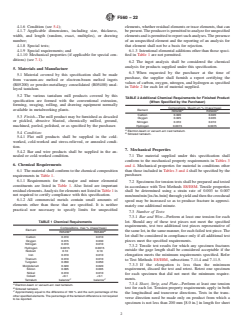
1.2 Units—The values stated in either SI units or inch-pound units are to be regarded separately as standard. The values stated in each system may not be exact equivalents; therefore, to ensure conformance with the standard, each system shall be used independently of the other and values from the two systems shall not be combined.
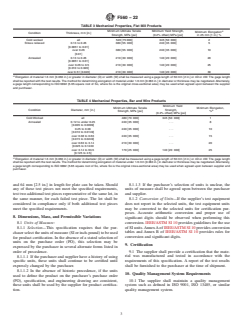
1.3 This international standard was developed in accordance with internationally recognized principles on standardization established in the Decision on Principles for the Development of International Standards, Guides and Recommendations issued by the World Trade Organization Technical Barriers to Trade (TBT) Committee.
- Status
- Published
- Publication Date
- 14-Feb-2022
- Technical Committee
- F04 - Medical and Surgical Materials and Devices
- Drafting Committee
- F04.12 - Metallurgical Materials
Buy Documents
ASTM F560-22 - Standard Specification for Unalloyed Tantalum for Surgical Implant Applications (UNS R05200, UNS R05400)
REDLINE ASTM F560-22 - Standard Specification for Unalloyed Tantalum for Surgical Implant Applications (UNS R05200, UNS R05400)
Overview
ASTM F560-22: Standard Specification for Unalloyed Tantalum for Surgical Implant Applications sets the chemical, mechanical, and metallurgical requirements for unalloyed tantalum products used in surgical implants. Covering products identified as UNS R05200 (vacuum-arc or electron-beam melted ingots) and UNS R05400 (powder-metallurgy consolidated tantalum), this standard applies to plates, sheets, strips, bars, and wire intended for use in the manufacturing of orthopedic medical devices and surgical implants. The purpose is to ensure reliable performance, biocompatibility, and regulatory compliance for critical medical applications.
Key Topics
- Material Forms Covered: Plate, sheet, strip, bar, and wire, each with clear definitions regarding size and form, ensuring clarity in ordering and manufacturing.
- Chemical Composition: Strict requirements for elemental composition, including limits on carbon, oxygen, nitrogen, hydrogen, and major/minor elements to promote purity and biological compatibility. Cobalt content is restricted as per EU medical device regulations.
- Mechanical Properties: Minimum standards for tensile strength, yield strength, and elongation for different product forms and delivery conditions (annealed, cold-worked, stress-relieved).
- Testing and Certification: Procedures for sampling, tension testing (as per ASTM E8/E8M and ISO 6892), and requirements for supplier certification to verify conformance to the specification.
- Quality Management System: Requirement for producers to operate a certified quality management system in accordance with ISO 9001 or ISO 13485, with provision for purchaser audits.
- Measurement Units: Products can be certified in SI or inch-pound units, but values must not be interchanged or combined. The standard aligns with internationally accepted measurement practices.
Applications
ASTM F560-22 is vital for:
- Surgical Implant Manufacturing: Ensures that unalloyed tantalum components, such as plates, rods, screws, and wire, meet stringent requirements for use in medical devices implanted in the human body.
- Orthopedic and Medical Device Industry: Used as a baseline for material properties in orthopedic implants, dental prostheses, and devices requiring corrosion-resistant, biocompatible materials.
- Regulatory Compliance: Supports manufacturers in meeting global regulatory requirements such as the FDA, European MDR, and other authorities, ensuring that only approved materials are used for implants.
- Quality Assurance: Facilitates comprehensive quality checks and recording for traceability throughout the supply chain, from raw material through to finished products.
Related Standards
- ASTM E8/E8M - Test Methods for Tension Testing of Metallic Materials: Specifies the methods for mechanical property testing.
- ASTM E29 - Practice for Using Significant Digits in Test Data: Guidance for rounding and interpreting test results.
- ASTM F981 - Practice for Assessing Biocompatibility of Materials for Surgical Implants: Reference for biological response evaluations.
- IEEE/ASTM SI 10 - Use of SI (Metric) Units: Ensures consistency and accuracy in measurement units.
- ISO 6892 - Metallic Materials - Tensile Testing at Ambient Temperature: Internationally recognized procedure for tensile testing.
- ISO 9001 and ISO 13485 - Quality Management Systems: Set requirements for quality assurance in manufacturing and for regulatory purposes.
- ISO 13782 - Implants for Surgery - Unalloyed Tantalum: International specification for tantalum used in surgical implants.
By following ASTM F560-22, manufacturers and suppliers of tantalum products support enhanced patient safety, global market access, and consistent product quality in the medical industry. Including this standard in quality management systems acts as both a compliance tool and a benchmark for manufacturing excellence in surgical implant materials.
Relations
- Effective Date
- 01-Jan-2024
- Effective Date
- 15-Jul-2016
- Effective Date
- 01-Feb-2015
- Effective Date
- 01-Jun-2013
- Effective Date
- 01-Dec-2011
- Effective Date
- 01-Jun-2010
- Effective Date
- 01-Oct-2008
- Effective Date
- 15-Nov-2006
- Effective Date
- 15-Sep-2006
- Effective Date
- 01-May-2006
- Effective Date
- 01-Dec-2004
- Effective Date
- 01-May-2004
- Effective Date
- 01-Nov-2003
- Effective Date
- 10-May-2002
- Effective Date
- 10-May-1999
Buy Documents
ASTM F560-22 - Standard Specification for Unalloyed Tantalum for Surgical Implant Applications (UNS R05200, UNS R05400)
REDLINE ASTM F560-22 - Standard Specification for Unalloyed Tantalum for Surgical Implant Applications (UNS R05200, UNS R05400)
Get Certified
Connect with accredited certification bodies for this standard

BSI Group
BSI (British Standards Institution) is the business standards company that helps organizations make excellence a habit.

TÜV Rheinland
TÜV Rheinland is a leading international provider of technical services.

TÜV SÜD
TÜV SÜD is a trusted partner of choice for safety, security and sustainability solutions.
Sponsored listings
Frequently Asked Questions
ASTM F560-22 is a technical specification published by ASTM International. Its full title is "Standard Specification for Unalloyed Tantalum for Surgical Implant Applications (UNS R05200, UNS R05400)". This standard covers: SCOPE 1.1 This specification covers chemical, mechanical, and metallurgical requirements for unalloyed tantalum plate, sheet, strip, bar, and wire used in the manufacture of surgical implants. 1.2 Units—The values stated in either SI units or inch-pound units are to be regarded separately as standard. The values stated in each system may not be exact equivalents; therefore, to ensure conformance with the standard, each system shall be used independently of the other and values from the two systems shall not be combined. 1.3 This international standard was developed in accordance with internationally recognized principles on standardization established in the Decision on Principles for the Development of International Standards, Guides and Recommendations issued by the World Trade Organization Technical Barriers to Trade (TBT) Committee.
SCOPE 1.1 This specification covers chemical, mechanical, and metallurgical requirements for unalloyed tantalum plate, sheet, strip, bar, and wire used in the manufacture of surgical implants. 1.2 Units—The values stated in either SI units or inch-pound units are to be regarded separately as standard. The values stated in each system may not be exact equivalents; therefore, to ensure conformance with the standard, each system shall be used independently of the other and values from the two systems shall not be combined. 1.3 This international standard was developed in accordance with internationally recognized principles on standardization established in the Decision on Principles for the Development of International Standards, Guides and Recommendations issued by the World Trade Organization Technical Barriers to Trade (TBT) Committee.
ASTM F560-22 is classified under the following ICS (International Classification for Standards) categories: 11.040.40 - Implants for surgery, prosthetics and orthotics. The ICS classification helps identify the subject area and facilitates finding related standards.
ASTM F560-22 has the following relationships with other standards: It is inter standard links to ASTM E8/E8M-24, ASTM E8/E8M-16, ASTM E8/E8M-15, ASTM E8/E8M-13, ASTM E8/E8M-11, ASTM F981-04(2010), ASTM E29-08, ASTM E29-06b, ASTM E29-06a, ASTM E29-06, ASTM E29-04, ASTM F981-04, ASTM F981-99(2003), ASTM E29-02e1, ASTM E29-93a(1999). Understanding these relationships helps ensure you are using the most current and applicable version of the standard.
ASTM F560-22 is available in PDF format for immediate download after purchase. The document can be added to your cart and obtained through the secure checkout process. Digital delivery ensures instant access to the complete standard document.
Standards Content (Sample)
This international standard was developed in accordance with internationally recognized principles on standardization established in the Decision on Principles for the
Development of International Standards, Guides and Recommendations issued by the World Trade Organization Technical Barriers to Trade (TBT) Committee.
Designation:F560 −22
Standard Specification for
Unalloyed Tantalum for Surgical Implant Applications (UNS
R05200, UNS R05400)
ThisstandardisissuedunderthefixeddesignationF560;thenumberimmediatelyfollowingthedesignationindicatestheyearoforiginal
adoption or, in the case of revision, the year of last revision.Anumber in parentheses indicates the year of last reapproval.Asuperscript
epsilon (´) indicates an editorial change since the last revision or reapproval.
1. Scope* 2.2 ISO Standards:
ISO 6892 Metallic Materials—Tensile Testing at Ambient
1.1 This specification covers chemical, mechanical, and
Temperature
metallurgical requirements for unalloyed tantalum plate, sheet,
ISO 9001 Quality Management Systems—Requirements
strip, bar, and wire used in the manufacture of surgical
ISO 13485 Medical Devices—Quality Management
implants.
Systems—Requirements for Regulatory Purposes
1.2 Units—The values stated in either SI units or inch-
ISO 13782 Implants for Surgery—Metallic Materials—
pound units are to be regarded separately as standard. The
Unalloyed Tantalum for Surgical Implant Applications
values stated in each system may not be exact equivalents;
therefore, to ensure conformance with the standard, each 3. Terminology
system shall be used independently of the other and values
3.1 Definitions of Terms Specific to This Standard:
from the two systems shall not be combined.
3.1.1 bar—material 3.15 to 63.5 mm [0.125 to 2.5 in.] in
1.3 This international standard was developed in accor-
diameter in round, hexagonal, or octagonal cross section
dance with internationally recognized principles on standard-
supplied in straight lengths.
ization established in the Decision on Principles for the
3.1.2 lot—all material produced from the same ingot or a
Development of International Standards, Guides and Recom-
single powder blend with the same cross section under the
mendations issued by the World Trade Organization Technical
same conditions at essentially the same time.
Barriers to Trade (TBT) Committee.
3.1.3 plate—a flat product more than 4.75 mm [0.1875 in.]
in thickness.
2. Referenced Documents
3.1.4 sheet—a flat product 150 mm [6 in.] or more in width
2.1 ASTM Standards:
and from 0.13 to 4.75 mm [0.005 to 0.1875 in.] in thickness.
E8/E8M Test Methods for Tension Testing of Metallic Ma-
terials 3.1.5 strip—a flat product less than 150 mm [6 in.] in width
E29 Practice for Using Significant Digits in Test Data to
and from 0.13 to 4.75 mm [0.005 to 0.1875 in.] in thickness,
Determine Conformance with Specifications which may be supplied in coil.
F981 Practice for Assessment of Compatibility of Biomate-
3.1.6 wire—material up to 3.15 mm [0.124 in.] in diameter
rials for Surgical Implants with Respect to Effect of
furnished in coils or on spools or reels.
Materials on Muscle and Insertion into Bone
IEEE/ASTM SI 10 American National Standard for Metric 4. Ordering Information
Practice
4.1 Inquiries and orders under this specification shall in-
clude the following information:
4.1.1 Quantity (weight or number of pieces);
This specification is under the jurisdiction of ASTM Committee F04 on
Medical and Surgical Materials and Devices and is the direct responsibility of
4.1.2 ASTM designation, alloy number, and date of issue;
Subcommittee F04.12 on Metallurgical Materials.
4.1.3 Units to be used for certification (SI or inch-pound);
Current edition approved Feb. 15, 2022. Published February 2022. Originally
4.1.4 Composition designation (see 5.1);
approved in 1978. Last previous edition approved in 2017 as F560 – 17. DOI:
10.1520/F0560-22. 4.1.5 Form (strip, sheet, plate, bar, wire) (see 3.1);
For referenced ASTM standards, visit the ASTM website, www.astm.org, or
contact ASTM Customer Service at service@astm.org. For Annual Book of ASTM
Standards volume information, refer to the standard’s Document Summary page on Available fromAmerican National Standards Institute (ANSI), 25 W. 43rd St.,
the ASTM website. 4th Floor, New York, NY 10036, http://www.ansi.org.
*A Summary of Changes section appears at the end of this standard
Copyright © ASTM International, 100 Barr Harbor Drive, PO Box C700, West Conshohocken, PA 19428-2959. United States
F560−22
4.1.6 Condition (see 5.4); elements, whether residual elements or trace elements, that can
4.1.7 Applicable dimensions, including size, thickness, bepresent.Theproducerispermittedtoanalyzeforunspecified
width, and length (random, exact, multiples), or drawing elementsandispermittedtoreportsuchanalyses.Thepresence
number; of an unspecified element and the reporting of an analysis for
4.1.8 Special tests; that element shall not be a basis for rejection.
4.1.9 Special requirements; and 6.1.3 Intentional elemental additions other than those speci-
4.1.10 Mechanical properties (if applicable for special con- fied in Table 1 are not permitted.
ditions) (see 7.1).
6.2 The ingot analysis shall be considered the chemical
analysis for products supplied under this specification.
5. Materials and Manufacture
6.3 When requested by the purchaser at the time of
5.1 Material covered by this specification shall be made
purchase, the supplier shall furnish a report certifying the
from vacuum-arc melted or electron-beam melted ingots
values of carbon, oxygen, nitrogen, and hydrogen as specified
(R05200) or powder-metallurgy consolidated (R05400) unal-
in Table 2 for each lot of material supplied.
loyed tantalum.
5.2 The various tantalum mill products covered by this
TABLE 2 Additional Chemical Requirements for Finished Product
specification are formed with the conventional extrusion,
(When Specified by the Purchaser)
forming, swaging, rolling, and drawing equipment normally
Compositions, Maximum % (mass/mass)
Element
available in metalworking plants. A B
R05200 R05400
Carbon 0.020 0.020
5.3 Finish—The mill product may be furnished as descaled
Oxygen 0.025 0.035
or pickled, abrasive blasted, chemically milled, ground,
Nitrogen 0.010 0.010
Hydrogen 0.0015 0.0015
machined, peeled, polished, or as specified by the purchaser.
A
Electron-beam or vacuum-arc cast tantalum.
5.4 Condition:
B
Sintered tantalum.
5.4.1 Flat mill products shall be supplied in the cold-
worked, cold-worked and stress-relieved, or annealed condi-
tion.
7. Mechanical Properties
5.4.2 Bar and wire products shall be supplied in the an-
nealed or cold-worked condition. 7.1 The material supplied under this specification shall
conform to the mechanical property requirements in Tables 3
6. Chemical Requirements
and 4. Mechanical properties for material in conditions other
than those included in Tables 3 and 4 shall be specified by the
6.1 The material shall conform to the chemical composition
purchaser.
requirements in Table 1.
6.1.1 Requirements for the major and minor elemental
7.2 Specimens for tension tests shall be prepared and tested
constituents are listed in Table 1. Also listed are important
in accordance with Test Methods E8/E8M. Tensile properties
residual elements.Analysis for elements not listed in Table 1 is
shall be determined using a strain rate of 0.003 to 0.007
not required to certify compliance with this specification.
mm/mm/min [in./in./min] through yield and then the crosshead
6.1.2 All commercial metals contain small amounts of
speed may be increased so as to produce fracture in approxi-
elements other than those that are specified. It is neither
mately one additional minute.
practical nor necessary to specify limits for unspecified
7.3 Number of Tests:
7.3.1 Bar and Wire—Perform at least one tension for each
lot. Should any of these test pieces not meet the specified
TABLE 1 Chemical Requirements
requirements, test two additional test pieces representative of
Compositions, max % (mass/mass)
Element
A B thesamelot,inthesamemanner,foreachfailedtestpiece.The
R05200 R05400
lot shall be considered in compliance only if all additional test
Carbon 0.010 0.010
Oxygen 0.015 0.030 pieces meet the specified requirements.
Nitrogen 0.010 0.010
7.3.2 Tensile test results for which any specimen fractures
Hydrogen 0.0015 0.0015
outside the gage length shall be considered acceptable if the
Niobium 0.10 0.10
Iron 0.010 0.010 elongation meets the minimum requirements specified. Refer
Titanium 0.010 0.010
to Test Methods E8/E8M, subsections 7.11.4 and 7.11.5.
Tungsten 0.050 0.050
7.3.3 If the elongation is less than the minimum
Molybdenum 0.020 0.020
Silicon 0.005 0.005
requirement, discard the test and retest. Retest one specimen
Nickel 0.010 0.010
for each specimen that did not meet the minimum require-
Cobalt <0.1 <0.1
C C
ments.
Tantalum balance balance
7.3.4 Sheet, Strip, and Plate—Perform at least one tension
A
Electron-beam or vacuum-arc cast tantalum.
B
Sintered tantalum. test for each lot. Tension property requirements apply in both
C
Approximately equal to the difference of 100 % and the sum percentage of th
...
This document is not an ASTM standard and is intended only to provide the user of an ASTM standard an indication of what changes have been made to the previous version. Because
it may not be technically possible to adequately depict all changes accurately, ASTM recommends that users consult prior editions as appropriate. In all cases only the current version
of the standard as published by ASTM is to be considered the official document.
Designation: F560 − 17 F560 − 22
Standard Specification for
Unalloyed Tantalum for Surgical Implant Applications (UNS
R05200, UNS R05400)
This standard is issued under the fixed designation F560; the number immediately following the designation indicates the year of original
adoption or, in the case of revision, the year of last revision. A number in parentheses indicates the year of last reapproval. A superscript
epsilon (´) indicates an editorial change since the last revision or reapproval.
1. Scope*
1.1 This specification covers chemical, mechanical, and metallurgical requirements for unalloyed tantalum plate, sheet, strip, bar,
and wire used in the manufacture of surgical implants.
1.2 Units—UnitsThe—The values stated in either SI units or inch-pound units are to be regarded separately as standard. The values
stated in each system may not be exact equivalents; therefore, to ensure conformance with the standard, each system shall be used
independently of the other. Combiningother and values offrom the two systems may result in non-conformance with this
standard.shall not be combined.
1.3 This international standard was developed in accordance with internationally recognized principles on standardization
established in the Decision on Principles for the Development of International Standards, Guides and Recommendations issued
by the World Trade Organization Technical Barriers to Trade (TBT) Committee.
2. Referenced Documents
2.1 ASTM Standards:
E8/E8M Test Methods for Tension Testing of Metallic Materials
E29 Practice for Using Significant Digits in Test Data to Determine Conformance with Specifications
F981 Practice for Assessment of Compatibility of Biomaterials for Surgical Implants with Respect to Effect of Materials on
Muscle and Insertion into Bone
IEEE/ASTM SI 10 American National Standard for Use of the International System of Units (SI): The Modern Metric
SystemMetric Practice
2.2 ISO Standards:
ISO 6892 Metallic Materials– Tensile Metallic Materials—Tensile Testing at Ambient Temperature
ISO 9001 Quality Management Systems—Requirements
ISO 13485 Medical Devices—Quality Management Systems—Requirements for Regulatory Purposes
ISO 13782 Implants for Surgery—Metallic Materials—Unalloyed Tantalum for Surgical Implant Applications
3. Terminology
3.1 Definitions of Terms Specific to This Standard:
This specification is under the jurisdiction of ASTM Committee F04 on Medical and Surgical Materials and Devices and is the direct responsibility of Subcommittee
F04.12 on Metallurgical Materials.
Current edition approved Nov. 1, 2017Feb. 15, 2022. Published November 2017February 2022. Originally approved in 1978. Last previous edition approved in 20132017
ɛ1
as F560 – 13F560 – 17. . DOI: 10.1520/F0560-17.10.1520/F0560-22.
For referenced ASTM standards, visit the ASTM website, www.astm.org, or contact ASTM Customer Service at service@astm.org. For Annual Book of ASTM Standards
volume information, refer to the standard’s Document Summary page on the ASTM website.
Available from American National Standards Institute (ANSI), 25 W. 43rd St., 4th Floor, New York, NY 10036, http://www.ansi.org.
*A Summary of Changes section appears at the end of this standard
Copyright © ASTM International, 100 Barr Harbor Drive, PO Box C700, West Conshohocken, PA 19428-2959. United States
F560 − 22
3.1.1 bar—material 3.15 to 63.5 mm [0.125 to 2.5 in.] in diameter in round, hexagonal, or octagonal cross section supplied in
straight lengths.
3.1.2 lot—all material produced from the same ingot or a single powder blend with the same cross section under the same
conditions at essentially the same time.
3.1.3 plate—a flat product more than 4.75 mm [0.1875 in.] in thickness.
3.1.3 bar—material 3.15 to 63.5 mm [0.125 to 2.5 in.] in diameter in round, hexagonal, or octagonal cross section supplied in
straight lengths.
3.1.4 sheet—a flat product 150 mm [6 in.] or more in width and from 0.13 to 4.75 mm [0.005 to 0.1875 in.] in thickness.
3.1.5 strip—a flat product less than 150 mm [6 in.] in width and from 0.13 to 4.75 mm [0.005 to 0.1875 in.] in thickness, which
may be supplied in coil.
3.1.6 wire—material up to 3.15 mm [0.124 in.] in diameter furnished in coils or on spools or reels.
4. Ordering Information
4.1 Inquiries and orders under this specification shall include the following information:
4.1.1 Quantity (weight or number of pieces);
4.1.2 ASTM designation, alloy number, and date of issue;
4.1.3 Units to be used for certification (SI or inch-pound);
4.1.4 Composition designation (see 5.1);
4.1.5 Form (strip, sheet, plate, bar, wire) (see 3.1);
4.1.6 Condition (see 5.4);
4.1.7 Applicable dimensions, including size, thickness, width, and length (random, exact, multiples), or drawing number;
4.1.8 Special tests;
4.1.9 Special requirements; and
4.1.10 Mechanical properties (if applicable for special conditions) (see 7.1).
5. Materials and Manufacture
5.1 Material covered by this specification shall be made from vacuum-arc melted or electron-beam melted ingots (R05200) or
powder-metallurgy consolidated (R05400) unalloyed tantalum.
5.2 The various tantalum mill products covered by this specification are formed with the conventional extrusion, forming,
swaging, rolling, and drawing equipment normally available in metalworking plants.
5.3 Finish—The mill product may be furnished as descaled or pickled, abrasive blasted, chemically milled, ground, machined,
peeled, polished, or as specified by the purchaser.
5.4 Condition:Condition:
F560 − 22
5.4.1 Flat mill products shall be supplied in the cold-worked, cold-worked and stress-relievedstress-relieved, or annealed
condition.
5.4.2 Bar and wire products shall be supplied in the annealed or cold-worked condition.
6. Chemical Requirements
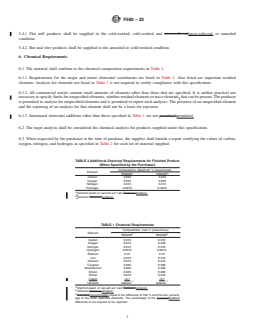
6.1 The material shall conform to the chemical composition requirements in Table 1.
6.1.1 Requirements for the major and minor elemental constituents are listed in Table 1. Also listed are important residual
elements. Analysis for elements not listed in Table 1 is not required to certify compliance with this specification.
6.1.2 All commercial metals contain small amounts of elements other than those that are specified. It is neither practical nor
necessary to specify limits for unspecified elements, whether residual elements or trace elements, that can be present. The producer
is permitted to analyze for unspecified elements and is permitted to report such analyses. The presence of an unspecified element
and the reporting of an analysis for that element shall not be a basis for rejection.
6.1.3 Intentional elemental additions other than those specified in Table 1 are not permitted permitted.
6.2 The ingot analysis shall be considered the chemical analysis for products supplied under this specification.
6.3 When requested by the purchaser at the time of purchase, the supplier shall furnish a report certifying the values of carbon,
oxygen, nitrogen, and hydrogen as specified in Table 2 for each lot of material supplied.
TABLE 2 Additional Chemical Requirements for Finished Product
(When Specified by the Purchaser)
Compositions, Maximum % (mass/mass)
Element
A B
R05200 R05400
Carbon 0.020 0.020
Oxygen 0.025 0.035
Nitrogen 0.010 0.010
Hydrogen 0.0015 0.0015
A
Electron-beam or vacuum-arc cast Tantalum.tantalum.
B
Sintered Tantalum.tantalum.
TABLE 1 Chemical Requirements
Compositions, max % (mass/mass)
Element
A B
R05200 R05400
Carbon 0.010 0.010
Oxygen 0.015 0.030
Nitrogen 0.010 0.010
Hydrogen 0.0015 0.0015
Niobium 0.10 0.10
Iron 0.010 0.010
Titanium 0.010 0.010
Tungsten 0.050 0.050
Molybdenum 0.020 0.020
Silicon 0.005 0.005
Nickel 0.010 0.010
Cobalt <0.1 <0.1
C C
Tantalum balance balance
A
Electron-beam or vacuum-arc cast Tantalum.tantalum.
B
Sintered Tantalum.tantalum.
C
Assumed Approximately equal to the difference of 100 % and the sum percent-
age of the other specified elements. The percentage of the Tantalumtantalum
difference is not required to be reported.
F560 − 22
7. Mechanical Properties
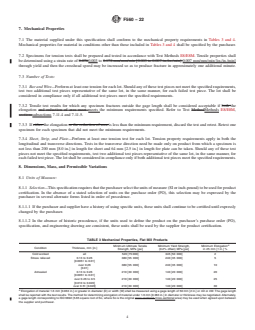
7.1 The material supplied under this specification shall conform to the mechanical property requirements in Tables 3 and 4.
Mechanical properties for material in conditions other than those included in Tables 3 and 4 shall be specified by the purchaser.
7.2 Specimens for tension tests shall be prepared and tested in accordance with Test Methods E8/E8M. Tensile properties shall
be determined using a strain rate of 0.0760.003 to 0.178 mm/mm/min [0.003 to 0.007 in./in./min] 0.007 mm/mm/min [in./in./min]
through yield and then the crosshead speed may be increased so as to produce fracture in approximately one additional minute.
7.3 Number of Tests:
7.3.1 Bar and Wire—Perform at least one tension for each lot. Should any of these test pieces not meet the specified requirements,
test two additional test pieces representative of the same lot, in the same manner, for each failed test piece. The lot shall be
considered in compliance only if all additional test pieces meet the specified requirements.
7.3.2 Tensile test results for which any specimen fractures outside the gage length shall be considered acceptable if both the
elongation and reduction of area meet meets the minimum requirements specified. Refer to Test MethodMethods E8/E8M,
sectionssubsections 7.11.4 and 7.11.5.
7.3.3 If either the elongation or the reduction of area is less than the minimum requirement, discard the test and retest. Retest one
specimen for each specimen that did not meet the minimum requirements.
7.3.4 Sheet,
...