

ASTM D5687/D5687M-20
(Guide)Standard Guide for Preparation of Flat Composite Panels with Processing Guidelines for Specimen Preparation
General Information
- Abstract
SIGNIFICANCE AND USE
5.1 The techniques described in this guide, if properly used in conjunction with a knowledge of behavior of particular material systems, will aid in the proper preparation of consolidated laminates for mechanical property testing.
5.2 The techniques described are recommended to facilitate the consistent production of satisfactory test specimens by minimizing uncontrolled processing variance during specimen fabrication.
5.3 Steps 3 through 8 of the 8-step process may not be required for particular specimen or test types. If the specimen or test does not require a given step in the process of specimen fabrication, that particular step may be skipped.
5.4 A test specimen represents a simplification of the structural part. The test specimen's value lies in the ability of several sites to be able to test the specimen using standard techniques. Test data may not show identical properties to those obtained in a large structure, but a correlation can be made between test results and part performance. This may be due, in part, to the difficulty of creating a processing environment for test specimens that identically duplicates that of larger scale processes.
5.5 Tolerances are guidelines based on current lab practices. This guide does not attempt to give detailed instructions due to the variety of possible panels and specimens that could be made. The tolerances should be used as a starting reference from which refinements can be made.
SCOPE
1.1 This guide provides guidelines to facilitate the proper preparation of laminates and test specimens from fiber-reinforced organic matrix composite prepregs. The scope is limited to organic matrices and fiber reinforcement in unidirectional (tape) or orthagonal weave patterns. Other forms may require deviations from these general guidelines. Other processing techniques for test coupon preparation, for example, pultrusion, filament winding and resin-transfer molding, are not addressed.
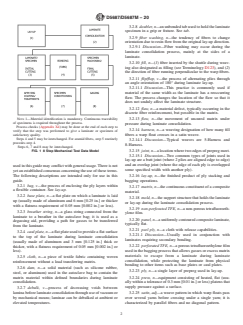
1.2 Specimen preparation is modeled as an 8-step process that is presented in Fig. 1 and Section 8. Laminate consolidation techniques are assumed to be by press or autoclave. This practice assumes that the materials are properly handled by the test facility to meet the requirements specified by the material supplier(s) or specification, or both. Proper test specimen identification also includes designation of process equipment, process steps, and any irregularities identified during processing.
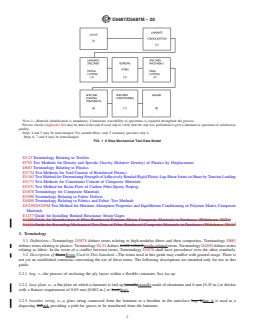
FIG. 1 8 Step Mechanical Test Data Model
Note 1: Material identification is mandatory. Continuous traceability of specimens is required throughout the process.
Process checks (Appendix X4) may be done at the end of each step to verify that the step was performed to give a laminate or specimen of satisfactory quality.
Steps 4 and 5 may be interchanged. For aramid fibers, step 5 routinely precedes step 4.
Steps 6, 7 and 8 may be interchanged.
1.3 Units—The values stated in either SI units or inch-pound units are to be regarded separately as standard. The values stated in each system are not necessarily exact equivalents; therefore, to ensure conformance with the standard, each system shall be used independently of the other, and values from the two systems shall not be combined.
1.3.1 Within the text, the inch-pound units are shown in brackets.
1.4 This standard does not purport to address all of the safety concerns, if any, associated with its use. It is the responsibility of the user of this standard to establish appropriate safety, health, and environmental practices and determine the applicability of regulatory limitations prior to use.
1.5 This international standard was developed in accordance with internationally recognized principles on standardization established in the Decision on Principles for the Development of International Standards, Guides and Recommendations issued by the World Trade Organization Technical Barriers to Trade (TBT) Committee.
- Status
- Published
- Publication Date
- 30-Sep-2020
- Technical Committee
- D30 - Composite Materials
- Drafting Committee
- D30.04 - Lamina and Laminate Test Methods
Buy Documents
ASTM D5687/D5687M-20 - Standard Guide for Preparation of Flat Composite Panels with Processing Guidelines for Specimen Preparation
REDLINE ASTM D5687/D5687M-20 - Standard Guide for Preparation of Flat Composite Panels with Processing Guidelines for Specimen Preparation
Overview
ASTM D5687/D5687M-20 is the Standard Guide for Preparation of Flat Composite Panels with Processing Guidelines for Specimen Preparation, developed by ASTM Committee D30 on Composite Materials. This guide establishes recommended practices to facilitate the preparation of fiber-reinforced organic matrix composite laminates and test specimens, especially targeting mechanical property testing. It emphasizes process consistency, material traceability, and minimization of uncontrolled processing variation while ensuring specimen quality and comparability across laboratories.
This standard is recognized internationally, in line with WTO technical barriers to trade principles, and is particularly relevant for composite material laboratories, manufacturers, and testing organizations seeking best practices for specimen creation and evaluation.
Key Topics
- Material Scope: The guide is applicable to fiber-reinforced organic matrix composite prepregs, including unidirectional (tape) and orthogonal weave patterns. It does not cover other composite forms (e.g., pultrusion, filament winding, resin-transfer molding).
- 8-Step Specimen Preparation Model: The process is organized into eight steps for systematic laminate consolidation and specimen preparation, offering flexibility to skip steps not required for specific tests.
- Process Consistency: By minimizing uncontrolled variance during specimen fabrication, the standard enables repeatable and comparable test results, crucial for mechanical property testing of composites.
- Traceability: Continuous specimen identification and traceability are mandated, aiding quality control and data integrity.
- Lab Equipment and Practices: The guide describes qualified apparatus (e.g., vacuum systems, presses, autoclaves), lay-up environments, and best practices for contamination control.
- Dimensional and Tolerance Guidelines: Offers references to tolerances based on current laboratory practices while supporting refinements depending on the specific materials and labs.
- Terminology Alignment: Relies on standardized terminology from related ASTM documents to ensure consistent language for composite materials and processing.
Applications
- Mechanical Testing Specimen Preparation: Essential in creating flat laminated composite panels that serve as test coupons for evaluating properties like tensile strength, shear, and environmental durability.
- Quality Assurance in Manufacturing: Minimizes process-related variability, supporting reliable data for product certification, R&D, and compliance reporting.
- R&D and Material Qualification: Enables valid material comparisons and development of performance databases by ensuring that coupon preparation closely follows recognized processes.
- Cross-Lab Comparability: Supports multicenter studies or qualification programs where data quality and comparability are vital.
- Process Documentation and Traceability: Ensures that all steps, equipment, and any deviations or irregularities are documented, supporting accountability and audits within quality management systems.
Related Standards
- ASTM C297/C297M – Flatwise Tensile Strength of Sandwich Constructions
- ASTM D792 – Density and Specific Gravity of Plastics by Displacement
- ASTM D883 – Terminology Relating to Plastics
- ASTM D2734 – Void Content of Reinforced Plastics
- ASTM D3163 – Strength of Adhesively Bonded Rigid Plastic Lap-Shear Joints
- ASTM D3171 – Constituent Content of Composite Materials
- ASTM D3878 – Terminology for Composite Materials
- ASTM D3990 – Terminology Relating to Fabric Defects
- ASTM D5229/D5229M – Moisture Absorption Properties of Polymer Matrix Composites
- ASTM E1309 – Guide for Identification of Fiber-Reinforced Polymer-Matrix Composite Materials (Withdrawn)
- ASTM E1434 – Guide for Recording Mechanical Test Data of Fiber-Reinforced Composite Materials (Withdrawn)
Practical Value
Implementing ASTM D5687/D5687M enables consistent, high-quality preparation of composite specimens, ensuring mechanical property data are meaningful and directly comparable across different laboratories and organizations. By following standardized processing and identification procedures, users can support accreditation, optimize research outcomes, and streamline compliance with regulatory and customer requirements in the field of advanced composites. This standard forms a foundational reference for anyone engaged in the reliable testing and evaluation of composite panel materials.
Relations
- Effective Date
- 01-Feb-2024
- Effective Date
- 01-Nov-2023
- Effective Date
- 01-Oct-2023
- Effective Date
- 15-Aug-2020
- Effective Date
- 01-Mar-2020
- Effective Date
- 01-Jan-2020
- Effective Date
- 15-Oct-2019
- Effective Date
- 01-Aug-2019
- Effective Date
- 15-Apr-2019
- Effective Date
- 15-Apr-2019
- Effective Date
- 01-Feb-2019
- Effective Date
- 01-Dec-2018
- Effective Date
- 01-Nov-2018
- Effective Date
- 01-Apr-2018
- Effective Date
- 15-Aug-2017
Buy Documents
ASTM D5687/D5687M-20 - Standard Guide for Preparation of Flat Composite Panels with Processing Guidelines for Specimen Preparation
REDLINE ASTM D5687/D5687M-20 - Standard Guide for Preparation of Flat Composite Panels with Processing Guidelines for Specimen Preparation
Get Certified
Connect with accredited certification bodies for this standard

DIN CERTCO
DIN Group product certification.

Smithers Quality Assessments
US management systems and product certification.
Sponsored listings
Frequently Asked Questions
ASTM D5687/D5687M-20 is a guide published by ASTM International. Its full title is "Standard Guide for Preparation of Flat Composite Panels with Processing Guidelines for Specimen Preparation". This standard covers: SIGNIFICANCE AND USE 5.1 The techniques described in this guide, if properly used in conjunction with a knowledge of behavior of particular material systems, will aid in the proper preparation of consolidated laminates for mechanical property testing. 5.2 The techniques described are recommended to facilitate the consistent production of satisfactory test specimens by minimizing uncontrolled processing variance during specimen fabrication. 5.3 Steps 3 through 8 of the 8-step process may not be required for particular specimen or test types. If the specimen or test does not require a given step in the process of specimen fabrication, that particular step may be skipped. 5.4 A test specimen represents a simplification of the structural part. The test specimen's value lies in the ability of several sites to be able to test the specimen using standard techniques. Test data may not show identical properties to those obtained in a large structure, but a correlation can be made between test results and part performance. This may be due, in part, to the difficulty of creating a processing environment for test specimens that identically duplicates that of larger scale processes. 5.5 Tolerances are guidelines based on current lab practices. This guide does not attempt to give detailed instructions due to the variety of possible panels and specimens that could be made. The tolerances should be used as a starting reference from which refinements can be made. SCOPE 1.1 This guide provides guidelines to facilitate the proper preparation of laminates and test specimens from fiber-reinforced organic matrix composite prepregs. The scope is limited to organic matrices and fiber reinforcement in unidirectional (tape) or orthagonal weave patterns. Other forms may require deviations from these general guidelines. Other processing techniques for test coupon preparation, for example, pultrusion, filament winding and resin-transfer molding, are not addressed. 1.2 Specimen preparation is modeled as an 8-step process that is presented in Fig. 1 and Section 8. Laminate consolidation techniques are assumed to be by press or autoclave. This practice assumes that the materials are properly handled by the test facility to meet the requirements specified by the material supplier(s) or specification, or both. Proper test specimen identification also includes designation of process equipment, process steps, and any irregularities identified during processing. FIG. 1 8 Step Mechanical Test Data Model Note 1: Material identification is mandatory. Continuous traceability of specimens is required throughout the process. Process checks (Appendix X4) may be done at the end of each step to verify that the step was performed to give a laminate or specimen of satisfactory quality. Steps 4 and 5 may be interchanged. For aramid fibers, step 5 routinely precedes step 4. Steps 6, 7 and 8 may be interchanged. 1.3 Units—The values stated in either SI units or inch-pound units are to be regarded separately as standard. The values stated in each system are not necessarily exact equivalents; therefore, to ensure conformance with the standard, each system shall be used independently of the other, and values from the two systems shall not be combined. 1.3.1 Within the text, the inch-pound units are shown in brackets. 1.4 This standard does not purport to address all of the safety concerns, if any, associated with its use. It is the responsibility of the user of this standard to establish appropriate safety, health, and environmental practices and determine the applicability of regulatory limitations prior to use. 1.5 This international standard was developed in accordance with internationally recognized principles on standardization established in the Decision on Principles for the Development of International Standards, Guides and Recommendations issued by the World Trade Organization Technical Barriers to Trade (TBT) Committee.
SIGNIFICANCE AND USE 5.1 The techniques described in this guide, if properly used in conjunction with a knowledge of behavior of particular material systems, will aid in the proper preparation of consolidated laminates for mechanical property testing. 5.2 The techniques described are recommended to facilitate the consistent production of satisfactory test specimens by minimizing uncontrolled processing variance during specimen fabrication. 5.3 Steps 3 through 8 of the 8-step process may not be required for particular specimen or test types. If the specimen or test does not require a given step in the process of specimen fabrication, that particular step may be skipped. 5.4 A test specimen represents a simplification of the structural part. The test specimen's value lies in the ability of several sites to be able to test the specimen using standard techniques. Test data may not show identical properties to those obtained in a large structure, but a correlation can be made between test results and part performance. This may be due, in part, to the difficulty of creating a processing environment for test specimens that identically duplicates that of larger scale processes. 5.5 Tolerances are guidelines based on current lab practices. This guide does not attempt to give detailed instructions due to the variety of possible panels and specimens that could be made. The tolerances should be used as a starting reference from which refinements can be made. SCOPE 1.1 This guide provides guidelines to facilitate the proper preparation of laminates and test specimens from fiber-reinforced organic matrix composite prepregs. The scope is limited to organic matrices and fiber reinforcement in unidirectional (tape) or orthagonal weave patterns. Other forms may require deviations from these general guidelines. Other processing techniques for test coupon preparation, for example, pultrusion, filament winding and resin-transfer molding, are not addressed. 1.2 Specimen preparation is modeled as an 8-step process that is presented in Fig. 1 and Section 8. Laminate consolidation techniques are assumed to be by press or autoclave. This practice assumes that the materials are properly handled by the test facility to meet the requirements specified by the material supplier(s) or specification, or both. Proper test specimen identification also includes designation of process equipment, process steps, and any irregularities identified during processing. FIG. 1 8 Step Mechanical Test Data Model Note 1: Material identification is mandatory. Continuous traceability of specimens is required throughout the process. Process checks (Appendix X4) may be done at the end of each step to verify that the step was performed to give a laminate or specimen of satisfactory quality. Steps 4 and 5 may be interchanged. For aramid fibers, step 5 routinely precedes step 4. Steps 6, 7 and 8 may be interchanged. 1.3 Units—The values stated in either SI units or inch-pound units are to be regarded separately as standard. The values stated in each system are not necessarily exact equivalents; therefore, to ensure conformance with the standard, each system shall be used independently of the other, and values from the two systems shall not be combined. 1.3.1 Within the text, the inch-pound units are shown in brackets. 1.4 This standard does not purport to address all of the safety concerns, if any, associated with its use. It is the responsibility of the user of this standard to establish appropriate safety, health, and environmental practices and determine the applicability of regulatory limitations prior to use. 1.5 This international standard was developed in accordance with internationally recognized principles on standardization established in the Decision on Principles for the Development of International Standards, Guides and Recommendations issued by the World Trade Organization Technical Barriers to Trade (TBT) Committee.
ASTM D5687/D5687M-20 is classified under the following ICS (International Classification for Standards) categories: 83.140.10 - Films and sheets. The ICS classification helps identify the subject area and facilitates finding related standards.
ASTM D5687/D5687M-20 has the following relationships with other standards: It is inter standard links to ASTM D883-24, ASTM D883-23, ASTM D2734-23, ASTM E1237-20, ASTM D5229/D5229M-20, ASTM D883-20, ASTM D3878-19a, ASTM D883-19c, ASTM D3878-19, ASTM D883-19a, ASTM D883-19, ASTM D883-18a, ASTM D883-18, ASTM D3878-18, ASTM D883-17. Understanding these relationships helps ensure you are using the most current and applicable version of the standard.
ASTM D5687/D5687M-20 is available in PDF format for immediate download after purchase. The document can be added to your cart and obtained through the secure checkout process. Digital delivery ensures instant access to the complete standard document.
Standards Content (Sample)
This international standard was developed in accordance with internationally recognized principles on standardization established in the Decision on Principles for the
Development of International Standards, Guides and Recommendations issued by the World Trade Organization Technical Barriers to Trade (TBT) Committee.
Designation: D5687/D5687M − 20
Standard Guide for
Preparation of Flat Composite Panels with Processing
Guidelines for Specimen Preparation
This standard is issued under the fixed designation D5687/D5687M; the number immediately following the designation indicates the
year of original adoption or, in the case of revision, the year of last revision. A number in parentheses indicates the year of last
reapproval. A superscript epsilon (´) indicates an editorial change since the last revision or reapproval.
1. Scope Development of International Standards, Guides and Recom-
mendations issued by the World Trade Organization Technical
1.1 This guide provides guidelines to facilitate the proper
Barriers to Trade (TBT) Committee.
preparation of laminates and test specimens from fiber-
reinforced organic matrix composite prepregs. The scope is
2. Referenced Documents
limited to organic matrices and fiber reinforcement in unidi-
2.1 ASTM Standards:
rectional(tape)ororthagonalweavepatterns.Otherformsmay
C297/C297MTest Method for Flatwise Tensile Strength of
require deviations from these general guidelines. Other pro-
Sandwich Constructions
cessing techniques for test coupon preparation, for example,
D123Terminology Relating to Textiles
pultrusion, filament winding and resin-transfer molding, are
D792Test Methods for Density and Specific Gravity (Rela-
not addressed.
tive Density) of Plastics by Displacement
1.2 Specimen preparation is modeled as an 8-step process
D883Terminology Relating to Plastics
that is presented in Fig. 1 and Section 8. Laminate consolida-
D2734TestMethodsforVoidContentofReinforcedPlastics
tion techniques are assumed to be by press or autoclave. This
D3163Test Method for Determining Strength ofAdhesively
practice assumes that the materials are properly handled by the
Bonded Rigid Plastic Lap-Shear Joints in Shear by Ten-
test facility to meet the requirements specified by the material
sion Loading
supplier(s) or specification, or both. Proper test specimen
D3171Test Methods for Constituent Content of Composite
identification also includes designation of process equipment,
Materials
process steps, and any irregularities identified during process-
D3531Test Method for Resin Flow of Carbon Fiber-Epoxy
ing.
Prepreg
1.3 Units—The values stated in either SI units or inch- D3878Terminology for Composite Materials
pound units are to be regarded separately as standard. The
D3990Terminology Relating to Fabric Defects
values stated in each system are not necessarily exact equiva- D4850Terminology Relating to Fabrics and Fabric Test
lents; therefore, to ensure conformance with the standard, each
Methods
system shall be used independently of the other, and values D5229/D5229MTestMethodforMoistureAbsorptionProp-
from the two systems shall not be combined.
erties and Equilibrium Conditioning of Polymer Matrix
1.3.1 Within the text, the inch-pound units are shown in Composite Materials
brackets.
E1237Guide for Installing Bonded Resistance Strain Gages
1.4 This standard does not purport to address all of the
3. Terminology
safety concerns, if any, associated with its use. It is the
3.1 Definitions—Terminology D3878 defines terms relating
responsibility of the user of this standard to establish appro-
to high-modulus fibers and their composites. Terminology
priate safety, health, and environmental practices and deter-
D883 defines terms relating to plastics. Terminology D123
mine the applicability of regulatory limitations prior to use.
definestextile-relatedterms.TerminologyD4850definesterms
1.5 This international standard was developed in accor-
relating to fabric. In the event of a conflict between terms,
dance with internationally recognized principles on standard-
Terminology D3878 shall have precedence over the other
ization established in the Decision on Principles for the
standards.
3.2 Description of Terms Used in This Standard—Theterms
This guide is under the jurisdiction of ASTM Committee D30 on Composite
Materials and is the direct responsibility of Subcommittee D30.04 on Lamina and
Laminate Test Methods. For referenced ASTM standards, visit the ASTM website, www.astm.org, or
Current edition approved Oct. 1, 2020. Published November 2020. Originally contact ASTM Customer Service at service@astm.org. For Annual Book of ASTM
approved in 1995. Last previous edition approved in 2015 as D5687/ Standards volume information, refer to the standard’s Document Summary page on
D5687M–95(2015). DOI: 10.1520/D5687_D5687M-20. the ASTM website.
Copyright © ASTM International, 100 Barr Harbor Drive, PO Box C700, West Conshohocken, PA 19428-2959. United States
D5687/D5687M − 20
3.2.8 doubler, n—anunbondedtabusedtoholdthelaminate
specimen in a grip or fixture. See tab.
3.2.9 fiber washing, n—the tendency of fibers to change
orientationduetoresinflowfromtheoriginallay-updirection.
3.2.9.1 Discussion—Fiber washing may occur during the
laminate consolidation process, mainly at the sides of a
laminate.
3.2.10 fill, n—(1) fiber inserted by the shuttle during weav-
ing also designated as filling (see Terminology D123), and (2)
the direction of fiber running perpendicular to the warp fibers.
3.2.11 flip/flop, v—the process of alternating plies through
an angle orientation of 180° during laminate lay-up.
3.2.11.1 Discussion—This practice is commonly used if
material of the same width as the laminate has a reoccurring
flaw. The process changes the location of the flaw so that it
does not unduly affect the laminate structure.
3.2.12 flaw, n—a material defect, typically occurring in the
discrete fiber reinforcement, but possible in the matrix.
NOTE 1—Material identification is mandatory. Continuous traceability
3.2.13 flow, n—the movement of uncured matrix under
of specimens is required throughout the process.
pressure during laminate consolidation.
Process checks (Appendix X4) may be done at the end of each step to
3.2.14 harness, n—a weaving designation of how many fill
verify that the step was performed to give a laminate or specimen of
satisfactory quality.
fibers a warp float crosses in a satin weave.
Steps 4 and 5 may be interchanged. For aramid fibers, step 5 routinely
3.2.14.1 Discussion—Typical weaves are 5-Harness and
precedes step 4.
8-Harness.
Steps 6, 7 and 8 may be interchanged.
FIG. 1 8 Step Mechanical Test Data Model 3.2.15 joint, n—alocationwheretwoedgesofprepregmeet.
3.2.15.1 Discussion—Two common types of joints used in
lay-up are a butt joint (where 2 plies are aligned edge to edge)
and an overlap joint (where the edge of each ply is overlapped
usedinthisguidemayconflictwithgeneralusage.Thereisnot
some specified width with another ply).
yetanestablishedconsensusconcerningtheuseoftheseterms.
The following descriptions are intended only for use in this 3.2.16 lay-up, n—the finished product of ply stacking and
guide. bagging operations.
3.2.1 bag, v—the process of enclosing the ply layers within
3.2.17 matrix, n—the continuous constituent of a composite
a flexible container. See lay-up.
material.
3.2.2 base plate, n—a flat plate on which a laminate is laid
3.2.18 mold, n—thesupportstructurethatholdsthelaminate
up (usually made of aluminum and 6 mm [0.25 in.] or thicker
or lay-up during the laminate consolidation process.
with a flatness requirement of 0.05 mm [0.002 in.] or less).
3.2.19 non-perforated TFE, n—a non-porous tetrafluoroeth-
3.2.3 breather string, n—a glass string connected from the
ylene film.
laminate to a breather in the autoclave bag; it is used as a
3.2.20 panel, n—auniformlycontouredcompositelaminate,
degassing aid, providing a path for gasses to be transferred
typically flat.
from the laminate.
3.2.21 peel ply, n—a cloth with release capabilities.
3.2.4 caul plate, n—aflatplateusedtoprovideaflatsurface
3.2.21.1 Discussion—Usually used in conjunction with
to the top of the laminate during laminate consolidation
laminates requiring secondary bonding.
(usually made of aluminum and 3 mm [0.125 in.] thick or
3.2.22 perforated TFE, n—aporoustetrafluoroethylenefilm
thicker, with a flatness requirement of 0.05 mm [0.002 in.] or
usedinthebaggingprocessthatallowsgassesorexcessmatrix
less).
materials to escape from a laminate during laminate
3.2.5 cloth, n—a piece of textile fabric containing woven
consolidation, while protecting the laminate from physical
reinforcement without a load transferring matrix.
bonding to other items such as base plates or caul plates.
3.2.6 dam, n—a solid material (such as silicone rubber,
3.2.23 ply, n—a single layer of prepreg used in lay-up.
steel, or aluminum) used in the autoclave bag to contain the
3.2.24 press, n—equipment consisting of heated, flat (usu-
matrix material within defined boundaries during laminate
consolidation. allywithinatoleranceof0.3mm[0.01in.]orless)platensthat
supply pressure against a surface.
3.2.7 debulk, v—process of decreasing voids between
laminabeforelaminateconsolidationthroughuseofvacuumor 3.2.25 satin, adj—aweavepatterninwhichwarpfloatspass
by mechanical means; laminae can be debulked at ambient or over several yarns before crossing under a single yarn; it is
elevated temperatures. characterized by parallel fibers and no diagonal pattern.
D5687/D5687M − 20
3.2.26 sealant, n—a high temperature material used to seal 5.2 The techniques described are recommended to facilitate
the edges of a vacuum bag to the base plate during a the consistent production of satisfactory test specimens by
consolidation or debulking cycle. minimizing uncontrolled processing variance during specimen
fabrication.
3.2.27 staggered, adj—the description of ply placement
wherethejointsarenotpositionedinthesameinplanelocation 5.3 Steps 3 through 8 of the 8-step process may not be
through some specified thickness of the laminate.
required for particular specimen or test types. If the specimen
or test does not require a given step in the process of specimen
3.2.28 tab, n—a piece of material used to hold the laminate
fabrication, that particular step may be skipped.
specimen in a grip or fixture for testing so that the laminate is
not damaged, and is adequately supported.
5.4 A test specimen represents a simplification of the
3.2.28.1 Discussion—It is bonded to the specimen. An
structural part. The test specimen’s value lies in the ability of
unbonded tab is termed a doubler.
several sites to be able to test the specimen using standard
techniques. Test data may not show identical properties to
3.2.29 TFE coated cloth, n—a cloth coated with a tetrafluo-
those obtained in a large structure, but a correlation can be
roethylene coating.
made between test results and part performance. This may be
3.2.29.1 Discussion—This is used in the bagging process to
due, in part, to the difficulty of creating a processing environ-
allow gases or excess matrix material to escape during the
mentfortestspecimensthatidenticallyduplicatesthatoflarger
laminateconsolidation.ItdiffersfromperforatedTFEinthatit
scale processes.
gives a textured surface to the laminate.
5.5 Tolerancesareguidelinesbasedoncurrentlabpractices.
3.2.30 traveler, n—a coupon with the same nominal thick-
Thisguidedoesnotattempttogivedetailedinstructionsdueto
nessandwidthasthetestspecimen,madeofthesamematerial
the variety of possible panels and specimens that could be
andprocessedsimilarlytothespecimenexceptusuallywithout
made. The tolerances should be used as a starting reference
tabs or gages.
from which refinements can be made.
3.2.30.1 Discussion—The traveler is used to measure mass
changes during environmental conditioning when it is imprac-
6. Interferences
tical to measure these changes on the actual specimen.
6.1 Specimenpreparationpracticesshouldreflectthoseused
3.2.31 vacuum bag, n—a low gas permeable material used
onanapplicablepart,tothegreatestextentpractical.However,
to enclose and seal the laminate during a consolidation or
due to scaling effects, processing requirements for test lami-
debulking cycle.
nates may not exactly duplicate the processes used in larger
3.2.32 vacuum couple, n—the mechanical connection that
scale components. The user should attempt to understand and
sealsthevacuumsourcetothelay-upduringaconsolidationor
control those critical process parameters that may produce a
debulking cycle.
differenceinmaterialresponsebetweenthetestcouponandthe
structure. Critical process parameters are material, application,
3.2.33 warp surface, n—the ply surface which shows the
and process dependent and are beyond the scope of this guide.
larger area of warp tows with respect to filling tows.
3.2.33.1 Discussion—Fabrics where both surfaces show an
6.2 Laminate quality is directly related to the prevention of
equalareaofwarptowswithrespecttofillingtowsdonothave
contamination during lay-up and processing.
a warp surface.
7. Apparatus and Materials
3.2.34 warp nested, n—warp plies alternated in the pattern
NOTE1—Thissectionprovidesalistingofapparatusandmaterialitems
warp surface up, warp surface down.
that have been shown to be acceptable. The list is not meant to be all
inclusive, but may be helpful to novice users.
4. Summary of Guide
7.1 Equipment:
7.1.1 Lay-up Environment/Tools:
4.1 This guide describes the general process flow for prepa-
7.1.1.1 Tables—Tables should be1m[3ft]in height (or
ration of flat composite panels and provides specific recom-
adjustable tables) with ample area for lay-up.The table should
mended techniques that are generally suitable to laminated
be accessible from all sides. The table surface should have a
fibrous organic polymer matrix composites for each of the
fully supported metal or wood undersurface. The table surface
process steps to test specimen fabrication.
shouldbeof(1)safetyglasswithedgesprotectedbyaluminum
4.2 The specific techniques included in this guide are the
angle plate or (2) a toughened transparent plastic sheet.
minimum recommended for common composite material sys-
7.1.1.2 Convenient Accessibility of Lay-up Materials—Wall
tems as represented in the scope of this guide. For a given
racks hold bulk cloth, TFE, and other expendable bagging
application, other techniques may need to be added or substi-
materials.Theserackstypicallyconsistofasteelrodwhichcan
tuted for those described by this guide.
hold a roll of material. The rods should be able to accommo-
date material rolls up to 1.5 m [60 in.] wide. The spacing
5. Significance and Use
between racks should be a minimum of 0.4 m [15 in.] spacing
5.1 The techniques described in this guide, if properly used between rods with the bottom rod being no closer than 0.6 m
in conjunction with a knowledge of behavior of particular [25 in.] to the floor and the top rod being no higher than 2.2 m
material systems, will aid in the proper preparation of consoli- [85 in.] from the floor. Cabinets and drawers hold other lay-up
dated laminates for mechanical property testing. materials such as sealants, spare tape, vacuum couples, hoses,
D5687/D5687M − 20
caul plates, thermocouple wire, and so forth. These should be 7.2.2 Releaseclothsallowthelaminatetobeseparatedfrom
compartmentalized for easy access. other cloth materials.
7.2.2.1 Peel Plies—Several types of peel ply are commer-
7.1.1.3 Vacuum Supply—Overhead piping for vacuum with
cially available. Release properties and shrinkage vary with
a flexible hose reel over the table has been found to be
bothfiberandstyle.Nylonandpolycarbonatearetwocommon
satisfactory. The vacuum pump should be located within 45 m
fibers used. Aramid may be used for higher temperature
[150 ft] of the lay-up site.
applications above 230°C [450°F]. Peel plies are generally
7.1.1.4 Cleanliness and Airborne Particulates—Controlling
used when secondary bonding is required.
dust in air, on surfaces, and other contamination (such as from
7.2.2.2 TFE Coated Release Cloth—Generally weaves that
skin or material contact) should be a priority. Adequate
have significant air spacing are preferred. These are used to
particulate air filters, gloves, floor sweeping compound, and
separate the laminate from bleeders.
wiping cloths should be present to help minimize contamina-
7.2.3 Non-porous TFE Film, used as a release to separate
tion.
ply stack from tool or caul plate.
7.1.2 Tool Plate—Plates of aluminum or steel have been
7.2.4 Breather—Cloth which allows even gas flow over the
found to be satisfactory. The plate should have a minimum
lay-up surface. The breather also helps minimize bag puncture
thickness of 6 mm [0.25 in.] (base plate) or 3 mm [0.125 in.]
by metal plates. Use (1) batted material type 10 or (2) 1581
thick (caul plate) with a flatness tolerance of 0.05 mm
style glass cloth.
[0.002in.]. The surface should be coated with a mold release,
7.2.5 Bleeder—Cloth that allows matrix to flow into it. Use
except around the edges where sealant is to be applied.
(1) 120 style glass cloth with finish or (2) CW1850 style mat.
7.1.3 Cutting Apparatus—A cutting apparatus may range
7.2.6 Thermocouples allow for temperature monitoring:
from a simple retractable knife blade to die or ultrasonic or
7.2.6.1 Use type J, 24 gage thermocouple wire to 370°C
laser devices.Whenever there is a cutting surface, this must be
[700°F].LowergagewireorsamegagetypeKcanbeusedfor
evaluated for wear. If the blade cuts without pulling the
higher temperatures.
material, the blade is adequately sharp and need not be
7.2.6.2 Use gold plated thermocouple 2 pole connectors.
changed.
7.2.7 Dams—May be silicone rubber or cork. These can be
7.1.4 Vacuum Source—The vacuum capacity at the lay-up
different thicknesses depending on the panel thickness (3 mm
site shall be at least 75 kPa [22 in. Hg] with a drop of no more
[0.125 in.], 4.5 mm [0.188 in.], or 6 mm [0.25 in.] thick). The
than 3.5 kPa [1 in. Hg] in 5 min. Pump requirements are
dam thickness should slightly exceed panel thickness. The
dependent on autoclave size and distance of pump from the
dams are typically 25 mm [1 in.] wide with adhesive on one
lay-up. Standard oil type pumps have proven satisfactory.
side.
7.1.5 Debulking:
NOTE 3—Dams and peel plies may have chemicals that could influence
7.1.5.1 Bag—Twotypeshavebeenshowntobesatisfactory:
secondary bonding operations. There are various materials. Find a
(1)commerciallyavailablerubberbagwithavacuumsourceor
material that is suitable for the particular operation.
(2) an internally built bag made from a tool plate, vacuum
NOTE 4—Silicone rubber dams may be used to 280°C [545°F] due to
coupling, and vacuum bag materials.
limitations of adhesive backing. Moldable sealants may be used at higher
temperatures.
7.1.5.2 A wooden or hard plastic roller or spatula may be
used for mechanical debulking.
7.2.8 Moldable Sealant, capable of providing an adequate
7.1.6 Vacuum Ports—Hose couplings that provide a flat vacuum seal when placed between the base plate and the
surface against the breather material are preferred. The port is vacuum film. Several types are available for different tempera-
connected to the hose through quick connect couplings. The ture applications.
hose is a braid reinforced hose. Both hose and coupling must 7.2.9 Tape:
be able to withstand consolidation temperature and pressure.
7.2.9.1 For use in lay-up, tape with adhesive on one side.
The tape remains in surface contact with a plate or dam under
7.2 Lay-up Expendables:
temperature and pressure, typically 25 or 50 mm [1 or 2 in.]
7.2.1 Baggingfilmsareplacedoverthelay-upandsealedto
wide. The tape must be able to withstand heat generated in
the base plate with sealant.
consolidation.
7.2.1.1 For cures up to 200°C [400°F], use a 0.06 mm
7.2.9.2 Usedasanaidduringplystacking,adhesiveonboth
[0.002 in.] thick Nylon 6 film sold for vacuum applications.
sides, typically 25 mm [1 in.] wide.
7.2.1.2 For cures up to 230°C [450°F], use a 0.06 mm
7.3 Test Material—The test material (prepreg) should be
[0.002 in.] thick high temperature Nylon 66 film sold for
freeofcontaminants.Itmaybeunrolledfromarack.Underno
vacuum applications.
conditions should it be folded on itself. Taped ends should be
7.2.1.3 For cures from 230°C to 425°C [450°F–800°F],
removed before the material is plied.
specific bagging materials are temperature and application
7.4 Consolidation Equipment:
dependent.
7.4.1 Press—A variety of hydraulic and air driven presses
NOTE 2—Most other lay-up materials (specifically sealant, bleeders,
are available. Generally, a hydraulic press with platen support
peel ply, vacuum couplings, hoses, thermocouples) may also need
posts is preferred. Cooling water is generally a requirement.A
modification at higher temperatures. Some other items, such as bleeders
press that can ramp through a programmed cycle for both
and breathers, have no high temperature equivalent. Suppliers should be
consulted for specific applications above 230°C [450°F]. temperature and pressure control/monitoring is recommended.
D5687/D5687M − 20
The press must be large enough to hold the lay-up and provide 7.8.2 Coatings for specimen protection depend on specific
satisfactory pressure to the lay-up area. Press platens should environmental or test condition.
have a flatness of 0.3 mm [0.01 in.].Afacility may determine
pressflatnesswiththepressplatensopenoratminimalcontact. 8. Procedure
7.4.2 Autoclave, capable of holding lay-up. Provides ad-
8.1 Laminate Lay-up:
equatecontrolandmonitoringofconsolidationcycleincluding
8.1.1 Terminology and designation systems found inTermi-
pressure application and temperature and vacuum if required.
nologies D3878, D123, D883, D4850, and D3990 are used in
7.4.3 Oven, capable of holding lay-up and providing ad-
thisdocumentsothatterminologyanddesignationsystemswill
equate vacuum and temperature control and monitoring.
bethesamebetweentestfacilities.Plyorientationdesignations
7.5 Machining Equipment—Machining equipment is de-
that determine laminate stacking are described in Appendix
scribed in Table X3.1.
X1.
8.1.2 Theareainwhichthelay-upistobeperformedshould
7.6 Secondary Bonding:
be a clean area. Clean room definitions allow no more than a
7.6.1 Release Cloth—Peel plies (Section 7.2.2) are recom-
concentrationof35000particlesgreaterthan5µmindiameter
mended.
per cubic meter (1000 particles greater than 200 µin. diameter
7.6.2 Adhesives—Obtain an adhesive suitable for the par-
per cubic foot). Clean room definitions may be too restrictive
ticular test requirements (for example, do not use an adhesive
for some working environments. However, care should be
withlowshearstrengthifsignificantshearloadswillbeplaced
taken that the area approaches clean room conditions, being
on the bond) and temperature and humidity conditions. Follow
visually free of dust. Work surfaces must be likewise free of
manufacturer’s recommended use and cure conditions.
residue dust or debris. Any agglomeration of contaminant on
7.6.3 Tooling—Tools set gage length and tab position.Tools
the panel during lay-up should be avoided. These conditions
aretypicallysteeloraluminumandcoatedwithamoldrelease.
should be verified before commencing work. Care should be
Usually, tab and gage distance are set either by spring loading
taken to minimize contamination while handling plies (hand
the fixture or by set pins or spacers.
oils, lotions, talc in gloves, and fabric softener are some
7.7 Strain Gaging:
materials that have been shown to contaminate material).
7.7.1 Soldering Iron,capableofheatingsoldertoitsmelting
8.1.3 Laminate Dimensional Considerations—More than
point.
one laminate will at times need to be made for the desired
7.7.2 Solder/Flux, as recommended by the strain gage
number of specimens. Since lay-up does play a role in
manufacturer based on gage and wire.
specimen quality, the ideal situation is to make all specimens
7.7.3 Wire, as recommended by strain gage or test machine
from the same laminate. Randomize specimens within the
manufacturer.
laminate if possible. If more than one laminate is used,
7.7.4 Surface Preparation:
randomize specimens between laminates.
7.7.4.1 220 grit sandpaper is used to lightly abrade the
8.1.3.1 Thesizeofthelaminateshouldbedeterminedbased
surface.
on the size and number of specimens required.Additional area
7.7.4.2 The surface is cleaned with isopropanol or other
should be provided to make up for discarded or destroyed
chemical that does not attack the laminate and leaves a
material. It is recommended that at least 15 mm [0.5 in.] from
minimum of residue.
the laminate edges be discarded due to nonrepresentative
7.7.5 Strain gage selection is dependent on the material
matrix/fiber ratio or thickness taper.Typically, cutting destroys
type, lay-up, specimen and test constraints. Section II of the
some material (1–2 mm [.03–.08 in.] or more) with each pass.
Manual on Experimental Methods for Mechanical Testing of
This discarded or destroyed material should be considered
Composites gives additional information for the strain gage
when determining panel surface area.
selection.
8.1.3.2 The limitations of the lay-up tooling (base plates,
7.7.6 Straingageadhesivecanberecommendedbythegage
caul plates) or consolidation apparatus (autoclave, oven, press)
manufacturer based on the specific environmental/test condi-
should be considered when determining laminate size.
tions.
8.1.4 Lay-up Materials and Tooling:
7.7.7 Strain gage coatings may be recommended by the
8.1.4.1 Plate or Mold Flatness/surface Preparation—The
gage manufacturer based on the specific environmental condi-
moldorbaseplateshouldbeflat(nomorethan0.05mm[0.002
tions. 2
in.] deviation in any square meter [in. ]). Caul plates should
show similar flatness. Interior of molds and the bottom surface
7.8 Conditioning:
of the caul plate shall be coated with a mold release or lined
7.8.1 Achamber contains humidity and temperature control
with nonperforated TFE film. Base plates shall be coated with
and monitoring capability. The chamber must be capable of
a mold release or lined with a nonperforated TFE film, except
holding specimens and monitoring environment within the
where sealant is to be applied.The surfaces in contact with the
chamber.
laminateshouldhaveaminimumaveragesurfaceroughnessof
0.8 µm [32 µin.] and preferably 0.4 µm [16 µin.]. Cutting
operations shall not be performed on mold or base plates.
Manual on Experimental Methods for Mechanical Testing of Composites,
8.1.4.2 Tool Size—The base plate should be large enough to
Edited by Richard L. Pendleton, Mark E. Tuttle, Society of Experimental Mechan-
ics. encompass the laminates, and any other material to be placed
D5687/D5687M − 20
on the baseplate such as dams, sealant and vacuum ports 8.1.6.6 If a delay of some period occurs before further
(ideally vacuum ports should not be placed over the laminate). lay-upoperations,placesomenon-contaminatingfilmorpaper
on the top and bottom of the stack, to protect the stack from
8.1.5 The Ply Layer (1st Ply and Single Ply Consider-
dust. For thermosets, the stack may be placed in a moisture
ations):
proof bag and placed in the freezer to slow matrix advance-
8.1.5.1 Check the material consistency. Inclusion of mate-
ment. Operations may continue once the bag warms to room
rial flaws such as fiber breaks, drags, or pulls will affect
temperature.
specimen properties.
8.1.5.2 The facility has the option to use extra material for 8.1.7 Bagging Considerations:
eachplylayer,thentrimtheplystacktosize,orprecuttheplies
8.1.7.1 Debulking—As the laminate increases in thickness,
to size prior to stacking. If the plies are trimmed, use a sharp
a debulking step is required to avoid porosity in the laminate.
blade and place as much of the cutting surface of the blade
Laminates of the same dimensions may show different porosi-
against the material as possible. This helps to minimize pulled
tiesduetomaterialtype.Alaminateshouldbedebulkedatleast
material so that acceptable dimensional and fiber orientation
once for every 2.5 mm [0.1 in.] of thickness.
tolerances are maintained.
NOTE 7—Debulking cycles may be accomplished under vacuum at
8.1.5.3 Align the ply to the proper fiber orientation for the
room temperature. An example is to place the lay-up into a vacuum
firstplyinthestackingsequence.Forunidirectionaltape,atow
chamberwithatoolingbaseplateandatopsheetofrubberornylonsealed
canbepulledfromthecompositematerialtoestablishtruezero
around several plies of the unconsolidated laminate. Debulking cycles are
degree fiber orientation. For fabrics this is assessed visually.
dependent on both material and panel size. Debulking should be per-
formed often enough during the lay-up so that the final laminate shows an
NOTE 5—Fill direction of samples shall be established prior to remov-
acceptable level of voids.
ing samples from a roll. Slippage and handling may alter the fabric
appearance, limiting the ability to distinguish warp and fill.
8.1.7.2 Breather String—A breather string (X2.4) may be
used to provide a path for volatile materials to escape during
8.1.5.4 Placetheplyonareferencesurface(orientationgrid
cure. The string is most effective when placed 90° to the fiber
or caul plate) maintaining the proper fiber orientation if
orientation.
applicable. The ply should adhere to the reference surface
8.1.7.3 Control of Matrix Flow—Matrix flow is related to
without shifting.
material, temperature, and pathway. Flow can occur both in a
8.1.5.5 When joints are required, they should follow the
lateral and vertical direction.
applicable fiber orientation pattern. The amount of gap or
(a) Damsandnon-porousTFEhelpcontrollateralflow.A
overlap of the joint should be consistent through the length of
damplacedadjacenttotheplystackwillminimizelateralflow.
the joint and between joints.
If the matrix flows into the dam material, a non-porous TFE
8.1.6 Ply Stacking—Additional plies should adhere to pre-
film barrier will further restrict lateral flow.
vious plies without causing bubbles between plies. A roller or
(b) Non-porous, coated cloth and porous TFE, bleeder
spatulamaybeusedtoassurecontactbetweenpliesisachieved
cloths, and peel ply control vertical flow.
in all locations. A needle may be used to prick open bubbles.
(c) Non-porous TFE film provides a barrier which keeps
8.1.6.1 Maintain the orientation of the reference through
verticalflowclosetothelaminatesurface.Arelease(porousor
addition of subsequent plies.
coated cloth TFE, and so forth) must be placed between the
NOTE 6—Plies are stacked one at a time. A partial ply stack may be
bleeder and the laminate or the bleeder will become consoli-
combined with another partial ply stack if a debulking operation is
dated into the laminate.
performed.
(d) Porous TFE or coated TFE cloth control the mecha-
8.1.6.2 Since some fabrics have surface orientation, this
nism of how the vertical flow is directed to the bleeders (for
shouldbedesignatedintheplystackingnomenclature.Surface
example,aporousTFEfilmwithmoreorlargerholesprovides
orientation may be controlled by the top ply (warp surface up,
less obstruction to the rapid flow of the matrix into the bleeder
warp surface down, warp nested) or the symmetry plane
than a porous TFE film with less or smaller holes).
through the middle of the thickness of the laminate. Subse-
(e) Bleeders allow significant levels of vertical flow. The
quent plies are oriented to the previous surface in the proper
amount allowed depends on the matrix material, laminate
surface orientation.
dimensions, and bleeder type, and release barrier. Bleeders
8.1.6.3 Recurring defects may be minimized by offsetting may be placed both above and below the ply stack. Several
the subsequent ply layer (stagger or flip flop configuration). bleedersmaybeusedtoincreaseflow.Theabilityofthematrix
X2.1 gives an example of how staggering can be used to to flow into each subsequent bleeder is reduced.
minimize the vertical effect of repeated defects or joints. (f) Peel ply functions both as a release and bleeder. For
best results, cut peel ply and bleeders to the size of the
8.1.6.4 Acheck of ply count may be made by weighing one
laminate.
ply and comparing this weight to the weight of the ply stack.
An alternative technique is to count pieces of the removed
8.1.7.4 Air breather and vacuum bagging assure that the
paper or plastic backing.
laminate is in a proper environment so that pressure can be
8.1.6.5 The ply stack should be identified after the ply applied and proper matrix flow can be achieved during an
stacking operation is complete. An easy way to do this is to autoclave consolidation of the laminate. The vacuum bag
place an aluminum tape or foil in the corner of the stack. The should be checked for leakage prior to laminate consolidation.
identification can be written with a pen or scribe. The sealed vacuum bag should hold at least 75kPa vacuum
D5687/D5687M − 20
[22in.Hg]. Vacuum should not drop more than 1.5kPa pascal temperature which may cause thermal shock to the material.A
[0.5in.Hg] in any thirty second period. guideline is to not remove the part from the sealed autoclave
above 90°C.
8.1.7.5 Surface Considerations—TFE coated cloth and peel
plywillgiveasurfacetext
...
This document is not an ASTM standard and is intended only to provide the user of an ASTM standard an indication of what changes have been made to the previous version. Because
it may not be technically possible to adequately depict all changes accurately, ASTM recommends that users consult prior editions as appropriate. In all cases only the current version
of the standard as published by ASTM is to be considered the official document.
Designation: D5687/D5687M − 95 (Reapproved 2015) D5687/D5687M − 20
Standard Guide for
Preparation of Flat Composite Panels with Processing
Guidelines for Specimen Preparation
This standard is issued under the fixed designation D5687/D5687M; the number immediately following the designation indicates the
year of original adoption or, in the case of revision, the year of last revision. A number in parentheses indicates the year of last
reapproval. A superscript epsilon (´) indicates an editorial change since the last revision or reapproval.
1. Scope
1.1 This guide provides guidelines to facilitate the proper preparation of laminates and test specimens from fiber-reinforced
organic matrix composite prepregs. The scope is limited to organic matrices and fiber reinforcement in unidirectional (tape) or
orthagonal weave patterns. Other forms may require deviations from these general guidelines. Other processing techniques for test
coupon preparation, for example, pultrusion, filament winding and resin-transfer molding, are not addressed.
1.2 Specimen preparation is modeled as an 8-step process that is presented in Fig. 1 and Section 8. Laminate consolidation
techniques are assumed to be by press or autoclave. This practice assumes that the materials are properly handled by the test facility
to meet the requirements specified by the material supplier(s) or specification, or both. Identification and information gathering
guidelines are modeled after Guide E1309. Test specimens shall be directly traceable to material used as designated in Guide
E1434. Proper test specimen identification also includes designation of process equipment, process steps, and any irregularities
identified during processing.
1.3 Units—The values stated in either SI units or inch-pound units are to be regarded separately as standard. Within the text the
inch-pound units are shown in brackets. The values stated in each system are not necessarily exact equivalents; therefore, to ensure
conformance with the standard, each system mustshall be used independently of the other. Combiningother, and values from the
two systems may result in nonconformance with the standard. shall not be combined.
1.3.1 Within the text, the inch-pound units are shown in brackets.
1.4 This standard does not purport to address all of the safety concerns, if any, associated with its use. It is the responsibility
of the user of this standard to establish appropriate safety safety, health, and healthenvironmental practices and determine the
applicability of regulatory limitations prior to use.
1.5 This international standard was developed in accordance with internationally recognized principles on standardization
established in the Decision on Principles for the Development of International Standards, Guides and Recommendations issued
by the World Trade Organization Technical Barriers to Trade (TBT) Committee.
2. Referenced Documents
2.1 ASTM Standards:
C297/C297M Test Method for Flatwise Tensile Strength of Sandwich Constructions
This guide is under the jurisdiction of ASTM Committee D30 on Composite Materials and is the direct responsibility of Subcommittee D30.04 on Lamina and Laminate
Test Methods.
Current edition approved Nov. 1, 2015Oct. 1, 2020. Published December 2015November 2020. Originally approved in 1995. Last previous edition approved in 20072015
as D5687/D5687M - 95D5687/D5687M – 95(2007).(2015). DOI: 10.1520/D5687_D5687M-95R15.10.1520/D5687_D5687M-20.
For referenced ASTM standards, visit the ASTM website, www.astm.org, or contact ASTM Customer Service at service@astm.org. For Annual Book of ASTM Standards
volume information, refer to the standard’s Document Summary page on the ASTM website.
Copyright © ASTM International, 100 Barr Harbor Drive, PO Box C700, West Conshohocken, PA 19428-2959. United States
D5687/D5687M − 20
NOTE 1—Material identification is mandatory. Continuous traceability of specimens is required throughout the process.
Process checks (Appendix X4) may be done at the end of each step to verify that the step was performed to give a laminate or specimen of satisfactory
quality.
Steps 4 and 5 may be interchanged. For aramid fibers, step 5 routinely precedes step 4.
Steps 6, 7 and 8 may be interchanged.
FIG. 1 8 Step Mechanical Test Data Model
D123 Terminology Relating to Textiles
D792 Test Methods for Density and Specific Gravity (Relative Density) of Plastics by Displacement
D883 Terminology Relating to Plastics
D2734 Test Methods for Void Content of Reinforced Plastics
D3163 Test Method for Determining Strength of Adhesively Bonded Rigid Plastic Lap-Shear Joints in Shear by Tension Loading
D3171 Test Methods for Constituent Content of Composite Materials
D3531 Test Method for Resin Flow of Carbon Fiber-Epoxy Prepreg
D3878 Terminology for Composite Materials
D3990 Terminology Relating to Fabric Defects
D4850 Terminology Relating to Fabrics and Fabric Test Methods
D5229/D5229M Test Method for Moisture Absorption Properties and Equilibrium Conditioning of Polymer Matrix Composite
Materials
E1237 Guide for Installing Bonded Resistance Strain Gages
E1309 Guide for Identification of Fiber-Reinforced Polymer-Matrix Composite Materials in Databases (Withdrawn 2015)
E1434 Guide for Recording Mechanical Test Data of Fiber-Reinforced Composite Materials in Databases (Withdrawn 2015)
3. Terminology
3.1 Definitions—Terminology D3878 defines terms relating to high-modulus fibers and their composites. Terminology D883
defines terms relating to plastics. Terminology D123 defines textile related textile-related terms. Terminology D4850 defines terms
relating to fabric. In the event of a conflict between terms, Terminology D3878 shall have precedence over the other standards.
3.2 Description of TremsTerms Used in This Standard—The terms used in this guide may conflict with general usage. There is
not yet an established consensus concerning the use of these terms. The following descriptions are intended only for use in this
guide.
3.2.1 bag, v—the process of enclosing the ply layers within a flexible container. See lay-up.
3.2.2 base plate, n—a flat plate on which a laminate is laid up [usually(usually made of aluminum and 6 mm [0.25 in.] or thicker
with a flatness requirement of 0.05 mm [0.002 in.] or less].less).
3.2.3 breather string, n—a glass string connected from the laminate to a breather in the autoclave bag. Itbag; it is used as a
degassing aid;aid, providing a path for gasses to be transferred from the laminate.
D5687/D5687M − 20
3.2.4 caul plate, n—a flat plate used to provide a flat surface to the top of the laminate during laminate consolidation
[usually(usually made of aluminum and 3 mm [0.125 in.] thick or thicker, with a flatness requirement of 0.05 mm [0.002 in.] or
less].less).
3.2.5 cloth, n—a piece of textile fabric containing woven reinforcement without a load transferring matrix.
3.2.6 dam, n—a solid material (such as silicone rubber, steel, or aluminum) used in the autoclave bag to contain the matrix material
within defined boundaries during laminate consolidation.
3.2.7 debulk, v—process of decreasing voids between lamina before laminate consolidation through use of vacuum or by
mechanical means. Laminaemeans; laminae can be debulked at ambient or elevated temperatures.
3.2.8 doubler, n—an unbonded tab used to hold the laminate specimen in a grip or fixture. See tab.
3.2.9 fiber washing, n—the tendency of fibers to change orientation due to resin flow from the original lay-up direction. Fiber
washing may occur during the laminate consolidation process mainly at the sides of a laminate.
3.2.9.1 Discussion—
Fiber washing may occur during the laminate consolidation process, mainly at the sides of a laminate.
3.2.10 fill, n—(1) Fiberfiber inserted by the shuttle during weaving also designated as filling. Seefilling (see Terminology D123.
), and (2) Thethe direction of fiber running perpendicular to the warp fibers.
3.2.11 flip/flop, v—the process of alternating plies through an angle orientation of 180° during laminate lay-up. This practice is
commonly used if material of the same width as the laminate has a reoccurring flaw. The process changes the location of the flaw
so that it does not unduly affect the laminate structure.
3.2.11.1 Discussion—
This practice is commonly used if material of the same width as the laminate has a reoccurring flaw. The process changes the
location of the flaw so that it does not unduly affect the laminate structure.
3.2.12 flaw, n—a material defect, typically occurring in the discrete fiber reinforcement, but possible in the matrix.
3.2.13 flow, n—the movement of uncured matrix under pressure during laminate consolidation.
3.2.14 harness, n—a weaving designation of how many fill fibers a warp float crosses in a satin weave. Typical weaves are
5-Harness and 8-Harness.
3.2.14.1 Discussion—
Typical weaves are 5-Harness and 8-Harness.
3.2.15 joint, n—a location where two edges of prepreg meet. Two common types of joints used in lay-up are a butt joint (where
2 plies are aligned edge to edge) and an overlap joint (where the edge of each ply is overlapped some specified width with another
ply).
3.2.15.1 Discussion—
Two common types of joints used in lay-up are a butt joint (where 2 plies are aligned edge to edge) and an overlap joint (where
the edge of each ply is overlapped some specified width with another ply).
3.2.16 lay-up, n—the finished product of ply stacking and bagging operations.
3.2.17 matrix, n—the continuous constituent of a composite material.
3.2.18 mold, n—the support structure that holds the laminate or lay-up during the laminate consolidation process.
3.2.19 non-perforated TFE, n—a non-porous tetrafluoroethylene film.
D5687/D5687M − 20
3.2.20 panel, n—a uniformly contoured composite laminate, typically flat.
3.2.21 peel ply, n—a cloth with release capabilities. Usually used in conjunction with laminates requiring secondary bonding.
3.2.21.1 Discussion—
Usually used in conjunction with laminates requiring secondary bonding.
3.2.22 perforated TFE, n—a porous tetrafluoroethylene film used in the bagging process that allows gasses or excess matrix
materials to escape from a laminate during laminate consolidation, while protecting the laminate from physical bonding to other
items such as base plates or caul plates.
3.2.23 ply, n—a single layer of prepreg used in lay-up.
3.2.24 press, n—equipment consisting of heated, flat [usually(usually within a tolerance of 0.3 mm [0.01 in.] or less]less) platens
that supply pressure against a surface.
3.2.25 satin, adj—a weave pattern in which warp floats pass over several yarns before crossing under a single yarn. Ityarn; it is
characterized by parallel fibers and no diagonal pattern.
3.2.26 sealant, n—a high temperature material used to seal the edges of a vacuum bag to the base plate during a consolidation or
debulking cycle.
3.2.27 staggered, adj—the description of ply placement where the joints are not positioned in the same inplane location through
some specified thickness of the laminate.
3.2.28 tab, n—a piece of material used to hold the laminate specimen in a grip or fixture for testing so that the laminate is not
damaged, and is adequately supported. It is bonded to the specimen. An unbonded tab is termed a doubler.
3.2.28.1 Discussion—
It is bonded to the specimen. An unbonded tab is termed a doubler.
3.2.29 TFE coated cloth, n—a cloth coated with a tetrafluoroethylene coating. This is used in the bagging process to allow gases
or excess matrix material to escape during the laminate consolidation. It differs from perforated TFE in that it gives a textured
surface to the laminate.
3.2.29.1 Discussion—
This is used in the bagging process to allow gases or excess matrix material to escape during the laminate consolidation. It differs
from perforated TFE in that it gives a textured surface to the laminate.
3.2.30 traveler, n—a coupon with the same nominal thickness and width as the test specimen, made of the same material and
processed similarly to the specimen except usually without tabs or gages. The traveler is used to measure mass changes during
environmental conditioning when it is impractical to measure these changes on the actual specimen.
3.2.30.1 Discussion—
The traveler is used to measure mass changes during environmental conditioning when it is impractical to measure these changes
on the actual specimen.
3.2.31 vacuum bag, n—a low gas permeable material used to enclose and seal the laminate during a consolidation or debulking
cycle.
3.2.32 vacuum couple, n—the mechanical connection that seals the vacuum source to the lay-up during a consolidation or
debulking cycle.
3.2.33 warp surface, n—the ply surface which shows the larger area of warp tows with respect to filling tows. Fabrics where both
surfaces show an equal area of warp tows with respect to filling tows do not have a warp surface.
3.2.33.1 Discussion—
Fabrics where both surfaces show an equal area of warp tows with respect to filling tows do not have a warp surface.
D5687/D5687M − 20
3.2.34 warp nested, n—warp plies alternated in the pattern warp surface up, warp surface down.
4. Summary of Guide
4.1 This guide describes the general process flow for preparation of flat composite panels and provides specific recommended
techniques that are generally suitable to laminated fibrous organic polymer matrix composites for each of the process steps to test
specimen fabrication.
4.2 The specific techniques included in this guide are the minimum recommended for common composite material systems as
represented in the scope of this guide. For a given application, other techniques may need to be added or substituted for those
described by this guide.
5. Significance and Use
5.1 The techniques described in this guide, if properly used in conjunction with a knowledge of behavior of particular material
systems, will aid in the proper preparation of consolidated laminates for mechanical property testing.
5.2 The techniques described are recommended to facilitate the consistent production of satisfactory test specimens by minimizing
uncontrolled processing variance during specimen fabrication.
5.3 Steps 3 through 8 of the 8-step process may not be required for particular specimen or test types. If the specimen or test does
not require a given step in the process of specimen fabrication, that particular step may be skipped.
5.4 A test specimen represents a simplification of the structural part. The test specimen’s value lies in the ability of several sites
to be able to test the specimen using standard techniques. Test data may not show identical properties to those obtained in a large
structure, but a correlation can be made between test results and part performance. This may be due, in part, to the difficulty of
creating a processing environment for test specimens that identically duplicates that of larger scale processes.
5.5 Tolerances are guidelines based on current lab practices. This guide does not attempt to give detailed instructions due to the
variety of possible panels and specimens that could be made. The tolerances should be used as a starting reference from which
refinements can be made.
6. Interferences
6.1 Specimen preparation practices should reflect those used on an applicable part, to the greatest extent practical. However, due
to scaling effects, processing requirements for test laminates may not exactly duplicate the processes used in larger scale
components. The user should attempt to understand and control those critical process parameters that may produce a difference in
material response between the test coupon and the structure. Critical process parameters are material, application, and process
dependent and are beyond the scope of this guide.
6.2 Laminate quality is directly related to the prevention of contamination during lay-up and processing.
7. Apparatus and Materials
NOTE 1—This section provides a listing of apparatus and material items that have been shown to be acceptable. The list is not meant to be all inclusive,
but may be helpful to novice users.
7.1 Equipment:
7.1.1 Lay-up Environment/Tools:
7.1.1.1 Tables—Tables should be 1 m [3 ft] in height (or adjustable tables) with ample area for lay-up. The table should be
accessible from all sides. The table surface should have a fully supported metal or wood undersurface. The table surface should
be of (1) safety glass with edges protected by aluminum angle plate or (2) Aa toughened transparent plastic sheet.
7.1.1.2 Convenient accessibilityAccessibility of lay-up materials—Lay-up Materials—Wall racks hold bulk cloth, TFE, and other
D5687/D5687M − 20
expendable bagging materials. These racks typically consist of a steel rod which can hold a roll of material. The rods should be
able to accommodate material rolls up to 1.5 m [60 in.] wide. The spacing between racks should be a minimum of 0.4 m [15 in.]
spacing between rods with the bottom rod being no closer than 0.6 m [25 in.] to the floor and the top rod being no higher than
2.2 m [85 in.] from the floor. Cabinets and drawers hold other lay-up materials such as sealants, spare tape, vacuum couples, hoses,
caul plates, thermocouple wire, and so forth. These should be compartmentalized for easy access.
7.1.1.3 Vacuum Supply—Overhead piping for vacuum with a flexible hose reel over the table has been found to be satisfactory.
The vacuum pump should be located within 45 m [150 ft] of the lay-up site.
7.1.1.4 Cleanliness and Airborne particulates—Particulates—Controlling dust in air, on surfaces, and other contamination (such
as from skin or material contact) should be a priority. Adequate particulate air filters, gloves, floor sweeping compound, and wiping
cloths should be present to help minimize contamination.
7.1.2 Tool Plate—Plates of aluminum or steel have been found to be satisfactory. The plate should have a minimum thickness of
6 mm [0.25 in.] [base plate](base plate) or 3 mm [0.125 in.] thick [caul plate](caul plate) with a flatness tolerance of 0.05 mm
[0.002 in.]. 0.05 mm [0.002 in.]. The surface should be coated with a mold release, except around the edges where sealant is to
be applied.
7.1.3 Cutting Apparatus—A cutting apparatus may range from a simple retractable knife blade to die or ultrasonic or laser devices.
Whenever there is a cutting surface, this must be evaluated for wear. If the blade cuts without pulling the material, the blade is
adequately sharp and need not be changed.
7.1.4 Vacuum Source—The vacuum capacity at the lay-up site shall be at least 75 kPa [22 in. Hg] with a drop of no more than
3.5 kPa [1 in. Hg] in 5 min. Pump requirements are dependent on autoclave size and distance of pump from the lay-up. Standard
oil type pumps have proven satisfactory.
7.1.5 Debulking:
7.1.5.1 Bag—Two types have been shown to be satisfactory: (1) commercially available rubber bag with a vacuum source or (2)
an internally built bag made from a tool plate, vacuum coupling, and vacuum bag materials.
7.1.5.2 A wooden or hard plastic roller or spatula may be used for mechanical debulking.
7.1.6 Vacuum Ports—Hose couplings that provide a flat surface against the breather material are preferred. The port is connected
to the hose through quick connect couplings. The hose is a braid reinforced hose. Both hose and coupling must be able to withstand
consolidation temperature and pressure.
7.2 Lay-up Expendables:
7.2.1 Bagging films are placed over the lay-up and sealed to the base plate with sealant.
7.2.1.1 For cures up to 200°C [400°F],200 °C [400 °F], use a 0.06 mm [0.002 in.] thick Nylon 6 film sold for vacuum applications.
7.2.1.2 For cures up to 230°C [450°F],230 °C [450 °F], use a 0.06 mm [0.002 in.] thick high temperature Nylon 66 film sold for
vacuum applications.
7.2.1.3 For cures from 230°C230 °C to 425°C [450°F–800°F],425 °C [450 °F–800 °F], specific bagging materials are temperature
and application dependent.
NOTE 2—Most other lay-up materials (specifically sealant, bleeders, peel ply, vacuum couplings, hoses, thermocouples) may also need modification at
higher temperatures. Some other items, such as bleeders and breathers, have no high temperature equivalent. Suppliers should be consulted for specific
applications above 230°C [450°F].230 °C [450 °F].
7.2.2 Release cloths allow the laminate to be separated from other cloth materials.
7.2.2.1 Peel Plies—Several types of peel ply are commercially available. Release properties and shrinkage vary with both fiber
and style. Nylon and polycarbonate are two common fibers used. Aramid may be used for higher temperature applications above
230°C [450°F].230 °C [450 °F]. Peel plies are generally used when secondary bonding is required.
D5687/D5687M − 20
7.2.2.2 TFE coated release cloth—Coated Release Cloth—Generally weaves that have significant air spacing are preferred. These
are used to separate the laminate from bleeders.
7.2.3 Non-porous TFE Film—Film, used as a release to separate ply stack from tool or caul plate.
7.2.4 Breather—Cloth which allows even gas flow over the lay-up surface. The breather also helps minimize bag puncture by
metal plates. Use (1) batted material type 10 or (2) 1581 style glass cloth.
7.2.5 Bleeder—Cloth that allows matrix to flow into it. Use (1) 120 style glass cloth with finish or (2) CW1850 style mat.
7.2.6 Thermocouples allow for temperature monitoring:
7.2.6.1 Use type J, 24 gage thermocouple wire to 370°C [700°F].370 °C [700 °F]. Lower gage wire or same gage type K can be
used for higher temperatures.
7.2.6.2 Use gold plated thermocouple 2 pole connectors.
7.2.7 Dams—May be silicone rubber or cork. These can be different thicknesses depending on the panel thickness [3(3 mm [0.125
in.], 4.5 mm [0.188 in.], or 6 mm [0.25 in.] thick].thick). The dam thickness should slightly exceed panel thickness. The dams are
typically 25 mm [1 in.] wide with adhesive on one side.
NOTE 3—Dams and peel plies may have chemicals that could influence secondary bonding operations. There are various materials. Find a material that
is suitable for the particular operation.
NOTE 4—Silicone rubber dams may be used to 280°C [545°F]280 °C [545 °F] due to limitations of adhesive backing. Moldable sealants may be used
at higher temperatures.
7.2.8 Moldable sealant,Sealant, capable of providing an adequate vacuum seal when placed between the base plate and the
vacuum film. Several types are available for different temperature applications.
7.2.9 Tape:
7.2.9.1 For use in lay-up, tape with adhesive on one side. The tape remains in surface contact with a plate or dam under
temperature and pressure, typically 25 or 50 mm [1 or 2 in.] wide. The tape must be able to withstand heat generated in
consolidation.
7.2.9.2 Used as an aid during ply stacking, adhesive on both sides, typically 25 mm [1 in.] wide.
7.3 Test Material—The test material (prepreg) should be free of contaminants. It may be unrolled from a rack. Under no conditions
should it be folded on itself. Taped ends should be removed before the material is plied.
7.4 Consolidation Equipment:
7.4.1 Press—A variety of hydraulic and air driven presses are available. Generally, a hydraulic press with platen support posts is
preferred. Cooling water is generally a requirement. A press that can ramp through a programmed cycle for both temperature and
pressure control/monitoring is recommended. The press must be large enough to hold the lay-up and provide satisfactory pressure
to the lay-up area. Press platens should have a flatness of 0.3 mm [0.01 in.]. A facility may determine press flatness with the press
platens open or at minimal contact.
7.4.2 Autoclave—Autoclave, Capablecapable of holding lay-up. Provides adequate control and monitoring of consolidation cycle
including pressure application and temperature and vacuum if required.
7.4.3 Oven—Oven, Capablecapable of holding lay-up and providing adequate vacuum and temperature control and monitoring.
7.5 Machining Equipment—Machining equipment is described in Table X3.1.
D5687/D5687M − 20
7.6 Secondary Bonding:
7.6.1 Release Cloth—Peel plies (Section 7.2.2) are recommended.
7.6.2 Adhesives—Obtain an adhesive suitable for the particular test requirements (for example, do not use an adhesive with low
shear strength if significant shear loads will be placed on the bond) and temperature and humidity conditions. Follow
manufacturer’s recommended use and cure conditions.
7.6.3 Tooling—Tools set gage length and tab position. Tools are typically steel or aluminum and coated with a mold release.
Usually, tab and gage distance are set either by spring loading the fixture or by set pins or spacers.
7.7 Strain Gaging:
7.7.1 Soldering iron,Iron, capable of heating solder to its melting point.
7.7.2 Solder/Flux, as recommended by the strain gage manufacturer based on gage and wire.
7.7.3 Wire, as recommended by strain gage or test machine manufacturer.
7.7.4 Surface preparation:Preparation:
7.7.4.1 220 grit sandpaper is used to lightly abrade the surface.
7.7.4.2 The surface is cleaned with isopropanol or other chemical that does not attack the laminate and leaves a minimum of
residue.
7.7.5 Strain gage selection is dependent on the material type, lay-up, specimen and test constraints. Section II of the Manual on
Experimental Methods for Mechanical Testing of Composites gives additional information for the strain gage selection.
7.7.6 Strain gage adhesive can be recommended by the gage manufacturer based on the specific environmental/test conditions.
7.7.7 Strain gage coatings may be recommended by the gage manufacturer based on the specific environmental conditions.
7.8 Conditioning:
7.8.1 A chamber contains humidity and temperature control and monitoring capability. The chamber must be capable of holding
specimens and monitoring environment within the chamber.
7.8.2 Coatings for specimen protection depend on specific environmental or test condition.
8. Procedure
8.1 Laminate Lay-up:
8.1.1 Terminology and designation systems found in Terminologies D3878, D123, D883, D4850, and D3990 and Guide E1309are
used in this document so that terminology and designation systems will be the same between test facilities. Ply orientation
designations that determine laminate stacking are described in Appendix X1.
8.1.2 The area in which the lay-up is to be performed should be a clean area. Clean room definitions allow no more than a
concentration of 35 000 particles greater than 5 μm in diameter per cubic meter (1000 particles greater than 200 μin. diameter per
cubic foot). Clean room definitions may be too restrictive for some working environments. However, care should be taken that the
area approaches clean room conditions, being visually free of dust. Work surfaces must be likewise free of residue dust or debris.
Any agglomeration of contaminant on the panel during lay-up should be avoided. These conditions should be verified before
Manual on Experimental Methods for Mechanical Testing of Composites, Edited by Richard L. Pendleton, Mark E. Tuttle, Society of Experimental Mechanics.
D5687/D5687M − 20
commencing work. Care should be taken to minimize contamination while handling plies (hand oils, lotions, talc in gloves, and
fabric softener are some materials that have been shown to contaminate material).
8.1.3 Laminate Dimensional Considerations—More than one laminate will at times need to be made for the desired number of
specimens. Since lay-up does play a role in specimen quality, the ideal situation is to make all specimens from the same laminate.
Randomize specimens within the laminate if possible. If more than one laminate is used, randomize specimens between laminates.
8.1.3.1 The size of the laminate should be determined based on the size and number of specimens required. Additional area should
be provided to make up for discarded or destroyed material. It is recommended that at least 15 mm [0.5 in.] from the laminate edges
be discarded due to nonrepresentative matrix/fiber ratio or thickness taper. Typically, cutting destroys some material [1–2(1–2 mm
[.03–.08 in.] or more]more) with each pass. This discarded or destroyed material should be considered when determining panel
surface area.
8.1.3.2 The limitations of the lay-up tooling (base plates, caul plates) or consolidation apparatus (autoclave, oven, press) should
be considered when determining laminate size.
8.1.4 Lay-up materialsMaterials and tooling:Tooling:
8.1.4.1 Plate or mold flatness/surface preparation—Mold Flatness/surface Preparation—The mold or base plate should be flat
[no(no more than 0.05 mm [0.002 in.] deviation in any square meter (in.[in. )].]). Caul plates should show similar flatness. Interior
of molds and the bottom surface of the caul plate shall be coated with a mold release or lined with nonperforated TFE film. Base
plates shall be coated with a mold release or lined with a nonperforated TFE film, except where sealant is to be applied. The
surfaces in contact with the laminate should have a minimum average surface roughness of 0.8 μm [32 μin.] and preferably 0.4
μm [16 μin.]. Cutting operations shall not be performed on mold or base plates.
8.1.4.2 Tool size—Size—The base plate should be large enough to encompass the laminates, and any other material to be placed
on the baseplate such as dams, sealant and vacuum ports (ideally vacuum ports should not be placed over the laminate).
8.1.5 The ply layerPly Layer (1st ply and single ply considerations):Ply and Single Ply Considerations):
8.1.5.1 Check the material consistency. Inclusion of material flaws such as fiber breaks, drags, or pulls will affect specimen
properties.
8.1.5.2 The facility has the option to use extra material for each ply layer, then trim the ply stack to size, or precut the plies to
size prior to stacking. If the plies are trimmed, use a sharp blade and place as much of the cutting surface of the blade against the
material as possible. This helps to minimize pulled material so that acceptable dimensional and fiber orientation tolerances are
maintained.
8.1.5.3 Align the ply to the proper fiber orientation for the first ply in the stacking sequence. For unidirectional tape, a tow can
be pulled from the composite material to establish true zero degree fiber orientation. For fabrics this is assessed visually.
NOTE 5—Fill direction of samples shall be established prior to removing samples from a roll. Slippage and handling may alter the fabric appearance,
limiting the ability to distinguish warp and fill.
8.1.5.4 Place the ply on a reference surface (orientation grid or caul plate) maintaining the proper fiber orientation if applicable.
The ply should adhere to the reference surface without shifting.
8.1.5.5 When joints are required, they should follow the applicable fiber orientation pattern. The amount of gap or overlap of the
joint should be consistent through the length of the joint and between joints.
8.1.6 Ply Stacking—Additional plies should adhere to previous plies without causing bubbles between plies. A roller or spatula
may be used to assure contact between plies is achieved in all locations. A needle may be used to prick open bubbles.
8.1.6.1 Maintain the orientation of the reference through addition of subsequent plies.
NOTE 6—Plies are stacked one at a time. A partial ply stack may be combined with another partial ply stack if a debulking operation is performed.
D5687/D5687M − 20
8.1.6.2 Since some fabrics have surface orientation, this should be designated in the ply stacking nomenclature. Surface orientation
may be controlled by the top ply (warp surface up, warp surface down, warp nested) or the symmetry plane through the middle
of the thickness of the laminate. Subsequent plies are oriented to the previous surface in the proper surface orientation.
8.1.6.3 Recurring defects may be minimized by offsetting the subsequent ply layer (stagger or flip flop configuration). X2.1 gives
an example of how staggering can be used to minimize the vertical effect of repeated defects or joints.
8.1.6.4 A check of ply count may be made by weighing one ply and comparing this weight to the weight of the ply stack. An
alternative technique is to count pieces of the removed paper or plastic backing.
8.1.6.5 The ply stack should be identified after the ply stacking operation is complete. An easy way to do this is to place an
aluminum tape or foil in the corner of the stack. The identification can be written with a pen or scribe.
8.1.6.6 If a delay of some period occurs before further lay-up operations, place some non-contaminating film or paper on the top
and bottom of the stack, to protect the stack from dust. For thermosets, the stack may be placed in a moisture proof bag and placed
in the freezer to slow matrix advancement. Operations may continue once the bag warms to room temperature.
8.1.7 Bagging Considerations:
8.1.7.1 Debulking—As the laminate increases in thickness, a debulking step is required to avoid porosity in the laminate.
Laminates of the same dimensions may show different porosities due to material type. A laminate should be debulked at least once
for every 2.5 mm [0.1 in.] of thickness.
NOTE 7—Debulking cycles may be accomplished under vacuum at room temperature. An example is to place the lay-up into a vacuum chamber with a
tooling base plate and a top sheet of rubber or nylon sealed around several plies of the unconsolidated laminate. Debulking cycles are dependent on both
material and panel size. Debulking should be performed often enough during the lay-up so that the final laminate shows an acceptable level of voids.
8.1.7.2 Breather string—String—A breather string (X2.4) may be used to provide a path for volatile materials to escape during
cure. The string is most effective when placed 90° to the fiber orientation.
8.1.7.3 Control of matrix flow—Matrix Flow—Matrix flow is related to material, temperature, and pathway. Flow can occur both
in a lateral and vertical direction.
(a) Dams and non-porous TFE help control lateral flow. A dam placed adjacent to the ply stack will minimize lateral flow.
If the matrix flows into the dam material, a non-porous TFE film barrier will further restrict lateral flow.
(b) Non-porous, coated cloth and porous TFE, bleeder cloths, and peel ply control vertical flow.
(c) Non-porous TFE film provides a barrier which keeps vertical flow close to the laminate surface. A release (porous or
coated cloth TFE, and so forth) must be placed between the bleeder and the laminate or the bleeder will become consolidated into
the laminate.
(d) Porous TFE or coated TFE cloth control the mechanism of how the vertical flow is directed to the bleeders (for example,
a porous TFE film with more or larger holes provides less obstruction to the rapid flow of the matrix into the bleeder than a porous
TFE film with less or smaller holes).
(e) Bleeders allow significant levels of vertical flow. The amount allowed depends on the matrix material, laminate
dimensions, and bleeder type, and release barrier. Bleeders may be placed both above and below the ply stack. Several bleeders
may be used to increase flow. The ability of the matrix to flow into each subsequent bleeder is reduced.
(f) Peel ply functions both as a release and bleeder. For best results, cut peel ply and bleeders to the size of the laminate.
8.1.7.4 Air breather and vacuum bagging assure that the laminate is in a proper environment so that pressure can be applied and
proper matrix flow can be achieved during an autoclave consolidation of the laminate. The vacuum bag should be checked for
leakage prior to laminate consolidation. The sealed vacuum bag should hold at least 75 kPa vacuum [22 in. Hg]. 75 kPa vacuum
[22 in. Hg]. Vacuum should not drop more than 1.5 kPa pascal [0.5 in. Hg] 1.5 kPa pascal [0.5 in. Hg] in any thirty second period.
8.1.7.5 Surface considerations—Considerations—TFE coated cloth and peel ply will give a surface texture. Any film or cloth that
is applied unevenly (doubles back, does not cover the entire surface) will cause an undesirable crease or other thickness variation
in the laminate. Porous materials in contact with the laminate surface may allow resins to leach out, leaving outer filaments
unsupported by the matrix.
8.1.7.6 Caul plates are used to minimize thickness variation in a laminate. The laminate should be trimmed to the dimensions of
D5687/D5687M − 20
the caul plate. If a caul plate is used, dams are required. The top of the dam should be bordered by the edges of the caul plate.
If the bottom of the caul plate is above the top of the dam, then the laminate may become convex toward the middle. If the top
of the caul plate is below the top of the dam, then the laminate may become concave toward the middle.
8.1.7.7 Lay-up methods—Methods—Some recommended lay-up techniques for use in autoclaving of stacked laminates are shown
in Appendix X2. Techniques utilizing presses may omit vacuum bag, vacuum port, and air breather. Variations of these techniques
are primarily based on the choice or availability of materials or process being used.
8.2 Laminate Consolidation:
8.2.1 Specific laminate consolidation conditions are recommended based on viscoelastic and thermal characteristics of specific
fiber/matrix combinations. Consolidation specifics provided by the composite supplier or end user state the amount of pressure and,
if necessary, vacuum and heat that should be supplied to the lay-up. The consolidation should be consistent with the purpose of
the data acquisition.
8.2.1.1 Good recommended practices during laminate consolidation using a press or autoclave include the following:
(a) Pressure—Press platens should be parallel to each other within 0.3 mm [0.01 in.] over the area of the mold that has pressure
applied to it.
NOTE 8—Stopper shims should not be used unless specifically requested.
NOTE 9—Laminate quality is a function of (1) the flatness of baseplate, caul plate, and press platens,platens; and (2) overall laminate thickness. Tighter
flatness tolerances will improve the laminate. Thinner laminates require tighter tolerances. For example, a press tolerance of 0.5 mm may be fine for a
2 2 2 2
laminate of 6 mm thick, but is too loose for a laminate of 1 mm thick. For panels smaller than 0.02 m [30 in. ] or larger than 0.1 m [150 in. ]], flatness
tolerances may be relaxed. Use tolerances that are practical to achieve and maintain, and give satisfactory flatness to the laminate.
Pressure application should occur within 0.5 min.min of the time indicated in a particular consolidation cycle. Pressure should
remain within 5 % of the indicated pressure at all times.
(b) Temperature (Cures only)—Temperature inside or near the laminate should be used for monitoring of temperature during
cure. A tolerance of 62°C [65°F]62 °C [65 °F] is recommended from the specified temperature for the following conditions:
uniformity of platen temperature in contact with the mold; ramp capability (platen or autoclave); and hold at temperature (platen
or autoclave). The ability to meet these tolerances should be demonstrated on a periodic basis. Cured laminate should not be
removed from the press or autoclave at a temperature which may cause thermal shock to the material. A guideline is to not remove
the part from the sealed autoclave above 90°C.90 °C.
NOTE 10—For low curing systems, only [less(less than 150°C [300°F]]150 °C [300 °F]) the following equation may be used:
T ,0.5 T 2 RT 1RT (1)
~ !
R c
where:
T = temperature of part at removal,
R
T = temperature of the cure hold step, and
c
RT = ambient (room) temperature.
(c) Vacuum. Vacuum—Vacuum is not a requirement. However, it may be helpful. If vacuum is used, it will be continuously
monitored on the bag. Amount of vacuum and duration is highly dependent on the material type. Vacuum may decline during a
rapid pressurization or temperature ramp. Vacuum integrity should be considered compromised if the vacuum during a hold step
declines more than 3.5 kPa pascal [1 in. Hg] in any 5 min period. For thermosets, vacuum is unimportant after the resin gels. Excess
vacuum applied during the laminate consolidation of some systems may result in foaming or void propagation. Vacuum monitoring
is not important after the vacuum is vented, except as an indicator of bag integrity. Vacuum ports should not be placed over the
laminate. If a vacuum port is placed over the laminate, discard laminate material within a 50 mm [2 in.] 50 mm [2 in.] diameter
of the vacuum port.
8.2.2 Laminate post cure is considered as an extension of the laminate cure where pressure is not required.
8.3 Initial Cutting of Laminates:
D5687/D5687M − 20
8.3.1 The panel is initially cut into smaller parts. Fiber orientation of these parts should be marked or otherwise maintained as fiber
orientation was maintained in the laminate. These parts act as smaller laminates (1) from which specimens of the same
configuration can be made, (2) that are sized for secondary bonding (tabbing), (3) that are properly sized for further machining,
or (4) provide final specimen configuration.
8.3.2 Initial cutting of laminates is typically accomplished with a rough cut abrasive grit band saw, water jet, or a fluid cooled
diamond saw with a plexiglass backing (Appendix X3). The cut surfaces may be satisfactory without grinding if the cut edge does
not taper more than 0.015 m/m of specimen length and does not show significant microcracking [no(no more than 0.2 cracks/mm
[5 cracks/in.] at a magnification of 50×]50×) on the cut edge. Aramid laminates may need to be sandwiched between layers of
plexiglass or other suitable material during cutting.
8.3.3 Each initial cutting method has limitations. For example, the saw cannot perform cuts with any curvature. Use the proper
equipment to meet the purpose of the initial cut.
NOTE 11—Tabbed specimens require proper alignment in a mold. Further machining (Section 8.6) may be needed to achieve proper alignment.
8.4 Bonding of Tabs—Bonded tabs are not required on all specimens. Depending on load, test, grip mechanism, and specimen
configuration, tabs and/or doublers or doublers, or both, may be required. If bonded tabs are necessary, the cure of the adhesive
should be evaluated to determine if it is compatible with the composite system and the tab material (if different). The following
recommendations are designed to minimize effects of tabbing on test results:
8.4.1 Pressure and temperature during the adhesive cure should be controlled within the limits of 8.2.1.1.
8.4.2 The adhesive cure temperature should not exceed 80 % of the laminate matrix glass transition temperature (T ) for
g
thermosets if possible.
8.4.3 The adhesive cure cycle should not further cure the specimen, unless this is a desired effect.
8.4.4 It is recommended that adhesive and tabbing material shear strength be such that the shear failure load of the tab exceeds
the specimen failure load. This may determine the tabbing area and the gripping apparatus required.
NOTE 12—The following formula may be used as a guideline when considering adhesive or tab materials:
P
F. (2)
w 3l 32
~ !
where:
F = shear strength of adhesive or tab material (P)
P = expected failure load of specimen (N)
w = width of specimen bond on one side of specimen (cm)
l = length of specimen bond on one side of specimen (cm)
2 = factor to account for two sides of specimen
F = shear strength of adhesive or tab material (P),
P = expected failure load of specimen (N),
w = width of specimen bond on one side of specimen (cm),
l = length of specimen bond on one side of specimen (cm), and
2 = factor to account for two sides of specimen.
NOTE 13—This formula approximates shear stress average load and does not address peak stress. It is possible for tab or adhesive failure to occur even
if the conditions of this equation are met. If a significant number of failures occur, then the tabbing or adhesive material strength must be improved.
8.4.5 If the tab configuration produced by the bonding process is not within the geometry requir
...