

ASTM B230/B230M-22
(Specification)Standard Specification for Aluminum 1350–H19 Wire for Electrical Purposes
General Information
- Abstract
ABSTRACT
This specification covers the standard requirements for aluminum 1350-H19, extra hard, round wire for electrical purposes. The aluminum wire shall be made from drawing stock and shall be free of brittleness as evidenced by its ability to be coiled or looped around its own diameter with or without a mandrel. Joints may also be made during the final drawing or in the finished wire by electric-butt welding, cold-pressure welding, or electric-butt, cold-upset welding. Tension tests shall be performed; wherein, the wire shall conform to the tensile strength, elongation, and bending specifications. The specimen shall also conform to the electrical resistivity requirements.
SCOPE
1.1 This specification covers aluminum 1350–H19 (extra hard) round wire for electrical purposes.
1.2 The values stated in inch-pound or SI units are to be regarded separately as standard. The values in each system are not exact equivalents; therefore, each system shall be used independently of the other. Combining values from the two systems may result in nonconformance with the specification.
1.2.1 For density, resistivity, and temperature, the values stated in SI units are to be regarded as standard.
Note 1: Prior to 1975 aluminum 1350 was designated EC aluminum.
Note 2: The aluminum and temper designations conform to ANSI H35.1/H35.1M. Aluminum 1350 corresponds to UNS A91350 in accordance with Practice E527.
Note 3: For definitions of terms found in this specification relating to uninsulated electrical conductors see Terminology B354.
1.3 This international standard was developed in accordance with internationally recognized principles on standardization established in the Decision on Principles for the Development of International Standards, Guides and Recommendations issued by the World Trade Organization Technical Barriers to Trade (TBT) Committee.
- Status
- Published
- Publication Date
- 30-Sep-2022
- Technical Committee
- B01 - Electrical Conductors
- Drafting Committee
- B01.07 - Conductors of Light Metals
Buy Documents
ASTM B230/B230M-22 - Standard Specification for Aluminum 1350–H19 Wire for Electrical Purposes
REDLINE ASTM B230/B230M-22 - Standard Specification for Aluminum 1350–H19 Wire for Electrical Purposes
Overview
ASTM B230/B230M-22 is the internationally recognized standard specification for Aluminum 1350–H19 wire for electrical purposes. Developed and published by ASTM International, this standard outlines the essential requirements for extra hard, round, aluminum wire used in electrical applications. The specification sets forth criteria for materials, dimensions, mechanical and electrical properties, joints, and methods of test and inspection. The primary focus is to ensure reliable performance and safety of aluminum electrical conductors, making it vital for manufacturers, suppliers, and end-users in the electrical industry.
Key Topics
- Material Requirements: The standard applies to aluminum 1350–H19, specifying that the wire must be made from appropriate drawing stock and be free of brittleness. Joints may be introduced using permitted welding techniques if agreed upon by the manufacturer and purchaser.
- Mechanical Properties:
- Tensile Strength and Elongation: The wire must meet precise tensile and elongation requirements to ensure robustness and flexibility, which are quantified in the specification for various wire diameters.
- Bending (Brittleness) Test: It must withstand coiling or looping around its own diameter, confirming durability without fracturing.
- Electrical Properties:
- Conductivity and Resistivity: Limits on electrical resistivity at 20°C guarantee the wire’s efficiency in conducting electricity, directly relating to applications in electrical distribution and transmission.
- Dimensional Standards: Tolerances for diameter are clearly specified in both inch-pound and SI units, emphasizing the need for manufacturing precision.
- Inspection and Testing: Procedures for sampling, testing tensile and electrical properties, and acceptance criteria are established to maintain consistent product quality.
- Marking and Packaging: Requirements for packaging, size, package marking, and protection during shipment provide additional assurance to buyers and handlers.
Applications
Aluminum 1350–H19 wire is widely used as an electrical conductor in various sectors due to its high conductivity, lightweight properties, and cost-effectiveness. Typical applications include:
- Overhead electrical transmission and distribution lines
- Busbars and transformer winding
- Underground electrical cable manufacturing
- Electrical wiring for industrial and commercial installations
The specification's detailed criteria ensure the wire's suitability for demanding environments, such as utility grids and infrastructure projects, where electrical reliability and mechanical strength are paramount.
Related Standards
ASTM B230/B230M-22 references several other key standards to provide comprehensive coverage of all relevant technical requirements:
- ASTM B233: Aluminum 1350 Drawing Stock for Electrical Purposes
- ASTM B193: Test Method for Resistivity of Electrical Conductor Materials
- ASTM B354: Terminology Relating to Uninsulated Metallic Electrical Conductors
- ASTM B557/B557M: Test Methods for Tension Testing of Aluminum- and Magnesium-Alloy Products
- ASTM B830: Specification for Uniform Test Methods and Frequency
- ANSI H35.1/H35.1M: Alloy and Temper Designation Systems for Aluminum
- E527: Practice for Numbering Metals and Alloys in the Unified Numbering System (UNS)
These related documents support the technical requirements for materials, test methods, terminology, and product identification, ensuring consistency and international compatibility in aluminum electrical conductor production and usage.
Keywords: ASTM B230, B230M, Aluminum 1350 wire, H19 temper, electrical conductor, aluminum wire, electrical resistivity, tensile strength, aluminum conductor standards, electrical wiring aluminum, ASTM electrical standards.
Relations
- Effective Date
- 15-Jun-2018
- Effective Date
- 01-Sep-2016
- Effective Date
- 01-Apr-2016
- Effective Date
- 15-May-2014
- Effective Date
- 15-May-2014
- Effective Date
- 01-Apr-2014
- Effective Date
- 01-Dec-2012
- Refers
ASTM B233-97(2012) - Standard Specification for Aluminum 1350 Drawing Stock for Electrical Purposes - Effective Date
- 15-Oct-2012
- Effective Date
- 01-Oct-2011
- Effective Date
- 01-Jul-2010
- Effective Date
- 01-Jul-2010
- Effective Date
- 01-Sep-2008
- Refers
ASTM B233-97(2007) - Standard Specification for Aluminum 1350 Drawing Stock for Electrical Purposes - Effective Date
- 01-Oct-2007
- Effective Date
- 01-Sep-2007
- Effective Date
- 01-Sep-2007
Buy Documents
ASTM B230/B230M-22 - Standard Specification for Aluminum 1350–H19 Wire for Electrical Purposes
REDLINE ASTM B230/B230M-22 - Standard Specification for Aluminum 1350–H19 Wire for Electrical Purposes
Get Certified
Connect with accredited certification bodies for this standard

IMQ S.p.A. (Certification)
Italian electrical product certification.

SLG Prüf- und Zertifizierungs GmbH
German testing and certification body.

UL Solutions
Global safety science company with testing, inspection and certification.
Sponsored listings
Frequently Asked Questions
ASTM B230/B230M-22 is a technical specification published by ASTM International. Its full title is "Standard Specification for Aluminum 1350–H19 Wire for Electrical Purposes". This standard covers: ABSTRACT This specification covers the standard requirements for aluminum 1350-H19, extra hard, round wire for electrical purposes. The aluminum wire shall be made from drawing stock and shall be free of brittleness as evidenced by its ability to be coiled or looped around its own diameter with or without a mandrel. Joints may also be made during the final drawing or in the finished wire by electric-butt welding, cold-pressure welding, or electric-butt, cold-upset welding. Tension tests shall be performed; wherein, the wire shall conform to the tensile strength, elongation, and bending specifications. The specimen shall also conform to the electrical resistivity requirements. SCOPE 1.1 This specification covers aluminum 1350–H19 (extra hard) round wire for electrical purposes. 1.2 The values stated in inch-pound or SI units are to be regarded separately as standard. The values in each system are not exact equivalents; therefore, each system shall be used independently of the other. Combining values from the two systems may result in nonconformance with the specification. 1.2.1 For density, resistivity, and temperature, the values stated in SI units are to be regarded as standard. Note 1: Prior to 1975 aluminum 1350 was designated EC aluminum. Note 2: The aluminum and temper designations conform to ANSI H35.1/H35.1M. Aluminum 1350 corresponds to UNS A91350 in accordance with Practice E527. Note 3: For definitions of terms found in this specification relating to uninsulated electrical conductors see Terminology B354. 1.3 This international standard was developed in accordance with internationally recognized principles on standardization established in the Decision on Principles for the Development of International Standards, Guides and Recommendations issued by the World Trade Organization Technical Barriers to Trade (TBT) Committee.
ABSTRACT This specification covers the standard requirements for aluminum 1350-H19, extra hard, round wire for electrical purposes. The aluminum wire shall be made from drawing stock and shall be free of brittleness as evidenced by its ability to be coiled or looped around its own diameter with or without a mandrel. Joints may also be made during the final drawing or in the finished wire by electric-butt welding, cold-pressure welding, or electric-butt, cold-upset welding. Tension tests shall be performed; wherein, the wire shall conform to the tensile strength, elongation, and bending specifications. The specimen shall also conform to the electrical resistivity requirements. SCOPE 1.1 This specification covers aluminum 1350–H19 (extra hard) round wire for electrical purposes. 1.2 The values stated in inch-pound or SI units are to be regarded separately as standard. The values in each system are not exact equivalents; therefore, each system shall be used independently of the other. Combining values from the two systems may result in nonconformance with the specification. 1.2.1 For density, resistivity, and temperature, the values stated in SI units are to be regarded as standard. Note 1: Prior to 1975 aluminum 1350 was designated EC aluminum. Note 2: The aluminum and temper designations conform to ANSI H35.1/H35.1M. Aluminum 1350 corresponds to UNS A91350 in accordance with Practice E527. Note 3: For definitions of terms found in this specification relating to uninsulated electrical conductors see Terminology B354. 1.3 This international standard was developed in accordance with internationally recognized principles on standardization established in the Decision on Principles for the Development of International Standards, Guides and Recommendations issued by the World Trade Organization Technical Barriers to Trade (TBT) Committee.
ASTM B230/B230M-22 is classified under the following ICS (International Classification for Standards) categories: 29.060.10 - Wires. The ICS classification helps identify the subject area and facilitates finding related standards.
ASTM B230/B230M-22 has the following relationships with other standards: It is inter standard links to ASTM B830-18, ASTM B354-16, ASTM B193-16, ASTM B557-14, ASTM B557M-14, ASTM B193-02(2014), ASTM B354-12, ASTM B233-97(2012), ASTM B830-11, ASTM B557-10, ASTM B557M-10, ASTM B193-02(2008), ASTM B233-97(2007), ASTM B557M-07, ASTM B557M-07e1. Understanding these relationships helps ensure you are using the most current and applicable version of the standard.
ASTM B230/B230M-22 is available in PDF format for immediate download after purchase. The document can be added to your cart and obtained through the secure checkout process. Digital delivery ensures instant access to the complete standard document.
Standards Content (Sample)
This international standard was developed in accordance with internationally recognized principles on standardization established in the Decision on Principles for the
Development of International Standards, Guides and Recommendations issued by the World Trade Organization Technical Barriers to Trade (TBT) Committee.
Designation:B230/B230M −22
Standard Specification for
Aluminum 1350–H19 Wire for Electrical Purposes
This standard is issued under the fixed designation B230/B230M; the number immediately following the designation indicates the year
of original adoption or, in the case of revision, the year of last revision. A number in parentheses indicates the year of last reapproval.
A superscript epsilon (´) indicates an editorial change since the last revision or reapproval.
This standard has been approved for use by agencies of the U.S. Department of Defense.
1. Scope B354 Terminology Relating to Uninsulated Metallic Electri-
cal Conductors
1.1 This specification covers aluminum 1350–H19 (extra
B557 Test Methods for Tension Testing Wrought and Cast
hard) round wire for electrical purposes.
Aluminum- and Magnesium-Alloy Products
1.2 The values stated in inch-pound or SI units are to be
B557M Test Methods for Tension Testing Wrought and Cast
regarded separately as standard. The values in each system are
Aluminum- and Magnesium-Alloy Products (Metric)
not exact equivalents; therefore, each system shall be used
B830 Specification for Uniform Test Methods and Fre-
independently of the other. Combining values from the two
quency
systems may result in nonconformance with the specification.
E527 Practice for Numbering Metals and Alloys in the
1.2.1 For density, resistivity, and temperature, the values
Unified Numbering System (UNS)
stated in SI units are to be regarded as standard. 3
2.3 ANSI Standard:
ANSI H35.1 American National Standard for Alloy and
NOTE 1—Prior to 1975 aluminum 1350 was designated EC aluminum.
NOTE 2—The aluminum and temper designations conform to ANSI
Temper Designations Systems for Aluminum
H35.1/H35.1M. Aluminum 1350 corresponds to UNS A91350 in accor-
ANSI H35.1M American National Standard for Alloy and
dance with Practice E527.
Temper Systems for Aluminum [Metric]
NOTE 3—For definitions of terms found in this specification relating to
2.4 NIST Document:
uninsulated electrical conductors see Terminology B354.
NBS Handbook 100 Copper Wire Tables
1.3 This international standard was developed in accor-
dance with internationally recognized principles on standard-
3. Terminology
ization established in the Decision on Principles for the
3.1 Definitions of Terms Specific to This Standard:
Development of International Standards, Guides and Recom-
3.1.1 lot—a group of production units, up to 30 000 lb
mendations issued by the World Trade Organization Technical
[15 000 kg] of mass, of one type and size of wire, which was
Barriers to Trade (TBT) Committee.
produced during the same time period, under similar produc-
tion conditions, and is presented for acceptance at the same
2. Referenced Documents
time (Explanatory Note 1 and Note 2).
2.1 The following documents of the issue in effect on the
3.1.2 production unit—a coil, reel, spool, or other package
date of material purchase form a part of this specification to the
of wire that represents a single usable length.
extent referenced herein.
3.1.3 sample—the production unit or units from which a test
2.2 ASTM Standards:
specimen or specimens has been removed, and which is
B193 Test Method for Resistivity of Electrical Conductor
considered to have properties representative of the lot.
Materials
B233 Specification for Aluminum 1350 Drawing Stock for 3.1.4 specimen—a length of wire removed for test purposes.
Electrical Purposes
4. Ordering Information
4.1 Orders for material under this specification shall include
This specification is under the jurisdiction of ASTM Committee B01 on
the following information:
Electrical Conductors and is the direct responsibility of Subcommittee B01.07 on
4.1.1 Quantity of each size,
Conductors of Light Metals.
4.1.2 Wire size (see 11.1 and Table 1 or Table 2),
Current edition approved Oct. 1, 2022. Published October 2022. Originally
approved in 1948. Last previous edition approved in 2021 as B230/B230M – 07
(2021). DOI: 10.1520/B0230_B0230M-22.
2 3
For referenced ASTM standards, visit the ASTM website, www.astm.org, or Available from American National Standards Institute (ANSI), 25 W. 43rd St.,
contact ASTM Customer Service at service@astm.org. For Annual Book of ASTM 4th Floor, New York, NY 10036, http://www.ansi.org.
Standards volume information, refer to the standard’s Document Summary page on Available from National Institute of Standards and Technology (NIST), 100
the ASTM website. Bureau Dr., Stop 1070, Gaithersburg, MD 20899-1070, http://www.nist.gov.
Copyright © ASTM International, 100 Barr Harbor Drive, PO Box C700, West Conshohocken, PA 19428-2959. United States
B230/B230M−22
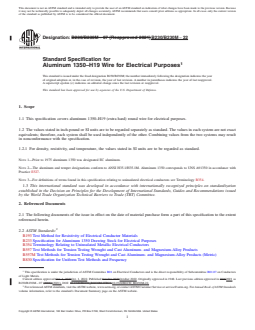
TABLE 1 Tensile Strength and Elongation Requirements
4.1.8 Special package marking, if required (see 16.4).
Elongation in 10 in., min
Tensile Strength, min ksi
(%)
5. Materials and Manufacture
Diameter, in.
Average for Individual Average for Individual
A
a Lot Tests a Lot Tests 5.1 The aluminum wire shall be made from drawing stock
meeting the requirements of Specification B233.
0.0105 to 0.0500 25.0 23.0 . . . . . .
0.0501 to 0.0600 29.0 27.0 1.4 1.2
0.0601 to 0.0700 28.5 27.0 1.5 1.3
6. Workmanship, Finish, and Appearance
0.0701 to 0.0800 28.0 26.5 1.6 1.4
0.0801 to 0.0900 27.5 26.0 1.6 1.5
6.1 The wire shall be free of imperfections not consistent
0.0901 to 0.1000 27.0 25.5 1.6 1.5
with good commercial practice.
0.1001 to 0.1100 26.0 24.5 1.6 1.5
0.1101 to 0.1200 25.5 24.0 1.7 1.6
0.1201 to 0.1400 25.0 23.5 1.8 1.7
7. Tensile Properties
0.1401 to 0.1500 24.5 23.5 1.9 1.8
0.1501 to 0.1800 24.0 23.0 2.0 1.9
7.1 Tensile Strength and Elongation—The wire shall con-
0.1801 to 0.2100 24.0 23.0 2.1 2.0
form to the tensile strength and elongation requirements set
0.2101 to 0.2600 23.5 22.5 2.3 2.2
forth in Table 1 or Table 2 (Explanatory Note 3).
A
For wire diameters within 0.0501 to 0.2600 in., the minimum average tensile
strength for a lot may be estimated from the following logarithmic equation for
7.2 When requested by the purchaser, tension tests shall be
process control purposes to meet the requirements of this specification: Tensile
made of specimens of wire containing joints made in the
strength,ksi=17.40–3.84×ln(diameterofwire,in.).Requirementsstatedinthe
table are to be used for all other purposes.
drawing stock or in the wire prior to final drawing. Such tests
shall indicate tensile strengths not less than 90 % of the values
for individual tests shown in Table 1 or Table 2.
TABLE 2 Tensile Strength and Elongation Requirements
7.3 When requested by the purchaser, tension tests of
Elongation in 250 mm, min
Tensile Strength, min MPa
specimens containing joints in the finished wire, or in the final
(%)
Diameter, mm
drawing, if permitted, shall be made. Such tests shall indicate
Average for Individual Average for Individual
A
a Lot Tests a Lot Tests
tensile strengths to be not less than 11.0 ksi [145 MPa] for
0.227 to 1.25 170.0 160.0 . . . . . .
electric-butt welded joints, and not less than 21.0 ksi [75 MPa]
1.26 to 1.50 200.0 185.0 1.4 1.2
for cold-pressure welded joints and electric-butt, cold-upset
1.51 to 1.75 195.0 185.0 1.5 1.3
welded joints.
1.76 to 2.00 195.0 185.0 1.6 1.4
2.01 to 2.25 190.0 180.0 1.6 1.5
2.26 to 2.50 185.0 175.0 1.6 1.5
8. Bending Properties
2.51 to 2.75 180.0 170.0 1.6 1.5
2.76 to 3.00 175.0 165.0 1.7 1.6
8.1 The wire shall be free of brittleness as evidenced by its
3.01 to 3.50 170.0 160.0 1.8 1.7
abilitytobewrappedatleastsixtimesarounditsowndiameter,
3.51 to 3.75 170.0 160.0 1.9 1.8
3.76 to 4.50 165.0 160.0 2.0 1.9 withorwithoutamandrel(see14.7).Theedge-to-edgespacing
4.51 to 5.25 165.0 160.0 2.1 2.0
of consecutive turns shall not exceed two times the diameter of
5.26 to 6.50 160.0 155.0 2.3 2.2
the wire. No fracture shall occur. Slight surface checks shall
A
Forwirediameterswithin1.26to6.50mmtheminimumaveragetensilestrength
not constitute cause for rejection.
for a lot may be estimated from the following logarithmic equation for process
control purposes to meet the requirements of this specification: Tensile Strength,
MPa = 205.88 – 27.14 × ln (diameter of wire, mm). Requirements stated in the
9. Resistivity
table are to be used for all other purposes.
9.1 The electrical resistivity shall not exceed the values
shown in Table 3 (Explanatory Note 4).
4.1.3 Special tension test, if required (see 7.2 and 7.3),
10. Density
4.1.4 Frequency of bending test (see 8.1 and 14.5),
4.1.5 Special jointing procedures, if permitted (see 12.2), 10.1 For the purpose of calculating linear density, cross
4.1.6 Place of inspection (see 15.2), section, and so forth, the density of aluminum 1350 shall be
3 3
4.1.7 Package size and type (see 16.1), and taken as 2705 kg/m [0.0975 lb/in. ] at 20 °C [68 °F].
A
TABLE 3 Electrical Resistivity Requirements at 20°C [68°F] and Equivalent Copper Resistivity
NOTE 1—The values in boldface are standard; other values are for information only.
Volume
Electrical Resistivity
Conductivity
Volume Mass
%IACS
2 2 2
Ω·mm /m µΩin. µΩ·cm Ω·cmil/ft Ω·lb/mile Ω·g/m
Average for lot 61.2 0.028172 1.1091 2.8172 16.946 434.81 0.076149
Individual tests 61.0 0.028265 1.1128 2.8265 17.002 436.23 0.076399
Copper equivalent 100.0 0.017241 0.67879 1.7241 10.371 875.20 0.15328
A 2
Theequivalentresistivityvaluesfor100%IACSconductivitywereeachcomputedfromthefundamentalIECvalue( ⁄58Ω·mm /m)usingconversionfactorseachaccurate
to at least seven significant figures. Corresponding values for aluminum conductivities were derived from these by multiplying by the reciprocal of the conductivity ratios
and, where applicable, also by the density ratios, both accurate to at least seven significant figures.
B230/B230M−22
11. Diameter 14.2 Finish—Make a visual surface finish inspection with
theunaidedeye(correctivelensesexcepted).Thesurfacefinish
11.1 The diameter of the wire shall be specified in inches to
shall meet the requirements of 6.1. Should any specimen be
the nearest 0.0001 in. or the diameter of the wire shall be
found unacceptable, the lot shall be considered to not meet
specified in millimetres to the nearest 0.001 mm for wires less
surface finish requirements.
than 1.000 mm in diameter, and to the nearest 0.01 mm for
wires1.00mmindiameterandlarger.Theactualwirediameter
14.3 Tensile strength and elongation may be determined
shall not vary from the specified diameter by more than the
simultaneously. Obtain the tensile strength, in accordance with
values shown in Table 4.
Test Methods B557 or B557M, by dividing the maximum load
resisted by the tensile specimen by the original cross-sectional
12. Joints
area of the specimen, with the tensile stress to be expressed in
12.1 No joints shall be made in the finished wire except as ksi [MPa]. Elongation is the percent increase in length of the
tensile test specimen as measured between gage marks origi-
provided in 12.2. Joints may be made in the drawing stock and
in the wire prior to final drawing and shall be in accordance nally spaced 10 in. [25
...
This document is not an ASTM standard and is intended only to provide the user of an ASTM standard an indication of what changes have been made to the previous version. Because
it may not be technically possible to adequately depict all changes accurately, ASTM recommends that users consult prior editions as appropriate. In all cases only the current version
of the standard as published by ASTM is to be considered the official document.
Designation: B230/B230M − 07 (Reapproved 2021) B230/B230M − 22
Standard Specification for
Aluminum 1350–H19 Wire for Electrical Purposes
This standard is issued under the fixed designation B230/B230M; the number immediately following the designation indicates the year
of original adoption or, in the case of revision, the year of last revision. A number in parentheses indicates the year of last reapproval.
A superscript epsilon (´) indicates an editorial change since the last revision or reapproval.
This standard has been approved for use by agencies of the U.S. Department of Defense.
1. Scope
1.1 This specification covers aluminum 1350–H19 (extra hard) round wire for electrical purposes.
1.2 The values stated in inch-pound or SI units are to be regarded separately as standard. The values in each system are not exact
equivalents; therefore, each system shall be used independently of the other. Combining values from the two systems may result
in nonconformance with the specification.
1.2.1 For density, resistivity, and temperature, the values stated in SI units are to be regarded as standard.
NOTE 1—Prior to 1975 aluminum 1350 was designated EC aluminum.
NOTE 2—The aluminum and temper designations conform to ANSI H35.1/H35.1M. Aluminum 1350 corresponds to UNS A91350 in accordance with
Practice E527.
NOTE 3—For definitions of terms found in this specification relating to uninsulated electrical conductors see Terminology B354.
1.3 This international standard was developed in accordance with internationally recognized principles on standardization
established in the Decision on Principles for the Development of International Standards, Guides and Recommendations issued
by the World Trade Organization Technical Barriers to Trade (TBT) Committee.
2. Referenced Documents
2.1 The following documents of the issue in effect on the date of material purchase form a part of this specification to the extent
referenced herein.
2.2 ASTM Standards:
B193 Test Method for Resistivity of Electrical Conductor Materials
B233 Specification for Aluminum 1350 Drawing Stock for Electrical Purposes
B354 Terminology Relating to Uninsulated Metallic Electrical Conductors
B557 Test Methods for Tension Testing Wrought and Cast Aluminum- and Magnesium-Alloy Products
B557M Test Methods for Tension Testing Wrought and Cast Aluminum- and Magnesium-Alloy Products (Metric)
B830 Specification for Uniform Test Methods and Frequency
This specification is under the jurisdiction of ASTM Committee B01 on Electrical Conductors and is the direct responsibility of Subcommittee B01.07 on Conductors
of Light Metals.
Current edition approved Oct. 1, 2021Oct. 1, 2022. Published October 2021October 2022. Originally approved in 1948. Last previous edition approved in 20162021 as
B230/B230M – 07 (2016).(2021). DOI: 10.1520/B0230_B0230M-07R21.10.1520/B0230_B0230M-22.
For referenced ASTM standards, visit the ASTM website, www.astm.org, or contact ASTM Customer Service at service@astm.org. For Annual Book of ASTM Standards
volume information, refer to the standard’s Document Summary page on the ASTM website.
Copyright © ASTM International, 100 Barr Harbor Drive, PO Box C700, West Conshohocken, PA 19428-2959. United States
B230/B230M − 22
E527 Practice for Numbering Metals and Alloys in the Unified Numbering System (UNS)
2.3 ANSI Standard:
ANSI H35.1 American National Standard for Alloy and Temper Designations Systems for Aluminum
ANSI H35.1M American National Standard for Alloy and Temper Systems for Aluminum [Metric]
2.4 NIST Document:
NBS Handbook 100 Copper Wire Tables
3. Terminology
3.1 Definitions of Terms Specific to This Standard:
3.1.1 lot—a group of production units, up to 30 000 lb [15 000 kg] of mass, of one type and size of wire, which was produced
during the same time period, under similar production conditions, and is presented for acceptance at the same time (Explanatory
Note 1 and Note 2).
3.1.2 production unit—a coil, reel, spool, or other package of wire that represents a single usable length.
3.1.3 sample—the production unit or units from which a test specimen or specimens has been removed, and which is considered
to have properties representative of the lot.
3.1.4 specimen—a length of wire removed for test purposes.
4. Ordering Information
4.1 Orders for material under this specification shall include the following information:
4.1.1 Quantity of each size,
4.1.2 Wire size (see 11.1 and Table 1 or Table 2),
4.1.3 Special tension test, if required (see 7.2 and 7.3),
4.1.4 Frequency of bending test (see 8.1 and 14.5),
4.1.5 Special jointing procedures, if permitted (see 12.2),
TABLE 1 Tensile Strength and Elongation Requirements
Elongation in 10 in., min
Tensile Strength, min ksi
(%)
Diameter, in.
Average for Individual Average for Individual
A
a Lot Tests a Lot Tests
0.0105 to 0.0500 25.0 23.0 . . . . . .
0.0501 to 0.0600 29.0 27.0 1.4 1.2
0.0601 to 0.0700 28.5 27.0 1.5 1.3
0.0701 to 0.0800 28.0 26.5 1.6 1.4
0.0801 to 0.0900 27.5 26.0 1.6 1.5
0.0901 to 0.1000 27.0 25.5 1.6 1.5
0.1001 to 0.1100 26.0 24.5 1.6 1.5
0.1101 to 0.1200 25.5 24.0 1.7 1.6
0.1201 to 0.1400 25.0 23.5 1.8 1.7
0.1401 to 0.1500 24.5 23.5 1.9 1.8
0.1501 to 0.1800 24.0 23.0 2.0 1.9
0.1801 to 0.2100 24.0 23.0 2.1 2.0
0.2101 to 0.2600 23.5 22.5 2.3 2.2
A
For wire diameters within 0.0501 to 0.2600 in., the minimum average tensile
strength for a lot may be estimated from the following logarithmic equation for
process control purposes to meet the requirements of this specification: Tensile
strength, ksi = 17.40 – 3.84 × ln (diameter of wire, in.). Requirements stated in the
table are to be used for all other purposes.
Available from American National Standards Institute (ANSI), 25 W. 43rd St., 4th Floor, New York, NY 10036, http://www.ansi.org.
Available from National Institute of Standards and Technology (NIST), 100 Bureau Dr., Stop 1070, Gaithersburg, MD 20899-1070, http://www.nist.gov.
B230/B230M − 22
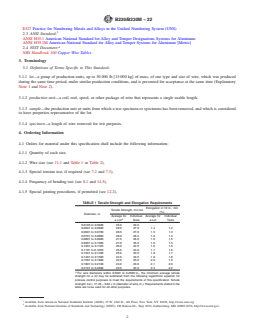
TABLE 2 Tensile Strength and Elongation Requirements
Elongation in 250 mm, min
Tensile Strength, min MPa
(%)
Diameter, mm
Average for Individual Average for Individual
A
a Lot Tests a Lot Tests
0.227 to 1.25 170.0 160.0 . . . . . .
1.26 to 1.50 200.0 185.0 1.4 1.2
1.51 to 1.75 195.0 185.0 1.5 1.3
1.76 to 2.00 195.0 185.0 1.6 1.4
2.01 to 2.25 190.0 180.0 1.6 1.5
2.26 to 2.50 185.0 175.0 1.6 1.5
2.51 to 2.75 180.0 170.0 1.6 1.5
2.76 to 3.00 175.0 165.0 1.7 1.6
3.01 to 3.50 170.0 160.0 1.8 1.7
3.51 to 3.75 170.0 160.0 1.9 1.8
3.76 to 4.50 165.0 160.0 2.0 1.9
4.51 to 5.25 165.0 160.0 2.1 2.0
5.26 to 6.50 160.0 155.0 2.3 2.2
A
For wire diameters within 1.26 to 6.50 mm the minimum average tensile strength
for a lot may be estimated from the following logarithmic equation for process
control purposes to meet the requirements of this specification: Tensile Strength,
MPa = 205.88 – 27.14 × ln (diameter of wire, mm). Requirements stated in the
table are to be used for all other purposes.
4.1.6 Place of inspection (see 15.2),
4.1.7 Package size and type (see 16.1), and
4.1.8 Special package marking, if required (see 16.4).
5. Materials and Manufacture
5.1 The aluminum wire shall be made from drawing stock meeting the requirements of Specification B233.
6. Workmanship, Finish, and Appearance
6.1 The wire shall be free of imperfections not consistent with good commercial practice.
7. Tensile Properties
7.1 Tensile Strength and Elongation—The wire shall conform to the tensile strength and elongation requirements set forth in Table
1 or Table 2 (Explanatory Note 3).
7.2 When requested by the purchaser, tension tests shall be made of specimens of wire containing joints made in the drawing stock
or in the wire prior to final drawing. Such tests shall indicate tensile strengths not less than 90 % of the values for individual tests
shown in Table 1 or Table 2.
7.3 When requested by the purchaser, tension tests of specimens containing joints in the finished wire, or in the final drawing, if
permitted, shall be made. Such tests shall indicate tensile strengths to be not less than 11.0 ksi [145 MPa] for electric-butt welded
joints, and not less than 21.0 ksi [75 MPa] for cold-pressure welded joints and electric-butt, cold-upset welded joints.
8. Bending Properties
8.1 The wire shall be free of brittleness as evidenced by its ability to be coiled or looped wrapped at least six times around its
own diameter, with or without a mandrel. mandrel (see 14.7). The edge-to-edge spacing of consecutive turns shall not exceed two
times the diameter of the wire. No fracture shall occur. Slight surface checks shall not constitute cause for rejection.
9. Resistivity
9.1 The electrical resistivity shall not exceed the values shown in Table 3 (Explanatory Note 4).
B230/B230M − 22
A
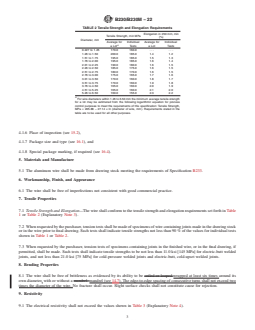
TABLE 3 Electrical Resistivity Requirements at 20 °C [68 °F] and Equivalent Copper Resistivity
NOTE 1—The values in boldface are standard; other values are for information only.
Volume
Electrical Resistivity
Conductivity
Volume Mass
%IACS
2 2 2
Ω·mm /m μΩin. μΩ·cm Ω·cmil/ft Ω·lb/mile ·g/m
Average for lot 61.2 0.028172 1.1091 2.8172 16.946 434.81 0.076149
Individual tests 61.0 0.028265 1.1128 2.8265 17.002 436.23 0.076399
Copper equivalent 100.0 0.017241 0.67879 1.7241 10.371 875.20 0.15328
A 2
The equivalent resistivity values for 100 % IACS conductivity were each computed from the fundamental IEC value ( ⁄58 Ω·mm /m) using conversion factors each accurate
to at least seven significant figures. Corresponding values for aluminum conductivities were derived from these by multiplying by the reciprocal of the conductivity ratios
and, where applicable, also by the density ratios, both accurate to at least seven significant figures.
10. Density
10.1 For the purpose of calculating linear density, cross section, and so forth, the density of aluminum 1350 shall be taken as 2705
3 3
kg/m [0.0975 lb/in. ] at 20 °C [68 °F].
11. Diameter
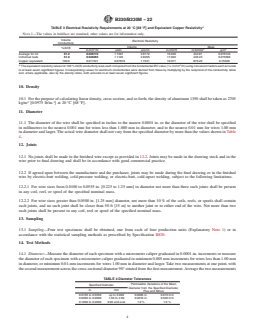
11.1 The diameter of the wire shall be specified in inches to the nearest 0.0001 in. or the diameter of the wire shall be specified
in millimetres to the nearest 0.001 mm for wires less than 1.000 mm in diameter, and to the nearest 0.01 mm for wires 1.00 mm
in diameter and larger. The actual wire diameter shall not vary from the specified diameter by more than the values shown in Table
4.
12. Joints
12.1 No joints shall be made in the finished wire except as provided in 12.2. Joints may be made in the drawing stock and in the
wire prior to final drawing and shall be in accordance with good commercial practice.
12.2 If agreed upon between the manufacturer and the purchaser, joints may be made during the final drawing or in the finished
wire by electric-butt welding, cold-pressure welding, or electric-butt, cold-upset welding, subject to the following limitations.
12.2.1 For wire sizes from 0.0100 to 0.0555 in. [0.225 to 1.25 mm] in diameter not more than three such joints shall be present
in any coil, reel, or spool of the specified nominal mass.
12.2.2 For wire sizes greater than 0.0500 in. [1.25 mm] diameter, not more than 10 % of the coils, reels, or spools shall contain
such joints, and no such joint shall be closer than 50 ft [15 m]
...