

ASTM D5895-20
(Test Method)Standard Test Methods for Evaluating Drying or Curing During Film Formation of Organic Coatings Using Mechanical Recorders
General Information
- Abstract
SIGNIFICANCE AND USE
5.1 The drying times of a coating are significant in determining when a freshly painted room, floor or stair may be put back in use or a coated article handled or packaged. Slow drying may result in dirt pick-up or, on an exterior surface, moisture may cause a nonuniform appearance.
5.2 These test methods are used to determine the various stages of drying or curing in the dry-film formation of organic coatings using mechanical devices for the purpose of comparing types of coatings or ingredient changes, or both. To evaluate the stages of drying in a quantitative manner, use of instrumentation under environmental controlled conditions is strongly recommended. These devices also offer a method of determining drying characteristics of coatings that can not be ascertained within the standard 8-h work day.
5.3 When evaluating drying characteristics of baking systems, the circular drying time devices offer a method to determine quantitatively drying times of coatings at room temperature and elevated conditions. Maximum temperatures would be limited by considerations such as the affect of temperature on the motor lubrication or structural components of the device.
5.4 The straight line drying time devices offer a method to determine quantitatively drying times of coatings tested simultaneously using one recorder.
5.5 This method is useful in comparing the behavior of coatings during drying of the same generic type. Determination of actual drying times should be conducted following procedures outlined in Test Method D1640 or ISO 9117-3.
SCOPE
1.1 These test methods describe the determination of several stages and the rate of dry-film formation of organic coatings using straight line and circular mechanical drying-time recording devices. The use of mechanical recorders is valuable in comparing the drying behavior of coatings of the same generic type, allowing that one coating may form a gel or resist tearing at a faster rate than another.
1.2 Drying time measured using the mechanical recorders may differ from those found using conventional methods, such as Test Method D1640 or ISO 9117-3 (formerly ISO 1517).
1.3 The values stated in SI are to be regarded as the standard. The values given in parentheses are provided for information only.
1.4 This standard does not purport to address all of the safety concerns, if any, associated with its use. It is the responsibility of the user of this standard to establish appropriate safety, health, and environmental practices and determine the applicability of regulatory limitations prior to use.
1.5 This international standard was developed in accordance with internationally recognized principles on standardization established in the Decision on Principles for the Development of International Standards, Guides and Recommendations issued by the World Trade Organization Technical Barriers to Trade (TBT) Committee.
- Status
- Published
- Publication Date
- 31-May-2020
- Technical Committee
- D01 - Paint and Related Coatings, Materials, and Applications
- Drafting Committee
- D01.23 - Physical Properties of Applied Paint Films
Buy Documents

ASTM D5895-20 - Standard Test Methods for Evaluating Drying or Curing During Film Formation of Organic Coatings Using Mechanical Recorders
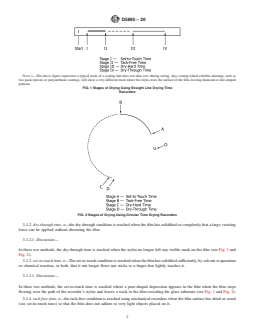
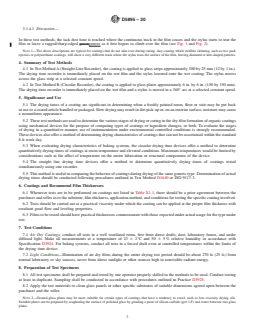
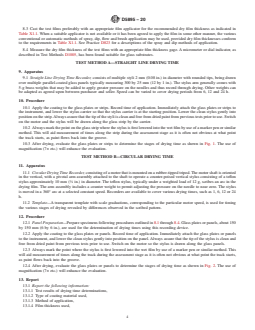
REDLINE ASTM D5895-20 - Standard Test Methods for Evaluating Drying or Curing During Film Formation of Organic Coatings Using Mechanical Recorders
Overview
ASTM D5895-20: Standard Test Methods for Evaluating Drying or Curing During Film Formation of Organic Coatings Using Mechanical Recorders establishes procedures for measuring the drying and curing stages of organic coatings using either straight line or circular mechanical drying-time recorders. This international standard, developed by ASTM, is essential for manufacturers, laboratories, and quality assurance professionals involved in testing the performance and usability of paints, varnishes, enamels, and related coating products.
Monitoring the drying times of coatings is critical for determining when freshly applied finishes can be safely handled, packaged, or put back into use. Mechanical recorders provide a quantitative and reproducible way to assess and compare the drying characteristics of coatings under controlled conditions.
Key Topics
Drying Stages and Definitions
- Set-to-touch time: The stage at which the coating surface solidifies and is no longer tacky to the touch.
- Tack-free time: Point at which the film surface dries sufficiently so that nothing adheres to it.
- Dry-hard time: The stage when the coating is sufficiently hardened that the film is not displaced by moderate pressure.
- Dry-through time: When the dried film can withstand twisting or significant pressure without changing appearance.
Testing Methods
- Straight Line Recorder: Used for testing multiple coating samples simultaneously, with styluses dragged at a constant speed across films applied to glass strips.
- Circular Recorder: Used for both room temperature and elevated conditions. Styluses move in a circular arc on larger panels, ideal for evaluating baking systems.
Environmental Control
- Conducting tests under specific temperature (23 ± 2°C) and humidity (50 ± 5%) conditions is recommended to ensure repeatable and accurate results.
- Lighting should be diffuse, avoiding direct sunlight to prevent non-visible radiant energy effects.
Reporting
- Complete documentation of testing methodology, conditions, film thickness, and the type of mechanical recorder used is required for reliable comparison of results.
Applications
- Product Development: Manufacturers use ASTM D5895-20 to compare the drying performance of new coating formulations or ingredient modifications, optimizing for faster curing and improved final properties.
- Quality Control: Application and performance standards rely on these test methods to ensure coatings meet manufacturer and end-user expectations for drying times.
- Surface Coatings Evaluation: Building contractors, architects, and maintenance staff depend on accurate drying time data to schedule use of freshly coated spaces, such as rooms, floors, or stairs, minimizing downtime.
- Comparative Testing: Laboratories and R&D facilities use this standard to benchmark different brands or types of paints, varnishes, and sealants for competitive analysis.
Related Standards
- ASTM D1640: Standard Test Methods for Drying, Curing, or Film Formation of Organic Coatings. Offers additional methods for determining coating drying times through conventional techniques.
- ISO 9117-3: Surface drying test for paints and coatings, providing an international benchmark for comparison.
- ASTM D823: Practices for Producing Films of Uniform Thickness of Paint, Coatings and Related Products.
- ASTM D3924: Specification for Standard Environment for Conditioning and Testing Paint, Varnish, Lacquer, and Related Materials.
- ASTM D1005: Test Method for Measurement of Dry-Film Thickness of Organic Coatings Using Micrometers.
Practical Value
ASTM D5895-20 delivers reliable, quantitative data on the rate and progression of drying or curing of organic coatings, offering several benefits:
- Ensures safe handling and rapid project turnaround by providing clear data on when coatings are ready for use.
- Minimizes risk of finish defects such as dirt pick-up or moisture-induced irregularities due to premature handling.
- Supports regulatory compliance with referenced industry and international standards.
- Facilitates clear communication between manufacturers, vendors, and clients regarding coating performance specifications.
By implementing ASTM D5895-20, organizations can standardize their coating evaluation processes, enhancing product quality and user satisfaction while reducing errors and potential rework associated with inadequately cured coatings.
Relations
- Effective Date
- 01-Jun-2020
- Effective Date
- 01-Jun-2020
- Effective Date
- 01-Dec-2017
- Effective Date
- 01-Apr-2016
- Effective Date
- 01-Nov-2012
- Effective Date
- 01-Jun-2011
- Refers
ASTM D3925-02(2010) - Standard Practice for Sampling Liquid Paints and Related Pigmented Coatings - Effective Date
- 01-Dec-2010
- Effective Date
- 01-Aug-2009
- Effective Date
- 01-Nov-2007
- Effective Date
- 01-Jun-2007
- Effective Date
- 01-Feb-2005
- Effective Date
- 01-Dec-2003
- Effective Date
- 10-Aug-2002
- Effective Date
- 01-Jan-2001
- Effective Date
- 01-Jan-2001
Buy Documents
ASTM D5895-20 - Standard Test Methods for Evaluating Drying or Curing During Film Formation of Organic Coatings Using Mechanical Recorders
REDLINE ASTM D5895-20 - Standard Test Methods for Evaluating Drying or Curing During Film Formation of Organic Coatings Using Mechanical Recorders
Get Certified
Connect with accredited certification bodies for this standard

DVS-ZERT GmbH
German welding certification society.
CARES (UK Certification Authority for Reinforcing Steels)
UK certification for reinforcing steels and construction.
EWF/IIW (European/International Welding Federation)
International welding personnel certification.
Sponsored listings
Frequently Asked Questions
ASTM D5895-20 is a standard published by ASTM International. Its full title is "Standard Test Methods for Evaluating Drying or Curing During Film Formation of Organic Coatings Using Mechanical Recorders". This standard covers: SIGNIFICANCE AND USE 5.1 The drying times of a coating are significant in determining when a freshly painted room, floor or stair may be put back in use or a coated article handled or packaged. Slow drying may result in dirt pick-up or, on an exterior surface, moisture may cause a nonuniform appearance. 5.2 These test methods are used to determine the various stages of drying or curing in the dry-film formation of organic coatings using mechanical devices for the purpose of comparing types of coatings or ingredient changes, or both. To evaluate the stages of drying in a quantitative manner, use of instrumentation under environmental controlled conditions is strongly recommended. These devices also offer a method of determining drying characteristics of coatings that can not be ascertained within the standard 8-h work day. 5.3 When evaluating drying characteristics of baking systems, the circular drying time devices offer a method to determine quantitatively drying times of coatings at room temperature and elevated conditions. Maximum temperatures would be limited by considerations such as the affect of temperature on the motor lubrication or structural components of the device. 5.4 The straight line drying time devices offer a method to determine quantitatively drying times of coatings tested simultaneously using one recorder. 5.5 This method is useful in comparing the behavior of coatings during drying of the same generic type. Determination of actual drying times should be conducted following procedures outlined in Test Method D1640 or ISO 9117-3. SCOPE 1.1 These test methods describe the determination of several stages and the rate of dry-film formation of organic coatings using straight line and circular mechanical drying-time recording devices. The use of mechanical recorders is valuable in comparing the drying behavior of coatings of the same generic type, allowing that one coating may form a gel or resist tearing at a faster rate than another. 1.2 Drying time measured using the mechanical recorders may differ from those found using conventional methods, such as Test Method D1640 or ISO 9117-3 (formerly ISO 1517). 1.3 The values stated in SI are to be regarded as the standard. The values given in parentheses are provided for information only. 1.4 This standard does not purport to address all of the safety concerns, if any, associated with its use. It is the responsibility of the user of this standard to establish appropriate safety, health, and environmental practices and determine the applicability of regulatory limitations prior to use. 1.5 This international standard was developed in accordance with internationally recognized principles on standardization established in the Decision on Principles for the Development of International Standards, Guides and Recommendations issued by the World Trade Organization Technical Barriers to Trade (TBT) Committee.
SIGNIFICANCE AND USE 5.1 The drying times of a coating are significant in determining when a freshly painted room, floor or stair may be put back in use or a coated article handled or packaged. Slow drying may result in dirt pick-up or, on an exterior surface, moisture may cause a nonuniform appearance. 5.2 These test methods are used to determine the various stages of drying or curing in the dry-film formation of organic coatings using mechanical devices for the purpose of comparing types of coatings or ingredient changes, or both. To evaluate the stages of drying in a quantitative manner, use of instrumentation under environmental controlled conditions is strongly recommended. These devices also offer a method of determining drying characteristics of coatings that can not be ascertained within the standard 8-h work day. 5.3 When evaluating drying characteristics of baking systems, the circular drying time devices offer a method to determine quantitatively drying times of coatings at room temperature and elevated conditions. Maximum temperatures would be limited by considerations such as the affect of temperature on the motor lubrication or structural components of the device. 5.4 The straight line drying time devices offer a method to determine quantitatively drying times of coatings tested simultaneously using one recorder. 5.5 This method is useful in comparing the behavior of coatings during drying of the same generic type. Determination of actual drying times should be conducted following procedures outlined in Test Method D1640 or ISO 9117-3. SCOPE 1.1 These test methods describe the determination of several stages and the rate of dry-film formation of organic coatings using straight line and circular mechanical drying-time recording devices. The use of mechanical recorders is valuable in comparing the drying behavior of coatings of the same generic type, allowing that one coating may form a gel or resist tearing at a faster rate than another. 1.2 Drying time measured using the mechanical recorders may differ from those found using conventional methods, such as Test Method D1640 or ISO 9117-3 (formerly ISO 1517). 1.3 The values stated in SI are to be regarded as the standard. The values given in parentheses are provided for information only. 1.4 This standard does not purport to address all of the safety concerns, if any, associated with its use. It is the responsibility of the user of this standard to establish appropriate safety, health, and environmental practices and determine the applicability of regulatory limitations prior to use. 1.5 This international standard was developed in accordance with internationally recognized principles on standardization established in the Decision on Principles for the Development of International Standards, Guides and Recommendations issued by the World Trade Organization Technical Barriers to Trade (TBT) Committee.
ASTM D5895-20 is classified under the following ICS (International Classification for Standards) categories: 25.220.60 - Organic coatings. The ICS classification helps identify the subject area and facilitates finding related standards.
ASTM D5895-20 has the following relationships with other standards: It is inter standard links to ASTM D5895-13, ASTM D1005-95(2020), ASTM D823-17, ASTM D3924-16, ASTM D823-95(2012), ASTM D3924-80(2011), ASTM D3925-02(2010), ASTM D1640-03(2009), ASTM D1005-95(2007), ASTM D823-95(2007), ASTM D3924-80(2005), ASTM D1640-03, ASTM D3925-02, ASTM D823-95, ASTM D1005-95. Understanding these relationships helps ensure you are using the most current and applicable version of the standard.
ASTM D5895-20 is available in PDF format for immediate download after purchase. The document can be added to your cart and obtained through the secure checkout process. Digital delivery ensures instant access to the complete standard document.
Standards Content (Sample)
This international standard was developed in accordance with internationally recognized principles on standardization established in the Decision on Principles for the
Development of International Standards, Guides and Recommendations issued by the World Trade Organization Technical Barriers to Trade (TBT) Committee.
Designation: D5895 − 20
Standard Test Methods for
Evaluating Drying or Curing During Film Formation of
Organic Coatings Using Mechanical Recorders
This standard is issued under the fixed designation D5895; the number immediately following the designation indicates the year of
original adoption or, in the case of revision, the year of last revision.Anumber in parentheses indicates the year of last reapproval.A
superscript epsilon (´) indicates an editorial change since the last revision or reapproval.
1. Scope ness of Organic Coatings Using Micrometers
D1640Test Methods for Drying, Curing, or Film Formation
1.1 Thesetestmethodsdescribethedeterminationofseveral
of Organic Coatings
stages and the rate of dry-film formation of organic coatings
D3924Specification for Standard Environment for Condi-
using straight line and circular mechanical drying-time record-
tioning and Testing Paint, Varnish, Lacquer, and Related
ing devices. The use of mechanical recorders is valuable in
Materials
comparing the drying behavior of coatings of the same generic
D3925Practice for Sampling Liquid Paints and Related
type,allowingthatonecoatingmayformagelorresisttearing
Pigmented Coatings
at a faster rate than another.
2.2 ISO Standard:
1.2 Drying time measured using the mechanical recorders
ISO 9117-3Drying tests—Surface—drying test using ballo-
may differ from those found using conventional methods, such 3
tini
as Test Method D1640 or ISO 9117-3 (formerly ISO 1517).
3. Terminology
1.3 The values stated in SI are to be regarded as the
standard. The values given in parentheses are provided for
3.1 Definitions of Terms Specific to This Standard:
information only.
3.1.1 dry-hard time, n—the dry-hard condition is reached
using mechanical recorders when the drying and curing, or
1.4 This standard does not purport to address all of the
both, reactions have proceeded sufficiently that the film is not
safety concerns, if any, associated with its use. It is the
displacednorisanynoticeablemarkleftbypinchingthepanels
responsibility of the user of this standard to establish appro-
between the thumb on the film and forefinger with a relatively
priate safety, health, and environmental practices and deter-
strong force.
mine the applicability of regulatory limitations prior to use.
3.1.1.1 Discussion—Inthesetestmethods,thedry-hardtime
1.5 This international standard was developed in accor-
is reached where the stylus has risen out of the film and rides
dance with internationally recognized principles on standard-
onthesurface,leavingonlyamarkwithoutdisruptingthebody
ization established in the Decision on Principles for the
of the film (see Fig. 1 and Fig. 2).
Development of International Standards, Guides and Recom-
mendations issued by the World Trade Organization Technical
3.1.2 dry-through time, n—the dry-through condition is
Barriers to Trade (TBT) Committee.
reachedwhenthefilmhassolidifiedsocompletelythatalarge,
twisting force can be applied without distorting the film.
2. Referenced Documents
3.1.2.1 Discussion—In these test methods, the dry-through
2.1 ASTM Standards: time is reached when the stylus no longer left any visible mark
on the film (see Fig. 1 and Fig. 2).
D823Practices for Producing Films of Uniform Thickness
of Paint, Coatings and Related Products on Test Panels
3.1.3 set-to-touch time, n—The set-to-touch condition is
D1005Test Method for Measurement of Dry-Film Thick-
reached when the film has solidified sufficiently, by solvent
evaporation or chemical reaction, or both, that it not longer
flows nor sticks to a finger that lightly touches it.
These test methods are under the jurisdiction of ASTM Committee D01 on
3.1.3.1 Discussion—In these test methods, the set-to-touch
Paint and Related Coatings, Materials, and Applications and are the direct
responsibility of Subcommittee D01.23 on Physical Properties of Applied Paint time is reached where a pear-shaped depression appears in the
Films.
filmwhenthefilmstopsflowingoverthepathoftherecorder’s
Current edition approved June 1, 2020. Published June 2020. Originally
stylus and leaves a track in the film revealing the glass
approved in 1996. Last previous edition approved in 2013 as D5895–13. DOI:
substrate (see Fig. 1 and Fig. 2).
10.1520/D5895-20.
For referenced ASTM standards, visit the ASTM website, www.astm.org, or
contact ASTM Customer Service at service@astm.org. For Annual Book of ASTM
Standards volume information, refer to the standard’s Document Summary page on Available fromAmerican National Standards Institute (ANSI), 25 W. 43rd St.,
the ASTM website. 4th Floor, New York, NY 10036, http://www.ansi.org.
Copyright © ASTM International, 100 Barr Harbor Drive, PO Box C700, West Conshohocken, PA 19428-2959. United States
D5895 − 20
4. Summary of Test Methods
4.1 In Test Method A (Straight Line Recorder), the coating
is applied to glass strips approximately 300 by 25 mm (12 by
1 in.). The drying time recorder is immediately placed on the
wetfilmandthestylusloweredontothewetcoating.Thestylus
moves across the glass strip at a selected constant speed.
4.2 In Test Method B (Circular Recorder), the coating is
appliedtoglassplatesapproximately6in.by6in.(150by150
mm). The drying time recorder is immediately placed on the
NOTE 1—The above figure represents a typical track of a coating that wet film and a stylus is moved in a 360° arc at a selected
does not skin over during curing. Any coating which exhibits skinning,
constant speed.
such as two pack epoxies or polyurethane coatings, will show a very
different track where the stylus tears the surface of the film, leaving
5. Significance and Use
diamond or kite-shaped patterns.
FIG. 1 Stages of Drying Using Straight Line Drying Time
5.1 The drying times of a coating are significant in deter-
Recorders
mining when a freshly painted room, floor or stair may be put
back in use or a coated article handled or packaged. Slow
drying may result in dirt pick-up or, on an exterior surface,
moisture may cause a nonuniform appearance.
5.2 These test methods are used to determine the various
stages of drying or curing in the dry-film formation of organic
coatings using mechanical devices for the purpose of compar-
ing types of coatings or ingredient changes, or both. To
evaluate the stages of drying in a quantitative manner, use of
instrumentation under environmental controlled conditions is
strongly recommended. These devices also offer a method of
determining drying characteristics of coatings that can not be
ascertained within the standard 8-h work day.
5.3 When evaluating drying characteristics of baking
systems, the circular drying time devices offer a method to
determine quantitatively drying times of coatings at room
temperature and elevated conditions. Maximum temperatures
would be limited by considerations such as the affect of
temperature on the motor lubrication or structural components
of the device.
5.4 The straight line drying time devices offer a method to
determine quantitatively drying times of coatings tested simul-
taneously using one recorder.
5.5 This method is useful in comparing the behavior of
FIG. 2 Stages of Drying Using Circular Time Drying Recorders
coatingsduringdryingofthesamegenerictype.Determination
of actual drying times should be conducted following proce-
dures outlined in Test Method D1640 or ISO 9117-3.
3.1.4 tack-free time, n—the tack-free condition is reached
6. Coatings and Recommend Film Thicknesses
using mechanical recorders when the film surface has dried or
cured(seeset-to-touchtime)sothatthefilmdoesnotadhereto
6.1 Whenever tests are to be performed on coatings not
very light objects placed on it.
listedinTableX1.1,thereshouldbeaprioragreementbetween
the purchaser and seller as to the substrate, film thickness,
3.1.4.1 Discussion—In these test methods, the tack-free
time is reached where the continuous track in the film ceases application method, and conditions for testing the specific
coating involved.
and the stylus starts to tear the film or leave a ragged/sharp-
edged groove as it first begins to climb over the film (see Fig.
6.2 Tests should be carried out at a practical viscosity under
1 and Fig. 2).
which the coating can be applied at the proper film thickness
with resultant good flow and leveling properties.
NOTE 1—The above descriptions are typical for coatings that do not
skinoverduringcuring.Anycoatingwhichexhibitsskinning,suchastwo
6.3 Films to be tested should have practical thicknesses
pack epoxies or polyurethane coatings, will show a very different track
commensurate with those expected under actual usage for the
where the stylus tears the surface of the film, leaving diamond or
kite-shaped patterns. type under test.
D5895 − 20
7. Test Conditi
...
This document is not an ASTM standard and is intended only to provide the user of an ASTM standard an indication of what changes have been made to the previous version. Because
it may not be technically possible to adequately depict all changes accurately, ASTM recommends that users consult prior editions as appropriate. In all cases only the current version
of the standard as published by ASTM is to be considered the official document.
Designation: D5895 − 13 D5895 − 20
Standard Test Methods for
Evaluating Drying or Curing During Film Formation of
Organic Coatings Using Mechanical Recorders
This standard is issued under the fixed designation D5895; the number immediately following the designation indicates the year of
original adoption or, in the case of revision, the year of last revision. A number in parentheses indicates the year of last reapproval. A
superscript epsilon (´) indicates an editorial change since the last revision or reapproval.
1. Scope
1.1 These test methods describe the determination of several stages and the rate of dry-film formation of organic coatings using
straight line and circular mechanical drying-time recording devices. The use of mechanical recorders is valuable in comparing the
drying behavior of coatings of the same generic type, allowing that one coating may form a gel or resist tearing at a faster rate
than another.
1.2 Drying time measured using the mechanical recorders may differ from those found using conventional methods, such as Test
Method D1640 or ISO 9117-3 (formerly ISO 1517).
1.3 The values stated in SI are to be regarded as the standard. The values given in parentheses are provided for information only.
1.4 This standard does not purport to address all of the safety concerns, if any, associated with its use. It is the responsibility
of the user of this standard to establish appropriate safety safety, health, and healthenvironmental practices and determine the
applicability of regulatory limitations prior to use.
1.5 This international standard was developed in accordance with internationally recognized principles on standardization
established in the Decision on Principles for the Development of International Standards, Guides and Recommendations issued
by the World Trade Organization Technical Barriers to Trade (TBT) Committee.
2. Referenced Documents
2.1 ASTM Standards:
D823 Practices for Producing Films of Uniform Thickness of Paint, Coatings and Related Products on Test Panels
D1005 Test Method for Measurement of Dry-Film Thickness of Organic Coatings Using Micrometers
D1640 Test Methods for Drying, Curing, or Film Formation of Organic Coatings
D3924 Specification for Standard Environment for Conditioning and Testing Paint, Varnish, Lacquer, and Related Materials
D3925 Practice for Sampling Liquid Paints and Related Pigmented Coatings
2.2 ISO Standard:
ISO 9117-3 Drying tests—Surface—drying test using ballotini
3. Terminology
3.1 Definitions of Terms Specific to This Standard:
3.1.1 dry-hard time, n—the dry-hard condition is reached using mechanical recorders when the drying and curing, or both,
reactions have proceeded sufficiently that the film is not displaced nor is any noticeable mark left by pinching the panels between
the thumb on the film and forefinger with a relatively strong force.
3.1.1.1 Discussion—
In these test methods, the dry-hard time is reached where the stylus has risen out of the film and rides on the surface, leaving only
a mark without disrupting the body of the film (see Fig. 1 and Fig. 2).
These test methods are under the jurisdiction of ASTM Committee D01 on Paint and Related Coatings, Materials, and Applications and are the direct responsibility of
Subcommittee D01.23 on Physical Properties of Applied Paint Films.
Current edition approved June 1, 2013June 1, 2020. Published June 2013June 2020. Originally approved in 1996. Last previous edition approved in 20082013 as
D5895 – 03 (2008).D5895 – 13. DOI: 10.1520/D5895-13.10.1520/D5895-20.
For referenced ASTM standards, visit the ASTM website, www.astm.org, or contact ASTM Customer Service at service@astm.org. For Annual Book of ASTM Standards
volume information, refer to the standard’s Document Summary page on the ASTM website.
Available from American National Standards Institute (ANSI), 25 W. 43rd St., 4th Floor, New York, NY 10036, http://www.ansi.org.
Copyright © ASTM International, 100 Barr Harbor Drive, PO Box C700, West Conshohocken, PA 19428-2959. United States
D5895 − 20
NOTE 1—The above figure represents a typical track of a coating that does not skin over during curing. Any coating which exhibits skinning, such as
two pack epoxies or polyurethane coatings, will show a very different track where the stylus tears the surface of the film, leaving diamond or kite-shaped
patterns.
FIG. 1 Stages of Drying Using Straight Line Drying Time
Recorders
FIG. 2 Stages of Drying Using Circular Time Drying Recorders
3.1.2 dry-through time, n—the dry-through condition is reached when the film has solidified so completely that a large, twisting
force can be applied without distorting the film.
3.1.2.1 Discussion—
In these test methods, the dry-through time is reached when the stylus no longer left any visible mark on the film (see Fig. 1 and
Fig. 2).
3.1.3 set-to-touch time, n—The set-to-touch condition is reached when the film has solidified sufficiently, by solvent evaporation
or chemical reaction, or both, that it not longer flows nor sticks to a finger that lightly touches it.
3.1.3.1 Discussion—
In these test methods, the set-to-touch time is reached where a pear-shaped depression appears in the film when the film stops
flowing over the path of the recorder’s stylus and leaves a track in the film revealing the glass substrate (see Fig. 1 and Fig. 2).
3.1.4 tack-free time, n—the tack-free condition is reached using mechanical recorders when the film surface has dried or cured
(see set-to-touch time) so that the film does not adhere to very light objects placed on it.
D5895 − 20
3.1.4.1 Discussion—
In these test methods, the tack-free time is reached where the continuous track in the film ceases and the stylus starts to tear the
film or leave a ragged/sharp-edged grovegroove as it first begins to climb over the film (see Fig. 1 and Fig. 2).
NOTE 1—The above descriptions are typical for coatings that do not skin over during curing. Any coating which exhibits skinning, such as two pack
epoxies or polyurethane coatings, will show a very different track where the stylus tears the surface of the film, leaving diamond or kite-shaped patterns.
4. Summary of Test Methods
4.1 In Test Method A (Straight Line Recorder), the coating is applied to glass strips approximately 300 by 25 mm (12 by 1 in.).
The drying time recorder is immediately placed on the wet film and the stylus lowered onto the wet coating. The stylus moves
across the glass strip at a selected constant speed.
4.2 In Test Method B (Circular Recorder), the coating is applied to glass plates approximately 6 in. by 6 in. (150 by 150 mm).
The drying time recorder is immediately placed on the wet film and a stylus is moved in a 360° arc at a selected constant speed.
5. Significance and Use
5.1 The drying times of a coating are significant in determining when a freshly painted room, floor or stair may be put back
in use or a coated article handled or packaged. Slow drying may result in dirt pick-up or, on an exterior surface, moisture may cause
a nonuniform appearance.
5.2 These test methods are used to determine the various stages of drying or curing in the dry-film formation of organic coatings
using mechanical devices for the purpose of comparing types of coatings or ingredient changes, or both. To evaluate the stages
of drying in a quantitative manner, use of instrumentation under environmental controlled conditions is strongly recommended.
These devices also offer a method of determining drying characteristics of coatings that can not be ascertained within the standard
8-h work day.
5.3 When evaluating drying characteristics of baking systems, the circular drying time devices offer a method to determine
quantitatively drying times of coatings at room temperature and elevated conditions. Maximum temperatures would be limited by
considerations such as the affect of temperature on the motor lubrication or structural components of the device.
5.4 The straight line drying time devices offer a method to determine quantitatively drying times of coatings tested
simultaneously using one recorder.
5.5 This method is useful in comparing the behavior of coatings during drying of the same generic type. Determination of actual
drying times should be conducted following procedures outlined in Test Method D1640 or ISO 9117-3.
6. Coatings and Recommend Film Thicknesses
6.1 Whenever tests are to be performed on coatings not listed in Table X1.1, there should be a prior agreement between the
purchaser and seller as to the substrate, film thickness, application method, and conditions for testing the specific coating involved.
6.2 Tests should be carried out at a practical viscosity under which the coating can be applied at the proper film thickness with
resultant good flow and leveling properties.
6.3 Films to be tested should have practical thicknesses commensurate with those expected under actual usage for the type under
test.
7. Test Conditions
7.1 Air
...