


Fibre Optic Interconnecting Devices Standards: Your Guide to Quality, Security, and Productivity
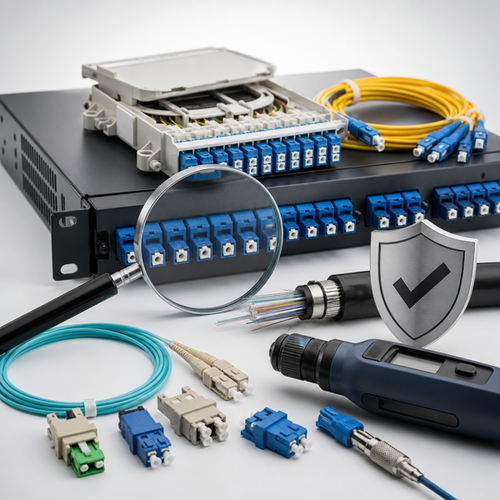
Fibre optic interconnecting devices form the backbone of today’s global telecommunications infrastructure. With the continuous push for higher speed, security, and scalability, the role of robust and standardized fibre optic components has never been more critical. Four updated international standards, each meticulously developed and revised, provide clear guidelines for testing, performance, and installation of fibre optic interconnecting devices and passive components. Adherence to these standards ensures businesses can deploy next-generation telecom solutions efficiently, securely, and at scale, maximizing both operational uptime and future growth potential.
Overview / Introduction
Telecommunications, now integral to almost every business and societal function, relies on fibre optic technology for reliable, high-speed data transfer. As demands for bandwidth, low latency, and network resilience escalate, the precision and quality of fibre optic interconnecting devices—such as connectors, patchcords, and attenuation modules—become mission critical. International standards in this domain, including EN IEC 61300-3-14:2026 and the EN IEC 61753 series, play a foundational role in:
- Defining quality and performance criteria
- Ensuring interoperability between systems
- Simplifying global sourcing and deployment
- Protecting networks against environmental and usage stresses
In this article, we break down four crucial standards, explaining each one’s significance, practical requirements, and why every business implementing new technologies—whether data centers, telecom carriers, or industrial automation providers—must prioritize compliance. You’ll also find guidance on implementation, compliance benefits, and resources to help you navigate the rapidly evolving landscape of fibre optic technology.
Detailed Standards Coverage
EN IEC 61300-3-14:2026 – Precision in VOA Attenuation Settings
Fibre optic interconnecting devices and passive components – Basic test and measurement procedures – Part 3-14: Examinations and measurements – Error and repeatability of the attenuation settings of a variable optical attenuator
This standard specifies procedures for measuring the error and repeatability in the attenuation settings of Variable Optical Attenuators (VOAs)—crucial devices that dynamically manage signal strength across both single-mode and multimode fibre systems. It addresses both manually and electrically controlled VOAs, reflecting their prevalence in modern, real-time managed networks.
What’s covered and why it matters: EN IEC 61300-3-14:2026 details how to set up, measure, and calculate attenuation errors, including provisions for the often-overlooked hysteresis characteristics in electrically controlled models. As new networks push the limits of optical power management, the ability to verify the precision and stability of VOA adjustments is a must for consistent, high-quality signal transmission.
Key requirements and features:
- Incorporation of IEC 61315 for fibre-optic power meter calibration as a normative reference
- Clarity on terms, definitions, and abbreviations (Clause 3)
- Updated tolerance definitions, allowing repeatability definition using 2σ (standard deviations)
- Guidance on launch conditions for multimode light sources
- Enhanced measurement uncertainty provisions and clearer reporting requirements
- Direct error corrections from past editions, ensuring confidence in measurement outputs
Target industries and implications: This standard is vital for fibre optic device manufacturers, telecom operators, network integrators, and test labs. By following its requirements, organizations can guarantee reliability in their VOA calibration and operation—dramatically reducing downtime, troubleshooting, and costly signal degradation in live environments.
Key highlights:
- Covers both manual and electrical VOA controls
- Assures high-precision attenuation settings and repeatability
- Emphasizes measurement uncertainty and accuracy for real-world deployments
Access the full standard:View EN IEC 61300-3-14:2026 on iTeh Standards
EN IEC 61753-021-03:2026 – Outdoor-Ready Single-Mode Connectors
Fibre optic interconnecting devices and passive components – Performance standard – Part 021-03: Single-mode fibre optic connectors terminated as pigtails and patchcords for category OP – Outdoor protected environment
This standard defines the minimum test and measurement requirements for single-mode fibre optic connectors (as pigtails or patchcords) intended for outdoor protected environments (Category OP). It ensures that connectors can withstand unpredictable outdoor conditions, like changes in temperature, humidity, and physical stresses, while consistently delivering low-loss, high-fidelity optical performance.
Scope and impact: EN IEC 61753-021-03:2026 updates environmental categories and test severities according to emerging operational realities, such as increased outdoor fibre deployment for 5G, FTTx, and sensor networks. It also introduces clearer definition and qualification for connectors with advanced fibre types (including B-657), and accommodates rectangular ferrule designs.
Key requirements:
- Up-to-date environmental test categories based on IEC 61753-1 guidance
- Definitions and sampling for pigtails, patchcords, and new fibre types
- Comprehensive performance and durability tests: vibration, tensile strength, temperature cycling, dust, flexing, and new side-pull proof tests
- Visual examination mandates for both initial and post-stress conditions, including special checks for reinforced cable sheath integrity
- All attenuation and return loss grades, allowing clear product performance grading
Who needs to comply: Manufacturers and suppliers of single-mode fibre connectors, system integrators in outdoor telecom and broadband deployments, and utilities handling networked field devices should adopt this standard to guarantee installation longevity and service quality.
Key highlights:
- Reliable qualification of connectors for hostile outdoor scenarios
- Updates for evolving fibre technologies (B-657) and connector designs
- Mandates robust documentation and visual inspection routines
Access the full standard:View EN IEC 61753-021-03:2026 on iTeh Standards
EN IEC 61753-022-02:2026 – Controlled Environment Multimode Connectors
Fibre optic interconnecting devices and passive components – Performance standard – Part 022-02: Multimode fibre optic connectors terminated as pigtails and patchcords for category C – Controlled environment
Targeting multimode fibre optic connectors used in controlled indoor environments (like data centers and communications rooms), this standard provides the baseline for ensuring signal integrity where environmental conditions are stable but performance demands are high.
Scope and practical details: EN IEC 61753-022-02:2026 requires connectors to meet detailed performance criteria for attenuation, mating durability, visual quality (endface geometry and defect inspection), and resistance to mechanical stresses and climate changes. It includes updated sample sizes, extended definitions, and explicit coverage of both cylindrical and rectangular ferrule variants.
Technical and usability features:
- Comprehensive environmental and mechanical test requirements
- Updated fibre naming and matching to current industry conventions (IEC 60793-2-10)
- Explicit inclusion of torsion, impact, and reduced retention test durations
- Fewer durability cycles required for modern high-performance connectors, simplifying testing and qualification
- Visual inspection routines for outer cable sheath movement (durability under stress)
Intended audience: Essential for designers, suppliers, and users of multimode connectors in commercial buildings, enterprise campuses, smart factories, and anywhere controlled environments demand flawless optical connectivity.
Key highlights:
- Detailed pass/fail criteria for all relevant fibre and connector types
- Expanded durability and geometry checks for evolving connector designs
- Optimized protocols for rapid, reproducible test results
Access the full standard:View EN IEC 61753-022-02:2026 on iTeh Standards
EN IEC 61753-022-13:2026 – Multimode Connectors for Extreme Outdoor Environments
Fibre optic interconnecting devices and passive components – Performance standard – Part 022-13: Multimode fibre optic connectors terminated as pigtails and patchcords for category OP+ HD – Extended outdoor protected environment with additional heat dissipation
This advanced standard sets the performance bar for multimode fibre optic connectors in the most challenging outdoor settings—those involving high temperatures, thermal cycling, humidity, and the need for added heat dissipation. The tests within EN IEC 61753-022-13:2026 ensure connectors can deliver robust data throughput and signal stability in environments where conventional products would fail.
Scope and benefits: Products passing the OP+ HD tests are automatically qualified for use in several less severe categories (OP+, OP, OPHD, C, and CHD), ensuring maximum flexibility for field deployment. The standard addresses both cable and connector durability, endface integrity, and environmental resilience—crucial for critical infrastructure and mission-critical data transmission in smart cities, industrial automation, and telecom base stations.
Key specifications and requirements:
- Full spectrum of mechanical, thermal, and environmental tests
- Durability and proof tests for connectors under dynamic and static loads
- All relevant attenuation measurements, visual exams, and geometry inspections
- Explicit validation of reinforced cables and sheath resilience under bending, flexing, and temperature extremes
Who implements this standard: Best suited for manufacturers of high-performance fibre optic connectors used in harsh outdoor environments, network engineers planning extreme temperature installations, and enterprises rolling out resilient edge and IoT infrastructure.
Key highlights:
- Guarantees performance even in extreme outdoor/high-heat scenarios
- Automatic compliance with multiple connector categories upon passing
- Detailed sample size and test reporting guidelines
Access the full standard:View EN IEC 61753-022-13:2026 on iTeh Standards
Industry Impact & Compliance
Why do these fibre optic interconnecting standards matter so much now?
- Quality Assurance: They establish clear pass/fail criteria and test methodologies, making quality transparent for buyers and end-users.
- Network Performance: Adherence ensures consistent data transmission with minimal attenuation, return loss, or signal instability.
- Scalability: Standardized components allow for seamless upgrades and cross-vendor interoperability—crucial as networks expand or migrate to new technologies.
- Security: Accurate measurement matrices and robust connector designs mitigate vulnerabilities like signal leakage or mechanical intermittency.
- Compliance Benefits: Being compliant opens up global supply chains, reduces the risk of costly network failures, and meets contractual demands in regulated industry verticals.
- Risks of Non-Compliance: The alternative—using non-standard, untested components—leads to higher failure rates, reputational risk, increased maintenance costs, and possible legal liability in critical deployments.
Implementation Guidance
Transitioning to these standards—or verifying compliance—is straightforward but requires diligence:
- Conduct a Gap Analysis: Review current components, supplier certifications, and installation specs versus standard requirements.
- Train Staff: Ensure that engineers, procurement, and installation teams understand updated test procedures and documentation protocols.
- Select Certified Suppliers: Source connectors, VOAs, and patchcords only from vendors with proven compliance and certification alignment.
- Implement Test Protocols: Regularly test both new installs and retrofits using the specified methods (power meter calibration, attenuation checks, durability tests).
- Document Everything: Maintain thorough records of test results, visual inspections, and corrective actions for audit and quality tracking.
- Stay Updated: Monitor new editions and technical revisions through platforms like iTeh Standards for ongoing compliance.
Best Practices
- Always check for updated environmental categories and fibre type naming
- Integrate visual inspections and geometry checks into standard maintenance routines
- Use automated and calibrated test equipment to minimize human error
Resources
- iTeh Standards – Telecommunications Collection
- Industry webinars, white papers, and vendor training modules
- Technical support from accredited test labs and fiber manufacturers
Conclusion / Next Steps
The world’s telecom networks hinge on reliable, future-proof fibre optic connections—and that reliability starts with internationally recognized standards. The new and revised EN IEC 61300 and EN IEC 61753 series provide organizations with the critical framework needed to deliver high-speed, robust, and secure fibre infrastructure at any scale. For businesses looking to implement the latest technologies or expand their networks, investing in compliance means higher productivity, reduced risk, and a clear pathway to digital transformation.
Key Takeaways:
- These four standards cover precision measurement, environmental performance, and durability for both indoor and outdoor fibre optic deployment.
- Compliance ensures better uptime, ROI, and network reputation.
- Implementation is manageable with the right mix of training, sourcing, and quality assurance workflows.
Ready to upgrade your network? Explore these fibre optic interconnecting device standards today at iTeh Standards, stay up-to-date on revisions, and make standards-based compliance the foundation of your telecom operations.
Categories
- Latest News
- New Arrivals
- Generalities
- Services and Management
- Natural Sciences
- Health Care
- Environment
- Metrology and Measurement
- Testing
- Mechanical Systems
- Fluid Systems
- Manufacturing
- Energy and Heat
- Electrical Engineering
- Electronics
- Telecommunications
- Information Technology
- Image Technology
- Precision Mechanics
- Road Vehicles
- Railway Engineering
- Shipbuilding
- Aircraft and Space
- Materials Handling
- Packaging
- Textile and Leather
- Clothing
- Agriculture
- Food technology
- Chemical Technology
- Mining and Minerals
- Petroleum
- Metallurgy
- Wood technology
- Glass and Ceramics
- Rubber and Plastics
- Paper Technology
- Paint Industries
- Construction
- Civil Engineering
- Military Engineering
- Entertainment