


Deck Equipment Standards: Improving Safety and Productivity in Modern Shipbuilding
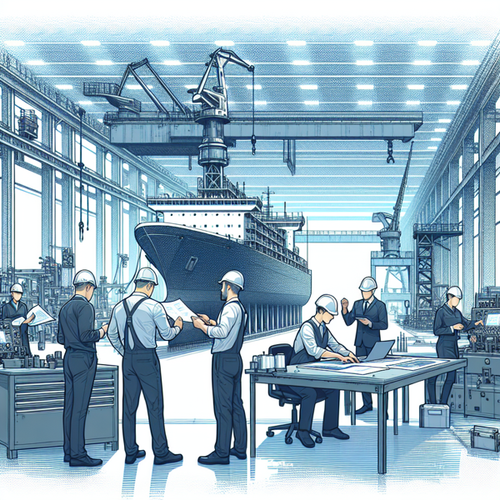
Today’s shipbuilding industry is driven by the relentless pursuit of safety, efficiency, and scalability. Standards for deck equipment and installations have become essential tools for businesses to meet regulatory requirements, enhance operational security, and improve overall productivity. This article delves into four key international standards for deck equipment and installations, providing an accessible, in-depth overview. From safety specifications for manually operated coupling devices to technical requirements for ladders and mooring lines—these standards are fundamental to modern maritime operations. Implementing them not only reduces risk and ensures global compliance, but also supports business growth by facilitating smoother, more secure ship operations.
Overview / Introduction
The shipbuilding and marine technology sector has long depended on rigorous standards to ensure that vessels are safe, reliable, and efficient. As ships grow in size and complexity—serving cargo transport, inland navigation, and offshore operations—the need for high-quality deck equipment becomes even more crucial. Deck installations like coupling devices, ladders, and mooring lines are integral to on-board and port safety, personnel access, and secure vessel-to-vessel connections.
This article covers four pivotal standards:
- EN ISO 6218:2005 – Safety requirements for manually operated coupling devices on inland navigation vessels
- EN ISO 9519:2023 – Specifications for rungs in dog-step ladders
- ISO 18821:2025 – Requirements for marine combined connecting mooring lines for tankers
- ISO 799-2:2021 – Guidelines for maintenance and inspection of pilot ladders
You’ll discover each standard’s scope, technical essentials, compliance requirements, and the practical impact on everyday operations in shipbuilding.
Detailed Standards Coverage
EN ISO 6218:2005 – Safety for Manually Operated Coupling Devices
Inland navigation vessels – Manually operated coupling devices for push tows – Safety requirements and main dimensions (ISO 6218:2005)
What this standard covers: EN ISO 6218:2005 sets out essential safety requirements and dimensional specifications for manually operated coupling devices—also known as securing devices—used for push tows and vessels coupled alongside using wire rope connections. These couplers are critical for assembling multiple inland navigation vessels into serviced convoys or tows.
Key requirements and specifications:
- General and strength-based safety requirements for operability and durability
- Main dimensions and design parameters (e.g., left-hand and right-hand models, drum capacity, rope drum diameter)
- Mechanical features like handwheels, arresting devices, pawls, ratchets, gears, foot brakes
- Materials of construction for improved reliability
- Instructions for use, testing, and manufacturer’s certification
- Rules for designation and marking for traceability
Target users:
- Shipyards building or refitting inland navigation vessels
- Vessel operators conforming to EU safety legislation
- Manufacturers of coupling and towing equipment for river and canal navigation
Practical implications: Compliance ensures compatibility between towboats and barges, minimizes accident risk during vessel assembly/disassembly, and helps meet legal safety obligations. Implementing this standard directly boosts operational security by reducing failure rates in push tow configurations.
Notable features:
- Defined drum, foundation, and fastener materials for longevity
- Operational guidelines supporting safe manual use
- Requirements for manufacturer’s operational instructions and maintenance
Key highlights:
- Standardized device dimensions improve interchangeability
- Safety features help prevent user injury and loss of control
- Certification process assures quality and operational readiness
Access the full standard:View EN ISO 6218:2005 on iTeh Standards
EN ISO 9519:2023 – Rungs for Dog-Step Ladders
Ships and marine technology – Single rungs and rungs for dog-step ladders (ISO 9519:2023)
What this standard covers: EN ISO 9519:2023 specifies types, construction, dimensions, technical and inspection requirements for single rungs and rungs used in dog-step ladders. These are fitted to the vertical panels or masts of ships but also applicable to other marine structures, serving as critical access solutions.
Key requirements and specifications:
- Classification of rung types and structure for universal application
- Precise dimensional criteria to ensure ergonomic safety and fit
- Materials and surface treatments for corrosion resistance
- Tolerance and appearance standards to improve quality control
- Inspection protocols and designation for consistency across product batches
Target users:
- Marine architects and shipbuilders
- Maintenance teams responsible for on-board access infrastructure
- Manufacturers of deck access solutions (ladder and rung assemblies)
Practical implications: Integrating rungs that meet this standard ensures uniform step distances and load-bearing capacity—contributing to safe crew movement, especially in adverse marine conditions. Adherence to the requirements minimizes hazards of slips, structural failures, or corrosion, enhancing overall onboard safety.
Notable features:
- Types A, B, and C rungs for flexible application
- Detailed usage diagrams to minimize installation errors
- Comprehensive inspection criteria to support ongoing vessel certification
Key highlights:
- Ergonomic and technical standardization of access steps
- Enhanced safety through material and structural guidelines
- Supports replacement and retrofitting with compatible equipment
Access the full standard:View EN ISO 9519:2023 on iTeh Standards
ISO 18821:2025 – Marine Combined Connecting Mooring Line
Ships and marine technology — Marine combined connecting mooring line
What this standard covers: ISO 18821:2025 provides comprehensive requirements for the design, manufacturing, classification, and testing of marine combined connecting mooring lines (combined lines), specifically for tankers. The standard covers all principal line types—T, M, and C—and addresses the combination of mooring rope, connector, and tail components.
Key requirements and specifications:
- Classification of line types: T (link without roller), M (link with roller), and C (cow hitch)
- Detailed structural diagrams for proper assembly
- Material standards for fibre and steel wire ropes, connection devices, and tails
- Design requirements: load and breaking strength, D/d ratios, temperature handling
- Testing protocols: proof and ultimate load, cyclic loading, dimensional consistency
Target users:
- Tanker ship designers and fleet managers
- Shipyards specializing in ocean-going vessels
- Mooring equipment suppliers and manufacturers
Practical implications: Using compliant mooring lines improves mooring security, reduces risk of failures during docking or adverse weather, and lowers maintenance costs with standardized inspection routines. The specification covers a wide range of materials, from high-modulus polyethylene to aramid fibres, allowing for optimal selection per application.
Notable features:
- Compatibility with both steel and synthetic ropes
- Clear marking and code system for traceability
- Standardized inspection and testing criteria for every line component
Key highlights:
- Significantly improved safety on mooring and berthing operations
- Detailed codes promote transparent supply chain and maintenance
- Break force and working load limits established for every component
Access the full standard:View ISO 18821:2025 on iTeh Standards
ISO 799-2:2021 – Maintenance, Use, and Inspection of Pilot Ladders
Ships and marine technology — Pilot ladders — Part 2: Maintenance, use, survey, and inspection
What this standard covers: ISO 799-2:2021 sets out requirements and recommended practices for the care, regular inspection, use, and maintenance of pilot ladders—critical safety devices for embarking and disembarking ships. The standard addresses both daily operations and formal survey requirements, supplementing regulatory guidance provided by IMO.
Key requirements and specifications:
- Pre-use and post-use ladder inspections by deck officers
- Periodic inspections by senior deck officers and authorized surveyors
- Manufacturer’s care and maintenance instructions as per ISO/IEC Guide 37
- Criteria for repairs, service life, and documentation
- Rigorous record-keeping for compliance with port state control
Target users:
- Ship operators and deck officers responsible for pilot transfer safety
- Maintenance teams and marine surveyors
- Pilots and marine safety authorities
Practical implications: Regular ladder inspection and structured maintenance drastically reduce the risk of falls or injuries. This standard ensures that only ladders in optimal condition are deployed, supporting the safety of pilots and boarding personnel while aligning with international safety regulations.
Notable features:
- Inspection checklist templates for operational consistency
- Guidance on acceptable repair and storage methods
- Recordkeeping and traceability to meet audit and regulatory demands
Key highlights:
- Directly addresses human safety in pilot transfer operations
- Prescribes usable life, limiting exposure to worn-out equipment
- Fosters a safety-first culture on all vessels
Access the full standard:View ISO 799-2:2021 on iTeh Standards
Industry Impact & Compliance
The deck equipment standards summarized above play a pivotal role in shaping the quality and safety baseline for ships worldwide. Compliance is not only a legal obligation for many operators; it is a straightforward way to protect people, assets, and reputation in a competitive industry:
- Regulatory Compliance: Both flag states and port authorities globally recognize and often mandate adherence to ISO and EN safety standards.
- Operational Benefits: Standardized deck equipment enhances workflow by reducing compatibility issues, enabling faster vessel assembly or disassembly, and providing peace of mind regarding equipment reliability.
- Safety and Risk Management: Proper deck installations are the single most effective safeguard against preventable accidents, equipment failures, and costly downtime.
- Business Scalability: Implementing recognized standards simplifies expansion into new markets, supports training, and streamlines global procurement of compliant components.
- Productivity Gains: Uniform equipment enables better crew training and cross-fleet standardization, minimizing human error during critical operations.
Failing to comply risks operational shutdowns, legal penalties, insurance disputes, and, most importantly, loss of life or severe injury.
Implementation Guidance
Common Approaches
- Gap Analysis: Review existing deck hardware and practices versus the current standards.
- Supplier Vetting: Source only from manufacturers certified under the relevant ISO or EN standards.
- Crew Training: Ensure all crew responsible for deck equipment understand both usage and maintenance standards.
- Inspection Scheduling: Implement regular audits and maintenance checks per the schedule in ISO 799-2:2021 and similar documents.
- Documentation: Maintain clear, accessible records for all deck equipment and inspections to satisfy both regulatory and insurance requirements.
Best Practices
- Integrate standard references into your purchasing manuals and onboarding protocols.
- Use manufacturers who supply full documentation, including compliance certificates and care instructions.
- Incorporate checklists (such as those in ISO 799-2:2021) in daily operational routines.
- Regularly audit for corrosion, wear, and proper installation using the criteria set out in each standard.
- Keep up with revisions by subscribing to standards platforms such as iTeh Standards.
Resources for Organizations
- Training modules and industry bulletins are often provided by class societies.
- Major industry workshops also provide updates on standards.
- Digital platforms like iTeh give access to the most recent versions and related documentation.
Conclusion / Next Steps
Deck equipment standards are more than bureaucratic checklists—they are operational tools that raise the bar on safety, productivity, and international compliance in shipbuilding. Whether you’re optimizing new builds, upgrading existing fleets, or training maritime personnel, aligning with EN ISO 6218:2005, EN ISO 9519:2023, ISO 18821:2025, and ISO 799-2:2021 is a strategic investment.
Key takeaways:
- Standards provide the framework for safer, more efficient ship operation
- Compliance enhances your organization’s reputation and lowers risk
- Improved equipment compatibility and durability result in tangible cost savings
We recommend organizations audit their deck equipment and maintenance schedules against these standards to ensure compliance, streamline operations, and stay ahead of regulatory demands. For full access to the standards—and to stay updated with revisions and related resources—visit iTeh Standards.
Categories
- Latest News
- New Arrivals
- Generalities
- Services and Management
- Natural Sciences
- Health Care
- Environment
- Metrology and Measurement
- Testing
- Mechanical Systems
- Fluid Systems
- Manufacturing
- Energy and Heat
- Electrical Engineering
- Electronics
- Telecommunications
- Information Technology
- Image Technology
- Precision Mechanics
- Road Vehicles
- Railway Engineering
- Shipbuilding
- Aircraft and Space
- Materials Handling
- Packaging
- Textile and Leather
- Clothing
- Agriculture
- Food technology
- Chemical Technology
- Mining and Minerals
- Petroleum
- Metallurgy
- Wood technology
- Glass and Ceramics
- Rubber and Plastics
- Paper Technology
- Paint Industries
- Construction
- Civil Engineering
- Military Engineering
- Entertainment