


Rubber and Plastics Industries Standards Summary - May 2025 (Part 1)
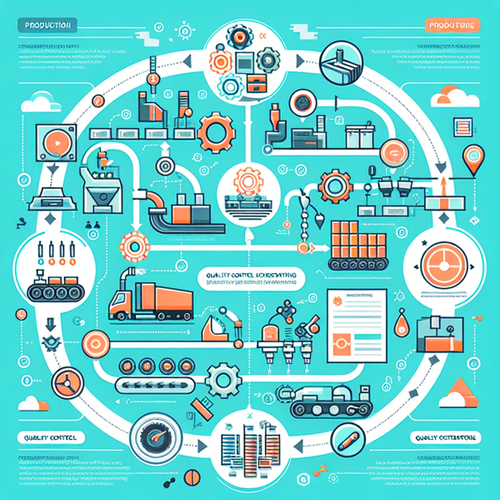
Looking back at May 2025, the Rubber and Plastics Industries sector experienced another month of active standardization, marked by the publication of five significant international standards. These documents addressed a mix of classic and emerging issues in plastics characterization—ranging from advanced calorimetric analysis to improved methods for evaluating material resilience, deformation, and behavior under practical processing and application conditions. For busy professionals, this comprehensive overview distills the main developments, contextualizes their significance, and highlights actionable compliance and implementation guidance.
Monthly Overview: May 2025
May 2025 stood out for its focus on polyscalar material properties and precise test methodologies—particularly in the way plastics respond to mechanical, thermal, and environmental influences. Historically, standardization activities in this sector have balanced routine testing methods with updates responding to new material technologies and regulatory shifts. The month’s publications reflected both ongoing refinements (such as updates to DSC techniques) and expanding industry expectations for reproducibility and comparative data. Notably, two standards addressed differential scanning calorimetry (DSC) but with distinct scopes: one for melting/crystallization (ISO 11357-3:2025) and another targeting reaction-curve analysis (EN ISO 11357-5:2025). Together with updates in measurement of mechanical resilience (scratch and impact tests) and volume-pressure-temperature (pvT) relations, May’s releases suggest a push for more granular, data-driven approaches in plastics R&D and quality management.
Standards Published This Month
ISO 11357-3:2025 - Plastics - Differential scanning calorimetry (DSC) - Part 3: Determination of temperature and enthalpy of melting and crystallization
Plastics - Differential Scanning Calorimetry (DSC) - Part 3: Determination of Temperature and Enthalpy of Melting and Crystallization
This standard specifies procedures for measuring the melting and crystallization properties of crystalline or partially crystalline plastics via conventional DSC, as originally outlined in ISO 11357-1. The method is critical in quantifying fundamental thermal properties—specifically, transition temperatures and the enthalpies associated with melting and crystallization events. Key for material scientists and quality labs, DSC results are widely used in product development, comparative material studies, and routine verification of supplied resins and compounds. The scope expressly excludes fast DSC as covered by ISO 23976, focusing on conventional equipment prevalent in industrial and academic labs.
- Applicable to production and research settings evaluating crystalline and semi-crystalline plastics.
- Prescribes apparatus and conditioning requirements, specimen calibration, and detailed reporting criteria.
- Supports material verification, batch comparison, and supplier qualification processes.
Key highlights:
- Defines standardized test and scan protocols for DSC-based thermal transitions.
- Offers detailed instructions on accurate enthalpy determination and calculation methods.
- Establishes a critical reference for polymer material compliance, key in regulated industries.
Access the full standard:View ISO 11357-3:2025 on iTeh Standards
ISO 19252:2025 - Plastics - Determination of scratch properties
Plastics - Determination of Scratch Properties
ISO 19252:2025 delivers a robust methodology for assessing the scratch resistance and surface damage behavior of plastics under carefully controlled conditions. Recognizing the critical role of surface durability in end-use applications, the standard enables both qualitative classification and quantitative comparison through concepts such as scratch mapping and critical load determination. It addresses a comprehensive material range—including thermoplastics and thermosets, both filled and unfilled—which makes the standard particularly relevant for automotive, consumer goods, electronics housings, and other sectors sensitive to cosmetic and functional surface defects. Updates in this edition clarify eligible material classes, specimen dimensions, and preferred test tip geometry.
- Tailored for laboratories and production environments needing repeatable scratch resistance data.
- Supports comparative assessments, R&D material optimization, and lifecycle performance validation.
- Includes guidance for specimen preparation, conditioning, and systematic interpretation of scratch modes (ploughing, wedge formation, cutting).
Key highlights:
- Introduces a mapping method to analyze scratch behavior under varying load/speed.
- Facilitates determination of critical normal load for material comparison.
- Classifies scratches by deformation type for nuanced reporting and failure analysis.
Access the full standard:View ISO 19252:2025 on iTeh Standards
ISO 7765-2:2025 - Plastics film and sheeting - Determination of impact resistance by the free-falling dart method - Part 2: Instrumented puncture test
Plastics Film and Sheeting – Determination of Impact Resistance by the Free-Falling Dart Method – Part 2: Instrumented Puncture Test
This standard outlines procedures for evaluating the puncture impact properties of plastic films and thin sheeting using instrumented equipment. The method is particularly valuable when force-deflection or force-time curves are needed for product characterization—a scenario increasingly common in flexible packaging, medical films, and specialty laminates. Compared to the classical 'staircase method' (ISO 7765-1), this approach accommodates scenarios where material is scarce, or greater detail is needed to distinguish between brittle and tough failure modes.
- Applicable to films up to 1 mm thick; suitable for quality labs and R&D groups.
- Provides the means to capture and compare impact-penetration forces and energy absorption capacities.
- Supports temperature and humidity variation to assess transition regions between failure modes.
Key highlights:
- Enables detailed measurement of puncture impact via instrumented testing.
- Useful for small-sample assessments and products sensitive to impact performance.
- Expands on classical methods, offering more data granularity for comparative analysis.
Access the full standard:View ISO 7765-2:2025 on iTeh Standards
EN ISO 11357-5:2025 - Plastics - Differential scanning calorimetry (DSC) - Part 5: Determination of characteristic reaction-curve temperatures and times, enthalpy of reaction and degree of conversion (ISO 11357-5:2025)
Plastics - Differential Scanning Calorimetry (DSC) - Part 5: Determination of Characteristic Reaction-Curve Temperatures and Times, Enthalpy of Reaction and Degree of Conversion
This European adoption aligns ISO and CEN specifications for analyzing polymerization and crosslinking reactions in plastics using DSC. EN ISO 11357-5:2025 standardizes the measurement of reaction temperatures, characteristic times, enthalpies, and conversion degrees—a set of data vital for process development, catalyst evaluation, and quality certification, especially in complex or multi-component polymer systems. The standard encompasses both temperature-scanning and isothermal methods, covering materials ranging from monomers to prepolymers and finished polymers in various physical states. The latest edition narrows its scope to conventional DSC (excluding fast DSC) and refines guidance for overlapping decomposition reactions—offering new references for specialists needing comprehensive reaction analysis.
- Highly relevant to researchers, production chemists, and quality managers controlling cure behavior.
- Useful for thermoset processing, advanced composites, and resins with tailored crosslinking kinetics.
- Emphasizes detailed procedures for sample preparation, calibration, and precision in reporting.
Key highlights:
- Allows measurement of degree of conversion in addition to enthalpy and reaction temperature.
- Harmonizes European and international best practices, aiding cross-border compliance.
- Incorporates recent technical updates for improved measurement reliability.
Access the full standard:View EN ISO 11357-5:2025 on iTeh Standards
ISO 17744:2025 - Plastics - Determination of specific volume as a function of temperature and pressure, pvT diagram - Piston apparatus method
Plastics – Determination of Specific Volume as a Function of Temperature and Pressure, pvT Diagram – Piston Apparatus Method
ISO 17744:2025 details procedures for mapping the specific volume of plastics as a function of temperature and pressure—delivering foundational thermal-physical property data critical for simulation, design, and process optimization. Using a piston-equipped cell, the standard provides for both isobaric (constant pressure) and isothermal (constant temperature) measurement modes, accommodating needs in both solid and molten polymer states. This technique yields pvT diagrams integral to injection molding simulation, shrinkage prediction, and the evaluation of stress areas prone to shrinkage or warping. The 2025 revision introduces provisions for amorphous sample measurement, new balance and calibration criteria, and improved guidelines for data presentation.
- Directed at labs generating data for mold design, processing simulation, and thermodynamic modeling.
- Provides direct measurement capability for volumetric compressibility, thermal expansion, and transition mapping.
- Notes complementary standards, such as ISO 17282, for broader application in processing design.
Key highlights:
- Updates for improved accuracy and usability in density/specific volume measurement.
- Useful for both academic researchers and processing/quality engineers.
- Recognizes limitations in direct application to injection-molding simulation but essential for supplementary data.
Access the full standard:View ISO 17744:2025 on iTeh Standards
Common Themes and Industry Trends
May 2025’s standards activity reflected several notable patterns:
- Granularity and Depth in Measurement: With the adoption of advanced calorimetry and puncture/impact analyses, standards are enabling more nuanced, comparative data generation—essential for characterizing increasingly complex or demanding plastic materials.
- DSC Method Harmonization: The simultaneous release of two advanced DSC standards demonstrates heightened industry focus on thermal property insights—not just for verification, but for R&D and manufacturing troubleshooting.
- Surface and Structural Resilience: Emerging scrutiny of surface properties (scratch, impact) underscores market demand for long-lasting, aesthetically superior plastics in consumer and industrial uses.
- International Alignment: The appearance of EN ISO standards ensures greater consistency for global supply chains and multi-jurisdictional compliance efforts, smoothing procurement and audit processes.
- Process Simulation and Data Foundation: pvT data and advanced test methodologies are increasingly expected as part of digital process simulation and Industry 4.0-driven design.
Compliance and Implementation Considerations
For organizations and professionals impacted by these May 2025 standards, effective compliance and timely implementation are critical:
- Assess Applicability: Determine which standards are directly relevant to your product lines, R&D programs, or compliance requirements (e.g., DSC for QA, scratch/impact tests for field performance guarantees).
- Update Laboratory Protocols: Replace outdated procedures, especially for DSC and scratch testing, with those prescribed in the 2025 editions to ensure consistency and audit defensibility.
- Prioritize Training: Provide laboratory and production staff with updated training on instrument setup, specimen conditioning, and data reporting for new measurement protocols.
- Review Supplier Specifications: Confirm that upstream and downstream partners are referencing the latest standards, particularly where test methods affect material certification or acceptance criteria.
- Plan Timeline for Integration: Check for transition deadlines in regulatory or customer documentation. Allow time for instrument recalibration, method validation, and process control updates.
- Leverage iTeh Resources: Use the iTeh Standards platform for easy access to full documents, amendments, and implementation guides.
Conclusion: Key Takeaways from May 2025
May 2025’s standardization activity in the Rubber and Plastics Industries represented an important step forward in harmonizing laboratory practices and expanding the analytical toolkit available to industry professionals. The updates in DSC methodologies, the sharper focus on mechanical and physical property testing, and the enhanced precision of volume-pressure-temperature analysis collectively provide a firmer foundation for compliance, quality assurance, and R&D.
For engineers, quality managers, and researchers, staying abreast of these standards is not just a matter of compliance, but a prerequisite for ensuring robust material selection, improved product performance, and effective troubleshooting throughout the supply chain. iTeh Standards offers immediate access and authoritative resources for each publication discussed.
To remain competitive and audit-ready, organizations are encouraged to:
- Review laboratory protocols and ensure alignment with the latest standards.
- Engage with industry peers on best practices for test implementation.
- Explore the details of each standard using the provided links on iTeh Standards.
Staying current with evolving standards is the key to unlocking innovation, certifiability, and product quality in the fast-moving world of rubber and plastics technology.
Categories
- Latest News
- New Arrivals
- Generalities
- Services and Management
- Natural Sciences
- Health Care
- Environment
- Metrology and Measurement
- Testing
- Mechanical Systems
- Fluid Systems
- Manufacturing
- Energy and Heat
- Electrical Engineering
- Electronics
- Telecommunications
- Information Technology
- Image Technology
- Precision Mechanics
- Road Vehicles
- Railway Engineering
- Shipbuilding
- Aircraft and Space
- Materials Handling
- Packaging
- Textile and Leather
- Clothing
- Agriculture
- Food technology
- Chemical Technology
- Mining and Minerals
- Petroleum
- Metallurgy
- Wood technology
- Glass and Ceramics
- Rubber and Plastics
- Paper Technology
- Paint Industries
- Construction
- Civil Engineering
- Military Engineering
- Entertainment