


Key Electrical Safety Standards for Road Vehicles: Relays and Overcurrent Protection Explained
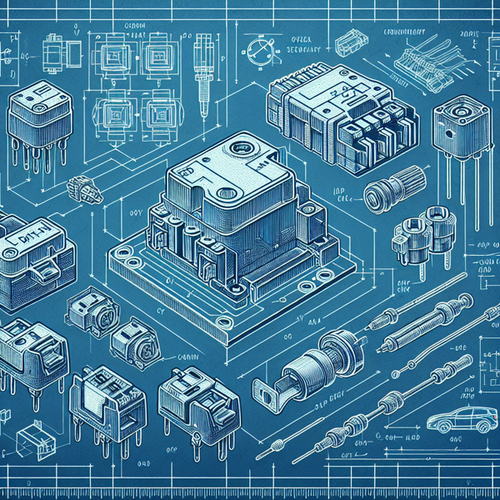
Road vehicle electrical systems are becoming more complex, interconnected, and essential for vehicle reliability and safety. To ensure performance, prevent hazards, and meet compliance requirements, businesses across the automotive supply chain must integrate rigorous, up-to-date standards. This article explores two key international standards—EN IEC 63522-29:2025 for electrical relays and SIST HD 60364-4-43:2023/oprAA:2025 for overcurrent protection—which collectively play instrumental roles in governing everything from component-level reliability to overarching electrical safety in modern vehicles.
These standards are indispensable for businesses striving to keep pace with technological change, regulatory expectations, and growing customer demand for safety, productivity, and scalable operations.
Overview / Introduction
The global automotive and road vehicle sector faces profound changes, driven by electrification, digitization, and the need for advanced safety. In this environment, electrical systems must not only power increasingly sophisticated functions but also guarantee reliability under all conditions—from bumpy transport and storage to decades of daily use.
Standards serve as technical roadmaps, ensuring interoperability, safety, and confidence in critical subsystems. This article offers:
- A broad introduction to two essential standards in road vehicle electrical installations: one governing \electrical relay capacitance\ and the other \overcurrent protection\ for low-voltage systems.
- Detailed explanations of requirements, best practices, and compliance contexts.
- Practical insight into how organizations can leverage these standards to boost efficiency, manage risks, and build competitive advantage.
Whether you design, manufacture, install, or maintain automotive systems, understanding and applying these international standards is a must for operational excellence and business growth.
Detailed Standards Coverage
EN IEC 63522-29:2025 – Electrical Relays: Tests and Measurements – Capacitance
Electrical relays - Tests and measurements - Part 29: Capacitance
This standard provides a framework for testing the capacitance characteristics of electrical relays under conditions that reflect real-world use, including transportation, storage, and operation in vehicles. Electrical relays, fundamental components in automotive systems, must maintain reliable switching and isolation without unintended capacitive coupling that could lead to performance issues or safety hazards.
EN IEC 63522-29:2025 specifies:
- The scope of tests for relay capacitance, ensuring relays do not form unwanted capacitive paths that could disrupt signal integrity or cause faults.
- Conditions and severities to which relays should be subjected for realistic assessment.
- Exactly how to measure and report relay capacitance, aligning results with international expectations for data driven decision making and quality assurance.
Key requirements include:
- Tests simulating expected transportation, storage, and operational conditions
- Measurement methods for all critical capacitance paths within a relay
- Criteria for acceptable maximum capacitance levels to meet functional and safety objectives
Who should comply? Automotive relay manufacturers, Tier 1 suppliers, OEM integrators, testing houses, and quality assurance teams—anyone responsible for specifying, purchasing, or verifying relays in road vehicle applications.
Implementation considerations:
- Aligning designs with maximum allowable capacitance for specific vehicle modules
- Ensuring testing protocols match those established in the standard, especially during qualification and incoming inspection
- Using standardized test reports for regulatory and supply-chain documentation
Key highlights:
- Directly addresses reliability by limiting stray or parasitic capacitance
- Harmonized with global quality and safety expectations for automotive electronics
- Supports scaling up production with consistent, internationally recognized test regimes
Access the full standard:View EN IEC 63522-29:2025 on iTeh Standards
SIST HD 60364-4-43:2023/oprAA:2025 – Low-voltage Electrical Installations: Protection for Safety—Protection Against Overcurrent
Low-voltage electrical installations - Part 4-43: Protection for safety - Protection against overcurrent
This comprehensive standard is essential for protecting vehicle occupants and electrical infrastructure from the dangers of excessive current—whether due to faults, short circuits, or overloads—in low-voltage automotive installations. Overcurrent, left unabated, can cause fires, damage to critical systems, and even life-threatening failures.
The 2023/oprAA:2025 edition expands and clarifies:
- Requirements for protecting phase, neutral, PEN, PEM, and PEL conductors from overcurrent.
- Preferred and alternative methods for automatic disconnection of supply to limit the duration and impact of faults.
- New annexes and clauses that guide users in the positioning and selection of protective devices.
- Adjusted requirements for environments with specific risks (fire, explosion), acknowledging real-world installation challenges.
Major updates from previous editions:
- Restructured sections for easier navigation and alignment with practical installations
- Annexes covering non-preferred but permitted methods under restricted conditions
- Specific requirements for protecting neutral and mid-point conductors, with and without harmonics
Who needs compliance? Any organization designing or managing low-voltage electrical installations in road vehicles, electric vehicle infrastructure, buses, specialty vehicles, and associated repair or retrofit operations.
Practical implications:
- Correct classification, placement, and configuration of overcurrent-detecting devices
- Up-to-date approaches for safely disconnecting faulty circuits, improving occupant and vehicle protection
- Simplified audits and documentation through harmonized terminology and clarified requirements
Key highlights:
- Mandates automatic disconnection as the primary overcurrent protection
- Offers dedicated annexes for alternative protection strategies under specific conditions
- Establishes best practices for conductor protection, reflecting latest technical advances
Access the full standard:View SIST HD 60364-4-43:2023/oprAA:2025 on iTeh Standards
Industry Impact & Compliance
Adopting these standards is more than a regulatory checkbox—it’s a strategic business decision. Implementation:
- Enhances safety for passengers, operators, and maintenance staff, directly reducing incidents and liability risk.
- Improves system reliability, contributing to lower warranty costs and stronger brand reputation.
- Drives productivity by simplifying design review and validation, enabling rapid scaling from prototype to mass production.
- Facilitates global market access by harmonizing with leading international requirements, opening doors to new customers and suppliers.
Failure to observe such standards can result in compliance failures, costly recalls, increased incident rates, and even legal penalties—putting both people and profits at risk.
For automotive suppliers, OEMs, fleet operators, and electrical contractors, these standards underpin core processes such as standard operating procedures, supplier qualification, and customer assurance programs.
Implementation Guidance
Organizations aiming for best-in-class road vehicle electrical systems—and the many security, scaling, and productivity advantages offered by international standardization—should approach implementation with:
1. Gap analysis:
- Benchmark current practices and specifications against standard requirements.
- Identify areas for immediate improvement, especially for new projects or high-risk product lines.
2. Staff training and awareness:
- Ensure engineering, production, and maintenance teams understand what’s required, including testing procedures and reporting formats.
- Use cross-functional workshops or e-learning modules to clarify responsibilities.
3. Standardized test and documentation protocols:
- Update design guides, sourcing checklists, and verification plans to align with the standards’ latest clauses and annexes.
- Automate data capture for relay capacitance tests or overcurrent protection validation.
4. Continuous improvement:
- Regularly review updates to standards and revise internal controls accordingly.
- Engage with certification bodies and industry technical committees for early warning of changes.
Best practices for scaling up:
- Adopt a system-level view: integrate standards at both component and system design phases.
- Leverage standardized test data and compliance marks for faster market approvals.
- Use harmonized documentation to streamline supplier qualification and customer assurance.
Resources:
- Access the iTeh Standards portal for the latest standards content, updates, and expert guidance.
- Join professional organizations and industry working groups to stay ahead of evolving requirements.
Conclusion / Next Steps
Staying competitive and safe in the road vehicles sector increasingly depends on proactive adoption of rigorous, internationally recognized standards. EN IEC 63522-29:2025 and SIST HD 60364-4-43:2023/oprAA:2025 empower organizations to:
- Deliver safer, higher-quality electrical systems
- Increase productivity and scalability
- Minimize compliance risk and ensure regulatory readiness
For manufacturers, installers, and managers, now is the time to embed these standards into product development, procurement, and operational routines. Explore the full standards, provide training, and make compliance a foundation for innovation and market growth. Stay updated with the latest changes and leverage standards to future-proof your organization’s product lines.
Explore the referenced standards in-depth or consult with iTeh Standards for tailored compliance support.
Categories
- Latest News
- New Arrivals
- Generalities
- Services and Management
- Natural Sciences
- Health Care
- Environment
- Metrology and Measurement
- Testing
- Mechanical Systems
- Fluid Systems
- Manufacturing
- Energy and Heat
- Electrical Engineering
- Electronics
- Telecommunications
- Information Technology
- Image Technology
- Precision Mechanics
- Road Vehicles
- Railway Engineering
- Shipbuilding
- Aircraft and Space
- Materials Handling
- Packaging
- Textile and Leather
- Clothing
- Agriculture
- Food technology
- Chemical Technology
- Mining and Minerals
- Petroleum
- Metallurgy
- Wood technology
- Glass and Ceramics
- Rubber and Plastics
- Paper Technology
- Paint Industries
- Construction
- Civil Engineering
- Military Engineering
- Entertainment