


Road Vehicles Electrical and Electronic Equipment: Key Standards for Reliability and Safety
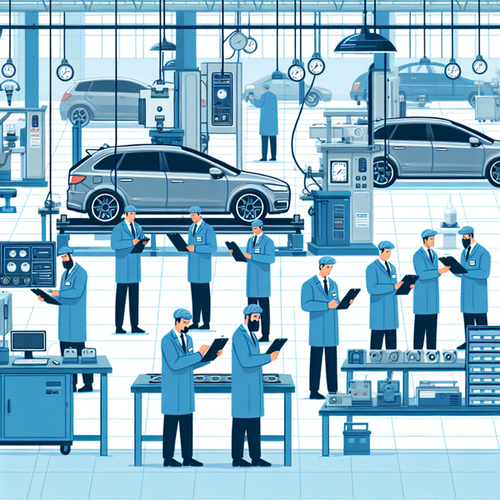
Ensuring the reliability and safety of electrical and electronic equipment in road vehicles is no longer an option—it's a necessity for modern automotive businesses intent on thriving in competitive, technology-driven markets. As the demand for advanced vehicles grows, adherence to key international standards is fundamental, enhancing productivity, security, and scalability. This guide explores four crucial standards that provide structured frameworks for testing, components selection, and system requirements, offering every automotive stakeholder—from manufacturers to suppliers—clear pathways towards operational excellence and peace of mind.
Overview / Introduction
The automotive industry today is marked by rapid innovation in electrical and electronic systems, from autonomous driving features to sophisticated infotainment networks. Vehicles now operate in complex environments, exposing components to mechanical stress, chemical exposure, and demanding electrical performance expectations.
Adopting international standards, such as those set by ISO, enables organizations to systematically address these challenges. These standards define environmental conditions and robust testing methods, ensuring that components can withstand real-world stresses and perform reliably over their service life. This article will familiarize you with:
- The core purpose and coverage of four landmark standards
- The practical requirements and specifications for each
- Who needs to comply and why compliance pays off
- Steps for implementing these standards in your processes
Whether you're a technical expert or a business leader, understanding and applying these standards is pivotal to successful product design, quality assurance, safety, and scaling your automotive business globally.
Detailed Standards Coverage
ISO 16750-3:2023 - Mechanical Loads on Road Vehicle Electrical and Electronic Equipment
Road vehicles — Environmental conditions and testing for electrical and electronic equipment — Part 3: Mechanical loads
Vehicles operate in tough mechanical environments, demanding that every electrical or electronic component—from control units to sensors—be rigorously tested for resistance to vibration, shock, and impact. ISO 16750-3:2023 establishes a harmonized approach for simulating these mechanical stresses. The standard is applicable to all electrical and electronic systems and components in vehicles, including those with electric propulsion and up to voltage class B.
Scope and Key Requirements:
- Specifies environmental mechanical loads and outlines detailed testing regimes for real-world conditions.
- Distinguishes between small/lightweight and large/heavy components, as these groups are affected differently by vibration profiles and shock.
- Describes test types: vibration (with overlaid thermal cycling), mechanical shock, free fall, surface strength, and gravel bombardment.
- Tailors requirements according to mounting location (e.g., engine, gearbox, suspension, cab), ensuring context-appropriate qualification.
- Cross-references ISO/IEC and UL standards for test methods and terminology.
Who Should Comply:
- Automotive manufacturers, part suppliers, electrical/electronic system integrators, and quality assurance engineers for both traditional and electric vehicles.
Practical Implementation:
- Use for defining durables testing in component development and during sourcing.
- Enhance reliability predictions and failure analysis with real-world, harmonized test data.
- Streamline supplier qualification by referencing common global criteria.
Notable Features:
- Covers not just routine mechanical shocks, but special scenarios involving rotating machines, flexible chambers, and exposure to surface abrasion or debris.
- Provides annexes for the design of vibration testing profiles, shaker testing guidance, and 3D vibration scenarios for advanced systems.
- Harmonizes with previous standards, but introduces a focus on newer hybrid and fully electric vehicles.
Access the full standard:View ISO 16750-3:2023 on iTeh Standards
ISO 16750-5:2023 - Chemical Loads on Road Vehicle Electrical and Electronic Equipment
Road vehicles — Environmental conditions and testing for electrical and electronic equipment — Part 5: Chemical loads
Chemicals encountered in automotive environments—oils, coolants, cleaning solutions, fuels—can compromise the functionality and safety of sensitive electronic and electrical equipment. ISO 16750-5:2023 outlines methods for evaluating the chemical resistance of these components.
Scope and Key Requirements:
- Defines environmental chemical stresses and details robust tests for evaluating material and component resilience to chemical agents.
- Specifies which parts need to be tested: any element potentially exposed to chemicals during normal vehicle operation or service.
- Requires documentary evidence or physical testing to demonstrate immunity or resistance.
- Agents for testing are selected based on likely exposure, using real-world conditions for mounting locations.
- Testing does not attempt to simulate lifetime exposure, but rather focuses on whether temporary contact will adversely affect performance.
Who Should Comply:
- Suppliers and manufacturers of electrical/electronic parts intended for use in road vehicles (passenger, commercial, electric propulsion).
- Materials engineers determining the suitability of plastics, seals, and coatings for automotive use.
Practical Implementation:
- Protects against costly warranty claims and brand reputation loss by ensuring components are not compromised by routine chemical exposure.
- Streamlines the development and validation of new materials, especially for electric vehicles where exposure profiles may differ from traditional powertrains.
Notable Features:
- Requires clear agreements between suppliers and customers regarding chemical agents relevant to each application.
- Advises early integration of chemical resistance checks in the design process.
- Provides flexibility for more comprehensive testing or long-term contact simulations if necessary, as agreed by parties.
Access the full standard:View ISO 16750-5:2023 on iTeh Standards
ISO 19642-12:2023 - RF Cable Specifications for Automotive Applications
Road vehicles — Automotive cables — Part 12: Dimensions and requirements for unscreened twisted pair RF cables with a specified analogue bandwidth up to 1 GHz
Modern vehicles rely on high-speed data transmission for radar, infotainment, and advanced driver assistance systems. Cables that can reliably transport signals, with minimal interference or loss, are vital. ISO 19642-12:2023 sets the foundational requirements for unscreened twisted pair radio-frequency (RF) cables used in these automotive applications.
Scope and Key Requirements:
- Establishes precise dimensions and performance specifications for unscreened single twisted pair cables supporting analog bandwidths up to 1 GHz.
- Designed for automotive systems with nominal voltages up to 30 V a.c. or 60 V d.c.
- Covers
- Construction details (core, insulation, sheath, lay length)
- Electrical requirements: resistance, withstand voltage, impedance, insertion/return loss, velocity of propagation
- Mechanical requirements: strip force, breaking force, cyclic bending, minimum bending radius
- Environmental tests: temperature cycling, chemical resistance, heat aging, flame propagation, and durability of cable marking
Who Should Comply:
- Automakers and tier-1 suppliers of high-speed communication systems
- Wiring harness and cable manufacturers
- Engineering teams developing automotive Ethernet, CAN FD, FlexRay, and related systems
Practical Implementation:
- Guarantees signal integrity, reliability, and performance as data rates and vehicle functions increase
- Ensures cross-compatibility in global procurement and streamlined integration into vehicle systems
Notable Features:
- Lays out comprehensive tables and annexes for test procedures and expected performance
- Directly supports emerging applications such as 100BASE-T1 and 1000BASE-T1 Ethernet
- Integrates with the larger ISO 19642 series for a unified approach to automotive cable standards
Access the full standard:View ISO 19642-12:2023 on iTeh Standards
ISO/FDIS 8820-3 - Blade-Type Fuse-Links for Road Vehicles
Road vehicles — Fuse-links — Part 3: Fuse-links with tabs (blade type) Type C (medium), Type E (high current) and Type F (miniature)
Electrical protection devices safeguard both equipment and passengers. In road vehicles, blade-type fuse-links are critical for preventing electrical fires and system damage. ISO/FDIS 8820-3 specifies requirements for the most common automotive fuse types, supporting safe, consistent operation in a range of applications.
Scope and Key Requirements:
- Applies to blade-type fuse-links: Type C (medium), Type E (high current), and Type F (miniature), rated at 32 V or 58 V and up to 100 A.
- Covers marking, labelling, colour coding, electrical and thermal testing, and mechanical requirements.
- Establishes standardized dimensions for each type, aiding rapid identification and replacement.
- Lays out rigorous performance testing:
- Voltage drop, operating time/temperature rise, current steps, breaking capacity
- Compatibility and connection resistance criteria
- Strength of terminals and environmental condition endurance
- Reference to supporting standards (ISO 8820-1, ISO 8820-2, ISO 19642-3) for comprehensive fuse system safety
Who Should Comply:
- Fuse manufacturers, automotive electrical system designers
- Vehicle OEMs and maintenance/service professionals
- Aftermarket parts distributors
Practical Implementation:
- Enables the use of interchangeable, reliable protection devices across vehicles and suppliers
- Reduces risk of incorrect fuse replacement and downstream electrical failures
- Supports clear labelling and colour coding for easy identification during assembly and maintenance
Notable Features:
- Includes technical updates to fixture definitions and dimensional specifications, reflecting advances in vehicle architectures
- Part of a suite of related standards, offering scalable protection as vehicle power systems evolve
- Provides clear connection resistance and breaking capacity requirements for robust safety assurance
Access the full standard:View ISO/FDIS 8820-3 on iTeh Standards
Industry Impact & Compliance
Impact on Businesses
For automotive businesses, international standards are the linchpin of successful product development, manufacturing, and system integration. They:
- Ensure compatibility between components from diverse suppliers
- Support efficient production scaling by minimizing rework and compliance errors
- Help access global markets with proven certification routes and harmonized requirements
Compliance Considerations
- Compliance is often mandated by OEMs, government regulations, or customer contracts
- Periodic testing and validation against these standards should be embedded in development cycles
- Documentation, supplier audits, and traceability measures are critical for demonstrating adherence
Benefits of Adopting Standards
- Boosts product reliability and extends service life, reducing recalls and warranty issues
- Enhances passenger safety and public confidence
- Minimizes environmental and chemical hazards
- Enables flexible design, future upgrades, and fast troubleshooting
- Streamlines logistics, maintenance, and global supply chains
Risks of Non-Compliance
- Increased risk of in-field failures and recalls
- Loss of market access and potential regulatory penalties
- Damaged customer trust and brand reputation
- Higher costs due to extra rework and warranty claims
Implementation Guidance
Common Approaches
- Integrate Early: Embed requirements into system design and pre-prototype test plans. Engage all stakeholders and suppliers.
- Document Thoroughly: Maintain clear records of test results, traceability, and compliance statements that align with each standard.
- Regular Supplier Audits: Evaluate critical partners against these standards—both in process and product quality.
- Continuous Training: Keep engineering and production teams updated on current standard versions and best practices.
- Use Accredited Laboratories: For key tests (vibration, shock, chemical), rely on qualified labs to ensure valid, comparable results.
- Iterative Improvement: Treat compliance as a loop—collect field data, feed learnings into future product design and validation cycles.
Best Practices
- Develop or update engineering checklists to directly reference applicable clauses in each relevant ISO standard
- Leverage lessons from prior test failures to refine designs, not just pass minimum thresholds
- Make use of annexes and informative notes in each standard for nuanced test adaptation
- Agree on supplier/customer test specifics early to avoid costly late-stage changes
- Stay abreast of updates and revisions—ISO standards evolve to address new technologies and failure modes
Resources for Organizations
- Utilize the iTeh Standards platform to access authoritative documents, news, and updates
- Engage with local or national ISO committees for training or clarification
- Consider third-party consulting specializing in automotive standards implementation
Conclusion / Next Steps
The automotive sector faces relentless demand for higher safety, quality, and technological innovation. Implementing the four standards covered—ISO 16750-3, ISO 16750-5, ISO 19642-12, and ISO/FDIS 8820-3—provides a comprehensive blueprint for ensuring the resilience and reliability of electrical and electronic vehicle systems.
These standards:
- Set clear test and performance benchmarks
- Foster secure, productive, and scalable business operations
- Enable compliance with regulatory and OEM partner expectations
Organizations are encouraged to use this guide as a starting point. Prioritize adopting current standards, keep documentation up to date, and make compliance a strategic advantage rather than a cost center. Stay connected to authoritative sources like iTeh Standards to keep ahead of changes, ensuring that your products are safe, future-ready, and trusted worldwide.
Explore the full standards today to unlock their benefits and lead the evolution of road vehicle technology.
https://standards.iteh.ai/catalog/standards/iso/948d0715-7e28-448b-82f1-d0d5f31bac0c/iso-16750-3-2023https://standards.iteh.ai/catalog/standards/iso/d1cf2c7b-2839-4648-86b7-a1302e534a29/iso-16750-5-2023https://standards.iteh.ai/catalog/standards/iso/8c3d8637-711e-42a8-8c17-8c8293412791/iso-19642-12-2023https://standards.iteh.ai/catalog/standards/iso/65ad1633-ed2b-4551-aa66-c8e45fe0dec4/iso-fdis-8820-3
Categories
- Latest News
- New Arrivals
- Generalities
- Services and Management
- Natural Sciences
- Health Care
- Environment
- Metrology and Measurement
- Testing
- Mechanical Systems
- Fluid Systems
- Manufacturing
- Energy and Heat
- Electrical Engineering
- Electronics
- Telecommunications
- Information Technology
- Image Technology
- Precision Mechanics
- Road Vehicles
- Railway Engineering
- Shipbuilding
- Aircraft and Space
- Materials Handling
- Packaging
- Textile and Leather
- Clothing
- Agriculture
- Food technology
- Chemical Technology
- Mining and Minerals
- Petroleum
- Metallurgy
- Wood technology
- Glass and Ceramics
- Rubber and Plastics
- Paper Technology
- Paint Industries
- Construction
- Civil Engineering
- Military Engineering
- Entertainment