


Road Vehicles: Key Standards for Electrical & Electronic Equipment Reliability
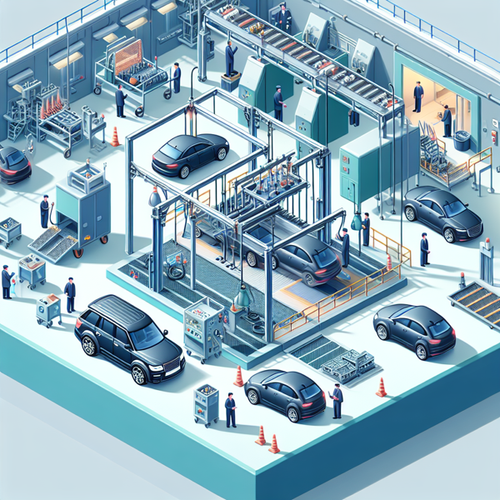
Ensuring the reliability, safety, and performance of electrical and electronic equipment has become a cornerstone in the rapidly progressing automotive industry. As vehicles evolve to incorporate more complex and interconnected systems—especially with the rise of electric and autonomous models—effective management of environmental stresses, cable quality, and protective devices is absolutely critical. The collection of four crucial standards showcased here is instrumental for organizations aiming to meet regulatory mandates, deliver robust products, and thrive in today's competitive marketplace. Implementing these standards not only fortifies security and operational safety but also significantly elevates productivity and scalability across development and production.
Overview / Introduction
The road vehicles sector is experiencing unprecedented changes. Modern automobiles are packed with advanced electrical and electronic subsystems—everything from infotainment units and advanced driver-assistance systems (ADAS) to electric propulsion and vehicle-to-everything (V2X) communications. This new reality presents unique challenges related to environmental exposure, electrical integrity, and fail-safe operation.
International standards provide a structured framework that automotive manufacturers, OEM suppliers, engineers, and even fleet operators can utilize to:
- Ensure durability and performance of critical systems
- Prevent costly recalls and warranty claims
- Streamline testing, validation, and documentation
- Enable interoperability and system integration
- Support rapid innovation and secure scale-up
This article provides a comprehensive overview of four pivotal standards for electrical and electronic equipment in road vehicles:
- ISO 16750-3:2023 - Mechanical Loads
- ISO 16750-5:2023 - Chemical Loads
- ISO 19642-12:2023 - Twisted Pair RF Cables
- ISO/FDIS 8820-3 - Blade-Type Fuse-Links
Each section below covers the scope, requirements, target audiences, implementation insights, and benefits—ensuring even those without engineering backgrounds can grasp why these standards are vital today.
Detailed Standards Coverage
ISO 16750-3:2023 - Mechanical Loads for Electrical and Electronic Equipment
Road vehicles — Environmental conditions and testing for electrical and electronic equipment — Part 3: Mechanical loads
This standard outlines the environmental stresses—particularly mechanical loads—that electrical and electronic components are likely to face in road vehicles. Components such as control units, sensors, modules, motors, and inverters can experience intense mechanical vibrations, shocks, and mechanical wear, especially when installed in demanding places like the engine compartment, wheel wells, or underbody.
What Does ISO 16750-3:2023 Cover?
- Applicable to electrical and electronic systems in vehicles (excluding motorcycles and mopeds)
- Covers components with up to voltage class B maximum working voltages
- Specifies standardized test procedures to simulate real-world mechanical stresses based on component mass and installation location
- Includes detailed guidance on vibration, mechanical shock, free fall, abrasion, scratch, and even gravel bombardment
- Introduces rigorous temperature profiles that mimic simultaneous environmental extremes
Key Requirements & Specifications
- Distinguishes between small/lightweight and large/heavy devices (DUTs), as their response to stress differs
- Mandates rigorous vibration tests, adjusted by mass and mounting point (e.g., engine vs. vehicle body vs. wheels)
- Requires mechanical shock tests simulating real incidents (e.g., door slams, cargo loading)
- Details abrasion resistance, accidental drops, and chip resistance for surface components
Who Should Comply?
- Automotive OEMs and tier suppliers responsible for ECUs, sensors, actuators, and auxiliary modules
- Engineers designing or validating parts for electric or internal combustion engine vehicles
- Quality control teams developing test programs or supplier audits
Practical Implications
- Increases product reliability: Early failure modes can be prevented during design and validation, decreasing warranty claims
- Reduces development costs: Establishes industry benchmarks, minimizing the need for extensive custom test setups
- Supports scalability: Companies can ramp up production knowing components are robust across locations and vehicle types
Notable Features
- Updated to harmonize with ISO 19453-3:2018 content
- Enhanced distinction and test profiles for heavier, electrified vehicle systems
- New vibration tests for hybrid and fully electric vehicles, and rotating machinery
- Logically grouped test sequences for easier program structuring
Key highlights:
- Comprehensive vibration/shock resistance tests
- Tailored for modern electric, hybrid, and combustion-engine vehicles
- Guidelines for test setup and reporting to ensure reproducibility
Access the full standard:View ISO 16750-3:2023 on iTeh Standards
ISO 16750-5:2023 - Chemical Loads for Electrical and Electronic Equipment
Road vehicles — Environmental conditions and testing for electrical and electronic equipment — Part 5: Chemical loads
This standard addresses another vital aspect of environmental durability—chemical exposure. Automotive environments are notorious for accidental spills and unavoidable contact with harsh agents: fuels, oils, coolants, de-icing salts, and cleaning agents. Even brief exposure can degrade plastics, seals, and coatings, causing malfunctions or system failures.
What Does ISO 16750-5:2023 Cover?
- Applies to all electrical and electronic vehicle systems subject to possible chemical contact
- Classifies chemicals based on likelihood and severity of exposure (depending on mounting location)
- Lays out standardized test procedures: from simple immersion to spray, wipe, or vapor exposure
- Provides criteria for material immunity and documentational requirements
Key Requirements & Specifications
- DUT (device under test) must demonstrate stable performance and no critical property change after exposure
- Methods for cleaning, preparation, and test agent application are defined and tailored by agent type
- Considers temperature and self-heating effects during chemical contact
- Immunity documentation and supplier/customer agreements for nonstandard conditions
Who Should Comply?
- Suppliers of housings, connectors, PCB assemblies, and exposed components
- Material scientists and test engineers evaluating polymers, elastomers, coating systems
- Procurement and regulatory compliance departments for risk assessment and QA
Practical Implications
- Risk mitigation: Early-stage material choices based on robust evidence, lowering downstream failures
- Enhanced product longevity: Products resist real-world contaminants, improving consumer satisfaction
- Improved certification and market access: Meets growing legal and market-driven requirements for robustness
Notable Features
- Aligned with advances from ISO 19453-5, expanding chemical agent ranges
- Detailed table-driven approach for agent-component compatibility
- Emphasis on early material selection and mutual understanding between customer and supplier
Key highlights:
- Covers fuel, coolant, road salts, lubricants, and cleaning chemical exposures
- Defines immunity criteria and testing for exposed products
- Supports both electric and traditional vehicle architectures
Access the full standard:View ISO 16750-5:2023 on iTeh Standards
ISO 19642-12:2023 - Automotive Unscreened Twisted Pair RF Cables
Road vehicles — Automotive cables — Part 12: Dimensions and requirements for unscreened twisted pair RF cables with a specified analogue bandwidth up to 1 GHz
Automotive communications are rapidly shifting to high-frequency, high-speed data transmission. ISO 19642-12:2023 establishes requirements for unshielded twisted pair (UTP) RF cables—the backbone of vehicle Ethernet, CAN, and other protocols used in driver-assist, automation, and infotainment systems.
What Does ISO 19642-12:2023 Cover?
- Technical requirements for UTP RF cables handling up to 1 GHz analogue bandwidth
- Focuses on 30 V a.c. or 60 V d.c. vehicle systems
- Defines construction, dimensional tolerances, insulation thickness, core structure, and electrical properties (resistance, capacitance, impedance)
- Includes mechanical tests: flexibility, abrasion, aging, heat resistance, cyclic bending
- Environmental tests: temperature and humidity cycling, chemical resistance, flame propagation
Key Requirements & Specifications
- Mandates stringent conductor resistance and insulation standards
- Ensures cable performance throughout mechanical stress and environmental exposure
- Specific color-coding, marking, and identification procedures
- Compatibility with CAN, CAN FD, FlexRay, automotive Ethernet—ensuring future-proof connectivity
Who Should Comply?
- OEM and tier suppliers producing harnesses for infotainment, telematics, and ADAS
- Engineers specifying network topologies for electrical architectures
- Quality control, procurement, and cable design teams
Practical Implications
- Uninterrupted communication: Secure, reliable signal transmission for safety-critical and entertainment systems
- Upgrade-ready infrastructure: Seamless migration to new data rates and protocols
- Consistent cable performance: Even in harsh automotive environments—temperature swings, vibration, and chemical exposure
Notable Features
- Covers extensive electrical measurement protocols (insertion loss, return loss, impedance)
- Incorporates advanced mechanical and environmental testing to match real usage conditions
- Integration support for single-pair Ethernet automotive connectivity (100BASE-T1, 1000BASE-T1)
Key highlights:
- Ensures high-frequency data integrity up to 1 GHz
- Details both dimensional and environmental cable requirements
- Future-proofs vehicle networking through standardization
Access the full standard:View ISO 19642-12:2023 on iTeh Standards
ISO/FDIS 8820-3 - Blade-Type Fuse-Links for Road Vehicles
Road vehicles — Fuse-links — Part 3: Fuse-links with tabs (blade type) Type C (medium), Type E (high current) and Type F (miniature)
Electrical circuit protection in modern vehicles is non-negotiable—blown fuses must be predictable, safe, and easy to diagnose. ISO/FDIS 8820-3 is the cornerstone standard for blade-type fuse-links (Types C, E, F) covering the majority of automotive protection applications.
What Does ISO/FDIS 8820-3 Cover?
- Applies to blade-type fuse-links with 32 V or 58 V rating, up to 100 A current, and 1,000 A breaking capacity
- Types covered: C (medium), E (high current), F (miniature)—the most commonly used in both passenger and commercial vehicles
- Establishes requirements for
- Rated current markings
- Terminal dimensions and mechanical strength
- Voltage drop limits
- Transient current cycling and temperature rise
- Visual identification (color codes, labeling)
- Test procedures for verification (operating time, breaking capacity, contact resistance)
Key Requirements & Specifications
- Requires compliance with general test methods in ISO 8820-1; adds specifics for these tab types
- Details fixture designs for consistent electrical and mechanical evaluation
- Provides strict color coding per current rating to avoid misidentification
- Demands clear failure indicators—fuses must plainly show when they’re blown
Who Should Comply?
- OEM and aftermarket fuse suppliers
- Vehicle harness and circuit designers
- Maintenance and quality assurance professionals
Practical Implications
- Enhances vehicle safety: Prevents fires and electrical faults from propagating
- Standardizes replacements: Ensures compatibility and ease of maintenance worldwide
- Reduces replacement errors: Visual coding and labeling lower risk of incorrect fuse installation
Notable Features
- Covers temperature rise, environmental endurance (vibration, corrosion), and terminal strength
- Updated to reflect the latest automotive trends and real-use scenarios
- Integration with cable standards for holistic protection design
Key highlights:
- Defines blade fuse types used globally in automotive circuits
- Details testing for electrical, mechanical, and environmental integrity
- Simplifies supply chain and maintenance with standardized labeling
Access the full standard:View ISO/FDIS 8820-3 on iTeh Standards
Industry Impact & Compliance
Adhering to these four international standards offers far-reaching benefits for organizations:
How These Standards Affect Businesses
- Risk reduction: Lower product failure and recall rates by preemptively identifying vulnerabilities
- Brand trust: Demonstrate commitment to robust, high-performing vehicles in a competitive market
- Global market access: Meet international regulations and expectations, facilitating exports and partnerships
- Operational transparency: Common framework for supplier audits, documentation, and traceability
Compliance Considerations
- Regular, documented testing and reporting against each standard’s requirements
- Supplier contracts that specify compliance and evidence thereof
- Internal audits and QA checks to align with ongoing production changes
- Consideration of legacy exemptions: Some new editions allow exclusions for systems already in production during the update
Benefits of Adopting These Standards
- Productivity: Streamlined testing and validation; less trial and error
- Security: Safer, more reliable electric and electronic architectures against environmental and operational dangers
- Scaling: Standards enable faster new model launches and supply chain integration without sacrificing quality
- Regulatory readiness: Easier navigation of government technical assessment and approval processes
Risks of Non-Compliance
- Higher rates of warranty claims, field failures, and safety incidents
- Difficulties in international market entry or maintenance of certifications
- Greater vulnerability to cyber and physical security risks
- Reputational damage and potential legal exposure
Implementation Guidance
Successfully leveraging these standards involves thoughtful planning, collaboration, and continuous improvement:
Common Implementation Approaches
- Early Integration: Incorporate standard requirements at the design concept stage—preventing costly rework later
- Dedicated Validation: Develop clear test plans that map to referenced procedures for both pre-production and routine sampling
- Supplier Engagement: Make compliance a contractual obligation, with clear quality gates and evidence reporting
- Documentation and Auditing: Keep full records of tests performed, deviations/exemptions, and corrective actions
- Staff Training: Equip engineering, QA, and procurement teams with up-to-date standard literacy
Best Practices for Adopting These Standards
- Benchmark against industry leaders for continuous improvement
- Use accredited labs where possible for validation tests
- Monitor regulatory updates and revise compliance programs in sync
- Foster a culture of safety and quality, with visible management engagement
Resources for Organizations
- ISO Online Browsing Platform and iTeh Standards give ongoing access to latest and historical documents
- Technical working groups and professional associations
- Conferences, training, and industry roundtables for knowledge sharing
Conclusion / Next Steps
Today's automotive landscape demands exceptional attention to detail in engineering, validation, and manufacturing of electrical and electronic systems. As vehicles advance in complexity and connectivity, so too must the rigor with which organizations ensure durability, safety, and seamless operation under all conditions. The four standards described—covering mechanical, chemical, communications, and protective devices—form the bedrock of robust electrical and electronic architecture for modern road vehicles.
Organizations prioritizing these standards will see measurable gains in product reliability, safety, and operational efficiency. They enable teams to respond swiftly to market and regulatory shifts, reduce uncertainty from rapid technology evolution, and build sustainable, scalable processes across the organization.
Whether you are a manufacturer, supplier, engineer, or fleet operator, start by reviewing the latest versions of these standards and benchmarking your current compliance. iTeh Standards offers the resources and authoritative documents to help you on this journey. Stay informed, stay compliant, and stay ahead—explore the referenced standards to safeguard your innovation and reputation.
https://standards.iteh.ai/catalog/standards/iso/65ad1633-ed2b-4551-aa66-c8e45fe0dec4/iso-fdis-8820-3
Categories
- Latest News
- New Arrivals
- Generalities
- Services and Management
- Natural Sciences
- Health Care
- Environment
- Metrology and Measurement
- Testing
- Mechanical Systems
- Fluid Systems
- Manufacturing
- Energy and Heat
- Electrical Engineering
- Electronics
- Telecommunications
- Information Technology
- Image Technology
- Precision Mechanics
- Road Vehicles
- Railway Engineering
- Shipbuilding
- Aircraft and Space
- Materials Handling
- Packaging
- Textile and Leather
- Clothing
- Agriculture
- Food technology
- Chemical Technology
- Mining and Minerals
- Petroleum
- Metallurgy
- Wood technology
- Glass and Ceramics
- Rubber and Plastics
- Paper Technology
- Paint Industries
- Construction
- Civil Engineering
- Military Engineering
- Entertainment