


Illuminating Safety: Essential Standards for Lighting, Signalling, and Hydraulic Devices in Road Vehicles
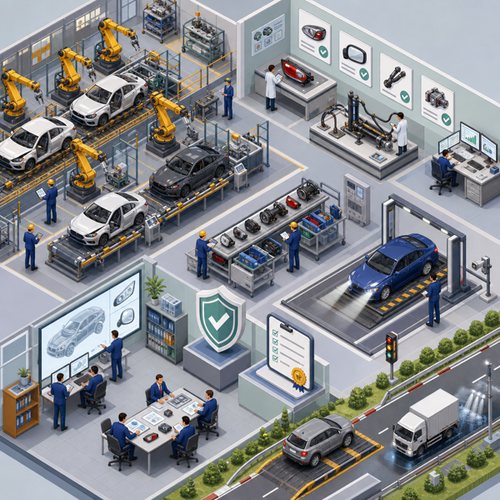
Ensuring visibility and safety on roads and agricultural settings is more crucial than ever. The rapid evolution of lighting, signalling, and hydraulic technologies means that manufacturers and operators must align with stringent international standards. Not only do these standards, such as those for tungsten halogen lamps, incandescent lamp safety, and agricultural hydraulic couplers, support compliance and security, but they also foster productivity, scale, and innovation throughout supply chains. This article provides an easy-to-understand guide to three authoritative standards—each forming a vital thread in the web of modern road vehicle and machinery operations.
Overview / Introduction
From the blink of a warning light to the heat and glow of halogen bulbs, the way we light and signal in road vehicles—and even agricultural machinery—directly impacts everyone’s safety and efficiency. Standards in lighting, signalling, and warning devices have evolved, addressing not just functional requirements, but also the expectations of reliability, environmental security, and seamless compatibility. For businesses in automotive, transportation, and agricultural sectors, compliance with these formalized requirements isn't optional: it's a business imperative.
In this guide, you'll discover:
- What each of the three standards requires
- How they help improve safety, efficiency, and business scalability
- Who should comply and how to do so
- Practical tips and key takeaways for implementation
Whether you’re designing lighting for passenger cars, certifying agricultural machines, or simply seeking to understand industry obligations, this article demystifies critical standards for lighting, signalling, and quick-action hydraulic couplers. Let’s illuminate the specifics.
Detailed Standards Coverage
SIST EN 60357:1999/A11:1999 – Tungsten Halogen Lamps (Non-Vehicle)
Tungsten halogen lamps (non-vehicle)
This standard, an amendment to EN 60357:1988, focuses on the specifications for tungsten halogen lamps not designed for vehicles. These high-efficacy lamps are widely used in general and professional lighting applications where consistent, clear illumination is crucial, such as in industrial, public, or domestic spaces. The standard defines construction, safety performance, and interchangeability requirements, ensuring manufacturers meet stringent reliability and safety metrics.
Businesses and producers implementing this standard benefit from clearly outlined expectations regarding:
- Lamp construction and material choice
- Electrical and thermal safety
- Environmental and operational durability
Who needs to comply? Manufacturers of non-vehicle tungsten halogen lighting, lighting system integrators, testing labs, and organizations involved in standardization or bulk procurement for public infrastructure.
Practical implications: Adhering to these guidelines prevents product failures, mitigates safety risks, and streamlines certification processes. Compliance also facilitates market access and legal security, especially under European directives and when exporting globally.
Key highlights:
- Focuses on non-vehicle tungsten halogen lamp construction and safety
- Promotes product reliability and longevity for infrastructure and public use
- Assures electric and mechanical interchangeability for broad compatibility
Access the full standard:View SIST EN 60357:1999/A11:1999 on iTeh Standards
SIST EN 60432-1:1995 – Safety Specifications for Incandescent Lamps (Tungsten Filament)
Safety specifications for incandescent lamps—Part 1: Tungsten filament lamps for domestic and similar general lighting purposes
This foundational standard sets out meticulous safety and interchangeability criteria for tungsten filament incandescent lamps intended for domestic and general illumination. Covering a range of wattages (up to 200W), voltages (50–250V), bulb shapes, and cap types, it sets a standard method for manufacturers to verify compliance via production and batch testing. Though superseded for performance properties by other texts, its focus is on user safety.
Scope includes:
- Definition of lamp categories (bulb shapes, cap types, finishes)
- Mandatory safety attributes such as temperature limits, construction standards, and material toxicity
- Interchangeability dimensions to ensure consistent fit and replacement
Who needs to comply? Lamp manufacturers, retailers, and procurement teams supplying lighting for homes, offices, public spaces, and related environments.
Practical implications: Implementation helps guarantee user safety, reduces liability exposure for businesses, and simplifies regulatory approvals. By meeting these specifications, organizations also enhance their marketability, reputation, and consumer confidence.
Key highlights:
- Authoritative safety baseline for tungsten filament lamps
- Provides standard method for test-based compliance proof
- Covers a broad array of bulb shapes and caps for universal applicability
Access the full standard:View SIST EN 60432-1:1995 on iTeh Standards
SIST ISO 5675:2015 – Agricultural Tractors and Machinery: General Purpose Quick-Action Hydraulic Couplers
Agricultural tractors and machinery – General purpose quick-action hydraulic couplers
This standard ensures that hydraulic couplers—used for connecting hydraulic circuits between tractors and their attachments—meet consistent, global interface and performance requirements. Quick-action couplers are vital for efficiency, frequently connecting and disconnecting machinery safely without spillage or heavy tooling. By mandating dimensional, operational, and compatibility criteria, the standard enables smooth interoperability across brands and types.
Standard requirements cover:
- Essential interface dimensions (per ISO 7241-1)
- Rigorous operational performance benchmarks
- Exclusions (e.g., braking circuits) to avoid cross-system misunderstanding
Who should comply? Manufacturers, designers, and suppliers of agricultural tractors and accessories, maintenance providers, and compliance auditors in the agricultural machinery sector.
Practical implications: Adopting these guidelines reduces equipment downtime, increases safety during coupling/decoupling, and underpins international trade in agricultural hardware.
Key highlights:
- Guarantees global interchangeability for hydraulic couplers
- Provides clear criteria for safety and ease of operation
- Reduces risk of hydraulic failures or mismatched connections in field operations
Access the full standard:View SIST ISO 5675:2015 on iTeh Standards
Industry Impact & Compliance
Lighting, signalling, and quick-coupling requirements are not just about technical conformance, but about setting universal benchmarks for safety, cost-efficiency, and business integrity. When manufacturers and suppliers adhere to these standards:
- Productivity increases: With fewer product failures, less downtime, and enhanced supply chain predictability, teams work smarter and faster.
- Security is enhanced: Industry-wide adoption of rigorous safety requirements lowers accident and recall risks.
- Scaling becomes possible: Compatibility and global acceptance make new markets, suppliers, and partnerships accessible, fueling sustainable growth.
Compliance Considerations:
- Regular audits and production reviews
- Training and competency development for staff
- Documented testing and certification to streamline regulatory approvals
- Strategic sourcing from certified supply chains
Risks of non-compliance include:
- Increased liability for defective products causing injury or loss
- Market access barriers due to certification shortfalls
- Severe reputational harm and lost consumer trust
Implementation Guidance
Transitioning to full compliance with lighting, signalling, and warning device standards can seem daunting, but proven best practices simplify the process:
Gap Analysis: Start by auditing current products and processes against the specific requirements of the standards. Document areas needing attention.
Staff Training: Ensure engineers, QA, and supply chain partners understand the purpose and key technical details of each relevant standard.
Certification-Ready Testing: Use the recommended whole-production and batch testing methodologies. Maintain thorough records of all inspections and tests as required by standards like SIST EN 60432-1:1995.
Supplier Alignment: Source parts and components only from certified or compliant partners. Verify certificates during all procurement cycles.
Continuous Improvement: Monitor incident reports, recalls, and performance data from fielded products. Use these insights to refine quality management systems.
Leverage Third-Party Resources: Collaborate with testing agencies, standardization bodies, and industry associations for up-to-date training and certification support.
Additional Resources:
- National and international standards bodies (ISO, IEC, SIST)
- Industry conferences and technical workshops
- Accredited product testing and compliance firms
Conclusion / Next Steps
Lighting, signalling, and hydraulic coupler standards are the backbone of modern road vehicle safety and agricultural machinery interoperability. Embracing standards like SIST EN 60357:1999/A11:1999, SIST EN 60432-1:1995, and SIST ISO 5675:2015 is not just best practice—it's a critical investment in quality, scalability, and trust. Whether you manufacture luminaires, assemble agricultural machinery, or integrate complex systems, aligning your products and processes with these standards is a doorway to innovation, market expansion, and operational excellence.
Recommendations:
- Perform a standards compliance audit for your lighting and hydraulic systems
- Train your team on specification and implementation details
- Engage with iTeh Standards and stay informed about updates to these and related guidelines
- Build compliance into every stage of your product development lifecycle
Take the next step—explore each standard, leverage their insights, and propel your business toward safer, smarter, and more sustainable operations.
Categories
- Latest News
- New Arrivals
- Generalities
- Services and Management
- Natural Sciences
- Health Care
- Environment
- Metrology and Measurement
- Testing
- Mechanical Systems
- Fluid Systems
- Manufacturing
- Energy and Heat
- Electrical Engineering
- Electronics
- Telecommunications
- Information Technology
- Image Technology
- Precision Mechanics
- Road Vehicles
- Railway Engineering
- Shipbuilding
- Aircraft and Space
- Materials Handling
- Packaging
- Textile and Leather
- Clothing
- Agriculture
- Food technology
- Chemical Technology
- Mining and Minerals
- Petroleum
- Metallurgy
- Wood technology
- Glass and Ceramics
- Rubber and Plastics
- Paper Technology
- Paint Industries
- Construction
- Civil Engineering
- Military Engineering
- Entertainment