


Key Standards for Railway Materials and Components: Enhancing Safety, Productivity, and Scalability
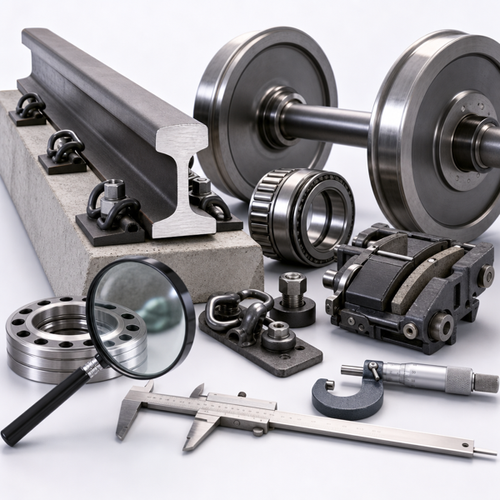
In today’s rapidly evolving rail industry, the importance of robust standards for materials and components cannot be overstated. Whether you are a manufacturer, operator, regulator, or investor, staying aligned with recognized railway engineering standards is fundamental for ensuring not only compliance, but also operational excellence, safety, and scalable productivity. In this article, we explore two pivotal international standards shaping the current and future landscape of railway applications: SIST EN 16839:2022/kFprA1:2025 and SIST-TS CEN/TS 15427-1-3:2021. Together, these standards define critical requirements for rolling stock head stock layouts and for managing the wheel/rail interface with adhesion materials. Their adoption underpins industry-wide advances in reliability, security, and efficiency across global railway networks.
Overview / Introduction
Railway engineering is a cornerstone of modern transportation infrastructure, providing safe, efficient, and sustainable mobility for both people and goods. At the heart of this system is a complex web of materials and components—from couplings and buffers to sophisticated friction management systems—that must perform flawlessly under dynamic conditions and stringent safety demands.
Standards for railway materials and components establish a consistent language and set of expectations in design, operation, and maintenance. They enable businesses to:
- Meet rigorous safety and regulatory requirements
- Ensure interoperability across international rail networks
- Optimize maintenance and lifecycle management
- Safeguard passengers, staff, and cargo
- Enhance operational productivity and scalability
This article will help both industry professionals and the general public understand the scope, benefits, and best practices associated with two essential railway standards. By adhering to these guidelines, organizations gain a crucial edge—driving technological innovation while reducing costs, risks, and delays.
Detailed Standards Coverage
SIST EN 16839:2022/kFprA1:2025 – Railway Applications: Rolling Stock Head Stock Layout
Full Title: Railway Applications – Rolling Stock – Head Stock Layout
This standard is central to the structural and safety integrity of rolling stock—the collective term for all vehicles that move on a railway. Specifically, it addresses the design and arrangement of head stock components for vehicles equipped with buffers and screw coupling systems. The focus here is on ensuring operational compatibility, safe coupling, and ease of rescue procedures across diverse rail vehicles.
What the Standard Covers and Its Scope
SIST EN 16839:2022/kFprA1:2025 defines how the head stock (the frontal end structure of a rail vehicle) must be laid out to provide:
- The required free space for shunters, known as the "Berne rectangle"
- Sufficient accommodation for rescue couplers
- Standardized locations and configurations for vital interface connections, such as buffers, screw couplings, end cocks, pneumatic half couplings, and electrical cable couplings
- Guidelines on fixing methods and calculation of buffer head width
By specifying these parameters, the standard ensures that vehicles from different manufacturers or national systems can be safely and efficiently coupled together during both routine operations and emergency rescue scenarios.
Key Requirements and Specifications
The standard provides clear guidelines for:
- The positioning and mounting of all critical head stock components
- Nominal values for dimensions, allowing for slight variations where clearly marked
- Calculation of buffer head width to guarantee mechanical compatibility
- Preservation of reserved spaces for maintenance access and shunter safety
Organizations need to comply with these requirements if they:
- Design or manufacture new rolling stock for mainline or regional railways
- Retrofit existing vehicles for compatibility with international systems
- Participate in maintenance or rescue operations where interoperable coupling is essential
For implementation, practical benefits are numerous: standardized layouts reduce the risk of misaligned couplings, ensure safe passageways for personnel, and guarantee rapid, safe connections during emergencies.
Notable Features
- Focus on the "Berne rectangle” for shunter safety
- Universal application to any vehicle using buffers and screw couplings
- Provides calculation methods for key component sizes
Access the full standard:View SIST EN 16839:2022/kFprA1:2025 on iTeh Standards
SIST-TS CEN/TS 15427-1-3:2021 – Railway Applications: Wheel/Rail Friction Management, Equipment and Application – Adhesion Materials
Full Title: Railway Applications – Wheel/Rail Friction Management – Part 1-3: Equipment and Application – Adhesion Materials
Managing the interface between wheels and rails is one of the most critical technical challenges in rail engineering. High-performance rail operations depend on optimal traction (adhesion) at the contact point of the wheel tread and rail head. Poor adhesion can result in unsafe braking distances, wheel sliding, track damage, and increased maintenance costs or unplanned downtime.
What the Standard Covers and Its Scope
This technical specification sets out comprehensive requirements for:
- The use and application of adhesion materials (such as sand, special powders, or pastes)
- Equipment design and installation, covering both trainborne and trackside systems responsible for delivering adhesion materials to the active wheel-rail interface
- Performance verification, inspection, and test methods for all equipment and processes involved
- Terminology and classification of related systems and components
This standard strictly applies to mainline railways but provides valuable guidance for other railway systems (urban, networks, trams) as well. Technologies that impact adhesion without direct material application are out of scope but may use this document as a reference.
Key Requirements and Specifications
For every adhesion system, the standard mandates:
- Effective delivery of adhesion material to the active interface in all operational conditions (e.g., speed, weather, direction of travel)
- Systems to prevent contamination or adverse reactions with other rail materials (i.e., avoiding incompatibility with lubricants)
- Implementation of inspection, control, and verification procedures to guarantee proper function
- Clear instructions for installation, maintenance, and performance verification
- Methods for both preventative and reactive application of adhesion materials (e.g., during known low-adhesion conditions, or in emergency response to wheel slip events)
Designing and operating friction management equipment must consider interface effects (including coupling with braking and train detection systems), safety and reliability, operator feedback and alarms, and best practices in environmental protection.
Organizations needing compliance include:
- Mainline and urban railway infrastructure managers
- Rolling stock operators responsible for trainborne systems
- Maintenance teams and manufacturers integrating friction management components
Notable Features
- Harmonized requirements for both trainborne and trackside adhesion systems
- Robust verification and inspection protocols
- Definitions and guidance for effective maintenance, compatibility, and environmental protection
Access the full standard:View SIST-TS CEN/TS 15427-1-3:2021 on iTeh Standards
Industry Impact & Compliance
The global rail sector is increasingly regulated, demanding measurable improvements in safety, performance, and sustainability. Adopting the above standards has immediate and far-reaching benefits for organizations across the supply chain.
Key impacts include:
- Enhanced Safety: Standardized layouts and interface management reduce the risk of coupling accidents, derailments, or uncontrolled track incidents.
- Operational Productivity: Interoperability built into rolling stock design and friction management solutions means smoother operations, fewer delays, and improved on-time performance.
- Risk Reduction: Clear requirements mitigate the risk of technical failures, non-compliance penalties, and reputational damage.
- Scalability: Harmonized standards enable multinational operations, supporting cross-border services and facilitating large-scale fleet expansions.
Regulatory authorities and network operators increasingly demand proof of compliance with such standards as a condition of contract award, new service introduction, or fleet upgrade. Non-compliance can result in costly retrofits, downtime, punitive actions, or loss of market access.
Implementation Guidance
Implementing these railway engineering standards effectively requires a structured, organization-wide approach. Key best practices include:
- Gap Assessment:
- Start with a comprehensive review of current rolling stock, components, and friction management practices against the detailed requirements of SIST EN 16839 and SIST-TS CEN/TS 15427-1-3.
- Stakeholder Engagement:
- Involve designers, engineers, procurement, operations, and safety authorities from concept through to commissioning and maintenance.
- Training & Competence:
- Ensure staff understand the rationale behind specific layout or equipment demands, and are equipped to install, operate, and verify compliance.
- Supplier Alignment:
- Work exclusively with vendors and integrators able to demonstrate certification or proven conformance to these standards.
- Documentation & Traceability:
- Maintain clear records of inspections, installations, and modifications; support audit and regulatory review processes.
- Continuous Improvement:
- Leverage operational feedback and advances in technology to update practices in line with standard amendments and evolving best practices.
Additional resources are available on platforms such as iTeh Standards, which provide detailed documentation and the latest updates for all referenced standards.
Conclusion / Next Steps
As railways modernize to meet 21st-century needs, international standards for materials and components have become essential for safe, efficient, future-proof transportation networks. The two key standards discussed here—SIST EN 16839:2022/kFprA1:2025 and SIST-TS CEN/TS 15427-1-3:2021—represent best-in-class guidance for both rolling stock layout and wheel/rail friction management.
Key Takeaways:
- Both safety and productivity rely on component interfaces engineered to precise, globally accepted standards.
- Proper management of wheel/rail adhesion preserves assets, reduces costs, and boosts operational reliability.
- Compliance and forward-thinking implementation ensure readiness for market expansion, regulatory audits, and future technological trends.
Recommendations:
- Conduct an immediate review of relevant assets and systems using the detailed requirements of these standards.
- Engage with qualified suppliers and download the latest documentation via iTeh Standards.
- Foster a culture of compliance, continuous improvement, and operational excellence within your team.
To stay ahead in railway engineering, embrace these standards as a foundation for robust, scalable, and innovative rail networks. For access to the full text of each standard and ongoing updates, visit the iTeh Standards platform—your trusted resource for international railway requirements.
Categories
- Latest News
- New Arrivals
- Generalities
- Services and Management
- Natural Sciences
- Health Care
- Environment
- Metrology and Measurement
- Testing
- Mechanical Systems
- Fluid Systems
- Manufacturing
- Energy and Heat
- Electrical Engineering
- Electronics
- Telecommunications
- Information Technology
- Image Technology
- Precision Mechanics
- Road Vehicles
- Railway Engineering
- Shipbuilding
- Aircraft and Space
- Materials Handling
- Packaging
- Textile and Leather
- Clothing
- Agriculture
- Food technology
- Chemical Technology
- Mining and Minerals
- Petroleum
- Metallurgy
- Wood technology
- Glass and Ceramics
- Rubber and Plastics
- Paper Technology
- Paint Industries
- Construction
- Civil Engineering
- Military Engineering
- Entertainment