


Railway Engineering Standards Summary – October 2025 (Part 2)
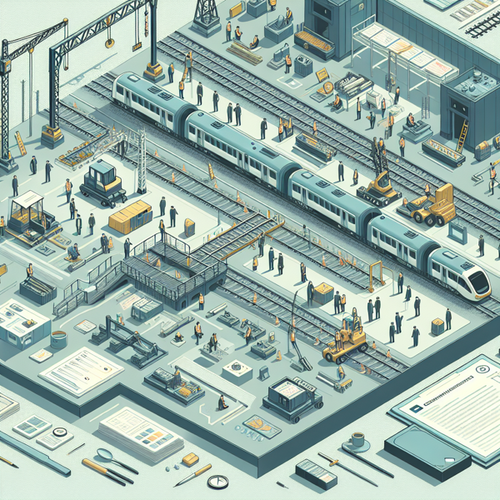
Looking back at October 2025, the Railway Engineering sector marked a significant period with five pivotal standards published by leading bodies such as CEN, ISO, and IEC. These standards tackled key issues ranging from braking interoperability and advanced rail joining methods, to hydrogen fuel cell integration and accessible passenger information for persons with reduced mobility. This monthly overview covers the critical content and industry implications of these documents, helping professionals and organizations across the railway ecosystem stay up to date and compliant with the latest technical and regulatory requirements.
For quality managers, engineers, procurement specialists, and compliance leaders, catching up on these standards is essential—not just for meeting obligations, but for keeping pace with technological innovation, evolving passenger needs, and sustainability priorities.
Monthly Overview: October 2025
October 2025 brought a dynamic set of publications within the Railway Engineering space. The scope of topics reflected both the consolidation of long-standing safety practices—such as robust requirements for train braking systems—and the burgeoning movement towards decarbonization through hydrogen fuel cell technologies. There was also a clear regulatory drive to enhance track infrastructure quality and operational safety through improved welding practices, paired with an increased commitment to universal accessibility for all rail passengers.
Compared to prior months, October’s batch stood out for its balanced focus across traditional safety-critical systems (e.g., braking, weld integrity), forward-leaning technologies (hydrogen PEMFC), and social inclusion (accessible information standards). This convergence of themes suggests that railway engineering is entering an era where reliability, technology modernization, and user-centric design are co-equal priorities. Organizations attentive to this shift will be better prepared to deliver safer, greener, and more inclusive railways.
Standards Published This Month
EN 14198:2025 – Railway applications - Braking - Requirements for the brake system of trains hauled by locomotives
Railway applications - Braking - Requirements for the brake system of trains hauled by locomotives
EN 14198:2025 sets the foundational requirements for braking systems in trains hauled by locomotives, including those operating in conventional and predefined formations. This revision replaces EN 14198:2016+A2:2021 and brings forward substantive updates regarding normative references, definitions, functional requirements (brake modes, positions, emergency brake applications), and details concerning dynamic brakes, brake management, adhesion performance, and compatibility with the "EN-UIC" air brake system.
Applicable across a broad spectrum of rolling stock, this standard is crucial for any entity responsible for specifying, designing, maintaining, or approving locomotive-hauled brake systems in the European network and similar operations worldwide.
Key specifications include:
- Technical compatibility guidelines for interoperable braking functions among mixed-heritage vehicle consists
- Functional and safety requirements for main and auxiliary brake systems, dynamic braking, and wheel slide protection
- Prescriptive criteria for design, operation, and performance verification—including service and emergency braking, parking brakes, thermal capacity, and adhesion enhancement
- Normative alignment with EU (2016/797) Essential Requirements, and clarification of where the standard integrates into the broader regulatory framework of European rail safety
Organizations must note the updated performance and design requirements, as well as necessary compliance with interface standards for integrating modern electronic control modules and dynamic brake options.
Key highlights:
- Harmonizes interoperable brake system requirements with European and UIC standards
- Expands provisions for electronic, hybrid, and auxiliary brake functions
- Updates normative references and performance calculations for improved safety
Access the full standard:View EN 14198:2025 on iTeh Standards
ISO 23300-2:2025 – Railway infrastructure – Rail welding – Part 2: Aluminothermic welding
Railway infrastructure – Rail welding – Part 2: Aluminothermic welding
This international standard establishes requirements for conducting aluminothermic welding on railway tracks, specifically for joining vignole rails ranging from 43 kg/m to 75 kg/m of matching profiles and grades. ISO 23300-2:2025 addresses the approval process, lab testing methodologies, welder and contractor qualification, and acceptance criteria for welds in operational track.
The core purpose is to ensure the structural integrity and service reliability of welded rail joints, mitigating risks of noise, vibration, and premature failure—especially critical where high performance ride quality and long-term maintainability are essential.
Organizations involved in new track construction, maintenance, or upgrade projects must adhere, as the standard formalizes both technical and documentation controls over the welding process from initial approval to in-situ inspection.
Key requirements:
- Well-defined procedures for process approval, including documentation, profile/grade grouping, lab tests (hardness, bending, fatigue)
- Comprehensive welder and contractor qualification processes with traceability and audit trails
- In-track acceptance criteria covering visual, geometric, and integrity checks, including ultrasonic and other non-destructive testing
- Clear COI (certificate of inspection) and reporting protocols
- Restricts scope to new rails of matching profiles/grades to ensure consistency and removes ambiguities regarding mixed or worn rails
Key highlights:
- Harmonizes global aluminothermic welding practice for quality and safety
- Includes rigorous welder/contractor approval and audit requirements
- Sets mandatory acceptance criteria for weld geometry and integrity
Access the full standard:View ISO 23300-2:2025 on iTeh Standards
IEC 63341-1:2025 – Railway applications – Hydrogen and fuel cell systems for rolling stock – Part 1: Fuel cell power system
Railway applications – Hydrogen and fuel cell systems for rolling stock – Part 1: Fuel cell power system
IEC 63341-1:2025 is a foundational standard for integrating proton exchange membrane fuel cell (PEMFC) systems into rolling stock across a wide range of rail vehicle types—including trams, metros, commuter and high-speed trains. The document outlines stringent specifications for fluidic, electrical, thermal, and mechanical interfaces, environmental operating conditions, safety and protection requirements (including risk mitigation for hydrogen usage), and validation/testing strategies.
With increasing attention on decarbonization, this standard is vital for all organizations developing, procuring, operating, or certifying hydrogen-fueled or hybrid rail vehicles.
Highlights of the technical content include:
- Specification of interface, sizing, and operating parameters for PEMFC-based power systems
- Requirement suites for safety (fire, flammability, hydrogen leakage, electric shock), EMC, marking and labelling, and maintenance protocols
- Robust type, routine and investigative test programs, covering everything from performance to environmental stress and hydrogen emissions
- Explicit boundaries separating this standard from fuel storage or power conversion equipment (addressed in other standards)
Conformance with IEC 63341-1:2025 signals readiness for regulatory approval, particularly as more rail networks pilot hydrogen-powered and hybrid solutions to reach net zero targets.
Key highlights:
- Establishes global baseline for hydrogen fuel cell safety and performance in rail
- Comprehensive requirements for integration, risk mitigation, and lifecycle management
- Aligned with other IEC and ISO electrical and hydrogen system standards
Access the full standard:View IEC 63341-1:2025 on iTeh Standards
Note: IEC 63341-1:2025 appears twice in October’s listings due to multiple publication instances and cross-jurisdictional adoption, reflecting its status as a cornerstone for hydrogen rail system development.
EN 16584-2:2025 – Railway applications – Design for PRM use – General requirements – Part 2: Information
Railway applications – Design for PRM use – General requirements – Part 2: Information
EN 16584-2:2025 advances universal design in rail by specifying the information requirements for accessible railway infrastructure and rolling stock. Targeting the needs of persons with reduced mobility (PRM) as defined by the Technical Standard for Interoperability (PRM TSI), the standard sets criteria for obstacle-free travel—covering spoken and written information, tactile feedback, pictograms, signs, and more.
Its provisions affect railway operators, rolling stock manufacturers, infrastructure managers, and anyone overseeing passenger information systems or facility design.
Essential requirements include:
- Universal design of signage and information media for clarity, readability, and accessibility (including tactile, visual, and acoustic forms)
- Strict dimensional and functional parameters for critical elements (signage, controls, ticketing interfaces, displays)
- Aligned assessment methods and documentation for demonstrating compliance
- Coverage of infrastructure and vehicle interfaces, including platform accessibility, call-for-aid devices, and customer information modules
The update reflects regulatory harmonization towards EU accessibility mandates, providing unambiguous minimums (not nominal requirements) and supporting both new construction and retrofit projects.
Key highlights:
- Comprehensive scope for all rail environments (infrastructure and vehicles)
- Detailed PRM-accessible information delivery (spoken, written, tactile, pictograms)
- Fully supports EU PRM TSI objectives for modern, inclusive transport
Access the full standard:View EN 16584-2:2025 on iTeh Standards
Common Themes and Industry Trends
Reviewing the October 2025 standards, several interconnected trends emerge:
- Safety and Interoperability: Both EN 14198:2025 and ISO 23300-2:2025 reinforce the sector’s long-term drive for harmonized safety practices and technical compatibility, ensuring all equipment can operate together across borders and operators with consistent reliability.
- Decarbonization and Innovation: IEC 63341-1:2025 is at the vanguard of the railway sector’s move to low- and zero-carbon propulsion technologies, setting up a robust international framework for hydrogen fuel cell adoption.
- Inclusion and Accessibility: EN 16584-2:2025 aligns with legislative and social pressures for universal access, mandating standards for accessible information delivery and inclusive infrastructure planning.
- Process Quality and Documentation: Across all new publications, there is a deeper emphasis on traceability, documentation, and qualification—not just for technical staff but for operational checkpoints from procurement through maintenance.
Notably, October’s standards underscore the interconnectedness of regulatory, technological, and user-centered trends, and suggest a maturing field where innovation and tradition go hand-in-hand.
Compliance and Implementation Considerations
For organizations affected by these standards, a strategic approach to compliance is critical. Key recommendations include:
- Audit Current Practices: Benchmark all relevant processes, rolling stock, infrastructure, and supplier qualifications against the new standards. Pay particular attention to brake system interfaces, welding process documentation, and passenger information accessibility.
- Prioritize Upgrades with Highest Impact: Safety-critical systems (brakes, hydrogen safety, track welds) should be prioritized for immediate compliance assessment, as these have direct implications for certification and operational risk.
- Plan for Documentation and Training: Ensure technical staff, welders, contractors, and front-line personnel are qualified to current requirements. Documentation and recordkeeping should be aligned to both organizational and audit needs.
- Engage Suppliers Early: For rolling stock contracts or maintenance partnerships, integrate these new standards into procurement criteria and vendor assessments.
- Timeline Awareness: Confirm the effective dates and required transition periods of each standard, especially in the context of EU directives and national regulations.
- Leverage Resources: Explore iTeh Standards (https://standards.iteh.ai) for access to full documents, supporting materials, and ongoing updates.
Conclusion: Key Takeaways from October 2025
October 2025 witnessed the publication of standards that will shape rail engineering for years to come. The impact is broad:
- EN 14198:2025 strengthens the technical reliability of cross-border and mixed-heritage train braking, driving safety and interoperability.
- ISO 23300-2:2025 raises the bar for quality assurance in rail welding, supporting infrastructure stability and long-term operations.
- IEC 63341-1:2025 lays the foundation for hydrogen-powered rolling stock—pivotal for decarbonization and network modernization.
- EN 16584-2:2025 makes tangible progress towards fully inclusive railway travel, bringing passenger information and design into alignment with EU and global accessibility standards.
For industry professionals, awareness and proactive engagement with these standards are no longer optional but essential. Review your systems, update your processes, and involve cross-disciplinary teams to ensure compliance and competitive positioning.
For a deeper dive into any standard discussed here—and to keep pace with evolving requirements—visit iTeh Standards for comprehensive access and implementation guidance.
Categories
- Latest News
- New Arrivals
- Generalities
- Services and Management
- Natural Sciences
- Health Care
- Environment
- Metrology and Measurement
- Testing
- Mechanical Systems
- Fluid Systems
- Manufacturing
- Energy and Heat
- Electrical Engineering
- Electronics
- Telecommunications
- Information Technology
- Image Technology
- Precision Mechanics
- Road Vehicles
- Railway Engineering
- Shipbuilding
- Aircraft and Space
- Materials Handling
- Packaging
- Textile and Leather
- Clothing
- Agriculture
- Food technology
- Chemical Technology
- Mining and Minerals
- Petroleum
- Metallurgy
- Wood technology
- Glass and Ceramics
- Rubber and Plastics
- Paper Technology
- Paint Industries
- Construction
- Civil Engineering
- Military Engineering
- Entertainment