


Railway Engineering Standards Summary - October 2025
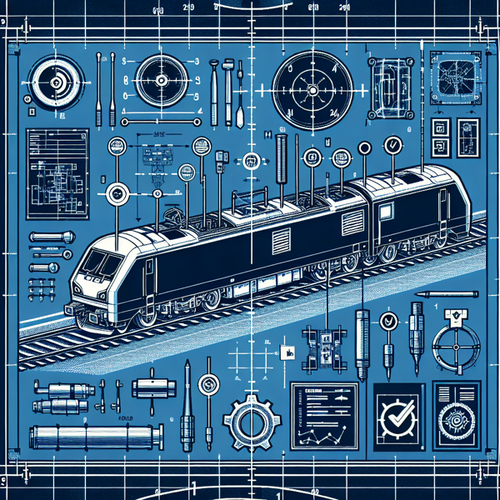
Looking back at October 2025, the Railway Engineering sector witnessed a significant wave of publications focused on enhancing accessibility for persons with reduced mobility (PRM). Five pivotal European standards were released, all aimed at improving inclusive design for both rolling stock and railway infrastructure. This article synthesizes the technical requirements, compliance implications, and broader industry context behind these publications. For railway professionals, quality managers, compliance officers, engineers, and procurement specialists, staying abreast of these updates is increasingly crucial as accessibility becomes a cornerstone of modern rail transport.
Monthly Overview: October 2025
October 2025 marked a notable period for standardization in the railway industry, with a clear emphasis on advancing universal accessibility. The suite of standards issued by CEN addressed comprehensive PRM requirements across multiple aspects: from trains’ onboard equipment (such as toilets and seating) to infrastructure-wide provisions (like obstacle-free routes and accessible boarding). This coordinated approach signaled industry alignment with the European Union’s Technical Specifications for Interoperability (TSI), reflecting an ongoing trend to harmonize both passenger experience and safety.
Compared to typical publication cycles, this month stood out due to the thematic coherence—most standards released targeted the removal of barriers for PRM both onboard and within station environments. This underlines the railway sector’s commitment to the EU Accessibility Act and to broader societal demands for transport equality.
Standards Published This Month
EN 16585-1:2025 - Design for PRM Use – Equipment and Components Onboard Rolling Stock – Part 1: Toilets
Railway applications – Design for PRM use – Equipment and components onboard rolling stock – Part 1: Toilets
This standard sets out precise design, assessment, and operational requirements for toilet facilities on rolling stock, specifically to ensure they are fully accessible to persons with reduced mobility. The scope covers both standard and universal (wheelchair-accessible) toilets, requiring such amenities to be reachable directly from both the general passenger area and, where provided, from sleeping compartments. The specification enforces absolute dimensional requirements, universal access parameters, and usability criteria for fixtures such as handholds, baby changing tables, and emergency aid devices.
While this standard supersedes the previous 2017 version, it introduces substantive revisions: updated terminology, expanded annexes on wheelchair limitations, best practices for accessible toilets, and references to harmonized European directives. It supports compliance with EU directives on interoperability and accessibility, targeting train manufacturers, fleet operators, and systems integrators responsible for overseeing rolling stock design and upgrades.
Key highlights:
- Mandates provision of at least one universal toilet per train, directly accessible from wheelchair spaces.
- Defines strict requirements for door operation, tactile and visual indicators, and accessible controls (e.g., flush, emergency buttons).
- Aligns the standard with current EU TSI and Interoperability Directives for railway operations.
Access the full standard:View EN 16585-1:2025 on iTeh Standards
EN 16585-2:2025 - Design for PRM Use – Equipment and Components Onboard Rolling Stock – Part 2: Elements for Sitting, Standing and Moving
Railway applications – Design for PRM use – Equipment and components on board rolling stock – Part 2: Elements for sitting, standing and moving
EN 16585-2:2025 addresses the design and assessment requirements for vital interior elements onboard trains, such as seating, handholds, and wheelchair spaces. The standard details operational conditions, ensures minimum and maximum spatial dimensions (absolute, not nominal), and prescribes features such as handrail heights, support points, and priority seating locations to maximize PRM usability throughout the vehicle.
The document provides explicit technical measures—the widths, heights, contrast, and tactile features necessary for visually impaired and mobility-impaired passengers to move safely and comfortably. By defining obligatory arrangements for wheelchair space and accessible sleeping accommodations, it underpins the stepwise elimination of barriers inside passenger compartments. Updates from the previous edition comprise revised figures, improved assessment methodologies, and enhanced requirements for priority seats and handholds, reflecting industries’ lessons learned.
Key highlights:
- Absolute measurements for minimum seat and aisle clearances, handhold heights (800–1200 mm), and handrail spacing.
- Priority seat designation and clear tactile/visual indicators.
- Comprehensive wheelchair space and accessible sleeping accommodation requirements for new builds and major refurbishments.
Access the full standard:View EN 16585-2:2025 on iTeh Standards
EN 16586-1:2025 - Design for PRM Use – Accessibility to Rolling Stock – Part 1: Steps for Access and Egress
Railway applications – Design for PRM use – Accessibility of persons with reduced mobility to rolling stock – Part 1: Steps for access and egress
This standard focuses on designing and assessing steps (fixed or movable) that enable PRM passengers to board and exit rolling stock safely. EN 16586-1:2025 defines required dimensions (height, depth, width) and visual contrasting features for step edges, ensuring slip-resistance, accurate tread measurement, and consistent usability regardless of platform height or station layout.
The requirements are especially pertinent for fleets operating in diverse regional infrastructures—where station platform heights and boarding conditions can vary considerably. The standard also provides methodologies for validating compliance, making it an essential reference for designers, fleet managers, and maintenance teams involved in rolling stock procurement, upgrade, or retrofit projects.
Key highlights:
- Specifies step position, riser height (max 200–230 mm under certain conditions), and tread depth (min 240 mm) for all passenger access points.
- Requires effective clear width and continuous contrasting bands for visibility.
- Mandates slip resistance to EN 16584-3 for all step surfaces and edges.
Access the full standard:View EN 16586-1:2025 on iTeh Standards
EN 16586-2:2025 - Design for PRM Use – Accessibility to Rolling Stock – Part 2: Boarding Aids
Railway applications – Design for PRM use – Accessibility of persons with reduced mobility to rolling stock – Part 2: Boarding aids
EN 16586-2:2025 sets the bar for boarding aids (ramps, lifts, bridging plates, movable steps) provided on trains or at platforms to facilitate step-free and gap-free boarding for mobility-impaired users. The standard stipulates both fixed and portable solutions, outlining requirements for structural integrity, usable width and height, slip resistance, operational safety, and tactile/visual guidance.
It applies to train builders, station developers, and operators required to meet the accessibility criteria of the latest PRM TSI regulations. The document distinguishes between boarding aids stored on platforms and those integrated onboard, giving granular requirements for each case. This enables harmonization of user experience across the European network, regardless of rolling stock or infrastructure age.
Key highlights:
- Minimum clear usable width (800 mm for doors; 1,000 mm for accessible doors in some cases).
- Functional and safety specifications for both permanent and temporary boarding aids (ramps, lifts, plates).
- Safety, contrast, and ergonomic demands designed to facilitate independent boarding/alighting for all PRM categories.
Access the full standard:View EN 16586-2:2025 on iTeh Standards
EN 16587:2025 - Design for PRM Use – Requirements on Obstacle-Free Routes for Infrastructure
Railway applications – Design for PRM Use – Requirements on obstacle free routes for infrastructure
EN 16587:2025 is the reference point for the planning, assessment, and completion of obstacle-free routes within railway infrastructure, notably stations and interchanges. Its requirements ensure that all public areas—including routes between entrances, ticketing areas, waiting rooms, and platforms—are navigable without barriers by any PRM user, covering elements such as horizontal and vertical circulation, platform edges, doors, lighting, and information systems.
It covers infrastructure design teams, station engineers, and project managers overseeing developments or upgrades. Updates from previous editions reflect evolving best practices and new insights from national codes of practice, with rigorous dimensional tolerances and mandatory convergence of alternative routes after height changes.
Key highlights:
- Mandates clear, step-free, and converging obstacle-free routes, accommodating divergent needs but ensuring routes reconverge wherever possible.
- Accessibility provisions for ticketing areas, toilets, baby-changing facilities, customer assistance points, and both informative and spoken signage.
- Guidance on weather protection, platform width, and integration with boarding aids.
Access the full standard:View EN 16587:2025 on iTeh Standards
Common Themes and Industry Trends
A retrospective analysis of October 2025’s standards highlights several prevailing trends:
- Universal Accessibility: All standards addressed the systematic removal of physical, sensory, and cognitive barriers within rail transport. From rolling stock interiors to multi-level station infrastructure, every aspect was designed to facilitate independent travel for all users.
- Harmonization with PRM TSI: The standards collectively align with the latest updates to the EU’s Technical Specifications for Interoperability (TSI) for PRM. This synchronization reduces fragmentation and supports cross-border rail operations.
- Holistic Approach: The coordinated release of updates for toilets, seating, steps, boarding aids, and obstacle-free infrastructure demonstrates a sector-wide shift toward comprehensive, lifecycle-based design and compliance.
- Compliance Accountability: Enhanced and clarified assessment methodologies make it easier for operators and manufacturers to demonstrate compliance, improving quality assurance and reducing risk during audits or procurements.
- Iterative Improvement: Revisions and the expansion of annexes reflect responsiveness to real-world lessons and advances in inclusive engineering.
Usage and implementation of these standards is not isolated to new builds; they critically inform upgrades and refurbishments as nations modernize rail environments.
Compliance and Implementation Considerations
For organizations affected by these standards, a strategic approach to compliance ensures both regulatory alignment and enhanced user experience. Key considerations include:
- Priority Action: Start with gap analysis against current assets—identify rolling stock and infrastructure not yet compliant with new accessibility dimensions and requirements.
- Procurement Alignment: Ensure all new equipment, rolling stock, or station upgrades specify compliance with October 2025 versions of EN 16585, EN 16586, and EN 16587 standards in contracts and supplier requirements.
- Implementation Timeline: Note that standards supersede earlier versions; conflicting national equivalents must be withdrawn by April 2026. Plan upgrade and procurement cycles accordingly.
- Training & Awareness: Equip design, maintenance, and operations teams with updated guidance, visual references, and assessment checklists. Encourage adoption of suggested best practices from standard annexes.
- Testing and Verification: Follow prescribed assessment methodologies (tactile/visual cues, slip-resistance tests, dimensional checks) as outlined, demonstrating traceable compliance for audit and reporting.
- Stakeholder Involvement: Involve PRM user groups in periodic reviews of implementation to confirm real-world effectiveness and provide feedback for continuous improvement.
For further support, explore the full text of each standard on iTeh Standards and consult associated CEN technical committee publications.
Conclusion: Key Takeaways from October 2025
The period saw a decisive step forward in inclusive design and operational safety standards for the railway sector. These five comprehensive standards—covering everything from onboard toilets and accessible seats to step-free routes and boarding aids—reveal an industry both responding to regulatory imperatives and committed to delivering seamless travel for all.
Recommendations for professionals:
- Rigorously review October 2025 standards when specifying infrastructure upgrades or rolling stock procurement.
- Prioritize accessibility and harmonized compliance in internal audits.
- Keep up with further developments as CEN and the EU update and refine PRM and accessibility requirements.
Staying current with these standards is not only a compliance obligation but a business and societal imperative, as customer expectations evolve and railways compete to offer the most accessible, reliable, and comfortable journeys in the transport sector.
For a complete library and direct access to all railway standards, visit iTeh Standards.
Categories
- Latest News
- New Arrivals
- Generalities
- Services and Management
- Natural Sciences
- Health Care
- Environment
- Metrology and Measurement
- Testing
- Mechanical Systems
- Fluid Systems
- Manufacturing
- Energy and Heat
- Electrical Engineering
- Electronics
- Telecommunications
- Information Technology
- Image Technology
- Precision Mechanics
- Road Vehicles
- Railway Engineering
- Shipbuilding
- Aircraft and Space
- Materials Handling
- Packaging
- Textile and Leather
- Clothing
- Agriculture
- Food technology
- Chemical Technology
- Mining and Minerals
- Petroleum
- Metallurgy
- Wood technology
- Glass and Ceramics
- Rubber and Plastics
- Paper Technology
- Paint Industries
- Construction
- Civil Engineering
- Military Engineering
- Entertainment