


Modern Standards for Metallurgical Equipment: Boosting Productivity, Safety, and Sustainability
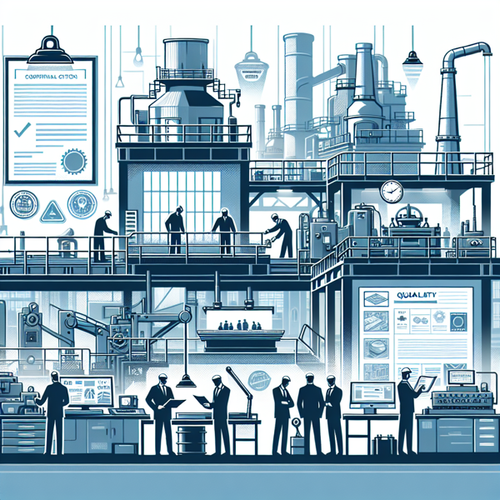
Ensuring safety, maximizing productivity, and achieving sustainability are core demands for modern businesses in the metallurgical industry. To meet these expectations, adherence to a robust set of international standards for equipment is now a must for companies of all sizes. Covering areas from foundry machinery terminology to the latest low-carbon technologies in steel plants, these standards are essential for facilitating communication, maintaining secure operations, safeguarding the environment, and enabling rapid, scalable growth. This overview examines four pivotal standards that define today’s best practices and regulatory requirements for metallurgical equipment, helping organizations not only comply but excel in a globalized industry.
Overview / Introduction
The Role of Standards in the Metallurgical Industry
The metallurgical industry forms the backbone of many sectors—constructing everything from skyscrapers to essential infrastructure. Within this highly technical field, the safe, efficient, and sustainable operation of heavy machinery is non-negotiable. As technologies evolve and regulations tighten, international standards for metallurgical equipment have become a foundation for operational excellence and legal compliance.
These standards help businesses:
- Align operations with global best practices
- Reduce the risk of workplace accidents and environmental harm
- Streamline communication via unified technical language
- Implement the latest eco-friendly technologies
- Scale safely and reliably across global markets
This article provides an accessible guide to four key standards in the field:
- ISO 23472-2:2020 — Vocabulary for molding/coremaking machinery
- ISO/TR 25088:2026 — Guidance for low-carbon steel technology
- SIST EN ISO 23063:2025 — Safety requirements for HP die casting
- SIST EN ISO 23779:2025 — Safety and environmental rules for shot blasting
Read on to learn what these standards cover, why they matter, and how your business can benefit from their implementation.
Detailed Standards Coverage
ISO 23472-2:2020 - Unifying Foundry Machinery Vocabulary
Foundry machinery — Vocabulary — Part 2: Molding and coremaking machines and other equipment related to non-permanent mold casting process
This standard plays a foundational role by setting out precise terminology for molding and coremaking machines, as well as ancillary equipment used in non-permanent mold casting. It covers the basic concepts, functions, mechanisms, and parameters of foundry machinery critical to sand casting and other non-permanent mold processes.
Implementing ISO 23472-2:2020 ensures that manufacturers, engineers, and operators speak a common technical language—vital for international projects, technical documentation, and compliance across borders. Clarity in terminology dramatically reduces miscommunication, errors, and rework, which directly boosts productivity and quality.
What does the standard cover?
- Definitions for over 100 types of machinery and equipment (from air-flow-squeeze molding lines to sand reclamation units)
- Specific terms for machine parts, processes (e.g. cold box, hot box, jolt molding), equipment types, and operational concepts
- Application guidance for manufacturers, documentation writers, and technical educators
- Structured index for easy cross-reference
Who should comply?
- Foundry machinery manufacturers
- Engineering firms in metal casting
- Technical writers and trainers
- Quality assurance professionals
Practical Implications
- Unifies technical communication globally
- Eases the development and updating of further process or safety standards
- Supports training and skills transfer, reducing onboarding costs
- Lowers the risk of mistakes stemming from ambiguous terminology
Key highlights:
- Comprehensive technical vocabulary for non-permanent mold casting
- Supports cross-functional teams and international supply chains
- Aids in drafting clear, precise documentation and specifications
Access the full standard:View ISO 23472-2:2020 on iTeh Standards
ISO/TR 25088:2026 - Low-Carbon Technologies for Steel Plants
Guidance for the application of low-carbon technologies in steel plants
With climate change firmly in the global spotlight, steelmaking’s transformation to greener production is on every company’s agenda. ISO/TR 25088:2026 offers comprehensive guidance on applying low-carbon technologies throughout all stages of steel production—including sintering, pelletizing, coking, ironmaking, steelmaking, casting, and rolling.
This technical report outlines leading low-carbon and carbon-neutral technologies, process innovations, and carbon capture solutions suitable for steel plants at different stages of maturity. It acknowledges the diversity of pathway options depending on plant circumstances and encourages continuous progress as technologies evolve.
What does the standard cover?
- Categories of low-carbon tech: smelting breakthroughs, process optimization, resource recycling, and carbon capture/utilization (CCU)
- Detailed descriptions of specific technologies, e.g. hydrogen-based direct reduction, near-zero emission electric arc furnaces, enhanced recycling
- Maturity and applicability analysis for each technology, allowing tailored adoption
- Guidance on integrating decarbonization into operational strategy
Who should comply?
- Steel plant owners and operators
- Environmental compliance officers
- Process engineers
- Sustainability managers
Practical Implications
- Identifies and prioritizes the most impactful decarbonization options for each plant
- Provides a roadmap to stay ahead of regulatory pressures and international ESG benchmarks
- Reduces long-term cost of compliance by proactive technology adoption
- Attracts investment through clear low-carbon credentials
Key highlights:
- Covers the latest decarbonization technologies and strategies
- Emphasizes actionable guidance and flexibility for different enterprise needs
- Facilitates significant cuts in greenhouse gas emissions and resource use
Access the full standard:View ISO/TR 25088:2026 on iTeh Standards
SIST EN ISO 23063:2025 - Safety for High Pressure Die Casting Machines
Foundry machinery - Safety requirements for high pressure die casting machines (ISO 23063:2024)
Safety in foundries is paramount, especially around high-pressure die casting machines (HPDCM), which operate under intense thermal and mechanical loads. SIST EN ISO 23063:2025 establishes mandatory safety measures and protective protocols for HPDCMs, including their installation, operation, maintenance, and interface with ancillary equipment (e.g., furnaces, feeders, cooling systems).
This standard covers both hot-chamber and horizontal cold-chamber die casting machines, detailing essential design and operational requirements to mitigate hazards such as moving parts, thermal risks, electrical faults, and access control. It is aligned with EU machinery safety directives, providing a presumption of conformity.
What does the standard cover?
- Identification of significant hazards for HPDCMs and foreseeable misuse scenarios
- Requirements for guards, safety systems, emergency stops, and fail-safes
- Protocols for safe setup, use, decommissioning, and maintenance
- Interface specifications for connecting ancillary equipment
- Clear guidelines for instructions, warning systems, and marking
Who should comply?
- HP die casting machine manufacturers
- Foundry safety and maintenance teams
- Plant managers and compliance teams
- Equipment integrators
Practical Implications
- Reduces workplace injury and property damage risks
- Ensures compliance with European and international machinery safety regulations
- Streamlines the commissioning and operator training process
- Minimizes liability and boosts operational reliability
Key highlights:
- Mitigates hazards of high-pressure casting through design and controls
- Covers all machine lifecycle stages—from setup to decommissioning
- Integrates with broader safety management systems and regulatory requirements
Access the full standard:View SIST EN ISO 23063:2025 on iTeh Standards
SIST EN ISO 23779:2025 - Safety & Environmental Requirements for Shot Blasting Machinery
Shot blasting machinery - safety and environmental requirements (ISO 23779:2024)
Shot blasting is vital for cleaning, finishing, and preparing metal surfaces across the metallurgical sector. SIST EN ISO 23779:2025 sets comprehensive requirements for the safe and environmentally responsible design, use, and maintenance of shot blasting machinery, including wheel blasters, air blasters (dry and wet), and combined units.
It addresses not only operational safety—from guarding moving parts to emergency stops—but also the minimization of energy use and environmental footprint. The standard takes into account functional interfaces with external systems and the lifecycle impact, ensuring machines are safer and greener by design.
What does the standard cover?
- All significant hazards relevant to shot blasting machinery in typical use scenarios
- Environmental impact minimization, including energy efficiency and emissions
- Safety measures: guards, control systems, emergency stops, noise reduction
- Integration and interface guidelines for connections (air, electrical, exhaust, safety circuits)
- Guidance for installation, operation, and maintenance manuals
Who should comply?
- Shot blasting machine manufacturers and plant operators
- EHS (environment, health, safety) managers
- Maintenance and operations personnel
- Equipment integrators for ancillary systems
Practical Implications
- Protects workers from mechanical, electrical, and environmental hazards
- Simplifies regulatory approval processes and boosts customer confidence
- Reduces lifecycle energy costs and emissions
- Supports risk assessment for older or legacy systems
Key highlights:
- Dual focus on safety and environmental impact
- Applies to wheel, air, and combination blasting systems
- Encourages machine designs that are inherently safer and resource-efficient
Access the full standard:View SIST EN ISO 23779:2025 on iTeh Standards
Industry Impact & Compliance
Why Standards Compliance Matters
The adoption of internationally recognized standards in metallurgy is not simply a box-ticking exercise. It’s a strategic choice that yields tangible business returns:
- Productivity gains: Unified terminology, streamlined procedures, and modern safety features reduce downtime and mistakes, while boosting throughput.
- Enhanced safety: Rigorous safety requirements decrease the risk of injury, equipment failure, and costly process interruptions.
- Sustainable growth: Carbon footprint reduction and efficient resource use position businesses to meet customer and investor expectations, as well as regulatory requirements.
- Scalability: Global standards future-proof operations, allowing easier entry into new markets and smoother expansion projects.
- Risk mitigation: Legal and reputational hazards from non-compliance (such as regulatory fines, site shutdowns, or accidents) are drastically reduced.
Risks of Non-Compliance:
- Regulatory penalties (including legal actions and export bans)
- Workplace injuries and fatal accidents
- Increased insurance and operational costs
- Loss of customer or investor trust
Firms that adopt and maintain these standards demonstrate commitment to operational excellence, safety, and environmental stewardship—all of which are increasingly demanded by clients and stakeholders worldwide.
Implementation Guidance
How to Successfully Adopt Metallurgical Equipment Standards
1. Gap Assessment:
- Review current equipment, procedures, and documentation against the latest standard requirements.
- Identify gaps in terminology, safety, environmental performance, or process controls.
2. Training & Communication:
- Ensure all stakeholders understand the terminology and requirements (ISO 23472-2:2020 is especially useful for training engineers, operators, and technical writers).
- Hold workshops on safety and environmental standards for relevant personnel.
3. Process & Equipment Upgrade:
- Modernize or retrofit equipment to meet safety and environmental standards (e.g., guards, control systems, energy-saving features).
- Work with suppliers to source compliant machinery and ancillary devices.
4. Documentation & Controls:
- Update technical documentation and operational manuals in line with standard requirements.
- Implement verification and maintenance procedures as specified in each standard.
5. Continuous Improvement:
- Regularly review standards (they evolve as technologies and regulations mature).
- Audit systems and process lines for compliance and performance gaps.
Resources for Organizations:
- iTeh Standards for full standard texts and regular updates
- Industry associations and technical committees
- Certified safety and environmental consultants specializing in metallurgy
Conclusion / Next Steps
Metallurgical equipment standards are no longer optional—they are the benchmark for safe, efficient, and sustainable operations in a world of increasing complexity and scrutiny. By understanding and implementing key international standards like ISO 23472-2:2020, ISO/TR 25088:2026, SIST EN ISO 23063:2025, and SIST EN ISO 23779:2025, organizations in the metallurgical sector can:
- Increase productivity and reduce costly errors
- Secure workplace safety and regulatory compliance
- Lower environmental impact and strengthen their sustainability profile
- Scale confidently into new markets and technologies
Take the next step: Explore each standard in depth and commit to a structured implementation plan. By aligning with global best practices, your business is well-placed for future growth, resilience, and reputation as a leader in the field.
For the most current documents, implementation tools, and compliance resources, visit iTeh Standards, your authoritative source for international standards in metallurgy and beyond.
Categories
- Latest News
- New Arrivals
- Generalities
- Services and Management
- Natural Sciences
- Health Care
- Environment
- Metrology and Measurement
- Testing
- Mechanical Systems
- Fluid Systems
- Manufacturing
- Energy and Heat
- Electrical Engineering
- Electronics
- Telecommunications
- Information Technology
- Image Technology
- Precision Mechanics
- Road Vehicles
- Railway Engineering
- Shipbuilding
- Aircraft and Space
- Materials Handling
- Packaging
- Textile and Leather
- Clothing
- Agriculture
- Food technology
- Chemical Technology
- Mining and Minerals
- Petroleum
- Metallurgy
- Wood technology
- Glass and Ceramics
- Rubber and Plastics
- Paper Technology
- Paint Industries
- Construction
- Civil Engineering
- Military Engineering
- Entertainment