


Key Standards for Metallurgical Equipment: Enhancing Productivity, Safety, and Green Innovation
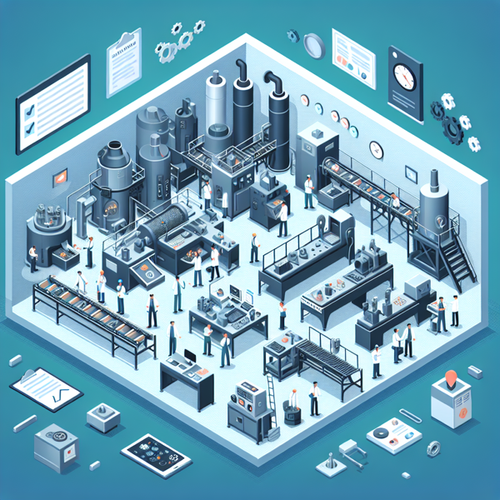
Modern metallurgy is at a turning point, where innovative equipment, operational efficiency, workplace safety, and environmental sustainability drive competitive success. For organizations in the metallurgical industry—be it a high-output steel plant, a specialty foundry, or a technology supplier—adherence to international standards is not simply recommended, but essential. This article delves into four pivotal standards that collectively form the backbone of quality, safety, and green progression in metalcasting, steelmaking, and cleaning operations. These standards set the vocabulary, requirements, and practices that streamline communication, raise productivity, minimize workplace hazards, and position companies on the cutting edge of the global low-carbon transition.
Overview / Introduction
The metallurgical industry is a vital pillar of manufacturing, providing the raw materials and machined components that fuel almost every sector—automotive, construction, electronics, energy, and more. The sheer engineering complexity of equipment for molding, casting, heat treating, and surface preparation underlines the sector’s need for common language, rigorous safety protocols, and sustainable innovation.
Why do standards matter so much in this industry?
- Consistency and clarity: Reduces miscommunication between global teams, suppliers, and regulators.
- Operational safety: Minimizes risks to personnel in environments with high temperatures, moving machinery, and hazardous materials.
- Increased productivity: Provides blueprints for efficient workflows, maintenance procedures, and integration.
- Sustainability and compliance: Sets a structured path for implementing new greener technologies and reducing emissions.
- Market access and competitive edge: Global acceptance of standardized practices is often required for procurement, tenders, or certification.
In this comprehensive overview, we’ll walk through four key international standards, highlighting their scope, requirements, and real-world benefits for businesses embracing advanced metallurgical equipment.
Detailed Standards Coverage
ISO 23472-2:2020 - Standardizing Vocabulary for Foundry Molding and Coremaking Equipment
Foundry machinery — Vocabulary — Part 2: Molding and coremaking machines and other equipment related to non-permanent mold casting process
This standard is the go-to reference for anyone working with or supplying foundry equipment for the non-permanent mold casting process—primarily sand casting but also covering a range of evolving technologies. ISO 23472-2:2020 meticulously defines terminology for equipment such as molding machines, coremaking centers, knock-out devices, sand reclamation equipment, and auxiliary components. Having a shared vocabulary eliminates confusion in technical development, contract negotiations, equipment specification, maintenance, and training.
What does this mean for industry players? A harmonized language improves accuracy in technical documentation, international procurement, and cross-border project execution. It’s also indispensable for training, knowledge transfer, and troubleshooting in multinational teams or across vendor-customer chains.
Key highlights:
- Defines over 150 technical terms covering machinery, process steps, and equipment characteristics
- Applies to all relevant sectors: foundry machine builders, end-users, technical authors, and educators
- Enables easier compliance with other related standards and documentation
Access the full standard:View ISO 23472-2:2020 on iTeh Standards
ISO/TR 25088:2026 - Guidance for Adopting Low-Carbon Technologies in Steel Plants
Guidance for the application of low-carbon technologies in steel plants
As net-zero targets and climate-related regulatory pressures mount worldwide, steelmakers are challenged to overhaul legacy processes. ISO/TR 25088:2026 offers a comprehensive roadmap for decarbonizing the entire iron and steel production value chain. It gives a rigorous, technology-neutral overview of low-carbon options at every process stage: from sintering, coking, and ironmaking, through steelmaking, continuous casting, and rolling.
What’s included?
- Classification of low-carbon technologies by process impact: smelting breakthroughs, resource recycling, process optimization (e.g., near net shape rolling), and carbon capture utilization (CCU).
- Clear descriptions of technologies such as hydrogen-based direct reduction, plasma smelting, high-scrap ratio smelting, and innovations in renewable energy integration.
- A summary of technology maturity, feasibility, and best practices for assessing site-specific applicability.
Steel plants using this guidance are positioned to balance environmental targets with productivity and competitiveness—essential for long-term scaling and global market access.
Key highlights:
- Up-to-date, evolving guidance that will track technological advances
- Designed for steelmakers of all sizes, from global leaders to local producers
- Supports compliance with international decarbonization and sustainability frameworks
Access the full standard:View ISO/TR 25088:2026 on iTeh Standards
SIST EN ISO 23063:2025 - Safety Requirements for High Pressure Die Casting Machines
Foundry machinery - Safety requirements for high pressure die casting machines (ISO 23063:2024)
Die casting is a demanding process involving molten metals, significant forces, and tight cycle times. Ensuring operator safety and protecting property is critical. SIST EN ISO 23063:2025 details the safety and risk reduction requirements for high pressure die casting machines, including both hot-chamber and horizontal cold-chamber types used across automotive, electronics, and general engineering.
Who must comply? Manufacturers, integrators, plant owners, and maintenance providers working with HPDCMs, as well as those supplying or specifying ancillary systems such as melting furnaces, die heating and cooling, loading/unloading robots, and sprayer or dosing units.
Key requirements cover:
- Mechanical, electrical, and control system hazards (e.g., guarding, interlocks, emergency stops)
- Handling of hot fluids, release agents, and pressure systems
- Safe access for maintenance, operator ergonomics, labeling, and documentation
- Risk mitigation for both intended use and reasonably foreseeable misuse (e.g., operator error or unexpected process variation)
Key highlights:
- Aligns with EU Machinery Directive for presumption of conformity
- Covers all significant hazards from transport/commissioning to operation and decommissioning
- Ensures safety integration is embedded from early design through end-of-life
Access the full standard:View SIST EN ISO 23063:2025 on iTeh Standards
SIST EN ISO 23779:2025 - Safety and Environmental Mandates for Shot Blasting Machinery
Shot blasting machinery - safety and environmental requirements (ISO 23779:2024)
Surface finishing, cleaning, and preparation using shot blasting machinery is integral to metallurgical product quality, but exposes workers to powerful mechanical energy, dust, noise, and hazardous emissions. SIST EN ISO 23779:2025 defines comprehensive safety and environmental requirements for a wide range of equipment—wheel blasting, air blasting, and combined units—in fixed installations.
What’s covered?
- Identification and mitigation of significant hazards in stationary shot blasting machines
- Environmental benchmarks: energy efficiency, minimization of emissions (noise, dust, chemical), waste handling, and system integration with air, water, and energy supplies
- Safety controls, fixed and interlocking guards, emergency stops, and safe interaction with transport or robotic handling systems
- Documentation for installation, operation, and maintenance by trained personnel
This standard is imperative for equipment builders, plant owners, consultants, and operators responsible for environmental management and occupational health and safety.
Key highlights:
- Minimizes accident and exposure risks in blasting operations
- Enables efficient, low-impact, and energy-responsible surface treatment
- Facilitates industrial scaling and integration with smart factory systems
Access the full standard:View SIST EN ISO 23779:2025 on iTeh Standards
Industry Impact & Compliance
The adoption of internationally recognized equipment standards is an operational and business necessity in today’s metallurgical sector. These standards impact day-to-day operations far beyond mere regulatory "box ticking."
Direct impacts include:
- Improved productivity: By defining best practices for machinery usage, workflow integration, and terminology, standards minimize downtime, errors, and rework.
- Enhanced safety: Statistically, companies embedding rigorous safety standards experience fewer accidents, lower insurance premiums, and improved staff morale and retention.
- Legal and market compliance: Standards like SIST EN ISO 23063:2025 and SIST EN ISO 23779:2025 are harmonized with EU directives and increasingly referenced in North America, Asia, and the Middle East. Non-compliance can block access to lucrative contracts or markets.
- Environmental leadership: ISO/TR 25088:2026 sets a path for steelmakers to credibly claim low-carbon credentials, helping meet ESG (Environmental, Social, Governance) expectations from investors and supply chain partners.
- Scalability: Process standardization enables rapid expansion—whether replicating a plant design internationally or integrating with Industry 4.0 digital systems.
Risks of non-compliance:
- Enforcement actions, fines, and downtime
- Loss of market access or contract eligibility
- Brand damage due to safety or environmental incidents
Implementation Guidance
Transitioning to full standards compliance is strategic—requiring planning, resource allocation, and sometimes a cultural shift. Here’s how leading metallurgical companies approach the challenge:
Gap analysis and planning
- Review current equipment, safety practices, and documentation against the latest standards
- Identify priority areas for action (e.g., safety upgrades, terminology harmonization, low-carbon projects)
Team training and awareness
- Ensure all levels—from operators to engineers to management—understand new requirements, especially for safety and process documentation
- Use standards-based training materials as a core part of onboarding and continuing education
Process integration
- Embed equipment standards into procurement, vendor selection, and contract language
- Develop checklists and SOPs (standard operating procedures) aligned with requirements
Technology and equipment upgrades
- Retrofit existing machinery with necessary safeguarding, emergency controls, and environmental enclosures
- Prioritize equipment replacement based on risk and business priorities
Continuous improvement
- Regularly audit practices and update safety/environmental controls as standards evolve (especially relevant for ISO/TR 25088:2026, an evolving guideline for decarbonization)
- Leverage digitalization (IoT, analytics, automation) to monitor real-time compliance and capture improvement opportunities
Resources for implementation:
- National standards bodies and online databases such as iTeh Standards
- Professional training organizations specializing in metallurgy
- Equipment manufacturers can often provide technical guidance or pre-validated solutions
- Industry consortia focused on safety, environmental management, and low-carbon innovation
Conclusion / Next Steps
The strategic implementation of these four standards—ISO 23472-2:2020, ISO/TR 25088:2026, SIST EN ISO 23063:2025, and SIST EN ISO 23779:2025—offers much more than a compliance pathway. They provide a universalized, future-focused toolkit for metallurgical companies aiming for excellence in productivity, safety, sustainability, and market leadership.
Key recommendations:
- Start by identifying which standards are directly applicable to your operations (equipment, processes, or safety/environmental compliance gaps)
- Engage all relevant stakeholders, including staff, suppliers, and external experts, in your implementation journey
- Use updates and upcoming revisions (for example, evolving decarbonization guidance) as opportunities to revisit KPIs and business models
- Leverage standards as the foundation for digital transformation and smart manufacturing
For plant managers, safety officers, process engineers, and business leaders, mastering these standards is a critical investment in operational resilience, risk mitigation, and strategic growth. Stay current and competitive by exploring the full texts and integrating these best practices throughout your organization.
https://standards.iteh.ai/catalog/standards/iso/4d1a068f-8be3-4c3a-9dd9-44a8fa46885b/iso-23472-2-2020https://standards.iteh.ai/catalog/standards/iso/dc730be2-6624-4b50-a75c-62558650fe85/iso-tr-25088-2026https://standards.iteh.ai/catalog/standards/sist/a894f4d1-ebe8-4bf4-8b8f-59585a5e710d/sist-en-iso-23063-2025https://standards.iteh.ai/catalog/standards/sist/00c15b10-9e3d-4054-ba6d-e2dc8bdf1561/sist-en-iso-23779-2025
Categories
- Latest News
- New Arrivals
- Generalities
- Services and Management
- Natural Sciences
- Health Care
- Environment
- Metrology and Measurement
- Testing
- Mechanical Systems
- Fluid Systems
- Manufacturing
- Energy and Heat
- Electrical Engineering
- Electronics
- Telecommunications
- Information Technology
- Image Technology
- Precision Mechanics
- Road Vehicles
- Railway Engineering
- Shipbuilding
- Aircraft and Space
- Materials Handling
- Packaging
- Textile and Leather
- Clothing
- Agriculture
- Food technology
- Chemical Technology
- Mining and Minerals
- Petroleum
- Metallurgy
- Wood technology
- Glass and Ceramics
- Rubber and Plastics
- Paper Technology
- Paint Industries
- Construction
- Civil Engineering
- Military Engineering
- Entertainment