


MECHANICAL SYSTEMS AND COMPONENTS Standards Summary – October 2025 (Part 1)
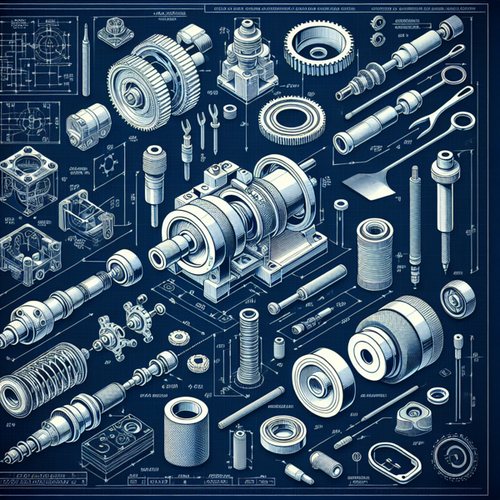
October 2025 Monthly Standards Overview: Mechanical Systems and Components for General Use (Part 1)
Looking back at the standardization activity of October 2025 in the Mechanical Systems and Components for General Use sector, it's clear that this period brought impactful developments that resonate across design, manufacturing, compliance, and operational excellence. Five key ISO standards—spanning belt drives and plain bearings—were finalized and published, reflecting both technical refinement and industry alignment with evolving requirements. This retrospective analysis reviews these standards, providing context, actionable insights, and a synthesis of their implications for engineers, quality managers, compliance professionals, and procurement specialists keen to ensure updated practices in line with international benchmarks.
October's standards releases underscore ongoing priorities in dimensional control, electrical safety, and advanced calculation methodologies. For professionals seeking to maintain robust compliance strategies, optimize mechanical performance, or simply stay informed of industry trends, this summary brings together the essential details and context you may have missed.
Monthly Overview: October 2025
October 2025 was a month marked by substantial updates within the Mechanical Systems and Components for General Use arena, specifically in belt drive technologies and plain bearing design methodology. The month's publications demonstrate ISO's continued commitment to technical accuracy, harmonization, and the application of practical, proven analytical methods.
Key themes observed this month include:
- Consistent dimensional definitions for V-belts and tight control over length tolerances
- Safer electrical characteristics for antistatic belt applications, especially where explosion or fire risk is a concern
- A new, cohesive series for hydrodynamic plain journal bearing calculation—establishing uniformity in engineering analysis, from foundational approaches (Part 1) to detailed characteristic values (Parts 2 & 3)
Relative to prior months, October's activity saw increased focus on the integrative calculation and safe operational analysis of critical components used across power transmission and rotating equipment. This trend mirrors broader industry shifts toward predictive analysis, more rigorous safety margins, and data-driven design choices, as mechanical systems grow in complexity and operational scope.
Standards Published This Month
ISO 4184:2025 – Belt Drives: Classical and Narrow V-belts – Lengths in Datum System
Belt drives – Classical and narrow V-belts – Lengths in datum system
This third edition of ISO 4184 defines standardized requirements for the lengths of both classical and narrow V-belts, covering sections Y, Z, A, B, C, D, and E (classical), as well as SPZ, SPA, SPB, and SPC (narrow). The document specifies the datum system as a consistent reference point for belt length definitions, offering critical value for manufacturers, OEMs, distributors, and end users who rely on interchangeable and reliably performing V-belts in diverse drive systems.
Key requirements and scope:
- Establishes rules for both manufacture and verification of belt lengths in the datum system
- Provides detailed tolerances for production and set matching
- Includes methods for measuring and checking belt length and center distance variation
- Covers requirements for designation and marking
Revision highlights include a more concise scope, new clauses consolidating technical demands, updated references, and corrected technical details in essential tables.
Who should comply?
- Belt manufacturers, distributors, and procurement professionals
- System designers and maintenance engineers in industrial machinery, automotive power transmission, compressors, pumps, and general mechanical systems
As part of the broader regulatory framework, ISO 4184 ensures global compatibility and quality, reducing mismatches and operational risks when sourcing or integrating V-belts from multiple origin points.
Key highlights:
- Consistent datum-based length definitions for all major V-belt sections
- Clear manufacturing and matching tolerances to facilitate set replacement
- Enhanced clarity and usability for international supply chain integration
Access the full standard:View ISO 4184:2025 on iTeh Standards
ISO 1813:2025 – Belt Drives: Electrical Conductivity of Antistatic Belts
Belt drives – Electrical conductivity of antistatic belts: Characteristics and test methods
ISO 1813:2025 was published as the fifth edition, updating the essential safety and quality requirements for the electrical resistance of antistatic belts. These requirements are vital in contexts where belts could be exposed to explosive atmospheres or settings with elevated fire risk, such as in mining, chemical processing, and grain handling facilities.
Scope and key requirements:
- Defines maximum permissible electrical resistance for antistatic endless V-ribbed belts, joined V-belts, single V-belts, and hexagonal belts
- Specifies production control and individual proof testing methods (including conditioning, apparatus, electrode configuration, and number of tests)
- Ensures belts are sufficiently conductive to dissipate electrostatic charges that could otherwise cause hazardous ignition events
Significant updates in the 2025 revision include the addition of technical terms and a revision to surface resistivity measurement units to maintain consistency with modern electrical standards.
Who needs to comply?
- Manufacturers of V-belts intended for explosive/fuel-rich environments
- Facilities engineers, EHS professionals, and procurement teams sourcing antistatic belt products
- Industrial and agricultural equipment OEMs
ISO 1813 is often referenced in risk management procedures, plant safety documentation, and international procurement specifications, underlining its significance in operational safety and compliance.
Key highlights:
- Maximum resistance thresholds for all relevant belt types
- Factory and laboratory test methods to verify belt conductivity
- Critical to ATEX and fire/explosion risk safety compliance
Access the full standard:View ISO 1813:2025 on iTeh Standards
ISO 31657-1:2025 – Plain Bearings: Calculation of Multi-lobed and Tilting Pad Journal Bearings
Plain bearings – Hydrodynamic plain journal bearings under steady-state conditions – Part 1: Calculation of multi-lobed and tilting pad journal bearings
This first edition of ISO 31657-1 provides the foundational calculation framework for hydrodynamic plain journal bearings, focusing on both multi-lobed configurations and tilting pad bearings. The calculation procedures outlined here are designed for steady-state operation and are widely applicable in turbines, electric motors, compressors, gearboxes, and pumps—where operational safety and precision engineering are paramount.
What it covers:
- General principles, engineering assumptions, and boundary conditions for steady-state bearing analysis
- Analytical approaches for load-carrying capacity, friction, lubricant flow rate, heat balance, film temperature, film pressure, stability, and vibration
- Applicability to symmetrical multi-lobed and tilting pad bearing designs (e.g., two-, three-, four-lobe, four- and five-pad bearings)
This standard is meant for use alongside Parts 2 and 3 in the series, which supply characteristic values needed for practical design using the outlined method.
Key audiences include:
- Mechanical engineers, bearing designers, and rotating equipment specialists
- OEMs and system integrators of high-speed, heavy-duty, or mission-critical rotating machinery
- Compliance officers requiring validation of engineering calculations as part of documentation
ISO 31657-1 enables a simplified, yet robust analysis pathway, supporting designers where advanced numerical simulation tools might not be available or required.
Key highlights:
- Unified framework for multi-lobed and tilting pad bearing design
- Steady-state predictive calculations for critical engineering parameters
- Supports safe, reliable operation in high-capacity rotating machinery
Access the full standard:View ISO 31657-1:2025 on iTeh Standards
ISO 31657-2:2025 – Plain Bearings: Characteristic Values for Multi-lobed Journal Bearings
Plain bearings – Hydrodynamic plain journal bearings under steady-state conditions – Part 2: Characteristic values for calculation of multilobed journal bearings
Published concurrently with Part 1, ISO 31657-2 defines the essential characteristic values required for the calculation of two-, three-, and four-lobe journal bearings. These values are needed to execute the procedures from Part 1, ensuring that real-world design and optimization processes can be completed using accurate, traceable data.
Scope:
- Delivers tables and curves containing characteristic values (static and dynamic) under specified geometric and operating conditions
- Covers parameters such as Sommerfeld numbers, relative eccentricity, attitude angle, minimum film thickness, friction parameters, lubricant flow rates, and stiffness/damping coefficients
- Includes separate sections for each bearing configuration with explicit boundary conditions for geometric variables
Target users:
- Bearing designers and rotating machinery engineers
- Analysts validating compliance with ISO prescriptive engineering methods
- Equipment manufacturers working across turbines, compressors, industrial gearboxes, and large pumps
ISO 31657-2's normative reference to Part 1 cements the utility of this calculation chain, supporting both basic and advanced reliability assessments without the need for complex, custom modeling.
Key highlights:
- Dimensionless characteristic values for standardized multi-lobed bearing analysis
- Essential reference for safe, reliable hydrodynamic bearing design
- Enables consistent calculation and benchmarking across international projects
Access the full standard:View ISO 31657-2:2025 on iTeh Standards
ISO 31657-3:2025 – Plain Bearings: Characteristic Values for Tilting Pad Journal Bearings
Plain bearings – Hydrodynamic plain journal bearings under steady-state conditions – Part 3: Characteristic values for calculation of tilting pad journal bearings
ISO 31657-3 finalizes the trilogy started with Parts 1 and 2 by establishing characteristic values necessary for analyzing tilting pad journal bearings with four or five pads. These pads may be supported centrally or eccentrically and cover a range of angular spans (80°, 60°, 45°), providing flexibility for different engineering applications.
Content and scope:
- Tabulates and explains fundamental parameters: Sommerfeld numbers, pressure ratios, minimum film thickness, lubricant flow rates, friction parameters, as well as film stiffness and damping coefficients
- Supplies both static and dynamic characteristic values needed for reliable performance prediction and vibration analysis
- Applicable to complex, high-performance hydrodynamic bearing arrangements typically found in power generation, marine propulsion, and high-speed turbo-machinery
ISO 31657-3 draws on the calculation framework of Part 1 and builds a bridge to practical application for the most advanced journal bearing architectures.
Targeted at:
- Advanced equipment designers
- Rotating machinery engineers
- Plant reliability and maintenance managers in mission-critical operations
Key highlights:
- Standardizes characteristic values for four- and five-pad tilting journal bearings
- Covers a wide range of structural and loading scenarios
- Integral for vibration and stability calculations in modern machinery
Access the full standard:View ISO 31657-3:2025 on iTeh Standards
Common Themes and Industry Trends
Across these five standards, several interconnected themes emerge:
Emphasis on Dimensional and Operational Consistency: Both the V-belt and bearing standards reinforce the value of measurable, interoperable components—critical as supply chains span multiple countries and vendors. Harmonized measures lower the risk of incompatibility and machine failure.
Focus on Safety—Both Operational and Environmental: ISO 1813 is particularly salient given increasing regulatory scrutiny around explosion protection and EHS (Environment, Health, and Safety) best practices. Interface standards like this underpin due diligence for risk assessments and worker safety.
Advances in Calculation and Predictive Engineering: The ISO 31657 series converges proven mechanical principles with accessible, standardized methods. These calculation procedures reflect a wider movement toward model-based engineering, reliability predictions, and digital validation—even outside the realm of numerically intensive CAD/CAE platforms.
Support for Equipment Modernization and Retrofitting: By ensuring backward compatibility (notably in ISO 4184’s classic/narrow belt delineations) and comprehensive characteristic value separation (ISO 31657-2 and -3), these standards enable both new design and effective retrofitting of legacy assets.
Sectors including industrial manufacturing, process engineering, energy, and transport all stand to benefit from the clarity and rigor these standards now embed in commonly used mechanical components.
Compliance and Implementation Considerations
For organizations affected by these standards, several priorities should guide their approach:
Assessment and Gap Analysis:
- Inventory current belt and bearing practices relative to the latest ISO guidance.
- Identify any specification mismatches in length, tolerances, or test procedures for belts in critical environments.
- For plain bearings, verify that calculation methods and data references are updated to the ISO 31657 series.
Procurement and Supplier Alignment:
- Ensure all purchased belts and bearings either comply with, or exceed, the relevant 2025 ISO requirements.
- Update supplier pre-qualification and drawing/specification templates to reference the latest standard versions.
Documentation and Change Management:
- Update technical documentation (drawings, maintenance instructions, design books) to cross-reference the new ISO standards.
- Where significant, communicate changes and training needs to staff and procurement teams.
Testing and Quality Assurance:
- For belts, implement or update test regimes for electrical conductivity and length control per ISO 1813 and 4184.
- For bearings, ensure the design and performance validation leverages the standardized calculation frameworks and characteristic values provided by ISO 31657-1,-2,-3.
Timeline and Transition:
- Most organizations should plan for compliance within 6–18 months of publication, depending on equipment upgrade or procurement cycles.
- Early adopters, especially in regulated or high-risk environments, may benefit from accelerated implementation for safety and operational assurances.
Recommended resources:
- Access standards via iTeh Standards for up-to-date documents and implementation tools.
- Leverage ISO guidance materials and sectoral implementation guides where available.
- Engage in relevant technical committees or user groups to share best practices and challenges.
Conclusion: Key Takeaways from October 2025
The October 2025 publication cycle has set new benchmarks for mechanical system safety, reliability, and global interoperability. The focus on belt drives and plain bearing calculation underscores the continuing relevance of foundational mechanical standards even as industry embraces digitalization and advanced predictive engineering.
Main recommendations for professionals in this sector:
- Review and update all technical procedures, procurement specifications, and calculation methods to reference the latest ISO standards outlined here.
- Engage proactively with suppliers and integrators to ensure they are transitioning in line with these international expectations.
- Monitor design and operational risk, particularly in contexts where antistatic performance or high-reliability rotating machinery is critical.
Staying current with such standards ensures not only compliance, but fosters supplier interoperability, product safety, and long-term asset performance—key for any engineer, quality manager, or compliance officer overseeing mechanical systems today.
Continue to Part 2 for coverage of additional standards from October 2025 impacting this dynamic field.
Categories
- Latest News
- New Arrivals
- Generalities
- Services and Management
- Natural Sciences
- Health Care
- Environment
- Metrology and Measurement
- Testing
- Mechanical Systems
- Fluid Systems
- Manufacturing
- Energy and Heat
- Electrical Engineering
- Electronics
- Telecommunications
- Information Technology
- Image Technology
- Precision Mechanics
- Road Vehicles
- Railway Engineering
- Shipbuilding
- Aircraft and Space
- Materials Handling
- Packaging
- Textile and Leather
- Clothing
- Agriculture
- Food technology
- Chemical Technology
- Mining and Minerals
- Petroleum
- Metallurgy
- Wood technology
- Glass and Ceramics
- Rubber and Plastics
- Paper Technology
- Paint Industries
- Construction
- Civil Engineering
- Military Engineering
- Entertainment