


Certification Standards for Gears: Concepts, Measurement, and Surface Durability
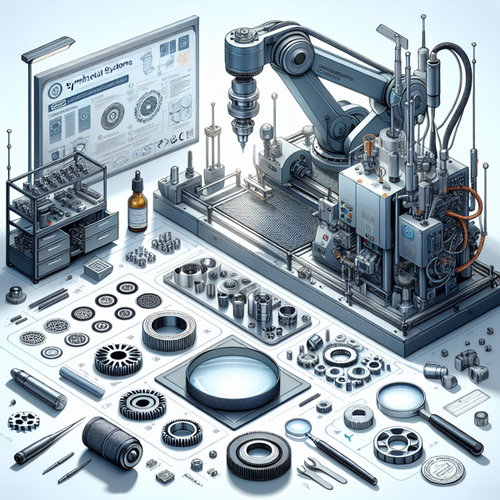
Ensuring the reliability, safety, and precision of mechanical drive systems starts with the gears at their core. In sectors ranging from automotive manufacturing to robotics and energy, the standards underpinning gear certification have become indispensable for businesses committed to high performance and global competitiveness. This article details three foundational international standards—ISO 21771-1:2024, ISO 21771-2:2025, and SIST ISO 6336-2:2020—providing practical insights into their requirements, significance, and implementation for all types of organizations. By adopting these standards, businesses not only comply with regulatory and quality expectations but also unlock increased productivity, security, and the scalable growth demanded by modern industry leaders.
Overview / Introduction
Gears are essential mechanical components that transmit torque and motion in countless machines and industrial processes. Their effectiveness and longevity depend on precision engineering and strict adherence to internationally recognized standards. As industries embrace automation, digital manufacturing, and globalization, the demand for certified gears—backed by rigorous specifications—has surged. Modern gear standards set clear criteria for geometry, measurement, and durability, directly impacting component performance, safety, maintenance costs, and market reputation.
This guide covers:
- Core concepts and geometry of cylindrical involute gears
- Calculation and measurement of tooth thickness and backlash
- Determination of surface durability and pitting resistance
- Practical implications for manufacturers, engineers, quality managers, and business owners
By the end, you will understand how embracing these standards can help scale your business, streamline certification, and future-proof your mechanical systems.
Detailed Standards Coverage
ISO 21771-1:2024 – Core Principles and Geometric Foundations
Cylindrical involute gears and gear pairs — Part 1: Concepts and geometry
The foundation of every precise gear system is its geometry. ISO 21771-1:2024 stipulates the geometric concepts, parameters, and terminology for cylindrical involute gears—establishing a universal language for design and manufacturing.
This standard covers all critical geometric details:
- Definitions and formulas for gear teeth geometry (including involute helicoid tooth flanks)
- Parameters valid for any pressure angle and all gear sizes/materials
- Guidance for gears with parallel or crossed axes, ensuring consistent gear ratios
- Flank modifications such as tip/root relief and crowning
What this means in practice: Manufacturers, designers, and quality assurance teams rely on ISO 21771-1:2024 to ensure accurate gear modeling, production, and inspection. This helps eliminate ambiguity, reduces the risk of mismatch in gear pairs, and supports seamless integration in global supply chains. The standard's inclusion of flank modifications enables manufacturers to optimize gear lifespan, reduce noise and vibration, and improve efficiency.
Who needs to comply?
- Gear manufacturers
- OEMs in transportation, heavy equipment, robotics, and energy
- Design engineers and quality control professionals in mechanical systems
Key highlights:
- Comprehensive coverage of gear and mating gear with the same rack tooth profile
- Applies universally across pressure angles, gear sizes, and tooth modifications
- Defines reference surfaces, datum lines, and standardizes terms and symbols for global consistency
Access the full standard:View ISO 21771-1:2024 on iTeh Standards
ISO 21771-2:2025 – Calculation and Measurement for Certification
Cylindrical involute gears and gear pairs — Part 2: Calculation and measurement of tooth thickness and backlash
Building on the geometric framework, ISO 21771-2:2025 prescribes the methods for calculating and measuring tooth thickness and analyzing backlash in cylindrical gears. Tooth thickness and backlash are critical parameters for ensuring proper meshing, load transmission, and minimizing wear or failure.
Scope and application:
- Procedures to determine specification limits for both external and internal gears with constant ratios
- Relationships among backlash, tooth thickness, centre distance, and allowable tooth deviations
- Suitable for numerous gear types: spur, helical, rack, worm, and sector gears
Implementation in operations: The standard offers detailed calculation methods, covering a wide variety of gear sizes, materials, and production methods. Gear manufacturers use ISO 21771-2:2025 to:
- Specify and verify acceptable tooth thickness during inspection
- Assess and control backlash to balance load-sharing and prevent gear jamming
- Select the right measurement systems (pitch, gears, span, balls/pins, chordal devices)
This standard also distinguishes between different measurement theories and offers recommendations for datum surfaces, master gear tests, and reporting. Proper control of these mechanical characteristics leads to quieter operation, improved durability, and reduced maintenance costs.
Who benefits from compliance?
- Gear producers and suppliers across industries (automotive, aerospace, robotics, etc.)
- Quality managers and calibration laboratories
- Design engineers focused on high-precision applications
Key highlights:
- Universal formulae fit all gear sizes and manufacturing methods
- Explains multiple measurement techniques and data reporting standards
- Essential for gear pair compatibility and certification during audits or export
Access the full standard:View ISO 21771-2:2025 on iTeh Standards
SIST ISO 6336-2:2020 – Surface Durability and Pitting Strength for Longevity
Calculation of load capacity of spur and helical gears - Part 2: Calculation of surface durability (pitting)
Gear durability is determined by resistance to pitting, a surface fatigue phenomenon that can severely impact gear performance and product safety. SIST ISO 6336-2:2020 details formulae and methods for evaluating the surface load capacity—specifically, ensuring gears withstand applied stresses without developing unacceptable pitting.
Key areas covered:
- Calculation formulas for contact stress and permissible contact stress (surface durability)
- Adjustment factors for geometry, load distribution, lubricant film, material quality, and size
- Applicability to oil-lubricated and slower, grease-lubricated transmissions
- Influences covered include contact ratio, helix angle, and life factor
Practical implications: Manufacturers calculate critical safety factors for every gear design, ensuring fielded components operate without premature surface failure. The guidance in this standard allows for reliable, validated methods of assessing gear health under real-world loads and lubrication conditions, safeguarding against catastrophic breakdowns in transmissions and drive trains.
Who must use it?
- Gear designers, tribologists, and mechanical engineers
- Quality assurance teams performing fatigue life estimations
- Manufacturers seeking to certify or export gear products
Key highlights:
- Standardized approach, aligning with global best practices
- Considers practical factors such as material hardness, heat treatment, roughness, and lubrication
- Provides universally accepted safety margins for gear certification
Access the full standard:View SIST ISO 6336-2:2020 on iTeh Standards
Industry Impact & Compliance
Certifying gears according to the above standards is now essential for any organization involved in the manufacturing, integration, or maintenance of mechanical drive systems. Markets and regulators demand compliance, and evidence of proper certification is often a prerequisite for product acceptance, international trade, or participation in high-value supply chains.
How These Standards Affect Businesses
- Reputation: Certification signals quality, adherence to international best practices, and commitment to safety.
- Liability: Reduces the risk of costly recalls or safety incidents due to gear failures.
- Market Access: Many buyers require or prefer internationally standardized gears, especially in regulated sectors.
- Traceability: Provides documented procedures and results supporting warranty claims and audits.
Compliance Considerations
- Periodic audits require documented evidence of adherence to these standards.
- Calibration of inspection and measurement equipment must be maintained in line with the requirements.
- Staff training must be provided on the latest test and certification methods.
Benefits of Adopting These Standards
- Increased productivity through reliable design and reduced rework
- Enhanced security (safety and reliability) for critical gear-driven applications
- Seamless scaling, allowing businesses to serve global markets without redesign
- Lower total cost of ownership via predictable maintenance and longer gear life
- Competitive advantage, helping brands stand out on quality and dependability
Risks of Non-Compliance
- Failures resulting in downtime, warranty claims, or even legal liability
- Barriers to entering new markets, especially where certification is enforced
- Inconsistent product quality and increased returns or customer dissatisfaction
Implementation Guidance
Transitioning to certified gears or upgrading your design/manufacturing workflows for compliance can be managed efficiently with careful planning and access to the right resources.
Typical Implementation Steps
- Familiarize Teams: Ensure all relevant staff (design, production, QA, maintenance) understand the scope and requirements of each standard.
- Gap Analysis: Review existing processes and measurements against standard requirements.
- Upgrade Equipment: Calibrate or invest in the required measurement instruments and testing setups.
- Documentation: Establish clear records, including inspection results, material data, and maintenance logs.
- Training: Provide targeted training on terminology, geometric concepts, measurement methods, and durability calculations.
- Internal Audits: Regularly verify compliance prior to external reviews or customer audits.
- Continuous Improvement: Monitor emerging revisions or related standards for ongoing enhancement.
Best Practices
- Partner with accredited testing laboratories for independent verification.
- Adopt digital tools for geometry modeling, calculation, and automated reporting.
- Develop cross-functional teams to bridge knowledge gaps between design, manufacturing, and QA.
- Engage in standardization workshops and maintain subscriptions to standards updates.
- Use controlled environments for critical inspections (e.g., clean, temperature-stable rooms).
Resources for Organizations
- iTeh Standards offers the latest, authoritative publications with expert support.
- Industry consortia and trade organizations provide guidance and peer-to-peer learning.
- Advanced software is available for simulation, modeling, and certification management.
Conclusion / Next Steps
Certification through compliance with gear standards like ISO 21771-1:2024, ISO 21771-2:2025, and SIST ISO 6336-2:2020 is no longer optional—it's a core requirement for growth, reliability, and international competitiveness. These standards ensure that your gear systems are built on a foundation of rigorous, validated geometric and mechanical principles, support accurate inspection and measurement, and protect long-term durability against the most common forms of gear surface failure.
Key Takeaways:
- Gear performance and market acceptance depend on adherence to international standards.
- Implementing these guidelines increases productivity, security, and operational scalability.
- Non-compliance increases operational risk and limits market opportunities.
- Robust, standard-driven certification processes are now the default for industry leaders.
Recommendations:
- Audit your current gear systems and design workflows against these standards.
- Upgrade measurement and inspection protocols as needed.
- Leverage iTeh Standards for the latest documentation and expert insight.
- Invest in staff training and continuous improvement to stay ahead in global markets.
Explore the referenced standards below for in-depth technical details and ensure your organization is ready for the demands of modern mechanical certification.
Categories
- Latest News
- New Arrivals
- Generalities
- Services and Management
- Natural Sciences
- Health Care
- Environment
- Metrology and Measurement
- Testing
- Mechanical Systems
- Fluid Systems
- Manufacturing
- Energy and Heat
- Electrical Engineering
- Electronics
- Telecommunications
- Information Technology
- Image Technology
- Precision Mechanics
- Road Vehicles
- Railway Engineering
- Shipbuilding
- Aircraft and Space
- Materials Handling
- Packaging
- Textile and Leather
- Clothing
- Agriculture
- Food technology
- Chemical Technology
- Mining and Minerals
- Petroleum
- Metallurgy
- Wood technology
- Glass and Ceramics
- Rubber and Plastics
- Paper Technology
- Paint Industries
- Construction
- Civil Engineering
- Military Engineering
- Entertainment