


Rough-Terrain Trucks: Key Safety Standards for Industrial Variable-Reach Handling
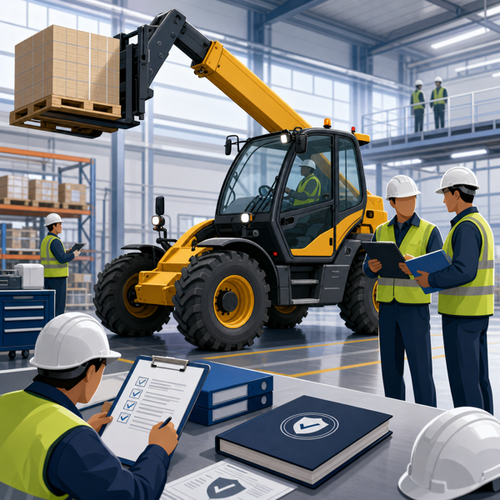
Ensuring safe and efficient handling of materials is a cornerstone of success in today’s demanding industrial and construction sectors. As operations become more complex and environments tougher, robust standards such as SIST EN 1459-1:2018 have become indispensable. This standard specifically addresses the design, safety, and verification requirements for self-propelled variable-reach rough-terrain trucks, which are industrial vehicles capable of handling loads on unimproved ground. Understanding and correctly implementing these guidelines is more crucial than ever for businesses seeking increased productivity, enhanced security, and scalable operations—key themes in modern materials handling.
Overview / Introduction
In the materials handling industry, efficiency and safety go hand-in-hand. Rough-terrain trucks are critical workhorses in sectors like construction, agriculture, mining, and logistics, where loads must be lifted and transported reliably over challenging and uneven terrain. Accidents involving these trucks not only threaten worker safety, but can halt business operations, inflict financial losses, and damage reputations.
This is where international standards, like SIST EN 1459-1:2018 – Rough-terrain trucks - Safety requirements and verification - Part 1: Variable-reach trucks, play a vital role. Developed to harmonize safety regulations across Europe and incorporated globally, this standard sets forth the baseline requirements for designing, manufacturing, and operating variable-reach rough-terrain trucks. Whether you are a manufacturer, contractor, health and safety officer, or fleet manager, this article will walk you through:
- The structure and scope of this foundational standard
- Key specifications and safety measures
- Who must comply and why
- Practical benefits of implementation
- Industry impact and compliance best practices
By the end, you’ll see why implementing these standards isn’t just a box to tick—it’s a strategic decision for safety, productivity, and business growth.
Detailed Standards Coverage
SIST EN 1459-1:2018 - Rough-Terrain Trucks: Safety Requirements for Variable-Reach Trucks
SIST EN 1459-1:2018 – Rough-terrain trucks - Safety requirements and verification - Part 1: Variable-reach trucks
This European standard sets out comprehensive safety requirements for self-propelled, variable-reach rough-terrain trucks—machines equipped with telescopic lifting mechanisms, designed for tough, uneven ground. These trucks are used extensively in construction, agriculture, forestry, and large-scale industrial sites, where they must transport, lift, and precisely place heavy materials or equipment.
Scope and Application:
- Applies to trucks with telescopic booms and variable reach, typically fitted with carriage and fork arms, or other specialist attachments.
- Covers trucks driven on unimproved or rugged terrain; excludes machines like mobile cranes, articulated chassis trucks, vehicles fitted with personnel work platforms, or those primarily designed for container handling or earth moving.
- Excludes hazards related to hybrid/gas/battery power systems, use on public roads, explosion risk areas, underground operations, and certain other niche scenarios.
Key Requirements and Specifications:
- Critical safety functions: Specifies protective measures for controls, brakes, drive trains, electronic and hydraulic systems, and load handling equipment.
- Operator environment: Outlines requirements for controls layout, emergency stops, lighting, cab access, visibility, and ergonomic design.
- Stability and structure: Mandates stability tests, structural robustness of booms and lifting mechanisms, and safe load handling charts.
- Functional verification: Details procedures for factory and in-field verification of all safety features, including operation under malfunction or power failure scenarios.
- Information and markings: Requires clear operator manuals, warnings, graphical symbols, and on-machine marking for critical operating parameters and hazards.
- Maintenance design: Trucks must facilitate safe maintenance with secure access, mechanical supports for elevated booms or cabs, and systems to neutralize stored energy before servicing.
- Harmonization with EU Directives: Supports compliance with the EU Machinery Directive 2006/42/EC and leverages existing ISO/EN norms for specifics on hydraulics, visibility, vibrations, rollover protection, and more.
Who Should Comply:
- Manufacturers and importers of variable-reach rough-terrain trucks
- Equipment rental companies
- Construction contractors and site managers
- Warehousing/logistics operators utilizing these trucks
- Certification bodies and regulatory authorities
Practical Implications:
- Ensures all significant hazards are systematically neutralized or mitigated before a truck is placed on the market or deployed on a job site.
- Facilitates market access—meeting EN 1459-1 is a legal necessity in most European countries for rough-terrain trucks.
- Businesses are protected from costly accidents and liabilities by following recognized best practices.
Notable Features:
- Integrates advanced safety verification (EN ISO 13849-1, EN ISO 12100 standards)
- Requires functional testing beyond design—the truck must be proven safe in simulation and real-world conditions.
- Ergonomics and operator comfort now have explicit requirements (for seat positioning, visibility, and vibration exposure).
Key highlights:
- Comprehensive coverage of all significant hazards and foreseeable misuses
- Stepwise functional and structural verification requirements
- Harmonized with international best practices, supporting global market access
Access the full standard:View SIST EN 1459-1:2018 on iTeh Standards
Industry Impact & Compliance
Why These Standards Matter
Implementing SIST EN 1459-1:2018 transforms rough-terrain truck operations by reducing accident rates, minimizing downtime, and protecting against liability. The standard not only outlines equipment requirements, but also shapes how operators, maintenance technicians, and safety managers approach truck usage on rugged sites.
Compliance Considerations:
- Truck manufacturers must design and verify products in accordance with all safety specifications before market entry.
- Operators and site managers must ensure only compliant machines are deployed on worksites. Failing to comply often results in legal penalties, higher insurance costs, and exclusion from public procurement.
- Regular audits and inspections are necessary, given the changing nature of construction and material handling environments.
Business Benefits of Adoption:
- Increased Productivity: Safe, ergonomically-designed trucks reduce operator fatigue, cut accident-related downtime, and allow smooth material flows.
- Enhanced Safety: The clear focus on hazard identification, functional verification, and operator awareness sharply reduces risks of injuries or fatalities.
- Scalability and Expansion: Compliance means smoother scaling across multiple worksites, geographies, or industries by using equipment that meets international norms.
- Reputation and Market Access: Manufacturers with EN 1459-1-compliant products are eligible for CE marking, increasing export potential and corporate trustworthiness.
Risks of Non-Compliance:
- Heavy fines, legal challenges, or work stoppages after accidents involving non-compliant equipment.
- Restricted access to government or large commercial projects that require proof of compliance.
- Insurance claim denials or premium hikes after incidents linked to lack of safety standard implementation.
Implementation Guidance
Implementing the requirements of SIST EN 1459-1:2018 need not be daunting. Here’s how organizations can approach compliance and maximize the benefits:
Common Implementation Approaches
- Gap Assessment: Begin with a detailed assessment comparing current equipment and procedures to the standard. Involve all stakeholders—manufacturers, maintenance, operations, and safety personnel.
- Training and Documentation: Invest in operator and maintenance staff training specifically referencing the requirements and hazard scenarios noted in the standard. Update or create illustrated manuals.
- Procurement Policies: Ensure all new rough-terrain trucks purchased or leased are certified compliant with SIST EN 1459-1:2018 and have all required markings and documentation.
- Regular Audits: Schedule periodic inspections and functional verification tests, especially after significant repairs or parts replacements.
- Incident Analysis: If an incident occurs, use it as an opportunity to review whether all standard requirements were being observed and how procedures can be improved.
Best Practices
- Engage certified bodies: Work with notified bodies for third-party conformity assessments or certification, especially when exporting or operating regionally.
- Stay updated: Follow industry news for amendments or related standards (parts covering attachments, noise, operator platforms, etc.).
- Leverage technology: Use telematics and sensor systems not only for truck management but also to help with operator presence, emergency control verification, and stability monitoring.
Resources for Organizations
- iTeh Standards Platform: Comprehensive access to up-to-date versions, amendments, and supporting documentation for SIST EN 1459-1:2018 and related standards.
- Industry Associations: Groups such as the European Materials Handling Federation (FEM) offer interpretation guides, events, and training resources.
- Regulatory Agencies: National agencies provide compliance checklists and enforcement information.
Conclusion / Next Steps
Modern materials handling is defined by the ability to do more with less—less effort, less risk, and less worry about compliance pitfalls. The SIST EN 1459-1:2018 standard for variable-reach rough-terrain trucks lays down crucial foundations for businesses looking to thrive in competitive and challenging worksites. Its comprehensive requirements ensure not only compliance with European and global laws but drive a culture of safety, reliability, and continuous improvement.
Key takeaways:
- Standards like SIST EN 1459-1:2018 are not optional add-ons—they are central to achieving the best in safety, productivity, and reputation.
- Implementation increases operational efficiency and helps future-proof equipment investments.
- Staying updated and proactive in compliance brings tangible business advantages, essential for both small operators and large multinational firms.
Recommendations for Organizations:
- Regularly assess your fleet and procurement practices for alignment with the latest standards.
- Invest in training, documentation, and verification processes to make safety and efficiency routine parts of operations.
- Use resources like iTeh Standards (https://standards.iteh.ai) to access authoritative, up-to-date international compliance information.
Explore the standard further, ensure your business is prepared for tomorrow’s challenges, and put safety and performance first in every materials handling operation.
Categories
- Latest News
- New Arrivals
- Generalities
- Services and Management
- Natural Sciences
- Health Care
- Environment
- Metrology and Measurement
- Testing
- Mechanical Systems
- Fluid Systems
- Manufacturing
- Energy and Heat
- Electrical Engineering
- Electronics
- Telecommunications
- Information Technology
- Image Technology
- Precision Mechanics
- Road Vehicles
- Railway Engineering
- Shipbuilding
- Aircraft and Space
- Materials Handling
- Packaging
- Textile and Leather
- Clothing
- Agriculture
- Food technology
- Chemical Technology
- Mining and Minerals
- Petroleum
- Metallurgy
- Wood technology
- Glass and Ceramics
- Rubber and Plastics
- Paper Technology
- Paint Industries
- Construction
- Civil Engineering
- Military Engineering
- Entertainment