


May 2026: Major Safety Update for Lifting Tables in Materials Handling Equipment
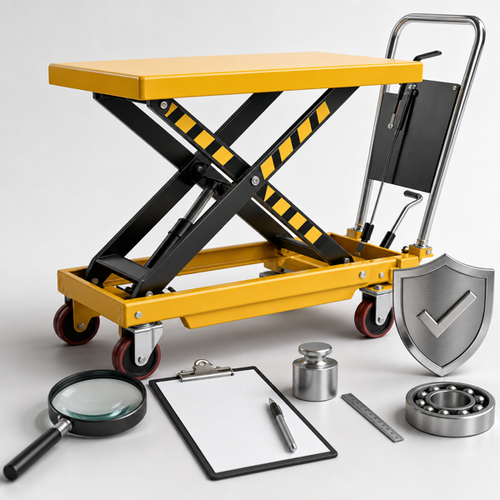
May 2026 Brings Important Safety Changes for Lifting Tables in Materials Handling
The European Committee for Standardization (CEN) has released a major safety update for the materials handling equipment sector with the publication of FprEN 1570-2 in May 2026. This newly revised standard addresses stringent safety requirements for lifting tables that serve more than two fixed landings and operate at low speeds, aiming to improve worker protection and operational reliability across various industries. This article explores who is affected, key changes, technical details, and why it matters for your business.
Overview / Introduction
Materials Handling Equipment forms the backbone of logistics, manufacturing, and warehousing, enabling the safe and efficient movement of goods within and between buildings. Standards like those developed by CEN ensure not only the performance and reliability of equipment such as lifting tables but also the safety of workers and the public.
In this article, industry professionals—including engineers, safety and compliance managers, facility operators, and procurement experts—will find a comprehensive look at:
- The new requirements and highlights of FprEN 1570-2 (2026 edition)
- Technical and practical implications for the use, design, and procurement of lifting tables
- Best practices for effective compliance and risk management
- The broader impact on materials handling operations
Detailed Standards Coverage
FprEN 1570-2 – Safety Requirements for Lifting Tables Serving More than Two Fixed Landings
Full Title: Safety requirements for lifting tables – Part 2: Lifting tables serving more than 2 fixed landings of a building, for lifting goods with a vertical travel speed not exceeding 0.15 m/s
Scope of the Standard
FprEN 1570-2 sets the minimum safety requirements for permanently installed lifting tables designed to serve more than two fixed landings. These tables transport goods (not persons) vertically within buildings at speeds not exceeding 0.15 meters per second. This makes the standard especially relevant for multi-story warehouses, distribution centers, factories, and commercial facilities where goods must be moved between multiple floors.
Applicability Exclusions:
- Lifting tables with speeds exceeding 0.15 m/s (see EN 81-31)
- Platforms serving two or fewer landings (see EN 1570-1)
- Equipment for lifting people, stage or artistic use, maritime applications
- Equipment powered by certain energy sources (e.g., internal combustion engines)
- Situations requiring additional requirements (e.g., explosive atmospheres, special load types)
Key Requirements and Specifications
The updated standard incorporates a host of design, calculation, and operational mandates that go far beyond previous editions. Here are the most notable requirements:
Structural Integrity and Load Calculations:
- Comprehensive stress analysis, including dynamic and static forces (wind, load transfer, platform extension).
- Platform deflection and stability limits to prevent hazardous tilting or deformation.
- Categorization of lifting tables by load cycles and lateral force coefficients, with explicit numbers for calculation.
Safety Against Crushing, Shearing, and Entrapment:
- Defined minimum safety distances around moving parts and travel zones.
- Specific protections for feet, hands, and body at critical points.
- Mandated guards, screens, or safety edges when required.
Fall Protection:
- Rigorous requirements for guard-rails, screens, and interlocked gates.
- Enhanced clarity and improved interlocking for removable guard-rails at higher fall risks.
- Differentiated requirements for public and non-public areas.
Platform and Landing Interface:
- Strict tolerances for vertical and horizontal clearances between platform and fixed landings (<30mm).
- Anti-slip surfaces and devices (e.g., wheel stops) for platforms intended to carry rolling loads.
Controls and Electrical Safety:
- Electrical and control components must meet international norms (integration with EN/IEC/ISO standards).
- Comprehensive marking, operational, and maintenance instructions.
- Hold-to-run or semi-automatic control arrangements—fully automatic gate closing prohibited for safety.
Public Area Requirements:
- More stringent protections, including locking and interlocking for gates and guard-rails when accessible to the public.
- Rigid guarding or screens and flexible guards as fallback, depending on the risk level.
Who Needs to Comply?
- Manufacturers of lifting tables supplied for use in buildings with multi-level goods transport
- Facility owners and operators in logistics, warehousing, retail, manufacturing, and commercial construction
- Installers, systems integrators, maintenance and service providers
- Health & safety, quality assurance, and compliance managers responsible for equipment purchases, installation, and maintenance
Implementation & Practical Implications
Organizations must:
- Update their risk assessments and procurement specifications to align with FprEN 1570-2
- Inspect existing equipment for compliance (note: standard does not apply retroactively to equipment manufactured before publication)
- Train operators in new safety procedures and maintenance requirements
- Ensure ongoing compliance with marking and inspection directives
Notable Changes from Previous Edition
- Document structure now aligns with EN 1570-1:2024 for harmonization
- Introduction of rated and structural loads as calculation elements
- New annexes covering risk at upper landings, travel zone risks, and pictogram guidance
- Enhanced requirements for protection in public spaces
- Clarity on locking/interlocking for removable rails and boom barriers
- Restrictions on hydraulic safety devices and drive systems updated to be consistent with latest industry practice
Key highlights:
- Elevated requirements for structural design, guard-rail integrity, and risk mitigation for fall hazards
- New technical annexes supporting risk assessments and safe design
- Updated alignment with EU Machinery Directive (Annex ZA relation)
Access the full standard:View FprEN 1570-2 on iTeh Standards
Industry Impact & Compliance
Effects on Businesses and Facilities
The release of FprEN 1570-2 significantly impacts the design, procurement, operation, and maintenance of vertical goods transport systems. For businesses involved in logistics, distribution, or manufacturing, adoption is critical for:
- Legal Compliance: Ensuring machinery aligns with the EU Machinery Directive and relevant occupational safety laws
- Risk Reduction: Minimizing workplace accidents, injuries from crushing or falling, and potential property damage
- Process Efficiency: Clear technical guidelines reduce ambiguity, speeding up new installations and repairs
- Market Competitiveness: Demonstrating commitment to safety increases customer confidence and may be required to win contracts
Compliance Steps and Timelines
- Gap Assessment
- Evaluate current lifting table installations and practices against the updated requirements
- Procurement and Upgrade Planning
- Specify only compliant products for new installations
- Plan retrofits or upgrades for non-compliant equipment where possible (while noting pre-existing units are not explicitly covered)
- Operator Training
- Update internal manuals, signage, and safety procedures as per Section 6 of the standard
- Inspection, Marking, and Documentation
- Apply updated marking, inspection, and maintenance protocols as required by Section 6
Benefits of Early Adoption
- Reduced workplace incidents and associated costs
- Lower insurance premiums through proven risk mitigation
- Enhanced audit readiness and simplified regulatory reporting
- Improved public and employee trust in facility safety
Risks of Non-Compliance
- Regulatory penalties or prohibition of unsafe equipment
- Increased liability in the event of incidents or injuries
- Potential loss of business or partnership opportunities
Technical Insights
Common Technical Themes
Across FprEN 1570-2 and related standards, several technical themes emerge:
- Emphasis on Structural Safety: Rigorous calculations for all load scenarios—dynamic and static, including lateral and wind loads—are now the norm.
- Integration with Other Machinery Standards: Requirements reference global documents like EN ISO 12100 (risk assessment), EN ISO 13849-1 (safety-related parts of control systems), and EN 61140/IEC 60204-1 (electrical safety), ensuring international harmonization.
- Protective Guarding and Interlock Logic: Greater technical specificity addresses real-world entrapment and fall hazards through improved design, marking, and controls.
- Testing and Certification: Engineering verification encompasses design checks, inspection, functional/practical tests, and electrical assessments (see Section 5: Verification of safety requirements).
Best Practices for Implementation
- Early Design Integration: Involve safety engineers and compliance specialists at the initial project planning stage to avoid costly redesigns
- Supplier Due Diligence: Vet vendors for up-to-date conformity declarations and technical documentation
- Operator Training & Documentation: Focus on clear, enforceable instructions for use, inspection, and maintenance; ensure all staff are properly trained following the new Annexes and risk guidance
- Routine Testing & Inspections: Implement schedule-based inspection, leveraging the test procedures and pictogram guidelines provided in the standard (see Annex A, Annex D)
- Leverage Expert Resources: Engage notified bodies or standards consultants for complex or high-risk installations
Certification Considerations
Products complying with FprEN 1570-2 can support CE marking and facilitate market access throughout the EU and EFTA member states. Full documentation—risk analysis, instructions, markings, and maintenance records—should always be retained to support third-party audits or regulatory inspections.
Conclusion / Next Steps
The May 2026 publication of FprEN 1570-2 signals a decisive move toward safer, more reliable materials handling operations—especially in complex, multi-level industrial and commercial environments. To remain both compliant and competitive, organizations should:
- Review and align procurement, design, and operation procedures with the latest standard requirements
- Conduct thorough assessments of existing installations and plan for phased upgrades if necessary
- Prioritize staff training and update all instructional materials in accordance with the new guidance
- Consult with standards experts or utilize platforms like iTeh Standards for ongoing updates and comprehensive access to related documentation
Stay ahead of regulatory changes—proactively adopting new safety standards not only protects your workforce but also strengthens your market position and operational excellence.
Access the full standard:View FprEN 1570-2 on iTeh Standards
For more in-depth standards and expert guidance, visit iTeh Standards and ensure your materials handling operations are always aligned with the latest safety and compliance requirements.
Categories
- Latest News
- New Arrivals
- Generalities
- Services and Management
- Natural Sciences
- Health Care
- Environment
- Metrology and Measurement
- Testing
- Mechanical Systems
- Fluid Systems
- Manufacturing
- Energy and Heat
- Electrical Engineering
- Electronics
- Telecommunications
- Information Technology
- Image Technology
- Precision Mechanics
- Road Vehicles
- Railway Engineering
- Shipbuilding
- Aircraft and Space
- Materials Handling
- Packaging
- Textile and Leather
- Clothing
- Agriculture
- Food technology
- Chemical Technology
- Mining and Minerals
- Petroleum
- Metallurgy
- Wood technology
- Glass and Ceramics
- Rubber and Plastics
- Paper Technology
- Paint Industries
- Construction
- Civil Engineering
- Military Engineering
- Entertainment