


Manufacturing Standards: October 2025 Monthly Overview (Part 1)
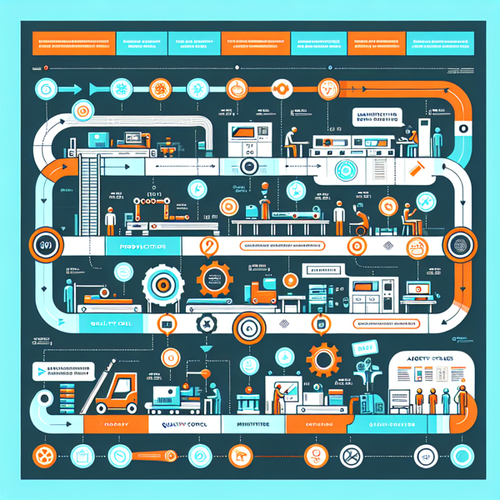
Looking back at October 2025, the Manufacturing Engineering sector saw the release of five key standards with far-reaching impacts across diverse industry specializations. These documents—spanning nuclear digital integration frameworks, metallic material groupings for welding, additive manufacturing data integrity, surface quality assessment for anodized aluminium, and hand-held tool safety—shed light on ongoing priorities in digitalization, materials innovation, quality control, and end-user safety. For professionals in engineering, quality assurance, procurement, and compliance, this monthly overview is a valuable resource to catch up on crucial changes, understand the implications for operations, and inform strategic decisions for upcoming projects and certifications.
Monthly Overview: October 2025
October 2025 was marked by the publication of five highly significant standards in the Manufacturing Engineering field. This period reinforced the sector’s persistent focus on digital transformation, advanced materials management, and workplace safety. A notable pattern was the increased alignment between digitalization strategies (especially in regulated industries like nuclear), standardized material classification for global operability, and cleaner compliance frameworks for next-gen processes, such as additive manufacturing.
Compared to previous months, October’s releases featured both foundational frameworks—setting the stage for future, detailed implementation standards—and practical, test-based protocols aimed at immediate quality assurance and safety benefits. The balance between strategic vision (exemplified by ISO 18136-1’s nuclear digital ecosystem framework) and operational specifics (like EN ISO 3210’s anodized aluminium quality test methods) reflects the sector’s dual-pressure: innovate for the future while solidifying trust in today’s technologies and procedures.
Industry professionals will notice greater focus on:
- Integration of engineering information across manufacturer and operator boundaries
- Unified groupings for metallic materials, streamlining welding operations globally
- Standardized properties disclosure for metal additive manufacturing
- Controlled, traceable quality assessment in surface treatments
- Enhanced occupational safety for electric-operated hand tools
Standards Published This Month
ISO 18136-1:2025 – Automation systems and integration – Nuclear digital ecosystem – Part 1: Overview and framework
Automation systems and integration – Nuclear digital ecosystem – Part 1: Overview and framework
ISO 18136-1:2025 provides a comprehensive conceptual framework for the Nuclear Digital Ecosystem (NDE). Specifically addressing the nuclear sector, it defines the interaction of various facility types, lifecycle stages, and technical management methodologies within digital information integration. This framework is designed as a high-level reference for subsequent standards, setting out the relationships between civil, architectural, mechanical, electrical, instrumentation & control (I&C), process engineering, and ICT within reactor-related facilities. Although the standard does not prescribe detailed methodologies for data exchange or the structure of exchanged information, it forms a solid basis for industry-wide harmonization of digital initiatives and interoperability across global nuclear operations.
This document targets:
- Nuclear facility owners/operators
- Engineering and ICT vendors in the nuclear supply chain
- Standards developers and compliance officers
Within the broader regulatory landscape, ISO 18136-1:2025 is intended as a foundational document to guide aligned development of practical methods and harmonized implementation approaches. Notable is its emphasis on practical industry applicability, lifecycle-wide relevance, and support for integration with existing IAEA guidance and ISO/IEC standards.
Key highlights:
- Defines a shared conceptual framework for digital integration in the nuclear sector
- Applies to all reactor-related facilities, across civil, engineering, and ICT domains
- Provides a roadmap for subsequent technical and management standards
Access the full standard:View ISO 18136-1:2025 on iTeh Standards
ISO 15608:2025 – Welding – Grouping system for metallic materials
Welding – Grouping system for metallic materials
ISO 15608:2025 establishes a globally harmonized grouping system for metallic materials intended for welding. This system enables consistent selection and qualification processes for welders, welding procedures, and inspection regimes across international projects. The standard applies not only to steels, aluminum, nickel, and titanium alloys, but is distinctive in this edition for including cobalt alloys and refining group boundaries based on industry feedback.
ISO 15608:2025 is vital for:
- Welding engineers and quality assurance managers
- Materials procurement and specification professionals
- Qualification and training providers in metallic joining
The update (evolving from ISO/TR 15608:2017 to a full International Standard) enforces clearer requirements, incorporates cobalt alloys, and simplifies certain tables, making compliance and referencing more straightforward. This grouping system also facilitates broader application in heat treatment, forming, and NDT, further reinforcing its utility within holistic production quality management.
Key highlights:
- Universal grouping system for ferrous and non-ferrous metals in welding
- Expanded scope with cobalt alloys and editorial improvements
- Supports global harmonization of qualification and compliance activities
Access the full standard:View ISO 15608:2025 on iTeh Standards
EN ISO/ASTM 52929:2025 – Additive manufacturing of metals – Powder bed fusion – Presentation of material properties in material data sheets (ISO/ASTM 52929:2025)
Additive manufacturing of metals – Powder bed fusion – Presentation of material properties in material data sheets
EN ISO/ASTM 52929:2025 addresses the consistency and integrity of material property data sheets for metal powder bed fusion (PBF) additive manufacturing processes. This standard mandates a minimum set of property disclosures—covering alloy composition, mechanical properties (e.g., hardness, yield strength, tensile strength, elongation), and density—alongside contextual reporting on processing parameters, feedstock characteristics, and post-processing steps. While not a qualification standard, it instigates transparency and improves comparability of results between manufacturers, suppliers, and end-users.
Users include:
- AM machine and material suppliers
- Service bureaus and component users/auditors
- Quality and compliance teams in additive/advanced manufacturing
It fits within the broader digitalization trend in manufacturing, aiming to underpin traceable, reliable certification and material selection by providing reliable data for decision-making. Optional properties (e.g., impact toughness, surface roughness) and boundary condition disclosures allow for extension flexibility, reflecting the fast-paced innovation in AM technologies.
Key highlights:
- Standardizes material property data sheets for PBF-LB/M and PBF-EB/M
- Improves traceability and comparability across additive manufacturing supply chains
- Enables more consistent selection and qualification of AM materials
Access the full standard:View EN ISO/ASTM 52929:2025 on iTeh Standards
EN ISO 3210:2025 – Anodizing of aluminium and its alloys – Assessment of quality of sealed anodic oxidation coatings by measurement of the loss of mass after immersion in acid solution(s) (ISO 3210:2025)
Anodizing of aluminium and its alloys – Assessment of quality of sealed anodic oxidation coatings by measurement of the loss of mass after immersion in acid solution(s)
EN ISO 3210:2025 provides two destructive reference methods for evaluating the quality of sealed anodic oxidation coatings on aluminum and its alloys, measured by mass loss after acid immersion. Method 1, conducted without prior acid treatment, is suited to decorative/protective coatings; Method 2, which includes pre-acid treatment, is intended for coatings required to withstand outdoor architectural environments. The document delineates what coating types are excluded (e.g., hard anodized, dichromate sealed, chromic acid-produced or hydrophobic-treated coatings), offering clear application boundaries.
This standard is essential for:
- Surface finishers for architectural, automotive, electronics, and consumer goods
- Coating inspection laboratories and third-party certifiers
- Aluminum alloy product designers and specifiers
By focusing on mass loss as a quality indicator, EN ISO 3210:2025 helps organizations provide robust quality documentation and resolve disputes about surface treatment efficacy, supporting both initial qualification and ongoing quality control.
Key highlights:
- Delivers standardized destructive reference methods for sealed anodic coatings on aluminum
- Differentiates test approach by end-use (decorative/protective vs. outdoor/architectural)
- Excludes specific coatings, ensuring test relevance and precision
Access the full standard:View EN ISO 3210:2025 on iTeh Standards
IEC 62841-2-4:2014 – Electric motor-operated hand-held tools, transportable tools and lawn and garden machinery – Safety – Part 2-4: Particular requirements for hand-held sanders and polishers other than disc type
Electric motor-operated hand-held tools, transportable tools and lawn and garden machinery – Safety – Part 2-4: Particular requirements for hand-held sanders and polishers other than disc type
IEC 62841-2-4:2014 (as adopted in 2025 for implementation) outlines the safety requirements for electric hand-held sanders and polishers—excluding disc-type tools—such as belt, drum, orbital, and reciprocating variants. The standard prescribes mechanical/electrical safety, safeguards against common hazards, and critical construction, testing, and marking features. With coverage including voltage, input power limits, overload protection, and transitional implementation recommendations, the document defines both tool-specific and generic safety design and testing obligations for manufacturers.
Intended users:
- Manufacturers of electric hand-held power tools
- Testing/certification laboratories
- Health and safety officers within manufacturing and industrial operations
This standard interacts comprehensively with IEC 62841-1 (general requirements), emphasizing that adoption should occur nationally within a recommended timeframe for market participants to adapt designs and compliance protocols.
Key highlights:
- Defines safety and performance criteria for all non-disc hand-held sanders and polishers
- Reinforces critical mechanical, thermal, and electrical protections
- Sets framework for update cycles and national adoption timing
Access the full standard:View IEC 62841-2-4:2014 on iTeh Standards
Common Themes and Industry Trends
The October 2025 standards reflect four persistent, interconnected trends shaping manufacturing engineering:
- Data-Driven Integration: From nuclear digital ecosystems to uniform additive manufacturing reporting, there is clear momentum toward transparent, data-rich, life-cycle management.
- Material Science and Traceability: Updates to metallic material grouping and standardized property reporting in AM underline the sector’s drive for greater material traceability and globally recognized qualification frameworks.
- Surface and Product Quality: With anodic coating assessment methods, the spotlight is on robust, defensible quality metrics that facilitate dispute resolution and third-party certification.
- User Safety and Compliance: Modernized requirements for powered hand tools are a reminder that technology progression must occur alongside practical safety enhancements, particularly as tool complexity and user diversity increase.
Industries with high regulatory scrutiny—nuclear, aerospace, automotive—were most directly affected. However, the principles advanced have broad applicability, particularly as supply chains globalize and digital product lifecycle management becomes standard.
Compliance and Implementation Considerations
For organizations impacted by these standards, the following best practices and guidance are recommended:
- Priority Assessment: Review the applicability of each standard to your operations. For high-impact areas (safety, compliance, digital management), prioritize full gap analyses before implementation.
- Resource Planning: Many standards (especially those for nuclear digital ecosystems and power tools) may require multi-disciplinary alignment—allocate resources for both technical and management integration.
- Timelines: Take advantage of any official transitional periods (as recommended for IEC 62841-2-4) to adapt products, retrain staff, and update process documentation.
- Training: Invest in training for QA, engineering, and procurement teams to ensure understanding of new groupings (ISO 15608), test methods (EN ISO 3210), and reporting obligations (EN ISO/ASTM 52929).
- Certification and Auditing: Consider third-party certification, especially for safety-driven and quality assessment standards, to reinforce market credibility.
- Leverage Standards Platforms: Use iTeh Standards to access official documentation, monitor updates, and integrate with internal compliance tracking.
Conclusion: Key Takeaways from October 2025
October 2025 marked a pivotal month for Manufacturing Engineering, seeing the release of five highly strategic standards addressing digital ecosystems, materials grouping, additive manufacturing data management, quality assessment for anodized surfaces, and safety requirements for electric hand-held tools. Navigating these standards positions organizations to:
- Lead in digital integration and operational transparency
- Streamline global manufacturing processes and supply chain qualification
- Enhance compliance posture and market trust through robust, certifiable quality and safety measures
For professionals across engineering, compliance, and procurement, staying abreast of these changes ensures strategic alignment with international requirements, reducing operational risk and opening doors to new markets.
To explore these standards further, and leverage their full impact, refer to the direct links above or visit iTeh Standards for complete access and integration resources.
Categories
- Latest News
- New Arrivals
- Generalities
- Services and Management
- Natural Sciences
- Health Care
- Environment
- Metrology and Measurement
- Testing
- Mechanical Systems
- Fluid Systems
- Manufacturing
- Energy and Heat
- Electrical Engineering
- Electronics
- Telecommunications
- Information Technology
- Image Technology
- Precision Mechanics
- Road Vehicles
- Railway Engineering
- Shipbuilding
- Aircraft and Space
- Materials Handling
- Packaging
- Textile and Leather
- Clothing
- Agriculture
- Food technology
- Chemical Technology
- Mining and Minerals
- Petroleum
- Metallurgy
- Wood technology
- Glass and Ceramics
- Rubber and Plastics
- Paper Technology
- Paint Industries
- Construction
- Civil Engineering
- Military Engineering
- Entertainment