


November 2025: New Safety Requirements for Industrial Sanders in Manufacturing
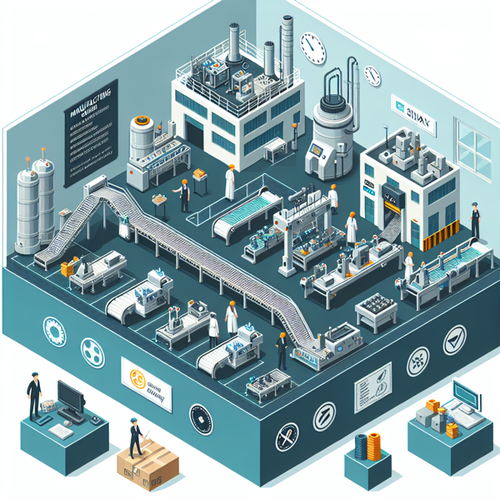
In November 2025, the field of manufacturing engineering advances further with the publication of two significant international standards that redefine safety and compliance for transportable belt sanders, disc sanders, and combined belt/disc sanders. These updates impact manufacturers, quality leaders, and safety professionals working with electric motor-operated tools across diverse industrial settings. This article, the final installment in our four-part coverage for this month, explores all you need to know about the new standards, how they affect operations, and actionable paths toward compliance.
Overview
Manufacturing engineering relies heavily on robust equipment standards to guarantee worker safety, product consistency, and operational efficiency. In high-speed, demanding manufacturing environments, transportable sanding equipment is ubiquitous—used for everything from metal finishing to woodworking. However, improper usage or outdated machinery poses significant risks.
The new November 2025 IEC standards deliver authoritative guidelines aimed at reducing these risks, improving machine design, and clarifying manufacturer obligations. This article will help you:
- Understand the scope and requirements of the updated standards for transportable sanding machinery
- Identify which machinery and users are affected
- Gain clarity on safety measures, technical requirements, and testing best practices
- Appreciate the benefits of prompt compliance
- Access official resources and prepare for upcoming regulatory changes
Detailed Standards Coverage
IEC 62841-3-16:2025 – Safety for Transportable Belt, Disc, and Belt/Disc Sanders
Electric motor-operated hand-held tools, transportable tools and lawn and garden machinery – Safety – Part 3-16: Particular requirements for transportable belt sanders, disc sanders, and belt/disc sanders
The IEC 62841-3-16:2025 standard provides comprehensive safety requirements for transportable sanding tools fitted with a sanding belt, disc, or both. These are powerful machines commonly found in manufacturing plants, metal fabrication workshops, and woodworking facilities, where solid materials must be sanded uniformly and efficiently.
Scope and Applicability
The standard specifically applies to transportable belt sanders, disc sanders, and belt/disc sanders—distinguishing them from hand-held variants (covered under other IEC standards). Covered equipment is powered by electric motors and is designed to process solid materials such as wood, plastics, or metals. Hand-held types, namely disc-type and belt sanders, are not covered under this part; instead, see IEC 62841-2-3 and IEC 62841-2-4, respectively.
Key Technical Specifications and Requirements
- Equipment must feature integral safety devices and clear user instructions
- Distinct marking for operational aspects such as direction of rotation and safety warnings (including always wearing eye protection)
- Mechanical requirements to minimize risk of injury: maximum permissible clearances, robust back stops, and work tables
- Rigorous performance and endurance benchmarks for switches, overload protection, and moving parts
- Detailed instructions on mounting, adjustment, and safe dust extraction system connection
- Noise and vibration emission measurement protocols to address occupational health
- Timeframes and recommendations for national adoption—suggesting a 36-month window for manufacturers to implement new requirements
Marking, Warnings, and Instructions
Special emphasis is placed on effective user communication:
- Markings must be clear, permanent, and specify operational direction
- Warnings for safe clearances (no greater than 2mm) between moving parts and support elements to reduce risks of finger entrapment
- Explicit instructions on safe mounting, adjusting, and maintaining equipment, emphasizing dust extraction and appropriate accessory use
Mechanical Safety Features
- Rigid back stops and work tables to support the workpiece and prevent accidental contact with moving components
- Protective design against 'nip' hazards (areas where body parts might be drawn in between moving belts/discs and static elements)
- Tests involving rods and steel balls to validate safety clearances
Notable Changes from Previous Editions
- Supplements and modifies the base requirements of IEC 62841-1:2014 and its 2025 amendment
- Enhanced guidance for modern battery-operated sanders
- New or adjusted mechanical tests and performance levels
- Integration with noise and vibration emission testing, reflecting occupational health priorities
Who Needs to Comply?
- Manufacturers of electric-powered transportable sanding equipment
- Testing and certification laboratories responsible for validating machine safety
- Industrial purchasers and procurement teams evaluating sander compliance
- Quality and safety managers overseeing plant operations and worker safety programs
Practical Implications and Implementation
Implementing the provisions of IEC 62841-3-16:2025 means:
- Updating product designs and risk assessments
- Enhancing documentation, labeling, and user instructions for machinery
- Introducing new pre-delivery testing protocols
- Training operators and maintenance staff on the latest safety recommendations
Key highlights:
- Clear marking and explicit safety instructions for users
- Rigorous testing of mechanical strength and safety distances
- Defined process for adopting updated standards within 36 months
Access the full standard:View IEC 62841-3-16:2025 on iTeh Standards
IEC 62841-3-16:2025 – (Repeat) Safety for Transportable Belt, Disc, and Belt/Disc Sanders
Electric motor-operated hand-held tools, transportable tools and lawn and garden machinery – Safety – Part 3-16: Particular requirements for transportable belt sanders, disc sanders, and belt/disc sanders
Note: This standard entry reflects a duplicate publication (as per source), underscoring its cross-application and sector-wide relevance. The scope, technical specifications, and implementation impacts are identical as described above, and reinforce the need for wide industry awareness and adoption.
Key highlights:
- Standard specifies requirements for design, labeling, safe operation, and regular testing
- Mandates rigorous operator instruction for machine adjustment, accessory fitment, and dust extraction
- Provides the regulatory basis for risk assessments and procurement decisions
Access the full standard:View IEC 62841-3-16:2025 on iTeh Standards
Industry Impact & Compliance
The 2025 publication of IEC 62841-3-16 resonates deeply across manufacturing engineering, impacting supply chain partners, manufacturers, and end users alike.
For businesses and quality teams, compliance is both a regulatory imperative and a competitive differentiator.
Compliance Considerations
- Timelines: The standard is recommended for national implementation not earlier than 36 months post-publication, giving manufacturers and regulators a clear window to update or transition equipment and processes.
- Certification: Testing bodies must integrate new requirements for machinery certification—particularly in performance, labeling, and documentation.
- Procurement: Purchasers should revise technical specifications to demand compliance with IEC 62841-3-16:2025 in all new acquisitions.
Benefits of Adoption
- Reduced workplace accidents and associated liabilities
- Enhanced machine reliability and longevity
- Smoother adoption of advanced, battery-operated sanding equipment
- Improved documentation for training and incident prevention
Risks of Non-Compliance
- Regulatory penalties and inability to secure international market access
- Increased risk of workplace injury or product recall
- Degraded reputation with customers and supply chain partners
Technical Insights
Common Safety and Performance Requirements
Across the new standards, several key technical requirements recur:
- Safety clearances: Maximum gaps of 2mm between moving parts and support stops/tables
- Mechanical robustness: Strong back stops, work tables, and working stands are mandatory
- Operator protection: Clear warnings, lockout devices, direction markings, and protective instructions are required
- Testing: Physical tests (e.g., rod and steel ball intrusion checks) ensure hazards are minimized
- Battery integration: New sections on battery-powered tools address unique risks and isolation/lockout needs
- Noise and vibration measurement: Defined conditions and methods for occupational exposure assessment
Implementation Best Practices
- Design Audit – Review all sander product lines against updated technical requirements
- Documentation – Update owner’s manuals, safety labeling, and user guides to comply with marking and instruction demands
- Retesting – Conduct required endurance and abnormal operation tests, focusing on all new failure scenarios
- Training – Provide comprehensive operator and maintenance staff training on new markings, warning signs, and safety protocols
- Procurement Controls – Update internal checklists and supplier requirements to demand proof of compliance
Testing and Certification Considerations
- Independent certification bodies must reference the latest IEC 62841-3-16 clauses and test setups
- Suppliers should earmark the transitional period for process and equipment upgrades
- Internal ISO 9001 or safety management audits should incorporate new standard requirements
Conclusion / Next Steps
The November 2025 IEC 62841-3-16 standard marks a pivotal safety upgrade for industrial sanding equipment—addressing both legacy equipment risks and new challenges posed by technological advancements like battery-powered tools.
Key Takeaways:
- Dual publication highlights the broad relevance and urgency of compliance
- All manufacturers, quality managers, and procurement leaders must prioritize an update to corporate standards
- Early adoption yields benefits in safety, compliance, and marketplace reputation
Recommendations for Organizations:
- Obtain the full text of IEC 62841-3-16:2025 via iTeh Standards for authoritative guidance
- Initiate compliance planning and product line reviews without delay
- Engage with notified bodies and industry associations for support and training
- Stay informed on further developments at https://standards.iteh.ai
Access the full standard:View IEC 62841-3-16:2025 on iTeh Standards
Stay ahead by aligning your manufacturing practices with the latest international standards. For more news and updates, continue exploring iTeh Standards.
Categories
- Latest News
- New Arrivals
- Generalities
- Services and Management
- Natural Sciences
- Health Care
- Environment
- Metrology and Measurement
- Testing
- Mechanical Systems
- Fluid Systems
- Manufacturing
- Energy and Heat
- Electrical Engineering
- Electronics
- Telecommunications
- Information Technology
- Image Technology
- Precision Mechanics
- Road Vehicles
- Railway Engineering
- Shipbuilding
- Aircraft and Space
- Materials Handling
- Packaging
- Textile and Leather
- Clothing
- Agriculture
- Food technology
- Chemical Technology
- Mining and Minerals
- Petroleum
- Metallurgy
- Wood technology
- Glass and Ceramics
- Rubber and Plastics
- Paper Technology
- Paint Industries
- Construction
- Civil Engineering
- Military Engineering
- Entertainment