


New Safety Standard for Hand-Held Jointers in Manufacturing Engineering: December 2025 Release
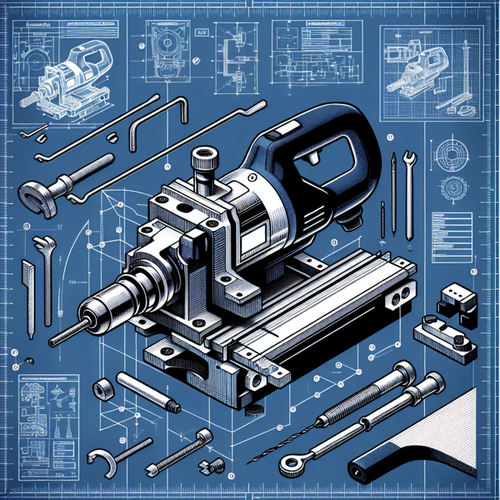
In December 2025, a significant advancement in safety and quality management has arrived for the manufacturing engineering sector with the publication of EN IEC 62841-2-19:2025. This newly released standard specifies the particular safety requirements for electric motor-operated hand-held jointers—tools widely used in woodworking, furniture manufacturing, and related industries. With evolving technology and practices, the update fulfills the urgent industry need for harmonized requirements, offering clear guidelines for safe tool design, operation, and maintenance. In this article, we explore the scope, technical specifics, and compliance pathways for this standard, helping professionals understand and implement the latest best practices.
Overview
The manufacturing engineering sector is deeply intertwined with the use of advanced hand-held tools, where safety, reliability, and efficiency are paramount. Standards play a crucial role in establishing the benchmarks for product safety, occupational health, and operational effectiveness. With the introduction of EN IEC 62841-2-19:2025, professionals now have an authoritative reference specifically tailored to hand-held jointers—a class of tools essential for precision joinery in wood and similar materials.
In this article, you will:
- Gain a comprehensive understanding of the new requirements for hand-held jointers
- Learn how the standard affects manufacturers, compliance officers, and users
- Discover implementation best practices and technical highlights
Detailed Standards Coverage
EN IEC 62841-2-19:2025 – Safety Requirements for Hand-Held Jointers
Electric motor-operated hand-held tools, transportable tools and lawn and garden machinery – Safety – Part 2-19: Particular requirements for hand-held jointers
Scope and Purpose:
EN IEC 62841-2-19:2025 establishes the safety requirements for electric hand-held jointers—specialized tools designed for cutting into wood or materials with comparable physical properties, including chipboard, fiberboard, and plywood. As an extension of the parent standard IEC 62841-1:2014, this standard augments general safety clauses with particular provisions targeting jointer design and use risk factors.
These requirements are vital for preventing injuries in environments ranging from furniture workshops and carpentry collectives to industrial production lines. The standard supersedes the previous EN 60745-2-19:2009 and its amendment, marking a comprehensive revision aligned with present-day safety methodologies and modern tool configurations.
Key Requirements and Specifications:
- Definition of safety-critical terminology and performance criteria for hand-held jointers
- Enhanced requirements for protection against live electrical parts, covering insulation and grounding
- Safe starting and operating mechanisms to mitigate accidental activation
- Design criteria for robustness, mechanical strength, and construction quality
- Guidance on overload protection circuits for transformer-operated models
- Marking and instructions clarity, including risk warnings and essential maintenance routines
- Detailed tests for heating, resistance to fire, moisture ingress, and mechanical stresses
- Special assessments for battery-operated jointers and noise/vibration emission measurement
Compliance and Target Audience:
- Intended for manufacturers, importers, distributors, and testing laboratories working with hand-held jointers
- Primary users include woodworking shops, industrial carpenters, furniture factories, and maintenance teams
- National adoption timelines are defined: publication by December 2026 and withdrawal of conflicting standards by December 2029
Practical Implications: Implementing EN IEC 62841-2-19:2025 brings enhanced workplace safety, reduces accident liability, and steers quality assurance programs in line with European and international best practices. Manufacturers are required to update design documentation, modify production lines if necessary, and retrain relevant staff to align with new labeling and safety instructions. Certification bodies and market surveillance authorities will use this standard as a benchmark in conformity assessments.
Notable Changes from Previous Editions:
- Alignment of terminology and clause structure with IEC 62841-1 series
- Expanded and clarified mechanical and electrical test requirements
- Additional sections devoted to battery-powered equipment
- Updated guidance on marking, documentation, and instruction clarity
Key highlights:
- Comprehensive safety provisions for hand-held jointers in manufacturing and woodworking
- Detailed mechanical and electrical testing protocols
- Mandatory transition from legacy standards (EN 60745-2-19:2009) by 2029
Access the full standard:View EN IEC 62841-2-19:2025 on iTeh Standards
Industry Impact & Compliance
The introduction of EN IEC 62841-2-19:2025 will directly impact manufacturers, equipment suppliers, quality managers, and end users throughout the woodworking and manufacturing value chain. Organizations must plan the migration from legacy standards to ensure continued market access and regulatory compliance, particularly in regions referencing European or IEC standards.
Compliance Considerations and Timelines
- Manufacturers must align new production models with the standard by December 2026
- Existing stock produced under earlier standards must be marketed before December 2029
- Adequate transition periods are provided for redesign, certification, and staff training
Benefits of Adopting the Standard
- Enhanced safety for operators, reducing risk of severe injury or electrocution
- Improved confidence among clients due to adherence to internationally recognized requirements
- Streamlined certification and conformity assessment processes
- Stronger risk mitigation and reduction in insurance liability
Risks of Non-Compliance
- Regulatory sanctions or market withdrawal for non-conforming tools
- Increased exposure to workplace accidents and legal claims
- Loss of market reputation and business opportunities, especially in regulated markets
Technical Insights
EN IEC 62841-2-19:2025 shares several technical themes with other standards in the IEC 62841 family but introduces dedicated clauses and testing requirements for jointers. Key technical features include:
Common Technical Requirements
- Rigorous insulation and protective earthing provisions
- Reliable starting controls with anti-accidental triggering features
- Construction requirements for tool housing integrity and ergonomic design
- Overload protection for electrical circuits and transformer-operated devices
- Robust labeling for hazard identification
Implementation Best Practices
- Gap Analysis: Conduct a review of existing jointer designs against the standard’s clauses
- Design Updates: Modify tool features as needed—especially safety switches, insulation, and labeling
- Testing Procedures: Engage accredited labs for the prescribed mechanical, electrical, and environmental tests
- Documentation: Update instruction manuals, risk assessments, and maintenance guides in line with Annex guidelines
- Training: Provide comprehensive operator and maintenance personnel training
Testing and Certification
- Testing for compliance must cover heating, resistance to rust and moisture, abnormal operation, and mechanical stress
- Battery-powered models must be assessed for both battery and charging circuit safety
- Noise and vibration emission measurements must follow the protocols defined in the annexes
Proactive engagement with notified bodies and ongoing surveillance will ensure seamless certification and market acceptance.
Conclusion / Next Steps
With the December 2025 release of EN IEC 62841-2-19:2025, the manufacturing engineering and woodworking sectors receive a pivotal upgrade to safety and product compliance frameworks. Professionals involved with production, quality, and procurement should prompt a review of current hand-held jointer tools and associated procedures to ensure conformance before the looming transition deadlines.
Recommendations:
- Assign a cross-functional team to lead standard implementation projects
- Initiate dialogue with certification bodies early to avoid bottlenecks
- Integrate new requirements into product development pipelines and supplier quality programs
Staying informed and proactive is essential for maintaining compliance, safeguarding employees, and delivering products that meet modern expectations for safety and quality.
Explore this and other essential manufacturing engineering standards at iTeh Standards to ensure your organization remains competitive and compliant in a rapidly evolving regulatory landscape.
Categories
- Latest News
- New Arrivals
- Generalities
- Services and Management
- Natural Sciences
- Health Care
- Environment
- Metrology and Measurement
- Testing
- Mechanical Systems
- Fluid Systems
- Manufacturing
- Energy and Heat
- Electrical Engineering
- Electronics
- Telecommunications
- Information Technology
- Image Technology
- Precision Mechanics
- Road Vehicles
- Railway Engineering
- Shipbuilding
- Aircraft and Space
- Materials Handling
- Packaging
- Textile and Leather
- Clothing
- Agriculture
- Food technology
- Chemical Technology
- Mining and Minerals
- Petroleum
- Metallurgy
- Wood technology
- Glass and Ceramics
- Rubber and Plastics
- Paper Technology
- Paint Industries
- Construction
- Civil Engineering
- Military Engineering
- Entertainment