

September 2026 Safety Standard Update for Electric Motor Tools in Manufacturing
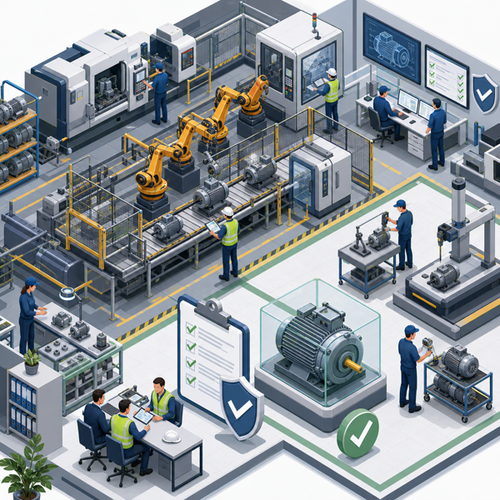
Manufacturing engineering professionals have a pivotal new reference point this September 2026 with the publication of prEN IEC 62841-1:2025. Developed by CLC, this comprehensive standard introduces wide-reaching changes to the safety landscape for electric motor-operated hand-held tools, transportable tools, and lawn and garden machinery. For manufacturers, compliance officers, engineers, and safety managers, the implications are significant—affecting product design, testing, documentation, and ultimately, workplace safety.
Overview
The manufacturing engineering industry depends on clear, robust standards to ensure product safety, consistency, and market acceptance. As robotics, automation, and battery technology transform the factory floor and garden equipment alike, keeping pace with new hazards and requirements is essential. This article unpacks the key elements of the newly published prEN IEC 62841-1:2025, helping industry stakeholders understand what’s new, why it matters, and how to comply.
By reading further, professionals will gain actionable insights into the scope, technical changes, and compliance strategies introduced with this revised standard, as well as the practical impact on organizations working with motor-operated electric tools and related equipment.
Detailed Standards Coverage
prEN IEC 62841-1:2025 – Safety for Electric Motor-Operated Hand-Held Tools, Transportable Tools, and Lawn and Garden Machinery
Full Title: Electric motor-operated hand-held tools, transportable tools and lawn and garden machinery – Safety – Part 1: General requirements
Scope and Structure: This new edition supersedes the 2014 version, refreshing the baseline safety requirements for a vast array of tools and machinery. It applies to:
- Hand-held tools (drills, saws, grinders, etc.)
- Transportable tools (such as table saws and benchtop tools)
- Lawn and garden machinery (mowers, trimmers, hedge cutters, etc.)
The standard is designed to address hazards encountered in both normal use and reasonably foreseeable misuse. It explicitly covers tools powered by mains, rechargeable batteries, and even USB sources, referencing specialized annexes for each category. Importantly, it supports risk assessment for novel tool types (including those not yet specifically classified by IEC 62841-2, -3, or -4).
Key Requirements and Innovations:
- Safety Architecture: Tools must operate without posing danger to users or their surroundings under defined conditions.
- Voltage Expansion: The permitted fully charged battery input voltage rises from 75V d.c. to 250V d.c. (see revised Annex B). This enables greater flexibility for next-generation lithium battery systems while introducing additional design-for-safety considerations.
- New Environmental Provisions: For the first time, battery-operated tools are permitted for use in rain, for cleaning under low-pressure water, and even immersion up to 1 meter for cleaning (with new corresponding marking and classification protocols).
- Revised and Expanded Annexes: The standard adds and restructures numerous annexes, including:
- Annex D: Guidance for choosing applicable requirements depending on the power source
- Annex J: Testing methodologies for artificial sources and loads (especially for battery packs)
- Annex N: Software safety evaluation
- Annex T/U: Security and reliability for remote communication over public networks (addressing cybersecurity in connected tools)
- Annex F: Tethering protocols for tools used at height (to prevent falling hazards)
- Annex P/Q: Accelerated aging and rust resistance for key components
- Annex I/X: Measurement of noise, vibration emissions, and rules for routine tests
Who Needs to Comply:
- Manufacturers of power tools, garden machinery, and accessories
- Importers and suppliers distributing such equipment into regulated markets (especially in the EU)
- Compliance managers, product safety engineers, testing labs, and procurement specialists
- Organizations responsible for workplace tool safety and maintenance
Implementation and Transition:
- A recommended national adoption window of 36 months from the publication date is provided to allow alignment of products, processes, and documentation.
- Harmonization with related IEC and ISO references is critical for global compliance.
Notable Differences from Previous Editions:
- Higher maximum battery voltage permitted
- Comprehensive restructuring for clarity and improved product classification
- Greater focus on software safety and remote communication reliability
- New endurance, waterproofing, and rust-resistance requirements
- Updated marking and user instruction protocols (including digital/documentation standards)
Key highlights:
- Expanded battery voltage range up to 250V d.c., supporting high-capacity cordless tools
- Enhanced safety testing for water, dust, and immersion resilience
- Detailed provisions for software reliability and cybersecurity of smart tools
Access the full standard:View prEN IEC 62841-1:2025 on iTeh Standards
Industry Impact & Compliance
The release of prEN IEC 62841-1:2025 holds substantial implications for businesses across the manufacturing, tool production, and garden equipment supply chain:
- Health & Safety: Enhanced requirements reduce risks of electric shock, fire, mechanical injury, and environmental hazards—for both workers and end-users. Tools certified to these requirements align with the latest best practices in occupational safety.
- Regulatory Market Access: Adoption is essential for CE marking and global distribution, especially as European and international regulators increasingly require conformance to the latest safety standards.
- Design Innovation: Manufacturers can introduce more powerful, feature-rich, and connected tool systems (higher voltage, smart controls, waterproofing) with a clear compliance pathway.
- Competitive Advantage: Early adopters of the new standard can demonstrate leadership in safety, improve product reliability, and open new market segments (e.g., professional outdoor tools for wet/demanding applications).
Timeline and Compliance Strategy:
- Businesses should immediately start gap assessments comparing current product lines to the new requirements.
- Develop or update internal checklists and verification procedures based on the revised standard.
- Engage with certified third-party testing labs familiar with prEN IEC 62841-1:2025.
- Implement training for safety and compliance teams on new and revised clauses, including cybersecurity and software evaluation (Annex N, T, U).
- Mark products accurately, with up-to-date warnings and digital access instructions as mandated.
Risks of Non-Compliance:
- Loss of CE mark or regulatory approval
- Liability exposure in case of safety incidents or product failures
- Market withdrawal or costly product recalls
- Reputation damage and loss of business partnerships
Technical Insights
Common Technical Requirements:
- Protection Against Electric Shock: All tools must be constructed to prevent access to live parts, maintain insulation integrity, and provide appropriate earthing.
- Mechanical Hazard Safeguards: Tools are tested for durability, structural strength, resistance to abnormal operation (such as locked-rotor conditions), and prevention of ejection of parts.
- Thermal/Electrical Testing: Temperature rises, leakage currents, heat and fire resistance, and overload protection mechanisms are all validated according to defined protocols.
- Environmental Testing: The standard incorporates robustness tests for moisture ingress, dust protection, and corrosion resistance—including new provisions for immersion in water.
- Battery and Power Source Safety: Rigorous short-circuit, overcurrent, and endurance tests are required for both general-purpose and lithium battery-powered tools.
- Vibration & Noise Measurement: Tools must comply with user exposure limits using standardized testing methods for noise and mechanical vibration emissions (referencing ISO 5349-1/2, ISO 11201/03).
- Marking and Instructions: Consistent and visible safety markings—including digital/manual access, warning labels, and classification information—must be provided in line with ISO 7010 and ISO 3864 requirements.
Implementation Best Practices:
- Design for Compliance: Incorporate safety features—such as double insulation, waterproofing, battery management systems, failsafe switches—at the concept stage.
- Prototype Testing: Subject tool prototypes to the standard’s test methods early and iterate based on results.
- Documentation: Maintain detailed records of design, testing, instruction manuals, digital access solutions (QR codes, web links), and risk assessments for all products.
- Supplier Coordination: Ensure all components and modules sourced from third parties meet the relevant subclauses and referenced IEC/ISO standards.
- Certification: Work directly with independent conformity assessment bodies for attestation and market approval.
Testing and Certification Considerations:
- Use accredited labs equipped to perform new water immersion, overload, and durability tests.
- Evaluate embedded software for safety-related functions, documenting validation and verification steps as described in Annex N.
- Where connectivity or remote control is offered, validate communication reliability and cybersecurity per Annexes T and U.
Conclusion & Next Steps
The September 2026 publication of prEN IEC 62841-1:2025 represents a milestone in harmonized safety requirements for electric motor-operated tools and related equipment in manufacturing engineering. For industry professionals, now is the time to:
- Review and analyze the full standard in detail, identifying action points for each product line
- Update internal training and processes to reflect the new technical and documentation demands
- Collaborate with suppliers and certification bodies to ensure seamless transitions
- Explore the iTeh Standards platform for access to prEN IEC 62841-1:2025 and related resources
With these proactive steps, organizations can ensure not only compliance and safety, but also technological leadership in a rapidly evolving industrial landscape.
Explore full details, official text, and purchasing options:View prEN IEC 62841-1:2025 on iTeh Standards
Categories
- Latest News
- New Arrivals
- Generalities
- Services and Management
- Natural Sciences
- Health Care
- Environment
- Metrology and Measurement
- Testing
- Mechanical Systems
- Fluid Systems
- Manufacturing
- Energy and Heat
- Electrical Engineering
- Electronics
- Telecommunications
- Information Technology
- Image Technology
- Precision Mechanics
- Road Vehicles
- Railway Engineering
- Shipbuilding
- Aircraft and Space
- Materials Handling
- Packaging
- Textile and Leather
- Clothing
- Agriculture
- Food technology
- Chemical Technology
- Mining and Minerals
- Petroleum
- Metallurgy
- Wood technology
- Glass and Ceramics
- Rubber and Plastics
- Paper Technology
- Paint Industries
- Construction
- Civil Engineering
- Military Engineering
- Entertainment