


May 2026 Brings New Railway Infrastructure Standards for Civil Engineering
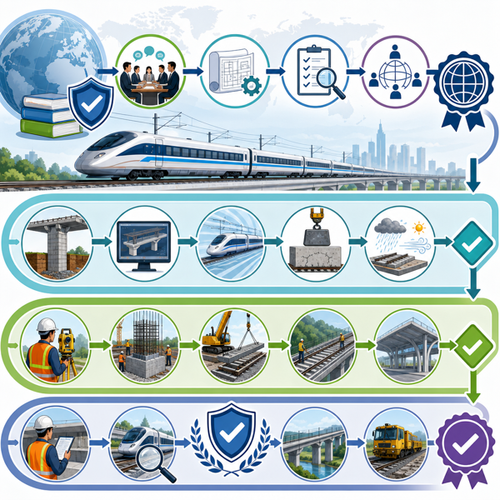
The civil engineering sector is undergoing pivotal updates with two major standards published in May 2026, targeting railway infrastructure. These new releases—EN 13848-6:2026 and EN 16272-3-2:2023+A1:2026—are set to enhance the quality, safety, and acoustic performance of railways throughout Europe. For professionals engaged in railway design, operations, compliance, and procurement, understanding these standards is key to staying ahead in an increasingly regulated landscape.
Overview
Railway infrastructure demands rigorous control of both physical track quality and environmental impact. International standards in civil engineering provide the framework for achieving operational reliability, regulatory compliance, and public trust. This month’s new standards address:
- Characterization and classification of track geometry quality
- Acoustic performance of noise barriers in direct sound field conditions
In this article, readers will find:
- In-depth coverage of EN 13848-6:2026 and EN 16272-3-2:2023+A1:2026
- Implementation details and industry impact
- Best practices for compliance and technical deployment
Detailed Standards Coverage
EN 13848-6:2026 – Characterization of Track Geometry Quality
Railway applications – Track – Track geometry quality – Part 6: Characterization of track geometry quality
EN 13848-6:2026 establishes methods to evaluate and classify the geometric quality of railway tracks, based on parameters set out in EN 13848-1. This standard applies to lines with a nominal gauge of 1,435 mm and above and specifically excludes urban rail systems.
The standard’s primary focus is the assessment and classification of track geometry through:
- Definition and calculation of multiple track quality indices (TQIs)
- Use of standardized methodologies, including the reference method (standard deviation or SD), point mass acceleration (PMA), and vehicle response analysis (VRA)
- Delineation of track quality classes (TQCs) to allow uniform interpretation across European rail networks
Scope and Key Requirements:
- Track geometry parameters such as alignment, cross level, longitudinal level, twist, and track gauge
- Statistical aggregation methods (SD, CoSD)
- Algorithms that are fully documented and reproducible
- Transparent reporting of TQIs over standardized track lengths (commonly 200 m for maintenance, with variations allowed up to entire networks)
- Classification into TQCs based on function (e.g., support for different speed categories)
Target Users:
- Railway infrastructure managers
- Track maintenance teams
- Engineers responsible for safety and quality control
- Certification and compliance bodies
Practical Implications:
- Improved ability to benchmark and track geometry quality across regions
- Support for predictive and condition-based maintenance, reducing operational disruptions and enhancing safety
- Objective criteria for accepting new rail lines, upgrades, or ongoing maintenance work
- Facilitates harmonization of network performance and maintenance strategies across Europe
Notable Changes from Previous Version:
- Revised structure and expanded technical annexes (notably Annexes A and B)
- Updated normative references for better alignment with related standards
- Enhanced methods for classifying alternative TQIs using TQC frameworks
Key highlights:
- Comprehensive definition of TQIs and their computation methods
- Fully documented algorithms with public domain availability
- Harmonized classification of track quality across the EU rail network
Access the full standard:View EN 13848-6:2026 on iTeh Standards
EN 16272-3-2:2023+A1:2026 – Acoustic Performance of Railway Noise Barriers
Railway applications – Infrastructure – Noise barriers and related devices acting on airborne sound propagation – Test method for determining the acoustic performance – Part 3-2: Normalized railway noise spectrum and single number ratings for direct sound field applications
EN 16272-3-2:2023+A1:2026 addresses the evaluation and assessment of the noise reduction devices, with a focus on noise barriers, by providing standardized methods to test their acoustic performance under direct sound field conditions. The standard introduces a reference rail noise spectrum and defines single-number ratings for key acoustic indices.
Scope and Core Specifications:
- Focused exclusively on airborne sound propagation close to railway lines
- Provides a normalized railway noise spectrum for use in acoustic measurements
- Methods to determine single-number ratings for:
- Sound reflection index (DL_RI)
- Sound insulation index (DL_SI)
- Diffraction index difference (DL_ΔDI) for added devices
- Ratings based on relative A-weighted sound pressure levels within one-third octave bands (100 Hz–5 kHz)
- Mandates declaration of measurement uncertainty and related confidence levels for all indices
Revised Content and Amendments:
- Updated definitions, symbols, and formulae (notably for DL_SI,G)
- Addition of Annexes on reproducibility and repeatability for better traceability
- Requirement to round all single-number ratings to the first decimal digit
- Enhanced guidance for measurement and reporting uncertainty
Target Audience:
- Railway project planners
- Acoustic engineers and consultants
- Quality managers of construction and civil engineering firms
- Environmental compliance officers
- Manufacturers of noise barriers and related sound attenuation devices
Practical Impact:
- Enables direct comparison and benchmarking of noise barrier systems
- Streamlines regulatory approval for new installations or upgrades
- Supports environmental impact assessments near railway corridors
- Ensures installers and specifiers use products with verifiable and repeatable acoustic performance
- Mitigates risks of non-compliance with contract or regulatory requirements
Key highlights:
- Introduction of normalized railway noise spectrum for accurate testing
- Single-number rating indices for consistent performance reporting
- Mandatory declaration of measurement uncertainties
Access the full standard:View EN 16272-3-2:2023+A1:2026 on iTeh Standards
Industry Impact & Compliance
Implementing these two standards will have a far-reaching effect on Europe’s civil engineering—and particularly railway—market. Key implications include:
- Harmonization: Creates a Europe-wide language for assessing track quality and acoustic barriers, simplifying multinational contracts and collaborative projects
- Compliance: Aligns technical assessments with regulatory requirements; non-compliance could lead to rework, contract penalties, or reputational damage
- Risk Mitigation: Enables earlier detection of potential failures in track geometry or noise mitigation strategies, improving both passenger safety and public satisfaction
- Efficiency: Allows procurement specialists and project managers to specify requirements consistently, reducing ambiguity and tender disputes
Compliance Timelines and Strategies:
- Newly initiated projects must specify the May 2026 editions in procurement and contract documents
- Existing networks should update their assessment methods to conform with the latest TQI and acoustic ratings
- Training for staff and partners on new definitions, algorithms, and reporting methodologies is advised
- Certification and third-party audits should reference the latest versions
Business Benefits:
- Increases competitiveness in tendering for high-value infrastructure projects
- Reduces lifetime operating costs by targeting maintenance with precision
- Demonstrates commitment to state-of-the-art engineering and public accountability
Risks of Non-Compliance:
- Safety hazards due to undetected track defects
- Legal liabilities if noise mitigation claims cannot be substantiated
- Potential loss of operational licenses or funding
Technical Insights
Both EN 13848-6:2026 and EN 16272-3-2:2023+A1:2026 emphasize robust, reproducible measurement and transparent reporting. Common technical threads include:
Technical Requirements:
- Use of internationally recognized definitions and calculation methods
- Application of statistical analysis (e.g., SD, CoSD, normalized spectra)
- Transparent documentation and algorithm disclosure to ensure comparability
- Mandatory declaration and calculation of uncertainty in measurements
Implementation Best Practices:
- Develop or update internal procedures to reflect new standard clauses and indices
- Validate measurement systems (whether for geometry or acoustics) against the reference methodologies
- Integrate digital tools for automated TQI calculation and acoustic index reporting to minimize manual errors
- Train technical personnel on how to interpret classification results and measurement uncertainties
Testing and Certification Considerations:
- Use certified and regularly calibrated measurement vehicles and instruments
- Cross-validate results using several methods where practical (e.g., SD, PMA, VRA)
- Ensure third-party laboratories or engineering services are accredited to the relevant standards
Conclusion & Next Steps
The May 2026 updates to civil engineering standards EN 13848-6 and EN 16272-3-2 mark an important evolution in the field of railway infrastructure. By adopting these standards, organizations can:
- Ensure uniform, objective characterization of track geometry quality
- Select and evaluate noise barriers on the basis of repeatable, standardized metrics
- Reduce risk and improve transparency in both regulatory compliance and public infrastructure procurement
Recommendations for Organizations:
- Review existing policies and technical guidelines to integrate these new standards
- Audit current infrastructure assessment and reporting methodologies
- Proactively seek training and software updates to support compliance
- Explore the full details of these standards using reliable resources
Stay informed and competitive by accessing the complete standards:
For professionals, engineers, and quality managers in civil engineering, keeping abreast of these updates is not just about compliance—it’s about ensuring safety, performance, and future-ready infrastructure. Visit iTeh Standards for more new releases and comprehensive coverage.
Categories
- Latest News
- New Arrivals
- Generalities
- Services and Management
- Natural Sciences
- Health Care
- Environment
- Metrology and Measurement
- Testing
- Mechanical Systems
- Fluid Systems
- Manufacturing
- Energy and Heat
- Electrical Engineering
- Electronics
- Telecommunications
- Information Technology
- Image Technology
- Precision Mechanics
- Road Vehicles
- Railway Engineering
- Shipbuilding
- Aircraft and Space
- Materials Handling
- Packaging
- Textile and Leather
- Clothing
- Agriculture
- Food technology
- Chemical Technology
- Mining and Minerals
- Petroleum
- Metallurgy
- Wood technology
- Glass and Ceramics
- Rubber and Plastics
- Paper Technology
- Paint Industries
- Construction
- Civil Engineering
- Military Engineering
- Entertainment