


February 2026 Manufacturing Engineering Standards: Digital Architecture, Batch Control, and Safety Updates
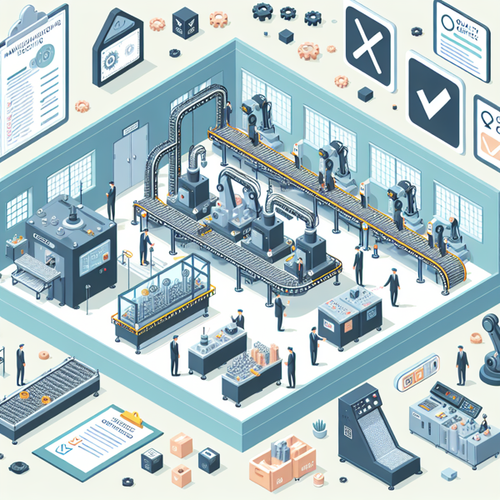
In February 2026, the manufacturing engineering sector witnessed the release of five essential international standards, marking significant advances in digital architecture, process control, machinery safety, and additive manufacturing validation. These updates, the third part of a comprehensive monthly roundup by iTeh Standards, provide manufacturing professionals, engineers, quality managers, and compliance officers with the technical requirements needed to optimize production, bolster safety, and future-proof compliance strategies in an evolving industry.
Overview
Manufacturing engineering is rapidly evolving, pushed forward by Industry 4.0 initiatives, advanced automation, and additive manufacturing. International standards are the backbone of safe, efficient, and interoperable processes across automated plants, connected enterprises, and complex supply chains. This article analyzes five newly published standards for February 2026, digesting their technical contents, key requirements, and strategic importance for compliance, operational risk, and quality management. Readers will gain actionable insights into:
- Upgrades in OPC Unified Architecture for data and security
- Harmonized batch control models and terminology
- Enhanced safety for electric fastener driving tools
- New validation methods for additively manufactured metal lattices
Detailed Standards Coverage
EN IEC 62541-8:2026 – OPC Unified Architecture: Data Access
OPC Unified Architecture - Part 8: Data Access
This fourth edition of EN IEC 62541-8:2026 defines the information model for Data Access (DA) within the OPC Unified Architecture (UA) framework, foundational for modern industrial automation systems. The standard specifies additional VariableTypes, NodeClasses, Attributes, and Properties essential for robust and flexible data access across diverse industrial equipment and platforms. It introduces:
- The new "Quantity Model" for referencing engineering units, including quantity definitions, assigned units, and unit conversions.
- Expanded rules for the
ValuePrecisionproperty, supporting data consistency for various subtypes (e.g., Duration, Decimal), and specifying behaviors for negative values.
Industries reliant on process automation, digital control, and cross-platform data exchange—including process industries, manufacturing lines, and industrial IT providers—must ensure their OPC UA implementations are aligned with these detailed information models. The revision strengthens interoperability, data quality, and the ability to harmonize legacy systems via OPC COM DA mapping.
Practical implications include the need for automation software vendors, system integrators, and plant engineers to update OPC UA server/client configurations to fully utilize the latest variable types, address space models, and engineering unit references. Compliance ensures reliable data access, critical for process control and historical data analysis.
Key highlights:
- New Quantity Model for engineering units and conversions
- Enhanced ValuePrecision property rules
- Expanded mapping for legacy OPC COM DA servers
Access the full standard:View EN IEC 62541-8:2026 on iTeh Standards
IEC 61512-1:2026 – Batch Control: Models and Terminology
Batch Control – Part 1: Models and Terminology
Industrial batch processing remains a complex domain blending automation, recipe management, traceability, and regulatory compliance. IEC 61512-1:2026, a core reference updated for the first time since 1997, delivers a modernized batch control framework. The standard delineates:
- Refined definitions separating equipment procedural elements from recipe procedural elements, enabling operational flexibility and simplified recipe updates.
- Comprehensive models for equipment modules, with explicit distinction between generic and recipe-aware units.
- Overhauled specifications for procedural control, recipe life cycles, and integration with higher-level manufacturing execution systems (MES).
- New visual representations via UML diagrams for batch processes, recipe relationships, and state transitions.
Updated terminology, reorganized document structure, and deeper coverage of compliance and conformance support both legacy environments and cutting-edge operations. Operations, control systems engineers, and manufacturers in pharmaceuticals, chemicals, food processing, and specialty batch production will benefit from more precise governance over manual, semi-automatic, and fully automated batch controls.
Most significantly, clarity around conformance, completeness, and compliance, along with improved annexes covering state modeling and application FAQs, will help organizations streamline regulatory submissions and drive batch integrity improvements.
Key highlights:
- Major model and terminology updates for batch systems
- Improved separation of equipment and recipe procedural elements
- Expanded guidance for compliance, conformance, and validation
Access the full standard:View IEC 61512-1:2026 on iTeh Standards
IEC 62841-2-16:2024 – Safety for Hand-Held Fastener Driving Tools
Electric Motor-Operated Hand-Held Tools, Transportable Tools and Lawn and Garden Machinery – Safety – Part 2-16: Particular Requirements for Hand-Held Fastener Driving Tools
Equipment safety remains paramount in modern manufacturing, construction, and related trades. IEC 62841-2-16:2024, as amended in February 2026, specifically addresses safety requirements for electric hand-held fastener driving tools—devices used to drive fasteners into or through materials like concrete, wood, metals, and composites using electric or magnetic energy (not pneumatic or combustible gas sources).
This standard updates and supplements IEC 62841-1 with additional definitions, performance criteria, and detailed safety requirements particular to fastener driving tools, emphasizing:
- Classification and permitted actuation modes (e.g., contact actuation, dual activation, sequential actuation)
- Enhanced protective measures against electrical hazards, mechanical risks, overheating, and misuse
- Robust marking, instruction requirements, and product safety labelling for user awareness and regulatory traceability
- New guidance on endurance, resistance to moisture and rust, and overload protection
- Updated requirements linked to noise, vibration emissions, battery safety, and minimum creepage distances for electric safety
Manufacturers, machine safety engineers, and procurement specialists for manufacturing and construction tools must align their safety programs and procurement policies with the updated provisions. Certification to this standard helps organizations demonstrate diligence in workplace safety, risk reduction, and compliance with regional or international regulations.
Key highlights:
- Scope limited to electric/magnetic tools (excludes pneumatic/combustion)
- Updated safety requirements and actuation mode controls
- Improved provisions for electric safety, labelling, and user documentation
Access the full standard:View IEC 62841-2-16:2024 on iTeh Standards
ISO/ASTM 52959:2026 – Additive Manufacturing: Compression Validation Specimens
Additive Manufacturing of Metals — Test Artefacts — Compression Validation Specimens for Lattice Designs
Additive manufacturing (AM) technology, especially for metals, introduces complex lattice structures with unique geometric and mechanical properties. ISO/ASTM 52959:2026 establishes procedures and requirements for preparing, identifying, and validating metallic lattice compression specimens. This standard bridges the gap between AM’s unique manufacturing techniques and existing test methods such as ASTM E9 and ISO 13314.
Key technical features include:
- Standardized design of lattice specimens for compression testing (axial force)
- Guidance on specimen preparation, cleaning, and visual inspection
- Emphasis on reporting AM-specific build parameters, minimum number of unit cells, and material properties relevant to both ductile and brittle alloys
- Additional recommendations for specimen identifiers, build orientation, and optional use of endplates
Quality managers, AM engineers, and test lab professionals should use ISO/ASTM 52959 to validate the integrity of AM metal parts, especially for high-stakes applications in aerospace, medical devices, or automotive sectors. Conformity improves comparability across platforms and suppliers while supporting regulatory certification and supply chain accountability.
Key highlights:
- Standardized compression test artefacts for AM metallic lattices
- Detailed reporting and build parameter guidelines
- Enhances consistency and reliability in AM part validation
Access the full standard:View ISO/ASTM 52959:2026 on iTeh Standards
IEC 62541-2:2026 – OPC Unified Architecture: Security Model
OPC Unified Architecture – Part 2: Security Model
Industrial digitalization and increased connectivity require robust security architectures. IEC 62541-2:2026, entirely revised from its prior edition, details threat models, architecture, and best practices for OPC UA-based communications—essential for secure industrial control and data exchange.
The document addresses:
- Security objectives (authentication, authorization, confidentiality, integrity, availability, auditability)
- Comprehensive threat analysis including DoS, eavesdropping, message spoofing, session hijacking, and rogue device threats
- Protective mechanisms including rigorous message processing, cryptographic key management, and access controls
- Guidelines for secure implementation, including password management, rate limiting, TLS/HTTPS, certificate handling, and integration with IEC 62443-4-2
Both OPC UA developers and end users (automation vendors and industrial facilities) should integrate the latest recommendations to protect against both protocol-level and environment-specific security threats. The update supports defense-in-depth strategies and compliance with industry cybersecurity frameworks.
Key highlights:
- Expanded security threat and control models
- Best practices for implementing secure OPC UA environments
- Normative references to IEC 62443-4-2 for holistic security
Access the full standard:View IEC 62541-2:2026 on iTeh Standards
Industry Impact & Compliance
The February 2026 standards apply to a wide range of manufacturing environments—automation system vendors, end users, system integrators, additive manufacturers, and tool OEMs. Adoption ensures:
- Stronger process consistency through harmonized models and terminology (IEC 61512-1)
- Improved operational reliability and interoperability (EN IEC 62541-8, IEC 62541-2)
- Enhanced workplace safety and reduced liability (IEC 62841-2-16)
- Reliable qualification and certification of advanced metal AM parts (ISO/ASTM 52959)
Compliance is not only regulatory, but strategic—facilitating market access, customer trust, and integration with connected enterprises. Non-compliance could lead to operational bottlenecks, IT-security breaches, regulatory fines, or unsafe work environments. Transition timelines vary, but early alignment is recommended, especially when integrating new digital architectures or launching new production assets.
Technical Insights
The five standards share common technical themes, including:
- Precise data modeling and address space design (OPC UA)
- Structured risk management and control state definitions (Batch control, Tool safety, Security)
- Rigorous specimen preparation and reporting guidelines (AM validation specimens)
- Requirements for interoperable, future-proof platforms (All standards)
Best practices include:
- Make sure OPC UA implementations are updated for both new data types and security protocols
- Engage IT/OT security teams to assess compliance with IEC 62541-2 and IEC 62443 references
- Use IEC 61512-1 terminology and models in MES and ERP integrations to ensure seamless recipe and batch data handling
- Update machinery procurement and operator training to align with IEC 62841-2-16
- Utilize standardized artefact testing (ISO/ASTM 52959) for design qualification and supplier audits in additive manufacturing
Certification and vendor audits should reference these standards’ specific testing, labeling, and reporting guidelines.
Conclusion & Next Steps
February 2026 brings significant advances in global standards for manufacturing engineering, supporting seamless integration, digital innovation, and safer operations. Organizations should:
- Review and update internal specifications and procurement guidelines referencing these standards
- Engage cross-functional teams (engineering, quality, IT/OT security, procurement) for gap analysis and implementation planning
- Train staff on new requirements, controls, and terminology
- Monitor iTeh Standards’ platform for ongoing updates, guidance documents, and implementation tools
Stay ahead of industry change—explore the full text of each standard (linked above) and ensure your organization is future-ready for compliance, operational excellence, and innovation.
Categories
- Latest News
- New Arrivals
- Generalities
- Services and Management
- Natural Sciences
- Health Care
- Environment
- Metrology and Measurement
- Testing
- Mechanical Systems
- Fluid Systems
- Manufacturing
- Energy and Heat
- Electrical Engineering
- Electronics
- Telecommunications
- Information Technology
- Image Technology
- Precision Mechanics
- Road Vehicles
- Railway Engineering
- Shipbuilding
- Aircraft and Space
- Materials Handling
- Packaging
- Textile and Leather
- Clothing
- Agriculture
- Food technology
- Chemical Technology
- Mining and Minerals
- Petroleum
- Metallurgy
- Wood technology
- Glass and Ceramics
- Rubber and Plastics
- Paper Technology
- Paint Industries
- Construction
- Civil Engineering
- Military Engineering
- Entertainment