


February 2026: New Standards Boost Automated Electric Vehicle Charging
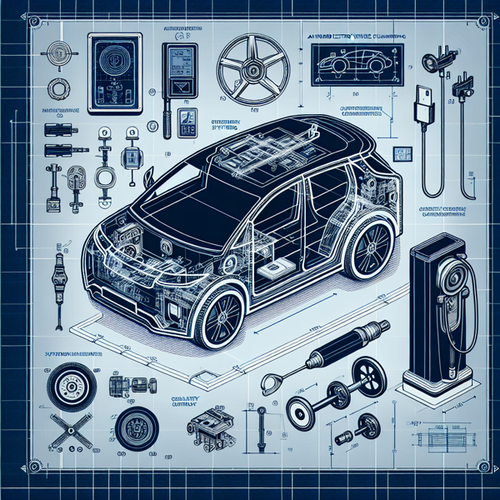
Key Updates in Automated EV Charging Standards: February 2026
The February 2026 release of two important IEC standards marks a significant step forward in the evolution of automated electric vehicle (EV) charging systems. With the rollout of IEC TS 61851-26:2026 and IEC TS 61851-27:2026, the automotive and road vehicles sector takes another leap toward safer, more efficient, and highly automated EV supply equipment (EVSE). These standards focus on the technical requirements for automated docking functionality, which is key for future-proof, user-friendly charging infrastructure. Industry professionals across engineering, compliance, and procurement must now align their strategies to harness these advancements and ensure robust compliance.
Overview / Introduction
The automotive and road vehicles industry is undergoing rapid transformation, driven by electrification and automation. As the number of electric vehicles on the road grows, demand for accessible, secure, and user-friendly charging solutions intensifies. Standards like those in the IEC 61851 series play a pivotal role in setting clear, harmonized technical and safety requirements for EV charging infrastructure worldwide.
This article explores the latest additions to the IEC 61851 series, providing:
- An in-depth look at the newly published standards for automated EVSE docking
- Key requirements for manufacturers, fleet operators, and infrastructure providers
- Insights on practical implementation, compliance, and industry impact
- Technical highlights and best practices to support successful deployment
Whether you’re an engineer, a compliance officer, a quality manager, or an EV infrastructure specialist, understanding these updates will help ensure your organization remains at the forefront of innovation and regulatory compliance.
Detailed Standards Coverage
IEC TS 61851-26:2026 - Automatic Docking for Underbody EV Couplers
Electric vehicle conductive charging system – Part 26: EV supply equipment with automatic docking of a vehicle coupler located at the underbody of an electric vehicle
The new IEC TS 61851-26:2026 standard delivers comprehensive requirements for EV supply equipment (EVSE) equipped with automatic docking and undocking functions (referred to as aEVSE) for category 3 couplers positioned at the underbody of electric vehicles.
Scope and Technical Focus
- Covers aEVSE that uses a single vehicle connector or a single socket-outlet
- Applies specifically to underbody couplers in accordance with ISO TS 5474-5
- Designed for integration with the broader IEC 61851-1 and IEC 61851-23 frameworks
- Excludes category 1 and 2 couplers and certain plug/socket-outlet configurations
- Considers interoperability and communication requirements (future-proofing for grid and AVDS integration)
Key Requirements and Specifications
- Protection Against Electric Shock: Rigid requirements for energization, monitoring, and de-energization of accessible contacts, including mandatory monitoring, self-test, insulation and protective conductor checks.
- Thermal Protection: Prevents unsafe temperatures, arcs, or radiation during operation; adheres to IEC 61851-1 and IEC 61851-23 protocols.
- Mechanical Injury Prevention: Design criteria addressing movement force, torque, and velocity of moving parts (e.g., robotic manipulators used in docking).
- Constructional & Accessibility Requirements: Precise dimensional tolerances, IP degree classifications, vehicle drive-over resilience, and manual/automatic undocking protocols.
- Testing & Marking: Comprehensive measurement, interoperability tests, user and installation manual standards, and compliance with marking practices.
Who Should Comply
- EVSE manufacturers and integrators
- Automotive OEMs producing EVs with underbody charging interfaces
- Fleet operators, public transport agencies adopting automated charging
- Facilities deploying public or autonomous vehicle charging solutions
Implementation Implications
Fulfilling this standard is critical for organizations wishing to adopt fully automated charging stations—particularly those planning autonomous vehicle usage or public queue-based infrastructure. The requirements allow for safer underbody connections, reduced manual intervention, and better accessibility for disabled drivers, delivering both convenience and compliance.
Notable Changes
- Introduction of rigorous mechanical and electrical safety for underbody charging
- Expansion of test and interoperability requirements
- Classified exclusion for category 1 and 2 couplers (handled in separate standards)
- Ongoing consideration of megawatt charging systems and enhanced communication protocols
Key highlights:
- Focus on fully automated underbody docking for EVs (category 3 couplers)
- Full lifecycle safety: electric shock, thermal, and mechanical protections
- Provisions for manual override, marking, and comprehensive testing protocols
Access the full standard:View IEC TS 61851-26:2026 on iTeh Standards
IEC TS 61851-27:2026 - Automated Docking Using IEC 62196 Couplers
Electric vehicle conductive charging system – Part 27: EV supply equipment with automatic docking of a vehicle coupler according to IEC 62196-2, IEC 62196-3 or IEC TS 62196-3-1
The companion standard, IEC TS 61851-27:2026, lays out requirements for EVSE that automatically docks vehicle couplers compliant with widely used standards (IEC 62196-2, IEC 62196-3, IEC TS 62196-3-1)—covering “category 1” connections for both AC and DC energy transfer.
Scope and Technical Focus
- Specifies automated docking of vehicle connectors and inlets, as opposed to plug/socket combinations
- Integrates with IEC 61851-1 and IEC 61851-23 series as its operational framework
- Also contemplates use with new and evolving configurations (e.g., future megawatt systems)
- Emphasizes compatibility with global vehicle and infrastructure requirements
Key Requirements and Specifications
- Electric Shock & Thermal Protection: Compliance with IEC 61851-1/-23’s comprehensive safety protocols; prevention of hazardous conditions during docking, charging, and undocking
- Mechanical and Safety Engineering: Controls the force, torque, velocity, and operational safety of movable docking mechanisms
- Mating and Obstacle-Free Space Definition: Parameters for spatial envelopes (i.e., “mating space”) allowing for robust docking even under installation and operational tolerances
- Classified Coupler Support: Explicitly addresses types, configurations, and adaptations for IEC 62196 vehicle inlets and connectors
- Installation and Adjustment Requirements: Calls for adjustable mechanical and software settings for real-world installation scenarios
- Marking, Manuals, and User Instructions: Standardizes necessary documentation for safe setup, operation, and maintenance
Who Should Comply
- EVSE and charger manufacturers
- Engineering and installation contractors
- Automotive OEMs using IEC 62196-compliant inlets/connectors
- Operators of public, commercial, and private EV charging solutions
Implementation Implications
By formalizing requirements for automated connection using internationally adopted connector standards (e.g., “Type 1,” “Type 2,” “Type 4,” “configuration AA”), IEC TS 61851-27:2026 paves the way for more interoperable, user-friendly, and scalable charging infrastructure. The standard’s detailed consideration of safety, mechanical design, and communication lays crucial groundwork for both current and next-generation (including autonomous) deployments.
Notable Changes
- Shift towards supporting automated docking for mainstream coupler formats
- Detailed treatment of spatial requirements for reliable connection
- Specific installation adaptation guidance for diverse site conditions
- Explicit separation between connector-focused and underbody-focused automated charging (referencing IEC TS 61851-26)
Key highlights:
- Comprehensive requirements for automated docking with global standard connectors
- Adapts to a broad spectrum of site layouts and vehicle types
- Prioritizes robust safety, ergonomic, and accessibility considerations
Access the full standard:View IEC TS 61851-27:2026 on iTeh Standards
Industry Impact & Compliance
The implementation of IEC TS 61851-26:2026 and IEC TS 61851-27:2026 signals a maturity leap in automated EV charging. Organizations connected to the automotive and road vehicles sector must now factor these standards into:
- Product development and certification processes for EV supply equipment
- Procurement and vendor selection, prioritizing solutions with verifiable compliance
- Infrastructure upgrades, especially for autonomous, commercial, or public EV charging networks
- Stakeholder risk assessment and management aligned with real-world operational safety
Compliance Considerations
- Timeline: With publication in February 2026, organizations should immediately begin adoption planning. Early implementation supports competitive advantage in both public and commercial charging markets.
- Certification: Adherence enhances eligibility for market access and can streamline multi-jurisdictional regulatory compliance.
- Documentation and Training: Robust user manuals, installation guides, and maintenance documentation are required for both safety and conformance.
- Liability and Insurance: Strong compliance with these standards can reduce risk exposures, protect brand reputation, and facilitate insurance acceptance.
Benefits of Adoption
- Support for future-proofed, fleet-scale automated charging (critical for AV and commercial fleets)
- Reduction in workforce intervention and operator error
- Enhanced safety for both users and installers
- Improved accessibility for disabled users and broader user groups
- Stronger interoperability and global infrastructure compatibility
Risks of Non-Compliance
- Exposure to safety-related legal action or product liability
- Loss of access to regulated or government-funded charging projects
- Competitive disadvantage as automated charging becomes a market expectation
- Higher support and maintenance costs due to sub-optimal integration
Technical Insights
Common Technical Features
Both new standards emphasize:
- Automated docking control: Mechatronic manipulator design, force/torque limitation, obstacle-free parameters
- Layered electrical safety: Full-disconnection, automatic monitoring, rapid fault response (<100ms), isolation checks
- Environmental resilience: Requirements for outdoor/indoor deployment, IP ratings, vibration and thermal stress tolerance
- Manual override and emergency operation: Ensuring continued usability in power or communication failures
- Testing methodologies: Interoperability testing, user verification, performance validation under normal and fault conditions
Implementation Best Practices
- Integrate Early: Begin implementing automated docking features at the design phase.
- Prioritize Interoperability: Engage with vendors and OEMs who actively certify to IEC 61851-series standards.
- Invest in Training: Ensure installation and maintenance personnel are properly trained in both the electrical and mechanical safety features mandated.
- Test Rigorously: Set up test benches for validation of docking/undocking under all use cases, including adverse scenarios.
- Document Thoroughly: Maintain detailed, compliant installation and operation manuals.
Testing and Certification Considerations
- Pursue verification via third-party certification bodies where available.
- Implement automated self-test routines, as required, and ensure system logs show full functional coverage.
- Schedule periodic re-testing, especially after system updates or hardware changes.
- Engage with ongoing standards evolution—future parts of IEC 61851 will expand communication and megawatt transfer protocols.
Conclusion / Next Steps
The February 2026 publication of IEC TS 61851-26:2026 and IEC TS 61851-27:2026 marks a watershed moment for automated EV charging in the automotive and road vehicles sector. By setting robust, harmonized requirements across key categories of couplers and deployment contexts, these standards support a safer, smarter, and more accessible future for electrified transport.
Key takeaways:
- Automated, safe, and interoperable charging is becoming the global norm.
- Early adoption equips organizations for compliance, risk reduction, and market leadership.
- Harmonized standards streamline global operations and cross-border charging deployments.
- Continuous engagement with evolving IEC and ISO frameworks is vital to stay ahead.
Recommendations:
- Review current charging infrastructure and update procurement specifications to reference these new standards.
- Align product development and certification strategies with IEC TS 61851-26:2026 and IEC TS 61851-27:2026 requirements.
- Leverage the iTeh Standards platform to access the latest standards, track future updates, and engage with the community of automotive and road vehicles professionals.
Stay at the forefront of automotive electrification—explore these new standards on iTeh Standards and lead your organization into the future of automated, efficient, and compliant electric vehicle charging.
Categories
- Latest News
- New Arrivals
- Generalities
- Services and Management
- Natural Sciences
- Health Care
- Environment
- Metrology and Measurement
- Testing
- Mechanical Systems
- Fluid Systems
- Manufacturing
- Energy and Heat
- Electrical Engineering
- Electronics
- Telecommunications
- Information Technology
- Image Technology
- Precision Mechanics
- Road Vehicles
- Railway Engineering
- Shipbuilding
- Aircraft and Space
- Materials Handling
- Packaging
- Textile and Leather
- Clothing
- Agriculture
- Food technology
- Chemical Technology
- Mining and Minerals
- Petroleum
- Metallurgy
- Wood technology
- Glass and Ceramics
- Rubber and Plastics
- Paper Technology
- Paint Industries
- Construction
- Civil Engineering
- Military Engineering
- Entertainment