


February 2026 Brings New Standards for Energy and Heat Transfer Engineering
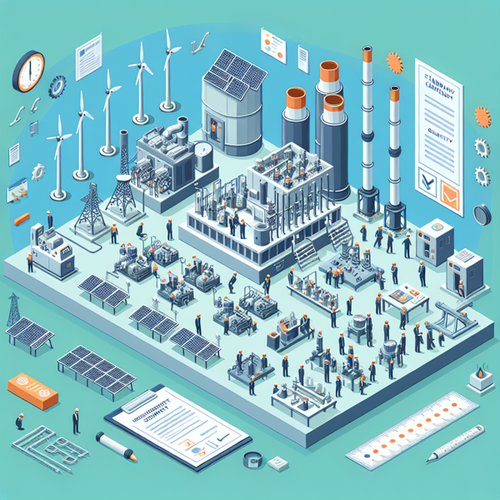
The field of Energy and Heat Transfer Engineering continues to evolve rapidly, shaped by changing market demands, technological advancements, and increasingly stringent regulatory landscapes. February 2026 marks another significant milestone for industry professionals, as five new international standards have been released covering wind energy systems, solar thermal performance, digital intelligence in security applications, distributed resource management, and drivetrain reliability. These standards set out new requirements that ensure safer, more reliable, and efficient energy infrastructure for both established and emerging players across the sector.
Overview
Energy and Heat Transfer Engineering is a foundation for global sustainable development, powering everything from large-scale renewable plants to intelligent grid management. Standards in this sector ensure interoperability, safety, efficient operation, and market confidence—driving down costs while reducing risks. This article will guide you through the new standards published in February 2026, offering practical insights, compliance strategies, and expert analysis. You’ll discover:
- The scope and technical highlights for each new standard
- Key changes affecting stakeholders across the value chain
- Implementation guidance for compliance and certifications
Detailed Standards Coverage
IEC 61400-40:2026 - Wind Energy Generation Systems: Electromagnetic Compatibility (EMC)
Wind energy generation systems – Part 40: Electromagnetic compatibility (EMC) – Requirements and test methods
This essential standard addresses the electromagnetic compatibility of individual wind turbines and all their subsystems, applicable to both onshore and offshore installations. By setting out requirements to verify turbine performance against radiated emissions and ensure immunity to conducted and radiated disturbances, IEC 61400-40:2026 provides the technical foundation for safe integration in complex power networks.
Key requirements include:
- Measurement procedures for emissions and immunity tailored for wind turbines
- Specific test configuration guidance (site, weather, antenna placement)
- Reference to relevant CISPR and IEC EMC standards for consistent evaluation
- Detailed reporting requirements for emission and immunity testing
- Applicability to both radiated and conducted phenomena
This standard is crucial for wind turbine manufacturers, designers, integrators, and operators who must demonstrate EMC compliance in ever more challenging environments—especially with growing numbers of digital control systems in turbines.
Key highlights:
- Comprehensive measurement and test procedures for EMC
- Covers both emission limits and immunity (such as surge, ESD, voltage dips)
- Special annexes for variations in turbine design and mains converter behavior
Access the full standard:View IEC 61400-40:2026 on iTeh Standards
IEC 62862-3-6:2026 - Solar Thermal Electric Plants: Durability of Silvered-Glass Reflectors
Solar thermal electric plants – Part 3-6: Durability of silvered-glass reflectors – Laboratory test methods and assessment
With a focus on component longevity and performance in harsh environments, IEC 62862-3-6:2026 sets out test methods to assess the durability of silvered-glass reflectors used in concentrating solar systems. The document standardizes accelerated aging procedures and defines criteria to evaluate optical degradation, corrosion resistance, and mechanical robustness.
Scope highlights:
- Detailed test suites: salt spray, CASS, condensation, thermal cycling/humidity, damp heat, UV/humidity, abrasion, and sand erosion
- Samples must be 10 x 10 cm or larger for consistency across evaluations
- Provides measurement protocols for reflectance and visual degradation
- Acceptance and reporting criteria ensure transparent qualification
- Annexes offer guidance for adapting methods to other reflector types and for correlating lab results with outdoor exposure
This standard is essential for manufacturers of solar reflectors, plant designers, procurement specialists, and quality engineers ensuring reliable long-term solar plant operation.
Key highlights:
- Multiple accelerated aging and degradation tests for complete durability assessment
- Clearly defined acceptance and measurement protocols
- Guidance for extrapolating lab results to field performance scenarios
Access the full standard:View IEC 62862-3-6:2026 on iTeh Standards
IEC 62676-6:2026 - Video Surveillance Systems in Security Applications
Video surveillance systems for use in security applications – Part 6: Performance testing and grading of real-time intelligent video content analysis devices and systems for use in video surveillance applications
This standard is pivotal for energy infrastructure operators integrating surveillance systems to protect assets and critical facilities. IEC 62676-6:2026 lays out the framework for performance testing and grading intelligent video content analysis (VCA) devices within surveillance networks, ensuring consistency and reliability of real-time event detection.
Key elements include:
- Specification of functions, interfaces, and environmental adaptability
- Methods for verifying object classification, activity detection (e.g., loitering, intrusion, fire, abandoned objects)
- Procedures for challenging real-world scenarios: lighting variation, weather, vibration, and field-of-view obstructions
- Systematic grading methodology to help users assess and compare devices
Target audiences range from system integrators and security consultants to procurement teams within energy utilities, who must balance automation with accuracy and resilience.
Key highlights:
- Performance testing and grading system for both core and complex video analysis capabilities
- Test criteria for real-time operation in demanding site conditions
- Standardized data output formats for interoperability
Access the full standard:View IEC 62676-6:2026 on iTeh Standards
IEC SRD 63443-1:2026 - Distributed Energy Resource Aggregation
Distributed energy resource aggregation business – Part 1: System architecture and service scenarios
Energy sector digitalization introduces complexity and flexibility through distributed energy resource aggregation (DERA). IEC SRD 63443-1:2026 defines the system architecture, terminology, and practical service scenarios for DERA, focusing on how multiple DER units and loads can be coordinated in a virtual power plant model.
Scope and features:
- Describes architecture elements: DER units, controllable loads, ERAB controller, and smart meters
- Outlines real-time monitoring and control strategies via ERAB controller
- Service scenarios span demand restraint (peak shaving) and demand increase (energy shifting to absorb excess supply)
- Detailed business use cases for incentive-based demand response
- Terminology and data points for interoperability across aggregators, grid operators, and utilities
This standard is foundational for energy companies, aggregators, technical service providers, and OEMs seeking to participate in emerging energy markets and provide flexibility services.
Key highlights:
- Architecture and interfaces for distributed resource aggregation in grid management
- Real-world service scenarios and evaluation methods for demand-side participation
- Precise common terminology to improve cross-industry communication
Access the full standard:View IEC SRD 63443-1:2026 on iTeh Standards
IEC TS 61400-4-1:2026 - Reliability Assessment of Wind Turbine Drivetrain Components
Wind energy generation systems – Part 4-1: Reliability assessment of drivetrain components in wind turbines
A technical specification for engineers and managers tasked with minimizing downtime and operational costs, IEC TS 61400-4-1:2026 presents methodologies to quantitatively assess the design reliability of wind turbine gearboxes and drivetrain subcomponents. The approach enables comparison across designs and supports lifecycle management.
Key content:
- Mathematical models for calculable failure modes (gears, bearings, shafts)
- Use of both theoretical and field-based statistical parameters
- Framework for system-level, stage-level, and component-level reliability analysis
- Guidance for integrating reliability results into lifecycle and maintenance strategies
Designed for wind turbine manufacturers, reliability engineers, and asset managers, this standard does not specify minimum design reliability values but enables transparent, evidence-based assessments.
Key highlights:
- Structured reliability calculation models for wind turbine gearboxes
- Applicability for design optimization, procurement, and long-term maintenance planning
- Informative annexes with worked calculation examples
Access the full standard:View IEC TS 61400-4-1:2026 on iTeh Standards
Industry Impact & Compliance
The release of these standards has immediate and long-term impacts across the energy and heat transfer engineering sector:
- Operational Reliability: Clear specifications lead to increased uptime and asset value
- Regulatory Alignment: Enables proactive compliance with regional and international requirements
- Competitive Advantage: Early adopters accelerate product certification processes and market entry
- Lifecycle Optimization: Enhanced methodologies support predictive maintenance and optimized total cost of ownership
Organizations must assess their current operations against these new benchmarks, update testing and documentation procedures, and train teams on technical changes to ensure compliance. Timelines for implementation may vary by jurisdiction and market segment, but early engagement with the standards is essential.
Failure to comply exposes companies to risks such as market exclusion, safety liabilities, and increased operational costs stemming from unplanned downtimes or component failures.
Technical Insights
A cross-section of these standards highlights common themes vital for contemporary energy infrastructure:
- End-to-end Testing: From EMC in wind turbines to the durability of solar reflectors, robust and consistent testing protocols are essential
- Reliability Modeling: Quantitative assessment frameworks allow organizations to design for both efficiency and resilience
- Interoperability: Standardized interfaces (e.g., for video analysis devices or distributed energy control systems) enable efficient integration and data flows across diverse systems
- Lifecycle Documentation: Comprehensive reporting and performance grading not only facilitate certification but also enable informed lifecycle and maintenance planning
Implementation best practices:
- Review new standards in cross-functional teams
- Update procurement specifications and design processes
- Schedule compliance testing in advance of enforcement dates
- Establish clear documentation trails for audits and certifications
- Leverage standard annexes and guidance notes for efficient adoption
Conclusion & Next Steps
As the Energy and Heat Transfer Engineering sector progresses, staying up to date with the latest standards is not merely a compliance exercise, but a strategic imperative. The February 2026 update introduces new performance benchmarks across wind, solar, intelligent security, grid management, and reliability assessment. Organizations are encouraged to:
- Proactively review and integrate these standards into project scoping and upgrade plans
- Train staff on new requirements and verification protocols
- Monitor for announcements and future releases, including Part 2 coverage
- Consult iTeh Standards for the official documents, updates, and technical resources
Start your compliance journey today – access all the new standards and further industry insights on the official iTeh Standards platform.
Categories
- Latest News
- New Arrivals
- Generalities
- Services and Management
- Natural Sciences
- Health Care
- Environment
- Metrology and Measurement
- Testing
- Mechanical Systems
- Fluid Systems
- Manufacturing
- Energy and Heat
- Electrical Engineering
- Electronics
- Telecommunications
- Information Technology
- Image Technology
- Precision Mechanics
- Road Vehicles
- Railway Engineering
- Shipbuilding
- Aircraft and Space
- Materials Handling
- Packaging
- Textile and Leather
- Clothing
- Agriculture
- Food technology
- Chemical Technology
- Mining and Minerals
- Petroleum
- Metallurgy
- Wood technology
- Glass and Ceramics
- Rubber and Plastics
- Paper Technology
- Paint Industries
- Construction
- Civil Engineering
- Military Engineering
- Entertainment