


March 2026: New Standards Shape the Future of Automotive and Road Vehicle Engineering
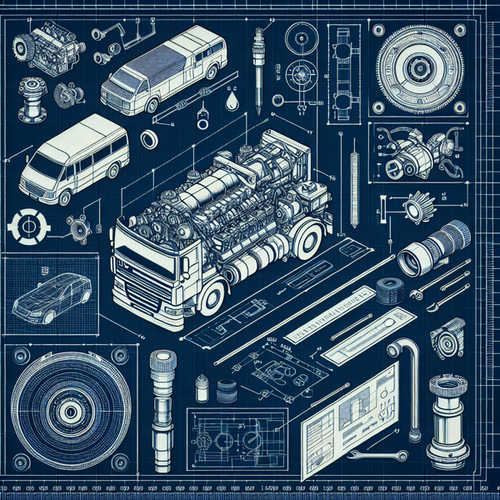
The Automotive and Road Vehicle Engineering sector received a wave of influential updates in March 2026, impacting vehicle safety, diagnostics, sustainability, and performance. Four major international standards—spanning from caravan holiday home safety to cutting-edge service-oriented diagnostics and hydrogen fuelling—are set to change compliance protocols and engineering practices across the automotive value chain. These advancements respond to evolving consumer expectations, regulatory demands, and technological innovation, shaping the operational landscape for engineers, quality managers, regulators, and industry leaders worldwide.
Overview
Automotive and Road Vehicle Engineering is experiencing rapid innovation, driven by demands for safer travel, greener fuels, smarter connectivity, and rigorous product quality. International standards play a central role, providing the technical benchmarks and compliance pathways that enable manufacturers and suppliers to meet legal obligations and ensure interoperability across global markets.
This article presents an in-depth look at four key standards published in March 2026. Readers will learn:
- What each standard covers and why it matters
- Key requirements, technical changes, and compliance implications
- How implementing the latest specifications supports business goals and risk management
Detailed Standards Coverage
EN 1647:2026 - Habitation Requirements for Caravan Holiday Homes
Leisure accommodation vehicles - Caravan holiday homes - Habitation requirements relating to health and safety
EN 1647:2026 addresses vital health and safety requirements for caravan holiday homes used as temporary or seasonal residences. Developed by CEN, this standard supersedes previous editions by broadening the scope of habitable design and updating critical safety parameters. It prescribes comprehensive requirements on grades of resistance to snow loads, fire precautions, ventilation, internal equipment, structural stability, and emergency escape protocols. The standard introduces new methods for ensuring the mechanical strength of bunks, updated requirements for roof ventilation, clarified door safety, inclusion of natural gas installations, and expanded protocols for emergency exits. A user’s handbook with minimum required information is mandated, and rigorous test procedures validate compliance.
Organizations dealing with the manufacture, installation, inspection, or rental of caravan holiday homes must comply with EN 1647:2026. Adoption is critical for maintaining safety records, avoiding liability, and aligning with regulatory inspections across Europe and beyond.
Key highlights:
- Enhanced fire safety and prescribed emergency escape routes and openings
- Tightened mechanical and stability requirements, especially for snow load resistance
- Updated technical protocols for equipment installations and health-conscious ventilation
Access the full standard:View EN 1647:2026 on iTeh Standards
ISO 17978-3:2026 - Service-oriented Vehicle Diagnostics API
Road vehicles — Service-oriented vehicle diagnostics (SOVD) — Part 3: Application programming interface (API)
The new ISO 17978-3:2026 leaps forward in vehicle diagnostics by specifying a unified, service-oriented API that bridges high-performance computers (HPCs) and legacy electronic control units (ECUs) in road vehicles. The standard streamlines diagnostics throughout the vehicle lifecycle—development, manufacturing, after-sales support, and regulatory inspections—by harmonizing how faults, configurations, and measurements are accessed and acted upon via modern programming interfaces. It covers RESTful HTTP approaches, network discovery using DNS-SD and mDNS, access controls, versioning, entity/resource management, and internationalization, ensuring global applicability and future-proof integration.
Primary users include OEM engineers, diagnostics tool providers, fleet operators, repair facilities, and compliance auditors. ISO 17978-3:2026 is indispensable for organizations developing advanced driver-assistance systems (ADAS), over-the-air software maintenance (including FOTA), or cloud-integrated analytics.
Key highlights:
- Unified diagnostics access for both classic ECUs and advanced vehicle computers
- Secure, standardized methods for reading and deleting fault entries, performing measurements, and running routines
- API version control, internationalization, and compatibility with manufacturer-specific update strategies
Access the full standard:View ISO 17978-3:2026 on iTeh Standards
ISO 4106:2026 - Motorcycles Engine Net Power Test Code
Motorcycles — Engine test code — Net power
The fifth edition of ISO 4106 brings crucial updates to the standardized test code for measuring net power in motorcycle engines. Applicable to reciprocating and rotary internal combustion engines (excluding free-piston engines), this standard introduces refined accuracy requirements for measuring equipment, broader permissible ranges for fuel and intake conditions, and specific methodologies for presenting power curves and fuel consumption data. For the first time, the standard references comprehensive calculation methods for both spark-ignition and compression-ignition engines, supporting industry moves toward greater transparency and repeatability in engine characterization.
Regulatory agencies, motorcycle manufacturers, and performance tuners will derive value from ISO 4106:2026’s harmonized reporting structure, improved test repeatability, and protocol compatibility, ensuring product performance aligns with published specifications.
Key highlights:
- Expanded temperature and fuel specification ranges
- Enhanced accuracy for torque, speed, and environmental measurements
- Inclusion of updated protocols for compression-ignition engines
Access the full standard:View ISO 4106:2026 on iTeh Standards
ISO 13984:2026 - Liquid Hydrogen Fueling Protocol for Land Vehicles
Liquid hydrogen — Land vehicle fuelling protocol
With the industry’s move towards hydrogen-powered mobility, ISO 13984:2026 sets a new benchmark for safely and efficiently fueling land vehicles using liquid hydrogen (LH2). It defines the complete set of design, installation, and operation criteria for vehicle fuelling stations and their vehicle interfaces—including piping, cryogenic material compatibility, pressure relief devices, and integrated safety controls. The standard’s protocols cover fuelling system design, assembly, operation, and maintenance to minimize the risks of fire, explosion, or other hydrogen-related hazards. Importantly, ISO 13984:2026 addresses protocol conformance testing, station inspection, and user training for safe operation.
This standard is indispensable for OEMs adopting hydrogen propulsion, fuel station designers/operators, and regulatory authorities overseeing energy transition initiatives. Implementing ISO 13984 ensures not only compliance but also safeguards lives, infrastructure, and investment in the hydrogen mobility ecosystem.
Key highlights:
- Complete fuelling protocols for vehicles with liquid hydrogen storage (0.6 m³ to 4 m³)
- Detailed guidelines for equipment compatibility, pressure safety, and operational workflow
- Emphasis on risk assessment, conformance verification, and emergency response
Access the full standard:View ISO 13984:2026 on iTeh Standards
Industry Impact & Compliance
The publication of these standards raises the bar for quality, safety, and technological progress across the automotive sector. Manufacturers and suppliers must:
- Review their internal product validation and documentation processes
- Update frontline training, maintenance protocols, and quality control steps
- Reassess supply chain requirements to ensure all components comply
- Anticipate and prepare for regulatory inspections referencing the new standards
Non-compliance can result in regulatory penalties, delayed market access, or reputational risk. Conversely, proactive adoption unlocks new market opportunities—such as participating in cross-border supply chains or delivering best-in-class safety and performance to customers.
Technical Insights
Among these new and updated standards, several recurring technical themes emerge:
- Comprehensive testing and reporting: From engine dynamometer protocols in ISO 4106:2026 to full fuel system compatibility in ISO 13984:2026, precise measurement and documentation are foundational.
- Advanced safety engineering: EN 1647:2026 and ISO 13984:2026 emphasize emergency planning, material behavior under stress (fire, load, cryogenics), and the human interface (i.e., handbooks, warning notices, emergency exits).
- Digitalization and interoperability: ISO 17978-3:2026’s SOVD API enables safer, more accessible diagnostics and remote operations for complex vehicle systems, providing both backward compatibility and future extensibility.
- Process-centric compliance: All four standards call for clear test methods, documented evidence of conformity, and in some cases, formal user/operator training.
Best practices for implementation include:
- Conducting a gap assessment comparing current products and processes to new requirements.
- Engaging standards-compliant suppliers and component manufacturers.
- Setting up internal audits and periodic reviews aligned with the testing and documentation sections of the standards.
- Partnering with accredited certification bodies to confirm and document compliance (especially where regulatory acceptance is required).
Conclusion & Next Steps
March 2026 marks a pivotal update cycle with sweeping effects on the Automotive and Road Vehicle Engineering landscape. Organizations that proactively adopt these new standards—EN 1647:2026 for habitation safety, ISO 17978-3:2026 for vehicle diagnostics, ISO 4106:2026 for engine performance, and ISO 13984:2026 for hydrogen refueling—will enhance their safety records, instill consumer confidence, and future-proof their product lines.
Recommendations:
- Review the full text of each standard via the iTeh Standards platform
- Analyze internal processes and product lines for compliance gaps
- Update technical documentation, staff training, and testing procedures promptly
- Engage with industry peers to share best practices and implementation strategies
Stay ahead of the curve. Explore the latest Automotive and Road Vehicle Engineering standards and updates on iTeh Standards.
Categories
- Latest News
- New Arrivals
- Generalities
- Services and Management
- Natural Sciences
- Health Care
- Environment
- Metrology and Measurement
- Testing
- Mechanical Systems
- Fluid Systems
- Manufacturing
- Energy and Heat
- Electrical Engineering
- Electronics
- Telecommunications
- Information Technology
- Image Technology
- Precision Mechanics
- Road Vehicles
- Railway Engineering
- Shipbuilding
- Aircraft and Space
- Materials Handling
- Packaging
- Textile and Leather
- Clothing
- Agriculture
- Food technology
- Chemical Technology
- Mining and Minerals
- Petroleum
- Metallurgy
- Wood technology
- Glass and Ceramics
- Rubber and Plastics
- Paper Technology
- Paint Industries
- Construction
- Civil Engineering
- Military Engineering
- Entertainment