


Key International Standards for Traditional Chinese Medicinal Herbs: Ensuring Quality, Safety, and Global Trade
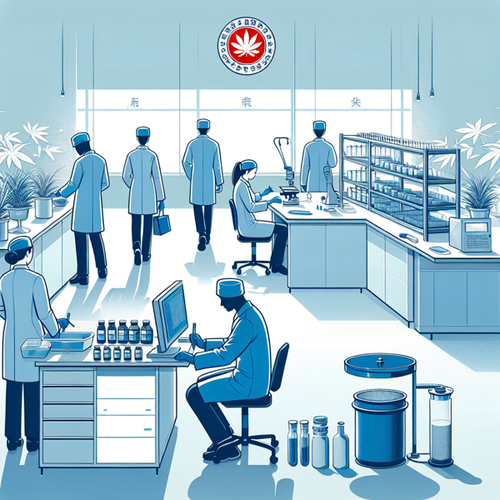
Today’s global herbal medicine market thrives on trust, consistency, and safety—making internationally recognized standards absolutely essential for businesses and consumers alike. Traditional Chinese medicinal herbs, such as Gardenia jasminoides fruit, Ganoderma lucidum (Lingzhi), Crocus sativus (saffron stigma), and Euodia fruit, play vital roles in health care and wellness across continents. Their international trade and clinical application depend on clear requirements for quality and safety. This article spotlights four key ISO standards, showing how adopting these guidelines can boost productivity, ensure security, promote scalable operations, and enable successful participation in the fast-growing pharmacological market for natural medicines.
Overview / Introduction
The global demand for high-quality traditional Chinese herbal medicines has never been greater. As herbal treatments integrate more deeply into mainstream health care, questions of quality assurance, ingredient authenticity, and consumer safety have come to the forefront. International standards bridge regional differences, serving as a reliable reference for producers, traders, regulators, and health practitioners.
By harmonizing definitions, sampling methods, testing techniques, and labeling practices, these standards help:
- Prevent adulteration and contamination
- Streamline international trade
- Build consumer trust
- Ensure that quality and safety benchmarks are met
This article provides a comprehensive overview of four pivotal standards:
- ISO 13619:2024 (Gardenia jasminoides fruit)
- ISO 21315:2026 (Ganoderma lucidum fruiting body)
- ISO 21590:2026 (Crocus sativus stigma)
- ISO 24066:2026 (Euodia fruit)
Whether you're a health business, supply chain operator, or simply curious about traditional plant medicines, you'll gain valuable insight into the requirements shaping today’s global herbal market.
Detailed Standards Coverage
ISO 13619:2024 - Quality Requirements for Gardenia Jasminoides Fruit
Traditional Chinese medicine — Gardenia jasminoides fruit
ISO 13619:2024 establishes the foundations for global quality, safety, and testing of Gardenia jasminoides fruit—a widely used natural medicine renowned for anti-inflammatory and antioxidant effects. This standard harmonizes disparate national guidelines, providing robust criteria for:
- Morphological features: Appearance, color, odor, size, and fracture
- Chemical makeup: Standardization via thin-layer chromatography (TLC), marker compounds like geniposide
- Contaminant controls: Heavy metals, pesticide residues, total ash, and moisture content
The document is crucial for growers, wholesalers, importers/exporters, and pharmaceutical companies that trade, process, or use gardenia fruit for clinical or nutraceutical purposes. By requiring consistent sampling methods, accurate labeling, and safe packaging, it minimizes health risks and helps manufacturers meet cross-border regulatory expectations.
Key highlights:
- Defines precise test methods for assurance of botanical identity and purity
- Mandates controls for heavy metal and pesticide contamination
- Standardizes packaging, storage, and labeling to facilitate safe trade
Access the full standard:View ISO 13619:2024 on iTeh Standards
ISO 21315:2026 - Quality and Identification of Ganoderma Lucidum Fruiting Body
Traditional Chinese medicine — Ganoderma lucidum fruiting body
ISO 21315:2026 introduces a harmonized approach to the identification and quality control of Ganoderma lucidum (Lingzhi or Reishi), a medicinal mushroom celebrated for its immunomodulatory and anti-tumor properties. Given the prevalence of similar-appearing species and the risk of adulteration, uniform standards are critical.
The standard covers:
- Morphology: Clear descriptors for size, shape, color, and structure
- Analytical identification: Use of thin-layer chromatography (TLC) and high-performance liquid chromatography (HPLC) for marker compounds, such as ganoderic acids and polysaccharides
- Contaminant limits: Controls for moisture, total ash, heavy metals, pesticide residues, and water-soluble extractives
- Documentation and labeling: Requirements for sampling, test reporting, and product marking
Adhering to ISO 21315:2026 allows producers and resellers to meet the expectations of diverse markets, from Asian pharmacopoeias to Western herbal supplement regulations. It promotes product traceability and safety for end-users.
Key highlights:
- Ensures botanical authenticity and purity through advanced analytical techniques
- Harmonizes international safety standards and testing requirements
- Supports fair trade by curbing adulteration and mislabeling
Access the full standard:View ISO 21315:2026 on iTeh Standards
ISO 21590:2026 - Quality and Safety of Crocus Sativus Stigma (Saffron)
Traditional Chinese medicine — Crocus sativus stigma
Crocus sativus stigma, commonly known as saffron, is prized for its pharmacological and culinary applications. ISO 21590:2026 provides a unique international standard that facilitates safe global trade and use of saffron in natural medicine and health supplements.
This standard sets forth:
- Minimum quality and safety criteria: Mandates for morphology, testable marker compounds (e.g., crocin), and the exclusion of artificial colorants
- Contaminant monitoring: Tests for heavy metals, pesticides, moisture, and total ash
- Advanced identification: Includes TLC and high-performance testing for chemical profiling
- Microscopic and macroscopic identification protocols: Reduces the risk posed by adulteration or substitution
It is especially valuable for countries importing raw saffron, ensuring the material meets global standards for medicinal and culinary applications alike. Pharmaceutical manufacturers benefit from a robust, repeatable testing regime that supports both consumer trust and compliance.
Key highlights:
- Unifies international requirements for medicinal quality saffron
- Provides objective criteria for supply chain verification and market access
- Enhances consumer safety with rigorous controls on contaminants and colorants
Access the full standard:View ISO 21590:2026 on iTeh Standards
ISO 24066:2026 - Quality Controls for Euodia (Evodia/Tetradium) Fruit
Traditional Chinese medicine — Euodia (syn. Evodia or Tetradium) fruit
ISO 24066:2026 sets the global benchmark for ensuring the quality and safety of Euodia fruit, a significant herb in Asian traditional medicine commonly marketed as wu zhu yu. As international trade broadens, standardization helps to overcome supply chain inconsistencies and support market transparency.
Key components of the standard include:
- Morphological and chemical identification: Detailed product descriptions, TLC protocol, and verification of marker compounds like evodiamine, rutecarpine, and limonin
- Contaminant thresholds: Limits for moisture, total ash, ethanol-soluble extractives, sulfur dioxide, heavy metals, and pesticide residues
- Test methods and documentation: Comprehensive sample collection, testing, and labeling procedures
By ensuring all stakeholders—from cultivators to exporters—adhere to tested protocols, the standard reduces health risks, strengthens brand reputation, and simplifies market entry for regulated pharmaceutical and nutraceutical companies.
Key highlights:
- Assures botanical and chemical identity, reducing the risk of adulteration
- Aligns producer practices with import/export requirements
- Covers a broad spectrum of contaminants including sulfur dioxide, unique among herbal standards
Access the full standard:View ISO 24066:2026 on iTeh Standards
Industry Impact & Compliance
Transforming Business Practices and Market Confidence
Effective implementation of international standards in the pharmaceutics sector produces competitive advantages and risk mitigation:
- Market Access: Compliant products are eligible for international export, bypassing many regulatory barriers.
- Reputation and Trust: Certification against ISO standards signals commitment to best practices, boosting consumer and partner confidence.
- Contamination Risk Reduction: Standard guidelines minimize the introduction of heavy metals, pesticides, and adulterants—leading to safer products and fewer recalls.
- Regulatory Compliance: Reduces the risk of fines, product seizures, or supply chain disruptions due to non-compliance.
- Productivity & Scaling: Structured protocols for quality control and documentation streamline production processes, enabling businesses to scale efficiently with predictable results.
Non-compliance, by contrast, can result in shipment rejections, legal action, recall expenses, regulatory sanctions, reputational damage, and even severe consumer health impacts.
Implementation Guidance
How Businesses Can Adopt and Benefit from These Standards
Adopting ISO standards in the pharmaceutics field requires clear planning and education. Here are steps and best practices for organizations:
- Gap Assessment: Review existing practices relative to the requirements in each relevant ISO standard.
- Training: Educate staff involved in cultivation, collection, processing, quality control, and warehousing on new requirements—emphasizing why these standards matter.
- Documentation & Recordkeeping: Implement robust systems for batch records, testing results, and compliance certificates. ISO standards often make this mandatory.
- Testing Protocols: Set up or outsource to accredited labs for routine testing of heavy metals, pesticides, marker compounds, and identity checks using TLC and HPLC where applicable.
- Supplier Management: Ensure suppliers are aware of and comply with standard requirements, with audits and regular communication.
- Product Marking & Labeling: Update product labels to meet international requirements, including clear descriptions, lot numbers, country of origin, and usage instructions.
- Continuous Improvement: Use audit results and customer feedback to refine practices over time for ever-higher consistency and quality.
Helpful resources:
- iTeh Standards (https://standards.iteh.ai) for complete ISO standards and updates
- Industry seminars, certification bodies, and technical consultants specialized in herbal medicine GMP (Good Manufacturing Practice)
Conclusion / Next Steps
International standards aren’t just for global pharmaceutical giants—they’re critical tools for any organization involved in natural medicine production, trade, or use. By following clear, evidence-based requirements such as those outlined in ISO 13619, ISO 21315, ISO 21590, and ISO 24066, businesses boost their productivity, credibility, and readiness to compete worldwide.
Focusing on traceability, contaminant limits, and product identification not only protects public health but also paves the way for expansion into new markets, more secure supply chains, and operational scalability. These standards help every link of the industry—growers, processors, distributors, and health providers—work with greater confidence and fewer risks.
Explore these ISO standards in detail via the links below, keep current with evolving requirements, and make tangible investments in your organization’s compliance and quality assurance strategy. In the world of traditional medicine, international standards are the foundation of future growth, safety, and consumer trust.
https://standards.iteh.ai/catalog/standards/iso/4ee5b47c-2738-4ec8-828f-463bfbb51a53/iso-13619-2024https://standards.iteh.ai/catalog/standards/iso/f4fec3ff-68f0-4518-8ea3-37eaa04b0609/iso-21315-2026https://standards.iteh.ai/catalog/standards/iso/1b6a4533-e0a0-48a7-b2bb-c9a993735158/iso-21590-2026https://standards.iteh.ai/catalog/standards/iso/49c29c85-a550-4309-97ff-7a0a5a260388/iso-24066-2026
Categories
- Latest News
- New Arrivals
- Generalities
- Services and Management
- Natural Sciences
- Health Care
- Environment
- Metrology and Measurement
- Testing
- Mechanical Systems
- Fluid Systems
- Manufacturing
- Energy and Heat
- Electrical Engineering
- Electronics
- Telecommunications
- Information Technology
- Image Technology
- Precision Mechanics
- Road Vehicles
- Railway Engineering
- Shipbuilding
- Aircraft and Space
- Materials Handling
- Packaging
- Textile and Leather
- Clothing
- Agriculture
- Food technology
- Chemical Technology
- Mining and Minerals
- Petroleum
- Metallurgy
- Wood technology
- Glass and Ceramics
- Rubber and Plastics
- Paper Technology
- Paint Industries
- Construction
- Civil Engineering
- Military Engineering
- Entertainment