


A Comprehensive Guide to Surgical Instrument and Material Standards for Modern Healthcare
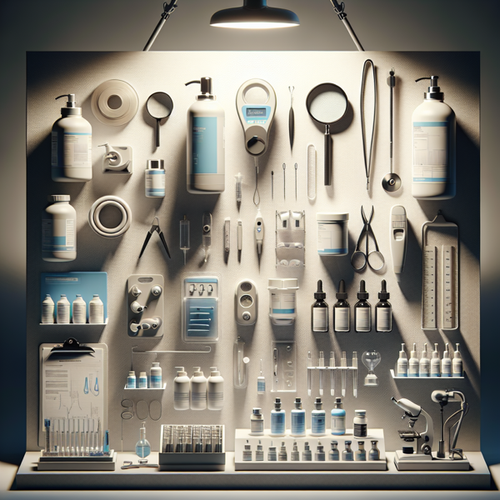
Surgical instruments and materials form the backbone of modern medical procedures, driving innovation in patient care and operating room efficiency. However, in today's rapidly advancing healthcare sector, the integration and implementation of robust international standards has become essential. This article explores three pivotal standards—ASTM F116-12(2021), EN IEC 60601-2-2:2018/A1:2024, and SIST EN ISO 16061:2009—standards that not only establish critical safety and quality benchmarks but also enable healthcare organizations to increase productivity, guarantee security, and scale operations globally.
With escalating demands for regulatory compliance, risk mitigation, and enhanced performance in the design, manufacturing, and maintenance of surgical tools and materials, adherence to trusted standards is no longer optional—it’s an indispensable business imperative. Read on to understand each standard’s requirements, who they affect, and why their adoption is vital for anyone involved in healthcare delivery, device manufacturing, or operations management.
Overview / Introduction
The healthcare industry demands procedures that are both safe and highly efficient. From high-frequency surgical equipment to specialized implant tools, the use of precisely manufactured and standardized instruments is crucial for patient outcomes, surgical team safety, and regulatory approval. As healthcare facilities and device manufacturers look to expand their reach and enhance operational effectiveness, the importance of implementing international standards grows.
In this article, you will learn:
- The scope, requirements, and impact of three key surgical instrument and material standards
- How these guidelines underpin reliability, reduce errors, and ensure compliance
- Practical tips for organizations to adopt these standards and stay competitive
- Why staying current on such standards is the cornerstone of health sector growth and innovation
Detailed Standards Coverage
ASTM F116-12(2021) - Medical Screwdriver Bits: Precision for Implant Procedures
Standard Specification for Medical Screwdriver Bits
ASTM F116-12(2021) describes the material, dimensional, and tolerance requirements for screwdriver bits designed for inserting and removing metal screws during surgical implant procedures. Its rigorous provisions ensure that such bits are compatible with a wide range of implantable screws, providing reliability, safety, and biomechanical effectiveness in operating rooms worldwide.
This standard identifies six types of screwdriver bits:
- Type I — Single-slot bit
- Type II — Cruciate-slot bit
- Type III — Cross-slot (modified Phillips) bit
- Type IV — Hexagonal bit
- Type V — Square bit
- Type VI — Hexalobe bit
Key requirements include:
- Strict dimensional tolerances for various bit types, ensuring compatibility across manufacturers
- Material specifications (martensitic stainless steel or cobalt-chromium-tungsten-nickel alloy) meeting established Rockwell hardness values for durability
- Alignment with related ISO standards (ISO 8319-1, ISO 8319-2, ISO 10664) to support international harmonization
- Suitability for use with widely adopted medical screw standards (e.g., ASTM F543, ISO 5835, ISO 9268)
Who Needs to Comply?
- Medical device manufacturers of orthopedic and trauma implants
- Surgical instrument designers and quality assurance teams
- Healthcare procurement and supply chain specialists
Implementing ASTM F116-12(2021) means less variability in surgery, fewer instrument failures, and a globally accepted quality benchmark in device supply chains. The standard’s comprehensiveness also reduces regulatory burden by referencing harmonized ISO and ASTM standards.
Key highlights:
- Covers six key screwdriver bit types for surgical implants
- Enforces stringent materials and hardness criteria for durability and safety
- Harmonizes with key ISO and ASTM specifications for global compatibility
Access the full standard:View ASTM F116-12(2021) on iTeh Standards
EN IEC 60601-2-2:2018/A1:2024 - Basic Safety and Essential Performance of High Frequency Surgical Equipment
Medical Electrical Equipment - Particular Requirements for High Frequency Surgical Equipment and Accessories
EN IEC 60601-2-2:2018/A1:2024 provides specialized safety and performance criteria for high-frequency surgical equipment and their accessories—devices critical to procedures such as electrosurgery (cutting/coagulation using electrical currents). This amendment aligns with IEC 60601-1 updates and addresses feedback and industry changes to ensure all surgical equipment meets top-tier safety and performance benchmarks in electrical medical devices.
Scope and Requirements:
- Covers electrical safety, mechanical integrity, and essential performance of high-frequency (HF) surgical devices and accessories
- Defines stringent requirements for design, testing, and labeling to minimize patient and operator risks from electric currents
- Requires inclusion of accessory length in instructions and specifies test setups for HF leakage current to reduce risk of unintentional current to patients or staff
- References core safety collateral standards (e.g., electromagnetic compatibility, alarm systems) for medical electrical devices
Who Should Comply?
- Manufacturers of high-frequency surgical generators and related accessories
- Hospital engineering and procurement departments
- Regulatory professionals and compliance engineers
Practical Implications: Adopting EN IEC 60601-2-2:2018/A1:2024 protects patients and staff from electrical hazards, ensures compliance with European and international regulations, and boosts trust in surgical device brands. Noncompliance can result in market exclusion and legal consequences, making adherence vital for any business scaling operations in the EU or globally.
Key highlights:
- Mandates the highest safety protocols for HF surgical equipment
- Updates manufacturer and user guidance to reflect the latest technological and regulatory progress
- Essential for CE marking and demonstrating compliance in Europe and beyond
Access the full standard:View EN IEC 60601-2-2:2018/A1:2024 on iTeh Standards
SIST EN ISO 16061:2009 - General Requirements for Instruments for Non-Active Surgical Implants
Instrumentation for Use in Association with Non-Active Surgical Implants - General Requirements (ISO 16061:2008)
The SIST EN ISO 16061:2009 standard lays out the comprehensive requirements for surgical instruments used with non-active (i.e., non-electric) implants. It addresses every stage of the instrument lifecycle: from design and materials selection to sterilization, packaging, and information supplied with the device. The result is a clear, rigorous foundation for safety and performance for surgical teams using orthopaedic, trauma, and similar non-active implant tools worldwide.
Key Requirements and Specifications:
- Defines necessary functional characteristics and intended use for each instrument
- Sets out design attributes including mechanical strength, ease of maintenance, and physical properties
- Requires selection of materials proven safe for patient contact and repeated sterilization
- Mandates pre-clinical evaluation and, if necessary, clinical studies to demonstrate safety and efficacy
- Outlines processes for manufacture, re-supply, and refurbishment to maintain quality across product cycles
- Details requirements for packaging (protection and sterility) and manufacturer-supplied instructions
Who Needs to Comply?
- Manufacturers of surgical instruments intended for use with orthopedic and other non-active implants
- Quality control and risk management professionals
- Medical device designers and engineers
Practical Implications: Conformance provides evidence of regulatory compliance for CE marking in Europe and is widely recognized for approval in other global markets. For manufacturers, it simplifies market entry and streamlines risk management. For healthcare providers, it means reliable, safe tools in every procedure.
Key highlights:
- Comprehensive, lifecycle-based approach to surgical instrument safety
- Applies to both manufacturers and refurbishment providers
- Key for regulatory approval, hospital accreditation, and patient safety initiatives
Access the full standard:View SIST EN ISO 16061:2009 on iTeh Standards
Industry Impact & Compliance
Why Healthcare Businesses Can’t Ignore These Standards
As regulatory scrutiny intensifies and patients increasingly demand transparency, compliance with international surgical instrument and material standards has evolved from an option to an obligation. Adopting standards such as ASTM F116-12(2021), EN IEC 60601-2-2:2018/A1:2024, and SIST EN ISO 16061:2009 means:
- Demonstrable product quality and patient safety: Minimizes the risk of surgical complications, adverse events, and device failures.
- Streamlined regulatory approvals: These standards are referenced by major regulators including the FDA, European Union, and many others around the globe.
- Enhanced competitiveness and market access: Compliance is often a precondition for public tenders, hospital contracts, and insurance reimbursement.
- Reputational resilience: Trust and credibility are built on rigorous adherence to global best practices.
Risks of Non-Compliance
- Product recalls, legal liability, and reputational damage
- Regulatory delays and denied market access
- Increased costs through non-standardized production and rework
Implementation Guidance
How to Adopt and Integrate Surgical Instrument and Material Standards
1. Gap Analysis and Training: Conduct a comprehensive gap analysis of your current processes against standard requirements. Engage staff across design, manufacturing, quality assurance, and procurement for targeted training on new or updated standards.
2. Documentation and Testing: Update technical documentation, designs, and SOPs to meet standard specifications. Ensure all instrument and equipment testing aligns with defined tolerances and performance benchmarks.
3. Supplier and Production Management: Vet suppliers to ensure material conformity (e.g., correct steel alloys for screwdrivers, validated sterilization). Integrate standard-driven requirements into contracts and performance reviews.
4. Ongoing Monitoring and Audit: Implement systems for continuous quality monitoring, regular auditing, and feedback loops to refine product design and manufacturing processes in line with standard updates.
5. Leverage External Resources: Use industry platforms (like iTeh Standards) to stay abreast of the latest standard revisions and sector best practices.
Best Practices:
- Participate in relevant professional bodies or standardization committees
- Actively track changes and amendments via standards organizations
- Develop a culture of continual improvement and compliance within your teams
Conclusion / Next Steps
The path to excellence—and scalable, sustainable growth—in modern healthcare starts with robust foundational standards. ASTM F116-12(2021), EN IEC 60601-2-2:2018/A1:2024, and SIST EN ISO 16061:2009 are at the heart of ensuring surgical instruments and materials deliver uncompromising safety, reliability, and performance. By integrating these standards, organizations not only demonstrate world-class compliance and unlock access to global markets, but also position themselves as trusted leaders in patient-focused care.
Recommendations:
- Review and baseline your current surgical instrument and material management against these standards
- Establish ongoing processes for standards review and staff upskilling
- Utilize authoritative sources such as iTeh Standards for current reference documents and implementation support
Commit today to standards-driven improvement—your patients, partners, and future growth depend on it.
https://standards.iteh.ai/catalog/standards/astm/db8e166c-4a59-409e-8612-522f9598b322/astm-f116-12-2021https://standards.iteh.ai/catalog/standards/clc/6aa509fa-3c14-422a-8c89-aa05ef71a2ac/en-iec-60601-2-2-2018-a1-2024https://standards.iteh.ai/catalog/standards/sist/8d6a41c5-23c9-4458-8926-499e8f53a5f1/sist-en-iso-16061-2009
Categories
- Latest News
- New Arrivals
- Generalities
- Services and Management
- Natural Sciences
- Health Care
- Environment
- Metrology and Measurement
- Testing
- Mechanical Systems
- Fluid Systems
- Manufacturing
- Energy and Heat
- Electrical Engineering
- Electronics
- Telecommunications
- Information Technology
- Image Technology
- Precision Mechanics
- Road Vehicles
- Railway Engineering
- Shipbuilding
- Aircraft and Space
- Materials Handling
- Packaging
- Textile and Leather
- Clothing
- Agriculture
- Food technology
- Chemical Technology
- Mining and Minerals
- Petroleum
- Metallurgy
- Wood technology
- Glass and Ceramics
- Rubber and Plastics
- Paper Technology
- Paint Industries
- Construction
- Civil Engineering
- Military Engineering
- Entertainment