


Modern Standards for Surgical Implants, Prosthetics, and Orthotics: Ensuring Quality, Safety, and Innovation
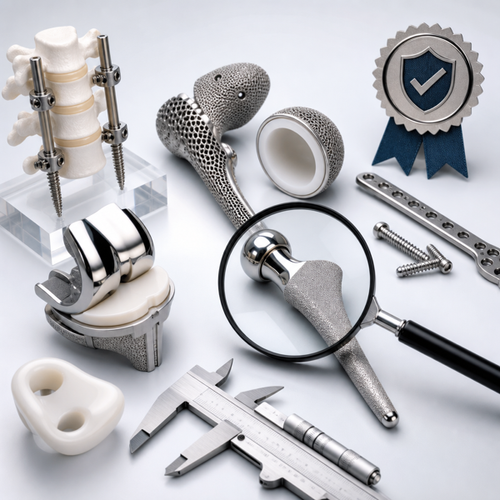
Modern Standards for Surgical Implants, Prosthetics, and Orthotics: Ensuring Quality, Safety, and Innovation
Advances in surgical implants, prosthetics, and orthotics have transformed healthcare, enabling improved patient outcomes and life-changing solutions for millions worldwide. As new technologies drive medical innovation, the role of international standards has become even more crucial. This article explores four essential standards that underpin quality, safety, and consistent performance in this sector, giving businesses and professionals the tools to not only ensure regulatory compliance but to scale confidently and capitalize on emerging opportunities.
Overview / Introduction
Implants for surgery, prosthetics, and orthotics represent one of the fastest-growing segments in health care. From high-performance artificial joints to bioengineered tissue scaffolds and advanced coatings for surgical devices, these products are at the heart of 21st-century medical care.
Implementing recognized international standards is no longer optional: it is a strategic necessity. Modern standards assure:
- Safety and biocompatibility
- Consistent, reproducible quality
- Efficient adoption of new technologies (like tissue engineering, precision manufacturing, and surface coatings)
- Streamlined regulatory approval
- Secure, scalable production chains
In this guide, you'll discover:
- The core requirements of each standard
- Practical insights for implementation
- How compliance boosts productivity, security, and business growth
Detailed Standards Coverage
ISO 18192-3:2025 - Impingement-Wear Testing for Spinal Disc Prostheses
Implants for surgery — Wear of total intervertebral spinal disc prostheses — Part 3: Impingement-wear testing and corresponding environmental conditions for test of lumbar and cervical prostheses
ISO 18192-3:2025 is vital for manufacturers, laboratories, and designers working with lumbar and cervical spinal disc prostheses. This standard outlines a rigorous test procedure simulating wear under adverse impingement conditions, directly impacting product longevity and patient safety.
The standard defines:
- How to select, prepare, and set up test specimens (including fluid medium composition and environmental controls)
- The apparatus and kinematic configurations for simulating clinical impingement events—flexion, extension, lateral bending, and their combinations
- Detailed motion and load profiles, ensuring harmonized results between labs
- Requirements for gravimetric wear measurement, intermediate test intervals, and surface analysis
Who implements it? Implant manufacturers, biomechanics labs, regulatory bodies, and R&D teams who design, test, or approve spinal prosthetic devices.
Practical impact:
- Provides objective data on wear patterns, helping reduce early failures and recalls
- Supports regulatory dossiers in major markets
- Enables comparison of new innovations with established reference devices
- Informs iterative product design and risk assessment
Key highlights:
- Simulates clinically relevant, adverse impingement scenarios
- Standardizes measurement of both lumbar and cervical prosthesis wear
- Mandates physiologically realistic media and test cycles
Access the full standard:View ISO 18192-3:2025 on iTeh Standards
ISO 6631:2025 - Collagen Quality Control in Tissue-Engineered Products
Tissue-engineered medical products — Quantification of bovine type I collagen marker peptide with liquid chromatography — Tandem mass spectrometry
With the explosive growth of tissue-engineered medical products (TEMPs) and collagen-based biomaterials, precise characterization is critical. ISO 6631:2025 sets out the method for quantifying marker peptides of purified bovine type I collagen via liquid chromatography–tandem mass spectrometry (LC-MS/MS).
The scope covers:
- Preparation and denaturation of solid, gel, or liquid collagen samples
- Trypsin digestion protocols
- Use of synthesized reference peptides (including isotopic-labeled standards) for calibration
- Recommended chromatographic conditions, internal and external standard curve techniques
- Guidance for both qualitative identification and quantitative detection, including mixed-animal or multi-type collagens
Who needs this standard? Manufacturers of collagen implants, regenerative medicine developers, quality control labs, and biotechnologists ensuring the authenticity and quality of collagen, whether for medical devices or advanced wound care.
Practical benefits:
- Assures product safety and performance by accurately determining collagen composition
- Detects batch-to-batch or supplier-to-supplier variability
- Facilitates regulatory submission with robust analytical backing
- Fosters transparency and trust in sourcing raw materials
Key highlights:
- LC-MS/MS method specifically targets bovine type I collagen, but template can adapt for other sources/types
- Enables detection within complex, mixed-material scaffolds
- Supports both product development and regulatory compliance
Access the full standard:View ISO 6631:2025 on iTeh Standards
ISO 7206-12:2025 - Press-Fit Acetabular Component Deformation Testing
Implants for surgery — Partial and total hip joint prostheses — Part 12: Deformation test method for press-fit acetabular components
Total hip joint replacement is among the most successful orthopedic interventions—but the long-term performance of prosthetic cups (acetabular components) relies on effective press-fit and minimal deformation under load. ISO 7206-12:2025 provides:
- Laboratory test methods for measuring deformation under short-term loading, accounting for real-world implant placement conditions
- Selection and setup instructions for test specimens, including monobloc and modular component variants
- Multi-directional loading schemes to simulate asymmetrical conditions (such as patient-specific anatomy, bone quality, or anti-rotation features)
- Evaluation criteria and risk assessment guidance around deformation impacts, referencing design, materials, and surgical variables
Target organizations include: implant manufacturers, testing labs, clinical researchers, product development engineers, and regulatory reviewers.
Implementation advantages:
- Detects excessive deformation risks before clinical use, preventing liner misfits, subluxation, or abnormal wear
- Aids in optimizing material choices, geometric design, and manufacturing tolerances
- Supports comprehensive technical documentation for conformity assessment
Key highlights:
- Diametric two-point loading for quantifiable, repeatable results
- Provides methodology for both modular and monobloc cup designs
- Detailed reporting requirements support global regulatory harmonization
Access the full standard:View ISO 7206-12:2025 on iTeh Standards
ISO/TR 4234:2026 - Best Practices for Implant Coating System Assessment
Non-active surgical implants — Implant coating — Best practices for coating system assessment
Surface coatings are fundamental to the next generation of implants—enhancing biocompatibility, controlling tissue integration, delivering drugs, and much more. ISO/TR 4234:2026 delivers a structured, best-lifecycle approach to evaluating implant coating systems.
Key features of the standard include:
- A systematic framework for assessment planning across design, manufacturing, sterilization, aging, and clinical use
- Foundational guidance on coating attributes, intended functions, and key evaluation dimensions
- Detailed process flowcharts and decision trees for identifying relevant hazards, selecting test methods, and setting acceptance criteria—aligned to international best practices
- Facilitates effective communication between coating suppliers, device OEMs, and regulators
Targeted at engineers, quality and regulatory professionals, and product managers overseeing coated devices and materials in joint, dental, cardiovascular, and general surgical applications.
Application benefits:
- Ensures robust risk and benefit assessment, minimizing costly recalls or failures
- Speeds up the technology transfer and validation of novel coatings
- Strengthens supplier relationships and documentation for audits
Key highlights:
- Emphasizes holistic, system-level evaluation from coating concept to final use
- Promotes transparent, evidence-based selection and justification of tests
- Complements existing product- and test-specific standards (e.g., ISO 17327-1)
Access the full standard:View ISO/TR 4234:2026 on iTeh Standards
Industry Impact & Compliance
Why Are These Standards a Must for Modern Healthcare Businesses?
Today’s medical device and implant sector faces increasing complexity: rapid innovation, global supply chains, rising patient expectations, and evolving regulatory requirements. Adhering to international standards is not merely about checking boxes:
- Accelerated Innovation: Standards bridge R&D and real-world clinical use, de-risking new product introductions and supporting adoption of advanced materials, smart implants, and digital health integrations.
- Productivity and Scaling: Clarity in testing protocols and acceptance criteria enables efficient workflow, reduces duplication of effort, and facilitates global market entry.
- Enhanced Security: Reduce liability by demonstrating a proactive, risk-managed approach to patient safety and technical due diligence.
- Regulatory Pathway Assurance: Harmonized standards assure regulators, healthcare providers, and customers of device quality, dramatically smoothing approval processes.
- Competitive Differentiation: Exceeding baseline requirements means faster feedback, better outcomes, and stronger relationships with surgeons, hospitals, and payers.
Risks of Non-Compliance
- Increased rejection rates by notified bodies and regulatory agencies
- Higher product recall and adverse event rates
- Delayed market entry due to inconclusive technical documentation
- Reputational damage and loss of trust within the clinical community
Incorporating these standards is a competitive, operational, and ethical imperative for all players in the surgical implant, prosthetics, and orthotics domain.
Implementation Guidance
Common Approaches to Adopting Implant Standards
- Gap Analysis: Start with a review of current practices versus standard requirements.
- Cross-Functional Training: Educate engineers, quality staff, and management on the standards’ impact and how they influence design, testing, and documentation practices.
- Process Mapping: Document and align R&D, quality control, and manufacturing SOPs to standard protocols.
- Pilot Testing: Implement the new procedures on sample products or batches, gather feedback, and refine workflows.
- Full Integration and Review: Roll-out updated processes across the organization, using checklists and dashboards to ensure continuous compliance.
Best Practices for Seamless Standard Adoption
- Establish clear ownership—assign standards champions for oversight
- Integrate digital recordkeeping and traceability for test data, materials, and design changes
- Collaborate with accredited third-party labs for specialized testing (e.g., LC-MS/MS, biomechanical wear)
- Engage early with regulatory or notified bodies for feedback on compliance strategies
- Monitor and adapt to new editions, technical reports, or annexes as standards evolve
Resources for Organizations
- Utilize standards subscription services at platforms like iTeh Standards for instant updates
- Attend industry workshops, webinars, and standards committee meetings
- Leverage supplier and partner expertise for testing and technology transfer
Conclusion / Next Steps
Key Takeaways:
- International standards are the backbone of safe, reliable, and high-quality surgical implants, prosthetics, and orthotics.
- ISO 18192-3:2025, ISO 6631:2025, ISO 7206-12:2025, and ISO/TR 4234:2026 cover every aspect of the modern product lifecycle—from materials characterization and biomechanical performance to surface technology assessment.
- Proactive adoption not only meets today’s regulatory demands but positions organizations to lead—and scale—in a rapidly advancing medical technology world.
Recommended Actions:
- Conduct a standards readiness assessment—identify gaps and action items
- Explore full-text standards and implementation tools at iTeh Standards
- Keep your teams trained and processes current as new technologies and standards emerge
Maintaining compliance with evolving surgical implants, prosthetics, and orthotics standards is your organization’s passport to innovation, market access, and most importantly, to the improved lives of patients worldwide.
Categories
- Latest News
- New Arrivals
- Generalities
- Services and Management
- Natural Sciences
- Health Care
- Environment
- Metrology and Measurement
- Testing
- Mechanical Systems
- Fluid Systems
- Manufacturing
- Energy and Heat
- Electrical Engineering
- Electronics
- Telecommunications
- Information Technology
- Image Technology
- Precision Mechanics
- Road Vehicles
- Railway Engineering
- Shipbuilding
- Aircraft and Space
- Materials Handling
- Packaging
- Textile and Leather
- Clothing
- Agriculture
- Food technology
- Chemical Technology
- Mining and Minerals
- Petroleum
- Metallurgy
- Wood technology
- Glass and Ceramics
- Rubber and Plastics
- Paper Technology
- Paint Industries
- Construction
- Civil Engineering
- Military Engineering
- Entertainment