


August 2026: New ISO Standard Advances Quality for Salvia miltiorrhiza in Health Care Technology
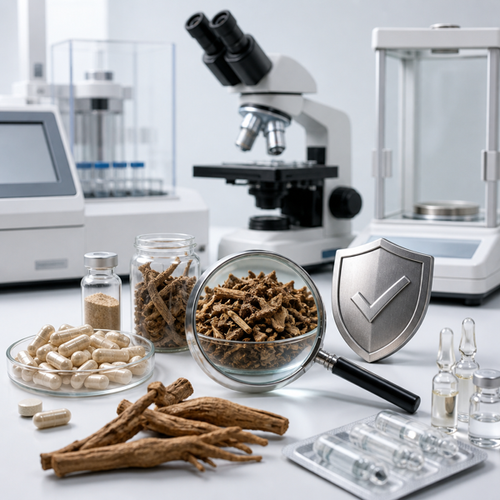
In August 2026, the field of health care technology sees a significant development with the publication of a new ISO standard for Salvia miltiorrhiza root and rhizome (Danshen), a critical botanical used in both traditional medicine and modern health products worldwide. ISO 21314:2026 establishes detailed requirements and testing methodologies, providing a foundation for harmonized quality assessment and safer international trade. This update, part of a three-part series, focuses on a single, impactful standard that will shape best practices for organizations sourcing, manufacturing, or regulating botanical medicines.
Overview
The global health care technology sector increasingly relies on stringent standards to ensure the quality, safety, and traceability of both conventional and traditional health products. Salvia miltiorrhiza (Danshen) has been prized for over 2,000 years in traditional Chinese medicine for its therapeutic effect on cardiovascular and liver diseases, among others. However, with growing use and trade across continents, significant variability in raw material quality and testing practices has led to regulatory and safety challenges.
International standards such as ISO 21314:2026 address these issues by unifying requirements for identity, purity, chemical composition, and contaminant limits. Professionals reading this article will understand:
- Scope and purpose of the new ISO 21314:2026 standard
- Essential requirements and test methods demanded by the new guidelines
- Who in the supply chain bears compliance responsibilities
- Practical impacts for quality assurance, procurement, and regulatory teams
Detailed Standards Coverage
ISO 21314:2026 – Traditional Chinese Medicine — Salvia miltiorrhiza Root and Rhizome
Traditional Chinese medicine — Salvia miltiorrhiza root and rhizome
ISO 21314:2026 is a second edition international standard that specifies rigorous requirements and test methods for Salvia miltiorrhiza root and rhizome, often traded as "Danshen". Developed by ISO Technical Committee 249 (Traditional Medicine), the standard is tailored for root and rhizome materials—both unprocessed and traditionally processed—destined for use as natural medicines globally.
Scope and Coverage: The standard covers all significant quality aspects for Salvia miltiorrhiza roots and rhizomes, including physical description, purity, identification tests, limits for contaminants (such as heavy metals and pesticides), as well as packaging and labelling guidelines.
Key Requirements and Specifications:
- General Quality: Materials must be clean, free from visible contaminants, and not display signs of decay or infestation.
- Morphological Identification: Detailed descriptions and size specifications for roots and rhizomes, ensuring correct botanical identity.
- Chemical Identification: Utilization of thin-layer chromatography (TLC) to verify unique compound profiles of Salvia miltiorrhiza.
- Moisture Content: Strict upper limits to prevent spoilage and maintain stability.
- Ash and Extractive Values: Controls for total ash, acid-insoluble ash, and extractive content to assure purity and resolve adulteration.
- Marker Compounds: Quantitative determination of key active constituents—including tanshinones (such as tanshinone IIA, cryptotanshinone, and tanshinone I) and salvianolic acid B—with set minimum or range requirements.
- Heavy Metals and Pesticide Residues: Compliance with ISO methods (e.g., ISO 18664 and ISO 22258) for strict control of toxic element content and acceptable levels for pesticide residues.
- Sampling, Testing, and Reporting: Mandates for representative sampling, accurate analytical methods, and consistent test reports for traceability.
- Packaging, Storage, and Labelling: Guidelines for appropriate packaging to preserve quality, mitigate contamination risks, and assure traceable labelling.
Who Needs to Comply:
- Herbal medicine manufacturers
- Raw material suppliers and exporters (particularly serving international markets)
- Regulatory agencies overseeing natural health products
- QA/QC laboratories and certification bodies
- Health supplement and phytopharmaceutical product developers
Notable 2026 Revisions:
- Combined subclauses on marker compounds, streamlining the requirements for chemical markers
- Updated references to national pharmacopoeias (Chinese and Korean)
- Expanded and revised normative references, supporting more robust contaminant testing
Key highlights:
- Harmonizes international trade in Salvia miltiorrhiza by defining unified chemical marker thresholds
- Details lab-based test methods for both botanical and chemical identity, improving efficacy and safety
- Supports consistent labelling and traceability throughout the supply chain
Access the full standard:View ISO 21314:2026 on iTeh Standards
Industry Impact & Compliance
The introduction of ISO 21314:2026 will have far-reaching effects across the health product supply chain:
- Quality and Safety Assurance: Consistent product quality and impurity limits help prevent patient harm and loss of efficacy in finished herbal medicines. Required limits for heavy metals and pesticides align with global safety practices and regulatory mandates.
- Regulatory Compliance: Organizations exporting Salvia miltiorrhiza must now demonstrate compliance with ISO 21314:2026 to meet global trade and importation standards.
- Market Access: Adoption of the standard facilitates entry into international markets, helping suppliers and manufacturers demonstrate credibility and assure buyers and regulators.
- Traceability: Improved labelling and test reporting enhances traceability throughout the supply chain, reducing the risk of product recalls or regulatory actions.
- Compliance Timelines: Suppliers and manufacturers should review procurement and production processes to ensure all new requirements are addressed—especially as regulatory adoption and enforcement may vary by jurisdiction.
Risks of Non-Compliance:
- Potential rejection of shipments and loss of access to regulated markets
- Product recalls or regulatory penalties if finished products are found non-conforming
- Reduced customer confidence for non-compliant firms
Technical Insights
Common Technical Requirements
ISO 21314:2026 provides a harmonized technical foundation for:
- Botanical Authentication: Mandates both morphological checks and standardized chemical fingerprinting (TLC) for species-level identification.
- Contaminant Testing: Establishes quantitative methods for moisture, ash, heavy metals, and pesticides, referencing standardized test procedures (ISO 18664, ISO 22258).
- Active Marker Quantification: Requires measurement of key pharmacologically relevant compounds (e.g., tanshinones, salvianolic acid B), often by advanced chromatographic techniques.
- Packaging and Storage: Detailed recommendations for packaging to prevent adulteration and maintain stability.
Implementation Best Practices
- Gap Analysis: Conduct internal audits comparing existing QC processes against ISO 21314:2026 requirements.
- Laboratory Accreditation: Ensure analytical labs are equipped and accredited to perform the specified tests (particularly TLC, metal, and pesticide assays).
- Supplier Engagement: Work closely with raw material suppliers to confirm upstream adherence to new specifications.
- Documentation and Training: Update SOPs, train staff, and revise documentation to reflect the new standard’s processes and recording mandates.
Testing and Certification
- Use validated methods for thin-layer chromatography and chemical quantification.
- Maintain lot-based sample traceability from supplier to finished product.
- Prepare detailed test reports per requirements for regulatory or customer audits.
- Where appropriate, seek third-party certification for compliance confirmation.
Conclusion / Next Steps
The August 2026 introduction of ISO 21314:2026 marks a milestone for quality assurance in botanical health products, offering organizations a clear, harmonized pathway to compliance for Salvia miltiorrhiza root and rhizome materials. Firms sourcing, manufacturing, or certifying herbal medicines should:
- Review and implement the new standard’s requirements promptly.
- Identify and address gaps in current quality and testing systems.
- Collaborate with supply chain partners to guarantee upstream compliance.
- Monitor ongoing updates and revisions in related ISO, national, or regional standards.
For industry professionals, adopting ISO 21314:2026 means enhanced product safety, easier global trade, and increased confidence from customers and regulators alike.
Explore this and related standards on iTeh Standards to maintain your organization’s leadership in health care technology and herbal product quality.
Categories
- Latest News
- New Arrivals
- Generalities
- Services and Management
- Natural Sciences
- Health Care
- Environment
- Metrology and Measurement
- Testing
- Mechanical Systems
- Fluid Systems
- Manufacturing
- Energy and Heat
- Electrical Engineering
- Electronics
- Telecommunications
- Information Technology
- Image Technology
- Precision Mechanics
- Road Vehicles
- Railway Engineering
- Shipbuilding
- Aircraft and Space
- Materials Handling
- Packaging
- Textile and Leather
- Clothing
- Agriculture
- Food technology
- Chemical Technology
- Mining and Minerals
- Petroleum
- Metallurgy
- Wood technology
- Glass and Ceramics
- Rubber and Plastics
- Paper Technology
- Paint Industries
- Construction
- Civil Engineering
- Military Engineering
- Entertainment