


Risk Management Standards for Connected Medical Equipment: Ensuring Safety, Security, and Effectiveness
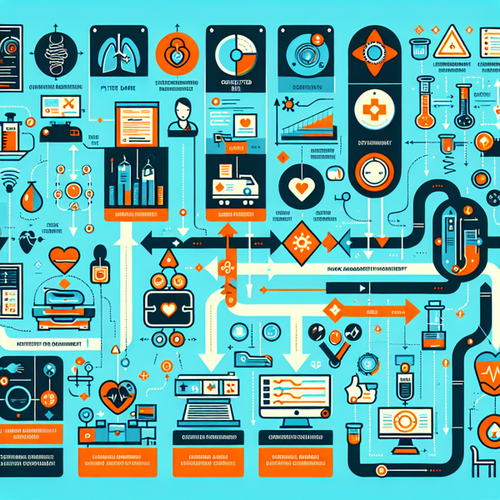
Today’s healthcare organizations operate in an era of unprecedented connectivity, where medical devices and health software are increasingly integrated with hospital IT networks. This merging of medical technology and digital infrastructure unlocks enormous benefits for patient care and operational efficiency, yet it introduces new challenges around safety, system effectiveness, and data security. To address these challenges, international standards like IEC 80001-1:2021 are vital. This article provides an in-depth, public-friendly overview of IEC 80001-1:2021—highlighting its scope, requirements, and the crucial role it plays in ensuring the safety and security of connected medical equipment for hospitals, clinics, and all providers relying on health IT systems.
Overview: The Role and Importance of Risk Management Standards in Medical Equipment
Modern healthcare relies heavily on interconnected IT infrastructures. Medical devices such as infusion pumps, monitoring systems, and imaging modalities often communicate across wired or wireless networks. Electronic health records (EHR), cloud-based analysis, and health apps further extend this web. While these digital advancements propel healthcare delivery forward, they also create new potential risks: patient safety events, cyberattacks, data breaches, service interruptions, and regulatory vulnerabilities.
International standards, like IEC 80001-1:2021, serve as global blueprints to manage risks in this complex environment. They set requirements that help organizations:
- Protect patient safety and privacy
- Assure continued effectiveness and reliability of medical devices and systems
- Safeguard sensitive clinical and operational data from cyber threats
- Build stakeholder and regulatory confidence in health IT deployments
In this article, you'll learn:
- The foundation and key clauses of IEC 80001-1:2021
- How this standard defines a risk management framework for health IT networks
- What practical steps organizations must take to comply
- The direct benefits for scaling, productivity, and organizational resilience
- Implementation considerations and resources
Detailed Standards Coverage
IEC 80001-1:2021 – Application of Risk Management for IT-Networks Incorporating Medical Devices
Full Title: Application of risk management for IT-networks incorporating medical devices — Part 1: Safety, effectiveness and security in the implementation and use of connected medical devices or connected health software
IEC 80001-1:2021 is a cornerstone standard developed by the International Electrotechnical Commission (IEC) and the International Organization for Standardization (ISO). It provides comprehensive, harmonized requirements for applying risk management to healthcare IT networks that incorporate medical devices and health software.
Scope and Purpose
The standard applies to all organizations that connect medical devices or health software to IT infrastructures—this includes hospitals, clinics, device manufacturers, IT service providers, and any stakeholders in the medical equipment lifecycle. Its core aim is to ensure that throughout planning, implementation, operation, and even decommissioning, the safety, effectiveness, and security of connected health systems are proactively managed and preserved.
Key Requirements and Specifications
IEC 80001-1:2021 requires organizations to implement a structured risk management framework that addresses:
- Safety: Preventing patient harm resulting from IT-network integration of medical devices.
- Effectiveness: Ensuring devices and IT systems perform as intended throughout their lifecycle.
- Security: Protecting systems and data from threats like unauthorized access, malware, and cyberattacks.
Notably, this edition aligns with the principles of ISO 31000 (Risk Management) and introduces:
- Explicit mandates for leadership and management accountability
- A lifecycle-based framework covering acquisition, installation, use, maintenance, and decommissioning
- Design and documentation of risk management plans, supported by ongoing evaluation and continual improvement
- Assignment of specific roles and responsibilities (such as Health IT Risk Manager)
- Requirements for stakeholder engagement—clinical, IT, business, and vendor partners
- Maintenance of a comprehensive Risk Management File detailing all risk decisions and their rationale
- Structured risk analysis, benefit-risk evaluation, implementation of control measures, and documented assurance cases
Who Needs to Comply?
Any healthcare provider organization, including hospitals, ambulatory care centers, clinics, and integrated health systems, falls under its purview when connecting medical devices to IT networks. In addition, device manufacturers, suppliers, IT companies, and third-party service providers also have a crucial role in providing compliant products, documentation, and support.
Practical Implications
Adherence to IEC 80001-1:2021 is often a regulatory expectation in many countries and regions. More importantly, it empowers organizations to:
- Mitigate risks before they cause service disruption or patient harm
- Demonstrate compliance with regulatory agencies and certification bodies
- Foster trust among patients, clinicians, and partners through robust, transparent risk controls
- Drive efficiency by integrating safety and security processes into day-to-day operations
- Scale confidently, knowing that network expansions, new device deployments, and technology upgrades are underpinned by a rigorous risk management approach
Notable Features and Requirements
- Lifecycle phase mapping: from acquisition to decommissioning
- Tailored, scalable risk assessments based on system complexity
- Stakeholder-inclusive workshops and regular health IT risk reviews
- Guidance for creating supporting documentation, including assurance cases
- Mechanisms for ongoing monitoring, incident management, and continual process enhancement
Key highlights:
- Mandates proactive, organization-wide risk management for any health IT system using connected medical devices/software
- Establishes leadership accountability and the role of Health IT Risk Manager
- Aligns with leading risk management frameworks (ISO 31000)
Access the full standard:View IEC 80001-1:2021 on iTeh Standards
Industry Impact & Compliance
Why Are Risk Management Standards a Must in Healthcare Now?
The digital transformation of healthcare brings not just innovation, but also new risk landscapes. Medical devices that were once standalone are now integrated with complex IT and cloud systems—and each link creates potential vulnerabilities.
Adopting IEC 80001-1:2021 is critical for:
- Regulatory alignment: Many jurisdictions require risk management for networked medical technology and view this standard as the benchmark.
- Cybersecurity resilience: Healthcare is a top target for cybercriminals; this standard mandates best practices to withstand attacks and recover from incidents.
- Patient safety and trust: The consequences of poorly managed connectivity can include patient harm; risk management processes are proven to reduce adverse events.
- Business continuity: Downtime, data loss, and system failures are costly. Risk-based planning minimizes disruptions and accelerates recovery.
Compliance Considerations
- Top management commitment is non-negotiable; leadership must champion and resource the risk management process
- Documentation—including the Risk Management File and Assurance Case—is vital not only for audits, but for internal decision-making
- Collaborative risk reviews: Involving all relevant departments (clinical, IT, biomedical engineering, and vendors) is essential for identifying and mitigating risks comprehensively
- Incident management processes: These catch emerging risks quickly and allow continuous improvement
Benefits of Adopting IEC 80001-1:2021
- Stronger patient safety and clinical outcomes
- Heightened data security and privacy protection
- Reduced regulatory and liability risks
- Streamlined integration of new equipment and software
- Organizational agility in response to technology and threat evolution
Risks of Non-Compliance
Ignoring risk management standards can result in:
- Security breaches and data leaks
- Regulatory fines and legal exposure
- Disrupted clinical workflows and patient endangerment
- Damaged institutional reputation
Implementation Guidance
Common Approaches to Implementation
Implementing IEC 80001-1:2021 may seem daunting, but it is designed to be scalable and adaptable to different organization sizes and technology landscapes.
Typical steps include:
- Gap analysis: Assess existing policies, procedures, and infrastructure against the standard’s requirements. Identify areas needing change.
- Leadership engagement: Secure executive support; define roles such as Health IT Risk Manager.
- Stakeholder involvement: Organize cross-functional groups—including IT, clinical, and administration—for risk analysis workshops.
- Develop risk management plans and documentation: This includes the Risk Management File, Assurance Case, and periodic review plans.
- Implement controls and mitigation measures: Address identified risks with technical, administrative, or procedural safeguards.
- Monitor, review, and improve: Establish incident management, feedback loops, and continual process improvements as part of routine operations.
Best Practices
- Use workflows and risk management processes that are tailored—but not overly restrictive—to the size and complexity of your healthcare setting
- Maintain clear records of all risk decisions and actions
- Regularly update staff training on IT security, device use, and risk procedures
- Engage vendors early to obtain security documentation and ensure compliance throughout the lifecycle of procured devices or systems
- Test risk controls in simulated environments before full deployment
- Make use of international guidance and reference documents—including those cited in IEC 80001-1 Annex B—for best results in cybersecurity, data migration, and decommissioning
Resources for Organizations
- IEC and ISO websites for current versions, guidance documents, and updates
- National healthcare authorities for regulatory alignment
- Industry forums and professional societies for peer learning and knowledge sharing
- Accredited consultants for gap assessments and implementation support
Conclusion & Next Steps
The integration of medical equipment and health IT systems is accelerating, and with it, the responsibility to manage operational, clinical, and cybersecurity risks. IEC 80001-1:2021 stands as an essential global standard for any healthcare provider or partner working with connected medical devices or software. By implementing its robust risk management framework, organizations:
- Protect patient safety and privacy
- Enhance productivity and secure operations
- Meet and exceed international regulatory expectations
- Enable safe, scalable healthcare technology adoption
Next steps:
- Conduct a gap analysis against IEC 80001-1:2021 today
- Engage your leadership and multidisciplinary teams in understanding and supporting risk management
- Explore the complete standard and related implementation guides
- Stay proactive—regularly review, test, and improve your risk processes to match an ever-evolving risk landscape
For hospitals, clinics, device manufacturers, and health IT professionals, adopting IEC 80001-1:2021 is not just compliance—it’s a path to smarter, safer healthcare delivery.
Access the full standard here:View IEC 80001-1:2021 on iTeh Standards
Categories
- Latest News
- New Arrivals
- Generalities
- Services and Management
- Natural Sciences
- Health Care
- Environment
- Metrology and Measurement
- Testing
- Mechanical Systems
- Fluid Systems
- Manufacturing
- Energy and Heat
- Electrical Engineering
- Electronics
- Telecommunications
- Information Technology
- Image Technology
- Precision Mechanics
- Road Vehicles
- Railway Engineering
- Shipbuilding
- Aircraft and Space
- Materials Handling
- Packaging
- Textile and Leather
- Clothing
- Agriculture
- Food technology
- Chemical Technology
- Mining and Minerals
- Petroleum
- Metallurgy
- Wood technology
- Glass and Ceramics
- Rubber and Plastics
- Paper Technology
- Paint Industries
- Construction
- Civil Engineering
- Military Engineering
- Entertainment