


January 2026 Brings New Calibration Standard for Radionuclide Calibrators in Health Care Technology
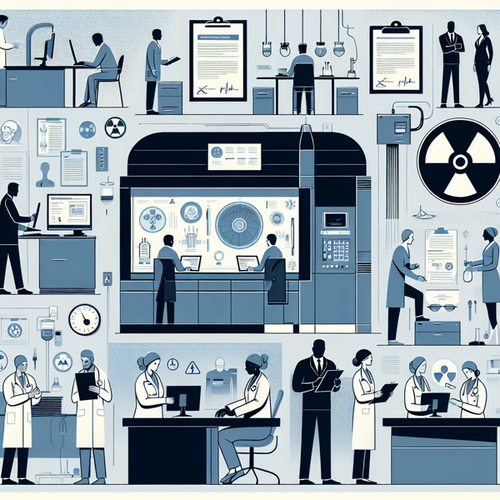
In January 2026, the health care technology sector welcomed a significant upgrade to best practices with the publication of a crucial new international standard — IEC 63465:2026. Focusing on calibration and quality control of radionuclide calibrators, this standard ushers in modernized procedures and updated compliance benchmarks for the precise measurement of radioactive sources. As reliable activity measurement is central to nuclear medicine, radiopharmaceuticals, and radioisotope production, stakeholders across the industry need to familiarize themselves with this latest guidance.
Overview / Introduction
Precise measurement and quality control are imperative in health care technology, particularly for nuclear medicine, radiopharmaceuticals, and associated industrial and research applications. Standards like IEC 63465:2026 ensure safe, accurate, and consistent use of vital equipment such as radionuclide calibrators and ionisation chambers. Adopting such standards not only drives regulatory compliance but also safeguards patient outcomes, public safety, and laboratory productivity. In this article, you’ll gain a deep understanding of the scope, requirements, and implications of the new IEC 63465:2026 standard, and how it supersedes earlier editions to address modern industry needs.
Detailed Standards Coverage
IEC 63465:2026 – Calibration and Quality Control in the Use of Radionuclide Calibrators
Full Standard Title: Calibration and Quality Control in the Use of Radionuclide Calibrators
IEC 63465:2026 sets forth comprehensive techniques for calibrating and ensuring the ongoing quality of pressurised, well-type ionisation chambers used for measuring radioactive source activity (in becquerel, Bq). These devices are crucial for determining the accuracy of photon and select medium to high-energy beta-emitting radionuclides — processes central to patient safety, therapeutic efficacy, and regulatory oversight in nuclear medicine.
What the Standard Covers & Its Scope
- Instrument Classification: The standard differentiates between field class instruments for end users (nuclear medicine clinics, hospital pharmacies, research labs, nuclear power plants) and reference class devices used in metrology institutes and by manufacturers.
- Applicable Devices: Applies to standalone ionisation chambers as well as those integrated into larger systems (fume hoods, hot cells, laminar flow cabinets, dispensing units), including required software and essential accessories.
- Calibration Lifecycle: Addresses initial manufacturer calibration, subsidiary/end-user calibration, and routine quality control — providing criteria and responsibilities for all stakeholders.
- Traceability and Documentation: Mandates traceable calibration to national/international standards and detailed documentation throughout the device’s operational life.
Key Requirements and Specifications
- Calibration Procedures: Initial device calibration must use certified or traceable radioactive standards. Subsidiary calibrations are covered for end-user-specific applications with non-standard geometries or configurations.
- Performance Verification: Outlines tests for accuracy, repeatability, reproducibility, linearity, and constancy. Sets benchmarks and acceptance criteria for each category, distinguishing between field and reference class devices.
- Routine Quality Control (QC): Daily, annual, and commissioning QC tests are specified (visual checks, background testing, constancy, high voltage, linearity, and more).
- Uncertainty and Measurement Bias: Guidance for assessing uncertainty and systematic errors, especially for challenging sources (e.g., low-energy photon emitters, pure beta emitters).
- Accessory and Software Integration: Requires proper use and QC of accessories and computer systems integrated with the calibrator.
- Recording and Logging: Recommends continuous data recording, use of control charts, and best practices for documentation to facilitate audits and traceability.
Who Needs to Comply?
- Equipment manufacturers and suppliers
- National metrology institutes and designated reference labs
- Producers/distributors of radionuclide sources
- Nuclear medicine facilities and hospital pharmacies
- Industrial and research laboratories using radionuclide calibrators
- Nuclear power plants involved in radiological measurements
Practical Implications for Implementation
For site operators and QA managers, implementing IEC 63465:2026 means aligning current protocols and workflows with the new, more granular procedures for calibration, verification, record-keeping, and periodic QC. Manufacturers must update product documentation and provide clear calibration data, especially for devices integrated with larger systems. Compliance will often involve staff retraining, revision of SOPs, and potentially investing in updated check sources and calibration accessories. By following the standard, organizations lower risks associated with inaccurate measurements, regulatory non-compliance, and device failures.
Notable Changes from Previous Editions
IEC 63465:2026 cancels and replaces older standards (IEC TR 61948-4:2019, IEC 61303:1994, IEC 61145:1992) and introduces:
- Updated technical specifications aligned with next-generation instruments
- Defined test acceptance criteria for both reference and field class devices
- Clear recommendations on data logging and control chart usage
- Expanded subsidiary calibration guidance, including user-defined source geometries
- Integration of accessory and software QC as part of the holistic calibration protocol
Key highlights:
- Updated QC procedures and technical requirements
- Explicit distinction between reference and field class device standards
- Calibration now includes detailed user-geometry guidance and software integration
Access the full standard:View IEC 63465:2026 on iTeh Standards
Industry Impact & Compliance
The release of IEC 63465:2026 directly affects how health care organizations, research facilities, and industry actors manage radioactive source measurement. Immediate benefits include:
- Enhanced Accuracy and Reliability: Clearly defined acceptance criteria and QC cycles help reduce the risk of false readings which can impact patient care and research outcomes.
- Regulatory Alignment: As this standard is expected to become a benchmark for global regulatory inspection, early adoption can help health care providers and suppliers manage audit risks.
- Record-Keeping and Traceability: More robust logging requirements support incident investigation, continuous improvement, and certification renewals.
Compliance considerations and timeline:
- Organizations should review their current calibration protocols and initiate gap analyses.
- Update SOPs, retrain staff, and acquire compliant check sources as needed.
- Engage with vendors to ensure current devices and new equipment align with standard requirements.
- Early compliance may confer a competitive edge and boost client confidence.
- Non-compliance risks include regulatory fines, operational delays, reputational impact, and — most critically — patient or staff safety hazards.
Technical Insights
Common technical requirements across IEC 63465:2026:
- Daily verification: All instruments should undergo routine visual checks, background responds, constancy, and system calibration. Automated QC may be supported by integrated software systems.
- Control chart implementation: Institutions are advised to use statistical process control charts for background and constancy metrics, supporting early detection of drift or malfunction.
- Calibration frequency: Accuracy, linearity, reproducibility, and repeatability tests must be performed annually or at commissioning, with results documented for audit and improvement.
- Recording protocols: Maintenance of comprehensive device logs and QC results is emphasized, further enabled by modern device software interfaces.
Implementation best practices:
- Develop or update a quality management system (QMS) that reflects IEC 63465:2026 requirements.
- Record and verify all calibration, subsidiary calibrations, and QC events with traceable, tamper-resistant logging systems.
- Train qualified operators and designate responsible personnel for daily and annual QC protocols.
- Use only certified or traceable standard sources for calibration and accuracy testing; ensure source geometry is matched to clinical use cases.
- Incorporate regular software updates and maintain integrative accessory QC, especially for complex installations.
- Perform gap analysis to review old procedures against new acceptance criteria.
- Audit compliance and implement corrective actions for any out-of-specification results.
Testing and certification considerations:
- Manufacturers, metrology institutes, and end users may require third-party verification or independent laboratory certification to comply with regulatory requirements, especially for reference class devices.
- Document all changes, calibrations, tests, and repairs to maintain a robust audit trail.
- When integrating with multi-component systems (e.g., in hospital hot cells), all accessories and supporting software must undergo qualification as part of the calibration ecosystem.
Conclusion / Next Steps
The publication of IEC 63465:2026 marks a leap forward in safety, precision, and consistency for health care technology professionals involved in radionuclide measurement. Organizations are strongly encouraged to:
- Review the new standard in full to ensure comprehensive understanding
- Reassess and update current calibration, verification, and record-keeping protocols
- Invest in staff training and upgrade necessary equipment/components as required
- Foster a safety-first and compliance-driven culture supported by robust documentation
To maintain excellence in patient care, operational safety, and regulatory compliance, all stakeholders across nuclear medicine, research, and industry should make adoption of this new standard a strategic priority.
Explore IEC 63465:2026 in detail:View IEC 63465:2026 on iTeh Standards
Stay ahead of changes in the rapidly evolving field of health care technology by subscribing to standard updates and leveraging authoritative resources like iTeh Standards.
Categories
- Latest News
- New Arrivals
- Generalities
- Services and Management
- Natural Sciences
- Health Care
- Environment
- Metrology and Measurement
- Testing
- Mechanical Systems
- Fluid Systems
- Manufacturing
- Energy and Heat
- Electrical Engineering
- Electronics
- Telecommunications
- Information Technology
- Image Technology
- Precision Mechanics
- Road Vehicles
- Railway Engineering
- Shipbuilding
- Aircraft and Space
- Materials Handling
- Packaging
- Textile and Leather
- Clothing
- Agriculture
- Food technology
- Chemical Technology
- Mining and Minerals
- Petroleum
- Metallurgy
- Wood technology
- Glass and Ceramics
- Rubber and Plastics
- Paper Technology
- Paint Industries
- Construction
- Civil Engineering
- Military Engineering
- Entertainment