


November 2025: New Standards Elevate Fine Ceramics and Advanced Technical Ceramics
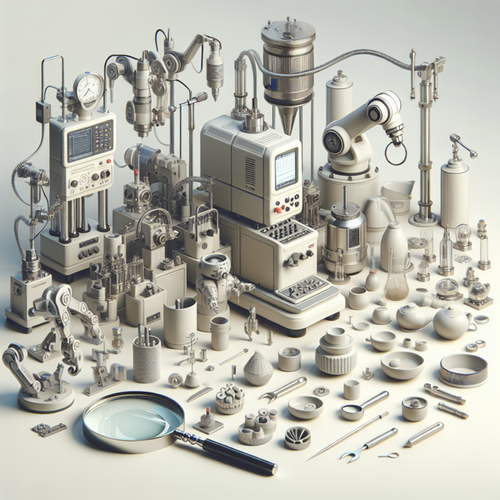
Stricter testing, more reliable materials, and enhanced quality control are the hallmarks of five new international standards for the glass and ceramics industries, published in November 2025. Covering a spectrum from fracture resistance and compressive strength to impurity detection and flexural strength, these standards define how the latest advanced ceramics and fine ceramics are developed, characterized, and certified worldwide. For industry professionals, staying up to date with these changes is crucial for maintaining compliance, securing product acceptance, and driving innovation in increasingly demanding technical applications. This article provides a comprehensive overview of each new standard, practical implications, and how your organization can benefit from early adoption.
Overview / Introduction
The glass and ceramics industries, and particularly the field of advanced technical ceramics (often referred to as fine ceramics), play a foundational role in sectors like aerospace, automotive, medical devices, renewable energy, and electronics. As performance requirements accelerate, so does the need for reliable and robust standards governing material selection, testing, and quality assurance.
Standards in this industry are more than checkboxes—they establish technical baselines for safety, reliability, and interoperability. For manufacturers, laboratories, and procurement teams, understanding and applying the latest requirements is vital for risk management, regulatory compliance, and global competitiveness.
In this first part of our November 2025 ceramics standards review, you’ll find in-depth coverage of five newly published EN ISO standards. Each brings critical updates or new protocols for fine ceramics, ranging from mechanical properties to analytical chemistry.
Detailed Standards Coverage
EN ISO 14627:2025 – Test Method for Fracture Resistance of Silicon Nitride Bearing Balls
Fine ceramics (advanced ceramics, advanced technical ceramics) – Test method for fracture resistance of silicon nitride materials for rolling bearing balls at room temperature by indentation fracture (IF) method (ISO 14627:2012)
This standard outlines the indentation fracture (IF) method for determining the fracture resistance of monolithic silicon nitride bearing balls at room temperature. It prescribes sample preparation, test apparatus configuration, and calculation procedures to provide reproducible material comparison and quality assurance data.
- Scope and Requirements: Applies exclusively to monolithic silicon nitride materials used in rolling bearing balls. The standard details the use of a Vickers indenter and a specific IF procedure to induce and measure cracks, ensuring objective comparison between batches or suppliers.
- Target Users: Producers, quality engineers, and laboratories focused on high-precision bearing components, especially where cartridge or machinery reliability is at stake.
- Practical Implications: Ensures consistent fracture resistance results for risk assessment, supplier qualification, and batch release. Reduces disputes over test variability.
- Notable Changes: Codifies IF testing for room temperature; clarifies test specimen handling and repeatability.
Key highlights:
- Exclusive applicability to monolithic silicon nitride
- IF method enhances quality control and supplier comparison
- Harmonizes test reporting for industry-wide comparability
Access the full standard:View EN ISO 14627:2025 on iTeh Standards
EN ISO 17162:2025 – Compressive Strength of Advanced Monolithic Ceramics
Fine ceramics (advanced ceramics, advanced technical ceramics) – Mechanical properties of monolithic ceramics at room temperature – Determination of compressive strength (ISO 17162:2014)
EN ISO 17162:2025 specifies how to determine the nominal compressive strength of advanced monolithic technical ceramic materials under room temperature conditions. Compressive strength is crucial for applications where ceramics face compressive loads—often less critical than tensile but vital for reliable component performance.
- Scope and Requirements: Sets strict guidelines for sample dimensions, surface finish, testing apparatus (including load rams, compression platens, and alignment), and data recording protocols. Emphasizes minimizing surface and specimen preparation variables for reproducibility.
- Target Users: Material suppliers, component manufacturers, R&D teams, and QA labs for all industries relying on monolithic ceramics.
- Practical Implications: Facilitates consistent data for material selection and component design, supports failure analysis, and helps in process optimization to maximize material integrity.
- Notable Changes: Integrates enhanced protocols for sample preparation and assessment to reduce result scatter typical in brittle materials.
Key highlights:
- Precision compressive strength test method for monolithic ceramics
- Guidelines on apparatus, alignment, and quality assessment
- Supports design data acquisition and process validation
Access the full standard:View EN ISO 17162:2025 on iTeh Standards
EN ISO 19630:2025 – Tensile Properties of Ceramic Filament Reinforcements
Fine ceramics (advanced ceramics, advanced technical ceramics) – Methods of test for reinforcements – Determination of tensile properties of filaments at ambient temperature (ISO 19630:2025)
For ceramic-reinforced composites and advanced fiber-based products, understanding the tensile properties of filaments is critical. EN ISO 19630:2025 establishes the procedures for measuring tensile strength, Young’s modulus, and fracture strain of single ceramic filaments, under ambient conditions.
- Scope and Requirements: Applies to continuous ceramic filaments (from tows, yarns, braids, etc.) with up to 5% fracture strain. The standard outlines specimen preparation, gauge length definitions, mounting, rate of loading, and statistical reporting. It explicitly excludes carbon fibers with nonlinear stress-strain responses and is not intended for homogeneity or volume effect assessment.
- Target Users: Composite manufacturers, reinforcement suppliers, and research laboratories focused on performance-critical ceramic fiber applications.
- Practical Implications: Enables reliable tensile property data for composite design, quality control, and supplier benchmarking.
- Notable Changes: Revised gauge length and compliance calculations; strengthened requirements for measurement authenticity and statistical analysis.
Key highlights:
- Uniform test methodology for continuous ceramic filaments
- Mandated measurement of tensile strength, modulus, and fracture strain
- Improved reliability for composite material design
Access the full standard:View EN ISO 19630:2025 on iTeh Standards
EN ISO 3169:2025 – Chemical Analysis of Impurities in Aluminium Oxide Powders via ICP-OES
Fine ceramics (advanced ceramics, advanced technical ceramics) – Methods for chemical analysis of impurities in aluminium oxide powders using inductively coupled plasma-optical emission spectrometry (ISO 3169:2023)
Purity is critical to the performance of technical ceramics. This standard sets out protocols for the chemical analysis of trace impurities in aluminium oxide powders using ICP-OES (Inductively Coupled Plasma Optical Emission Spectrometry), a highly sensitive analytical technique.
- Scope and Requirements: Applicable to Al2O3 powders used as raw materials for fine ceramics. Specifies provisions for acid decomposition, alkali fusion, calibration standards, and blank tests. Detects elements including Ca, Cr, Cu, Fe, Mg, Mn, K, Si, Na, Ti, Zn, and Zr.
- Target Users: Raw material suppliers, advanced ceramics manufacturers, and testing labs requiring assurance of powder purity.
- Practical Implications: Supports procurement and certification of high-purity materials, reduces risk of defects related to impurities, and supports regulatory compliance.
- Notable Changes: Introduces multi-method decomposition, standardized reporting of elements, and calibration protocols.
Key highlights:
- ICP-OES protocols for impurity determination in alumina
- Coverage of a broad range of trace metallic and non-metallic contaminants
- Enhanced precision in powder quality certification
Access the full standard:View EN ISO 3169:2025 on iTeh Standards
EN ISO 17138:2025 – Flexural Strength of Ceramic Matrix Composites
Fine ceramics (advanced ceramics, advanced technical ceramics) – Mechanical properties of ceramic composites at room temperature – Determination of flexural strength (ISO 17138:2025)
EN ISO 17138:2025 governs the test methodology for measuring the flexural strength of ceramic matrix composite (CMC) materials reinforced with continuous fibers. The three- or four-point bend tests defined within target composites where reliable flexural properties are a design or QC parameter.
- Scope and Requirements: Encompasses all CMCs with unidirectional, bidirectional, or tridirectional reinforcement, loaded along the axis of reinforcement as specified in ISO 19634. Not intended for absolute design-value generation, but crucial for development, benchmarking, and QC.
- Target Users: Designers, manufacturers, and testers of CMC components used in critical applications from turbines to advanced automotive parts.
- Practical Implications: Provides consistent approach for comparative evaluation and supplier certification; underpins performance guarantees.
- Notable Changes: Updated alignment with contemporary composite notations; enhanced guidance on test specimen preparation and bend geometries.
Key highlights:
- Consistent room-temperature flexural testing for CMCs
- Three- and four-point geometries for robust comparative data
- Supports R&D, supplier evaluation, and ongoing quality monitoring
Access the full standard:View EN ISO 17138:2025 on iTeh Standards
Industry Impact & Compliance
The adoption of these new and revised standards represents a major step forward for anyone involved in the glass and ceramics—especially fine and advanced ceramics—industry.
Business Critical Impacts:
- Assured Material Quality: More reliable, repeatable property measurements ensure that products meet global expectations, reduce field failures, and lower warranty risk.
- Regulatory Readiness: Compliance with the latest international standards is often mandatory or strongly recommended for market access, tenders, and certifications in sectors such as aerospace, automotive, and healthcare devices.
- Supply Chain Assurance: Standardized test and evaluation methods enable clear communication and benchmarking between suppliers and manufacturers.
Compliance and Timelines:
- Standards endorsed by CEN typically must be adopted as national standards within six months (– May 2026 for these publications).
- Update internal test methods, material acceptance protocols, and supplier contracts accordingly.
- Start training quality and testing personnel on new procedures as soon as possible to avoid delays in product qualification.
Risks of Non-Compliance:
- Product rejections due to non-conformity
- Reputation damage or lost business opportunities
- Regulatory penalties in highly controlled sectors
Benefits of Early Adoption:
- Improved quality assurance and process optimization
- Enhanced marketability and consumer confidence
- Competitive differentiation in contracts and bids
Technical Insights
A review of these five standards reveals several cross-cutting technical themes and best practices for successful implementation:
- Precision Sample Preparation: All mechanical test standards emphasize strict control over sample geometry, surface finish, and preparation methodology. Adherence here is crucial for consistent results.
- Instrument Calibration: Testing equipment (e.g., force application, ICP-OES spectrometers) must be maintained to accuracy requirements specified (often referencing ISO 7500-1).
- Data Recording and Reporting: Rigorous data capture—force, displacement, crack size, strain, emission intensity, etc.—is required. Automated recording and traceability are recommended.
- Statistical Analysis: The intrinsic variability of ceramic materials, especially in brittle fracture, means statistical treatment (mean, deviation, Weibull statistics) is critical for meaningful QA or material benchmarking.
- Documented Procedures: Maintain up-to-date SOPs reflecting the latest standards; audit labs and suppliers for conformity.
- Certification and Third-Party Validation: For critical applications, consider third-party laboratory certification under ISO/IEC 17025 to demonstrate robust compliance.
Conclusion / Next Steps
The November 2025 release of these five central standards for fine and advanced technical ceramics marks a significant inflection point for the industry. By upgrading your quality control, procurement, and testing protocols to align with these specifications, you not only mitigate supply chain and product risk, but also signal a commitment to best-in-class product performance.
Key recommendations:
- Audit your current practices for compliance gaps against the new standards
- Train or retrain staff in updated test methods and data reporting requirements
- Update technical documentation, supplier agreements, and internal specifications
- Reach out to accredited laboratories for certification or interlaboratory comparison if needed
Stay engaged with iTeh Standards as we publish Parts 2 and 3, which will cover further November 2025 updates essential for full compliance and competitive leadership in the rapidly evolving glass and ceramics industry.
Explore these and other cutting-edge standards directly at iTeh Standards to maintain your organization’s quality and innovation edge.
Categories
- Latest News
- New Arrivals
- Generalities
- Services and Management
- Natural Sciences
- Health Care
- Environment
- Metrology and Measurement
- Testing
- Mechanical Systems
- Fluid Systems
- Manufacturing
- Energy and Heat
- Electrical Engineering
- Electronics
- Telecommunications
- Information Technology
- Image Technology
- Precision Mechanics
- Road Vehicles
- Railway Engineering
- Shipbuilding
- Aircraft and Space
- Materials Handling
- Packaging
- Textile and Leather
- Clothing
- Agriculture
- Food technology
- Chemical Technology
- Mining and Minerals
- Petroleum
- Metallurgy
- Wood technology
- Glass and Ceramics
- Rubber and Plastics
- Paper Technology
- Paint Industries
- Construction
- Civil Engineering
- Military Engineering
- Entertainment