


A Practical Guide to Quality and Safety Standards for Cereals, Pulses, and Derived Products
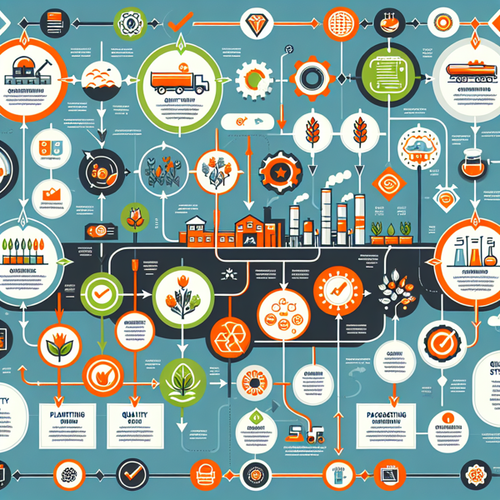
Cereals, pulses, and their derived products are a foundation of the global food system, forming the basis for a vast array of everyday foods. Ensuring their quality, safety, and consistency is paramount—not only for consumer protection but also for food industry growth, technological innovation, and international trade. In this guide, we explore four critical international standards: EN ISO 2171:2023, EN ISO 712-1:2024, EN ISO 712-2:2024, and ISO 5530-1:2025, each providing a cornerstone for excellence in food technology. Adopting and implementing these standards isn't just about compliance—it's about fostering food safety, productivity, risk reduction, scalability, and trusted reputations in an interconnected world.
Overview/Introduction
The cereals and pulses industry supports billions of people worldwide, supplying essential nutrients and ingredients for both direct human consumption and food manufacturing. With such a broad and complex supply chain—from farms to processors, mills, distributors, and retailers—there is a constant need for universal benchmarks to measure and guarantee the safety, quality, and performance of these products. International standards are the answer.
Why do standards matter so much today?
- Food safety compliance has never been more tightly regulated. Standards ensure that cereals and pulses pose minimal risk for contamination or unpredictability.
- Productivity and cost control: By providing precisely defined analytical methods for things like ash yield and moisture content, producers can maintain efficient processes and optimal product quality.
- Market access and export: Global trade relies on mutual recognition of these standards. Meeting them is essential for accessing restrictive or high-value markets.
- Consumer confidence: Consistent quality is no longer optional; it is a brand necessity.
This article unpacks what each of the four selected standards covers, how they can be practically implemented, and how they can help businesses scale, enhance safety, and position themselves as leaders in the food industry.
Detailed Standards Coverage
EN ISO 2171:2023 - Ash Yield Determination by Incineration
Cereals, pulses and by-products - Determination of ash yield by incineration (ISO 2171:2023)
Scope & Purpose: EN ISO 2171:2023 lays out a uniform method for determining the ash content—the inorganic residue remaining after incineration—in cereals, pulses, and their milled products. Products included under its scope are grains (wheat, barley, etc.), flours and semolinas, bran, mixed cereal flours, cereal by-products (such as wheat gluten or maize grits), pulses, and their flours. It excludes starches, starch derivatives, animal feed, and seeds.
The ash yield test is a principal indicator of product purity and quality. Excessive mineral content may point to contamination or sub-standard processing, impacting both nutritional value and functional properties in food production.
Key Requirements & Specifications:
- Defined procedure for sample incineration (at 550 ± 10°C for products with salts; 900 ± 25°C for flour analysis)
- Rigorous control over sampling, test portions, and ashing dishes
- Instructions for determining moisture content before ashing
- Expresses results as mass percentage of ash in the original product
- Ensures repeatability and reproducibility through detailed guidelines for critical differences and uncertainty
Who Needs to Comply:
- Flour mills, cereal processors, food ingredient producers
- Food laboratories and quality control centers
- Regulatory agencies overseeing food quality
Practical Implications: Consistent ash determination is vital for:
- Meeting food legislation requirements
- Guaranteeing nutritional labeling accuracy
- Monitoring process hygiene and contamination
- Optimizing milling yields and costs
Notable Features:
- Updated scope and enhanced precision vs previous versions
- Recommends platinum dishes and strict temperature guidelines for flour
- Wide applicability: covers most grains, pulses, and by-products for human consumption
Key highlights:
- Standardizes a common purity measurement across industry
- Ensures product labeling and trade documentation accuracy
- Facilitates regulatory compliance and audit readiness
Access the full standard:View EN ISO 2171:2023 on iTeh Standards
EN ISO 712-1:2024 - Moisture Content Determination: Reference Method
Cereals and cereal products - Determination of moisture content - Part 1: Reference method (ISO 712-1:2024)
Scope & Purpose: EN ISO 712-1:2024 details a laboratory reference method for determining moisture content in cereals and cereal products. This method applies to wheat, rice (paddy, husked, and milled), barley, millet, rye, oats, triticale, and sorghum, as either grains, milled forms, semolina, or flour. Notably, it does not apply to maize and pulses, which are covered in other standards.
Why is moisture content so critical? An optimal moisture level is key for preserving grain quality, preventing microbial growth, managing shelf life, and defining grain class or market category. Even small deviations can affect baking properties or lead to spoilage and financial loss.
Key Requirements & Specifications:
- Strict oven-drying method: samples are dried at 130–133°C for set periods
- Preparation instructions for test samples (including grinding, if required)
- Standardized weighing for precise analysis
- Duplicate determinations required for reliability; stipulates repeatability thresholds
- Adjustments for preconditioning in high- or low-moisture products
Who Needs to Comply:
- Cereal millers and processors
- Grain storage facilities
- Quality assurance labs
- Food manufacturers relying on precise grain/flour specifications
Practical Implications:
- Enables accurate stock management and quality grading
- Reduces safety risks associated with excess moisture (e.g., mold, aflatoxins)
- Prevents economic losses from inaccurate moisture reporting
- Supports traceability and meets customer/market demands
Notable Features:
- Harmonized protocol ensures uniform results across different labs
- Developed in collaboration with industry and regulatory experts
- Integral part of quality control in global supply chains
Key highlights:
- Guarantees data reliability for trading and inventory valuation
- Reduces safety and spoilage risks from improper storage
- Supports accurate product labeling and tracking
Access the full standard:View EN ISO 712-1:2024 on iTeh Standards
EN ISO 712-2:2024 - Moisture Content Determination: Automatic Drying Oven Method
Cereals and cereal products - Determination of moisture content - Part 2: Automatic drying oven method (ISO 712-2:2024)
Scope & Purpose: EN ISO 712-2:2024 introduces an automated approach to determining the moisture content of cereals and cereal products. Building on the reference method (Part 1), this standard leverages an automatic drying oven with precise control and monitoring, streamlining laboratory operations and reducing human error. Applicable to the same range of cereals as part 1, it excludes maize and pulses.
Automation dramatically improves speed, accuracy, and documentation—factors that are especially valuable in high-throughput environments or for companies seeking digital traceability.
Key Requirements & Specifications:
- Use of an automatic drying oven to ensure reproducible heating and drying conditions
- Consistent sample preparation procedures for both unground and ground cereals
- Automated mass determination before and after drying
- Requirements for calibration, maintenance, and performance verification of instruments
- Protocols for calculation, interpretation, and reporting of results
Who Needs to Comply:
- Large cereal/flour producers or laboratories processing high sample volumes
- Food companies embracing digital transformation and Industry 4.0
- Quality management and R&D departments seeking efficiency gains
Practical Implications:
- Increases analytical throughput—critical for continuous or industrial-scale operations
- Minimizes risk of operator error and improves objectivity
- Enables better integration with LIMS (Laboratory Information Management Systems)
- Supports certification, export, and partnership with demanding markets
Notable Features:
- Future-proofs the laboratory by embracing automation
- Allows for semi- or fully-automatic data collection and archiving
- Ensures seamless compatibility with industry 4.0 food processing traceability
Key highlights:
- Maximizes laboratory productivity and reliability
- Seamless integration with digital quality assurance systems
- Ensures high consistency for audits and regulatory inspections
Access the full standard:View EN ISO 712-2:2024 on iTeh Standards
ISO 5530-1:2025 - Wheat Flour Doughs: Water Absorption & Rheology via Farinograph
Wheat flour — Physical characteristics of doughs — Part 1: Determination of water absorption and rheological properties using a farinograph
Scope & Purpose: ISO 5530-1:2025 sets out detailed procedures to determine both the water absorption capacity and rheological (mixing) properties of wheat flour dough using a farinograph. Two methods are provided: a constant flour mass procedure and a constant dough mass approach. The standard is specifically designed for wheat flours, serving both commercial and experimental needs.
Understanding how flour hydrates and dough develops is essential for producing consistent, high-quality baked goods, noodles, and related wheat-based foods. Rheological data inform everything from recipe formulation to industrial equipment calibration.
Key Requirements & Specifications:
- Uses a standardized farinograph instrument with controlled temperature and mixing speed
- Prescribes analytical weighing, water dosing, and dough mixing routines
- Instructs on how to interpret farinogram output (e.g., water absorption, dough development time, stability, degree of softening)
- Requires duplicate measurements for reliability and detailed reporting, supporting international comparisons
- Aligns with key reference methods (ICC 115/1, AACC 54-21.02)
Who Needs to Comply:
- Commercial millers and bakers
- Developers of new wheat-based products
- Quality control and R&D labs
- Suppliers, importers/exporters of wheat flour
Practical Implications:
- Determines how much water should be added to flour for optimum dough texture and workability
- Enables bakers and food processors to match flour performance with product needs
- Helps in troubleshooting and optimizing recipes or processes
- Facilitates product certification and meets buyer/supplier technical requirements
Notable Features:
- Fourth edition with enhanced guidance for electronic equipment and fresh interlaboratory comparison data
- Allows both constant flour and dough mass procedures depending on application
- Ideal for automation and high-throughput laboratories
Key highlights:
- Provides universally recognized metrics for dough quality
- Crucial for consistent, reliable baked product outcomes
- Strengthens trust between suppliers and buyers
Access the full standard:View ISO 5530-1:2025 on iTeh Standards
Industry Impact & Compliance
In today's competitive food market, meeting international standards is not an optional extra—it is fundamental to building a secure, productive, and scalable business.
Impact on Businesses:
- Enhanced consistency and quality: Standardized tests for moisture, ash, and dough properties remove guesswork, enabling repeatable, high-quality outputs.
- Regulatory readiness: Compliance with recognized standards secures approvals, fast-tracks audits, and shields against legal or product recall risks.
- Operational efficiency: Automated or harmonized procedures (as defined in EN ISO 712-2:2024) boost laboratory productivity and cut resource waste.
- Market advantage: Ability to reliably demonstrate compliance with universally accepted standards opens exports and underpins trust with end-customers.
Compliance Considerations:
- Documentation: Maintain robust records for each analytical batch. Standards like ISO 5530-1:2025 stipulate detailed test reporting, which supports traceability and dispute resolution.
- Training: Staff must be trained not only in laboratory techniques but also in the application and reasoning behind each method.
- Regular calibration: Equipment used in these processes, such as ovens and farinographs, must be regularly calibrated and maintained.
- Staying current: Commit to frequent review of standard updates to maintain compliance and avoid obsolete methods.
Benefits of Adoption:
- Risk reduction: Minimizes recalls, legal exposure, and foodborne illness incidents.
- Cost control: Accurate analyses prevent over-drying, spoilage, or ingredient wastage.
- Brand reputation: Demonstrating adherence to these rigorously developed standards shows a commitment to quality and transparency.
- Operational scalability: Uniform testing supports expansion across new facilities or geographies.
Risks of Non-Compliance:
- Exposure to food safety crises
- Market exclusion or trade barriers
- Increased risk of financial penalties or product bans
- Loss of customer trust and brand value
Implementation Guidance
Adopting these standards in a real-world setting does not have to be daunting. Consider the following steps and best practices:
1. Assess Your Current Processes:
- Map out your current quality control and laboratory protocols for cereals, pulses, and derived products.
- Identify gaps where practice deviates from the requirements set out in these standards.
2. Staff Training and Onboarding:
- Provide training on new or updated methods, especially automation and digital data handling (EN ISO 712-2:2024).
- Emphasize the principles of accuracy, repeatability, and documentation.
3. Equipment Investment:
- Ensure you have the right tools: precision balances, ovens, farinographs, and appropriate LIMS software.
- Regularly calibrate and maintain all analytical equipment.
4. Develop Standard Operating Procedures (SOPs):
- Write clear SOPs based on each standard’s requirements.
- Make them accessible and up-to-date; review regularly.
5. Internal Auditing and Validation:
- Regularly perform method validation and verification using control samples.
- Cross-check results with external reference laboratories if needed.
6. Data Integration and Reporting:
- Implement digital records to track, analyze, and report quality data.
- Link results to products, batches, and supply chain partners.
Best Practices:
- Benchmark with industry peers and buyers
- Stay informed on standard revisions
- Foster a culture of quality and continuous improvement
- Use checklists during audits or compliance checks
Resources:
- iTeh Standards platform for the latest definitive documentation
- Training modules from professional associations (e.g., ISO, ICC, AACC)
- Industry workshops and webinars on food analysis and compliance
Conclusion / Next Steps
Implementing proven standards such as EN ISO 2171:2023, EN ISO 712-1:2024, EN ISO 712-2:2024, and ISO 5530-1:2025 is an investment in operational excellence, safety, and customer satisfaction. As demand for high-quality cereals, pulses, and derived products grows, businesses that master these standards will find themselves uniquely positioned to scale, innovate, and open new markets.
Key Takeaways:
- International food technology standards offer essential frameworks for quality, safety, and efficiency.
- Adopting these standards improves productivity, lowers risk, and builds consumer and client trust.
- Practical implementation requires methodical planning—from equipment to training and data management.
- Staying up-to-date with the latest editions and participating in ongoing education helps ensure continued compliance and leadership in the industry.
Recommendations:
- Review your current laboratory and quality control practices against the latest editions of these standards.
- Access full standard documents via trusted sources such as iTeh Standards for accurate details and procedures.
- Invest in digital and automation solutions to remain competitive in an increasingly technology-driven market.
Explore the full documentation, consult trained specialists, and take the next step toward world-class food quality management today.
https://standards.iteh.ai/catalog/standards/cen/59edadbf-f2e1-43e5-8d4c-24ae081b033e/en-iso-2171-2023https://standards.iteh.ai/catalog/standards/cen/da32ad7d-e914-4611-93e4-8ec3f1c51113/en-iso-712-1-2024https://standards.iteh.ai/catalog/standards/cen/da23622d-2ea1-4f14-a305-66852e49dd13/en-iso-712-2-2024https://standards.iteh.ai/catalog/standards/iso/4a4948b4-f2c8-4a7f-85de-1821c12cf09d/iso-5530-1-2025
Categories
- Latest News
- New Arrivals
- Generalities
- Services and Management
- Natural Sciences
- Health Care
- Environment
- Metrology and Measurement
- Testing
- Mechanical Systems
- Fluid Systems
- Manufacturing
- Energy and Heat
- Electrical Engineering
- Electronics
- Telecommunications
- Information Technology
- Image Technology
- Precision Mechanics
- Road Vehicles
- Railway Engineering
- Shipbuilding
- Aircraft and Space
- Materials Handling
- Packaging
- Textile and Leather
- Clothing
- Agriculture
- Food technology
- Chemical Technology
- Mining and Minerals
- Petroleum
- Metallurgy
- Wood technology
- Glass and Ceramics
- Rubber and Plastics
- Paper Technology
- Paint Industries
- Construction
- Civil Engineering
- Military Engineering
- Entertainment