


November 2025: Major Updates for Fluid Systems and Components Standards
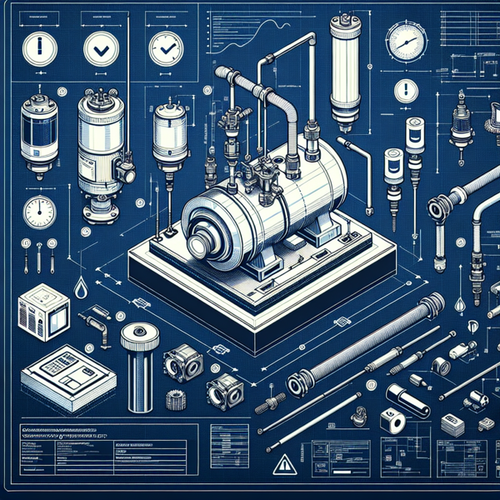
In November 2025, four significant new standards set new benchmarks for safety, quality, and reliability in fluid systems and components used across diverse industrial sectors. Covering fuel truck delivery hoses, polyethylene pipe fusion testing, and centrifugal pumps for cryogenic services, these standards provide robust frameworks for manufacturers, operators, engineers, and compliance managers. With new and revised requirements, these publications represent essential progress in risk management and technical performance, ensuring fluid systems remain safe, efficient, and compliant in dynamic operating environments.
Overview
Fluid systems and components underpin critical infrastructures in transportation, energy, process industries, and more. Ensuring that hoses, pipe joints, and cryogenic pumps meet the highest international standards minimizes downtime, prevents failures, ensures operator safety, and supports regulatory compliance. In this article, you will learn:
- The scope and key changes of the four new standards
- Essential technical and compliance updates
- Industry-specific implications and best practices
- Strategic recommendations for swift implementation
Detailed Standards Coverage
EN 1761:2025 - Rubber Hoses for Fuel Truck Delivery
Rubber hoses and hose assemblies for fuel truck delivery – Specification
What it covers: This European standard specifies two types of rubber hoses and assemblies for loading and discharging liquid hydrocarbon fuels with pressures up to 10 bar (1.0 MPa). It is tailored for fuels with an aromatic content not exceeding 50% and oxygenated compounds up to 15%. These hoses are intended for tough climatic conditions, ranging from −30 °C to +70 °C in operation (and −50 °C to +70 °C during static storage), ensuring performance and integrity across Europe’s diverse environmental conditions.
Key requirements and specifications:
- Two hose types: Type D (delivery), and Type SD (suction/delivery, helix reinforced)
- Electrically bonded options ("M" type) and electrically conductive versions ("Ω" type)
- Detailed material criteria: synthetic rubber linings, abrasion- and weather-resistant outer covers, woven/braided/spirally wound textile reinforcement, and—when required—embedded bonding wires
- Rigorous dimensional tolerances, minimum lining/cover thickness, and concentricity specifications
- Mandated performance and safety tests (hydrostatic, adhesion, flexibility, flammability)
- Not applicable for LPG, aviation fuel, fuel station, or marine use
Target sectors: Fuel transport and distribution companies, hose manufacturers, procurement officers, quality managers, and regulatory authorities in petrochemical supply.
Notable changes from EN 1761:1999:
- Expanded dimensional options (additions of 80 mm and 125 mm sizes)
- Revised proof and burst pressure requirements
- New annexes specifying test frequency and alternative flammability test liquids
- Option to adopt new adhesion test methods
Practical implications: Complying with EN 1761:2025 ensures fuel tanker operators maintain robust safety margins, minimize leak risks, and demonstrate conformance during audits. For manufacturers, alignment with the revised test regimes and marking requirements solidifies market access across Europe.
Key highlights:
- Extends dimensional options for fuel hose assemblies
- Enhanced pressure, flexibility, and flammability requirements
- Alternate testing options for greater adaptability
Access the full standard:View EN 1761:2025 on iTeh Standards
ISO 13954:2025 - Peel Decohesion Test for Polyethylene (PE) Electrofusion Assemblies
Plastics pipes and fittings – Peel decohesion test for PE electrofusion assemblies of nominal outside diameter greater than or equal to 90 mm
What it covers: This ISO standard specifies a method to assess the ductility of fusion joints at the interface of polyethylene (PE) electrofusion socket assemblies, crucial in pressurized fluid distribution applications. The test applies to assemblies of nominal outside diameter (DN) ≥ 90 mm, covering gas, water, and industrial fluid distribution systems.
Key requirements and specifications:
- Purpose-built tensile testing setup to apply a peel force to fused joints
- Ductility is determined by the test piece’s ability to show plastic deformation before separation
- Differentiation between brittle and ductile failures by visual and microscopy analysis
- Evaluation includes the presence of air pockets, thickness reduction, and fracture surface characteristics
- Structured reporting, including measurement data and failure characterization
Target sectors: Polyethylene pipe manufacturers, utility providers (water, gas), pipeline installers, and quality control labs.
Notable changes from the previous edition (ISO 13954:1997):
- Comprehensive revision of symbols and assessment criteria, aligning with latest ISO documents
- Inclusion of guidance for larger diameter fittings (thickness reduction consideration)
- Introduction of fracture surface photo documentation
- Enhanced guidance on evaluation and air pocket assessment
Practical implications: Organizations adopting ISO 13954:2025 gain reliable, internationally recognized procedures to qualify and verify the integrity of large-diameter PE electrofusion joints. This directly impacts network reliability, safety, and performance monitoring, reducing risk of costly joint failures and leaks.
Key highlights:
- Detailed fracture classification and reporting
- Adapted for large-diameter PE pipes (≥ 90 mm)
- Updates covering air pocket evaluation and failure photography
Access the full standard:View ISO 13954:2025 on iTeh Standards
ISO 13956:2025 - Decohesion Test for PE Saddle Fusion Joints
Plastics pipes and fittings – Decohesion test of polyethylene (PE) saddle fusion joints – Evaluation of ductility of fusion joint interface by tear test
What it covers: ISO 13956:2025 establishes a method to evaluate the ductility of fusion interfaces in assemblies involving PE pipes and electrofusion saddles, widely used for service connections in fluid conveyance systems. The standard’s focus is on the tear test, which assesses the joint’s ability to resist failure under load.
Key requirements and specifications:
- Application of a load on the PE fusion saddle joint to induce tearing
- Analysis of the resultant failure mode (ductile vs. brittle)
- Option to use an alternative strip-bend test (as per ISO 21751) if the saddle design is not compatible
- Assessment includes guidance for air pocket evaluation within the fusion zone and visual analysis of fracture surfaces
Target sectors: Utility companies, water and gas network operators, PE fitting and saddle manufacturers, pipeline engineers.
Notable changes from previous edition (ISO 13956:2010):
- Specific guidance on air pocket assessment (Clause 8, updated figures)
- Alignment of symbols and terms with latest ISO conventions
- Corrections and updates to test methodology diagrams for clarity
Practical implications: Ensuring compliant fusion saddle joints boosts long-term system reliability, prevents unplanned downtime, and fulfills audit and regulatory obligations. The standard equips testing labs and manufacturers with a robust, repeatable method to verify and document joint integrity.
Key highlights:
- Tailored for PE pipe/saddle fusion interfaces
- Visual and mechanical evaluation of ductility under load
- Alternative test method provision for special saddle designs
Access the full standard:View ISO 13956:2025 on iTeh Standards
EN ISO 24490:2025 - Centrifugal Pumps for Cryogenic Service
Cryogenic vessels – Centrifugal pumps for cryogenic service (ISO 24490:2025)
What it covers: This joint EN/ISO standard specifies minimum requirements for the design, manufacture, and testing of centrifugal pumps used in cryogenic service—such as the handling and transfer of liquefied gases (e.g., liquid nitrogen, oxygen, argon). Coverage includes material selection, construction, performance, and prototype/production testing, as well as installation recommendations.
Key requirements and specifications:
- Applies to centrifugal pumps (not reciprocating types) for cryogenic fluids
- Strict material specifications: toughness at low temperatures (ISO 21028-1/-2), corrosion resistance, compatibility with oxygen/oxidizing fluids, hydrogen embrittlement risk
- Mechanical features: pressure-containing part design, performance guarantees, clearance and fastenings, bearing types and lubrication, shaft seal design, contamination prevention, over-pressurization protection
- In-depth guidance on installation (with special sections for oxygen service)
- Prototype and production testing: hydrostatic tests, running/performance evaluations, cleanliness verification, and marking requirements
Target sectors: Gas and chemical plants, industrial gas distributors, cryogenic equipment manufacturers, design consultants, and facility maintenance managers.
Notable changes from EN ISO 24490:2016:
- Scope limited to centrifugal pumps (excluding reciprocating types)
- Revised requirements for oxygen compatibility and bearing arrangements
- Improved clarity and practical guidance for installation and special application scenarios
Practical implications: Adoption of EN ISO 24490:2025 ensures pumps can safely operate at cryogenic temperatures, minimize contamination risk, and meet the demanding durability and safety profiles required in critical gas supply applications. This reduces liability, supports insurability, and aligns operations with international best practice.
Key highlights:
- Comprehensive cryogenic pump quality and safety framework
- Material guidance for extreme low temperature and special fluids
- Installation and testing best practices included
Access the full standard:View EN ISO 24490:2025 on iTeh Standards
Industry Impact & Compliance
Implementing these new and revised standards delivers distinct advantages and strengthens operational integrity across the fluid systems field:
- Regulatory Assurance: Conforms to the latest international and regional compliance mandates, ensuring organizations avoid fines, supply-chain disruptions, or certification challenges.
- Enhanced Safety: Incorporates the latest materials, testing, and performance requirements to guard against failures under demanding conditions, from fuel hoses to cryogenic equipment.
- Operational Reliability: Adopting rigorous joint, hose, and pump testing deters leaks, unplanned downtime, and premature asset degradation.
- Market Access: Products and operations that align with EN/ISO standards enjoy wider acceptance and reduced barriers in procurement and tendering processes.
- Implementation Timelines: With the standards published in November 2025 and national adoption typically following within six months, organizations should plan for internal updates, staff training, and supply chain communication in preparation—early alignment is recommended.
Risks of Non-Compliance:
- Regulatory sanctions or procurement disqualification
- Heightened incident risk (spills, ruptures, system failures)
- Higher lifecycle costs and limited asset life
Technical Insights
Across these standards, several recurring technical themes stand out:
- Material Selection: Whether for hoses (synthetic rubber), PE fusion leaves, or cryogenic pump components, stringent requirements for temperature resistance, ductility, and chemical compatibility are now non-negotiable.
- Joint Integrity Testing: Decohesion, ductility, and fracture type (brittle vs. ductile) assessment are fully standardized for large-diameter PE pipe systems—directly impacting the reliability of fluid networks.
- Performance and Durability: Every standard mandates both routine and type testing. This ensures hoses, pipe joints, and pumps meet design pressure and operational requirements throughout their lifecycle.
- Documentation and Traceability: Marking, test reporting, and documented criteria align with best practices for audits, supply chain verification, and post-installation reviews.
- Installation Guidance: Particularly for complex cryogenic pump systems, installation design, cleanliness, and compatibility checks are crucial for safe, long-term operation.
Best Practices for Implementation:
- Implement regular training cycles integrating new standard requirements
- Establish and document internal quality audits aligned with updated testing and performance regimes
- Prioritize early supply chain engagement for hose, fitting, or pump sourcing to ensure compliance
- Use standard-compliant markings and reporting as part of traceability and compliance assurance
Testing and Certification Considerations:
- Develop or update SOPs for in-house or third-party testing per the detailed regime specified for each product type
- Maintain and periodically update records for inspections, especially those required for regulatory or customer audits
Conclusion and Next Steps
The November 2025 release of these four standards marks a pivotal evolution in the field of fluid systems and components for general use. As technical complexity and regulatory scrutiny grow, embracing these updated requirements is both a legal and commercial imperative.
Key takeaways:
- New standards redefine best practices in hoses for fuel delivery, polyethylene pipe joint assessment, and cryogenic pump design
- Adopting these standards translates directly into improved safety, reliability, and regulatory alignment
- Early implementation and thorough training will ensure seamless transition and operational readiness
Recommendations:
- Evaluate your current products and processes against these new requirements
- Schedule compliance reviews and staff training sessions
- Consult iTeh Standards for full documentation, change management resources, and ongoing industry updates
Action Point: Explore these and other critical standards on iTeh Standards. Ensure your organization leads with safety, quality, and confidence.
Categories
- Latest News
- New Arrivals
- Generalities
- Services and Management
- Natural Sciences
- Health Care
- Environment
- Metrology and Measurement
- Testing
- Mechanical Systems
- Fluid Systems
- Manufacturing
- Energy and Heat
- Electrical Engineering
- Electronics
- Telecommunications
- Information Technology
- Image Technology
- Precision Mechanics
- Road Vehicles
- Railway Engineering
- Shipbuilding
- Aircraft and Space
- Materials Handling
- Packaging
- Textile and Leather
- Clothing
- Agriculture
- Food technology
- Chemical Technology
- Mining and Minerals
- Petroleum
- Metallurgy
- Wood technology
- Glass and Ceramics
- Rubber and Plastics
- Paper Technology
- Paint Industries
- Construction
- Civil Engineering
- Military Engineering
- Entertainment