


March 2026 Fluid System Standards: Key Updates in Industrial Gases, Hydraulics, Hoses, and Steel Tanks
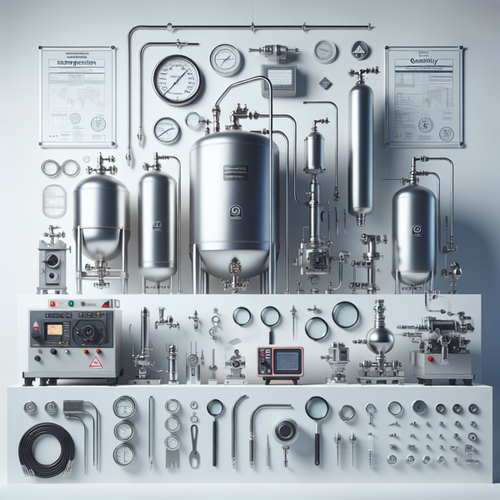
March 2026 Fluid System Standards: Key Updates in Industrial Gases, Hydraulics, Hoses, and Steel Tanks
The fluid systems and components industry enters a pivotal new phase this March, with five newly published standards setting sharper benchmarks for quality, safety, and compatibility. These international standards touch every facet—ranging from sustainable alternatives for SF6 gases and robust hydraulic componentry, to advanced hose assemblies for pharma/biotech, and next-generation requirements for steel tank design. For engineers, quality managers, and procurement specialists, these updates mark crucial shifts in both day-to-day operations and long-term strategic planning.
Overview / Introduction
In the dynamic field of fluid systems and components, international standards anchor safety, efficiency, and innovation. From the electricity grid’s insulated switchgear to pharmaceutical manufacturing lines, the validity of components and systems relies on meticulously set guidelines.
This article dives into the first of four installments highlighting the March 2026 standards update for this category. Here, you’ll learn:
- What’s changed in specifications for electrical gases, hydraulic cylinders, and critical industrial components.
- Why updated hose requirements are vital to pharma/biotech operations.
- How new Eurocode tank design rules affect steel storage structures.
Whether you manage regulatory compliance, engineering details, or supply chain quality, these standards illuminate what’s ahead for the global marketplace.
Detailed Standards Coverage
EN IEC 63359:2026 - Re-Use of Alternative Gases in Electrotechnical Equipment
Fluids for Electrotechnical Application: Specifications for the Re-Use of Mixtures of Gases Alternative to SF6
This standard sets the technical and environmental requirements for re-using gas mixtures that serve as sustainable alternatives to SF6 in high-voltage electrical equipment. As utilities worldwide move away from SF6 due to its high global warming potential, EN IEC 63359:2026 provides detailed quality parameters, contaminant limits, and reclaiming techniques to ensure reliable reuse, supporting both environmental compliance and system performance.
The document covers:
- Gas quality specifications for a range of alternative mixtures (C5-FK, C4-FN, CO2, O2, etc.).
- Analysis techniques for on-site and laboratory gas quality assessment.
- Procedural guidance for gas recovery, reclamation, safe handling, and risk assessment.
- Reference to harmonized terminology and alignment with other IEC standards and the IEC 63360 materials list.
Who needs to comply?
- Utilities, switchgear manufacturers, maintenance contractors, and anyone involved in the lifecycle of gas-insulated electrical equipment.
Practical implications:
- Drives sustainable equipment lifecycle management by enabling safe, effective gas reuse.
- Mandates rigorous checks for contaminants/by-products formed during electrical arcing.
- Forces changes to handling, testing, and contractual requirements.
Key highlights:
- Granular contaminant specifications for each alternative mixture.
- Step-by-step reclaim/re-use process flows for field and lab operations.
- Emphasis on responsibilities along the supply chain (manufacturers, users, reclaimers).
Access the full standard:View EN IEC 63359:2026 on iTeh Standards
ISO 13726:2026 - Mounting Dimensions for Large Hydraulic Cylinders
Hydraulic Fluid Power — Single Rod Cylinders, 16 MPa (160 bar) Compact Series with Bores from 250 mm to 500 mm — Accessory Mounting Dimensions
This revision of ISO 13726 specifies the standardized mounting and interchangeability dimensions for accessories used in large, single rod, compact hydraulic cylinders operating at up to 16 MPa. Focused on bores from 250 mm to 500 mm, it assures global consistency for rod clevis, rod eyes, pivot pins, and locking plates—which streamlines procurement, design, and maintenance for heavy machinery.
Scope and applications:
- Establishes fixed dimensions for AP2 (rod clevis), AP4 (rod eye), pivot pins (AA4-L/S/R), and locking plates (AL6), linked to cylinders built per ISO 6020-3.
- Materials and design parameters are based on operational pressures and bore sizes referencing ISO 2944 and ISO 3320.
Who should implement?
- Hydraulic equipment OEMs, maintenance providers, designers in industries like mining, heavy construction, shipbuilding, and large manufacturing.
Practical benefits:
- Guarantees interchangeability of accessories internationally.
- Delivers best practices for installation and lubrication.
- Updates technical specification in line with recent advances and reflector feedback.
Key highlights:
- Addition of AA4-R accessory specification.
- Updated dimensions, designation formats, and cross-section requirements.
- Aligned with current ISO series to reduce risks in global sourcing.
Access the full standard:View ISO 13726:2026 on iTeh Standards
EN 13001-3-6:2026 - Safety and Proof of Hydraulic Cylinders in Cranes
Cranes - General Design - Part 3-6: Limit States and Proof of Competence of Machinery - Hydraulic Cylinders
The new edition of EN 13001-3-6 raises the bar for hydraulic safety in cranes and load-handling equipment. This standard, integral to the EN 13001 series, defines comprehensive design and theoretical verification methods for load-bearing hydraulic cylinders, with a clear focus on preventing mechanical hazards such as strength failure and elastic instability.
In scope:
- Applies to carbon steel hydraulic cylinders as load-carrying structures.
- Covers requirements for static strength, fatigue, and buckling.
- Details proofs for welded and bolted connections, anchorage, and interface design.
- Provides clear test/proof methods to eliminate risk scenarios identified in the annex (yielding, fatigue, buckling).
Who should pay attention?
- Crane manufacturers, crane owners/operators, safety regulators, and engineering firms specializing in heavy lifting machinery.
Practical implications:
- Adherence is critical for Market Access in the EU (notably for CE marking under the Machinery Regulation).
- Direct impact on life extension, inspection intervals, and accident prevention.
- Contains updated material requirements and default values (efficiency, safety factors).
Key highlights:
- Modification of tube flattening test requirements.
- Revised efficiency values for active cylinders.
- New specific resistance factors for materials in structural members.
Access the full standard:View EN 13001-3-6:2026 on iTeh Standards
EN 16820:2026 - Advanced Hose Standards for Pharma and Biotech
Rubber and Plastics Hoses and Hose Assemblies for Use in the Pharmaceutical and Biotechnological Industry - Bonded Elastomeric Hoses With or Without a Lining
This standard is essential for assuring product safety and reliability in pharmaceutical and biotechnological manufacturing. EN 16820:2026 defines the classification, material, and quality requirements for type D and SD hose assemblies—used for moving gas, vapor, liquid, or powder at controlled pressures and a wide range of temperatures.
Scope and functionalities:
- Standardizes hose assemblies for operation between –30°C to +100°C (or +140°C for PTFE linings), with vacuum and positive pressures.
- Details four hose types and five grades (from fully insulated to highly conductive) covering diverse electrical and chemical safety needs.
- Sets strict requirements for autoclavability, flexibility, structural integrity, surface resistance, and marking.
Key users and impacts:
- Pharma and biotech production engineers, hose/fitting OEMs, validation professionals.
Practical impact:
- Supports GMP and regulatory compliance (with FDA, USP, or EN ISO references for product contact materials).
- Ensures hoses are sterilizable and traceable, reducing cross-contamination risks.
- Enhanced testing and manufacturing controls for product quality and reliability.
Key highlights:
- Expanded hose type/grade structure and corrected electrical resistance values.
- Mandatory markings for full traceability.
- Additional guidance for fire exposure, bending radius, and test procedures.
Access the full standard:View EN 16820:2026 on iTeh Standards
EN 1993-4-2:2026 - Eurocode 3: Steel Tanks Structural Design
Eurocode 3 - Design of Steel Structures - Part 4-2: Tanks
The 2026 version of EN 1993-4-2 brings forward expanded structural design rules for vertical cylindrical, conical, and pedestal above-ground steel tanks. These rules account for safe storage of liquids and refrigerated gas products, covering both the strength and stability of steel tank walls, bottoms, and roofs.
What’s in scope:
- Applies to tanks from 5 m3 up to 100 m diameter and 70 m height (axisymmetric steel tanks for liquids or liquid-suspended solids).
- Procedures for verifying resistance to pressure, buckling, environmental loading (e.g., wind), and design assisted by testing.
- Guidance for global tank stability, material choices (carbon/stainless steel), toughness, durability, and serviceability limit states.
Exclusions:
- Tanks under 5 m diameter/capacity, non-circular shapes, fire exposure, or high internal pressure (>50 kPa).
- Ancillary/supporting structures (stairs, platforms, ladders), foundation or concrete structures, and specialized seismic/floating roof designs.
Target sectors:
- Petrochemical, chemical, food & beverage, water, and industrial bulk storage providers.
Key updates:
- New reliability and partial factor parameters.
- Updated dimensional and tank group classifications.
- References to current harmonized Eurocode and execution standards.
Key highlights:
- Enhanced design for pressure, wind, and buckling resistance.
- Extended guidance for plate thickness, material properties, and roof structures.
- Improved methodology for durability and testing verifications.
Access the full standard:View EN 1993-4-2:2026 on iTeh Standards
Industry Impact & Compliance
Adopting these updated standards transforms the business landscape in several ways:
- Legal/market compliance: Implementation is essential for regulatory conformity (especially in the EU, with direct relevance for CE marking, environmental laws, and occupational safety).
- Operational safety: Updated requirements reduce risks of catastrophic failure in tanks, hoses, and load-bearing equipment.
- Sustainability: EN IEC 63359:2026 underpins the transition away from SF6, helping organizations lower carbon footprint and environmental liability.
- Supply chain assurance: Unified specifications enhance component interchangeability and sourcing across borders.
- Competitive advantage: Early adopters position themselves as leaders in engineering excellence and risk management.
Timelines:
- Most standards are applicable upon publication; organizations should map compliance to product/project lifecycles and training schedules.
Risks of non-compliance:
- Legal liability, equipment failure, lost market access, and reputational harm.
Technical Insights
Across the new releases, certain trends and best practices emerge:
- Testing and traceability: Routine and type testing are fundamental, with expanded marking and documentation requirements for hoses and steel tanks.
- Material suitability: Emphasis on validated material grades, environmental/chemical resistance, and compatibility with process media.
- Design verification: Use of both theoretical (calculations) and empirical (testing) methods to confirm safety margins for hydraulic and structural assemblies.
- Process harmonization: Streamlined accessory designs for hydraulics promote maintenance efficiency and reduce design overhead.
- Certification steps: Many standards reference third-party attestation or conformity assessment schemes—vital for audit trails and global trade.
Best practices:
- Integrate standards review into design freeze and procurement milestones.
- Update internal specifications, manuals, and staff competency to reflect new requirements.
- Leverage iTeh Standards’ resources for up-to-date documentation and compliance toolkits.
Conclusion / Next Steps
March 2026 marks a significant step forward for fluid systems and components. The new standards deliver robust frameworks for sustainability, compatibility, and safety—impacting everything from electric power equipment to pharma production and bulk liquid storage. Organizations are urged to:
- Review each new standard in detail (see direct iTeh links above).
- Assess impacts and schedule updates to processes, products, and quality documentation.
- Train relevant staff and collaborate with supply chains to ensure full compliance.
- Bookmark https://standards.iteh.ai for ongoing standards news and best-in-class technical resources.
Staying ahead of regulatory and technical change is vital for operational excellence—make these new standards a central part of your strategy for the year ahead.
Categories
- Latest News
- New Arrivals
- Generalities
- Services and Management
- Natural Sciences
- Health Care
- Environment
- Metrology and Measurement
- Testing
- Mechanical Systems
- Fluid Systems
- Manufacturing
- Energy and Heat
- Electrical Engineering
- Electronics
- Telecommunications
- Information Technology
- Image Technology
- Precision Mechanics
- Road Vehicles
- Railway Engineering
- Shipbuilding
- Aircraft and Space
- Materials Handling
- Packaging
- Textile and Leather
- Clothing
- Agriculture
- Food technology
- Chemical Technology
- Mining and Minerals
- Petroleum
- Metallurgy
- Wood technology
- Glass and Ceramics
- Rubber and Plastics
- Paper Technology
- Paint Industries
- Construction
- Civil Engineering
- Military Engineering
- Entertainment